Advertisement
Introduction
Water is the lifeblood of any living wall but how that water is delivered, managed, and removed is one of the most consequential decisions an architect and living wall contractor will make on a project. Get it right, and your green wall installation thrives for years and years with minimal fuss. Get it wrong, and you're looking at costly callbacks, dying plants, and frustrated clients.
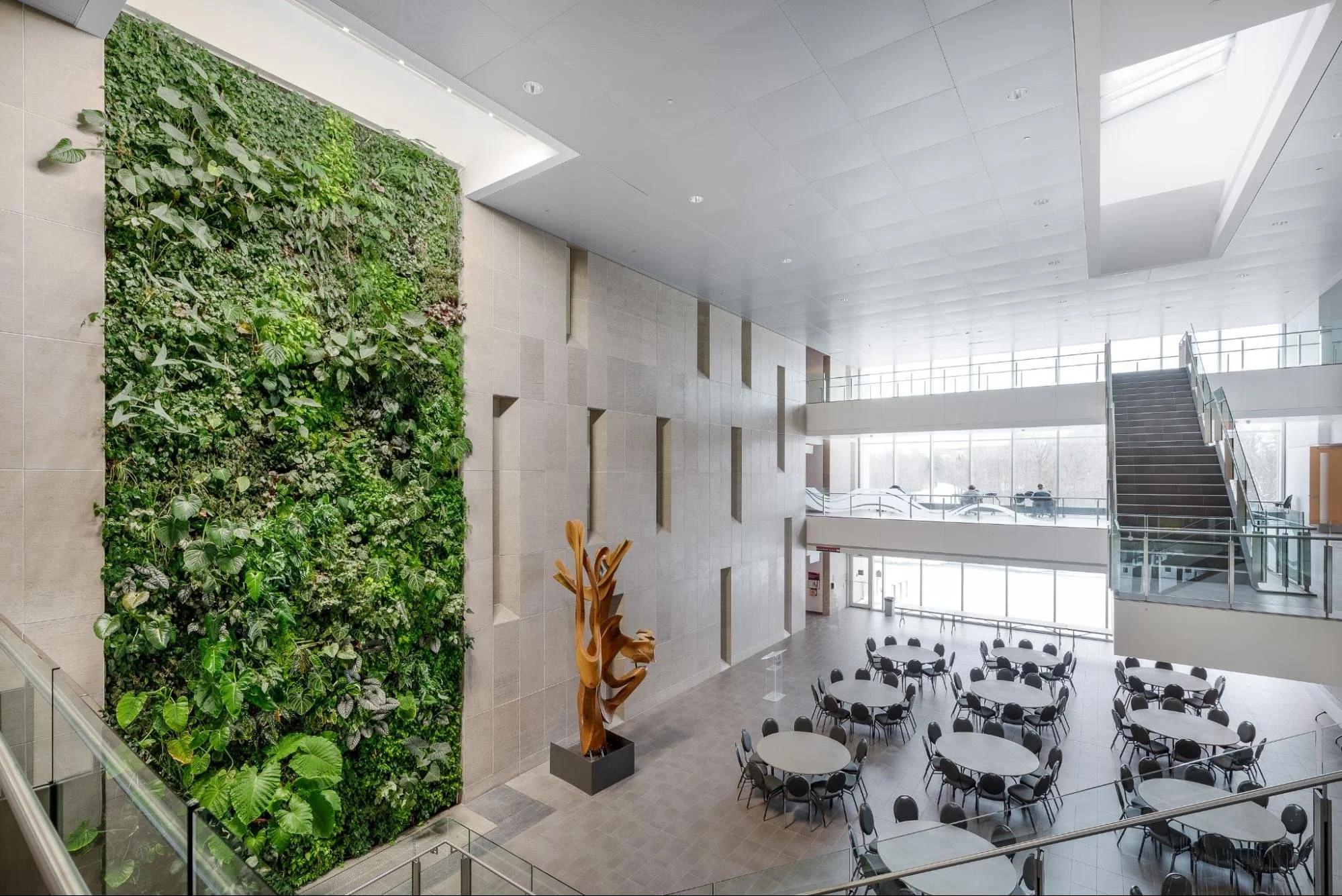
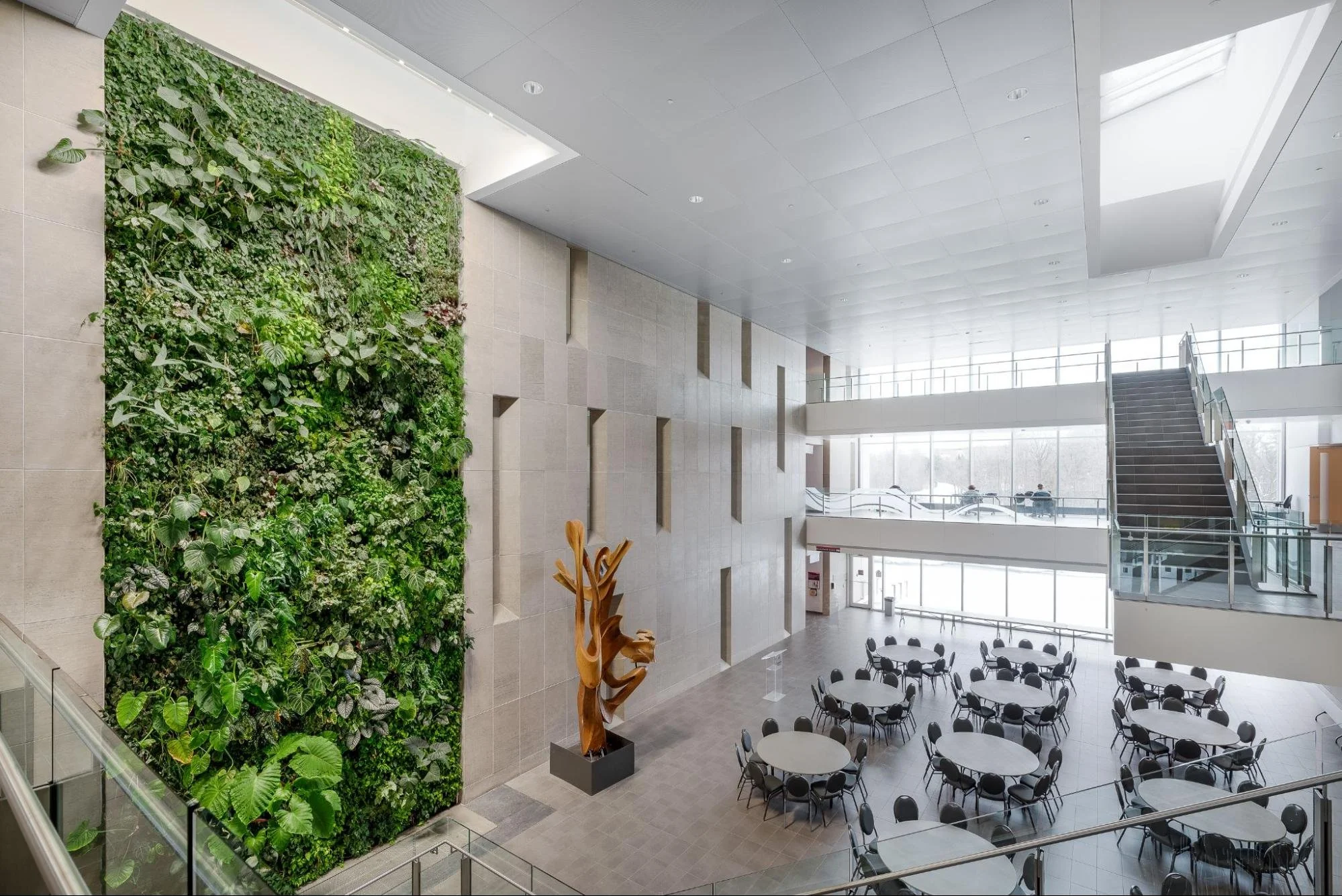
Carleton University’s green wall. Photo: Wallemi
Irrigation Systems
For living wall systems, two primary irrigation approaches are considered: closed-loop (recirculating) and open-loop (non-recirculating). Each has a distinct set of trade-offs, and understanding them before design development can save your team serious time, money, and headaches on site. More importantly, the choice between them has real implications for when and how deeply a living wall needs to be integrated into the project schedule.
Closed-Loop: The Self-Contained Workhorse
A closed-loop system recirculates water through the living wall using a submersible pump housed in a water-tight stainless steel reservoir, typically located at the base of the installation. Water flows up through the growing media or panel system, drains back down into the reservoir, and the cycle repeats on a predetermined schedule.
The advantages of this type of system include:
Fully self-contained which means no connection to a building's domestic water supply is required in many configurations - a money saver;
Straightforward to install in spaces where MEP coordination is limited or where the project is already deep into construction;
Works well for smaller interior walls where access to a drain or supply line is cost-prohibitive; and
A more water efficient system that saves water.
Advertisement
But the trade-offs are significant:
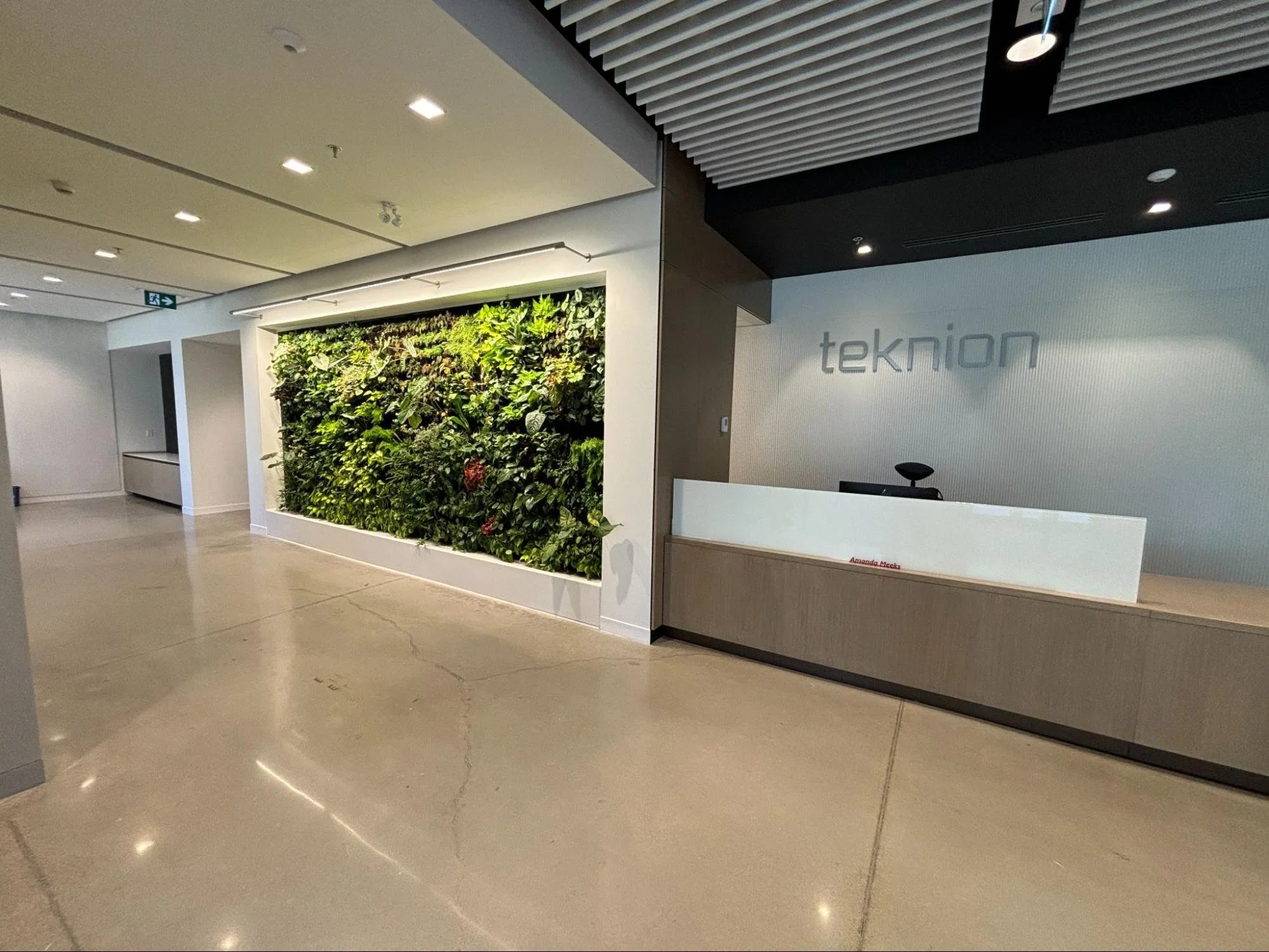
Recirculating Irrigation System Photo Credit: Wallemi
The stainless steel water reservoir is large, heavy, and expensive and it has to go somewhere, often consuming valuable floor space at the base of the wall;
Aesthetically, the reservoir can be a challenge to conceal, particularly in high-design interiors where every detail is scrutinized;
Maintenance is labor-intensive: during technicians' maintenance visits, they have to add on extracting the water, cleaning the reservoir, recharging it with fresh water, and re-dosing fertilizer. This process requires time, specialized equipment, and disposal of the drained water on site;
Over the life of the installation, those monthly service visits represent a significant cumulative cost in labor, materials, and disruption to occupied spaces; and
On large walls, calculating the size of the reservoir to hold enough water to feed the wall in between maintenance visits is crucial. If you miscalculate, you’re looking at a dying green wall, burnt out pumps and pricey repairs.
For the right project, particularly smaller interior applications without existing MEP infrastructure nearby, or installations added late in the construction process, closed-loop systems are a proven and reliable choice. But for larger or more prominent installations, the operational overhead adds up fast. Remember, the larger the wall, the larger the reservoir to hold the appropriate water volume to feed it (several hundred liters). There are dozens of living wall systems on the market, and planting plans vary widely based on the designer's intent and the lighting conditions of the space. As a general benchmark, however, a 100-square-foot living wall typically calls for a reservoir sized around 150 gallons, assuming roughly 20% runoff return to the system and monthly recharges.
Advertisement
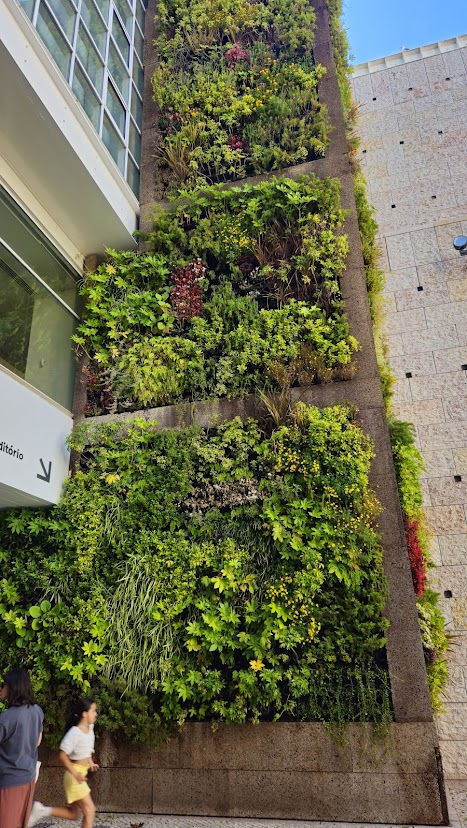
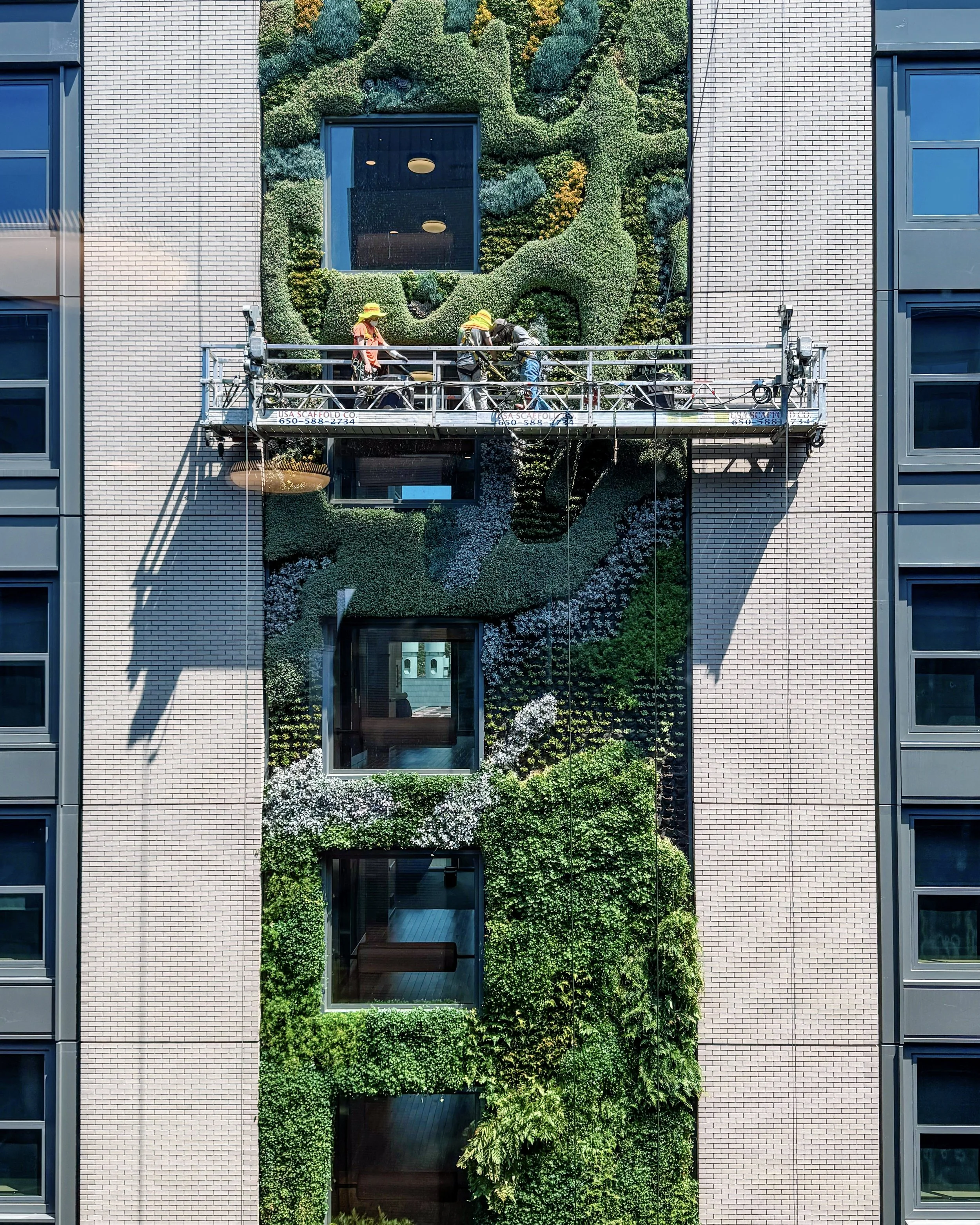
Exterior green wall using open loop irrigation at the Lisbon Museum of Contemporary Art and Technology. Photo: Steven Peck
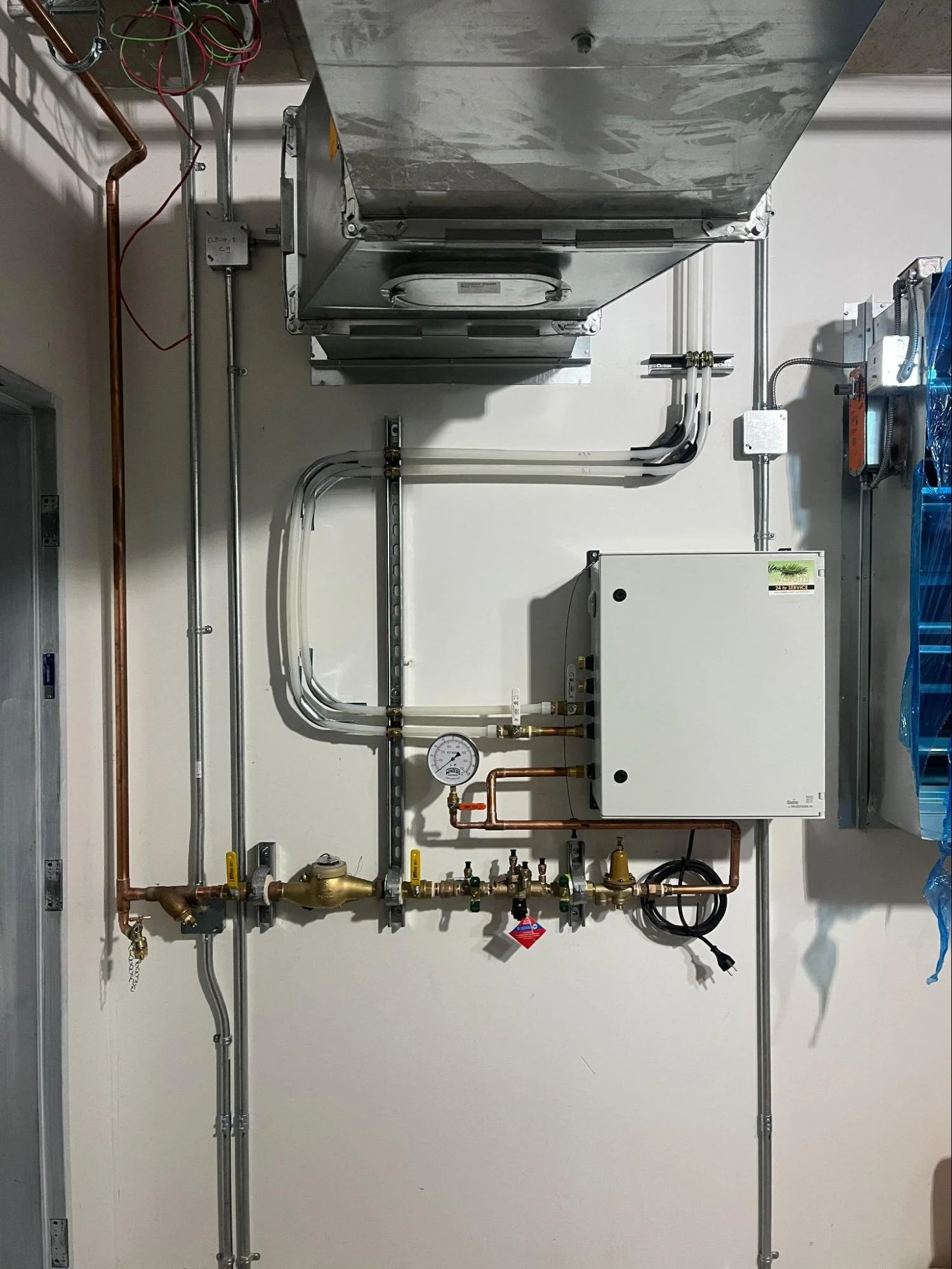
Irrigation Unit Area Photo Credit: Wallemi
Open-Loop: Smarter Coordination, Leaner Footprint
An open-loop, non-recirculating system connects directly to a building's water supply and drains to the grey water system after a single pass through the green wall. The system typically includes:
An RPZ (Reduced Pressure Zone) backflow prevention unit to protect the potable water supply;
Filters to remove particulates that could clog emitters and compromise plant health;
Timers/smart controllers to manage irrigation cycles precisely, with the ability to fine-tune frequency and duration by season or conditions; and
A fertilizer injector to deliver nutrients on demand, proportionally mixed into the irrigation water at every cycle
This approach requires more upfront coordination with MEP engineers and other relevant trades. Routing supply lines, tying into drain infrastructure, and specifying the right backflow assembly all need to be resolved early in the design process. That's a real consideration when choosing a system type, especially on fast-moving projects where scopes are still being defined. But the payoff can be substantial:
No reservoir: Eliminating the large stainless steel tank frees up floor space, simplifies the base detail, and opens up design options that simply aren't possible with a closed-loop system. In high-end interiors, this single factor is often the deciding factor; the base of a living wall should be read as a design feature, not mechanical infrastructure.
Lower ongoing maintenance costs: With no tank to drain, clean, and recharge each month, routine service visits are faster, less disruptive, and significantly less resource-intensive over the life of the installation.
Consistent nutrient delivery: A properly calibrated fertilizer injector delivers precise, repeatable doses every irrigation cycle, reducing the variability and the risk of over- or under-feeding that comes with manual recharging.
Scalability: As wall sizes grow, the closed-loop reservoir must grow proportionally and so does its footprint, cost, and maintenance demand. Open-loop systems scale cleanly without compounding those variables.
Why The Irrigation Decision Belongs in Schematic Design
Here's the conversation that doesn't happen often enough: the irrigation plan for a living wall needs to be on the table during schematic design or design development, not after construction documents, and certainly not during rough-in.
For an open-loop system, the supply line, drain connection, and backflow preventer location all need to be coordinated with the mechanical and plumbing team before rough-in begins. Once walls are framed, MEP runs are set, and slabs are poured, the cost and complexity of threading in a new water supply or floor drain climbs steeply. What would have been a straightforward rough-in detail becomes a change order.
This is why highly-engineered living wall systems, multi-story, or exterior installations, need to be specified early. These aren't accessories to a project; they are building systems, with the same coordination requirements as any other mechanical element. The irrigation infrastructure, waterproofing details, and electrical for controls and lighting all need to be resolved at the right phase, with the right trades at the table. These trades include the following; electricians, plumbers, and general contractors.
Advertisement
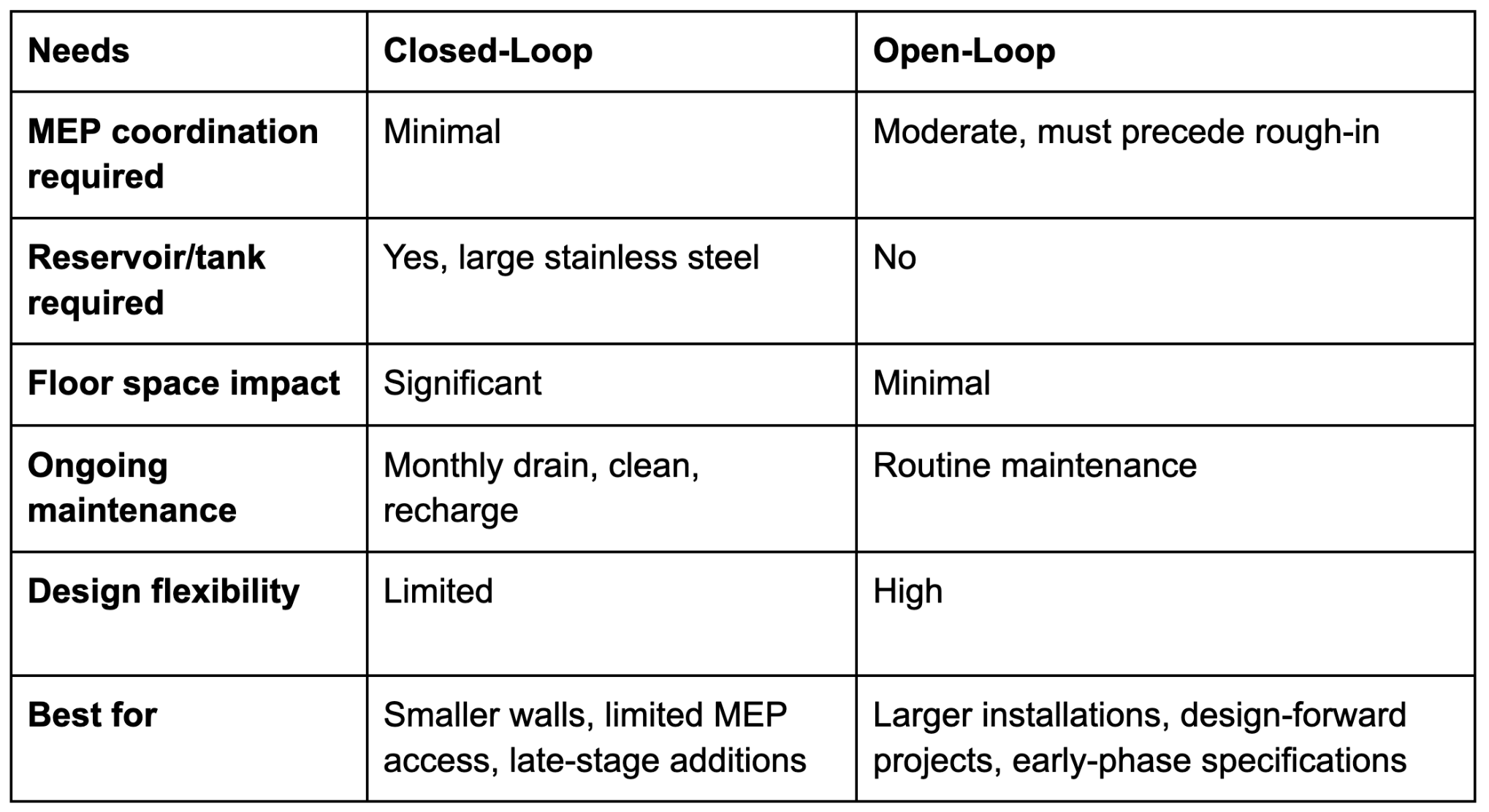
There's no universal answer, but here's a practical framework:
Which System Is Right for Your Project?
Conclusion
The best living walls aren't just about growing media or plant selection. They're about building in the right infrastructure from day one so those plants can thrive without demanding an outsized share of your maintenance budget, your floor plan, or your team's time on site.
Advertisement
Lily Turner is a biophilic designer and living wall specialist with experience across the United States as a design-build practitioner. She works closely with architects, designers, and contractors to identify the right living wall approach for their budget, design parameters, and project scale. Lily brings a uniquely integrated perspective to living architecture; one that bridges design, planning, and development to recognize the social, environmental, and economic value of her systems. She can be reached at lily@lilyscottdesigns.com or www.lilyscottdesigns.com
Resources
Catch Lily’s Green Wall Masterclass at CitiesAlive in New York City from September 30 to October 3, 2026. www.citiesalive.org