Advertisement
Introduction
The rooftop waterproofing is one of the most important systems of any building. When this system performs well, it typically goes unnoticed. When it fails, the consequences are disruptive and often costly. It is no surprise that the majority of litigation in commercial buildings can be traced to water intrusion – so making proper waterproofing decisions is not just a requirement, but a risk management strategy.
In the United States and Canada, roofing systems generally fall in one of two major categories based on where the membrane and insulation fall within the assembly: conventional roofing and protected membrane roofing. These two assembly categories are differentiated in two aspects:
Position of the waterproofing – in a conventional roofing assembly, the waterproofing is placed above the insulation. In a protected membrane roof, the membrane is placed directly on top of the structural roof deck.
Position of the insulation – in a protected membrane roof, the insulation is placed directly on top of the waterproofing membrane. In a conventional roof, the insulation is placed under the waterproofing and directly on the structural roof deck.
Here we discuss the attributes of both approaches.
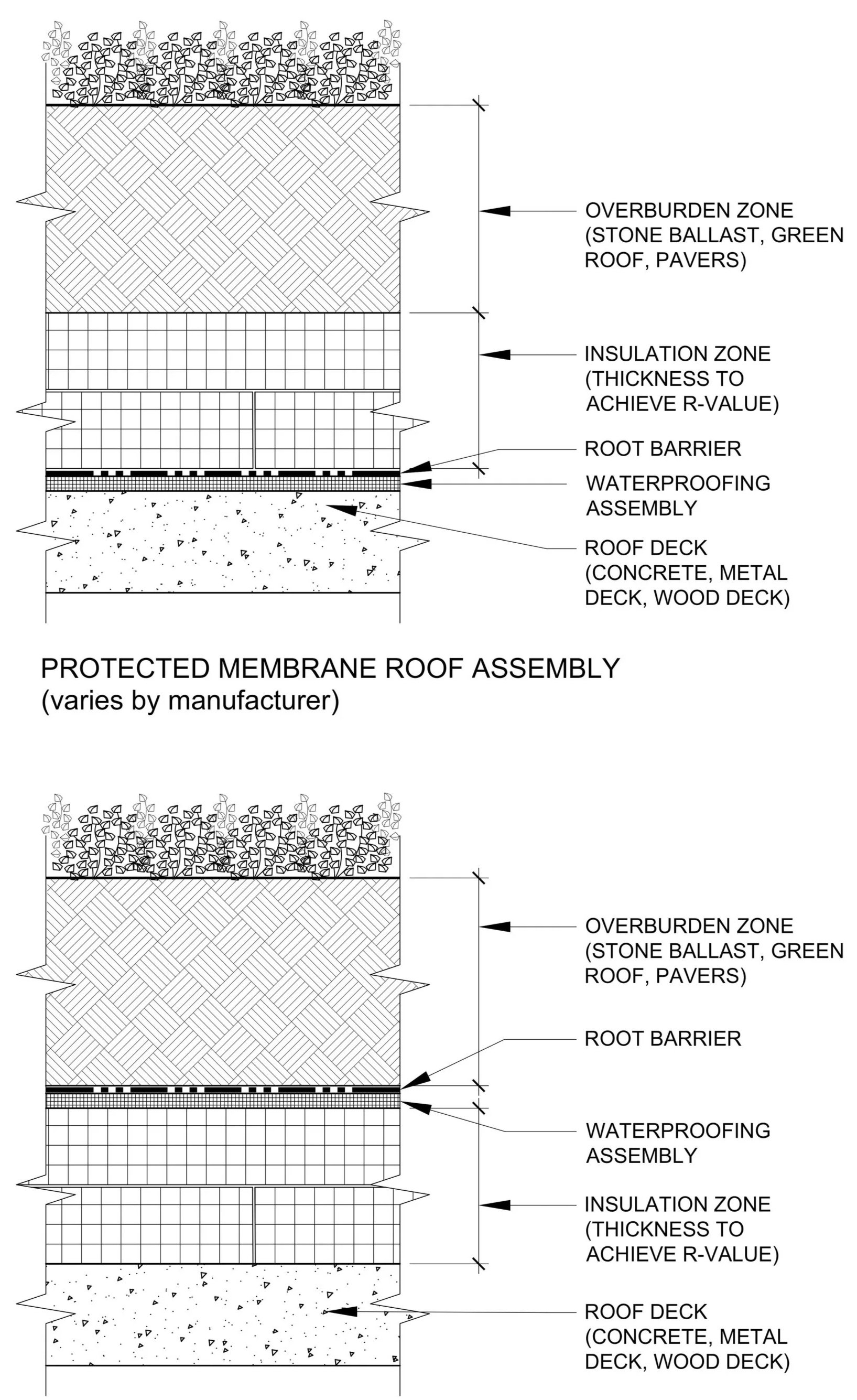
Conventional roof assembly (varies by manufacturer). Photo: Richard C. Hayden
Conventional Roofing
Conventional roofs are widely used across commercial construction, particularly in steel framed buildings with lightweight roof decks. Concrete and timber structures are also suitable candidates, particularly if weight is a concern. In conventional roofing systems, the insulation is installed below the roofing/waterproofing layer.
The waterproofing layer is usually a sheet of single-ply membrane such as synthetic rubber (EPDM) or thermoplastic (TPO or PVC). These materials come on rolls typically 10-20’ wide in a variety of colors which either absorb or reflect the sunlight to provide thermal benefits based on the building’s climate; as well as for aesthetics, if the membrane is left exposed and visible to building occupants. Mil thicknesses ranging from 45 mils to 90 mils are offered to meet budget, longevity, and performance requirements. A layer of fleece can also be laminated to the back of these membranes, which provides increased resistance to punctures and hail damage and provides a more robust system. In the seams where one roll meets another, it is critical that the sheets be properly sealed to prevent water intrusion. For EPDM membranes, a pressure-sensitive tape is used to adhere the sheets to one another. For thermoplastic membranes (TPO or PVC), the sheets are heat welded to one another. The membranes can be mechanically fastened through the insulation down to the roof deck or adhered. The insulation is typically polyisocyanurate which is cost-effective and offers the highest R-value per inch of commercial board insulations. However, polyisocyanurate is moisture-sensitive and can warp or degrade if exposed to water.
Advertisement
Protected Membrane Roofing
Protected membrane roofs are commonly used on concrete structures although some metal structures are incorporating protected membrane roof technologies. The advent of mass timber structures (using cross laminated timber and its variants) is another ideal use for a protected membrane roof.
In this case, the waterproofing material is liquid applied directly to the roof deck. One of the original materials for this use is coal tar pitch. Later, a hot applied, rubberized asphalt was developed and after that, cold applied membranes and synthetic membranes were developed. Once cured, these systems form a continuous, monolithic membrane. Installers are required to verify application thickness to ensure consistent coverage free of pinholes or voids.
The protection of the membrane in this type of roof is then provided by a protection sheet and the insulation. The insulation is typically extruded polystyrene (XPS) insulation with a high compressive strength. This type of insulation does not absorb water and is ideal for use in protected membrane roof assemblies.
The insulation is loosely laid on the finished waterproofing layer and subsequent overburden is applied to hold it in place. For many buildings using a protected membrane roof, the overburden is often stone ballast. This protects the membrane from damage from ultraviolet light, rain, hail, heat and other environmental damage as well as damage from any other overburden that might be added to the total roof assembly during construction. Green roofs have become increasingly common with these systems because they can function as ballast. Green roofs provide additional layers of protection to the insulation and membrane below.
Best Practices When Incorporating a Green Roof
While these systems differ in configuration, their performance ultimately depends on the same underlying principles: proper design, quality installation, and long-term maintenance.
Robust Systems: In conventional assemblies, it is recommended to add a high compressive strength cover board directly below the membrane. Adhered membranes and cover boards are recommended to prevent stress points at plates and fasteners once the weight of the overburden is added. To add redundancy, membrane seams can be overlaid with cover strip. In protected membrane roofing assemblies, the membrane assembly is often much thicker than conventional roofing membranes and often incorporate a reinforcing fabric between the layers of the fluid-applied system. These membranes are installed directly on top of and bonded to the structural roof deck and as a result, the water cannot migrate between the membrane and the roof deck. These membranes have resiliency to bridge small cracks that develop in concrete decks or the tiny movements that occur in metal roof decks or timber construction.
Root Barriers: Any roofing assembly with an overlying green roof must accommodate the inevitable movement of roots into areas where they are not intended by incorporating a root barrier. This protects the underlying layers from roots that naturally seek moisture and nutrients. These root barriers can include physical barriers such as plastic sheetings of various thicknesses depending on the anticipated plantings or an infused protection sheet that discourages root growth at the membrane level. Root barriers must be installed directly over the membrane for full effectiveness.
Leak Detection: Testing the roof for leaks prior to installing overburden is strongly recommended. It is easier to locate and repair a leak on an exposed membrane rather than digging through overburden. New technologies like electronic leak detection can pinpoint the location of water in a system.
Installer Quality Control: In a conventional roof, installers should ensure membrane seaming is consistent and in protected membrane roofs, installers should verify application thickness regularly.
Drainage: In a conventional roof, positive drainage is essential to prevent ponding water, which can accelerate membrane degradation and increase structural loading. Well placed drains/scuppers are key components of a high performing assembly. Many structural concrete decks are sloped towards the drains when the concrete is poured. On other deck types, this means incorporating tapered insulation below the membrane. When covered with overburden, drainage channels need to be provided at the membrane level, either through a synthetic drainage composite or through polystyrene with integrated channels.
Advertisement
In a protected membrane roof, roof decks are often constructed dead flat with zero-slope. This is essential in a number of municipalities where zoning requirements (e.g. Washington, DC and others) limit roof heights. The flat deck roof types are also essential in blue roof configurations where stormwater detention is one of the primary functions. The physics of small differences in head pressure created by the insulation over the membrane is what moves the water to the drains.
Inspection and Maintenance: Even well-installed systems benefit from routine inspection as a part of a full roof inspection. Annual or semi-annual reviews help identify issues early – before they become significant.
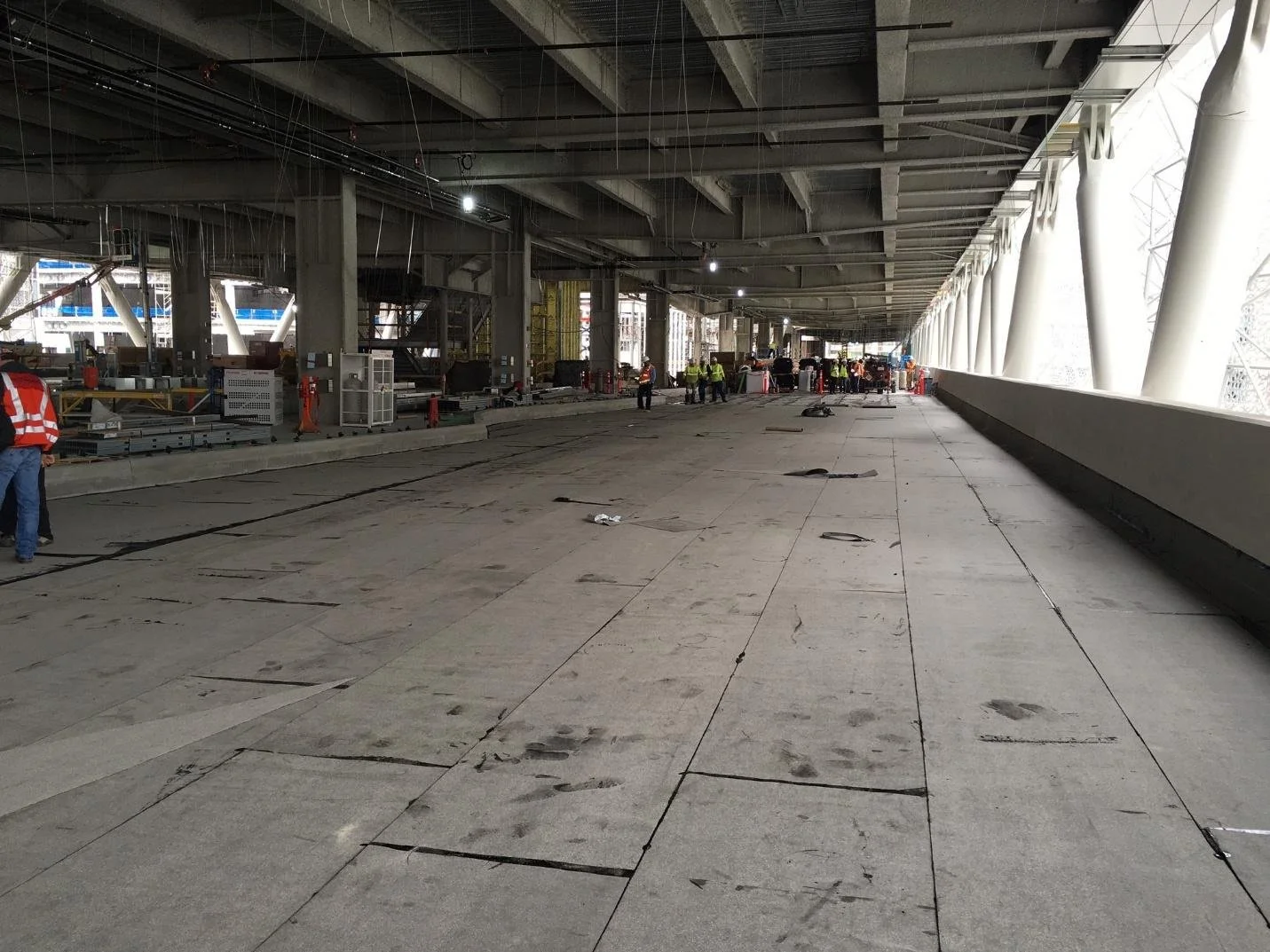
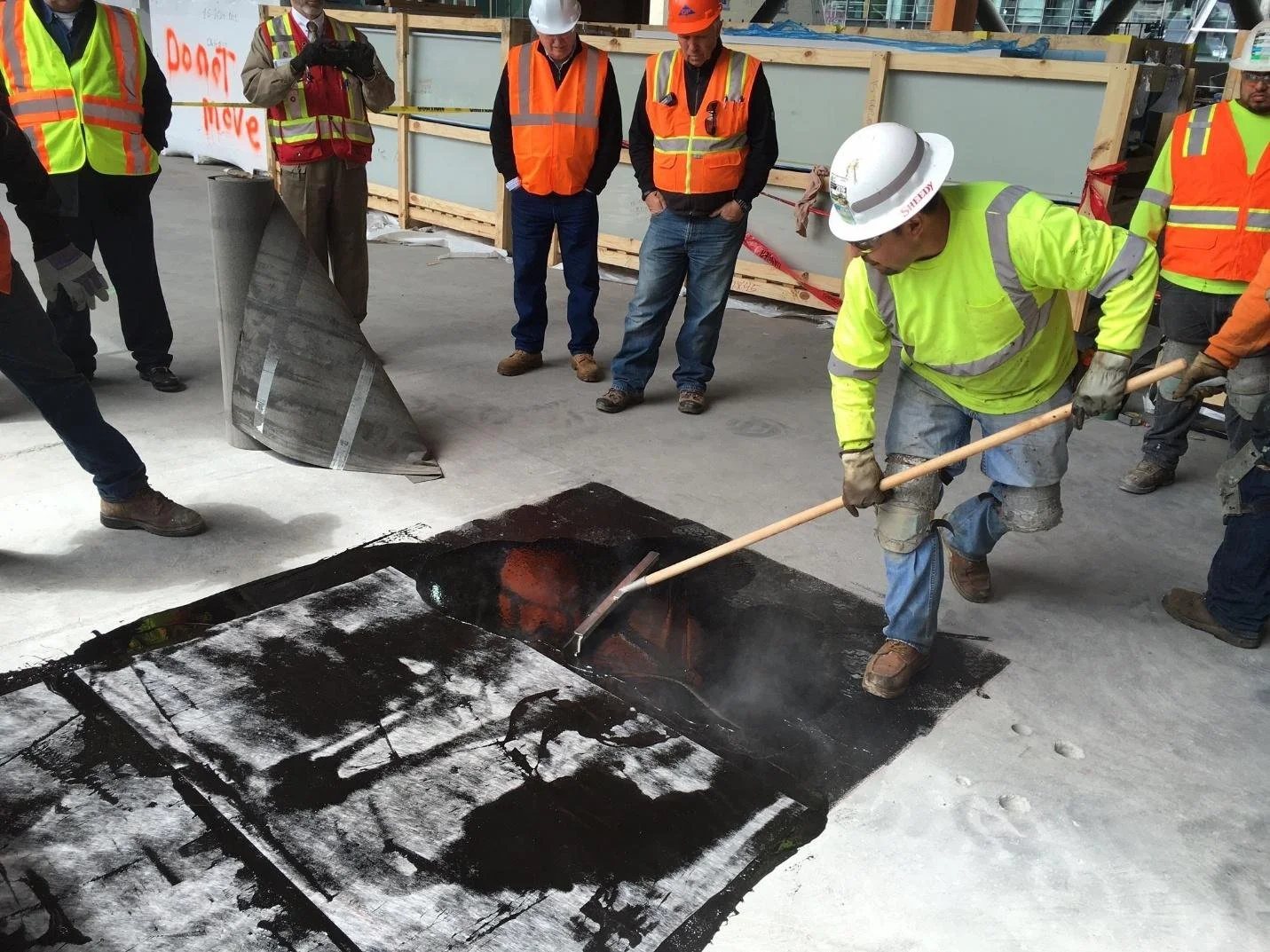
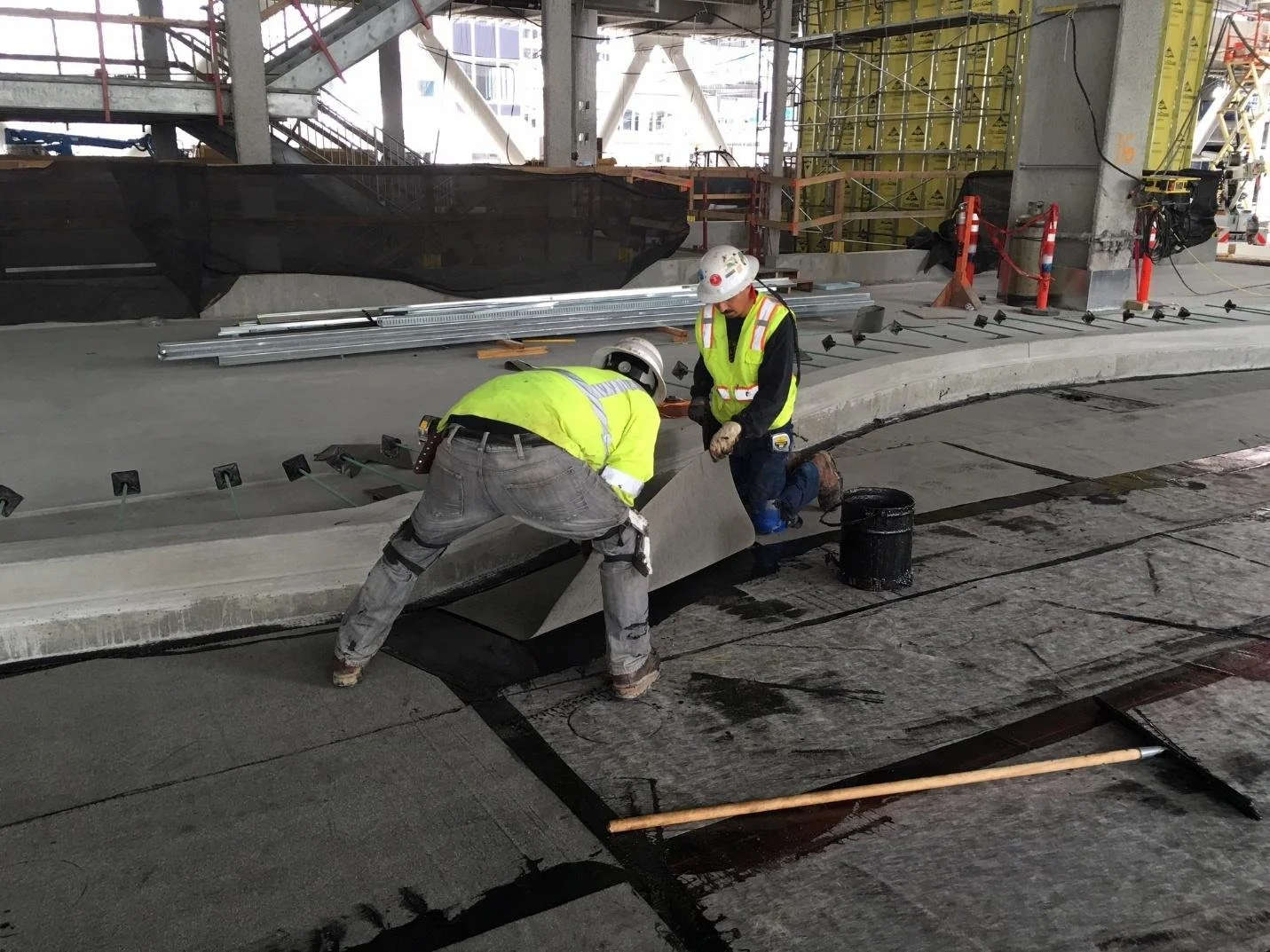
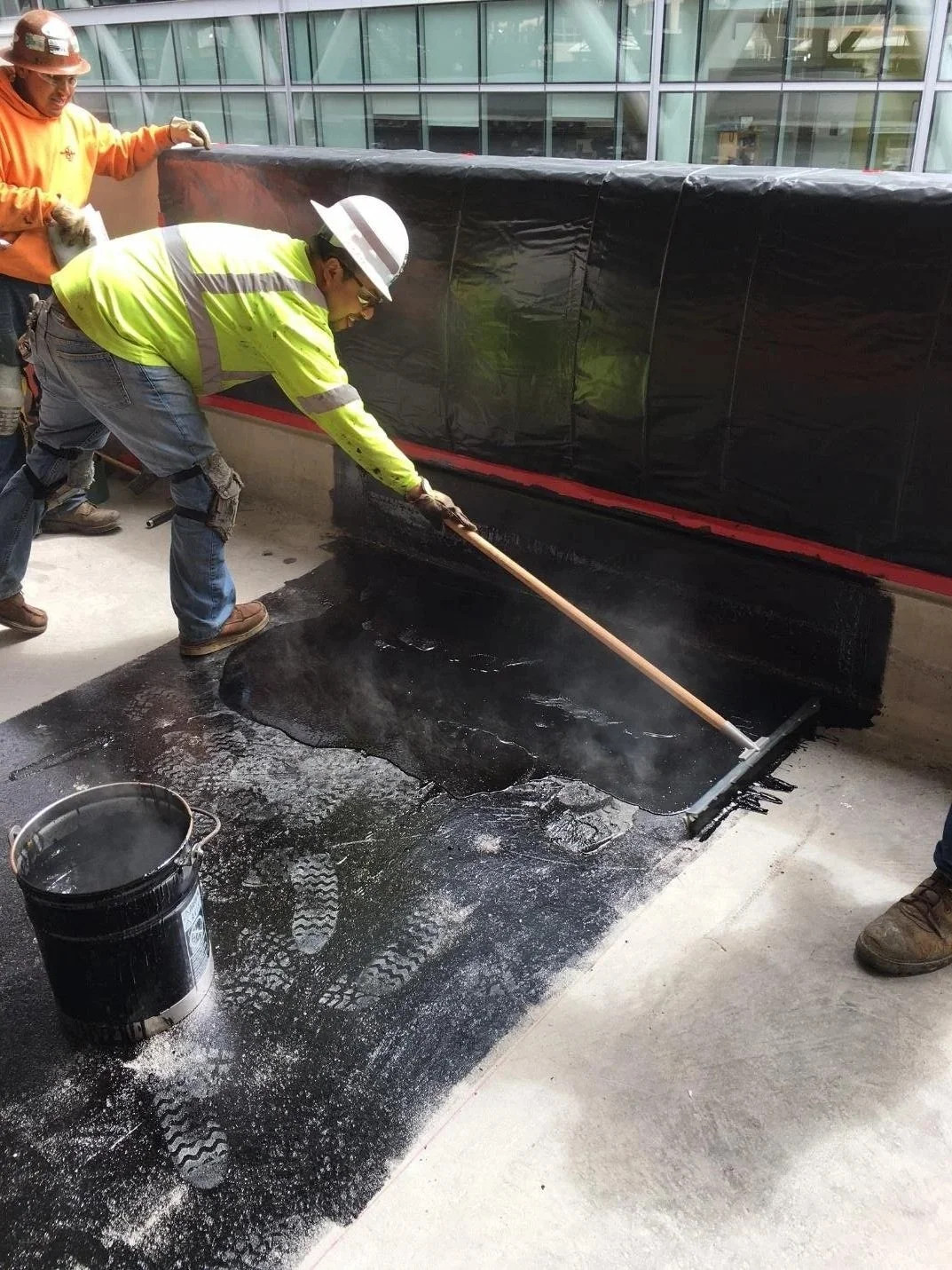
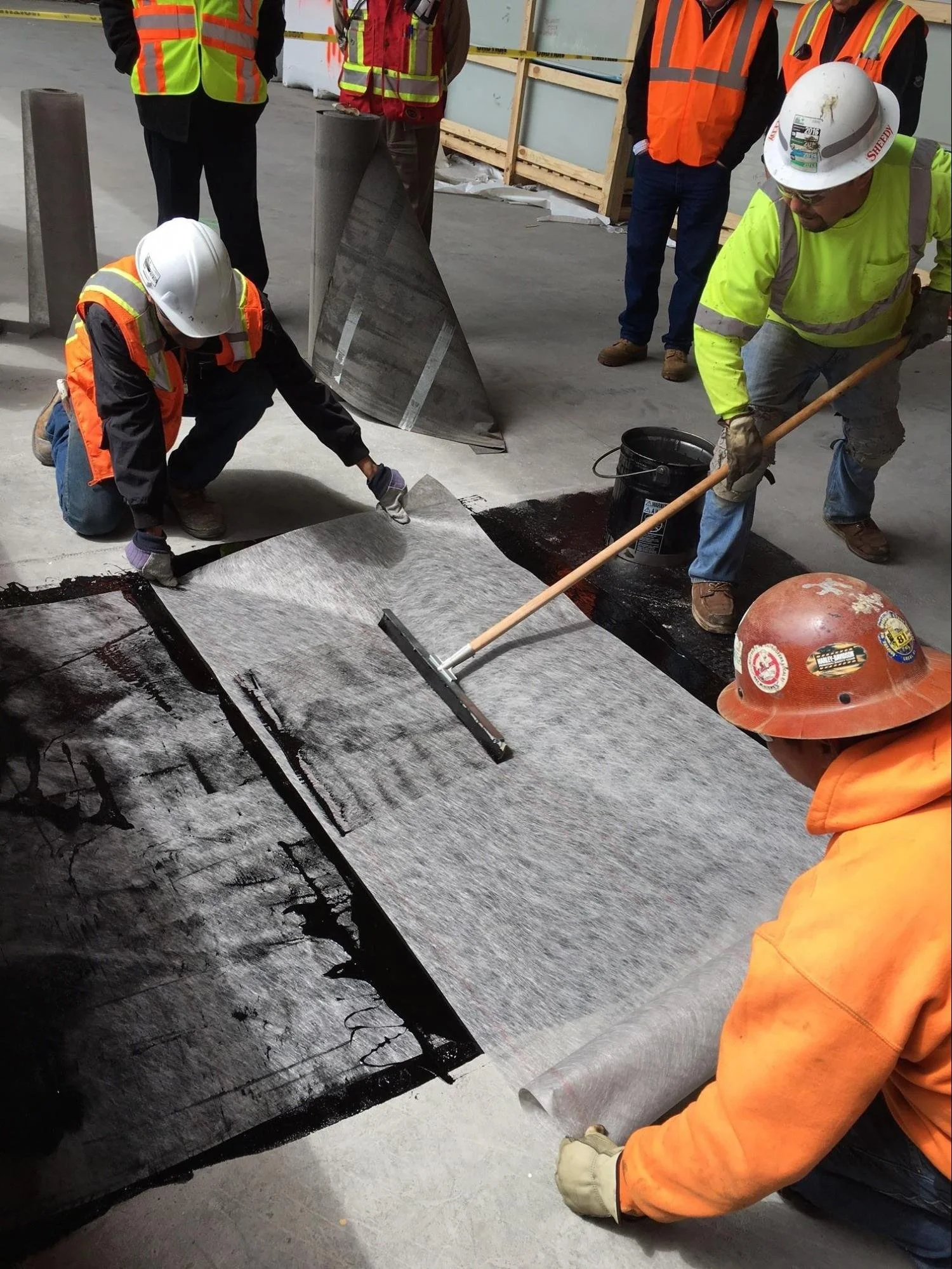
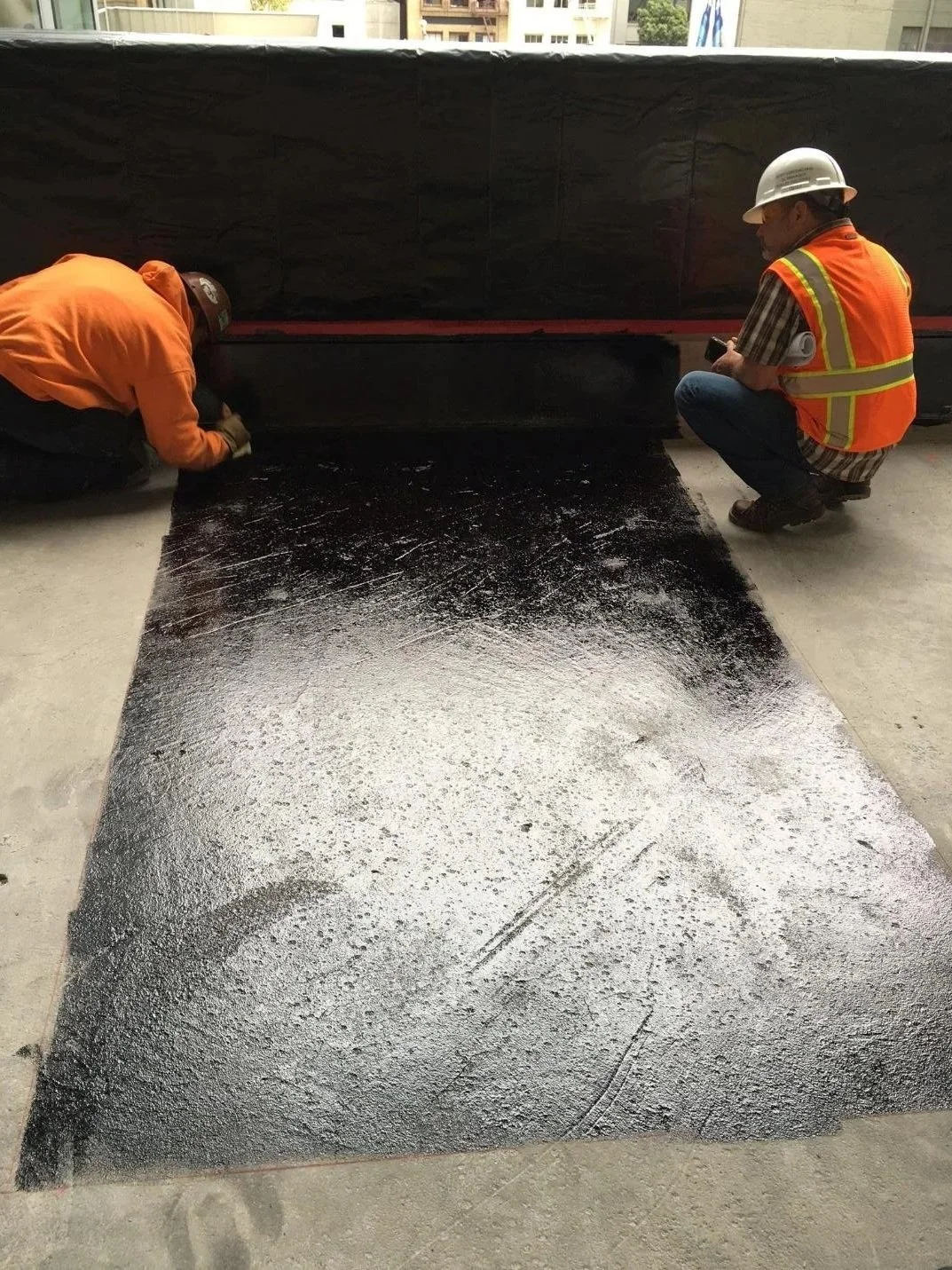
Photo 1: Initial priming of the concrete deck slab ready for hot rubberized asphalt installation. Photo 2: Hot rubberized asphalt being squeeged over the primer. Hot rubberized asphalt melts into successive layers forming a watertight seal. Photo 3: Reinforcing fabric is added to the molten first layer of hot rubberized asphalt to add strength to the waterproofing assembly. The fabric is embedded in the membrane. Photo 4: A top coat of hot rubberized asphalt is immediately added to completely cover and embed the reinforcing fabric. Total thickness will significantly exceed 200 mils. Photo 5: A protection sheet is added soon after the final layer of hot rubberized asphalt has been applied. Photo 6: Finished protection sheet installation over hot rubberized asphalt. At this point the overburden would be installed. A root barrier would be installed first, then the planks of XPS insulation are loose laid on top. Pavers and/or green roof are installed over the top of the insulation.
The Case for Single-Source Overburden Warranties
Conventional and protected membrane roofing manufacturers offer warranties that include the roof system and overburden. These types of warranties, called single-source overburden warranties, include the removal of any overburden installed above the waterproofing layer. In the unlikely event of a roof leak, the overburden will be removed, the leak will be investigated and repaired, and the overburden will be re-installed. This relieves the building owner from needing to remove the overburdened components themselves. In a single-source warranty, the manufacturer removes the overburden to access the waterproofing layer, makes the repairs and reinstalls the overburden components. This eliminates confusion and “finger-pointing” associated with using separate roofing/waterproofing manufacturers and overburden providers. This approach not only simplifies coordination between trades but also reduces risk for building owners by ensuring accountability remains with a single manufacturer.
Conclusion: The Choices in Roofing Assemblies
The choice of roofing assembly can be a challenging topic. Economics, construction budgets and intended building use play a key factor. Building owners and designers often must juggle multiple requirements in their projects that can influence the decisions on what structure type and best waterproofing assemblies to use.
Steel framed buildings with lightweight decks may not be able to support the additional load of a green roof without significant structural upgrades. Concrete buildings and decks can be more costly, but they can generally support a variety of green roof assemblies. Ensuring the structure can support the added weight of the green roof is critical. Longevity and repairability of the membrane assembly should also be considered, and compliance with insurance and building code requirements is required. Both conventional assemblies and protected membrane roofing assemblies can support green roofs, if system selection, detailing, and installation are approached with a clear understanding of long-term performance and risk.
Advertisement
Richard C. Hayden is the Green Roof and Blue Roof Advisor to The Barrett Roofing Company. He brings his 30 years of design consulting and 13 years of innovations and experience to the green roof industry.
Amanda Starner is a Senior Product Specialist at Carlisle Construction Materials and has spent the past seven years supporting specialty roofing systems, including vegetated and overburden roof assemblies. Her expertise spans green roof assemblies, paver and overburden systems, air and vapor barriers, and the integration of accessory components within complex commercial roofing designs. Amanda collaborates closely with design and construction professionals to evaluate system options, refine detailing, and resolve technical challenges to ensure high-performing assemblies. She brings a practical, systems-focused perspective that highlights green roofing’s role in stormwater management, healthier environments, and heat island mitigation.