Advertisement
Introduction
The impact of water upon human development cannot be easily overstated. For water is truly amazing. For thousands of years to the present, water has fundamentally shaped our world and how we design our buildings and communities. On a recent trip to Poland for the Polish Green Roofs Association’s Annual Conference, I presented an introduction to biophilic design, and had some time to reflect on how water has shaped this beautiful country and its architecture.
Water and Early City Building
The longest river in Poland is called the Vistula. At over 1000 km in length, it flows north from its headwaters in the Carpathian mountain range, which in turn stretches 1500 km across seven eastern European countries. The Vistula watershed encompasses more than half the land area of Poland, eventually pouring into the Baltic Sea near the city of Gdansk. Along its banks, it gave birth to a number of cities, including the capital, Warsaw. Prior to the development of roads, water provided transportation for people and goods. During the 15th and 16th centuries, Warsaw was made prosperous because of its trade in timber and grain transported upon the Vistula to Gdansk, by boat, bringing wealth to its inhabitants. Today the Vistula still serves Warsaw, providing more than 70 per cent of the drinking water for its 1.8 million residents.
Real Estate Values and the Blue Mind
The many apartments with Vistula River views in Warsaw fetch two to three times the average value of apartments located away from the river. This is because the presence of water gives rise to something scientists call the ‘blue mind’ effect – a mildly meditative state characterized by calmness, peacefulness and general happiness (Blue Mind 2014). Neuroscience research demonstrates that looking at water increases alpha brain waves, which are associated with relaxation and effortless focus. Water views trigger the release of dopamine, serotonin, and oxycontin and reduce cortisol, a stress hormone. People are willing to pay a premium for real estate that provides these water based psychological and physical benefits.
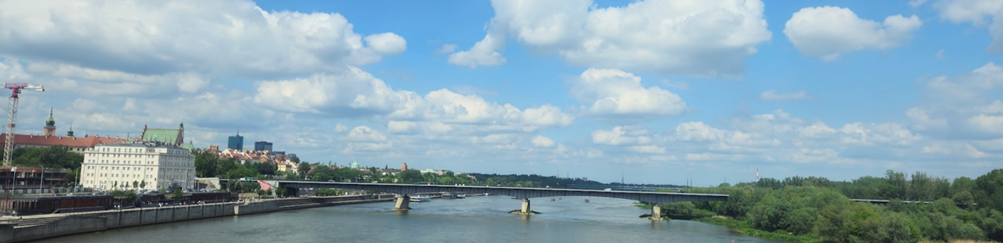
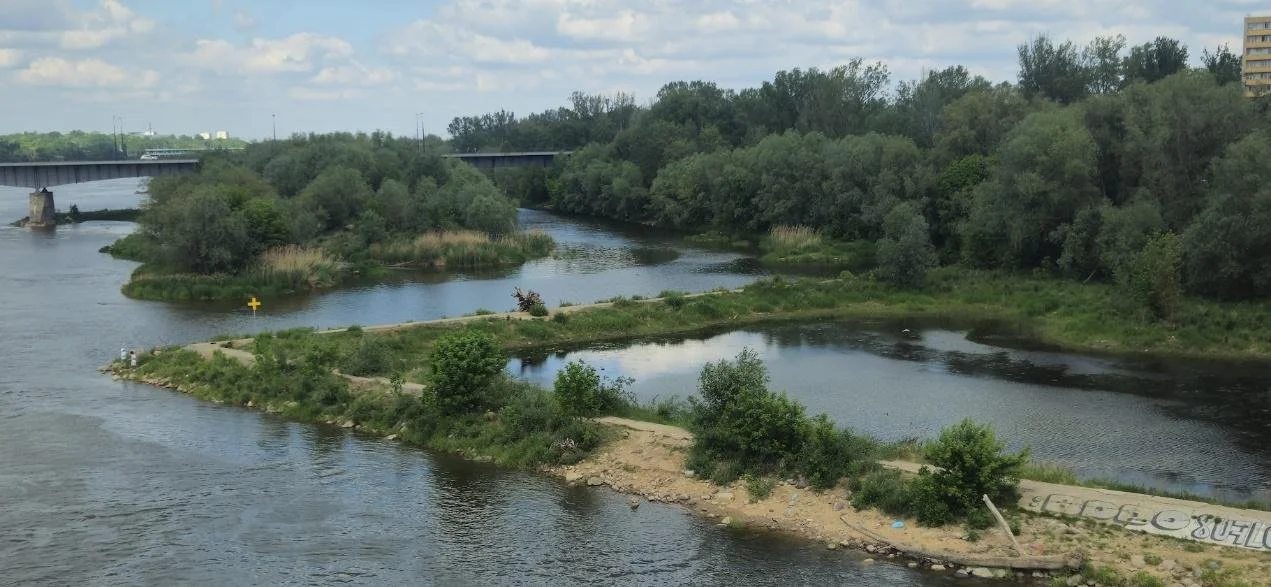
Warsaw is the only capital city in Europe that enjoys green infrastructure on the left bank of its major river, the Vistula. All photos courtesy of S. Peck
For countless millennia, humans have also sought out water because we need to drink it to survive. Water has often signified the presence of food. In addition, the edges of lakes, rivers and streams provide us with biophilic element called prospect, which is the ability to see possible threats from a distance and respond accordingly. Given how water impacts us, it is no wonder that worldwide, real estate encompassing views of water, particularly panoramic views of well-maintained water, are worth between 30 to 76 percent more and sell faster (Irwin 2022). If water quality is improved, its impact upon real estate values also improves (Harris). Higher real estate values give expression to the many positive impacts water has upon our lives.
Advertisement
Grey and Green and A River Between
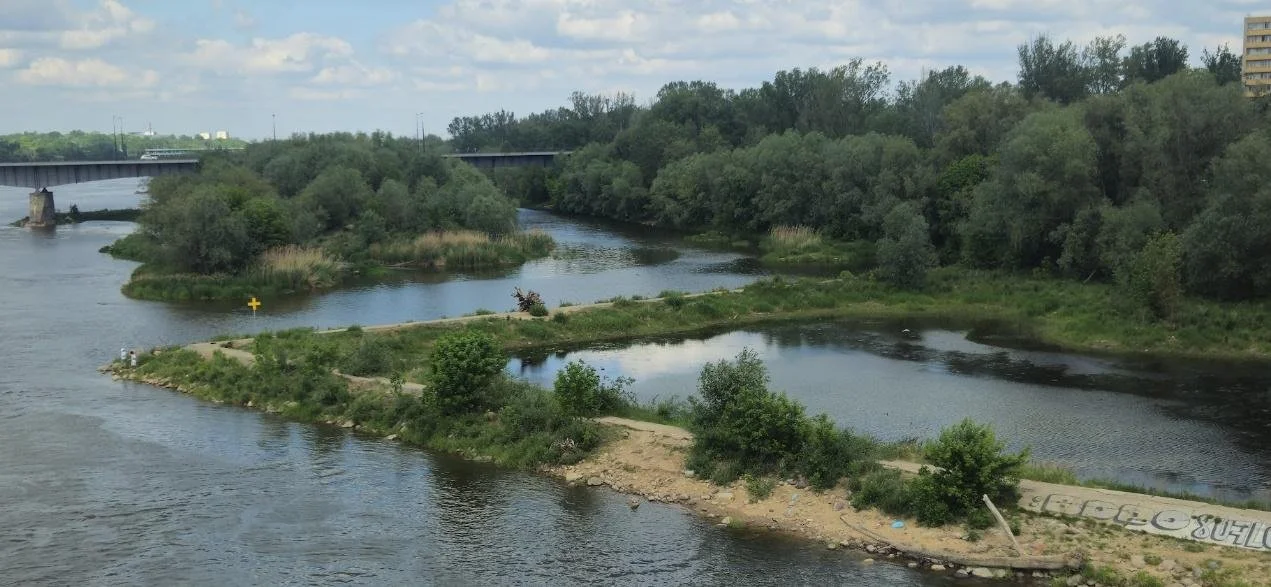
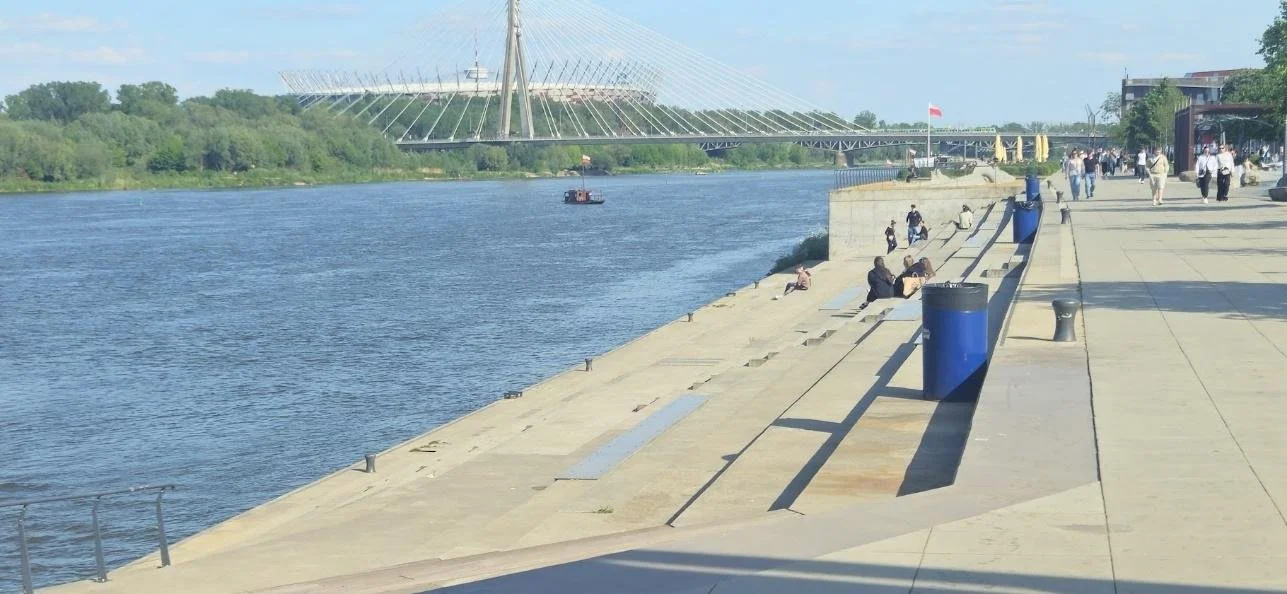
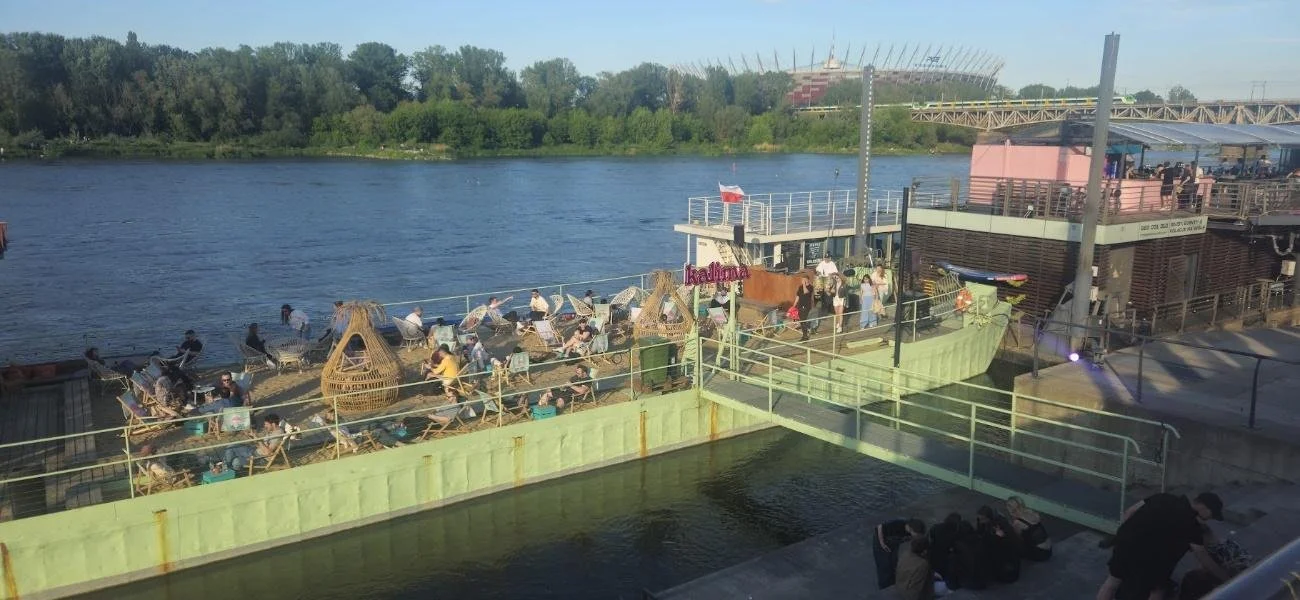
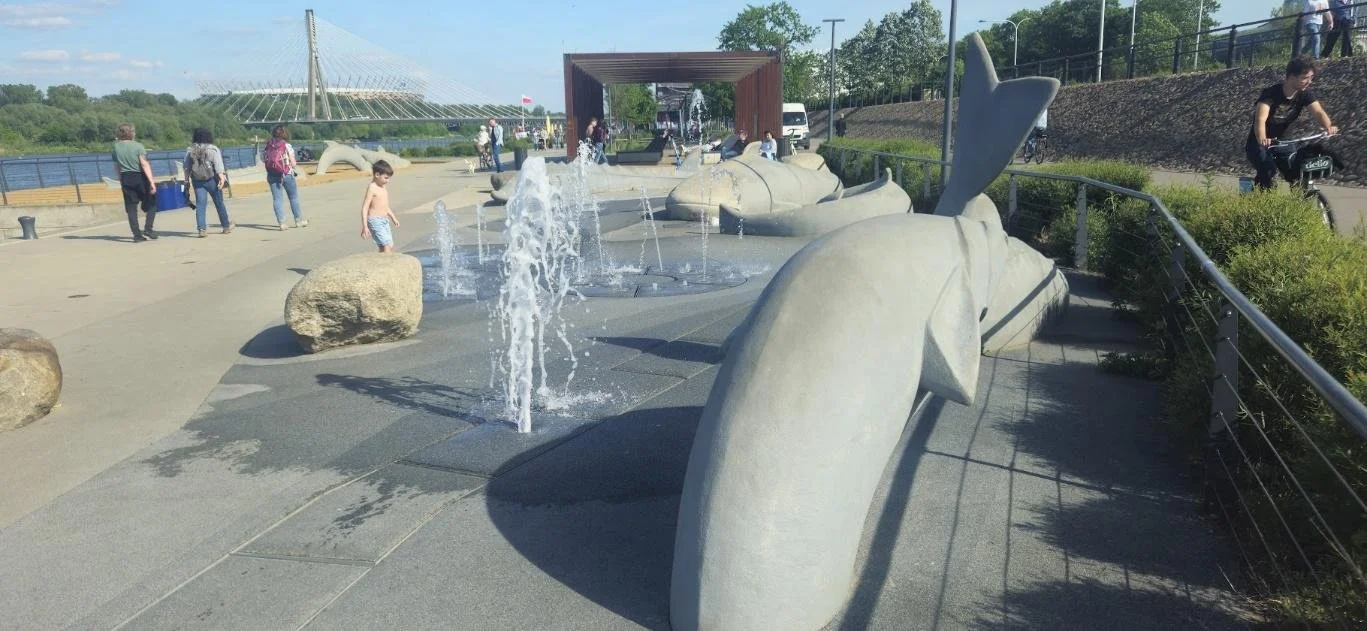
Unlike most European rivers which run through capital cities, the Vistula passes through Warsaw and the right bank features a stone retaining wall, while the left side has been left in a natural state, composed of ponds, inlets, and wetlands. It’s a dramatic study in contrasts – grey and green with a river in between. The natural left bank provides habitat for beaver, otter, terns, and black headed seagulls amongst other species. A berm, which doubles as a roadway, is set back more than 500 meters from the rivers’ edge, holding the water in place when the river inevitably rises, at times reaching four times higher than its present 180 cm depth. This band of green infrastructure provides recreational spaces for the city’s inhabitants, with picnic areas and many spots for local fishers as well as two popular beach locations. There is an occasional swimmer but not too many, since swimming is discouraged, due to high levels of mining and nutrient runoff which impact the river quality. On the grey right side, there are also beaches, on large barges moored to the rock wall. While, without access to the water, there is plenty of access to the bars at either end. People are attracted to both beaches, even when one has no access to the water. Such is the power of water over us. On the built-up right bank of the river, there is a cycling and walking path featuring small ground level fountains, accessible to children. In other places along the bank, the steep retaining walls are opened up to allow residents to take steps down to the river’s edge where hopeful fishers cast their lines.
Photo 1: Green infrastructure along the Vistula river provides flood control, habitat for birds and mammals as well as much needed recreational space for Warsaw’s human residents. Photo 2: The grey infrastructure on the right side of the river provides biking and walking and opens up to the river with steps, allowing people to reach its edge and fishers to cast their lines into the water. Photo 3: Artificial beaches, located on barges give people recreational space, with the prominent views of green infrastructure across the river. Photo 4: Water features incorporated into the grey infrastructure bank, such as these splash parks, soften the grey infrastructure and provide a direct connection to water, as well as cooling and opportunities for fun for children.
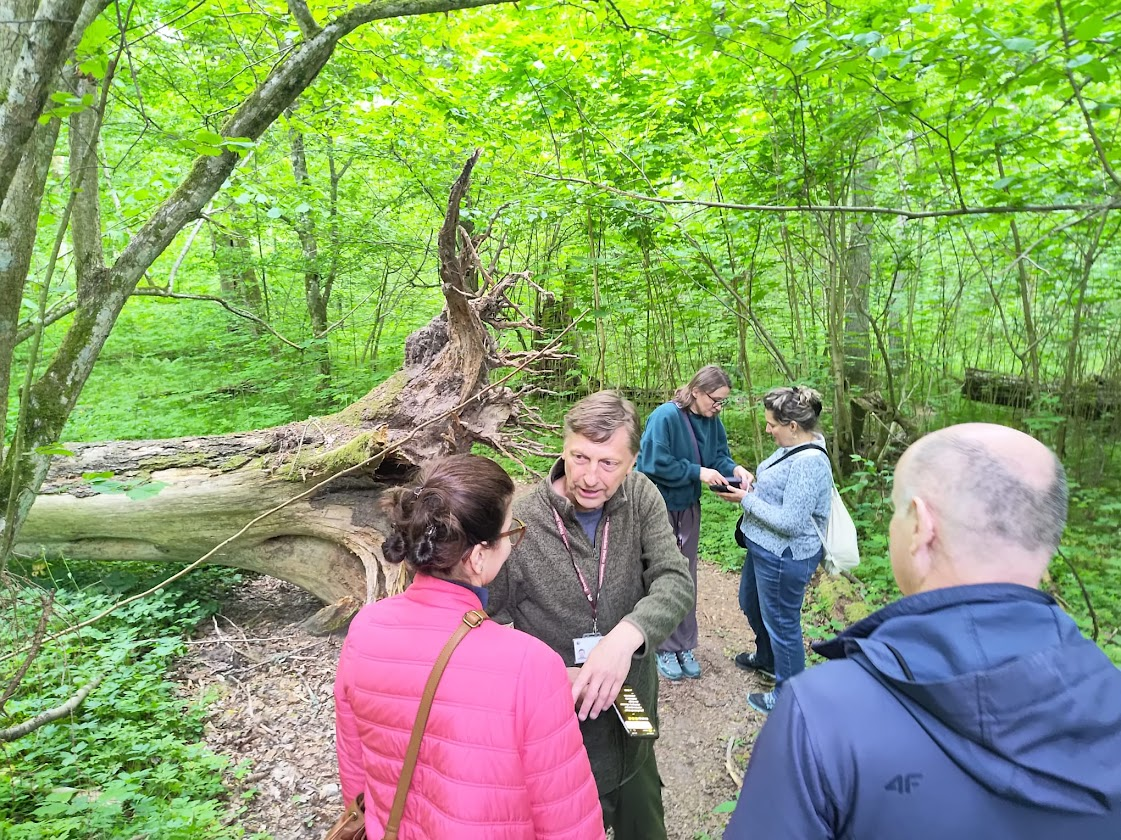
Visitors to the Białowieża Forest, the largest primeval forest in Europe, protected for centuries by a combination of wetlands and royal hunting privilege. It is home to more than 1000 European Bison, as well as wolves and moose.
Primeval Forest Preserved by Water
We were given the opportunity to visit Europe’s largest primeval natural forest. With most of Europe’s forests logged at one time or another, the 141,885 hectare Białowieża Forest, is the largest primeval forest and a UNESCO World Heritage Site. The forest is home to more than 1000 European Bison, as well as deer, wolves, lynx and even moose. This lowland forest is in a remote part of Europe and includes many wetlands and marsh areas that have helped to preserve it by making it difficult to log. The water-soaked landscape contributed to the forest’s preservation. In the 15th Century, Władysław II Jagiełło, the Grand Duke of Lithuania and later King of Poland, enjoyed hunting trips in the forest, which was then part of the Grand Duchy of Lithuania. The numerous animals and exclusive royal hunting trips further protected the forest for centuries.
Rooftop Ponds at the Opera House
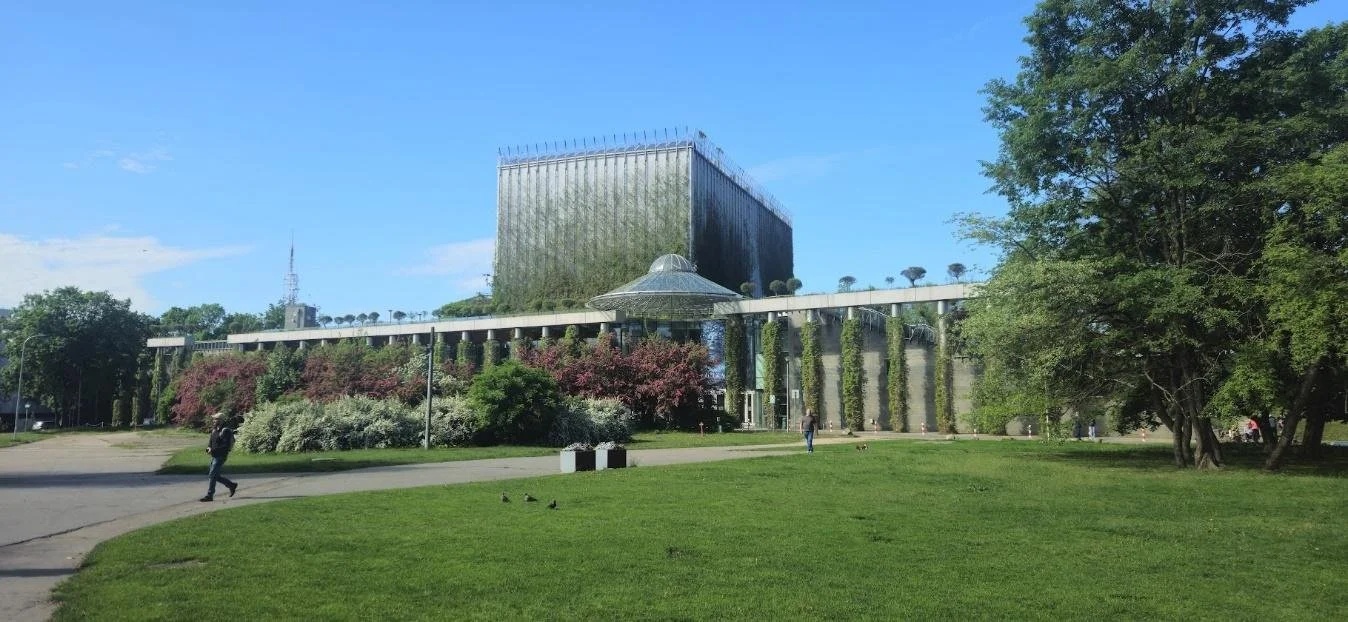
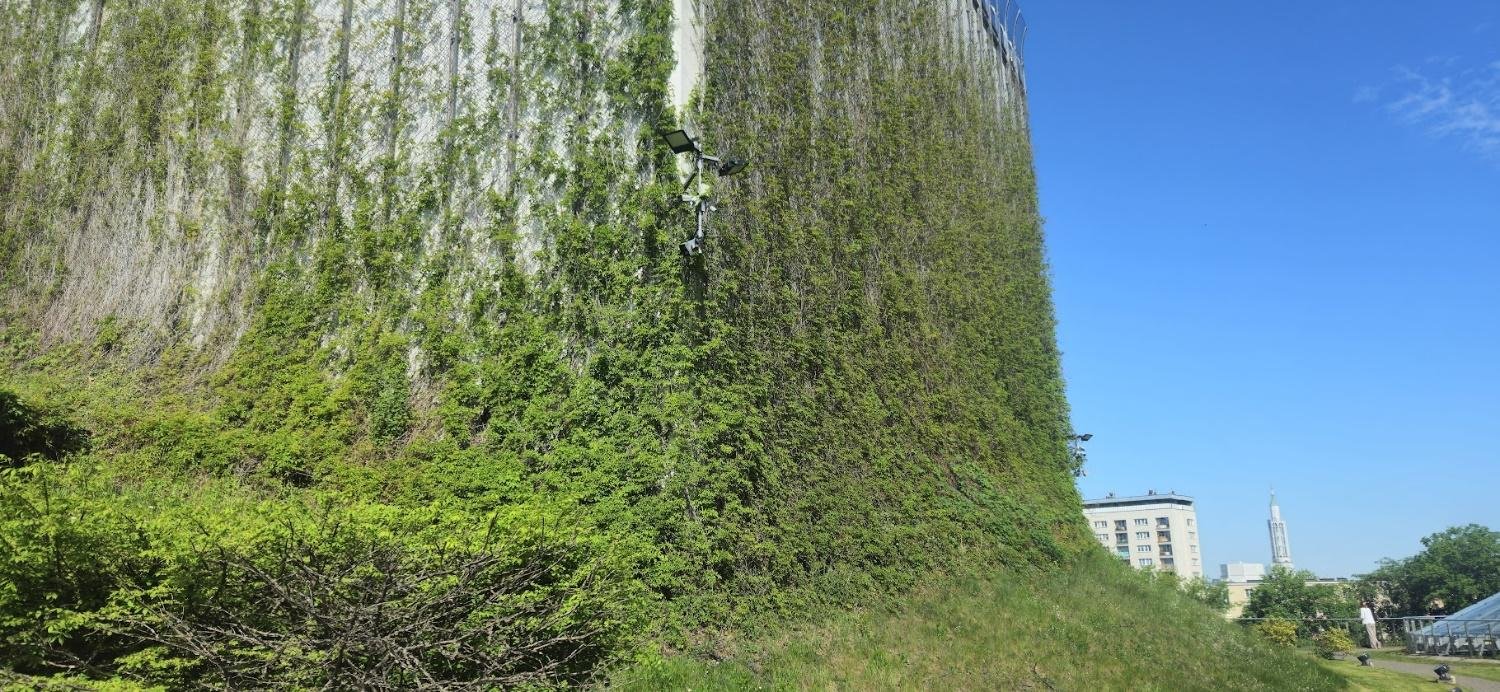
In the City of Bialystok, where the green roof conference was held, we went on a tour of the Opera House. In 2005, the Bialystok held a design competition for this new cultural center. Among 14 entries, Warsaw based architect Marek Budzynski and his team won. The building is situated in a park and multiple columns covered in green facades and multiple green roofs beautifully integrate the structure with its surroundings. The green facades feature mostly Virginia Creeper, planted in the ground where they enjoy a permanent irrigation system.
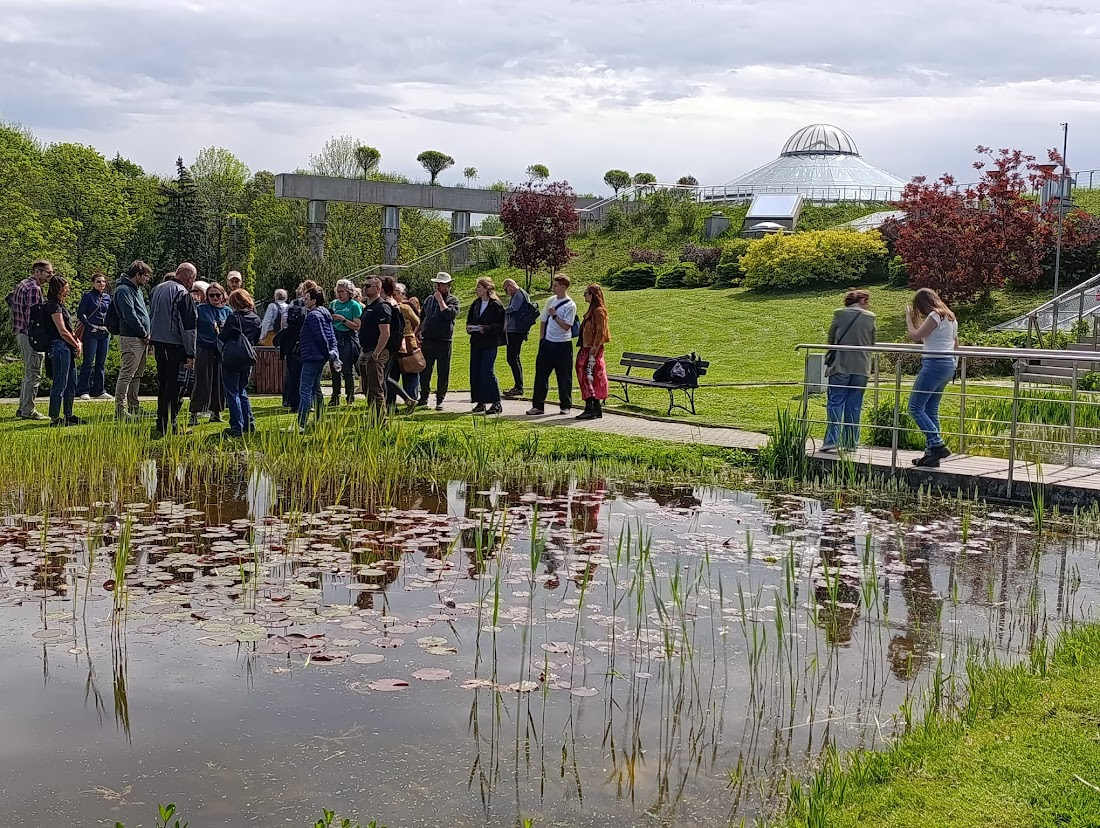
Rooftop ponds on the Opera House roof utilize stormwater and provide a relaxing amenity space for visitors.
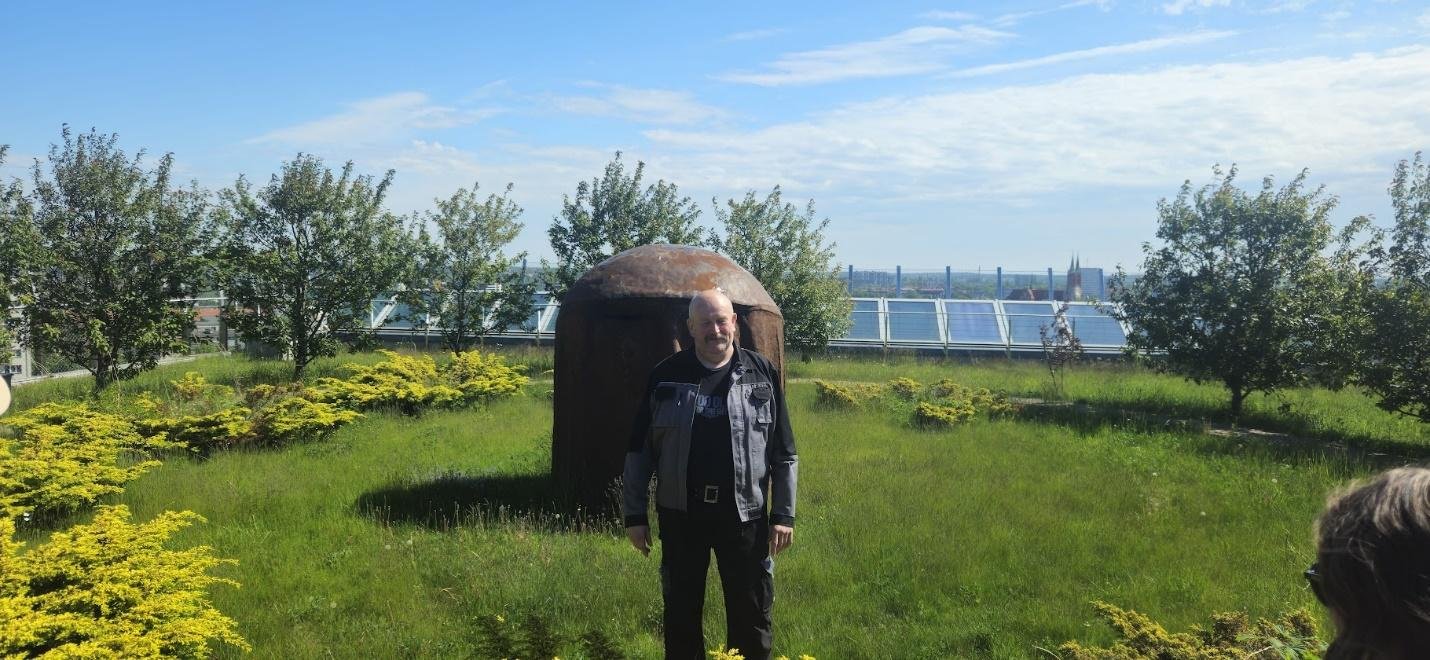
Photo 1: The intensely green Opera House in Bialystok designed by Architect Marek Budzynski welcomes visitors with its many vertical garden columns featuring Virginia Creeper. Photo 2: A green roof gives way seamlessly to one of the many green facades on the Opera House. Photo 3: Small apple trees encircle to top of the Bialystok Opera House roof, which is publicly accessible for a small fee.
Stairs take visitors up to multiple green roofs which act like gardens that wrap around the main structure. For a small fee, one can even ascend a two-storey spiral staircase to the top roof garden, and enjoy small apple trees growing in 20 cm of substrate while taking in great views of the surrounding city.
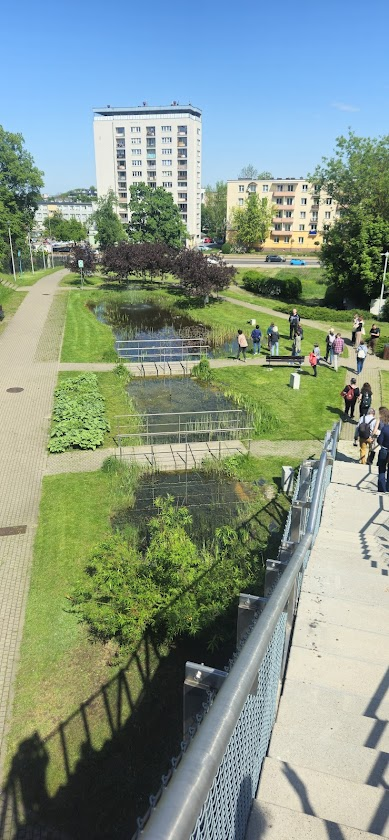
These ponds and fountains use stormwater captured from the stormwater runoff from other areas of this impressive green roof on the Opera House in Bialystok. It also provides an opportunity for visitors to enjoy the calming influence of the fountain while supporting local biodiversity.
On the roof below, a series of ponds with many wetland plants receive stormwater collected from the roofs and stored in two large cisterns under the roof. Initially, there was no vegetation in the ponds but the grounds keeper has gradually introduced reeds, lily pads and other forms of vegetation. Small fountains provide soothing sounds, helping to mask the harsher, unpredictable sounds of the city which cause stress. Research in psychoacoustics has demonstrated that water has the ability to mask harsh sounds providing a more relaxing environment in our noisy urban environments. The rhythmic sounds made by fountains, waves and streams trigger the parasympathetic nervous system, subconsciously signally safe, allowing us to relax. The fountains on this green roof also help to aerate the water to support the small fish. In addition to providing additional biodiversity, the ponds provide drinking water for the urban birds who inhabit or visit the roof, a necessity during hot summer days. The walkway runs adjacent to the ponds allowing visitors to enjoy the fountain and the pond.
Conclusion
Poland is a beautiful country which has historically been shaped by water. Water transport has given rise to its cities fueling prosperity. Water has helped to preserve a primeval forest, and wise water management through green infrastructure supports much needed green space in Bialystok and Warsaw. Polish cities, like many others, are struggling with the twin challenges of increasingly frequent heat and flooding. They continue to develop and refine policies and programs to support the implementation of green infrastructure, encouraged by researchers and the green roof and wall industry. Blue and green infrastructure will help them secure a better quality of life for their citizens. In the future, the wise use of rain water, through its capture, storage and use to support plants, will contribute to a more resilient, healthier and prosperous future.
Advertisement
Steven W. Peck, is the founder and president of Green Roofs for Healthy Cities North America and the editor of the Living Architecture Monitor magazine.
Special thanks to Professor Marta Weber-Siwirska, and her team at the Polish Green Roof Association for organizing this wonderful conference.
References
“Blue Mind: The Surprising Science That Shows How Being Near, In, On, or Under Water Can Make You Happier, Healthier, More Connected, and Better at What You Do”, by Wallace J. Nichols (2014)
“Time is money: Water quality's impact on home liquidity and property values”, Nicholas Irwin, David Wolf. Ecological Economics. May 2022.
“Water Quality and Property Value”, Evan Harris. https://www.pme.com/uncategorized/water-quality-property-value
“Measurement and Subjective Assessment of Water Generated Sounds” G.R. Watt et al. Researchgate.net, November 2009 Acta Acustica united with Acustica 95(6):1032-1039, DOI:10.3813/AAA.918235