Advertisement
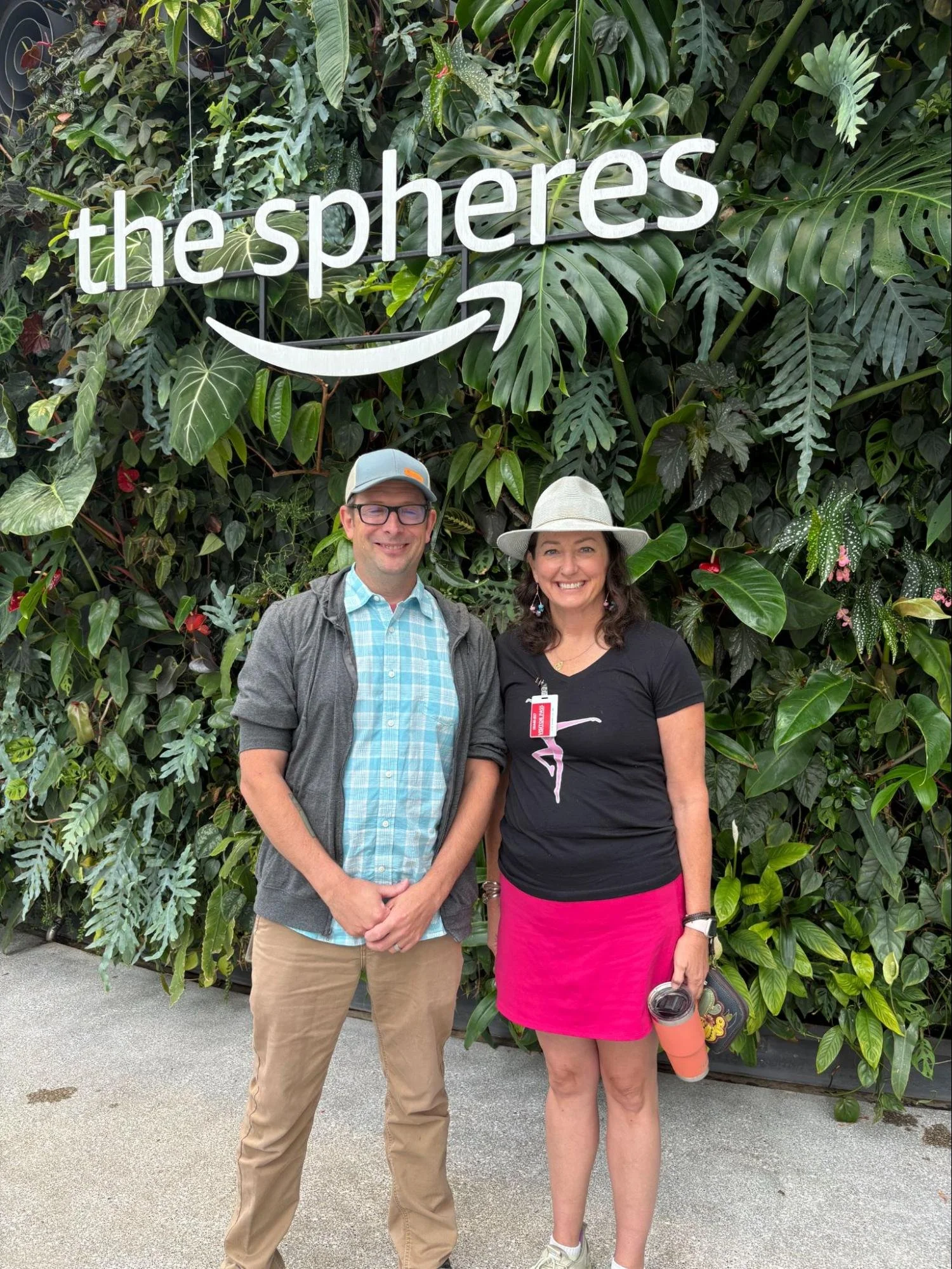
Ben Eiben and Jennifer Bousselot under the iconic logo for The Spheres. Photo: Lois Kaye
Introduction
Imagine a space filled with tropical plants and coffee bars to grab a cuppa while you set up your laptop. Imagine that space to be humming quietly with activity and unique architectural features that no doubt spur creative thinking and problem solving. Imagine that you work in that space or at least get a chance to visit it when your schedule allows. Amazon has brought that utopian working scenario to life with The Amazon Spheres project in downtown Seattle, Washington.
I have spent most of my career trying to make space for plants in the built environment. As a Midwest farm kid surrounded by plants as far as the eye could see, I was captivated by the idea of trying to emulate the verdant environment that I left when I arrived in Denver, Colorado, to follow my partner’s career out west. Through the years as an extension professional, graduate student, nonprofit staffer, and eventually a full time academic, I have had ample time to imagine the ultimate utopia of integrating plants into the built environment. In my opinion, The Spheres project is as close as it comes to those dreams being turned into reality.
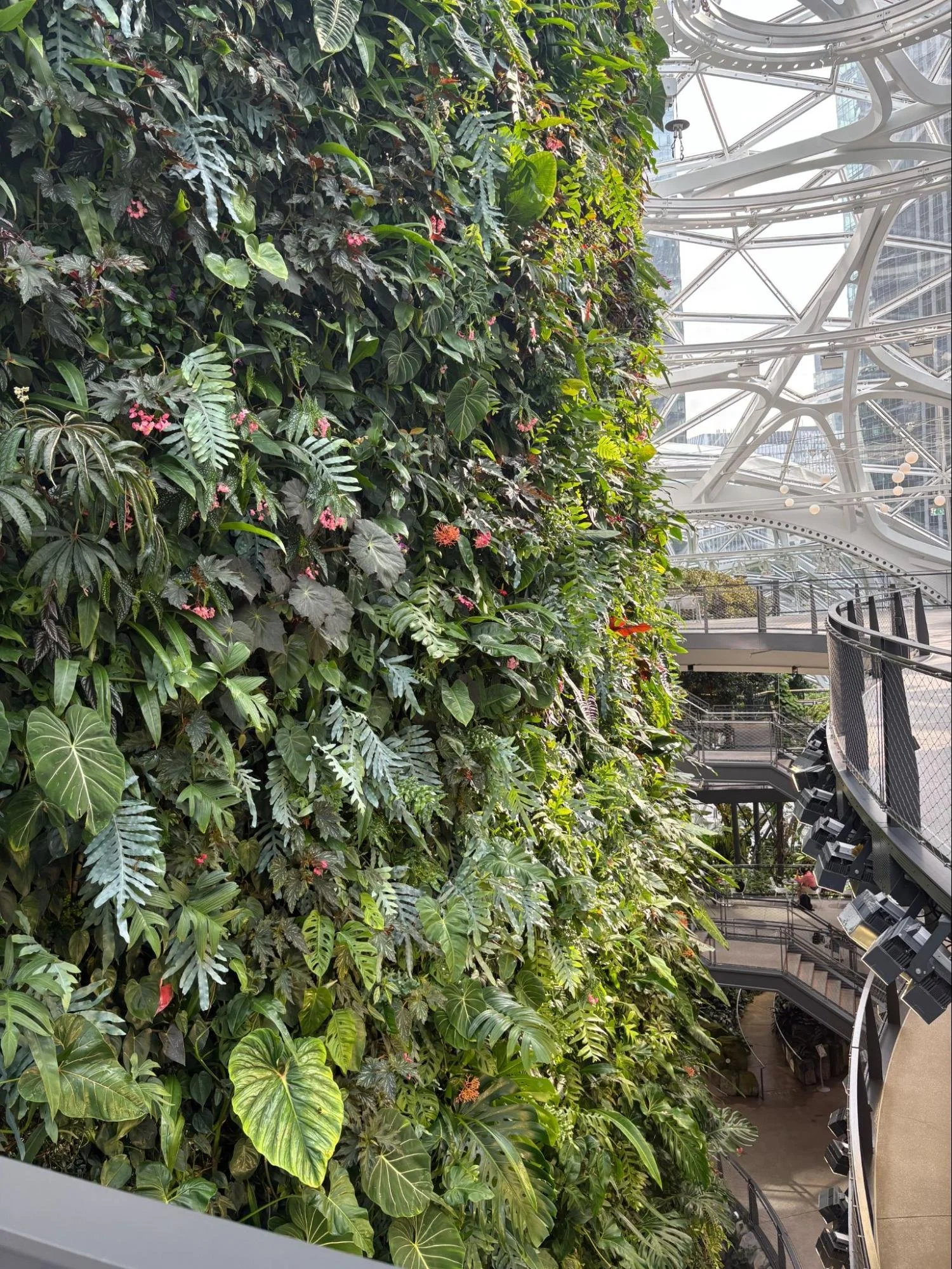
The >3,000 square foot green wall that dominates the interior of The Spheres. Photo: Jennifer Bousselot
This past summer I was scheduled to visit my sister and her family near Seattle. She suggested that we try to get a tour of The Amazon Spheres facility. After a quick online search, I found out that I was fortunately already LinkedIn-connected to the horticulturist on staff, Ben Eiben. Ben was kind enough to agree to give us a personal tour.
Interior Innovations
The first sign of foliage as we entered the primary globe of The Spheres was on the top floor. We came around the corner from the elevator and were met with a wall of green mixed with red, blue, and gold. Words cannot do justice to the awe and delight of that first glimpse. With over 200 epiphytic species (plants that grow natively on surfaces that do not have soil) in an area of more than 3,000 square feet, it dramatically dominates the interior space of The Spheres facility. Ben told the story of how he tested many materials to find the right combination to support the water needs, durability, and the weight loading requirements of the green wall system.
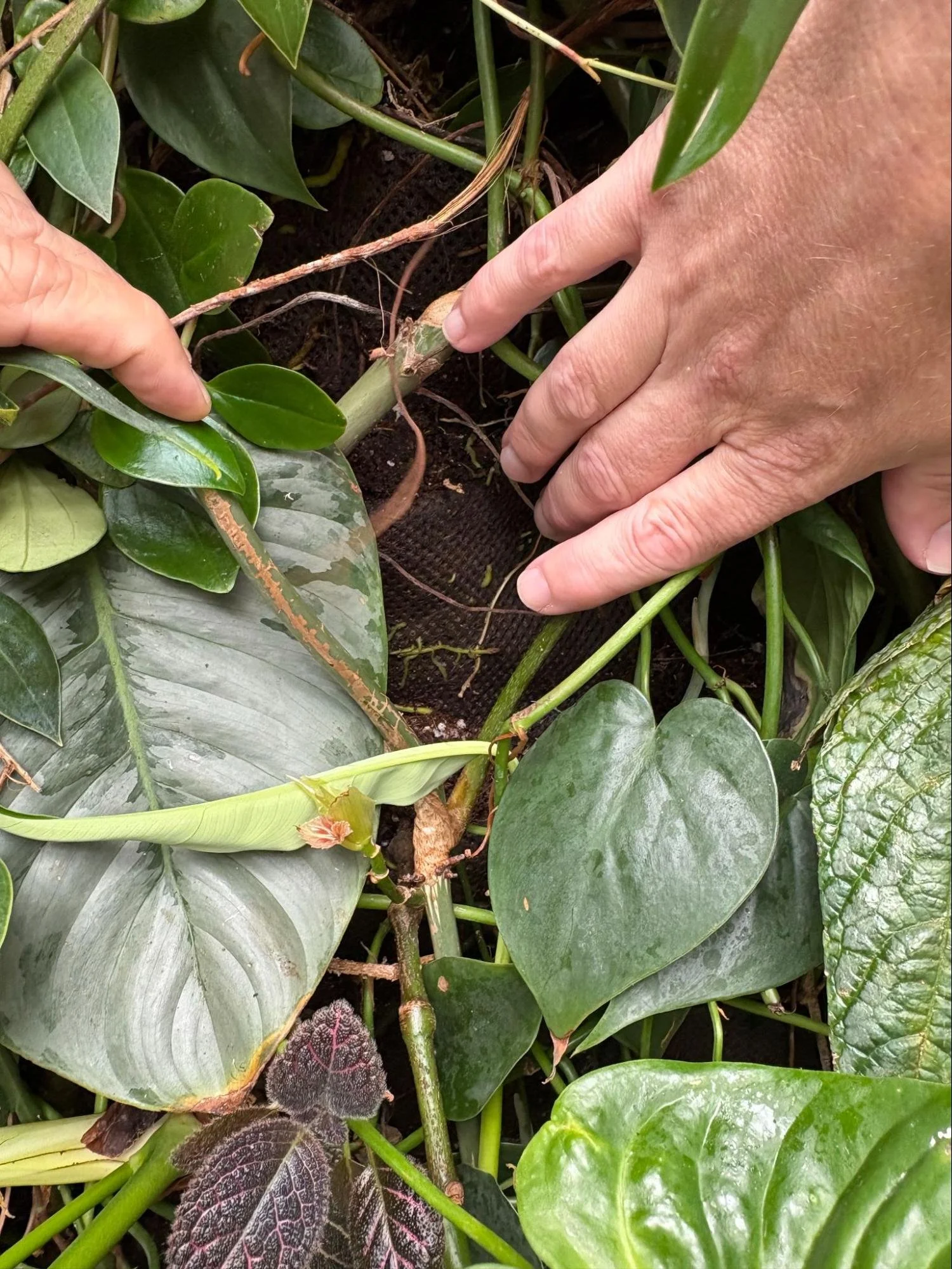
A close up of the wicking material that provides anchorage for the epiphytic plants and an avenue for irrigation distribution. Photo: Jennifer Bousselot.
Several green wall systems and components were tested in preparation for a project of this scale and public visibility. This particular system created optimal conditions and is novel in the material choice and the way water is distributed. This system is made of a woven fabric similar to the wicking material in hiking backpacks. And Netafim drip irrigation is provided at the top of the wall at low volume but frequent irrigation intervals. Very little irrigation effluent runs out of the system now that they have fine-tuned the irrigation timing. The effluent that does drain out is captured and returned to the recirculation reservoir below The Spheres building.
Remarkably, I assumed that the wall was the most spectacular feature of The Spheres. Little did I know that the rest of the interiorscape is a state of the art plant conservatory. The carefully curated plant species richness in the relatively small space at The Spheres rivals most public garden conservatories. The massive Ficus trees and tree fern are the most instantly distinguishable. Ben is a blueberry species expert and has collected many specimens across three plant genera for display in The Spheres. But you don’t have to be a botanical expert to enjoy the space, the moss rocks and babbling water features provide an ambiance that draws in the most eager biophilia enthusiast – can we say a “biophiliac”?
Advertisement
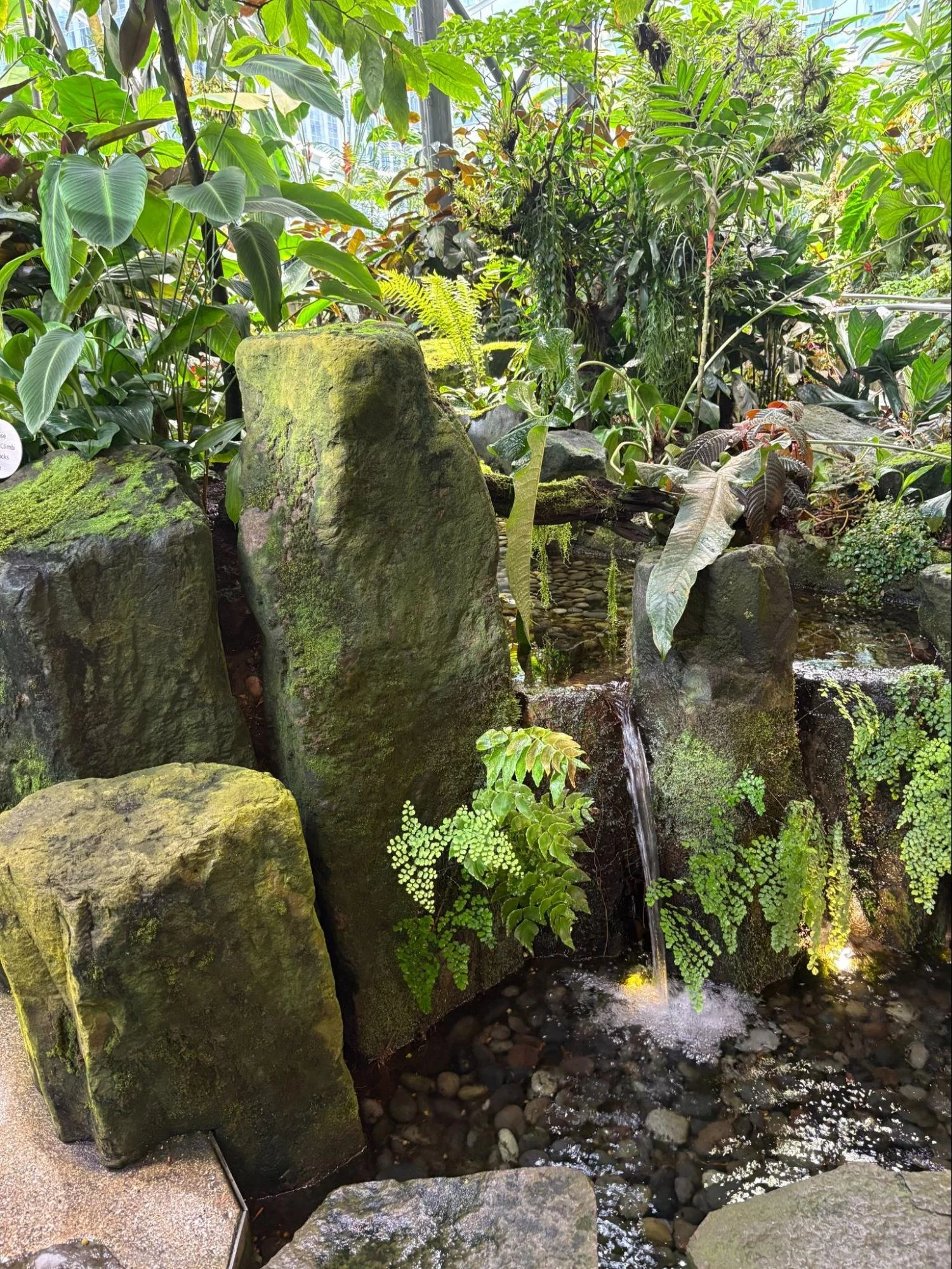
A babbling water feature surrounded by moss rocks at The Spheres. Photo: Jennifer Bousselot
As a horticulturist, I was curious about the maintenance challenges. The staff keeps busy with daily maintenance, but pest control was less intensive than I imagined. The primary line of defense is using biocontrols, naturally occurring insect predators, which is the safest form of pest control to date. Strong jets of water, manual labor, and scouting are major tools in their maintenance toolbox. Many controlled environment agriculture managers strive to provide the right conditions for supporting biocontrol systems and yet most beneficial insects struggle to maintain their populations in controlled environments. At a glance, there is no visual evidence of major pest problems inside of The Spheres. I have intense respect for a team that can accomplish that level of pest control with so few forms of intervention.
Innovation abounds in the interior space. I could not keep track of the number of projects and prototypes that Ben mentioned that were in various testing phases at The Spheres. The project that I was the most interested in was the LED lighting product development that supplies full spectrum yet low level lighting that suits both the plants and the people in the space.
Interior greenery is not the only living architecture on site. We did not have time to explore the green roofs that have pollinator provisioning onsite. The green roofs are installed with an emphasis on local ecotypic native plants to ensure that local biodiversity is maintained. Several collaborations with local experts and academics from botany to biophilia are in progress at The Spheres.
The architectural aspects of The Spheres are astounding to me as a novice in that subject area. The glass and metal patterns of the structure of the Sphere were endlessly fascinating. The elevated walkways and clever use of stone and wood made the interior spaces not covered in greenery feel more biotic and living.
Conclusion
As a fellow green infrastructure enthusiast, I was delighted to tour a public facing facility that has the audacity to go beyond the norm – beyond the expected shapes and forms of interior spaces – and push the boundaries of what we should expect for spaces to work and live in. It is up to our industry to continue that journey and encourage the shift to a more chlorophyll-filled built environment.
Advertisement
Jennifer Bousselot, Ph.D. is an Associate Professor of Horticulture at Colorado State University. Her decades-long research interests span from rooftop agrivoltaics to green roof pollinator provisioning. She is the editor of the GRHC-hosted Journal of Living Architecture and former research chair for the GRHC board of directors.