Advertisement
Introduction
The UNIQA Landesdirektion in Graz, Austria received a green façade that weaves vegetation into an existing back ventilated marble stone cladding, creating a continuous visual “nature-stone” surface along a 40-metre street frontage. The World Green Infrastructure Network Award winning project was recently recognized for the many innovations implemented in this project. The green façade was completed in 2019 and involves the use of a five-storey grid mesh mounted on a tubular steel frame; window openings are preserved by integrating frames into the mesh so the greenery appears as a temporary shadowing layer rather than a full skin. Approximately 800 square metres of façade were vegetated, making the installation a substantial urban greening gesture in the greenery challenged city centre.
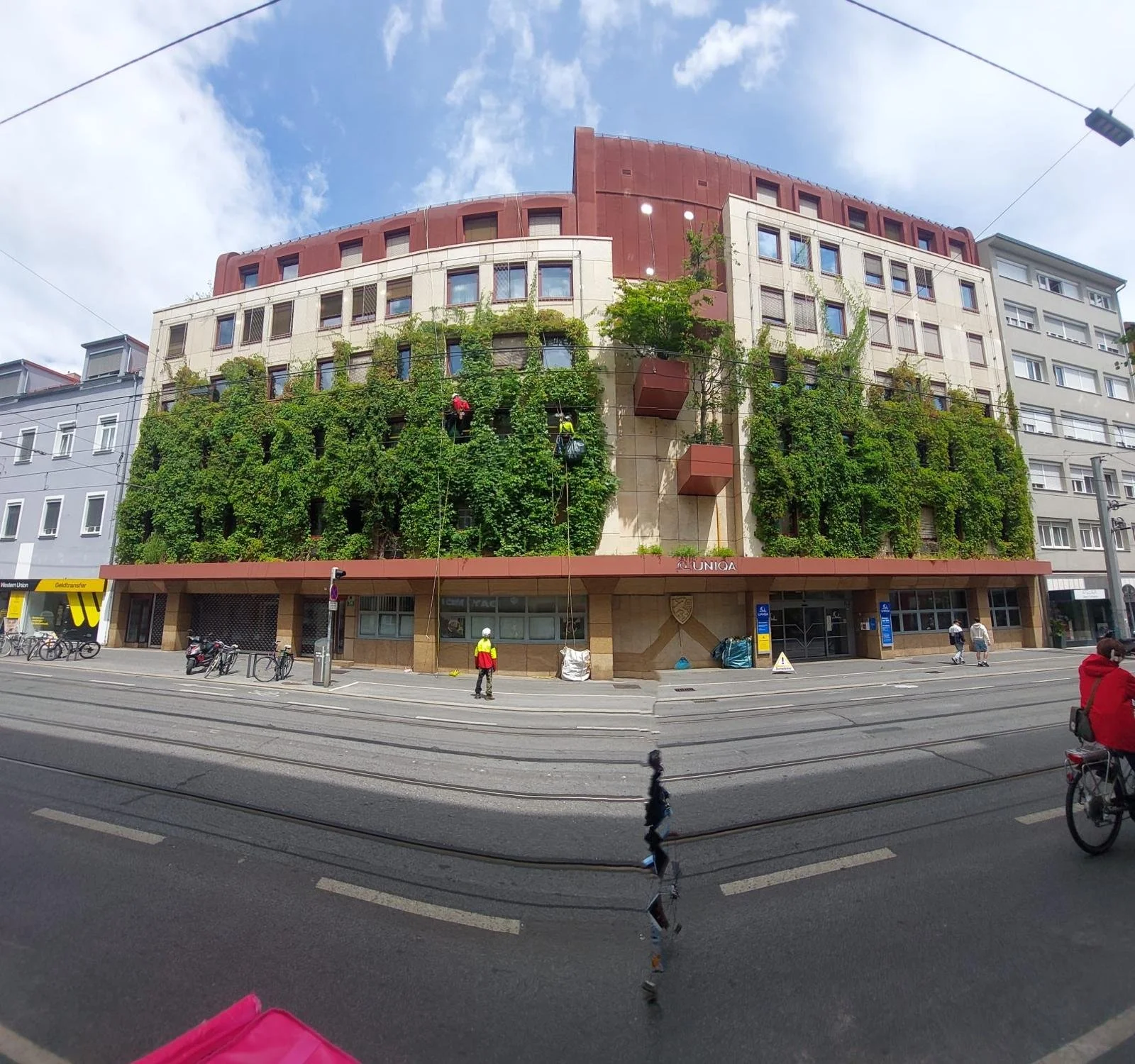
Workers maintaining the 6 year old award winning green facade in Austria in 2025. Photo: Vera Enzi
Design and Planting Strategy
The project uses a mix of native to climate adapted trees and climbers selected for urban tolerance and seasonal variation in shading to avoid negative effects in winter. Early plantings included species such as field maple and flowering ash, each installed in troughs to allow substantial root volume and long-term growth. The troughs hold around 2.3 cubic metres of substrate each, giving trees and larger shrubs the soil depth they need to thrive on a vertical plane. This design approach prioritises biodiversity, year-round visual interest and structural stability.
Advertisement
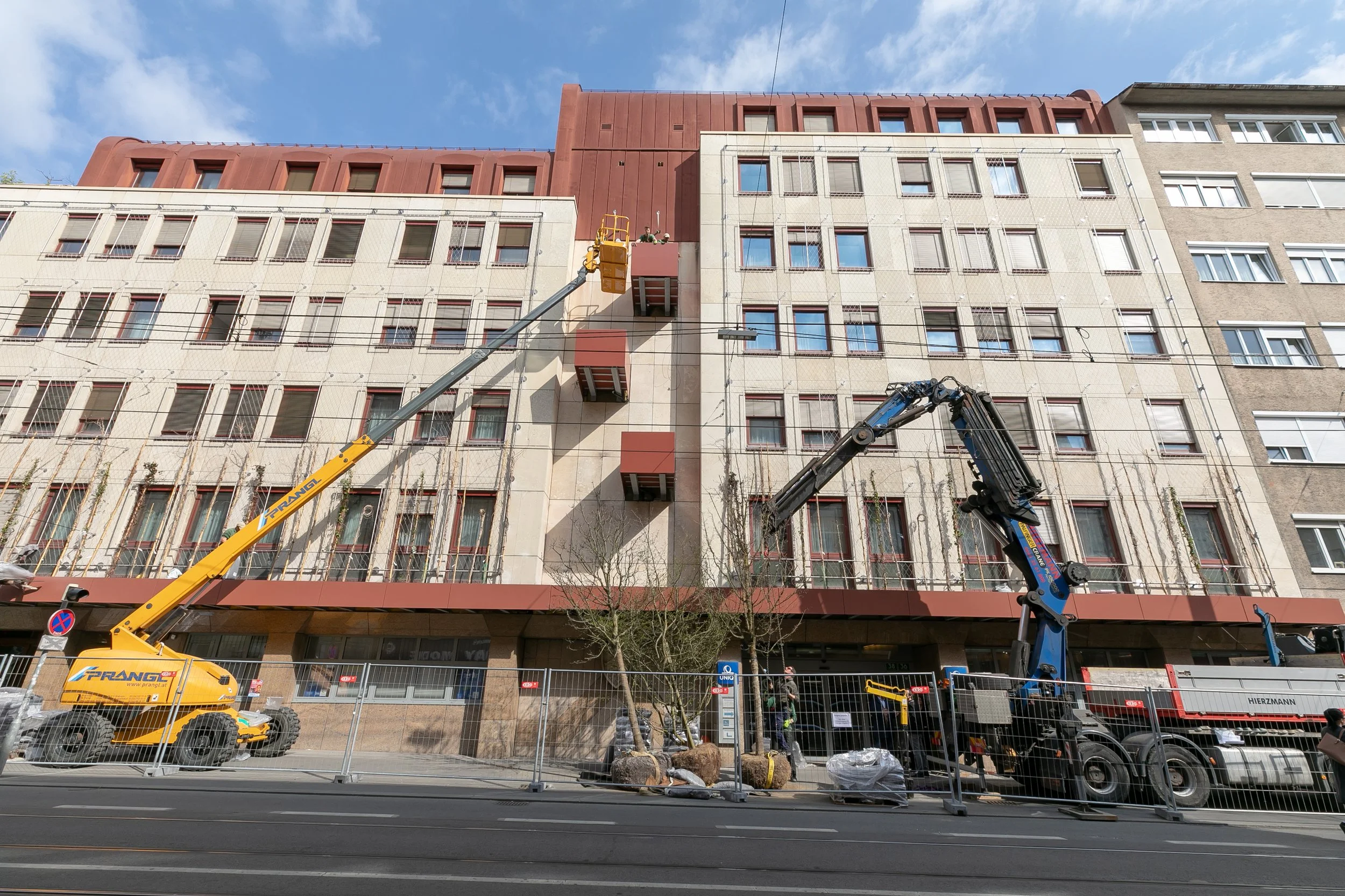
Hosting mature trees onto specially designed containers in the middle of the green facade. Photo: UNIQA
Technical Systems and Maintenance
The system combines lightweight green roof substrates and a needs- and sensor-based irrigation system to keep loads manageable while supporting healthy plant growth. The modular approach allows for staged installation and straightforward replacement or maintenance of individual units, reducing broad based vegetation disruption and lifecycle costs. Built-in irrigation and interconnected planters management support plant health while minimising water waste. The design intent is to balance performance with low operational complexity so the façade can be stewarded by building operators and local contractors. The maintenance is operated via an integrated safety system that allows for climbing activities and safe access through the windows. A tree expert works closely together with a local social entrepreneurship for maintenance and care. The irrigation system can be remotely controlled.
Environmental and Social Benefits
By introducing large-scale vegetation onto urban façade in a dense area, the project targets multiple performance benefits: reduced summer overheating through shading and evapotranspiration; improved air quality; and new urban habitats. The living façade also reframes the building’s public face, offering tactile, seasonal encounters with nature that strengthen occupant and passerby well-being. The intervention demonstrates how green wall retrofit strategies can deliver measurable ecological services while respecting existing urban fabric. It also shows that the combination of different measures, like groundwater ceiling cooling, green façades and photovoltaic systems can help to adapt and upgrade older building stock.
“As UNIQA Landesdirektion Styria, we did not want to merely talk about sustainability but to make it visible directly at our Graz location. The award confirms that investments in living façades deliver measurable benefits for the climate, the urban environment and quality of life, and will hopefully encourage many others to follow suit.”
Advertisement
Urban Context and Legacy
“Green infrastructure is a central pillar of our sustainability strategy. As an insurance company we are well aware of the consequences of climate change and we also have decisive levers to tackle it. With projects like the façade on Annenstraße we demonstrate that our business model goes far beyond the traditional risk protection offered by an insurer. In line with our corporate strategy, we actively invest in healthier, climate-resilient living environments in our core markets. Styria is, in any case, an important part of that.”
UNIQA’s project draws inspiration from high-profile precedents but adapts them to Graz’s scale and climate, emphasising local and pragmatic construction methods and maintenance provided by local businesses. The project has become a visible example of how corporate buildings can contribute to city greening and has been referenced in broader conversations about façade greening in Austria and worldwide now that it has won an award. The collaboration between designers, specialist suppliers and the client highlights the role of modular, research-informed solutions in scaling living architecture across older building stocks.
Conclusion
The Vertical Greenery at UNIQA Graz is a pragmatic, well-resolved example of retrofit living architecture: a modular, maintainable green façade that delivers ecological services, urban amenity and a clear visual identity while working with — not against — the existing building. It stands as a replicable model for cities seeking to densify green infrastructure without wholesale redevelopment.
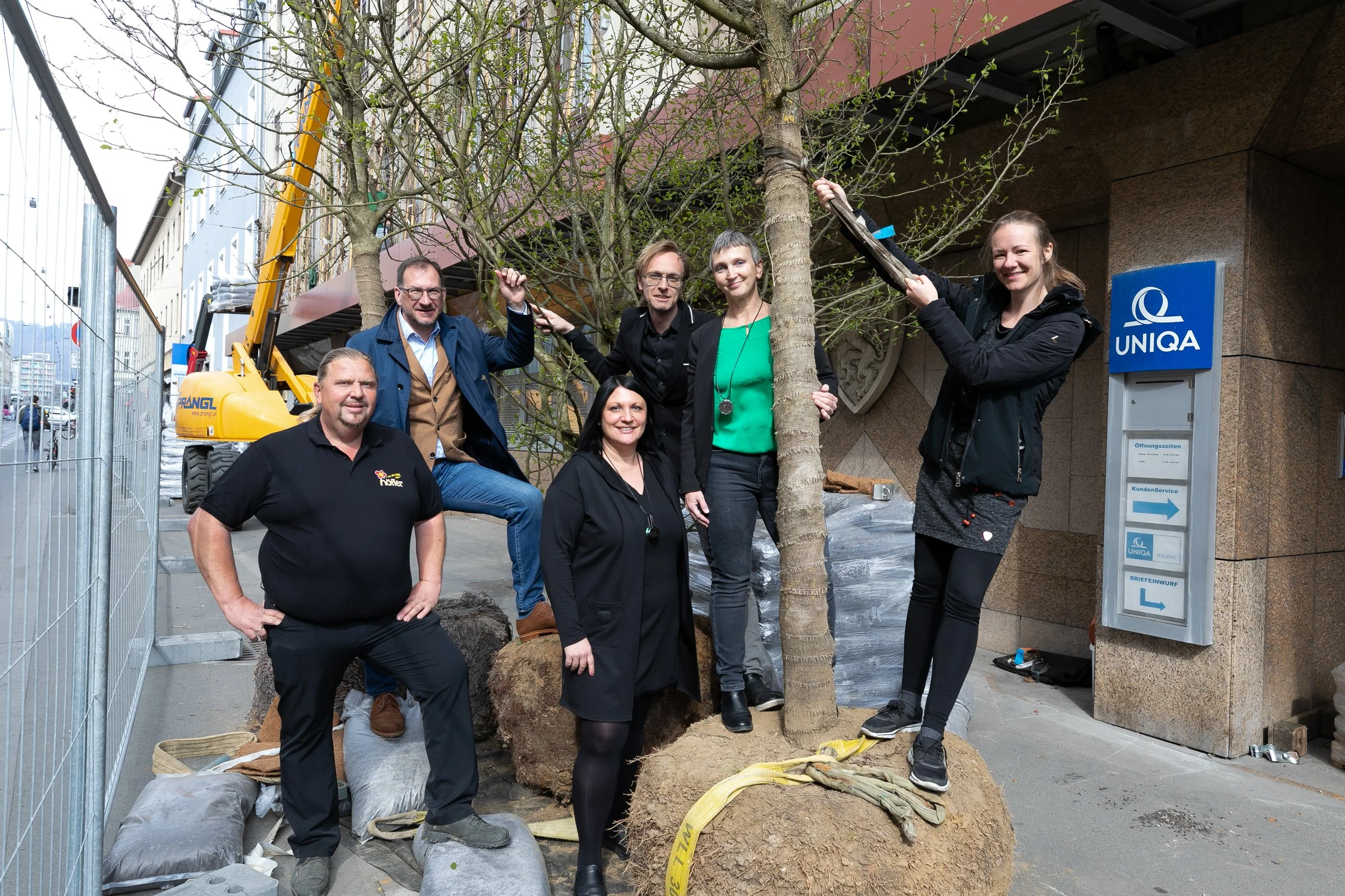
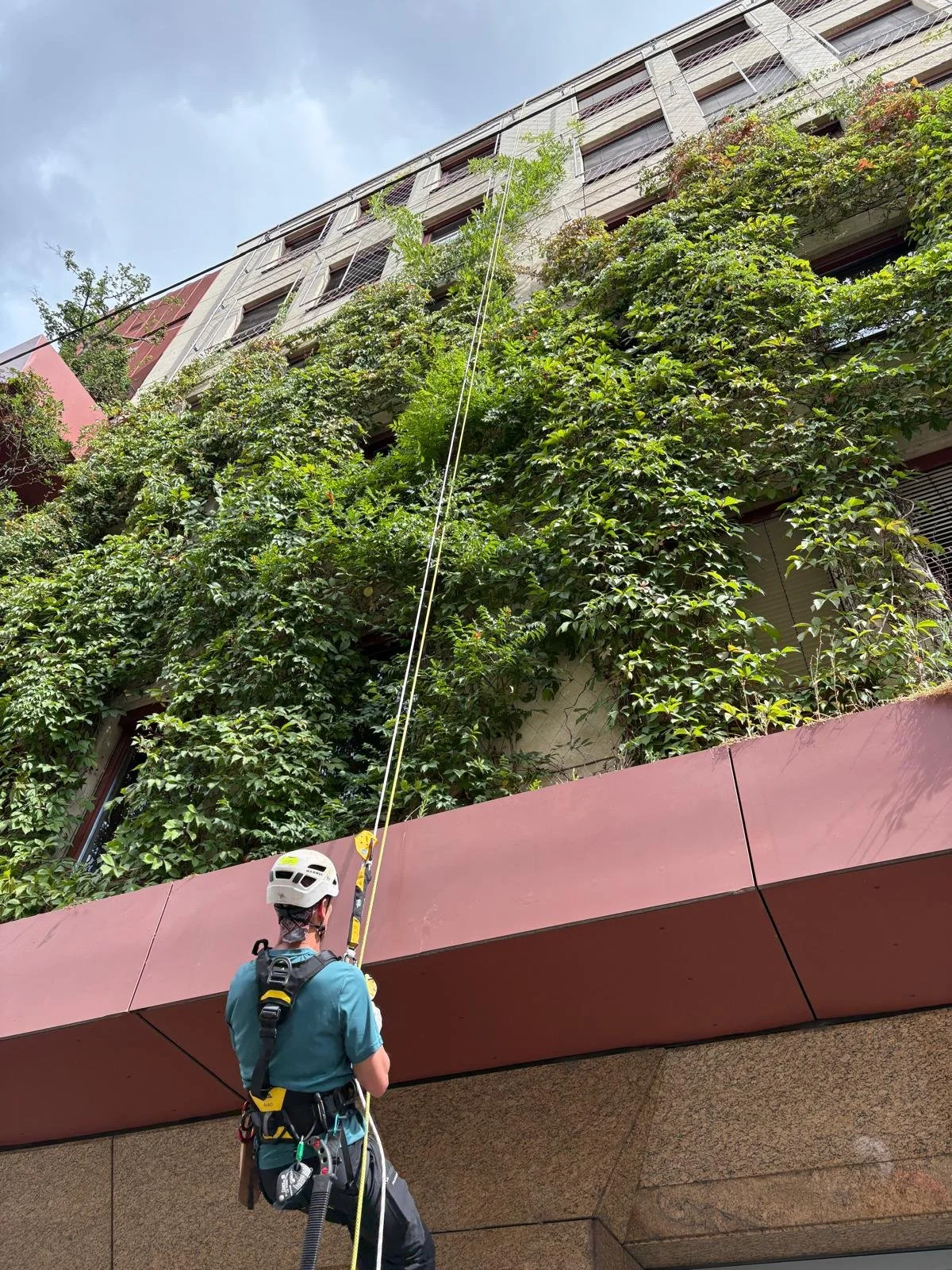
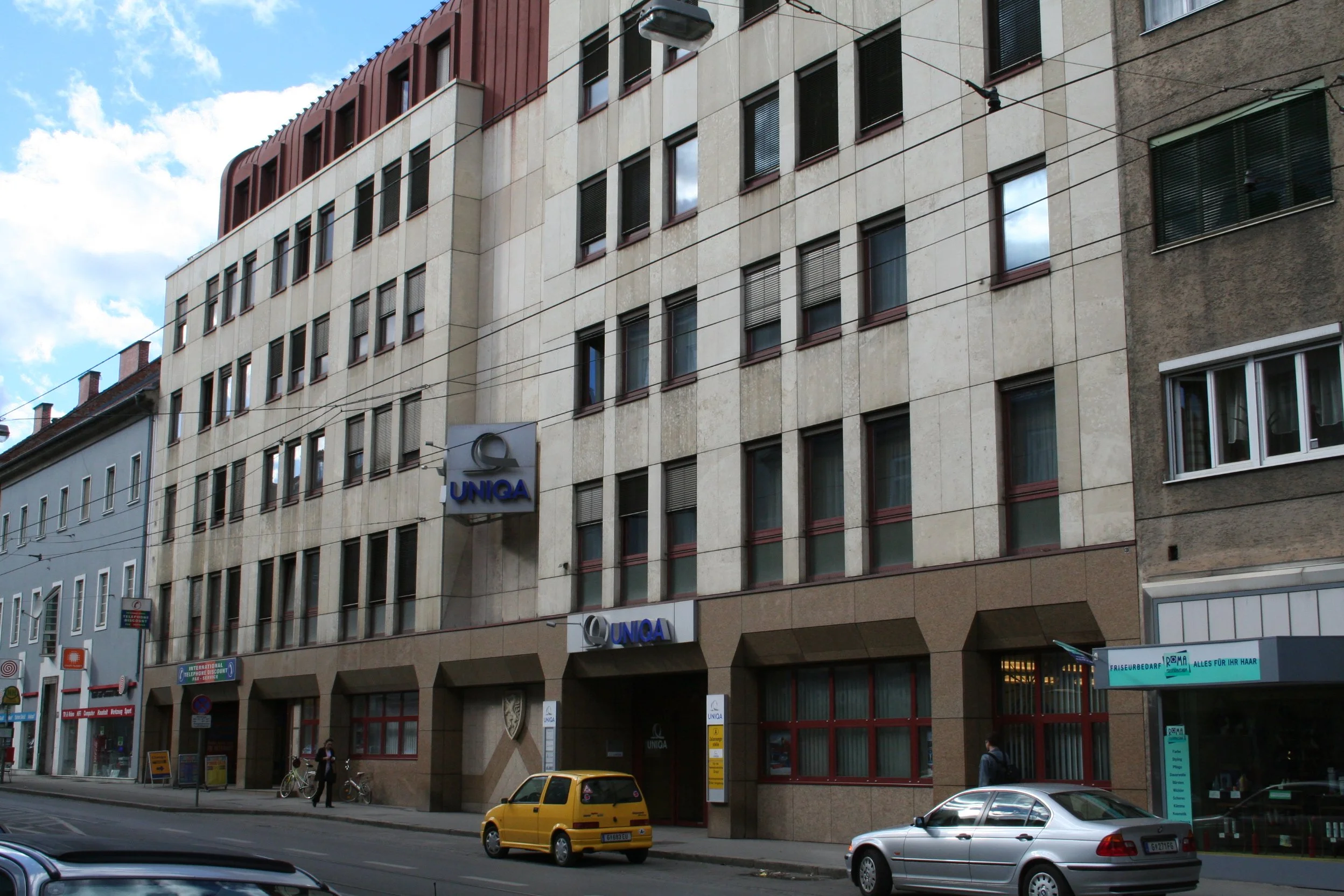
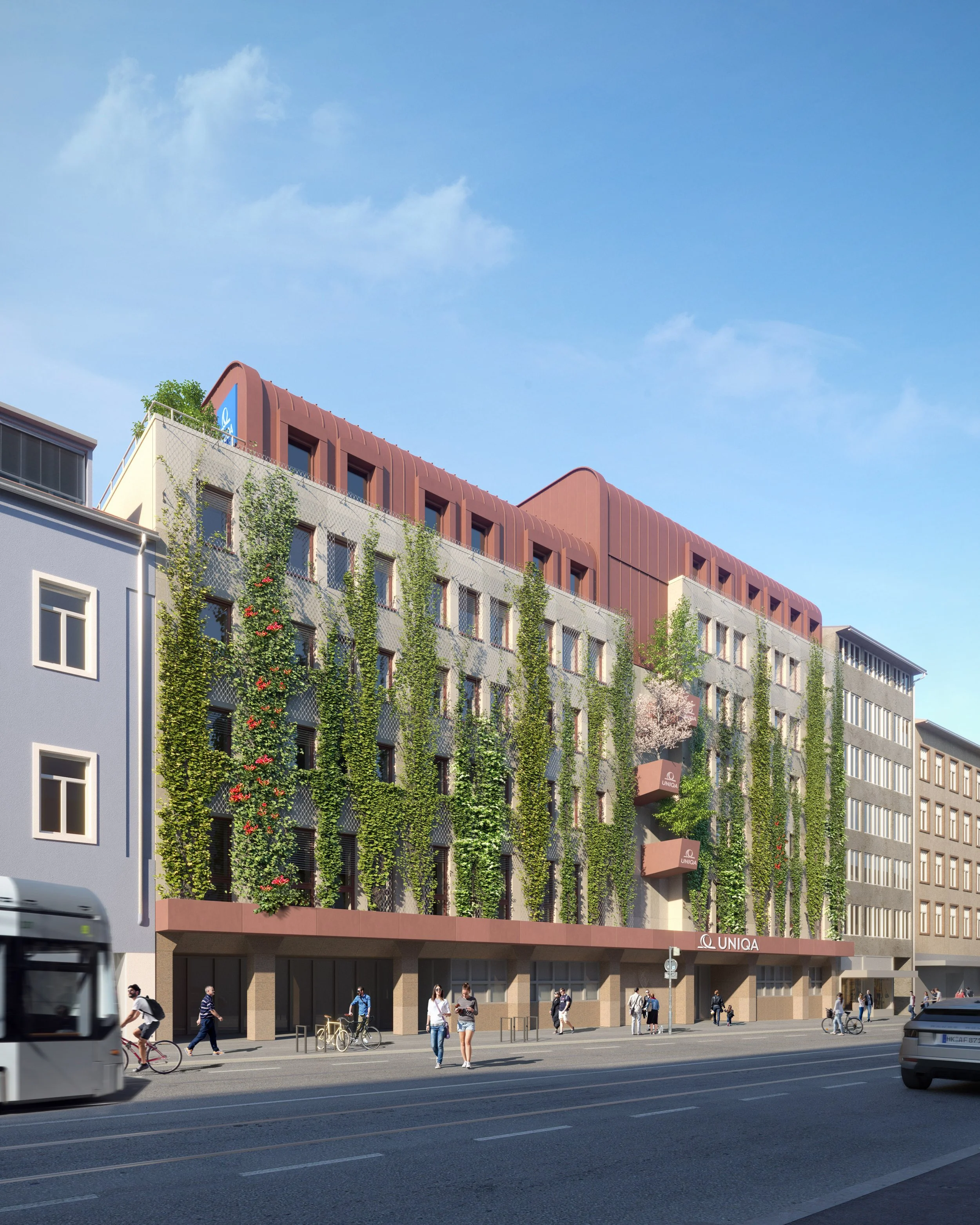
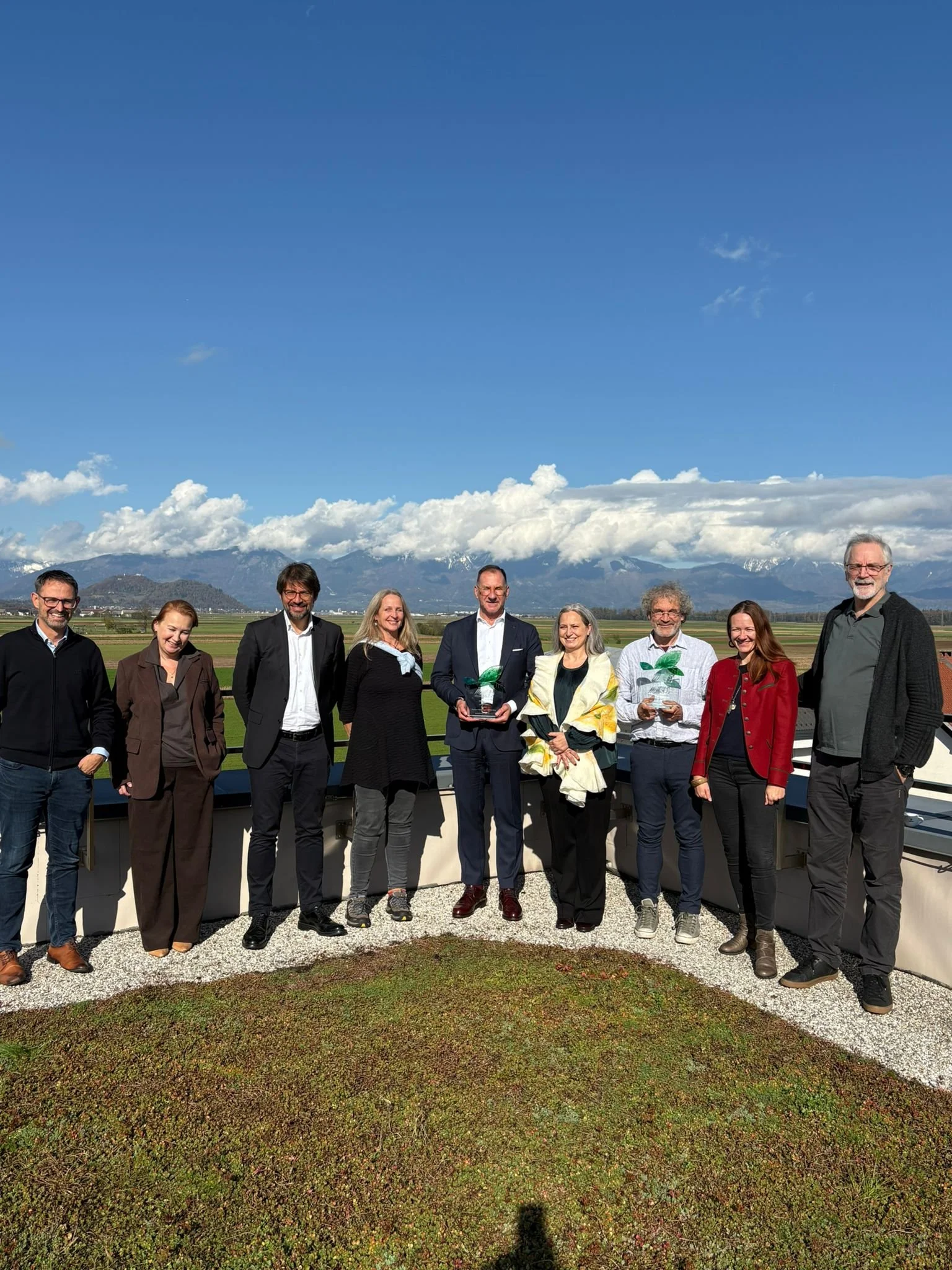
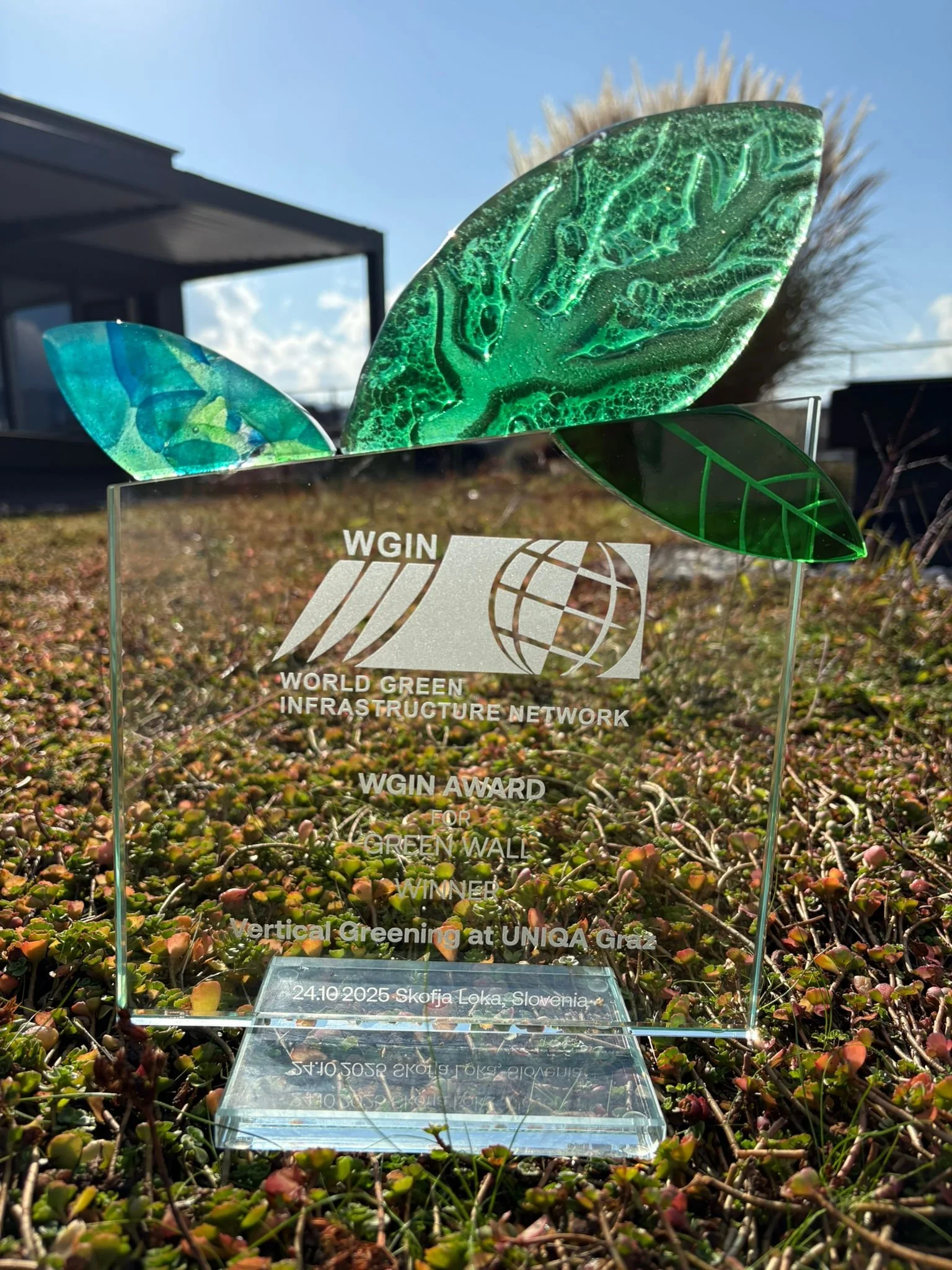
Picture 1: Building Phase First tree Photo: UNIQA. Picture 2: Arborist Pruning 2025 Photo:Vera Enzi . Picture 3: Before/Old Photo:UNIQA. Picture 4: Rendering Photo: Andreas Salfellner. Picture 6: Prize winner Photo: WGIN
Advertisement
Vera Enzi holds a degree for Landscape Planning, has a scientific background and is a consultant for Nature based Solutions on buildings. She is executive board member of the European Federation of Green Roof and Wall Associations EFB, representing Austria and a Business Board member of the Austrian Innovation Laboratory GRÜNSTATTGRAU. Email her here.
Companies Involved in the project include:
Companies: GRANIT (Statics, Metalworks, Tree Plantainers); Jakob Rope Systems/Seilerei Wüstner (grid mesh); Dachgrün (Greenroofing Materials: Substrates, Vlies, Drainage/Storage); Raintime (Irrigation, Sensors, Control System); Baumschule Höfler (Trees, Climbing plants, Landscaping works); Swisspearl, formerly Eternit Climbers Plantainers
UNIQA Austria Insurance AG & Regional Directorate Styria (Building Owner, Operator and Investor)
Architect: Architektursalon Andreas Salfellner
Civil Engineering, Statics, Planning Lead: ZT Eisner
Irrigation Planning: Jürgen Amplatz
Energy Planning, PV: Billy Rieger
Innovation in Landscape Engineering: GRÜNSTATTGRAU
Maintenance:
Naturwerkstadt (Social Entreprenneurship)
Certified Treeworker, Arborist, Biologist, Alpinist Michael Schöller
More project information:
https://gruenstattgrau.at/wp-content/uploads/2019/11/uniqa_fassadenbegruenung.pdf
Please watch the opening Video 2019 here: https://www.youtube.com/watch?v=qPk9xLO7uFw