Advertisement
Introduction: Long-Term Success with Engineered Green Roof Soil
As a green roof soil provider, innovation came right from the beginning with the creation of our rooflite soil products. We all know you need good soil for plants to grow, but the equation changes quite a lot when you move soil to a roof. Green roof soil (also referred to as growing media) needs to withstand the unique environment on a roof. Our rooflite green roof soil products have a finely tuned set of properties that allow them to thrive on top of a roof. They are:
Lightweight
Retain and drain water
Have a precise mix of organic materials and lightweight aggregates
Are long-lasting for the long-term success of the green roof
Normal soils, like topsoil or highly organic soils, just don’t work on a green roof over time. The organic materials will break down on a rooftop because of environmental stress, compaction, irrigation, and exposure to the elements. That’s why engineered green roof soil is key for rooftop projects, but it’s also important to use engineered soil with the right set of properties. Too much organic material, for example, will cause the soil to break down more quickly. Too little aggregates create an environment without enough support for the plants because it affects air and water exchange.
Supporting New Types of Green Roof Design with Flexible Product Options
It’s an exciting time in the green roof industry as we start to see designers push the limits in impressive ways with dynamic and bold green roof designs that would have been unthinkable only ten years ago.
One of the ways we’ve adjusted to these new types of designs is the creation of ten green roof soil systems. Our engineered green roof soil systems take the guesswork out of the soil build-up you need for your green roof project. These soil systems simplify the planning and design process because they are fully formed systems that meet your green roof requirements. We provide you with details on everything from the membrane up, including the drainage layer, filter fabric, and soil profiles.
Advertisement
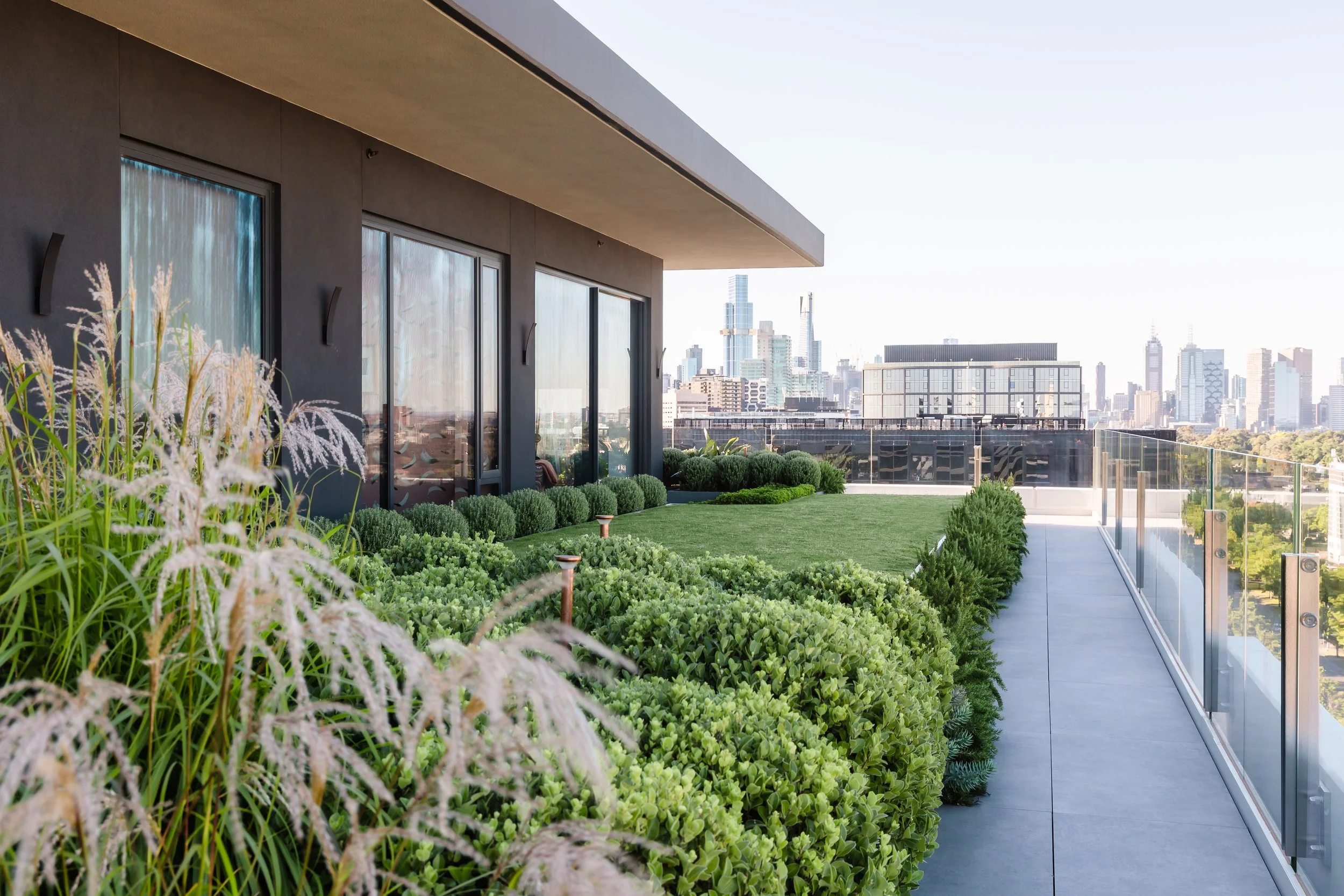
A green roof amenity space. Photo: rooflite
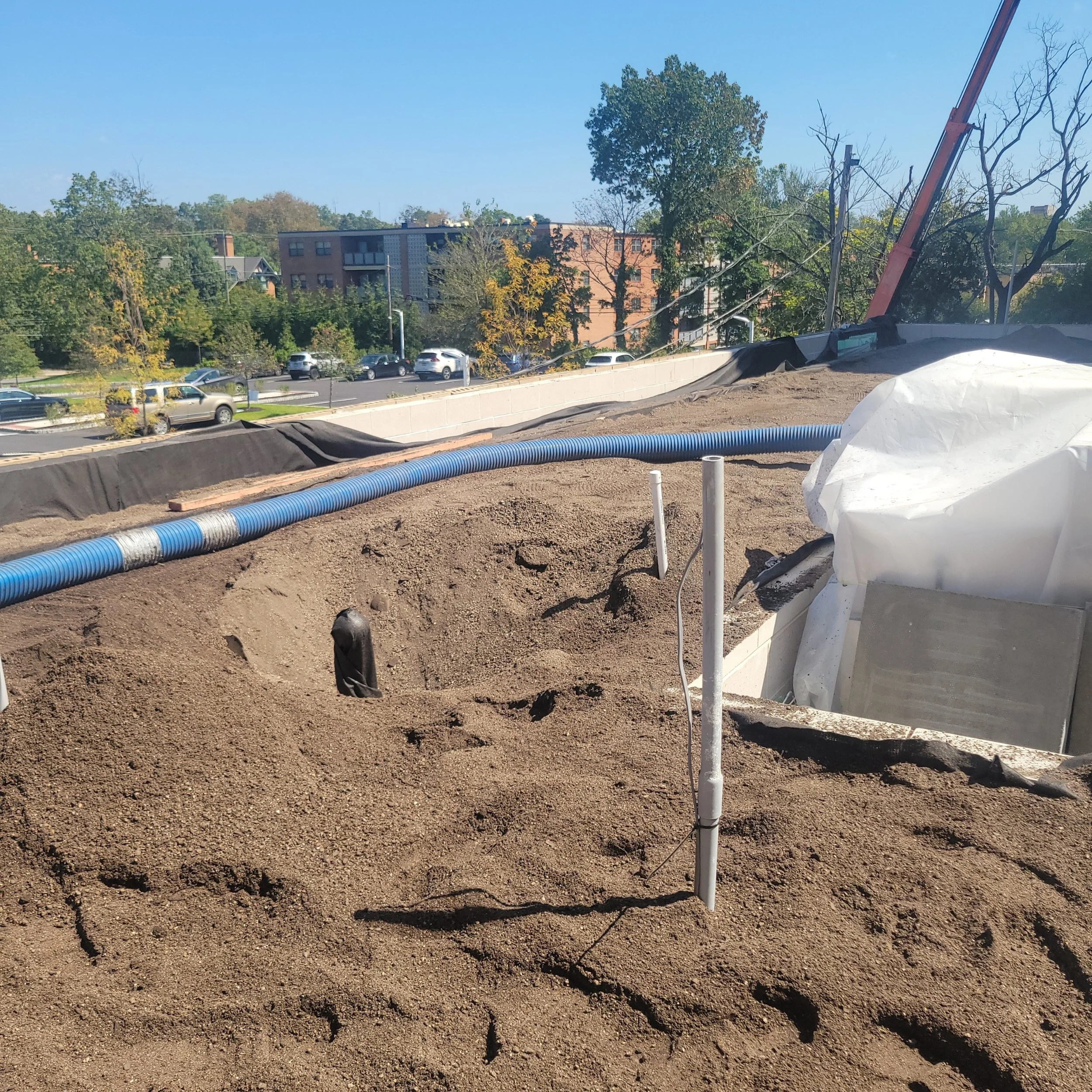
Engineered green roof installed. Photo: rooflite
Our ten complete soil systems can make your job easier and the overall planning process smoother. They have been engineered for the following applications:
Sedum Roofs
Perennial Roofs
Rooftop Lawns
Rooftop Gardens
Rooftop Trees
Rooftop Farming
Planters & Containers
In addition, we’ve also focused on creating different weight classes for each of our product options. These weight classes are designed to allow you to choose the option for your green roof project based on the structural weight requirements. Our products are available in up to six different saturated weight classes. Each weight class is identified by a number that corresponds to the typical weight for fully saturated media based on ASTM E2399. The availability of weight classes varies by region, and you may be able to choose from the following weight classes:
400: 40-50 lbs/ft3 (for drain product only)
500: 50-60 lbs/ft3 (for drain product only)
600: 60-70 lbs/ft3
700: 70-80 lbs/ft3
800: 80-90 lbs/ft3
900: 90+ lbs/ft3
Create Enhanced Amenity Space with Even Deeper Soil Systems
When we created our green roof soil systems, we knew that deeper soil systems would be a requirement for many green roof projects as designers added trees, planters, and other woody plants that require a deeper root zone. But designers have even surprised us recently with the need for even deeper soil systems. This is because we’re starting to see a new trend toward more amenity space on green roofs that is starting to feel like an at-grade environment, with much larger woody plants and trees. So the deep systems we originally designed now must go even deeper.
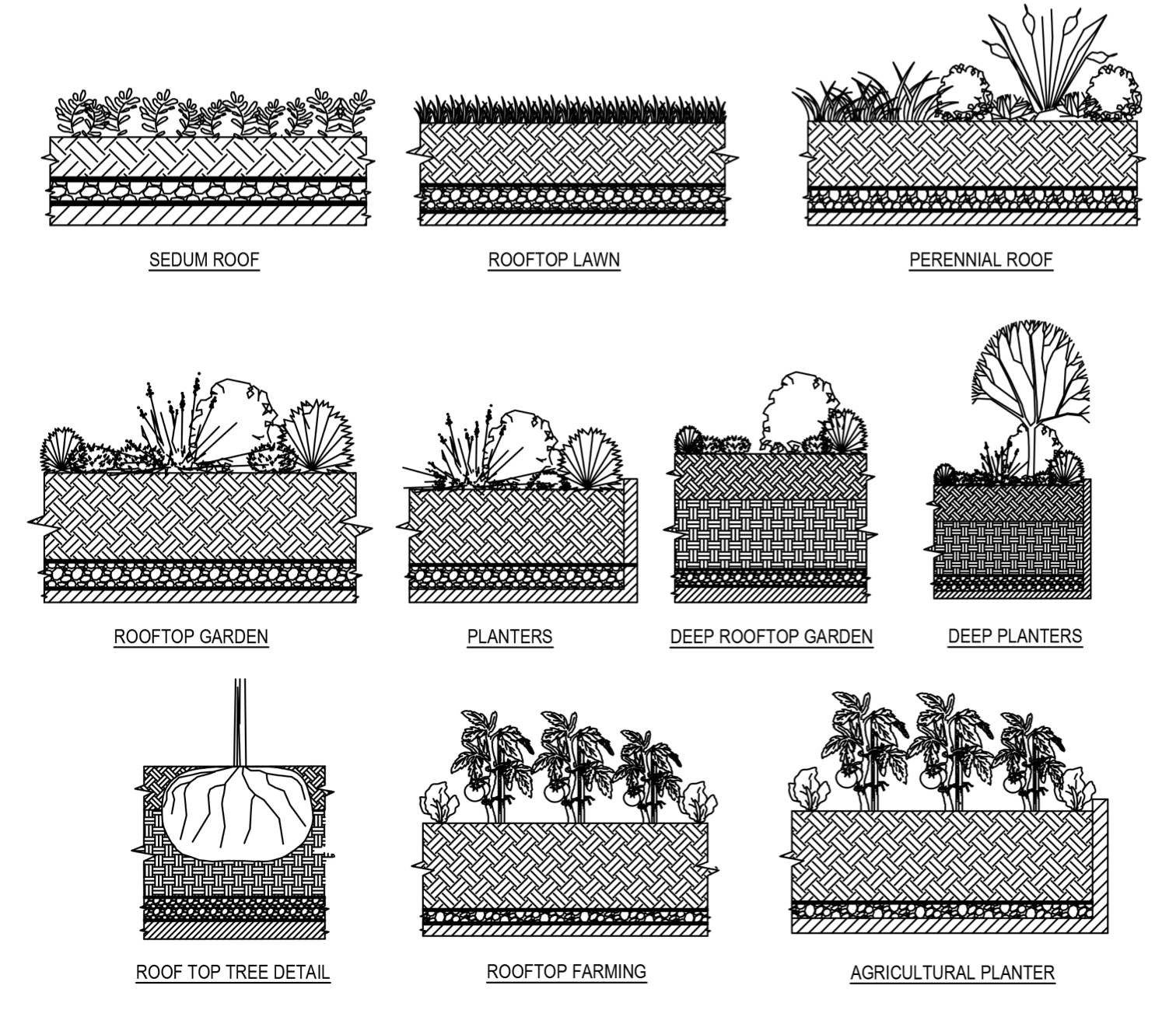
Green roof soil systems Photo: rooflite
These engineered deeper soil systems have several key properties:
Multi-layer soil system that mimics and improves on natural soil horizons. It typically includes a granular drainage layer, a filter layer, a base layer, and an organic, rich intensive top layer.
Well-designed root zone with a perfect balance of water retention and aeration along with adjusted nutrient levels to allow for long-term healthy root growth.
Lightweight and structurally stable, so it will not lose volume over time and will perform long term.
Water management that allows for free draining, so water doesn’t build up on the roof structure but also retains enough water to nourish the plants.
These deeper systems can easily be adjusted from a minimum depth of 20 inches to build-ups of several feet, letting designers virtually create any kind of green roof they want.
Advertisement
Meet Project Goals with Science-Backed Product Development: Regional Materials Meeting Industry Standards and Formal Testing Program
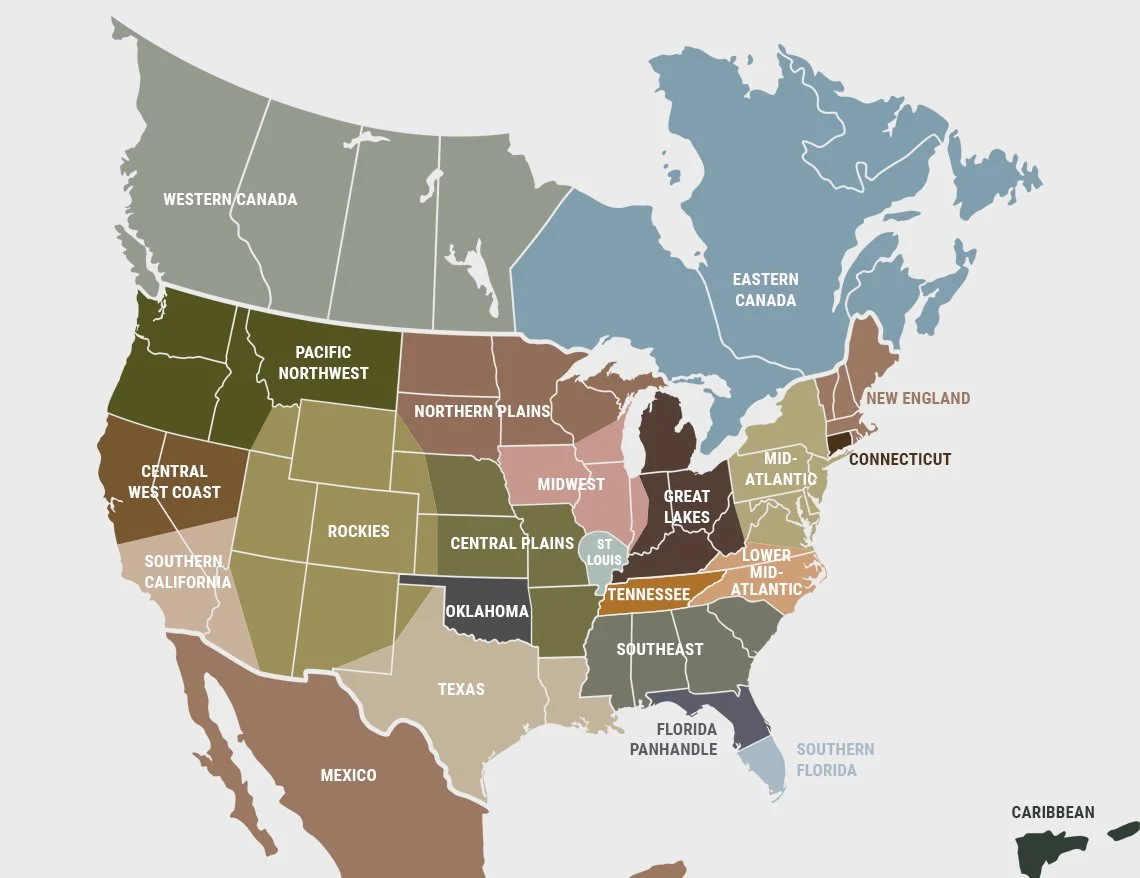
Regional materials map. Photo: rooflite
As green roof designs have evolved over the years, the technical requirements for projects have increased – from more aggressive stormwater management and environmental goals to enhanced amenity space - with different green roof requirements across one roof.
To ensure we can help designers meet project goals, we are focusing on two innovations: using regionally appropriate materials and mixes across the country and having a rigorous testing program.
At rooflite, we have a blender network that is made up of 20+ regions across the US and the Americas. Our trusted blender partners offer our rooflite soil product lines and soil systems, which are sourced, produced and shipped regionally.
Each specific regional blend is created based on cost-effective, often regionally sourced, raw materials and regional climate conditions. In addition, every rooflite soil product in any region is designed and produced according to ASTM E2777-14 and the FLL Green Roofing Guideline, the leading industry standards for the worldwide green roof industry.
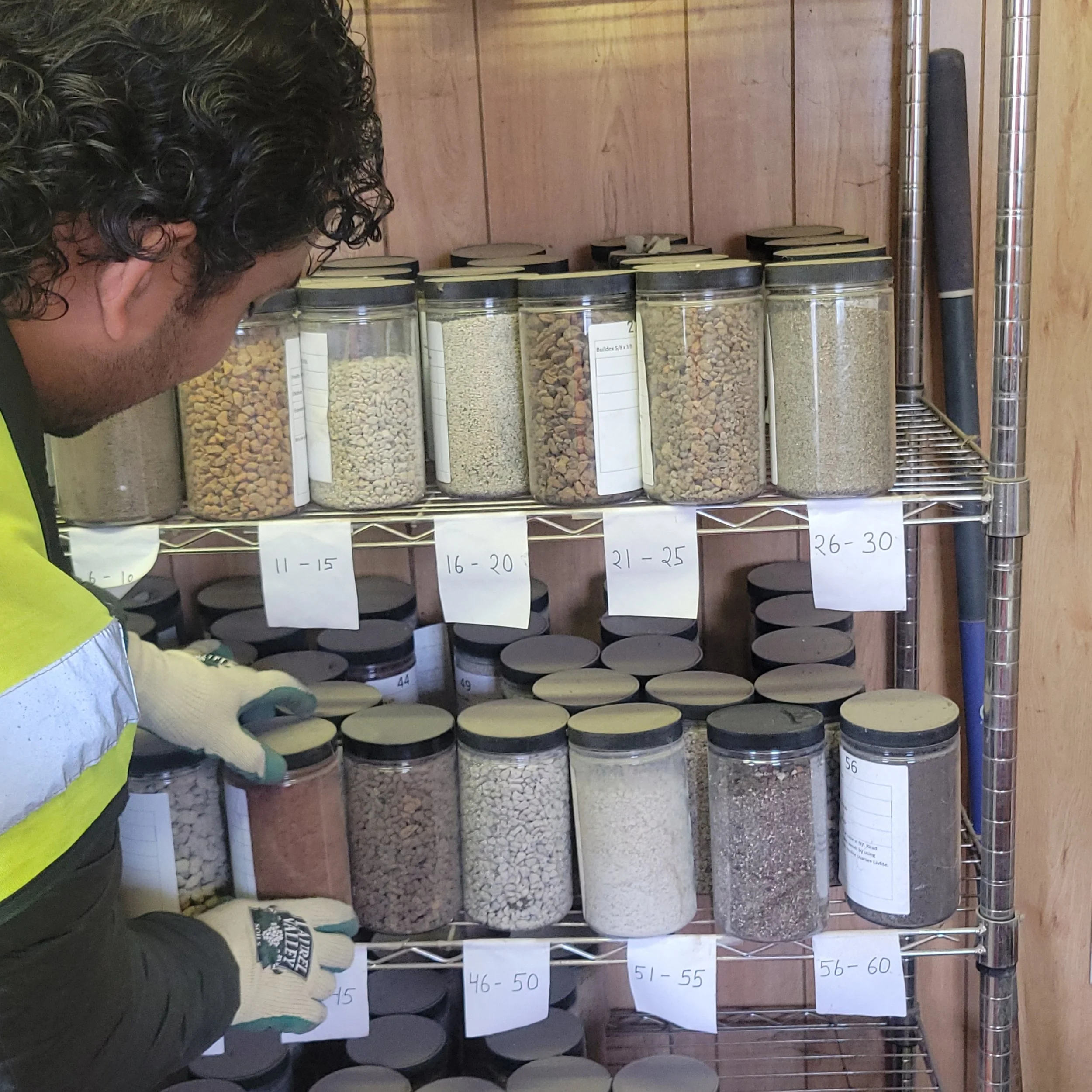
Internal soil lab. Photo: rooflite
In addition, we have a formal testing program that ensures all our soil products across the country meet our high standards and the high standards of our customers. Our Quality Assurance Program is both unique and rigorous. It involves both internal and independent laboratories. Our internal lab analyzes our rooflite soil products on a regular schedule to ensure they will stand up to demanding green roof applications throughout the life of a building. Independent labs validate compliance with established green roof media specifications and performance requirements.
Through our testing program, we can guarantee that every batch of rooflite soil produced is consistent across our blender network. It lets us make sure that your green roof project goals can be met or exceeded.
Conclusion
Having the right engineered soil is critical to the success of your project. At Skyland we look forward to working with the industry to continue the journey of innovation we began more than 20 years ago.
Advertisement
Jason Brown is a native of Landenberg, PA and is the Director of Skyland USA . He has 26 years of experience in the green industry, which have included introducing the Knock Out® family of shrub roses, designing and selling beautiful landscape enhancements, and selling perennials, shrubs, and trees to independent garden centers throughout the Mid-Atlantic U.S. He is happily married for 21 years and a proud father of two beautiful children, Phoenix and Aspen. When he is not working to beautify the planet with green roofs, he enjoys spending time gardening, bike-packing, and camping with his family.