Planting Rooftop “Tree Places”
Advertisement
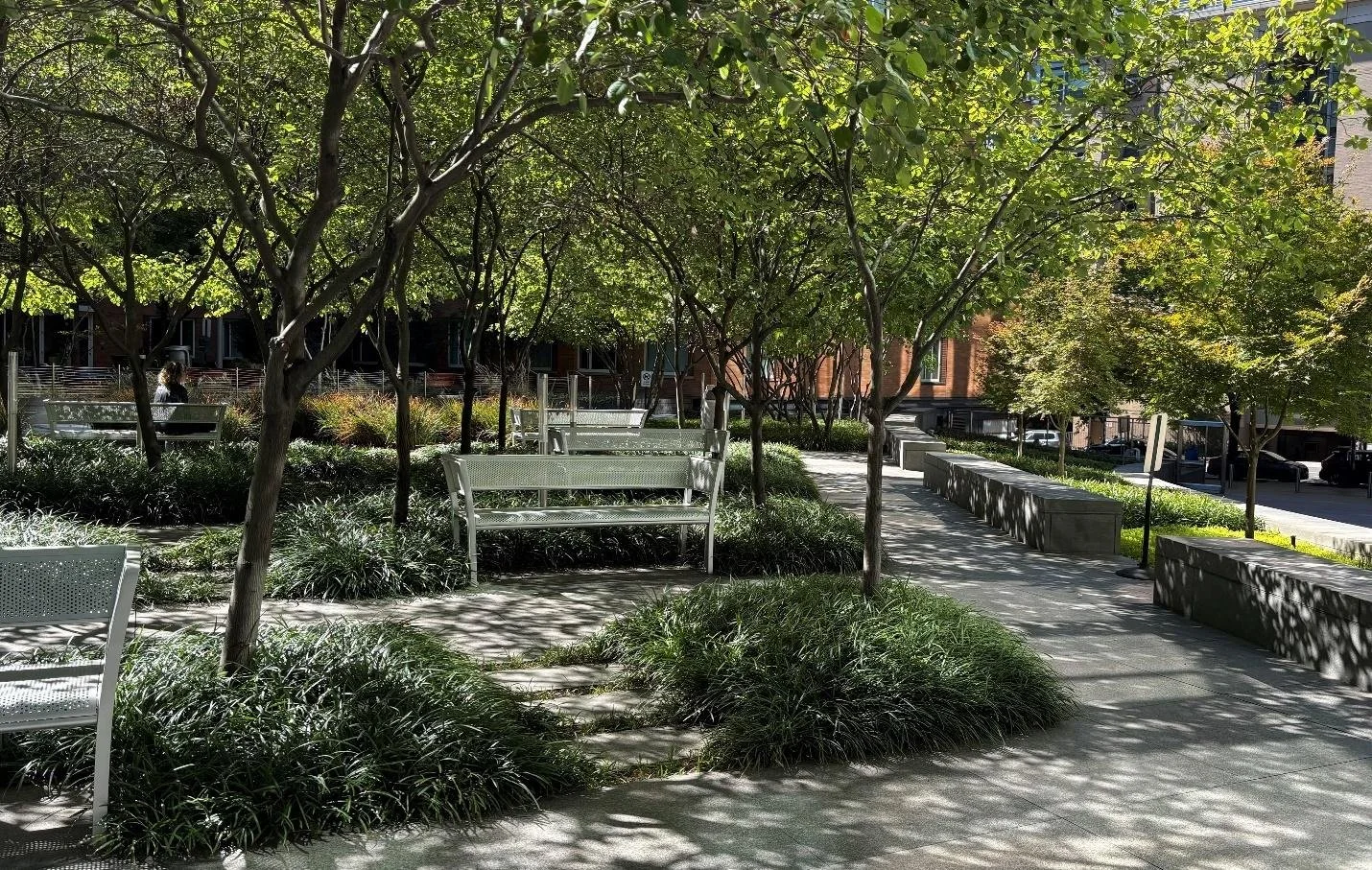
A courtyard at The Avenue sits above a submerged parking garage in Washington, D.C. Instead of a street-level parking garage, the developer envisioned a “tree space,” with parked cars below. Landscape architects Sasaki Associates designed this LEED Gold certified plaza for people to relax and reconnect with nature. A grove of honey locust trees (Gleditsia triacanthos f. inermis) is planted along with liriope and ornamental grasses. Photo: Bruce Dvorak
Introduction
Psychologists have long recognized three fundamental elements of the human psyche that can be assessed to understand emotional health (Buck 1948). The House-Tree-Person (H-T-P) test is administered when patients are asked to draw a picture of a house, a tree, and a person. Through interpretation, the contents and characteristics of those drawings convey a great deal about the patient's emotional and mental state. All aspects of the tree drawing are used to evaluate the individual’s thoughts, feelings, or mental state. Researchers have also determined that having trees present in our environments reduces stress, lowers blood pressure, improves our moods, and can help with focus. In the larger view, this means that trees are essential elements in the making of healthy and restorative spaces for people to live, work, play, and heal (Marcus and Barnes 1999).
When urban spaces lack trees or green space, there is a measurable decline in mental health for those living and visiting there. This is because people prefer living near green spaces (Kuo, Bacaicoa et al. 1998). This is one of the reasons that municipalities enact and enforce street tree ordinances, so that people will have contact with nature (Wolf, Lam et al. 2020). However, where high-rise buildings and treeless streetscapes are ubiquitous, the people living and working in those places suffer cumulative negative effects due to a lack of contact with nature (Gifford 2007). When effectively designed, green roofs and roof gardens can bring the healing benefits of nature into cities.
Research on green roofs supports the positive emotional benefits of including accessible roof gardens, with trees (Williams, Lee et al. 2019, Sullivan and Li 2021). While questions remain regarding the best approaches to implement trees on green roofs, such as how many trees are necessary to have a positive impact, there is scholarship on design patterns that can be utilized, based on the timeless ways of building (Alexander 1979).
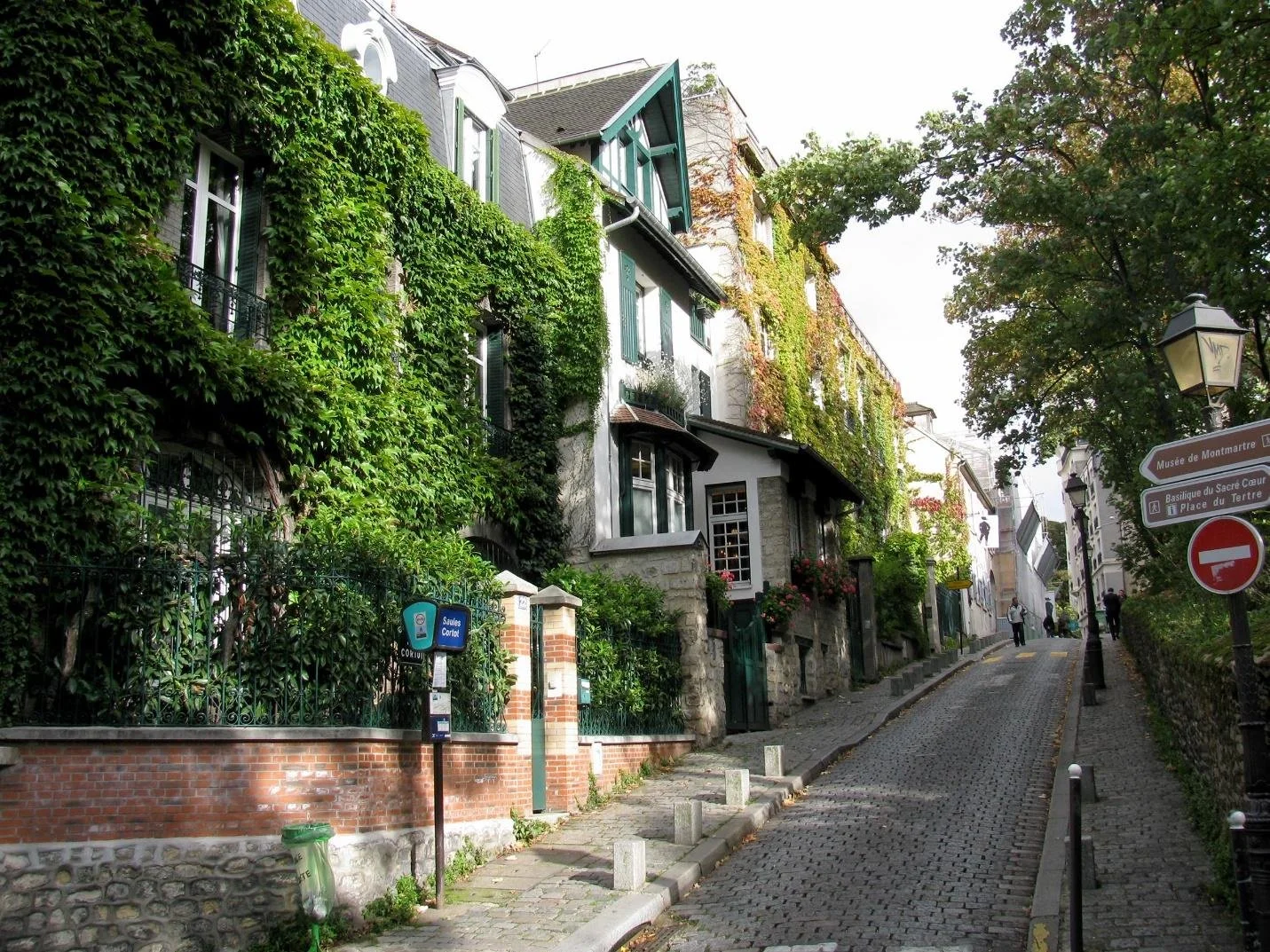
This streetscape in Montmartre Hill, Paris, France, abounds with ‘contact with nature’ through the inclusion of trees and green walls. Many older parts of European cities were designed with timeless ways of building, which enable healing patterns into the design of streetscapes, buildings, and rooftops. Photo: Bruce Dvorak
Tree Places
“If you are planting trees, plant them according to their nature, to form enclosures, avenues, squares, groves, and single spreading trees toward the middle of open spaces (Christopher Alexander, A Pattern Language, p. 800).”
In his seminal work, A Pattern Language, architect Christopher Alexander defines 253 archetypal patterns that can be used to design healthy, beautiful, and meaningful human environments based upon timeless ways of building (Alexander 1977). The pattern language encompasses design patterns for all aspects of built environments, from buildings to plazas, streetscapes, and rooftop gardens (Pattern 118). However, Pattern 171, “Tree Places,” recognizes the auspicious use of trees as a design element, whether as a single tree or in an organized grouping of trees to make people spaces.
Alexander defines ‘Tree Places’ through several instinctive pattern arrangements of trees: 1) a single mature tree with an umbrella-like canopy, 2) groupings of trees that form a grove, and 3) rows of trees that form an avenue, or alley (allée). Designers can incorporate trees into these arrangements on roof gardens to create human-scaled and restorative spaces for people to rest and enjoy. This article explores interpretations of these patterns - umbrella trees, tree groves, and tree alleys on rooftop gardens.
Advertisement
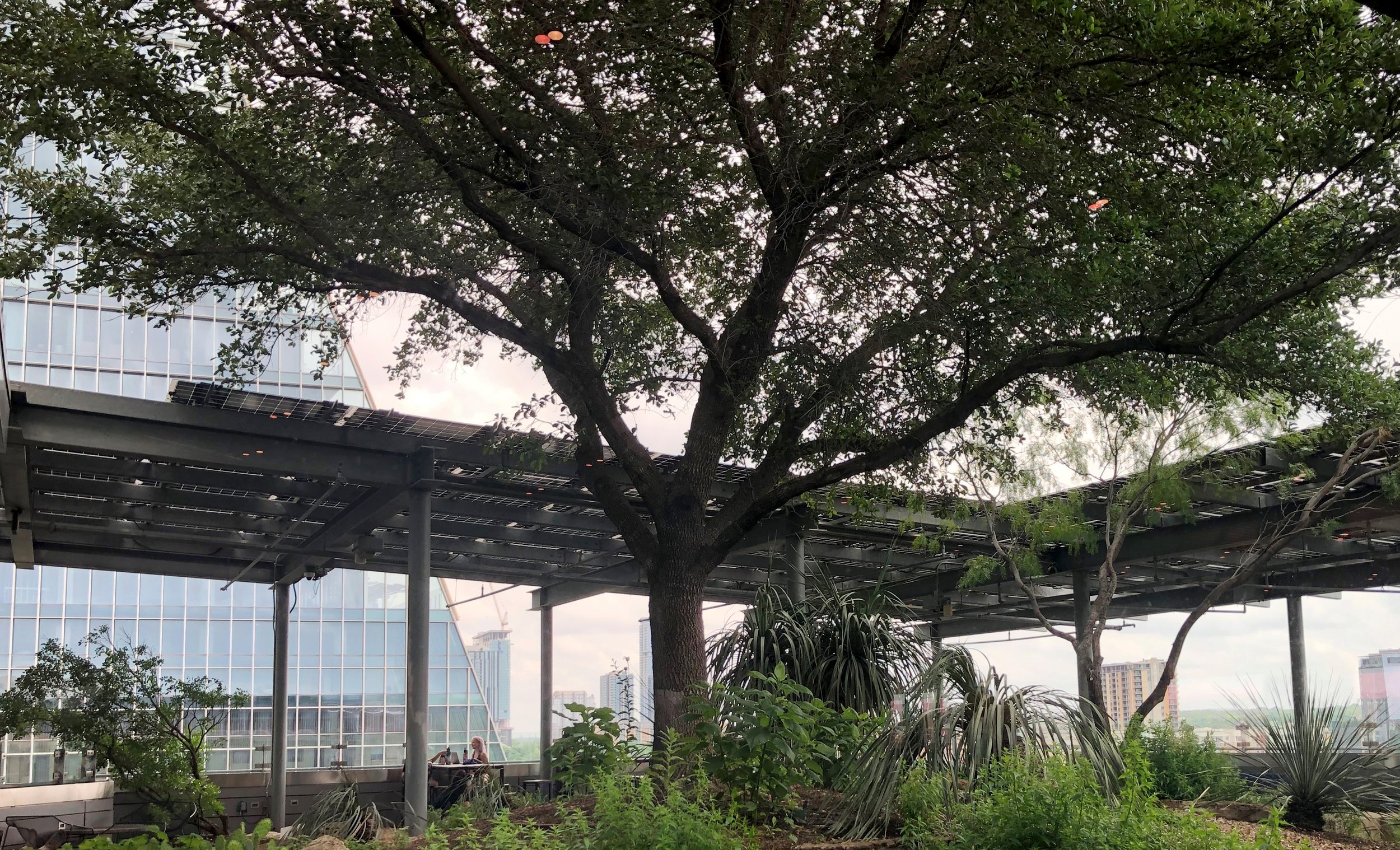
A live oak tree specimen functions as an “umbrella tree” and a focal point at the Reading Deck on the sixth story of the Austin Public Library. Photo: Bruce Dvorak
Umbrella Trees
The essence of this pattern is a single tree that provides a welcoming, ascending open canopy, where people can sit or rest and appreciate its beauty and protection from the elements. This approach demands a specimen tree with ornamental and upright branching characteristics and a commanding presence. Trees that function in this form are typically selected by the design team and tagged in a nursery early in the design process, so that exemplary trees are properly identified, prepared, arranged, and delivered safely to the site. These often large trees will require special design and engineering considerations regarding anchorage due to the forces of wind uplift and additional structural loading due to their weight.
Austin Public Library Rooftop Reading Deck
It is good to know that people still find the time to visit libraries, pick up a physical book, read, reflect, and engage their environments. The day I visited the Austin Public Library last April, I found many people enjoying the 3,000-square-foot Reading Deck roof garden. I also found an outstanding example of the umbrella tree pattern. The garden is spread out about a single specimen live oak tree located at the center of the reading deck. Landscape architect Aan Coleman, FASLA, said, “The design mimics an artificial knoll that includes rock ledges, limestone seat walls, and native plantings to create the visual natural replication of a Texas Hill Country landscape.”
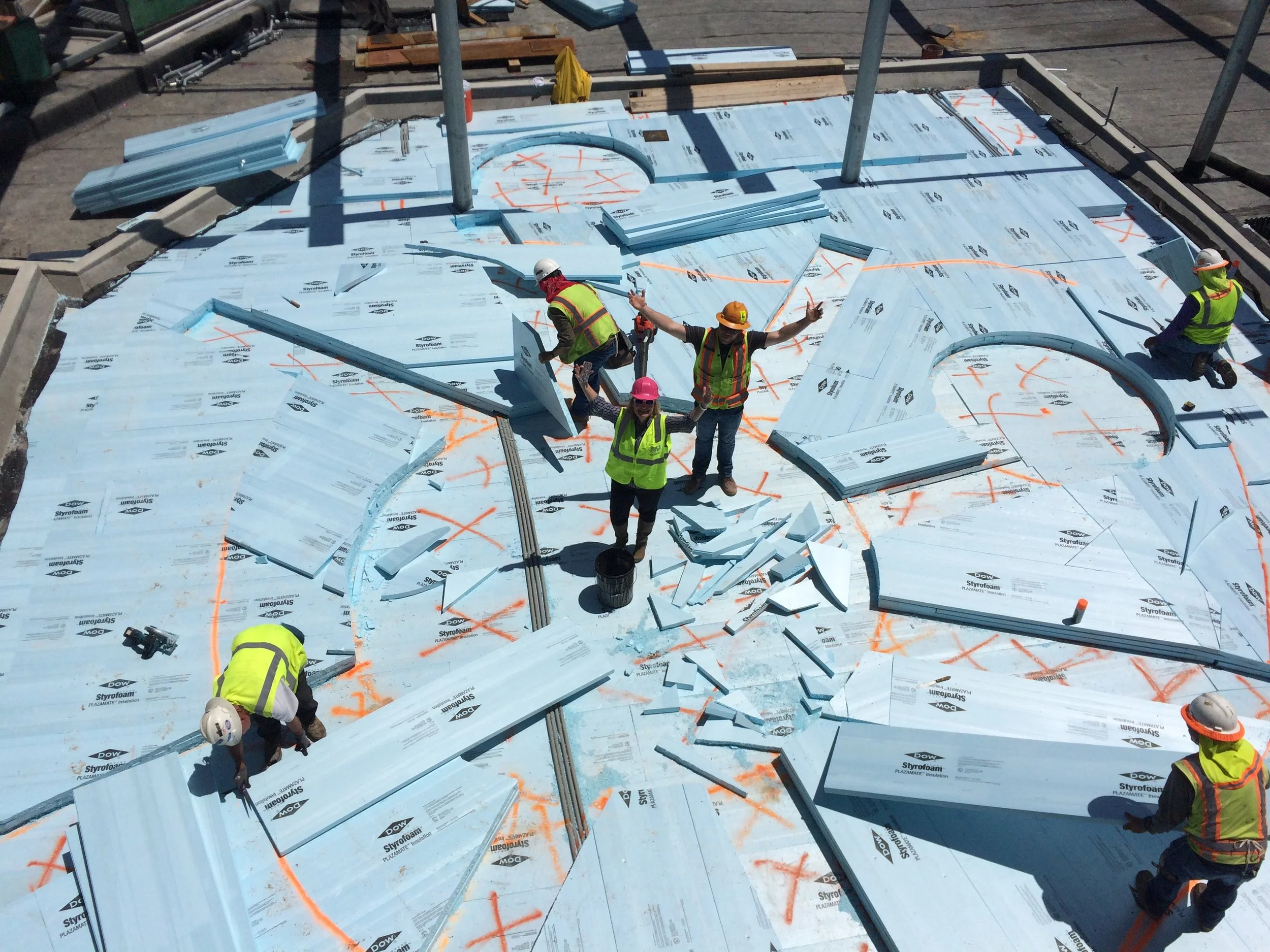
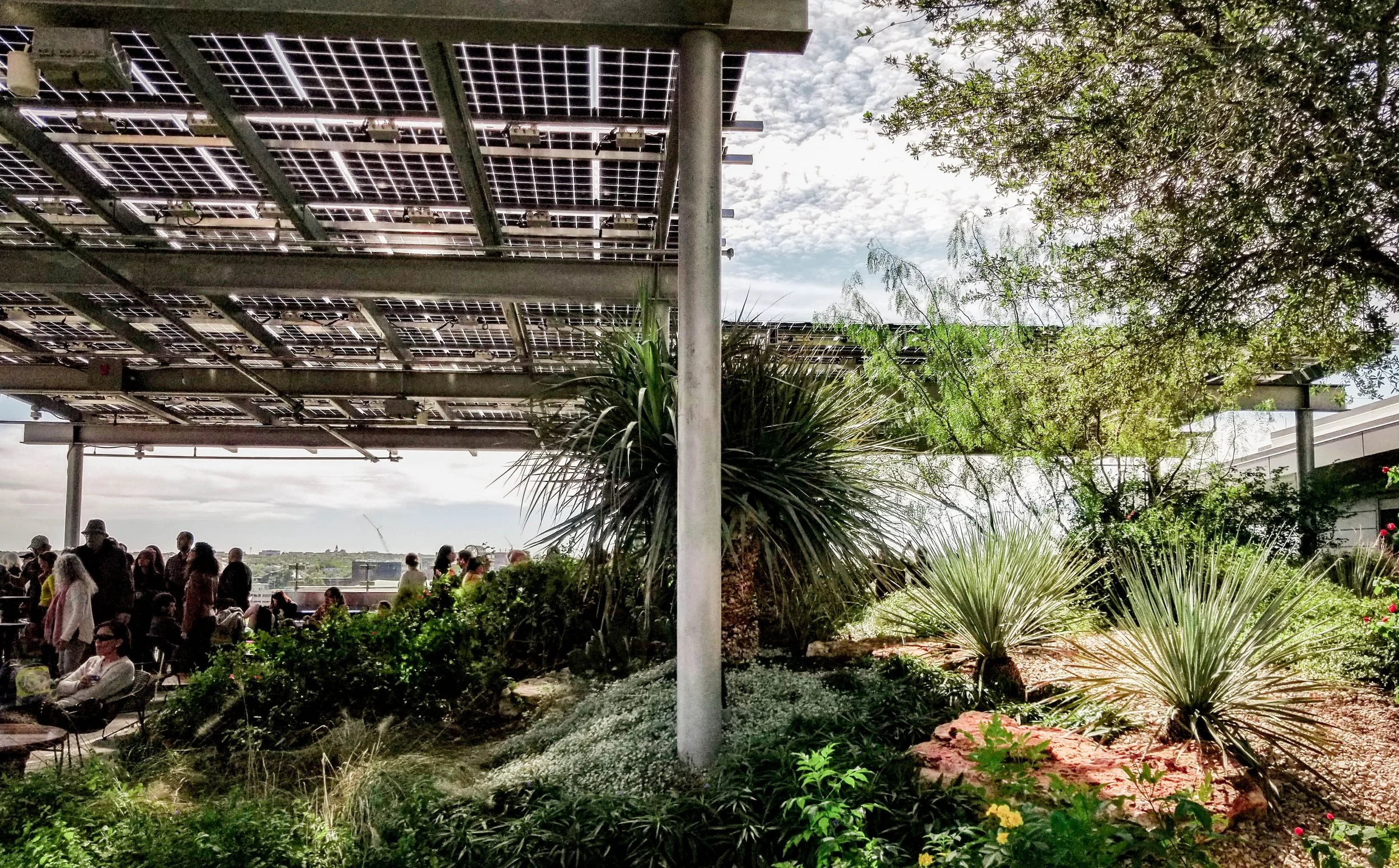
(left) Landscape Architect Aan Coleman (center) marks the spot for placement of the live oak. Shadows in the polystyrene lifts show circular spaces for the oak and several large shrubs to grow. (right) The garden around the oak tree is sloped down from the root crown to the deck level with stone and plants native to the Hill Country. (Photos: courtesy of Coleman & Associates)
Live oaks (Quercus virginiana) are native to humid subtropical climates of the South from Texas to Virginia. They are a characteristic tree of the South, especially south-central Texas. Live oaks are known for their wide-spreading canopy and arching branching patterns, evergreen leaves, and an open habit that allows for dappled shade. It is a beautiful and often massive tree in ideal growing conditions. Well worth the experience when observed from afar or from below, looking up into the canopy.
Aan designed the roof garden based on her years of observations of live oaks in the Texas Hill Country. For this approach to work, Aan said that they needed to provide space for a specimen tree to mature and spread out, but also needed to work with the engineers to meet the structural weight load and capacity of the roof deck. Aan said, “I have concluded in my 44 years of observing live oaks growing in natural environments that the 'bonsai effect' is real. Live oaks growing in plentiful, friable soils grow larger than live oaks growing in native rocky soils or planted in a parking lot.” Because the roof deck is flat, large blocks of expanded polystyrene lifts were used to mound the media up away from the trunk to reduce the structural weight load across the roof deck.
Advertisement
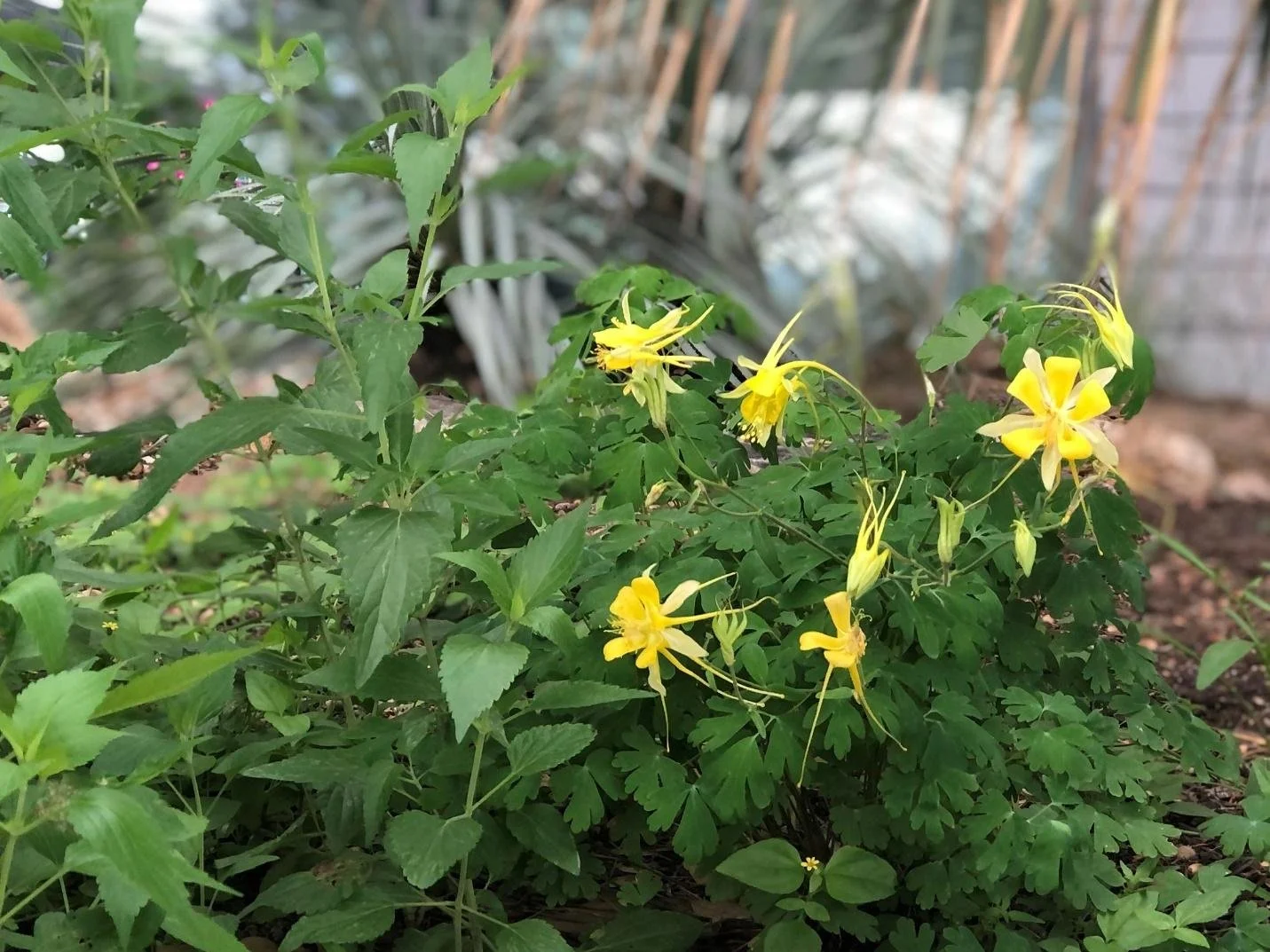
Because the live oak installed on the roof garden was quite large (6 in/15 cm caliper) when it was installed, shady microclimates were instantly present. This allowed for the planting of partly shaded environments where Yellow Columbine (Aquilegia chrysantha) thrives (above). This drift is located across a bench for viewing its blooms from March to early summer. Photo: Bruce Dvorak
The live oak is supported by up to three feet (91.4 cm) of growing media near the root ball. In addition, Aan said, “radial trenches were ‘carved’ in the polystyrene subsurface to attract roots to grow into the areas with the deepest soil.” Eight two-foot-wide and three-foot-deep trenches extend outward, in an asterisk pattern for roots to grow as the tree matures. The lifts also allow the entire space to mound up, emulating characteristics of Hill Country microclimates around Austin. The growing media tapers to 15 inches (38 cm) deep elsewhere to support the growth of native herbaceous plants away from the trunk. In addition to the live oak, the garden was planted with 30 taxa of native ground covers, bulbs, and shrubs. The project was completed in 2017 and has received numerous awards and has earned LEED Platinum Certification. The roof garden is irrigated with a low-flow irrigation system with weather sensors to conserve water.
Tree Groves
The Tree Grove pattern is defined by a cluster of trees that form a small grouping of similar species of trees in an oval, square, oblique, or organic form. A grove includes low-growing groundcovers underneath and is without heavy brush or dense understory vegetation, reflective of savanna environments. Tree groves allow for dramatic or unique tree forms to be on display, to clearly define outdoor spaces (rooms), or to feature specimen trees.
An excellent example of tree groves on a rooftop can be found at the Salesforce rooftop botanical garden and park in downtown San Francisco, California, where fifty-five taxa of trees are on display. One unique grove (out of many) includes a cluster of African Sumac (Rhus lancea) trees. These are spaced to allow the tree branches to rise from the root crown and to spread outward, and to emphasize their gnarled branching pattern contrasted against the flat, fine-textured vegetation below. This design approach allows for patterns of dappled shade and sun to illuminate the grassy groundcover and make a comfortable place to socialize, read a book, or take a nap.
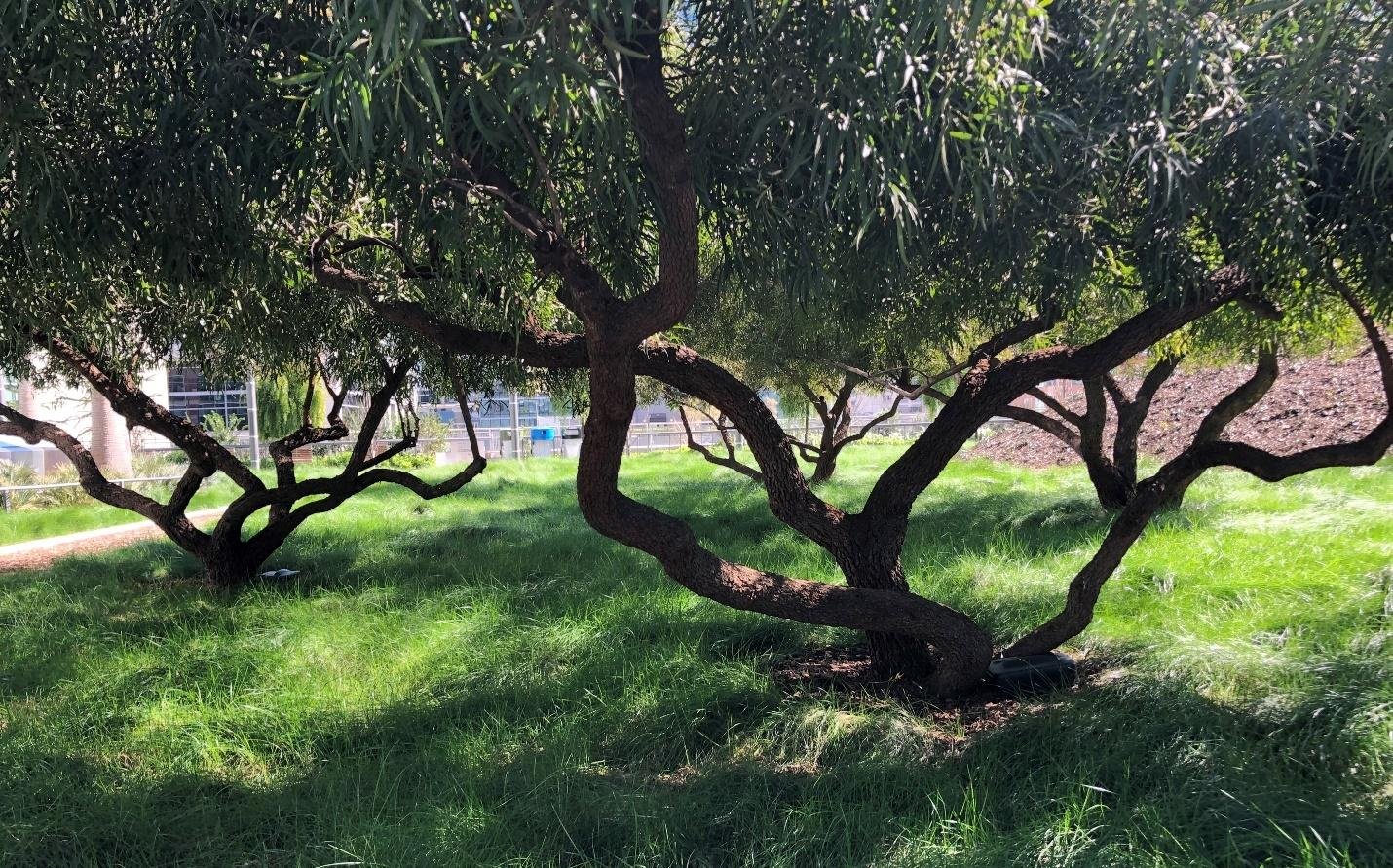
This grouping of African Sumac trees belongs to the South African Garden collection on the 5.4-acre Salesforce rooftop garden. These trees capture attention because of their dynamic and organic branching forms. Their loose spacing forms a welcoming grove. Photo: Bruce Dvorak
In contrast to the mounded growth media of a single tree at the Austin Library roof garden, on this roof, up to 600 trees have their root balls submerged below the garden surface and strapped to the roof deck. This means that the 54 inches (137 cm) of the growing media (for trees) is hidden below the surface, occurring between the roof deck and garden surface. This approach requires a thick parapet and roof deck to accommodate the depth of the media, drainage layers, irrigation pipes, and all technical elements and structures below the surface. For the grove pattern to be immediately effective, trees must be installed large enough to make an impression.
Studies on the mental and emotional well-being of visitors to this roof garden support evidence of how roof gardens with trees elevate visitors' moods. University of California, Davis researchers Haven Kiers and Elyse Mack found that 95 percent of visitors to the roof garden felt happy or very happy, whereas only 77 percent of people interviewed at street level below the roof garden reported feeling happy or very happy. Furthermore, 76 percent of park visitors said that their mental health and well-being were improved by visiting the gardens, and only 5 percent reported feeling stressed. Meanwhile, 37 percent of those interviewed at the street level reported that they were experiencing high or moderate levels of stress. Although these results are impressive, the sample size was small (n=21-87), and any future investigations could involve a larger sample size. It is also interesting to note that the researchers found that noise levels were .06 to 7.65 decibels lower on the roof garden than at the street level below (Kiers and Mack 2021). Noise, especially in cities, is well known for its negative health impacts and stress levels on people and wildlife.
Advertisement
Tree Alleys
Where roof gardens offer adequate space, large shade trees can be used. When arranged to align on both sides of paths, an alley effect can be created. The five-acre award-winning roof garden on the old Houston Post Office building, now known as “POST Houston”, or the “Skylawn Park”, demonstrates an excellent example of tree alleys. The roof garden has over 100 taxa of plants originally installed, including three taxa of palm trees, twelve taxa of ornamental trees, and five taxa of shade trees.
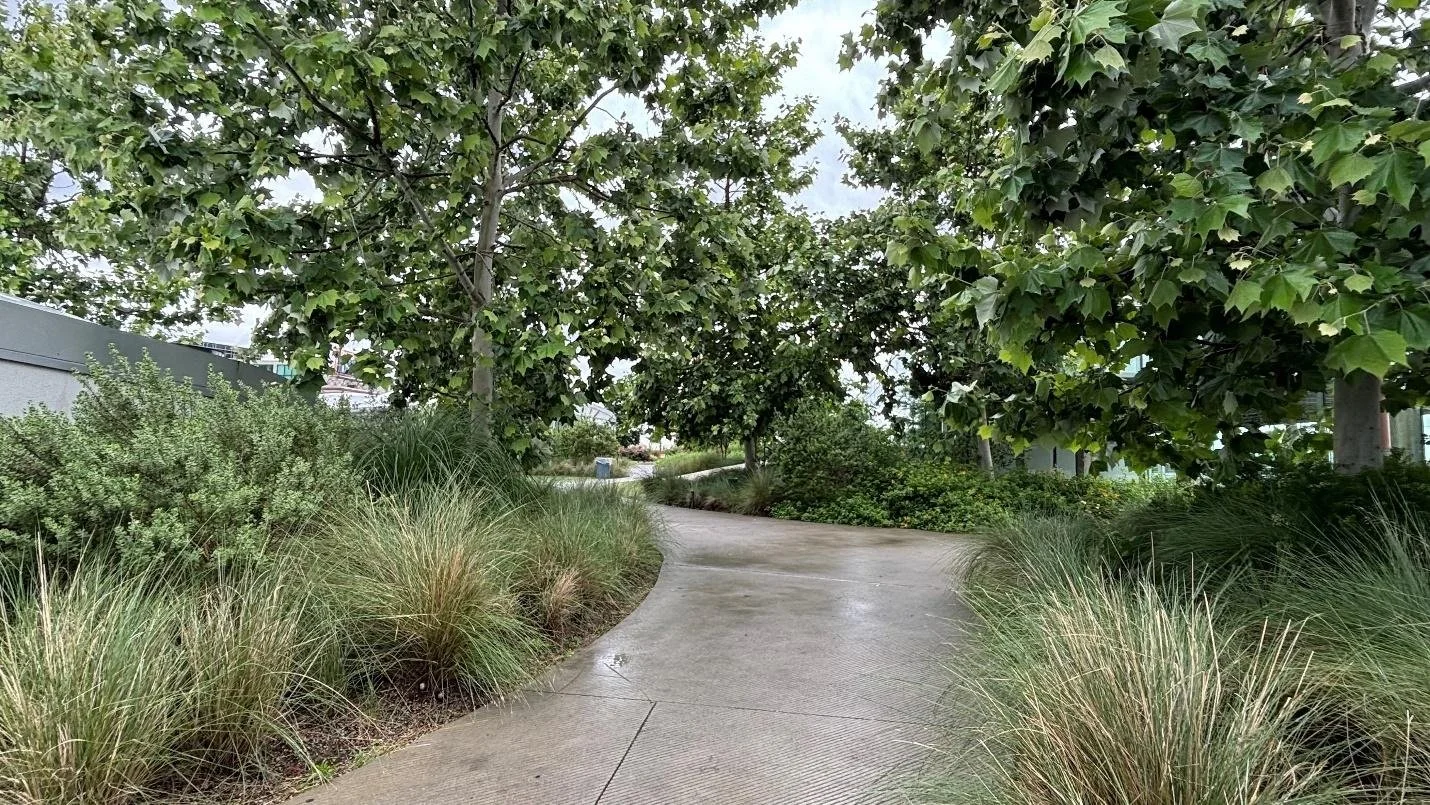
On the POST Houston roof garden, Mexican sycamore trees (Platanus Mexicana `Alamo`) were aligned to alternate on each side of a main cross path. The curving path creates a sense of depth, with hidden spaces beyond the viewshed. Sycamores are majestic trees, native to the eastern half of the United States, north to south, and northeastern and central Mexico and northern Guatemala. Sycamore trees can grow quite large where habitats are optimal, along riparian zones and floodplains. In the wild, mature sycamores can grow as tall as 130 feet (100 m) and 13 feet in diameter (4 m). However, it is doubtful that a sycamore tree would grow to its maximum potential on a rooftop garden.
As the lead landscape architect on the project, Hoerr Schaudt developed a design that harmonizes landscape elements with structural integrity. Brian Davis, Associate Principal at Hoerr Schaudt, noted, “Tree placement was carefully coordinated with the existing structural framework. Trees are positioned directly above beams and columns—areas of maximum structural strength. Given the curvilinear and angular nature of the design, their placement follows a grid aligned with the building’s column lines, ensuring both aesthetic intent and engineering feasibility.”
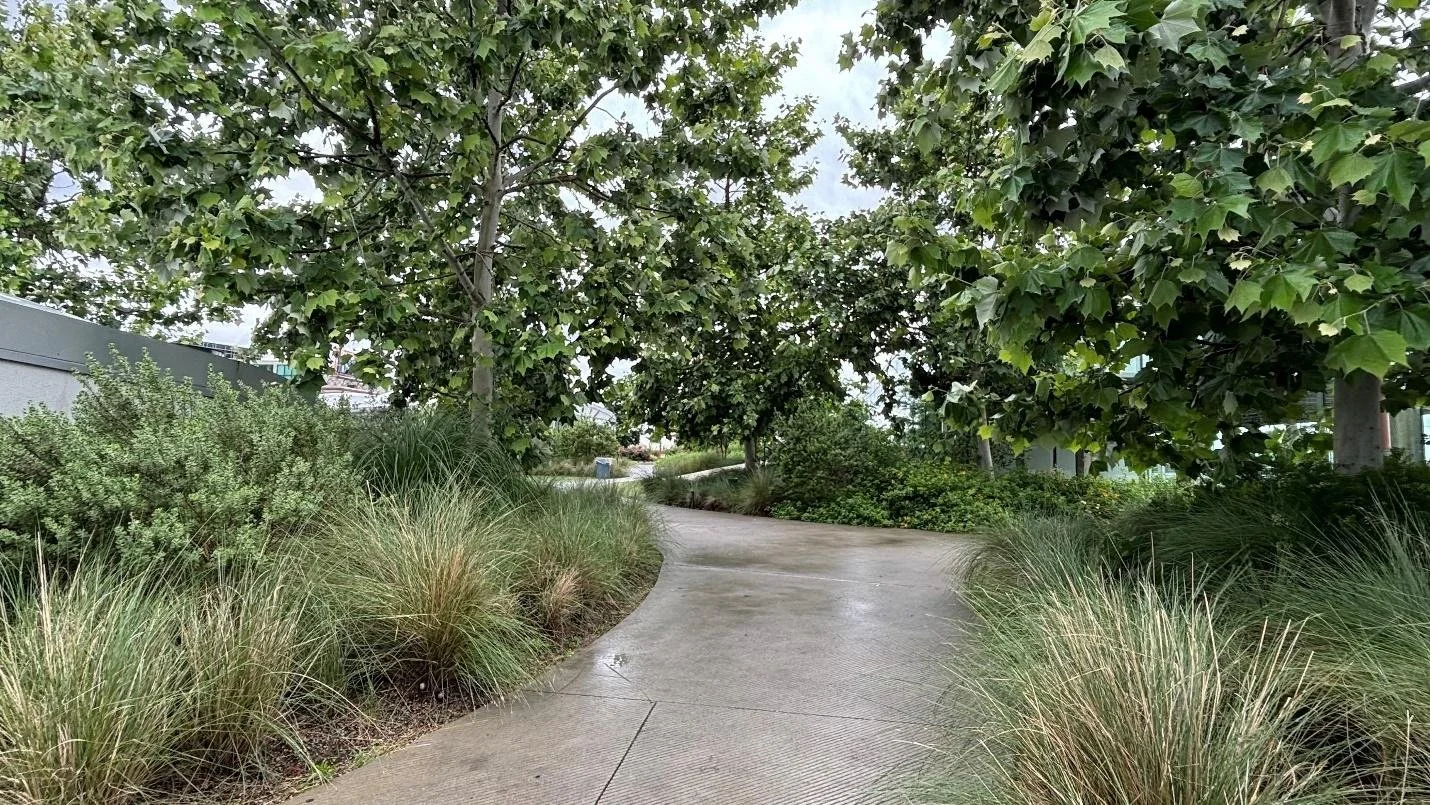
A Tree Alley of Mexican sycamore trees on the POST Houston rooftop park. At five acres, it is the second-largest roof garden in Texas and one of the largest public rooftop parks in North America. Photo: Bruce Dvorak
Houston is located near the Gulf Coast and is vulnerable to experiencing tropical storms and hurricane-force winds. In Harris County, where Houston is located, structures must endure wind speeds up to 120 mph. Because of these potential conditions, special measures were made to secure the trees to the roof deck. Brian said, “Each tree is anchored using concrete footings attached to the building structure. The root balls are secured to these footings with heavy-duty wiring and a mesh system to hold the root ball in the lightweight growing media during weather events."
Brian also said that the plants are supported by a custom-designed, lightweight, engineered growing media used to meet the stringent loading requirements to provide agronomic soil characteristics to the plant material. The media varies from 18 to 30 inches (45.7 to 76.2 cm) in depth, with the deepest parts located at the tree alleys.
Advertisement
Tips for Rooftop Tree Planting Success
While planting trees on roof gardens is generally a desirable thing to do, some limitations and situations need attention to ensure their tenure is a healthy one. In addition to the details discussed above, the use of trees in roof gardens should consider:
Avoiding Constrained Conditions. Avoid planting large trees in small spaces. Tree boxes or tree planters can be used successfully; however, if the tree species selected naturally grows large and wide, it may not live to maturity if the planter is too narrow or shallow. For example, several of the honey locust trees (Gleditsia Triacanthos var. inermis ‘Skyline’) planted in shallow planters on the Kansas City Library roof garden were short-lived. The limited substrate depth and narrow planters likely maximized the edge effect, which means that heat stress from the adjacent pavers and wind stress can cause plant stress and suppress longevity (Dvorak and Skabelund 2021).
Avoid Glass Facades. Avoid planting trees near a south or west-facing façade of windows, where reflective light and heat can cause stress and damage to trees. Maple trees on a ground-level roof garden in the Pacific Northwest received reflected light and heat energy from a full-glazed glass window nearby. The trees in the path of the reflected heat have declined in health (Dvorak and Rottle 2021).
Secure Positive Drainage. Adequate drainage is necessary for trees. If the drainage layer is not sufficient, moisture can back up into the drainage layer and cause waterlogged conditions. Include adequate and positive drainage at the lowest elevation where trees are planted.
Irrigation. Irrigation is necessary for most installations of trees. A qualified irrigation designer should be consulted to consider the irrigation delivery system. Trees may need to be watered at the surface and below the surface, depending on the species of tree and the climate of the roof garden. One should consider that rooftop conditions are windier and cooler than conditions at the ground level. Furthermore, moisture is generally less available on rooftops compared to ground level. Due to these variables, trees should be located within separate irrigation zones so they can receive water at their appropriate rates.
Cold Protection. Trees growing at the ground level have their roots secured and buffered from winter cold air by soil. On roof gardens, the growing medium may be the only protection from exposure to extreme cold or heat. Insulation, additional substrate depths, and separate irrigation zoning may be required to adequately support microclimates for trees.
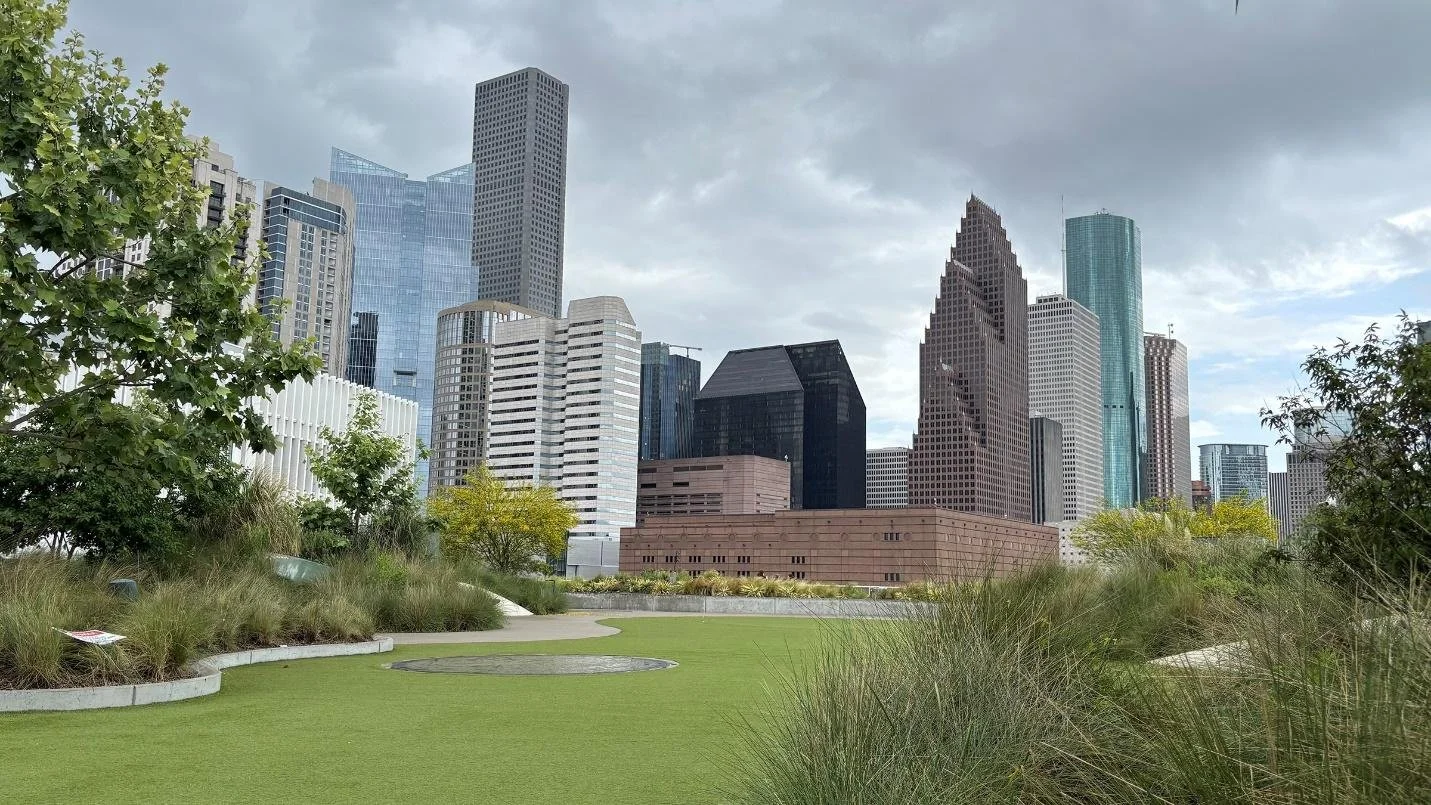
Here, at the POST Houston roof, shade trees are used to frame views of the downtown Houston skyline. This space also functions to host outdoor venues, such as the Grey to Green Symposium, September 25, 2025. See the GRHC website for event details. Photo: Bruce Dvorak
Summary
This article explores the importance of trees for human health and well-being and demonstrates three ways of arranging trees in roof gardens and successful examples of these approaches:
Psychologists recognize that humans need contact with nature and trees to maintain a healthy mental state and emotional well-being.
Developers should include roof gardens on buildings, with trees, to make healthy spaces for people to live, work, and play.
Placing a single tree on a roof garden can be successful if the specified tree is large enough to form a welcoming canopy, and there is enough growth media to support the tree. Trees should be ornamental in their branching habits and characteristics to function as a focal point.
Clustering trees in groves is a very effective way to create outdoor rooms, to make sufficient space for people to sit beneath the trees, or to be used as a focal point.
Large roof gardens can support trees to create an alley effect, with trees defining the edges of paths or corridors.
Trees may need to be secured to the roof deck to prevent uplift and keep them on rooftops during windstorms.
Trees need appropriate depths of growth media, drainage, irrigation, and regular care to maintain their livelihood.
Advertisement
Bruce Dvorak, FASLA, is a Professor at Texas A&M University in the Department of Landscape Architecture and Urban Planning, where he has been conducting green roof and living wall research since 2009. Bruce is the chair of the GRHC Research Committee and founded the Southern Plains Living Architecture Center of Excellence in 2022 (Regional Academic Center of Excellence). Bruce received the GRHC Research Award of Excellence in 2017 and teaches green roofs and living walls in his courses in landscape architecture programs at Texas A&M University. His edited book, Ecoregional Green Roofs: Theory and Application in the Western USA and Canada (2021), provided inspiration and content for this article.
Acknowledgments
I would like to thank Aan Coleman, Ashley Scroggs, and Liz Constantinou for sharing information about the roof garden at the Austin Public Library and their review of this article. Thank you also to Brian Davis, with Hoerr Schaudt, for sharing information about the POST Houston roof garden and reviewing this article.
References
Alexander, C. (1977). A pattern language: towns, buildings, construction, Oxford University Press.
Alexander, C. (1979). The timeless way of building, New York: Oxford University press.
Buck, J. N. (1948). "The HTP test." Journal of Clinical Psychology.
Dvorak, B. and N. D. Rottle (2021). Green Roofs in Puget Lowland Ecoregions. Ecoregional Green Roofs: Theory and Application in the Western USA and Canada. B. Dvorak. Cham, Springer International Publishing: 391-449.
Dvorak, B. and L. R. Skabelund (2021). Green Roofs in Tallgrass Prairie Ecoregions. Ecoregional Green Roofs: Theory and Application in the Western USA and Canada. B. Dvorak. Cham, Springer International Publishing: 83-142.
Gifford, R. (2007). "The consequences of living in high-rise buildings." Architectural Science Review 50(1): 2-17.
Kiers, H. A. and E. Mack. (2021). "Salesforce Transit Center Park Methods." Retrieved September 5, 2025, from https://www.landscapeperformance.org/sites/default/files/2022-11/Salesforce-Park-Methods.pdf.
Kuo, F. E., M. Bacaicoa and W. C. Sullivan (1998). "Transforming inner-city landscapes: Trees, sense of safety, and preference." Environment and behavior 30(1): 28-59.
Marcus, C. C. and M. Barnes (1999). Healing gardens: Therapeutic benefits and design recommendations, John Wiley & Sons.
Sullivan, W. C. and D. Li (2021). Nature and attention. Nature and psychology: Biological, cognitive, developmental, and social pathways to well-being, Springer: 7-30.
Williams, K. J., K. E. Lee, L. Sargent, K. A. Johnson, J. Rayner, C. Farrell, R. E. Miller and N. S. Williams (2019). "Appraising the psychological benefits of green roofs for city residents and workers." Urban forestry & urban greening 44: 126399.
Wolf, K. L., S. T. Lam, J. K. McKeen, G. R. Richardson, M. van Den Bosch and A. C. Bardekjian (2020). "Urban trees and human health: A scoping review." International journal of environmental research and public health 17(12): 4371.