Nature as Medicine: A Living Wall at The University of Texas MD Anderson Cancer Center
Advertisement
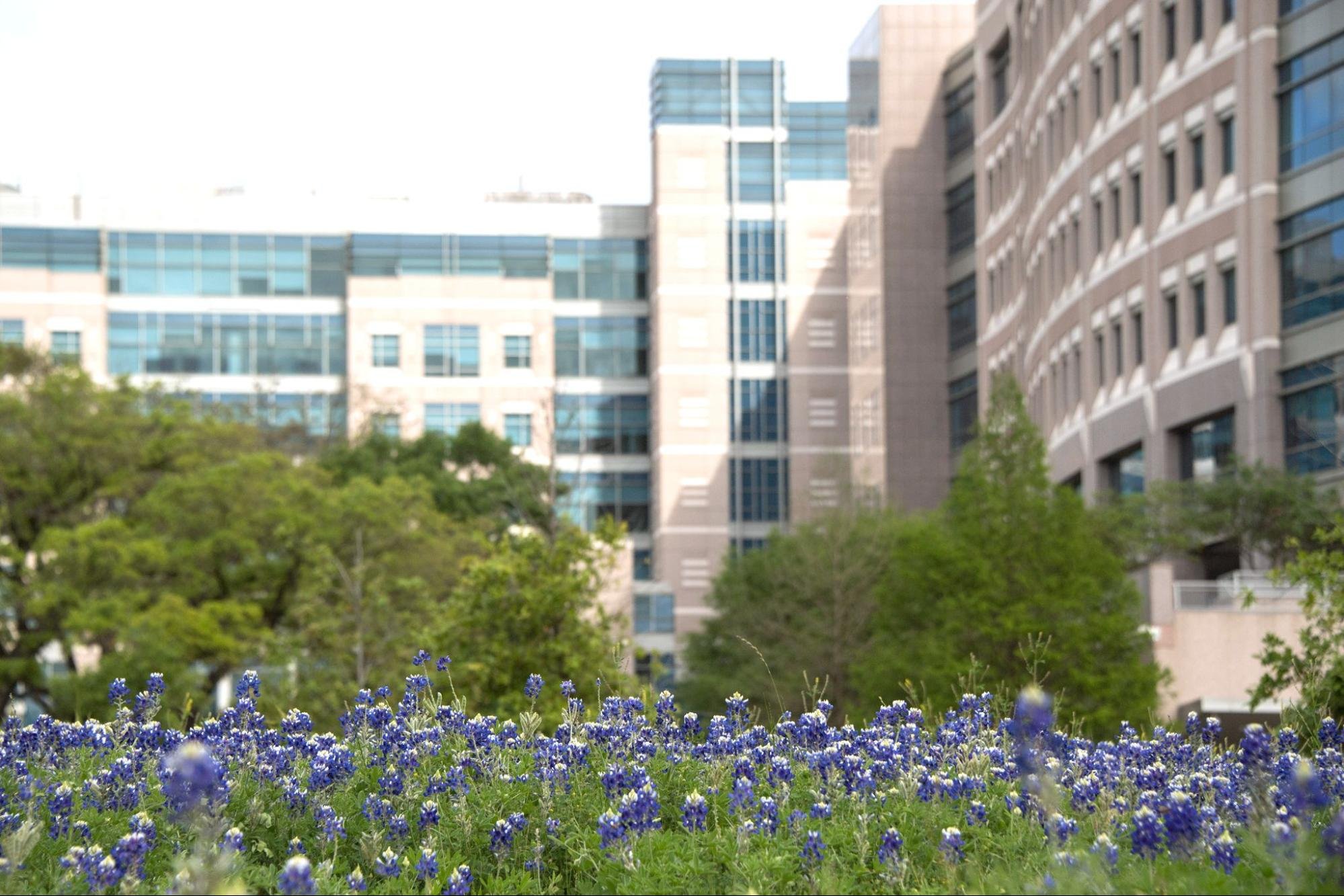
View of May’s Clinic from the Prairie (Image courtesy of MD Anderson Cancer Center)
Introduction
At The University of Texas MD Anderson Cancer Center, we’ve long known that nature can be healing. Our institution is world-renowned for cancer care and research, but it is also deeply connected to the field of biophilic design — the idea that humans thrive when we are connected to natural environments.
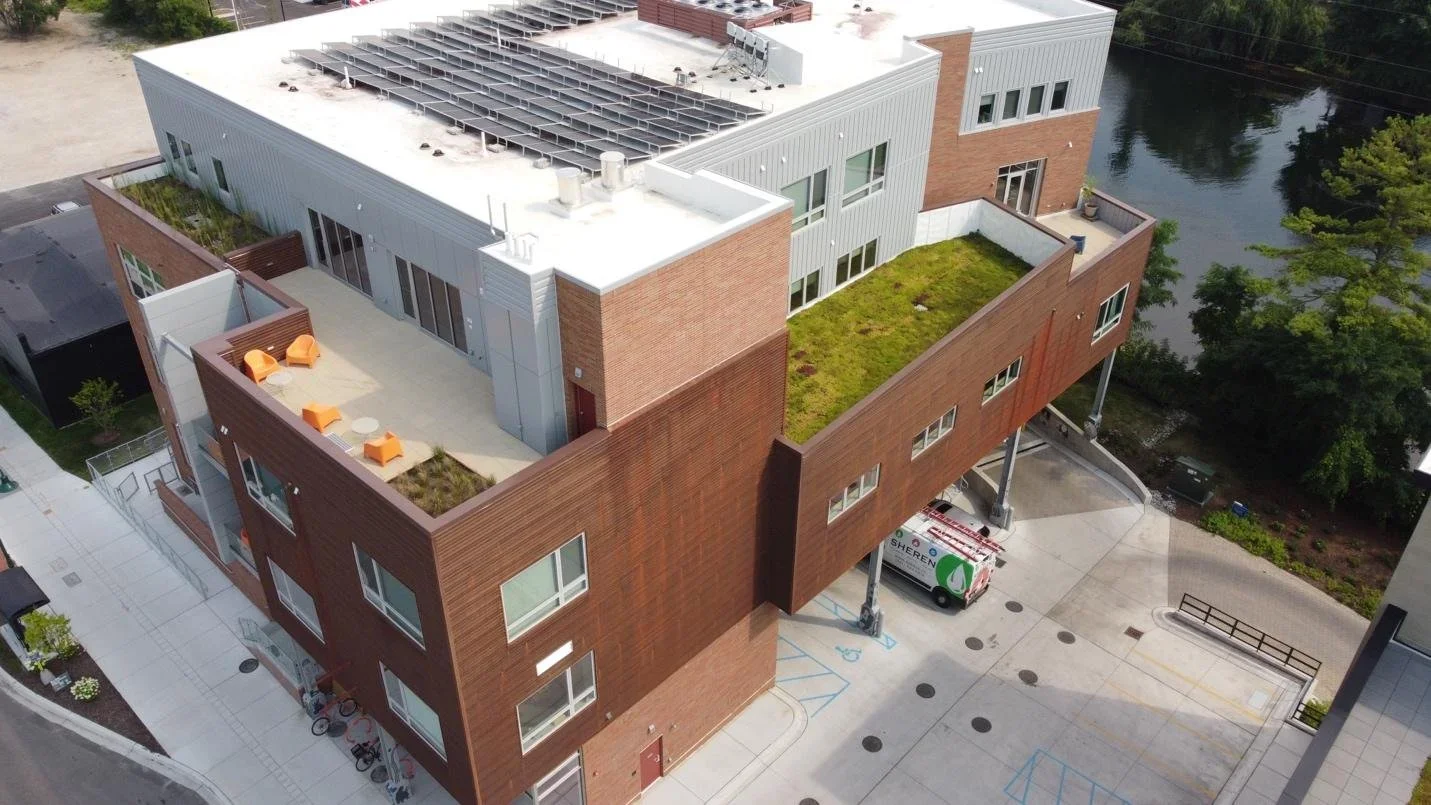
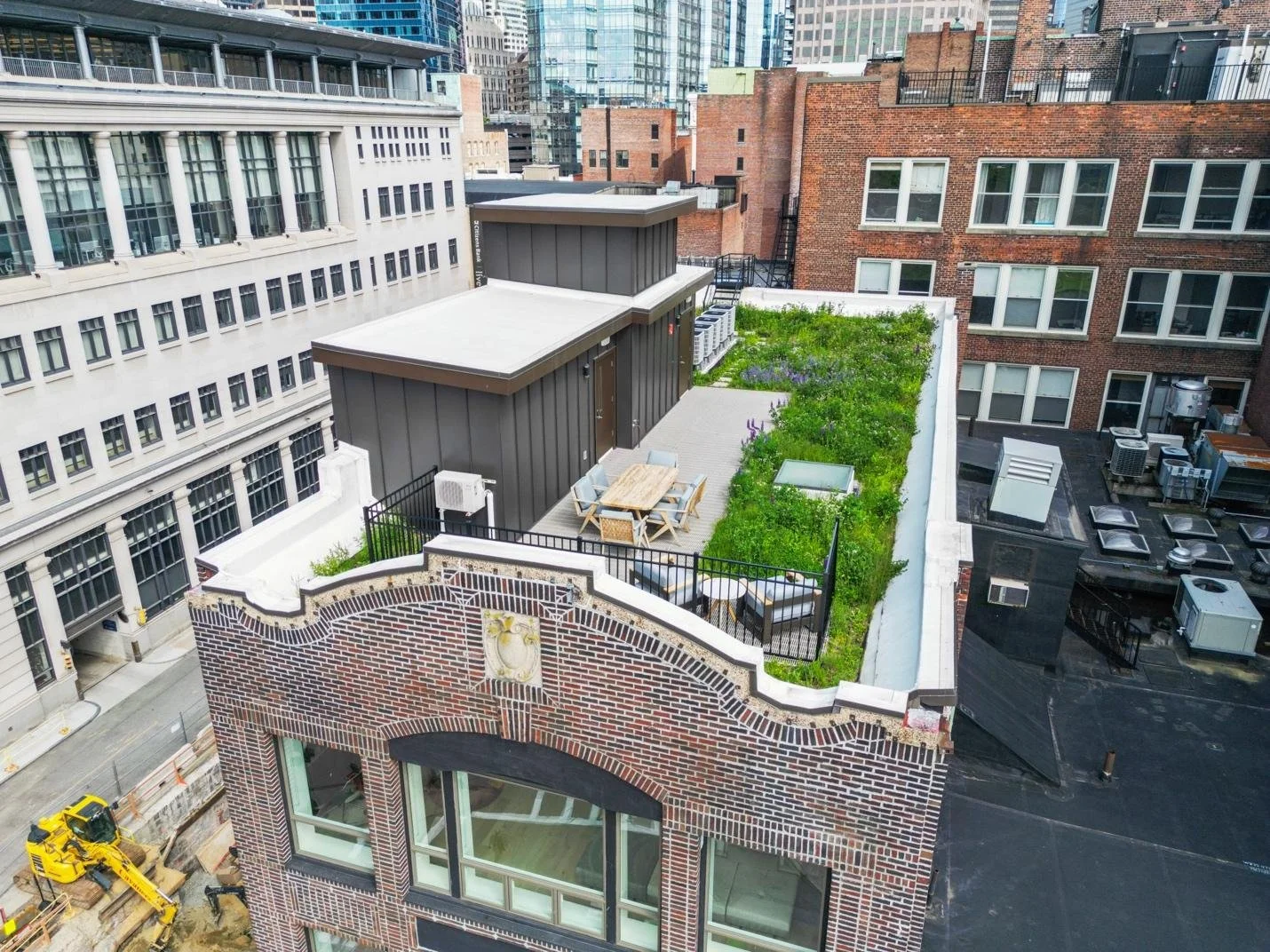
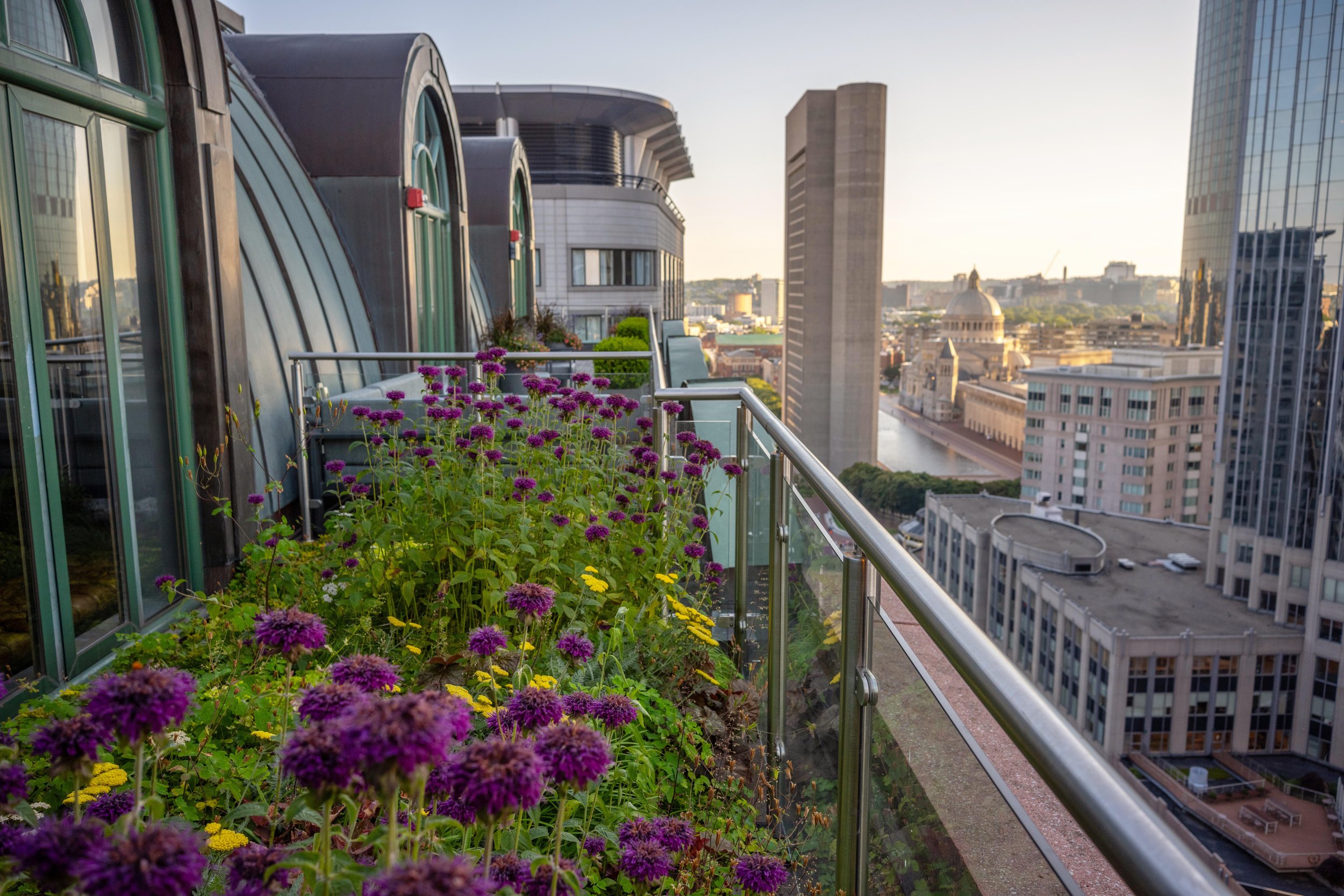
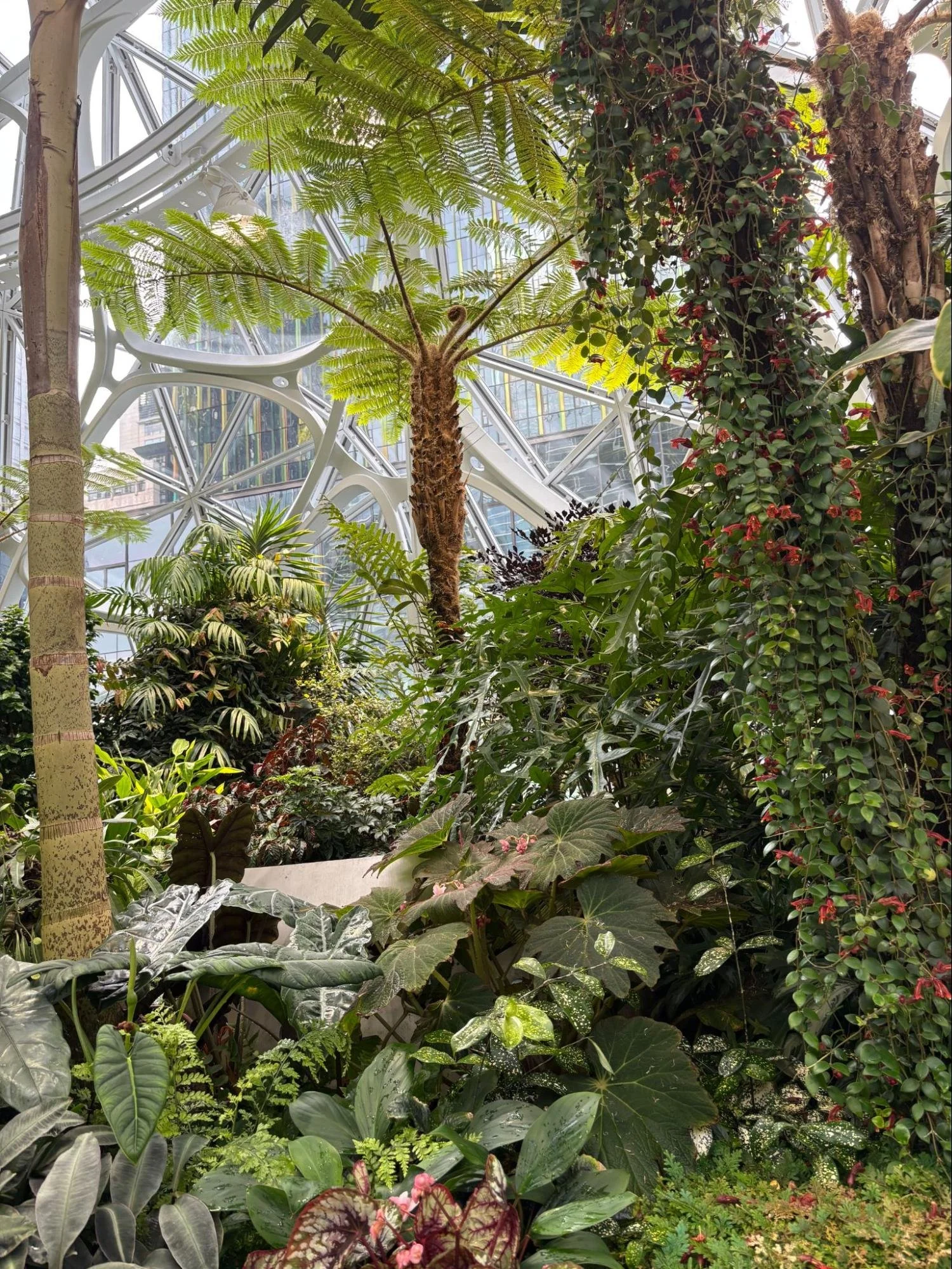
Walk our campus and you’ll see that commitment everywhere. Mays Clinic, designed in collaboration with biophilic pioneer Roger Ulrich, welcomes patients with rooftop gardens just outside waiting rooms. Terraced landscapes spill greenery from elevated floors down to the street below. Acres of restored coastal prairie bloom beside our buildings, recalling the ecosystems that once covered the Houston landscape. Even inside, patients encounter nature at every turn — aquariums, indoor plantings, art programs with natural themes, and hallways named for native Texas flowers.
But for all that emphasis, there were still patients we weren’t reaching.
Reaching Inpatients Where They Are
In the Intensive Care Unit (ICU), many patients spend weeks — even months — indoors. They never feel fresh air, sunlight, or the grounding sense of being outside. Not for lack of desire, but because the requirements of their care could not allow it.
It is difficult to know if a patient in ICU is healthy enough for a trip outdoors, and there are numerous considerations for moving patients outdoors while ensuring their safety and privacy. Further, we had no suitable outdoor space that could facilitate a medical team, critical equipment, and a patient receiving that intensive care.
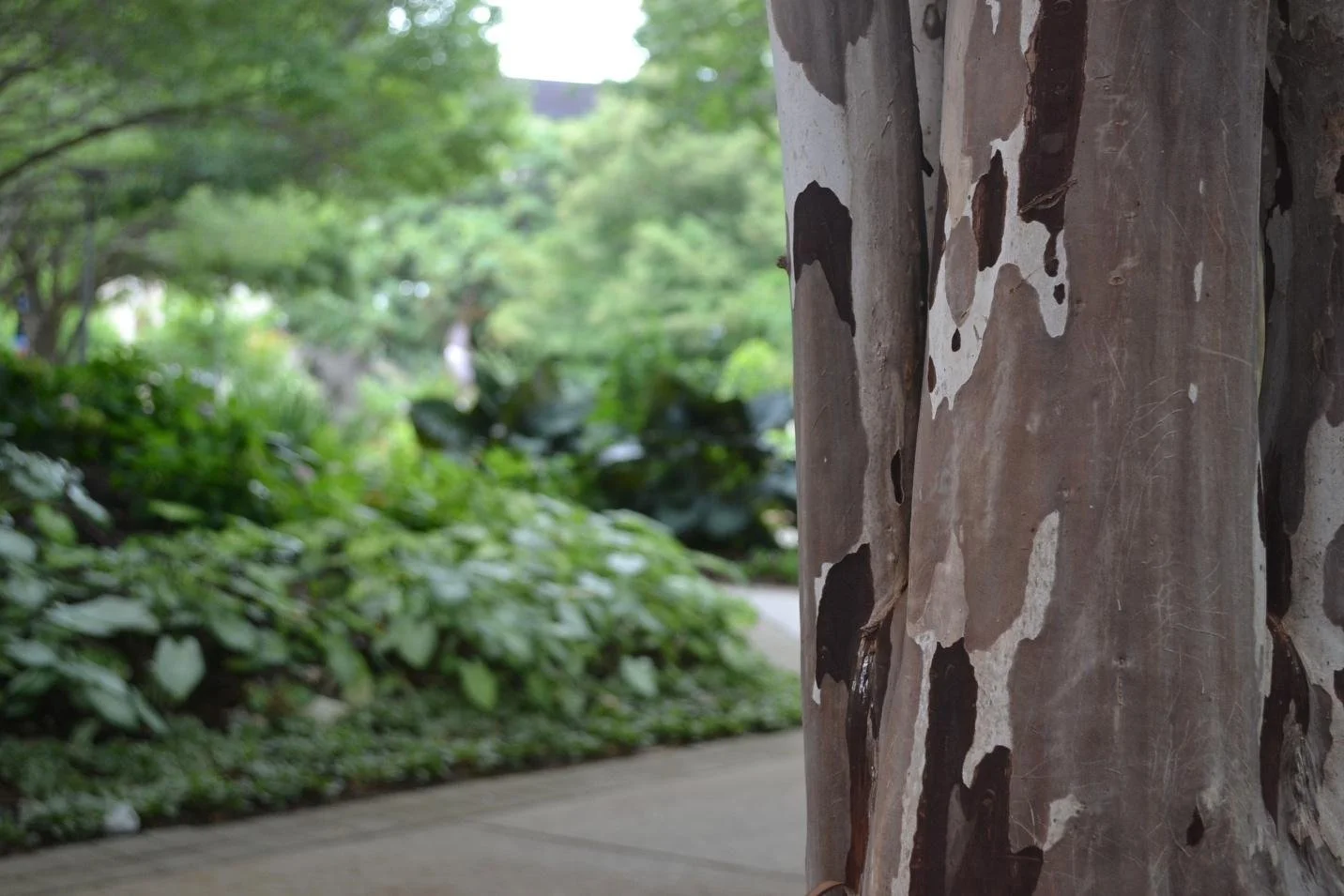
Dorthy Hudson Garden (Image courtesy of MD Anderson Cancer Center)
Knowing these difficulties, a group of ICU clinicians and rehabilitation specialists — including occupational therapist Tina Watkins, clinical nurse Erika Browne, Dr. Nisha Rathi, Medical Director of Respiratory Care, and Joseph McCarty, Inpatient Rehabilitation Supervisor — decided to change things. Together, they identified a space and created an algorithm that identified which patients could safely go outside and when.
Reimagining a Forgotten Patio
The best option identified was a ground-level patio by MD Anderson’s Alkek Tower, reachable for patients transported from the ICU on the 8th floor. It was private and accessible, but the space was far from welcoming. It was a narrow, noisy strip of concrete, hemmed in by walls and utilities. Years of heat radiating from nearby infrastructure had sterilized the soil in its planting beds. Almost nothing green could survive.
At first glance, it felt more like a utility access alley than a place of healing.
The breakthrough came with a simple idea: think vertically. As the landscape architect on the project, I designed a living wall to bring in new life where none could grow. By insulating roots from the overheated soil, the wall allowed plants to thrive in this punishing microclimate. More importantly, it gave the space life, color, and texture — the sensory richness ICU patients were craving. It was incredibly satisfying to see a long-neglected concrete strip become, in just a few weeks, a green sanctuary.
Advertisement
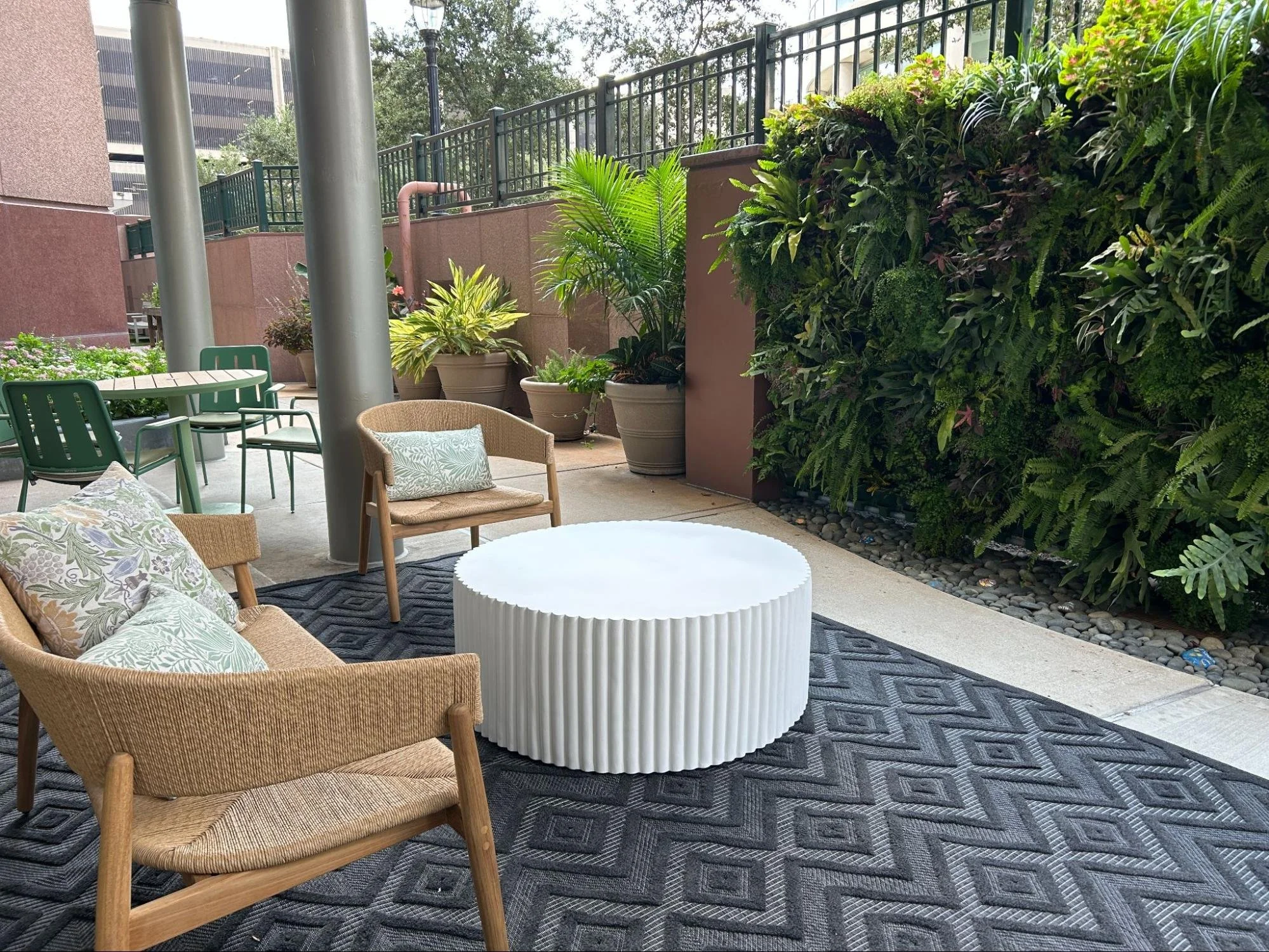
ICU Living Wall Patio (Image courtesy of MD Anderson Cancer Center)
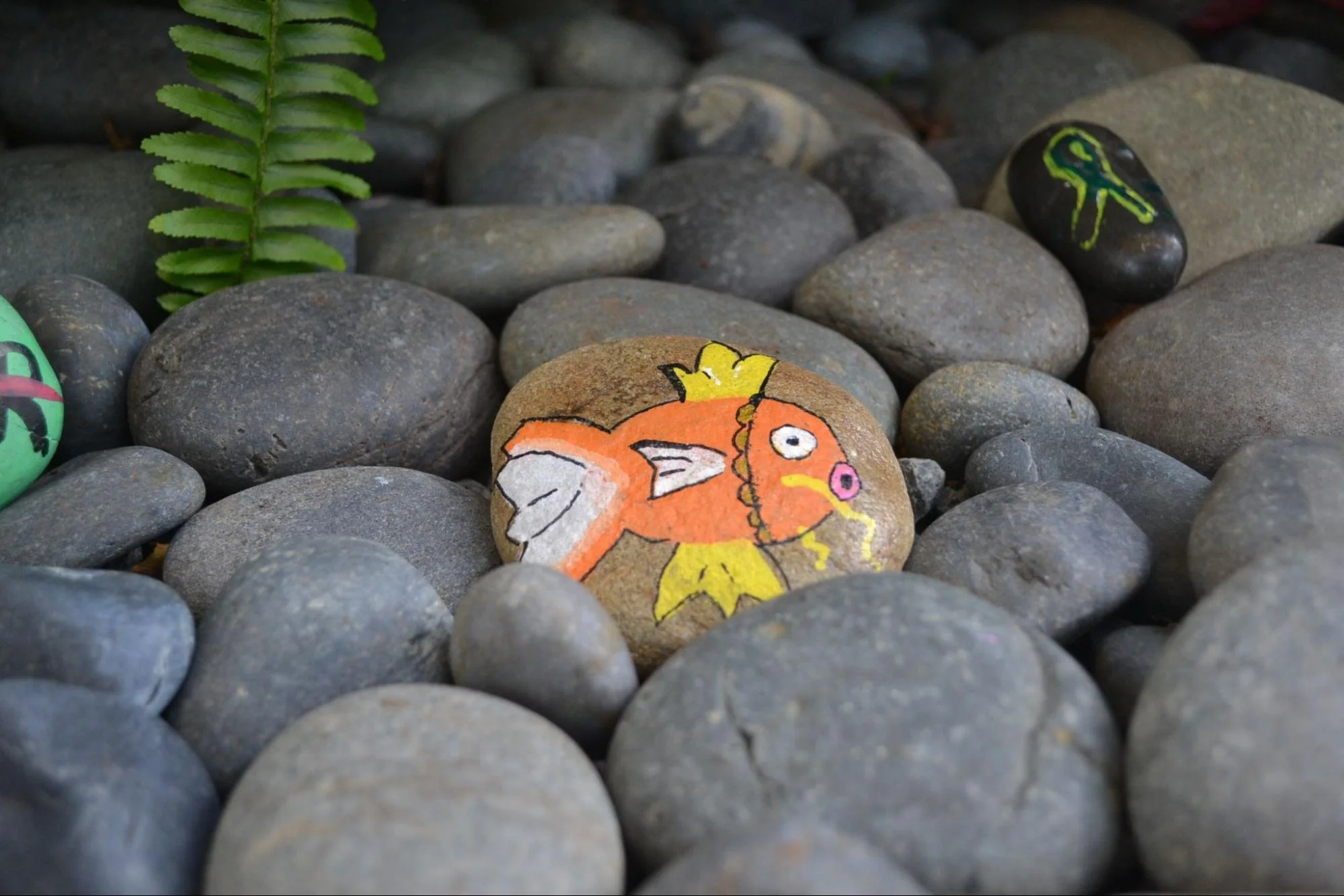
Rock garden at ICU Living Wall (Image courtesy of MD Anderson Cancer Center)
What It Means for Patients
The difference was immediate. Patients who hadn’t seen the outdoors in months now felt sun on their skin and air in their lungs. Families described moments of tearful joy and healing they thought were lost to them. One patient’s spouse called the experience “a blessing that healed both my soul and my husband’s.”
Staff embraced the space too, making it more than a patio. Care teams sit with patients to play card games, while families gather to share stories. At the base of the wall, a rock garden has taken shape. It is beginning to transform one stone at a time, painted with a patient’s name and the date of their first outdoor visit, or decorated with colorful art and messages of encouragement. It has become a ritual of resilience— a quiet celebration of courage, recovery, and hope.
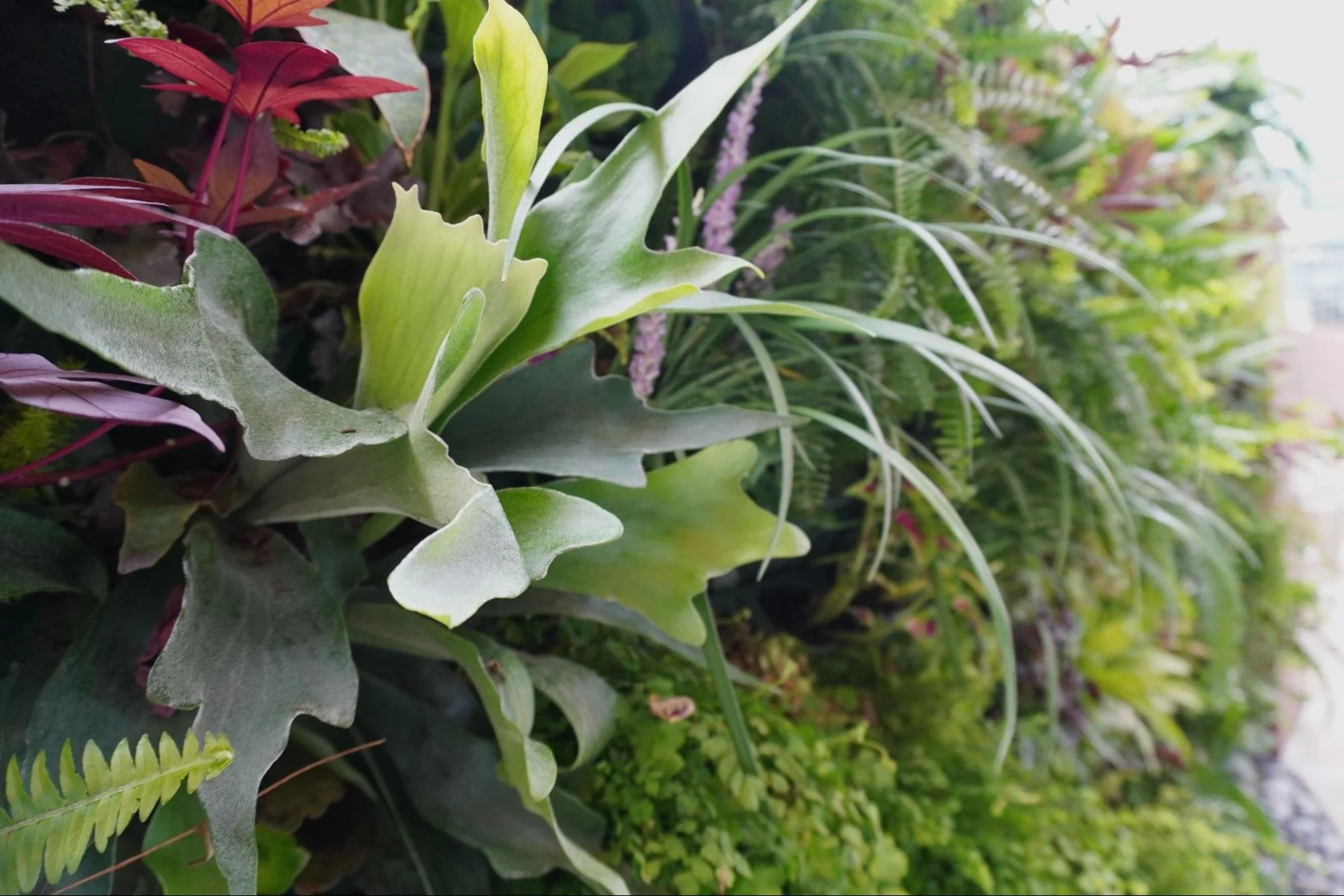
ICU Living Wall (Image courtesy of MD Anderson Cancer Center)
A Solution That’s More Approachable Than It Seems
Part of what makes this project so inspiring is its straightforward design. The vision for a space dedicated to ICU patients came from the medical team, and Facilities staff and landscape partners mobilized to make it real. A modular planter wall system was chosen, soil-based rather than hydroponic, with 384 individual planting cells. Each cell can be removed, allowing plants to be rotated for seasonal effect or taken to the greenhouse for protection in winter. Irrigation is provided by a drip emitter that fills a small reservoir in each cell, and a fabric wick draws moisture to the root zone.
The plant palette blends native Texas species such as maidenhair fern, hardy adapted selections like lilyturf and creeping Jenny, and tropicals including staghorn fern and croton to provide texture and color throughout the year. This mix ensures resilience while keeping the wall vibrant and engaging.
Our commercial maintenance contractor handled the installation, and their crew, usually tasked with routine upkeep, took pride in knowing they were building something transformative for patients. In the end, a neglected, forgotten corner of campus — once one of the most embarrassing patches of concrete on our 200-acre grounds — became one of its most cherished spaces. What was once a hidden eyesore is now a secret garden oasis.
Advertisement
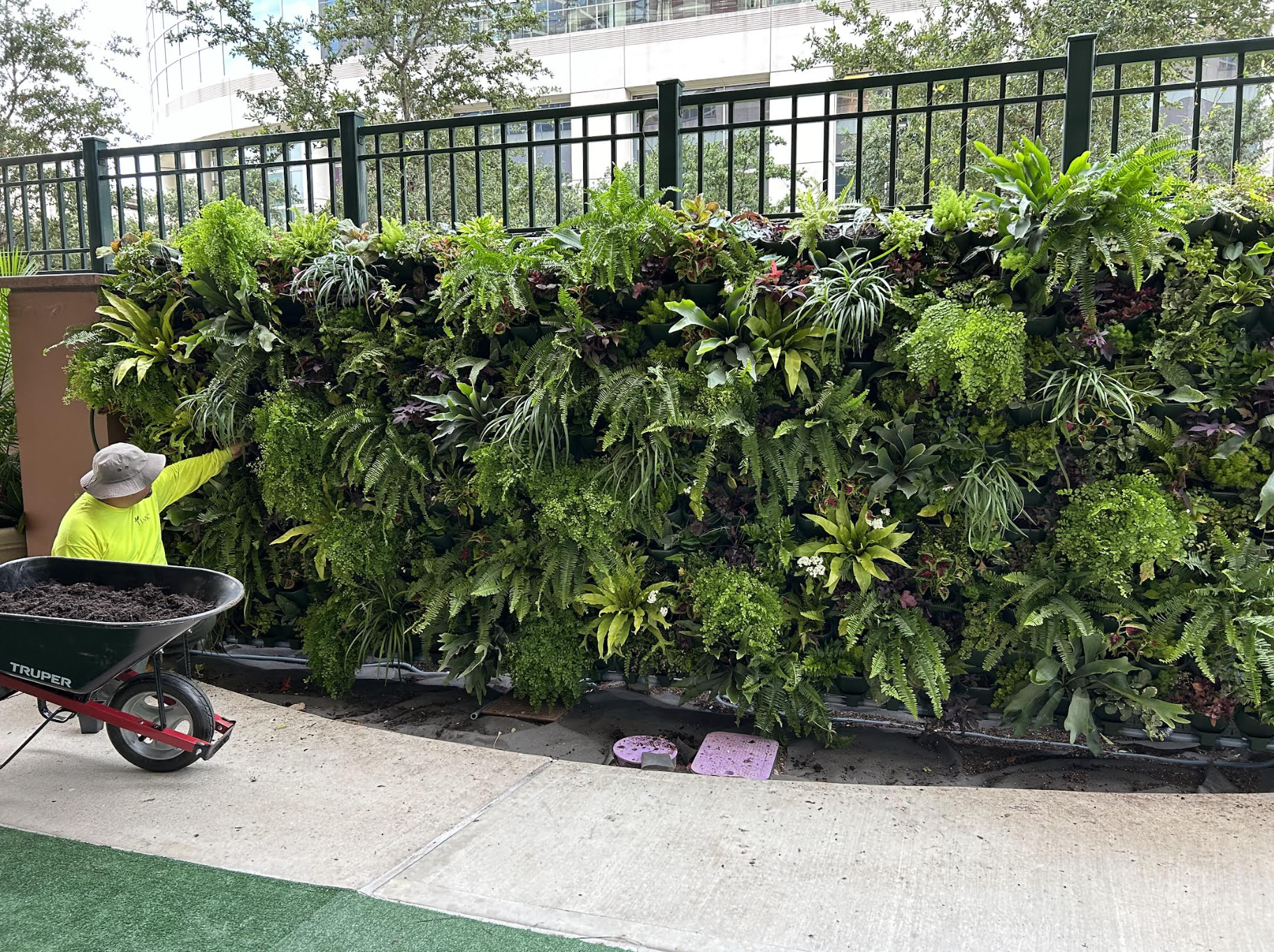
Landscape Contractor installing the Living Wall (Image courtesy of MD Anderson Cancer Center)
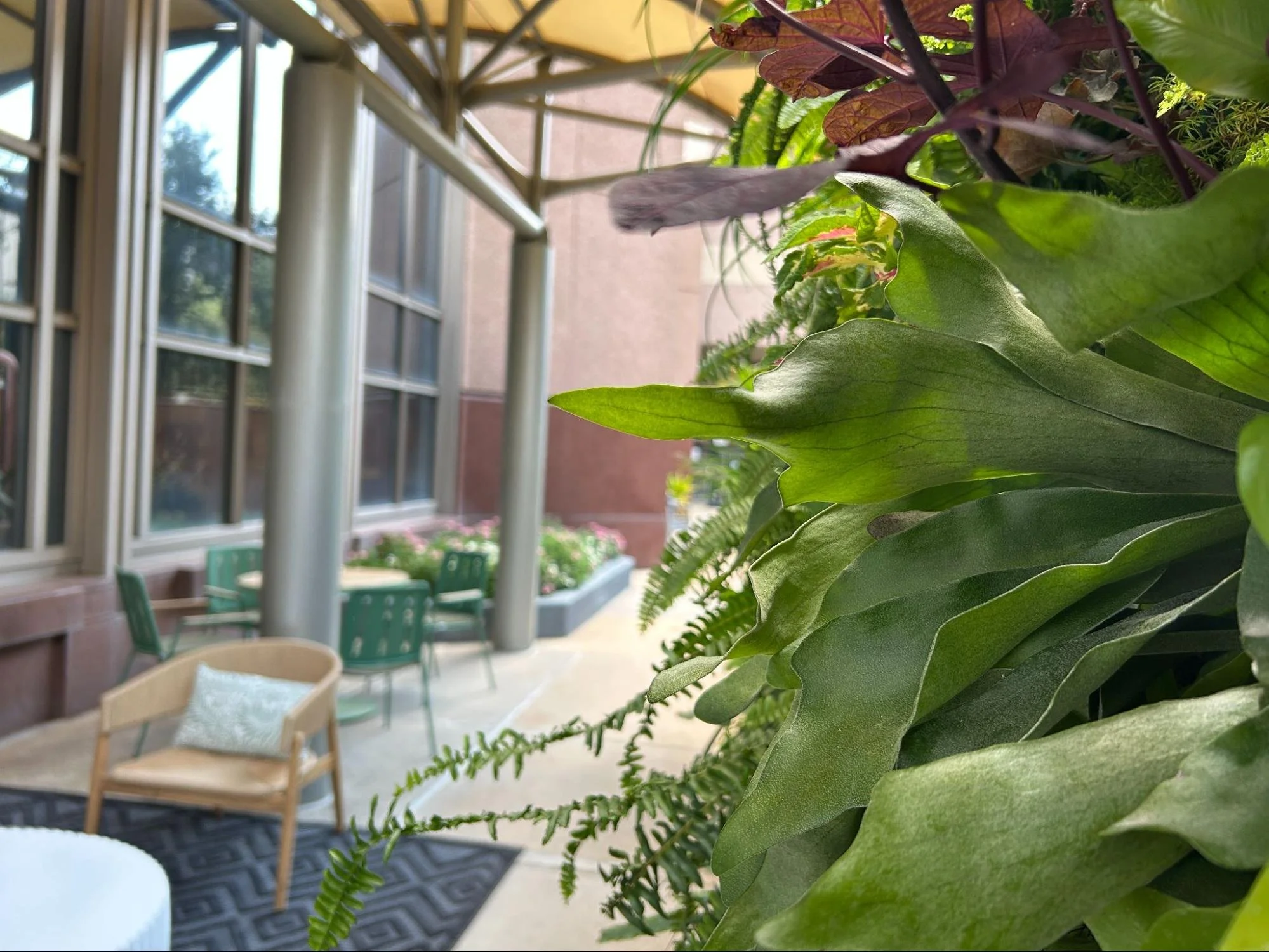
ICU Living Wall Patio (Image courtesy of MD Anderson Cancer Center)
Conclusion - Why It Matters
Research has already proven that access to nature supports healing, lowers stress, and improves patient outcomes. What this project shows is that access doesn’t require massive capital projects or multimillion-dollar gardens. Even in constrained, noisy, overlooked urban spaces, a living wall can become a doorway to nature.
For MD Anderson, the ICU living wall is more than a design intervention. It is a reminder that sometimes the simplest green solutions — a wall, some plants, a committed team, and a bit of creativity — can carry the greatest human impact.
Advertisement
About the Author
Philip Roberts is Senior Facilities Project Manager of Grounds and Landscaping Operations at The University of Texas MD Anderson Cancer Center. A licensed landscape architect with a background in landscape management, he oversees more than 200 urban acres. Roberts combines technical expertise with a passion for promoting health, beauty, and connection to nature. His work includes reviewing large-scale infrastructure planning and designing restorative gardens that support patient well-being. He believes landscapes should make a bold impact—providing function, inspiration, and a reminder of our place in the natural world while fostering peace, connection, and pointing beyond the self.