Advertisement
Introduction
At The Blackwood Educational Land Institute, we believe ecological literacy isn’t something that can be taught abstractly through textbooks and in theory. Learning from the natural world comes from connection to the natural world. It begins with hands in the soil, eyes on the horizon, and with commitment to stewardship of the land beneath our feet - even when that land is four stories above ground.
Founded in 1990 in Hempstead (Texas), The Blackwood Landfarm, a 33 acre regenerative farm and educational campus started with a fairly simple vision - to uphold our connection to the natural world, and advance ecological literacy in ways that are accessible and inspiring. In 2021, the founding of the Blackwood Skyfarm in downtown Houston (Texas) created a powerful new frontier. A living classroom, an experiment in urban ecology, and a beacon of regenerative possibility located on the rooftop of one of Houston’s most ambitious adaptive reuse projects, POST HTX.
Blackwood’s Skyfarm is more than a farm. It is a proof of concept. A functioning example of what can happen when cities begin to make space for sustainable food systems and land-based learning at the urban core.
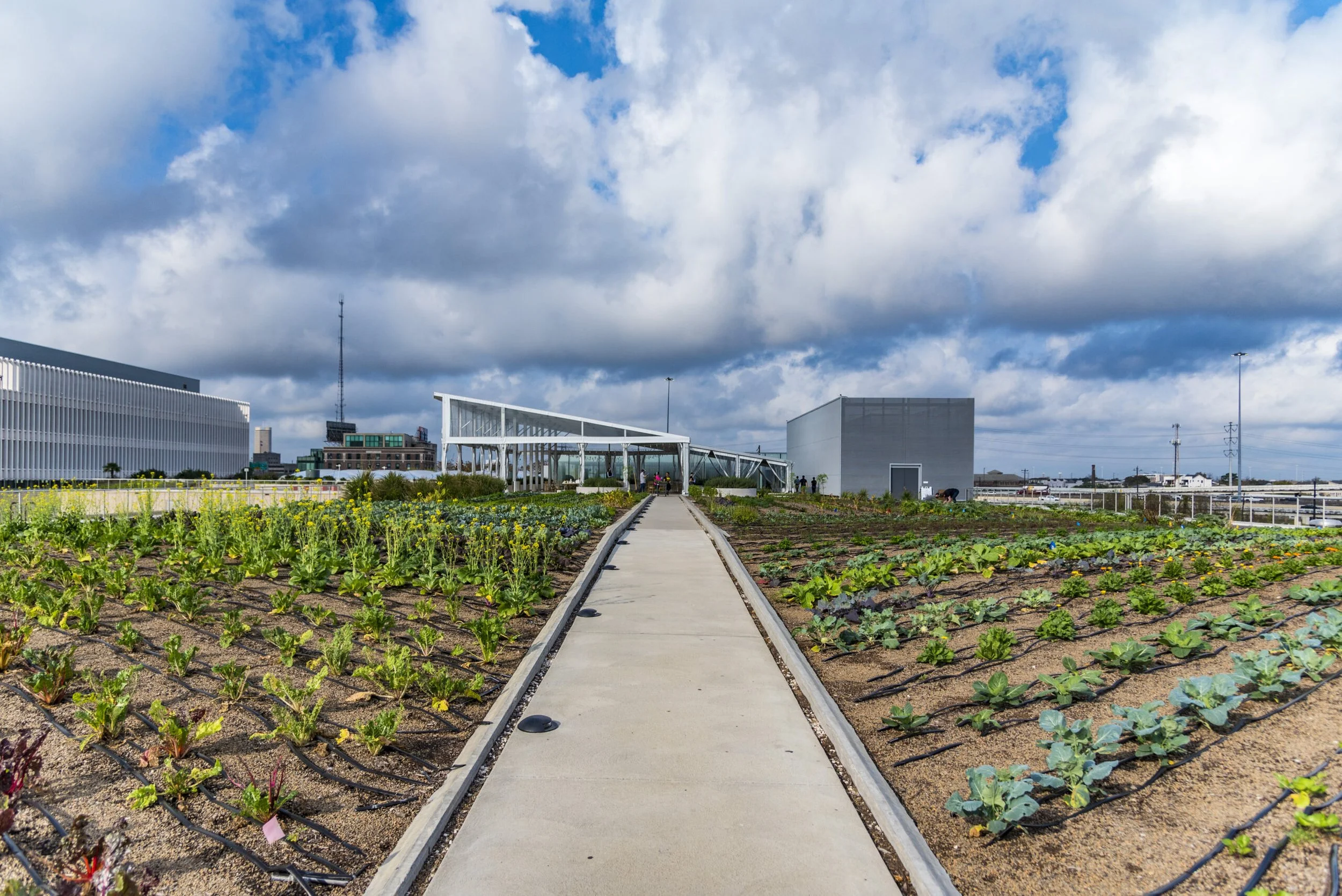
Fresh greens growing on the rooftop farm. Photo: Blackwood Farm
A Rooftop Farm Rooted in Education
When we built the Blackwood Skyfarm atop POST HTX in downtown Houston, Texas, we saw an opportunity to extend Blackwood’s mission into the city in a meaningful way. We were not just interested in producing food. We were interested in producing insight. We wanted to understand what it means to grow a farm in a dense urban setting, who it serves, and how it can become an integral part of the city's design and daily life.
Today, Blackwood’s Skyfarm serves hundreds of students from elementary classrooms to graduate programs. It offers hands-on learning in soil science, composting, biodiversity, and sustainable agriculture. Whether working with second graders or engineering and architecture students from Rice, Texas State University or the University of Houston, the farm has become a powerful platform for cross-disciplinary learning and collaboration. At a time when many young people are disconnected from the origins of their food, Blackwood’s Skyfarm brings these questions back into focus. It connects learners to ecological systems in a way that is direct, meaningful, and increasingly essential.
Advertisement
What We Are Learning From the Roof
For the last three years our Skyfarmers have tracked the soil health, pest cycles, irrigation needs, and the unique climate patterns created by conditions such as an urban rooftop’s elevation and full sun exposure. Plants are selectively propagated for their resistance to heat and drought, ground covering (both natural and manmade) is implemented and tested for impact on yields, and the occupation of wildlife and insects are monitored year round to confirm recovery and growth in tangibly measurable ways.
Farming on a rooftop is complex, and that complexity is part of what makes Blackwood’s Skyfarm so valuable. Every day, the farm teaches us what it takes to grow food and steward environmental health in a space never designed for agriculture. The challenges we face here are not obstacles; they are lessons that reveal how cities can further evolve to support new food systems, and how integrating regenerative agriculture into metropolitan landscapes impacts the overall quality of life in urban environments.
To learn these lessons we must first ask questions aimed at understanding and improving functionality. How do we reduce water usage? What does introducing biodiversity offer urban landscapes? How can we steward and increase the presence of essential pollinators? And beyond parks and gardens, how do interactive, sustainable, and nourishing green spaces improve communities? With these questions and so many more in mind, the Blackwood Skyfarm quickly became not only a place for cultivation but also a source for real world data that challenges many existing ideas about the role of urban agriculture in our modern world.
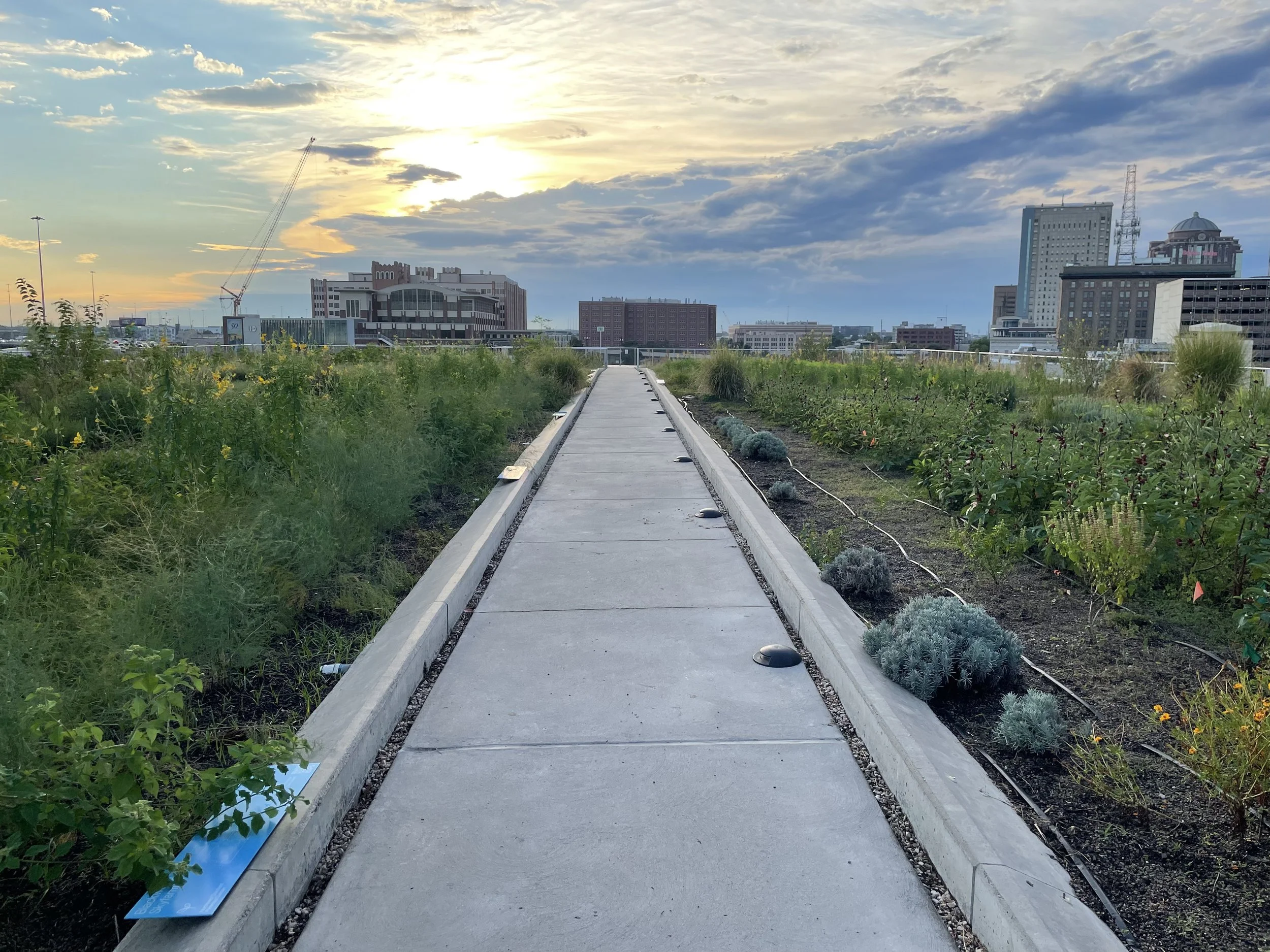
Plants on the skyfarm growing tall. Photo: Eric Durnford
Beyond agricultural interest, the data and ongoing documentation of what’s produced here provides essential information for architects, designers, engineers, and sustainability professionals who want to integrate agriculture into the built environment.
For them the Blackwood Skyfarm helps answer the most pressing question: what must change about the way we design buildings if we want farms to live on top of them?
What We Are Missing and What We Envision
Currently, Blackwood’s Skyfarm operates with minimal infrastructure. Through creative adaptation, strong partnerships, and determination, we have built a thriving ecosystem in a space not originally intended to host one. But to realize the full potential of rooftop agriculture, we must also imagine what it could look like with the right resources and design.
Our farm is missing some of the essential components that make agriculture resilient and efficient. These include secure storage for tools and materials, systems for harvesting and managing water, composting infrastructure, shaded work and learning areas, pathways and access points designed for people of all abilities, greenhouses for seedling propagation, and lab spaces for observation and research. The absence of these elements does not diminish the value of what we have accomplished. In fact, it highlights an important reality. Blackwood’s Skyfarm is not only a model of what is possible within limitations; it also provides a roadmap for what should be prioritized in future designs.
Advertisement
Rethinking the Built Environment
If we want rooftop farms to be more than isolated success stories, we must begin designing buildings with agriculture as part of their core function. This means rethinking load-bearing capacities, incorporating built-in irrigation and drainage systems, and designing with pollinators, beneficial microbes, and wildlife in mind.
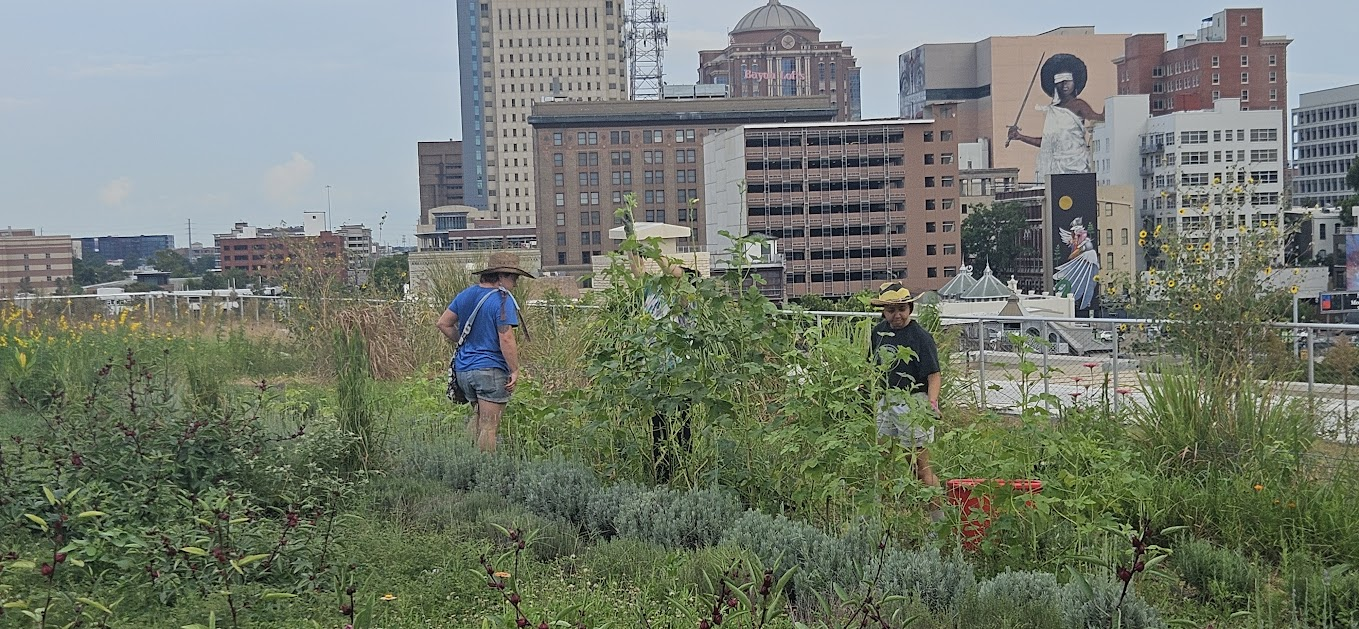
Harvesting at Blackwood Skyfarm, Houston. Photo: Steven Peck
Urban farms do much more than grow food. They support biodiversity, clean the air, manage water, and create jobs. They are sites for community, education, and innovation. But they can only thrive when the buildings that support them are intentionally designed to do so.
Blackwood’s Skyfarm demonstrates what can be done with retrofitted space. It also reveals the opportunities we have to build better. When developers, architects, and city planners engage with farms from the outset, we can create spaces that support entire ecosystems, from seed to soil to skyline.
A Vision for the Future
Everything we need to expand Blackwood Skyfarm’s impact is within reach. We are currently exploring new partnerships and funding opportunities to enhance infrastructure, grow our programming, and deepen our research capacity. With the right investment and continued collaboration, Blackwood’s Skyfarm could become a national model for rooftop agriculture.
We envision a future where rooftop farms are equipped not just to grow food, but to serve as dynamic, accessible, and resilient systems of ecological education and design.
In this future, buildings are designed with food systems in mind. Rooftop farms are planned alongside HVAC systems and solar panels, not added after the fact. Accessibility is not an afterthought. Ecological function is built into the very architecture of the city.
Moving Forward
Blackwood’s Skyfarm is already reshaping the way people think about food, education, and the repurposing of spaces within our urban landscapes. Showing us all what’s possible when urban design meets ecological intent. Reminding us that the purpose of land does not disappear as we build upward - it just has to take on new forms.
We are proud of what we have built, we are proud of what we are growing, and we are more inspired than ever by what is still ahead.
Advertisement
Andrew Whit is a creative strategist and writer who helps nonprofits and local institutions claim their place in the cultural landscape of Houston and beyond. With a focus on storytelling, community engagement, and mission-driven clarity, he builds narratives and strategies that elevate organizations, deepen their impact, and expand their reach.
More Information

Ten diverse innovations in living architecture - ranging from technologies and research to project certification and policy - plus trends and recommendations for future endeavors.