How Soprema’s Green Roof Journey is Interwoven With the Development of the North American Industry
Advertisement
Early Leadership by Soprema
In the 1980s the corporate leadership of Soprema, an independent family group established in 1908, had the foresight to invest in the development of green roof technology for France, a logical extension of its successful waterproof manufacturing business. It was still early days for the modern green roof industry, but significant progress through research, testing and standards development had been completed by the German Landscape Research, Development and Construction Society (FLL). They published the first green roof guidelines in 1982, laying out the details for the planning and maintenance of green roofs and setting a foundation for industry growth in Germany.
In 1989, Francois Lasalle was hired by Soprema to lead the development and marketing of green roof technologies for France. A gardener, with two horticultural degrees and fluency in German, Mr. Lasalle was the perfect person to lead Soprema’s green roof efforts. His research and development brought him to another pioneer, Germany’s Bernd Krupka, a landscape architect, urban planner and honorary member of the FLL. Mr. Lasalle spent a week with him, absorbing all of the knowledge and expertise he could. He adapted and developed these ideas for France and in November 1989, Soprema launched Sopranature Solutions at a big construction event with thousands of attendees.
“At first, sales were slow, but over the next couple of years Sopranature Solutions became profitable,” said Mr. Lasalle. Soprema kept investing in green roofing and hiring more staff. Ten years later, after much ongoing development and testing, a variety of Sopranature products for different roofing applications were finalized.
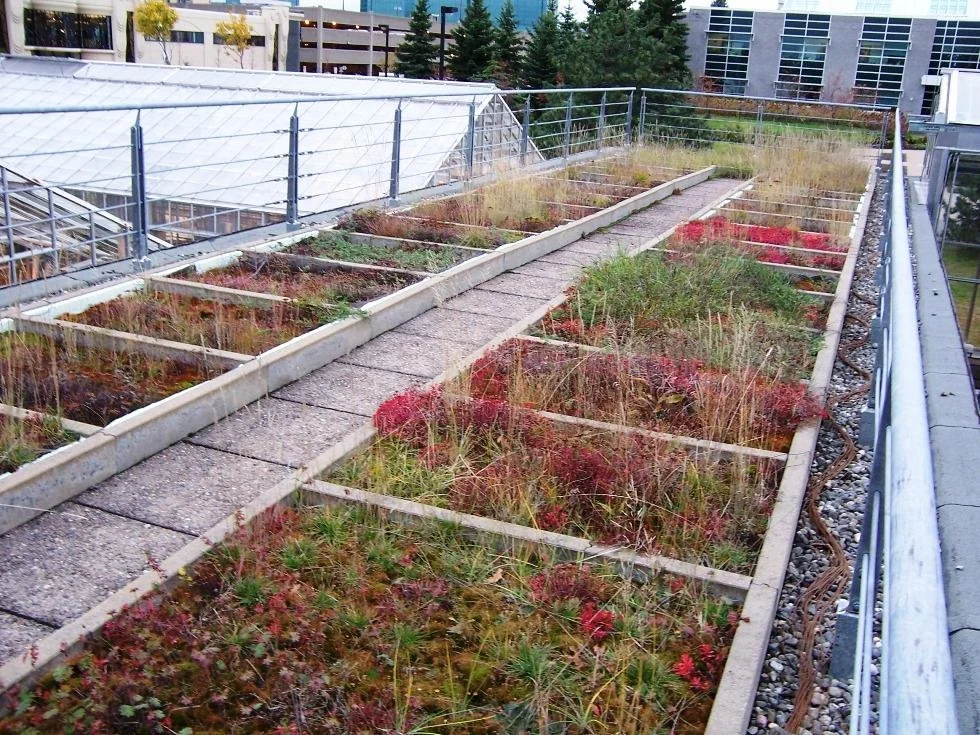
Test plots for green roofs in different depths of growing media at the Horticultural Research Center at the Université Laval. Photo: Soprema Canada.
Investing in Sopranature Products for North America
Sopranature got its start in Quebec, Canada. In 1992, Soprema had already built a waterproofing manufacturing facility in Drummondville, Quebec. Then technical Director, Denis Faucher requested support from the head office for the development of a Canadian version of Sopranature.
Anyone who has lived in or visited Quebec in the winter will know about its bone chilling temperatures. Hence, plant survival during winter months was a key technical challenge for early green roof development. Soprema’s head office in France agreed to Mr. Faucher’s request and in 1992, Mr. Lasalle, who was conducting research on different growing media in France at the time by testing plant survival in the lab and on rooftop test plots in France, turned his attention to Canada. There, he initiated the first North American green roof research project on the roof of the Drummondville manufacturing plant, investigating the ability of various sedum species to survive the winter at 5 cm, 10 cm and 15 cm depths of the substrates he created. Shortly after this initial research, a masters student named Marie-Anne Boivin soon began to work with Mr. Lasalle and Blanche Dansereau to replicate and expand on this initial plant research at a rooftop Horticultural research facility located at the University of Laval. Her research on more than 360 plants was designed to adapt green roofs for the North American market. Ms. Boivin’s work not only earned her a Master’s Degree in Horticulture, it also contributed to the development of unique growing media and plant selections for Canada. Soprema research greatly expanded our knowledge of the kinds of plants that could survive the cold dry Quebec winters on an extensive green roof and across a variety of North American climates. By 1995, Sopranature Canada was launched, and Marie Anne Boivin was hired to continue to develop products and the market. The SOPRANATURE green roof system was specifically designed to protect the waterproofing system from all potential physical and thermal damage.
Advertisement
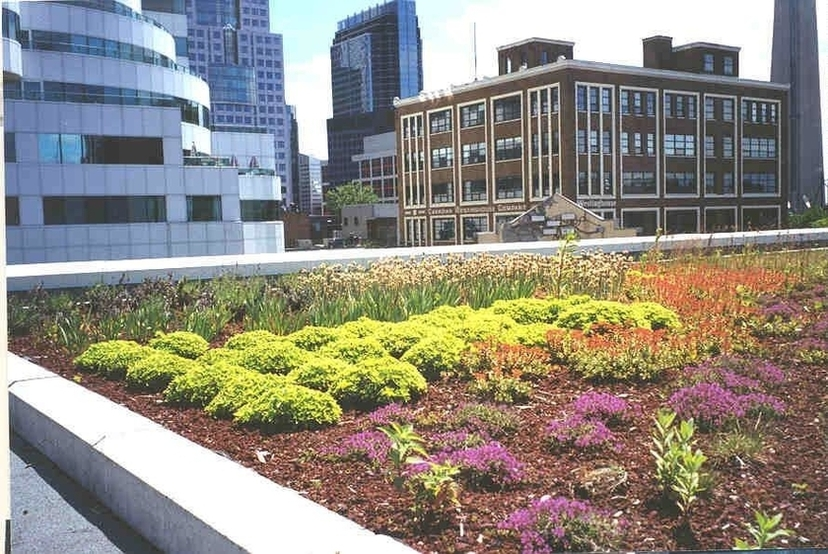
This 900 square meter Mountain Equipment Co-op extensive Sopranature green roof in downtown Toronto was completed in 1998 and provided exceptional opportunities for people to visit the project. This greatly increased support for green roofing in Canada. Photo: Soprema
Patiently Developing the Market
Initially, there were a couple of small SOPRANATURE projects completed in Quebec. To say the market for green roofs was immature at that time is an understatement. The green roof industry in Canada was practically a complete unknown – and SOPRANATURE was a testament to Soprema’s vision, leadership and commitment. When I started to do my research on green roofs in 1997, resulting in the Canada Mortgage and Housing Corporation (CMHC) funded report “Greenbacks from Green Roofs: Forging a New Industry in Canada”, there was literally no information available in the English language on the subject. My German speaking colleague and architect Monica Kuhn, had to translate benefits research data for our report from German sources. Ms. Boivin also developed detailed specifications for plants on the first SOPRANATURE green roofs to be grown and installed by nurseries and contractors. In the early years, it was tough to get designers and/or building owners on board. However, a big breakthrough occurred when the Mountain Equipment Co-op (MEC), a cooperative focused on retailing outdoor clothing and climbing gear, opened a new store in downtown Toronto. Marie-Anne Boivin was the driver behind the project, alongside Peter Serino, Soprema’s Sales Director for Ontario. Ms. Boivin went to visit the then owner at the MEC head office in Vancouver in 1996 to present the project proposal and find solutions that would ultimately allow this project to go forward. “The owners were actually striving to create an urban oasis in the city center,” said Ms. Boivin.
The MEC had adopted a mandate to support emerging green technologies. They agreed to implement a 900 square meter extensive SOPRANATURE green roof in 1998. This extensive green roof was very high profile and staff at the MEC were more than happy to take people up the ladder to the roof to show off the project. Over the first few years, literally thousands of people visited the MEC roof, wanting to see a green roof up close and personal. It was a big win for Soprema and a very young green roof industry.
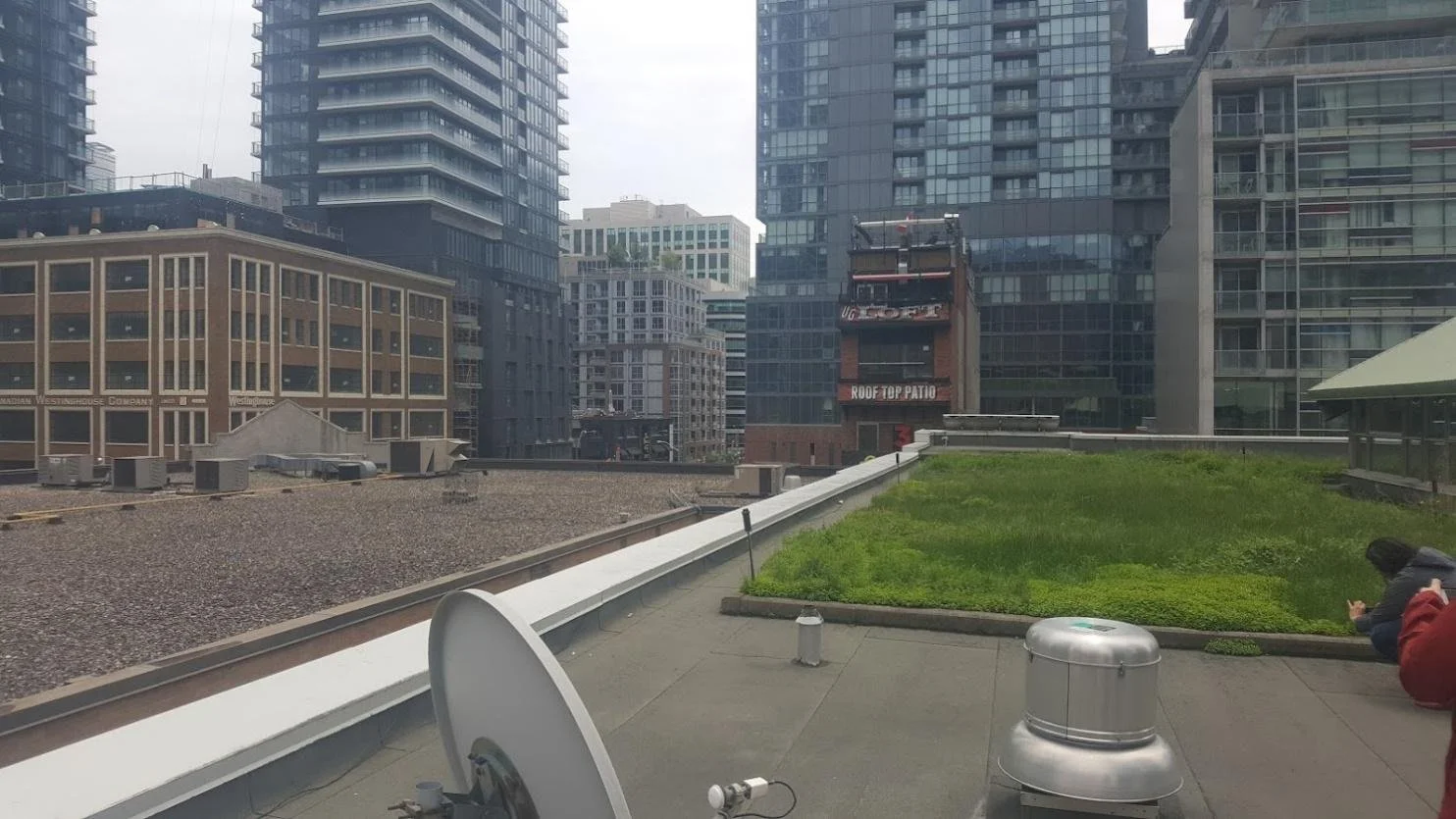
A section of the MEC SOPRANATURE green roof in 2019. Photo: Steven Peck
Research, Demonstration and a Major Policy Breakthrough
The MEC green roof was a fantastic educational tool. It also helped Green Roofs for Healthy Cities, a coalition of industry groups I founded in 1999 begin the work of developing the North American market through education, training, and advocacy. Soprema’s Colin Donaldson was one of the founding members of this coalition along with companies such as Flynn Roofing, Garland, IRC Group and Semple Gooder Roofing. Our initial focus was to spearhead the development of a green roof demonstration and research project on Toronto’s City Hall Roof. The coalition members, with help from the City of Toronto, the Toronto Atmospheric Fund, and Environmental Canada raised more than 1 million dollars to develop the green demonstration project. It featured eight different green roof plots, half of which were the SOPRANATURE systems, as well as an extensive green roof on the Eastview Neighborhood Community Center. The green roofs were installed in 2001 and the project included performance research led by Dr. Karen Liu of the National Research Council’s Institute for Research in Construction. The City Hall green roof featured a wide range of different applications in each plot, from sedums to biodiversity and even food production. It provided construction industry professionals and policy makers with an opportunity to experience the many benefits of green roof technology and engaged the North American research community.
Advertisement
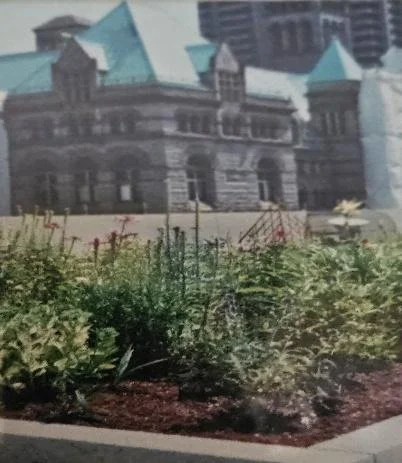
One of the educational plots in the Green Roof Demonstration and Research Project 2001, on the City of Toronto City Hall roof. The project was supported by Soprema and six other private sector members of the coalition, which later became incorporated as Green Roofs for Healthy Cities – North America Inc. Photo: Steven Peck
Securing Policy Support
The green roof industry thrives in markets where there is public policy support that recognizes the many public benefits green roofs provide. In 2012, Green Roofs for Healthy Cities was finally able to convince Toronto City Councilors to pass the Toronto Green Roof By-Law with the support of Deputy Mayor Joe Pantalone and Mayor David Miller. This By-law was the first of its kind. It included a construction standard which governs the construction of all green roofs in Toronto, an incentive program to support green roof projects on existing buildings, and a requirement for green roofs on new buildings with over 2,000 meters of floor space. This policy was a first in North America for a big city, and has since resulted in more than 10 million square feet of green roofing on over 1000 projects in Toronto. Other cities, such as New York, Cambridge and the Gatineau have adopted or modified the Toronto Green Roof By-Law for their own uses.
Supporting Membrane Durability Claims
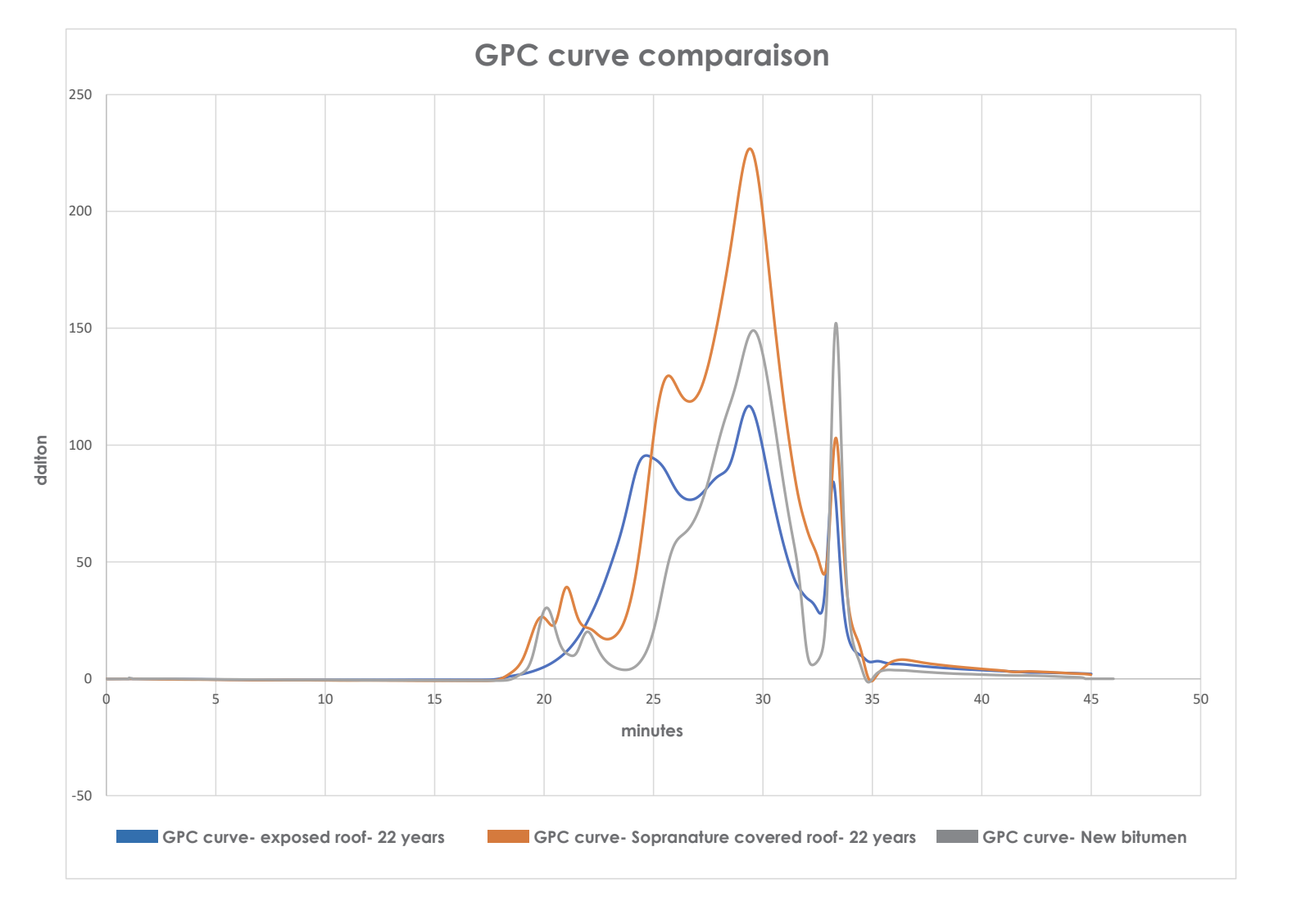
The results of gel permeation chromatography on membrane durability
The MEC Green Roof became important once again, in helping us verify the claims about how green roofs can double or even triple the life expectancy of waterproofing. In 2019, we learned that the MEC building had been sold to a developer who planned to demolish it to make way for a new condominium. So we asked them if we could, with the support of Soprema Canada, perform a cut test on the membrane beneath the green roof. After twenty-two years, one would think that there should be a noticeable difference in the chemistry of exposed membranes versus those protected under the Sopranature system. They agreed and Roxanne Miller who was leading Sopranature since 2018, and John Castonero performed the cut test in 2019.
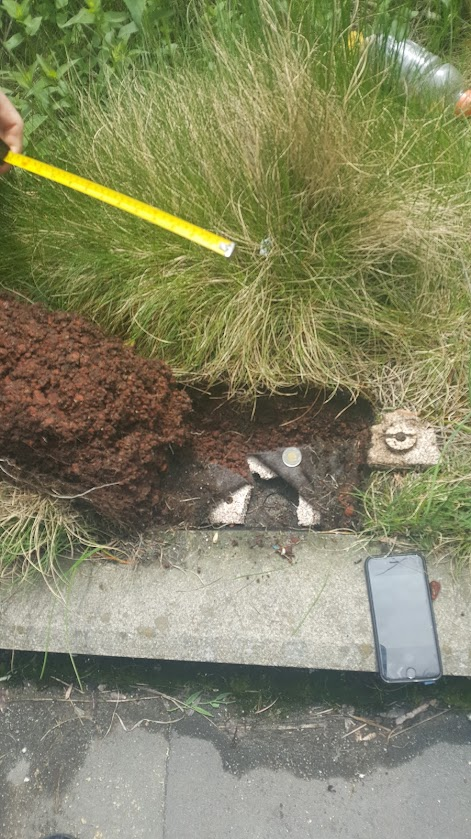
Peeling back the layers of the 1998 SOPRANATURE Green Roof system on the MEC Green roof to perform a cut test to determine the membrane durability benefits after 22 years of coverage. Photo: Steven Peck
The 12 inch by 12 inch waterproofing samples, one from under the green roof and one fully exposed were taken to one of Soprema’s testing facilities and subjected to a Gel Permeation Chromatography testing machine which measures the breakdown of molecular chain in the SBS elastomeric polymer. The test indicates that the protected part of the waterproofing system appears almost as if it is new. Furthermore, the green roof assembly was still intact, showing no signs of compaction of the growing medium, drainage components in good condition, no significant loss of organic content, or spread of root systems.
Supporting Project Innovation
Soprema Canada projects have won many Green Roofs for Healthy Cities Awards of Excellence over the years. One particularly innovative project is the IGA Rooftop Farm in Montreal Quebec. Many professionals were involved in this project: SOPREMA, NEUF Architectes, Le Groupe Mach and Sobeys are just a few of the stakeholders who participated. The entire concept was brought forth and happened as a result of the involvement and persistence of La Ligne Verte, the local Montreal company that incorporated a very creative solution- based approach to this project. IGA DUCHEMIN is now the first grocery store in Canada to sell fresh organic produce harvested directly from its roof. Here are a few interesting facts about the project:
More than 30 kinds of vegetables are produced on the roof; i.e. kale, lettuce, carrots, green beans, eggplant, garlic, tomatoes, spinach and more.
There is a very productive cut flower activity going on, on the roof.
Vegetables and flower bouquets are sold in the IGA below.
Eight newly installed beehives on the roof produced 500 jars of honey in 2021.
Birds eye view of the awards of excellence winning rooftop farm on the IGA Duchemin building in Montreal. A testament to Soprema’s ongoing support of innovative projects and Courtesy IGA Duchemin
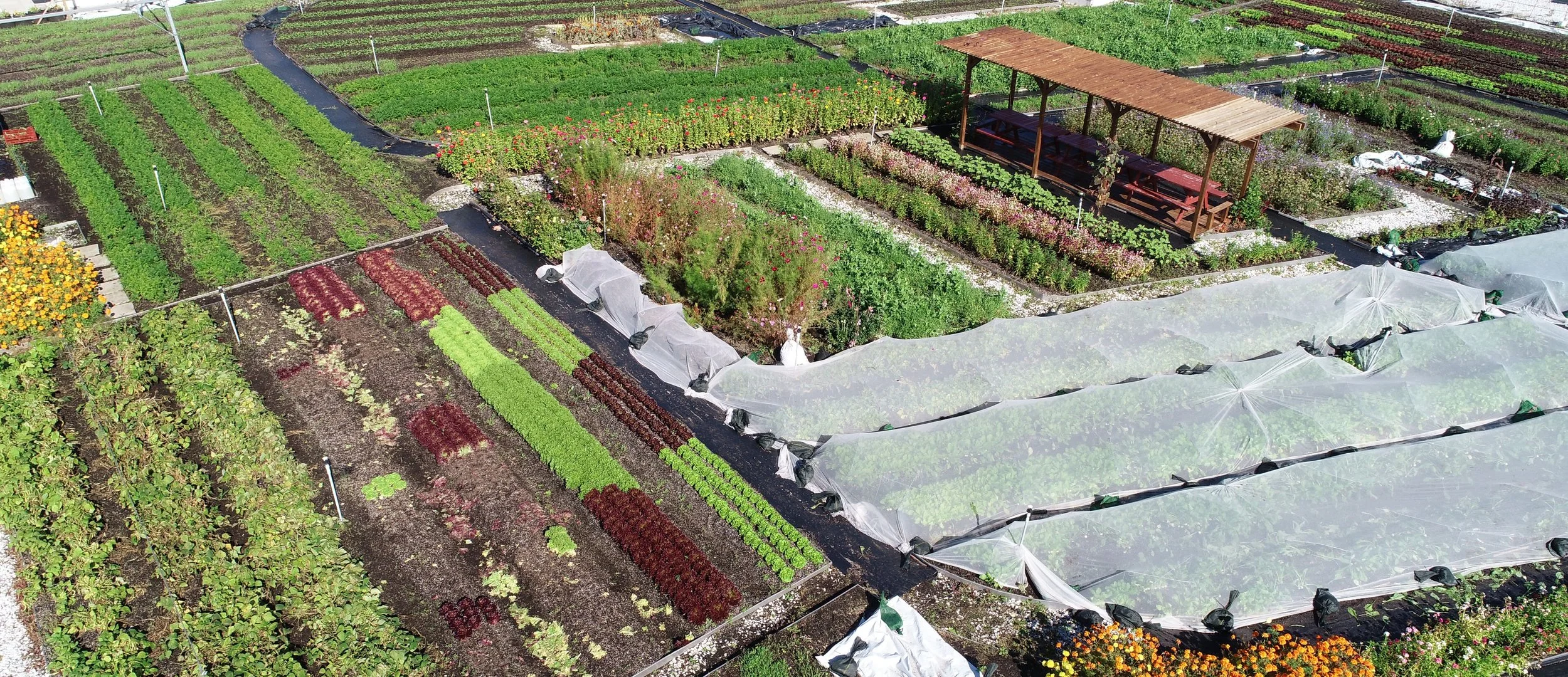
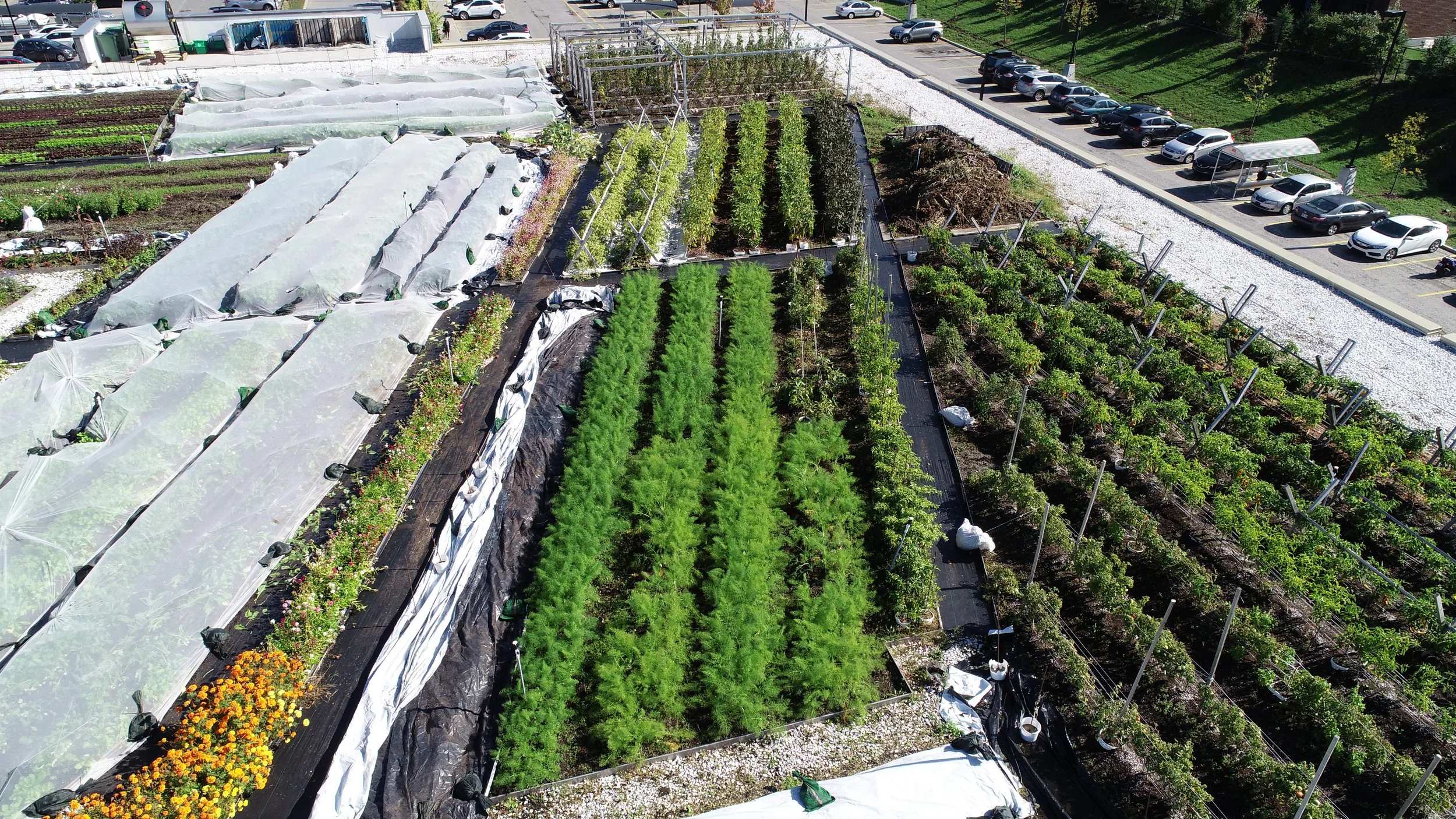
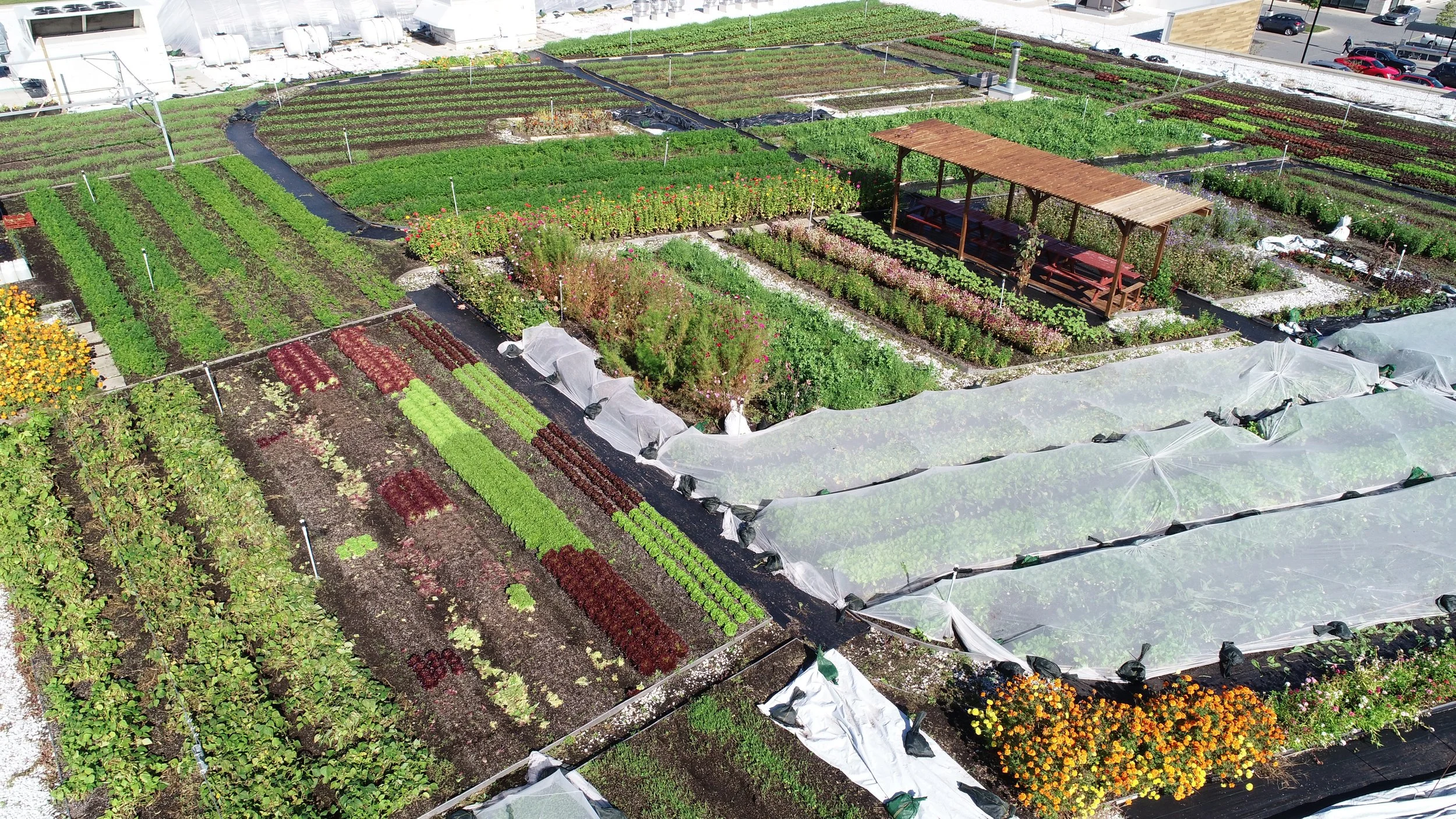
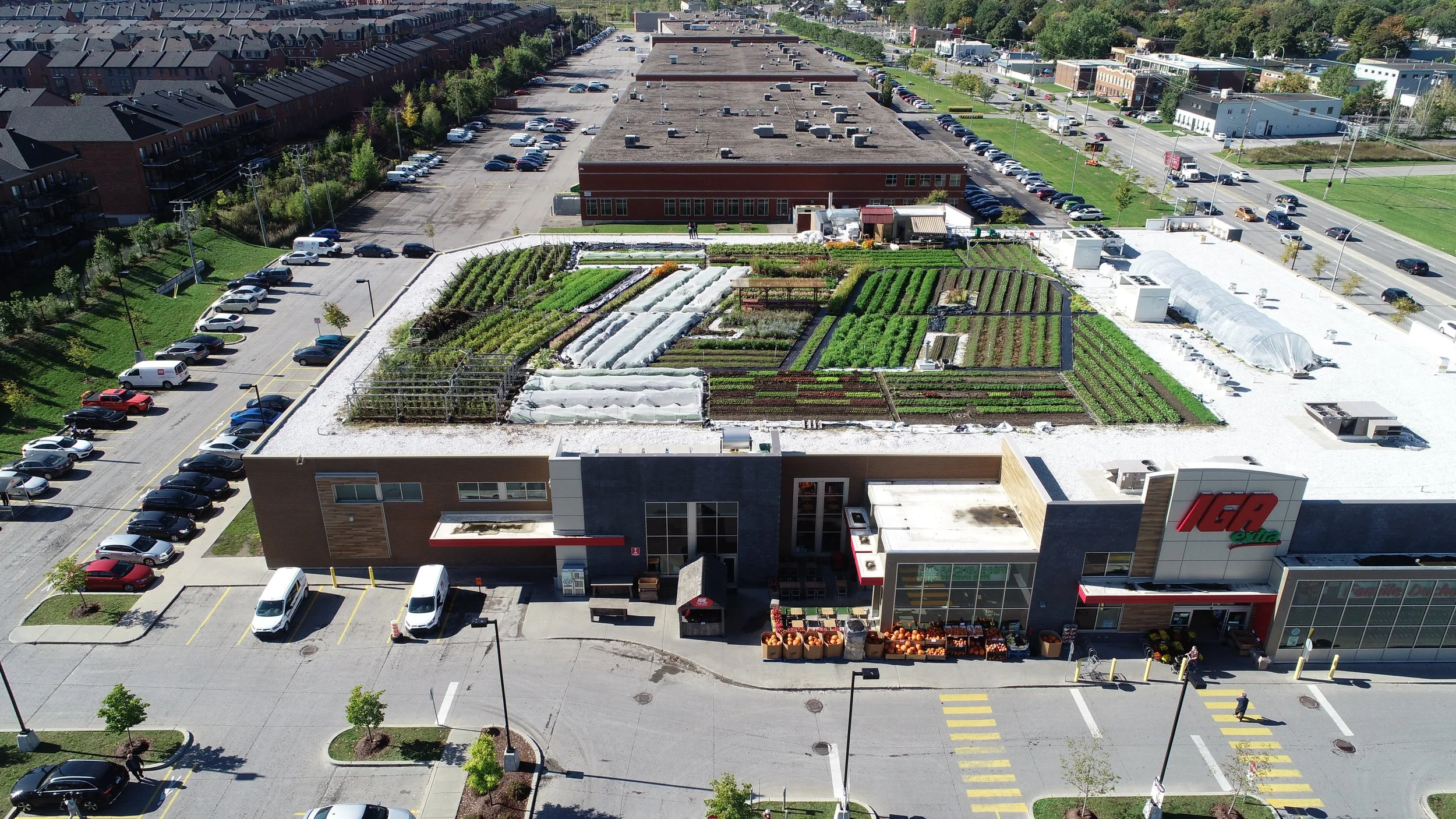
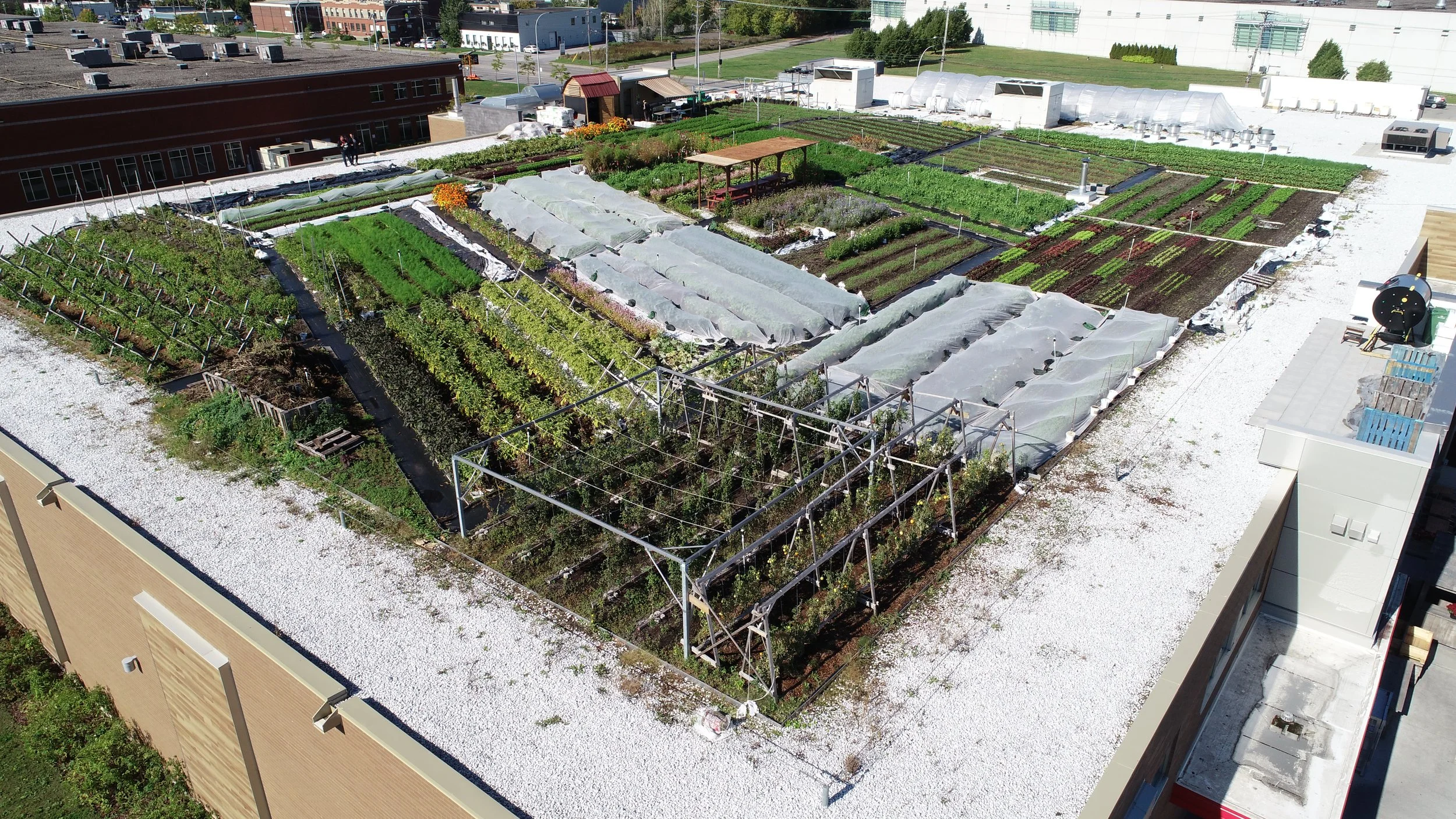
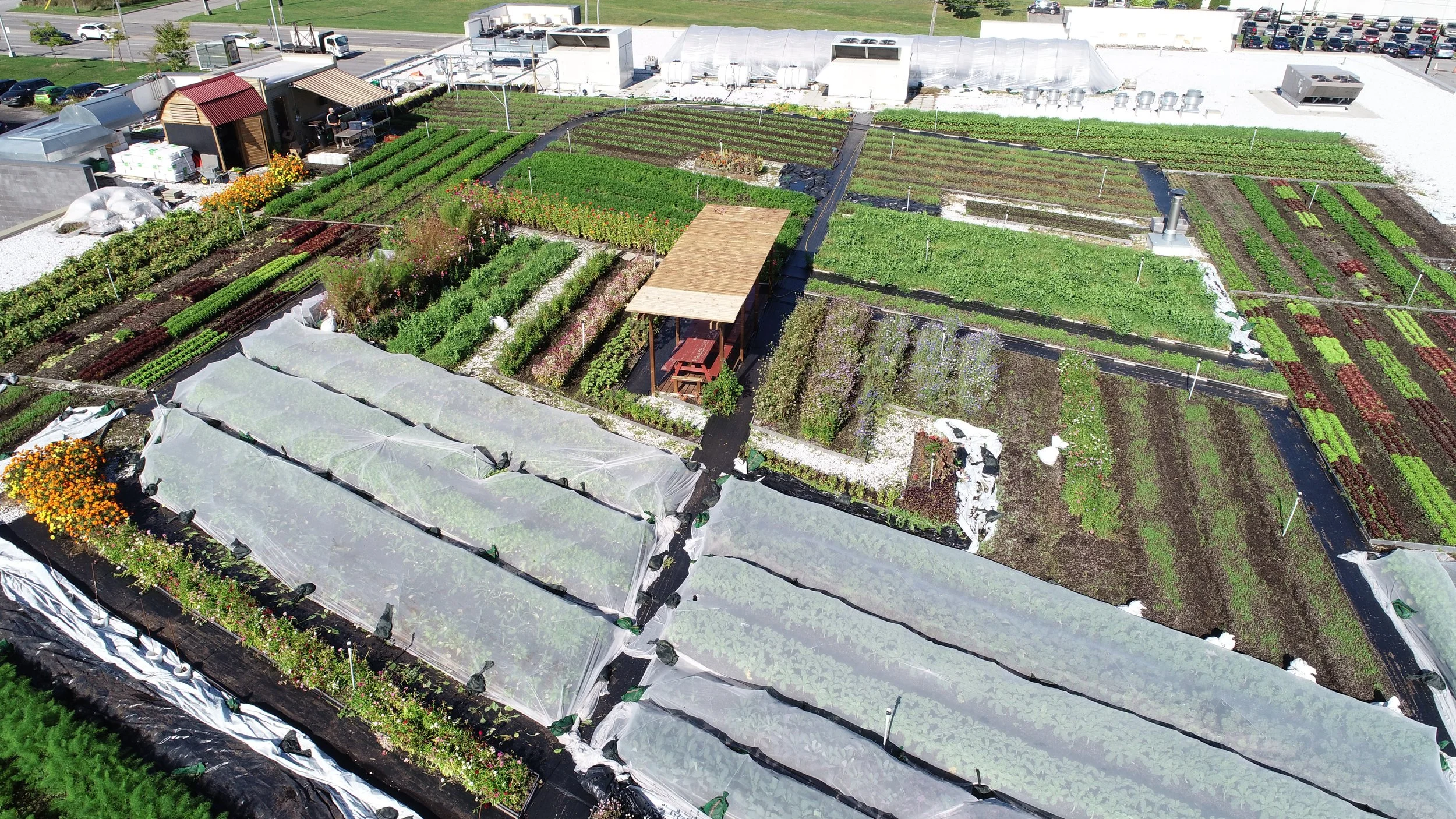
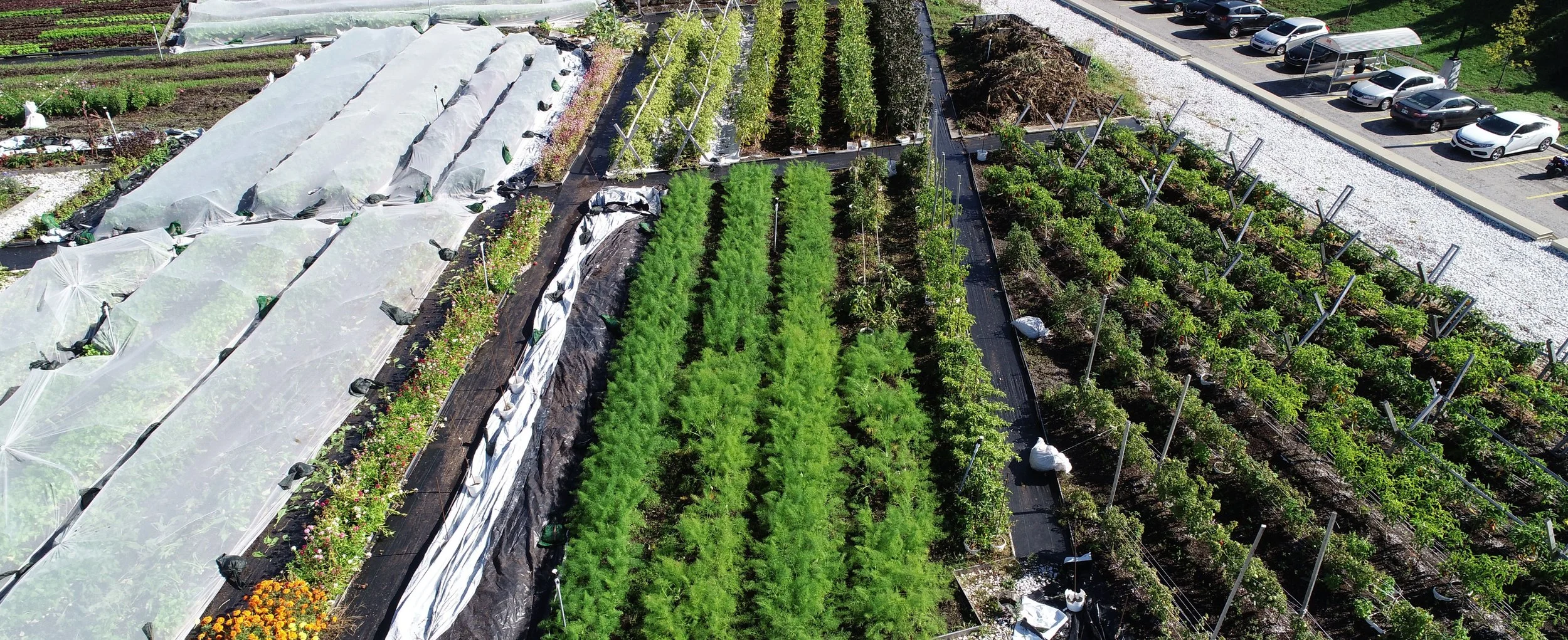
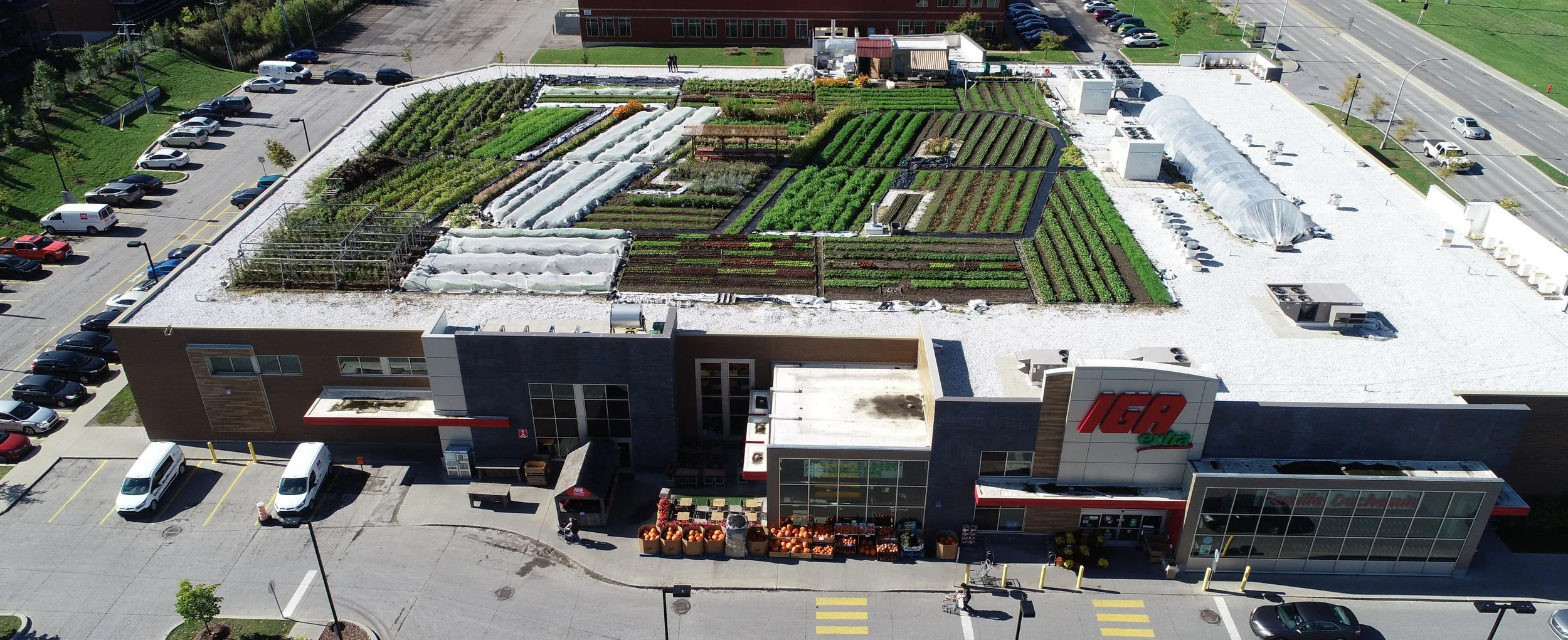
The IGA Farm in Montreal. Photos: Soprema
Conclusion
Soprema continues to play a key role in the development of the modern green roof industry. Its commitment to research and development enabled it to develop unique products suited to a wide variety of climates under its SOPRANATURE brand in France and North America. The early adoption of this technology resulted in high profile projects, like the MEC green roof, which was instrumental in educating the market. Support for Green Roofs for Healthy Cities and projects like the Green Roof Research and Demonstration project at Toronto City Hall were fundamental to gaining supportive public policies adopted. More recently, award winning projects like the IGA rooftop farm continue to demonstrate the many amazing possibilities of green roof technology. Congratulations Soprema Canada on thirty years of rooftop green with SOPRANATURE and thanks for your ongoing support and commitment to this industry, which would not be where it is today, without you.
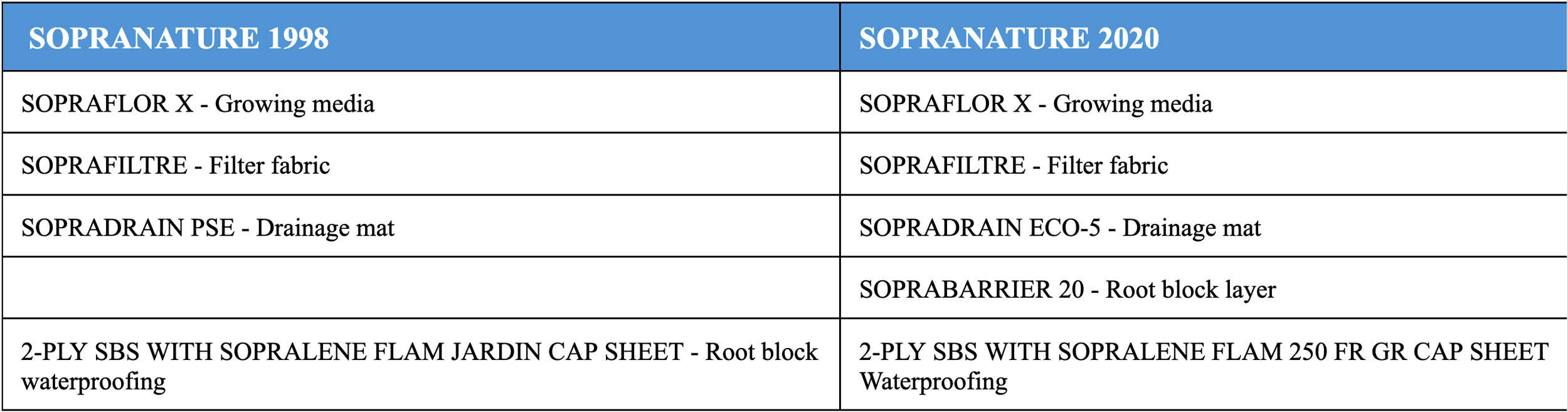
Changes to Sopranature over a twenty-two year period. Courtesy: Soprema.
Advertisement
Steven W. Peck, GRP, GRIMP, Hon. ASLA is grateful for the privilege of working to develop the green roof and wall industry in North America and around the world for the past twenty-five years.
Special thanks to Roxanne Miller, Sopranature, Soprema for all of her help in pulling together this article and happy 30th anniversary!