Introducing the New Solar Green Roofs Resource Guide
Advertisement
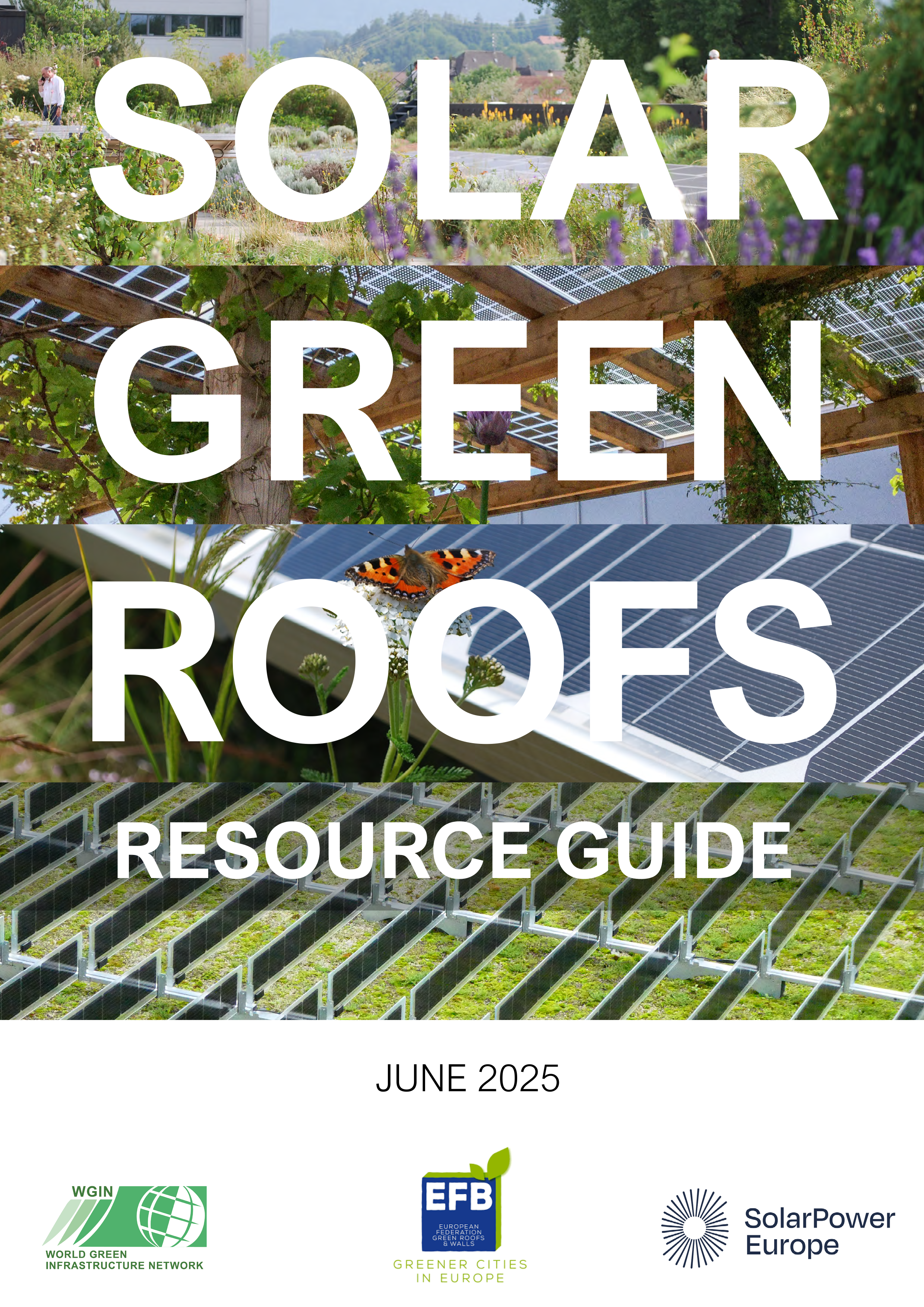
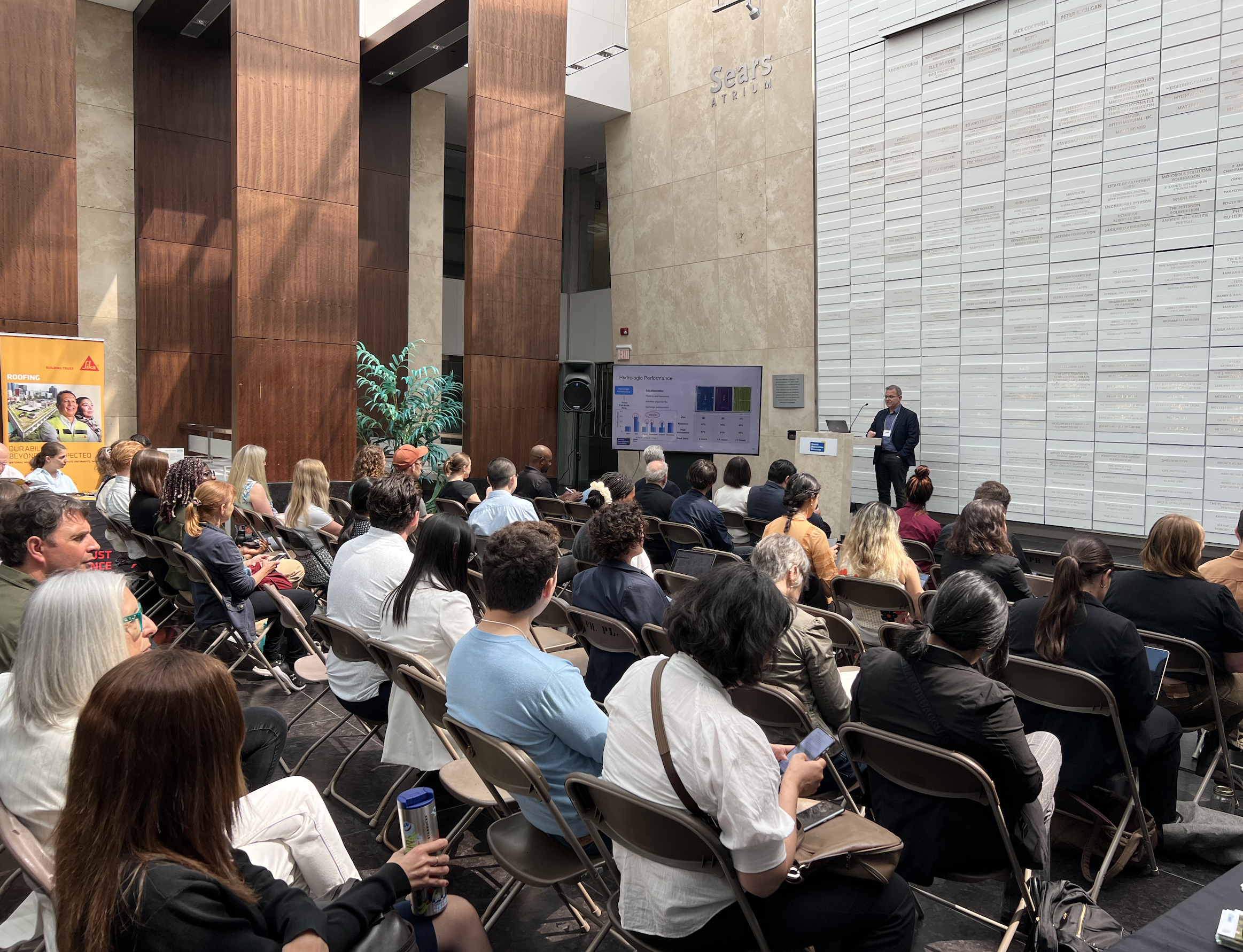
The Solar Green Roofs Resource Guide was launched in June at the World Green Infrastructure Network Conference in Basel.
Introduction
June 5th 2025, World Environment Day, was celebrated by the World Green Infrastructure Network, together with Solar Power Europe and the European Federation of Green Roof and Wall Associations by launching the Solar Green Roofs Resource Guide in Switzerland at the Basel World Congress of Green Roofs and Facades. The guide is the product of a global effort to provide guidance and recommendations around the integration of green roof and solar energy technologies. The 100 page guide contains case studies, design principles, and policies to provide information and inspiration for more sustainable, high efficiency projects.
As we look for strategies and techniques to manage the climate crisis, it is critical that we explore opportunities for synthesis and efficiency - pathways to accomplishing multiple goals rather than siloed solutions. Leveraging our urban roofscapes is one such opportunity, with the ability to generate renewable electricity, manage stormwater, support biodiversity, reduce greenhouse gases, cool our overheating cities and contribute to human health and well-being.
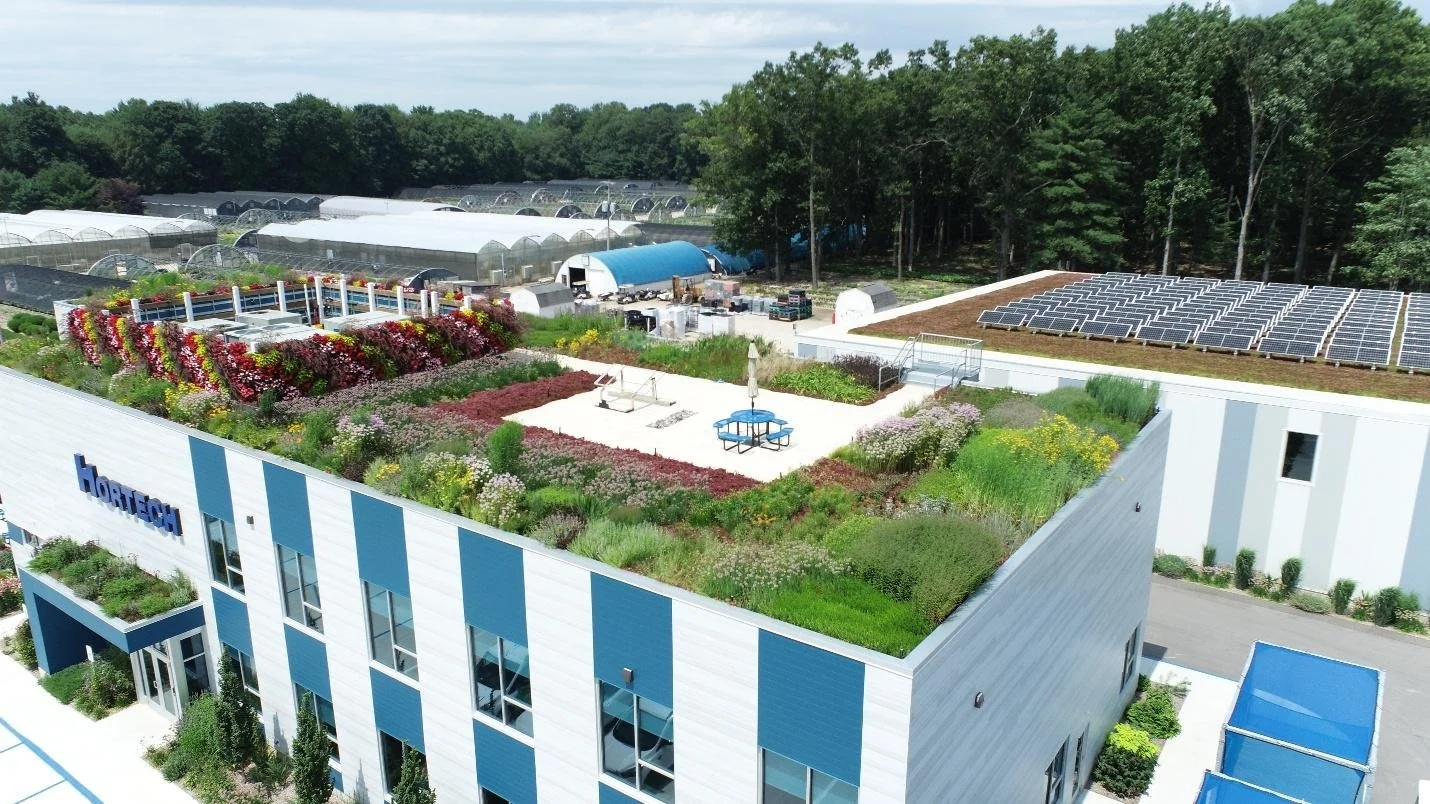
Green roof and solar technologies have been in use for decades, but combining the two is a relatively new endeavor not fully exploited or supported by government or the private sector. Separately, these technologies provide substantial returns for the building and surrounding communities, providing a wealth of ecosystem services, infrastructure support, decarbonized renewable energy supplies, and improving energy security. Combined, these technologies support and enhance each other, optimizing their output and performance. These enhanced benefits include:
Advertisement
Biodiversity support through microclimates that help plants and invertebrates;
Improved PV panel energy generation performance;
Ballasting without roof penetrations and by using growing media;
Integrated fire protection from aggregate growing media which is highly fire resistant;
Energy efficiency through thermal applications and reducing heat loss and gain in the building;
Lifecycle benefits by extending waterproofing system duration;
Ecosystem services such as air quality improvements, cooling, water management and improved human well being;
Green jobs creation including manufacturing, design, installation and maintenance; and
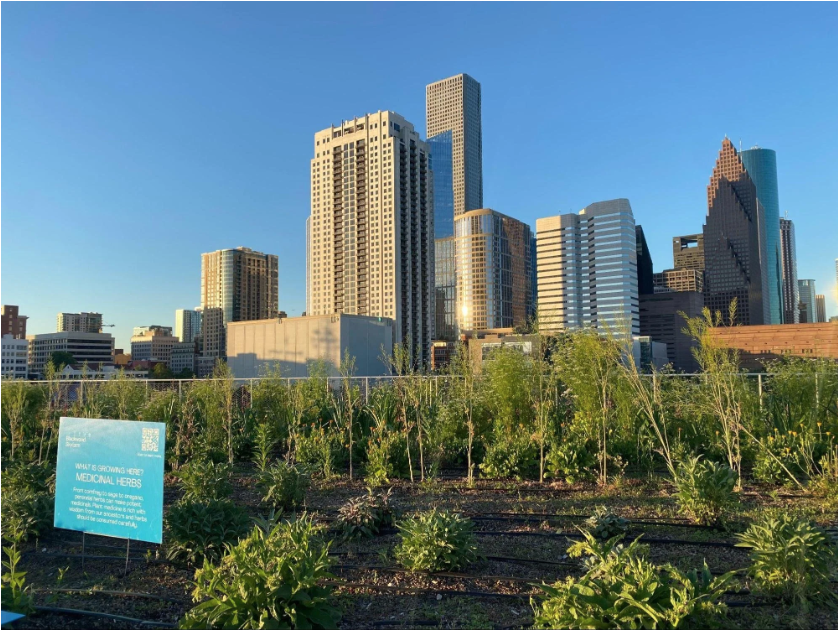
Rooftop food production located under solar panels which has numerous benefits.
The combination of multiple technological systems requires special design considerations and more cooperation across multiple trades but provides a wider range of additional social, environmental and building level benefits than green roof or solar panels alone.

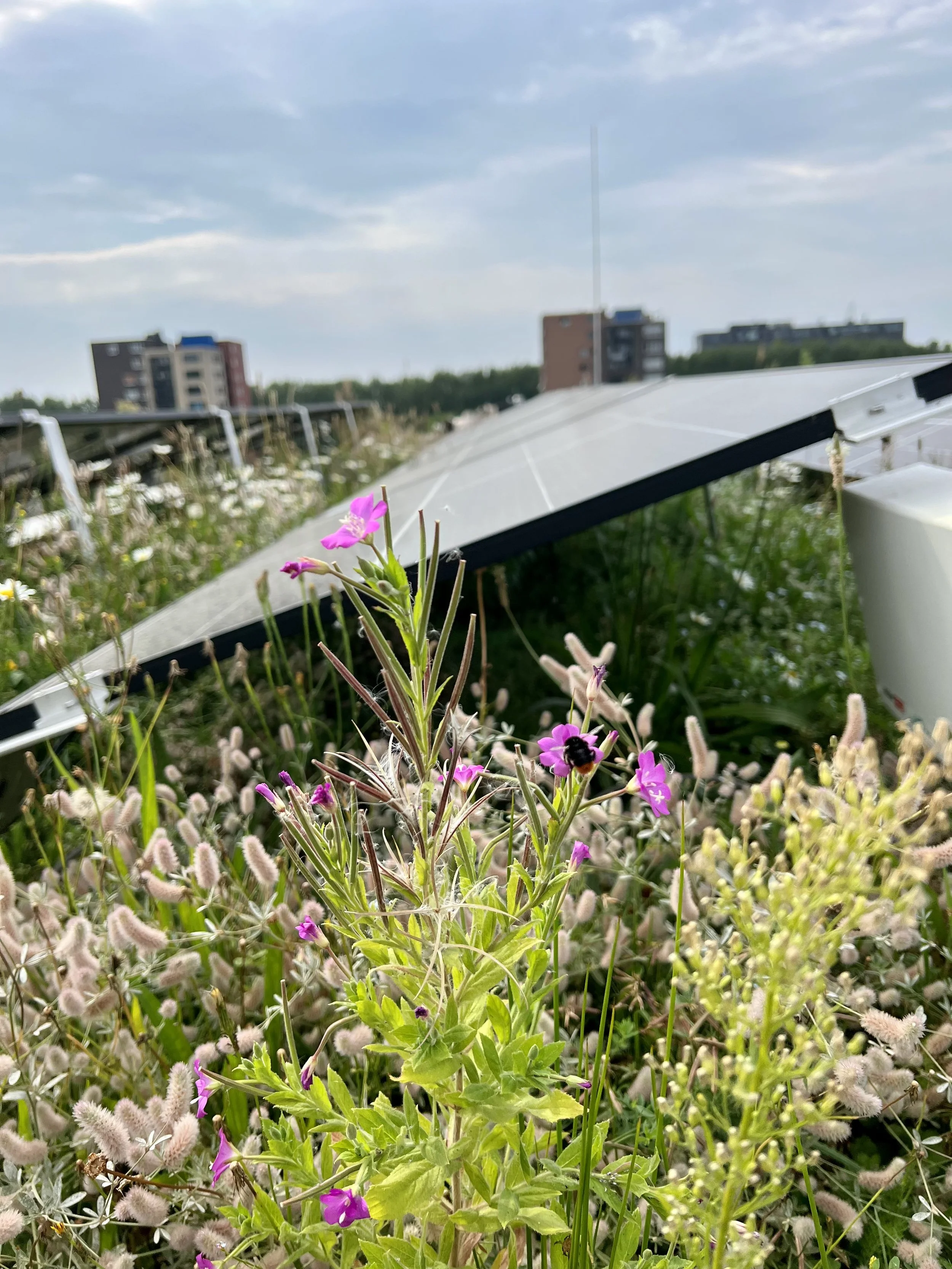
A biosolar roof with flowering plants going beside the solar panel. Photo: Permavoid
The guide provides an overview of the technologies as well as:
benefits from their installation, including the potential for electricity output increases between 5 and 15 per cent;
design and implementation considerations and challenges such as recommended spacing, and installation timing;
cost factors and current market trends for integrating these systems;
maintenance considerations and best practices;
a selection of regulations and policies governing their implementation; and
case studies of current projects using different technological approaches to illustrate how these technologies can successfully come together.
The guidance was produced and peer reviewed with expert and scientific contributions from France, Canada, Austria, Norway, Switzerland, Netherlands, United Kingdom, Germany, Portugal, United States, Denmark and Belgium.
Conclusion
The World Green Infrastructure Network (WGIN), the European Federation of Green Roofs & Walls (EFB) and Solar Power Europe have identified a need to inspire public authorities to develop policies and programs that support the more rapid increase in the design, implementation and maintenance of solar green roof solutions.
The Solar Green Roofs Resource Guide represents the intellectual collaboration that needs to be reflected in implementation, serving as an inspiration to the construction industry, designers, manufacturers and public authorities so they can better understand the opportunities involved and take action to combine these technologies.
Advertisement
Blaine Stand, GRP, is the Professional Resources Manager at Green Roofs for Healthy Cities -North America Inc and one of the co-authors of the Solar Green Roofs Resource Guide.
To download the full free resource guide visit here.