How Hungry Is Your Roof? Come Find Out With Us!
Advertisement
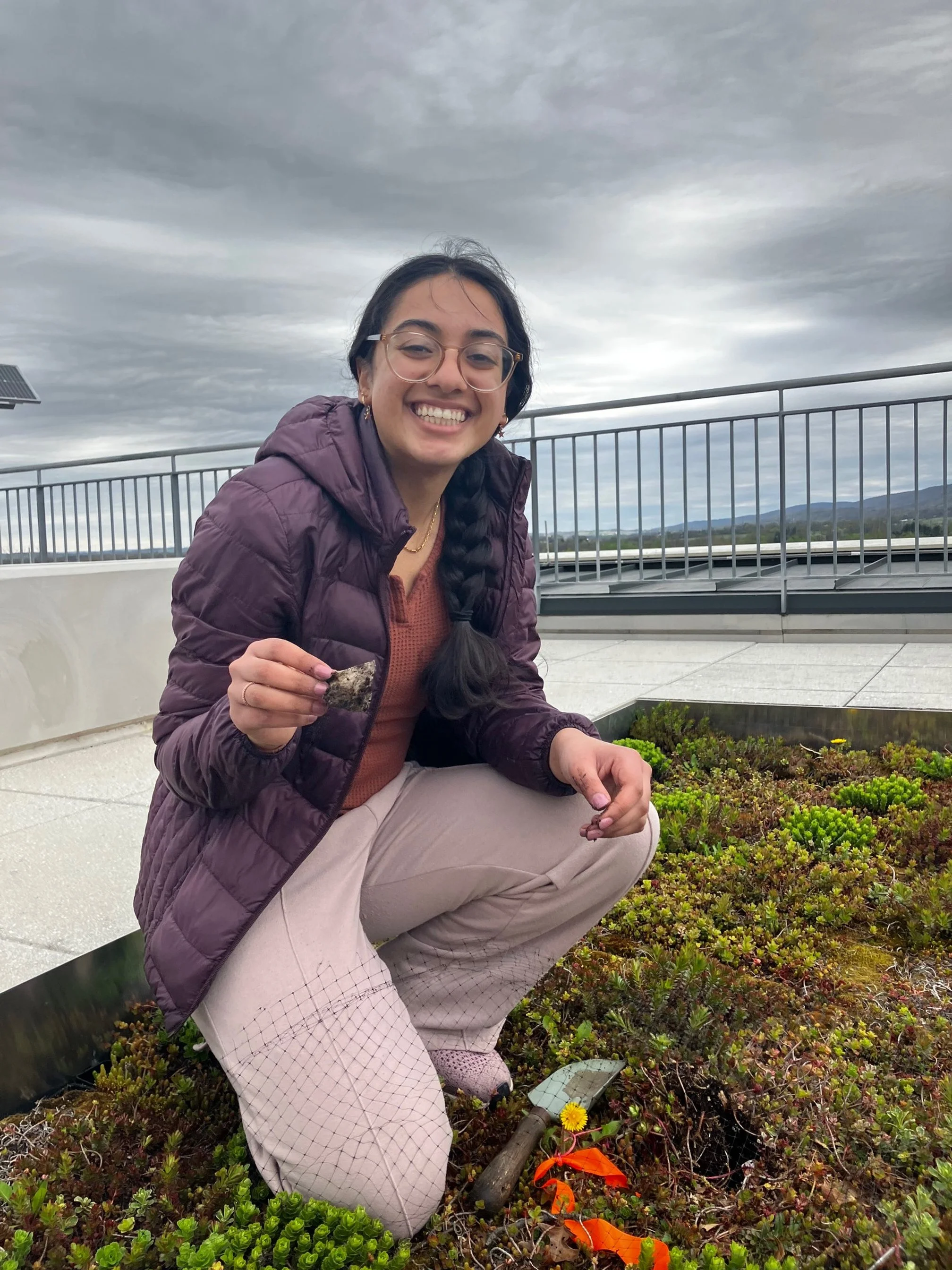
A student conducting research by burying a teabag under the green roof. Photo: O. Starry
Introduction
Green Roofs for Healthy Cities' Regional Academic Centers of Excellence program links researchers all over North America to support students and research. For several years this group has facilitated fellowships to students interested in taking the Green Roof Professional exam and hosted a variety of events, such as the Grey to Green conferences.
This year, the centers are piloting a shared research project. The focus of the research is substrate microbial activity. The extent of microbial activity in a green roof substrate can be an indicator of its vitality, and ability to sustain healthy plant life, since microbes play an essential function in helping plants secure the nutrients they need from the growing medium. Having a diverse microbial community can ensure functional redundancy to keep these essential nutrient and energy transformations on the roof going.
Method
To determine, “how hungry are green roof microbes” we will follow a citizen-science protocol developed in Europe for ground sites. This experiment has been done on hundreds of locations, but to our knowledge no formal study has been completed on green roof sites. The details of the experimental protocol that the centers are using, with slight modifications, can be found at the tea bag index website.
This protocol incubates tea bags in growing media/substrate at roof and ground sites for 90 days to see how fast the organic material in the bags degrades or decomposes. Microbes in the growing media will be attracted to the organic matter in the tea bags. Approximately 5 bags are buried about 2 inches deep in the substrate and then collected at regular intervals over the course of the study period. Bags are oven-dried, roots and particles are removed to the greatest extent possible, then weighed to determine mass loss over time.
Advertisement
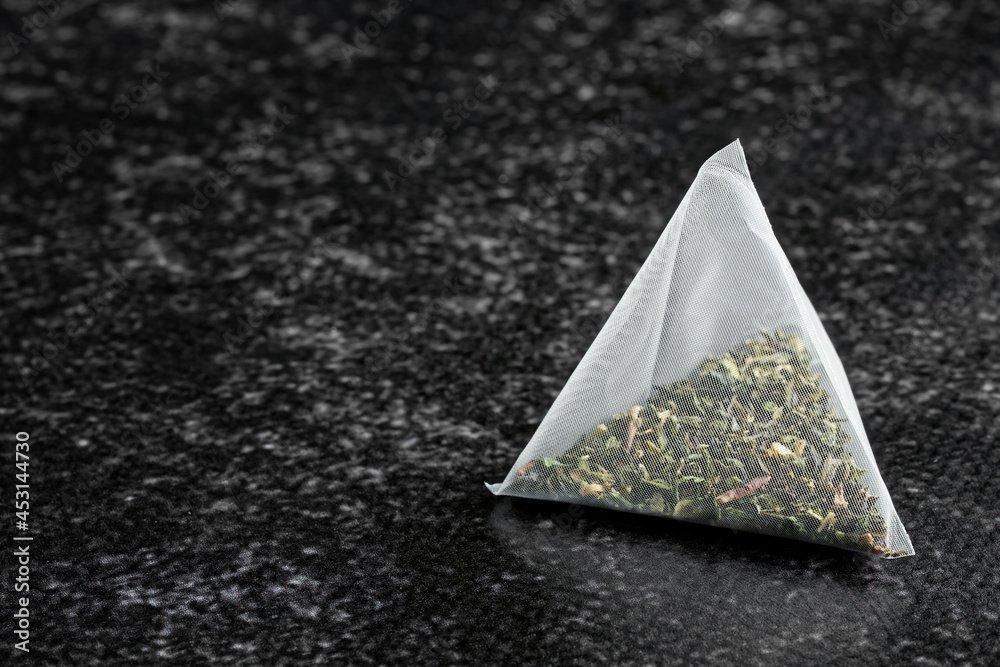
Teabags were used as part of this research project to see how quickly the organic material in the bags decomposes.
The bonus effect is that the tea bags have then been incubated with green roof microbes for further study. A pilot study done by the Microbial Connections Lab at Bucknell University suggests that green roofs have active microbial communities even during the winter. Teabags recovered over the winter months showed that the decomposition rates of the green roof microbial communities were comparable to those measured in other sites ground around the United States.
Although all centers will be completing the decomposition study, each one also has a different setting and idea to take the research further. At least one site will measure respiration at roof and ground sites to help understand how differences in CO2 production could be related to climate change. Funding for microbial community analysis costs approximately $500 per sample and is currently being solicited. Very little is known about which unique species can be found on green roofs and how they might contribute to, for example, air quality. As has been shown in green walls, green roof microbes may have the ability to break down pollutants such as volatile organic compounds.
Conclusion
At a minimum, this research project will provide valuable information about substrate vitality and inform design, maintenance, and fertigation practices. You are invited to join the study. We would be happy to add more study sites and volunteers. All that’s needed is a roof, a temperature sensor (please let me know if you need a sensor), a box of tea, and willingness to collect data over a 90-day period. If you also want to provide a sample for microbial analysis, then an additional monetary contribution of approximately $500 will also be requested. So, if you are interested in joining or supporting this effort, please contact Olyssa Starry: oss002@bucknell.edu
Advertisement
Dr. Olyssa Starry, Chair, Regional Academic Centers of Excellence Committee is an urban ecologist who investigates the reciprocal relationships between the infrastructure we create and the science of our everyday lives. She is currently the Director of the Sustainable Technology and the Built Environment Program at Bucknell University’s Center for Sustainability and the Environment.
RACE participant leads:
Colorado: Jennifer Bousselot and Kevin Duerfeldt
Greater Ohio: Allyssa Decker, Mark Mitchell, and Kim Thompson
Bucknell team: Olyssa Starry, Janani Hariharan, and Emily Stowe
Flint Hills Ecoregion project partners: Lee Skabelund and Muhaiminul Islam (Kansas State University)
Listen to this podcast with Molly Meyer on soil microbes.