Preserving a Coastal Habitat Integrating a Home Into the South Shore Dunes
Advertisement
“The Dune Dwelling is a remarkable example of a green roof meadow that was established using seeds and continues to evolve over time. Our role in its long-term care involves striking a delicate balance between curating the intended plant palette and allowing naturally occurring species to volunteer and thrive on the rooftop.”
GRHC Award of Excellence Winner: New York Green Roofs
Project Location: Long Island, NY
Project Team
Architect: COOKFOX Architects DPC
General Contractor: Bulgin & Associates Inc
Green Roof Technical Design Consultant, Installation Contractor, Maintenance Contractor: New York Green Roofs LLC
Green Roof System Supplier: Zinco USA
Landscape Architect: Quennell Rothschild & Partners LLP
Landscape Conception and Installation Artist: Paula Hayes
Plant Palette Consultant: Prairie Nursery
Structural Engineer: Steven Maresca Consulting Engineers
Introduction
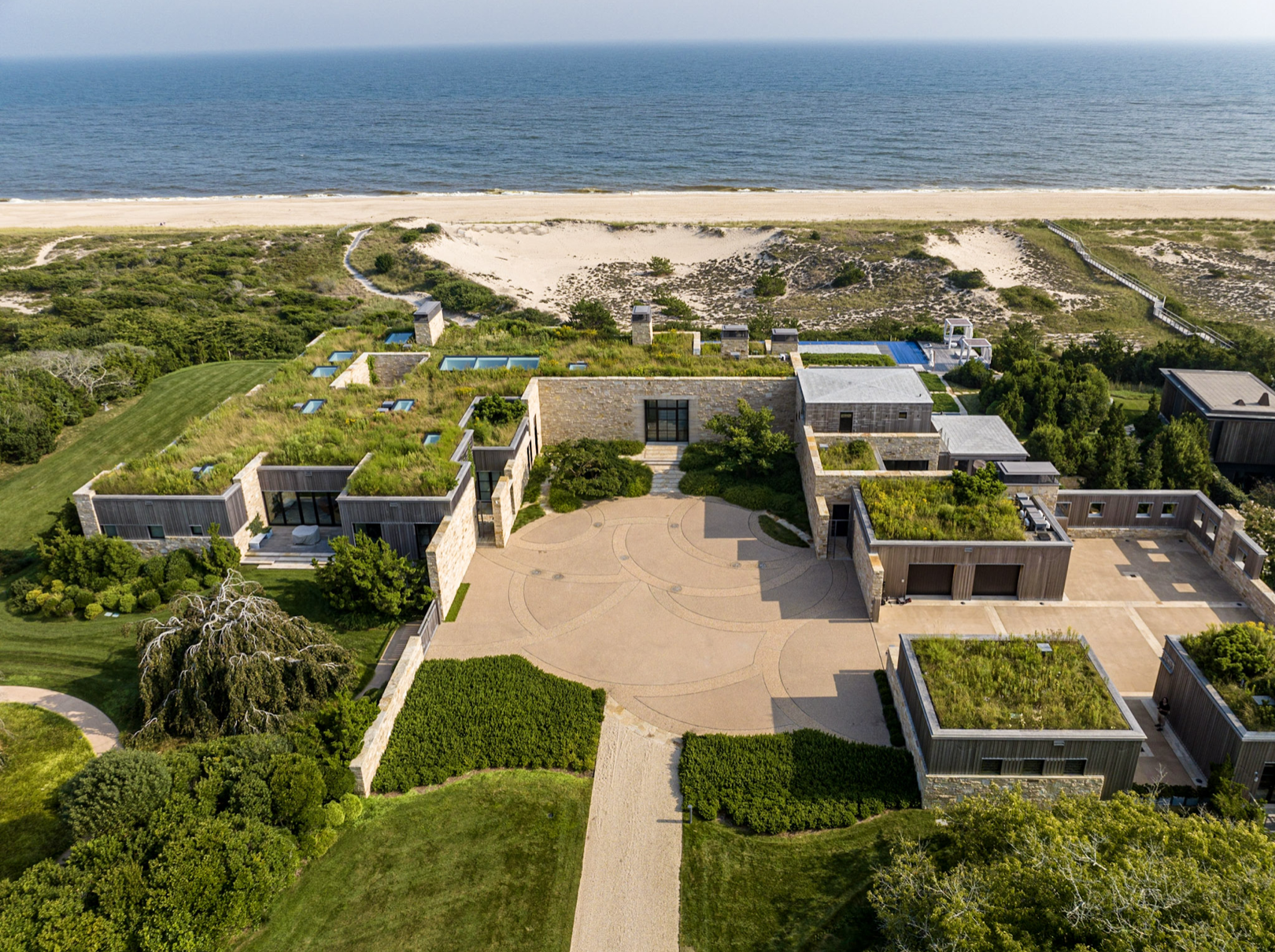
Each issue of the Living Architecture Monitor we feature one or more Awards of Excellence winning green roof or wall projects. The Dune Dwelling is an exquisite beach-front home located on the south shore of New York’s eastern Long Island. Built just behind a sand dune that is nestled right up against the relentless waves of the Atlantic Ocean, the home has 17,000 square feet of flat roof, nearly all of which are covered in vegetation. Seeded with a mix of warm season grasses and hardy perennials, the plant palette is peppered with needled evergreens that are well suited to thrive despite the coastline wind and salt spray. Being mindful of the site's ecologically sensitive location, the owners of the residence chose to take a cue from the surrounding protective dunes, creating a breathtaking meadow that enhances the building architectural design while camouflaging site lines, mitigating stormwater runoff, reducing energy consumption, and conserving coastal habitat.
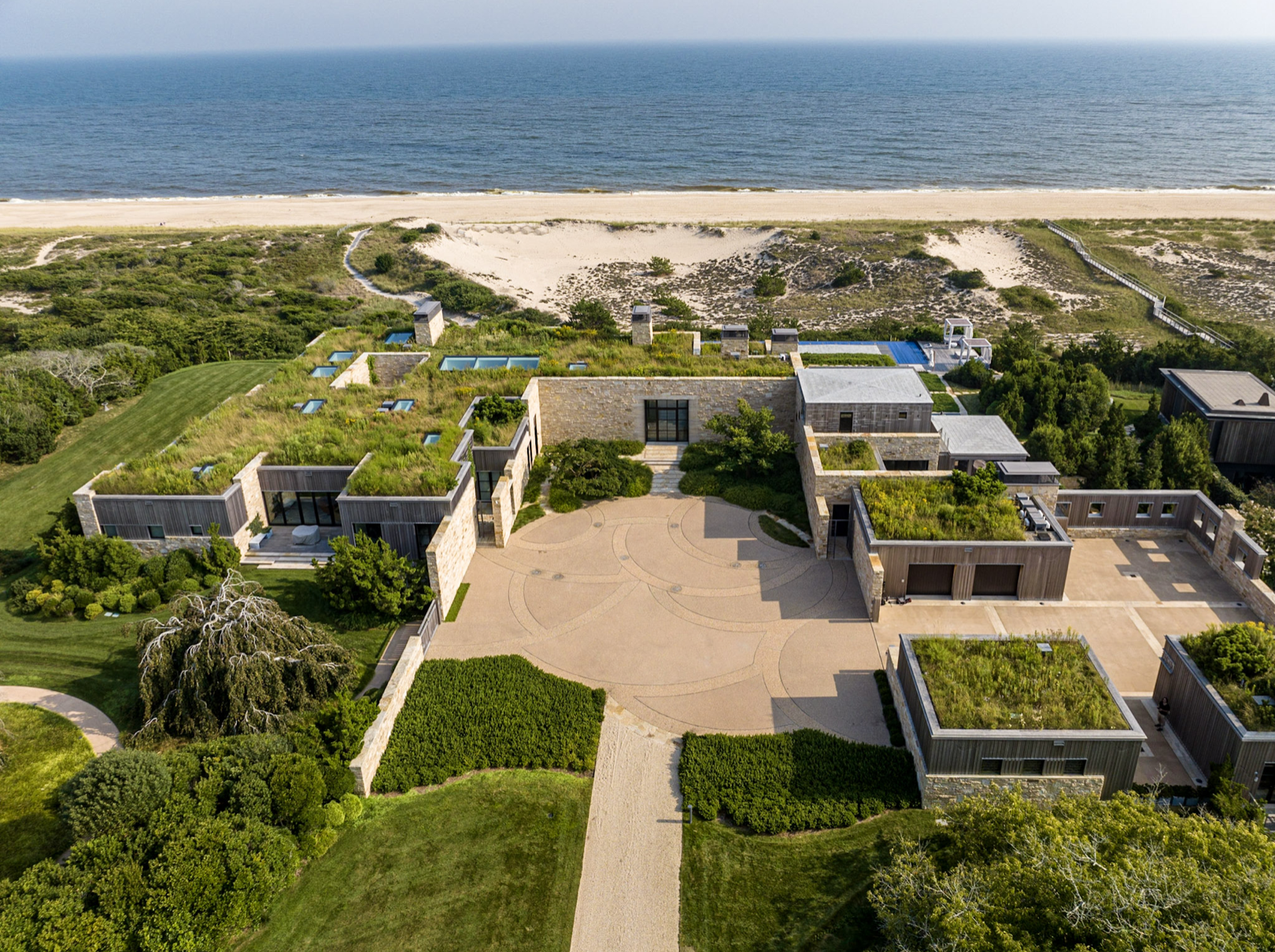
An aerial shot showing all the green roofs at Dune Dwelling. Photo: New York Green Roofs
Sand dunes provide natural coastal protection against wind, storm surges and high waves, preventing or reducing coastal flooding and structural damage, as well as providing important ecological habitat. The owners of this home opted to ensure the construction of their home did not threaten the preservation of the dune system that protects coastal property and the natural resilience of the island on which it sits. Some of their efforts to provide much needed protection to habitats included building dune paths from the beach to the house to prevent trampling of the dunes, planting beach grasses and shrubs, and planting a rooftop meadow that mimics the ecology of the dunes. With nearly 20 species of plants, this estate's rooftop meadow is a haven for pollinating insects and birds.
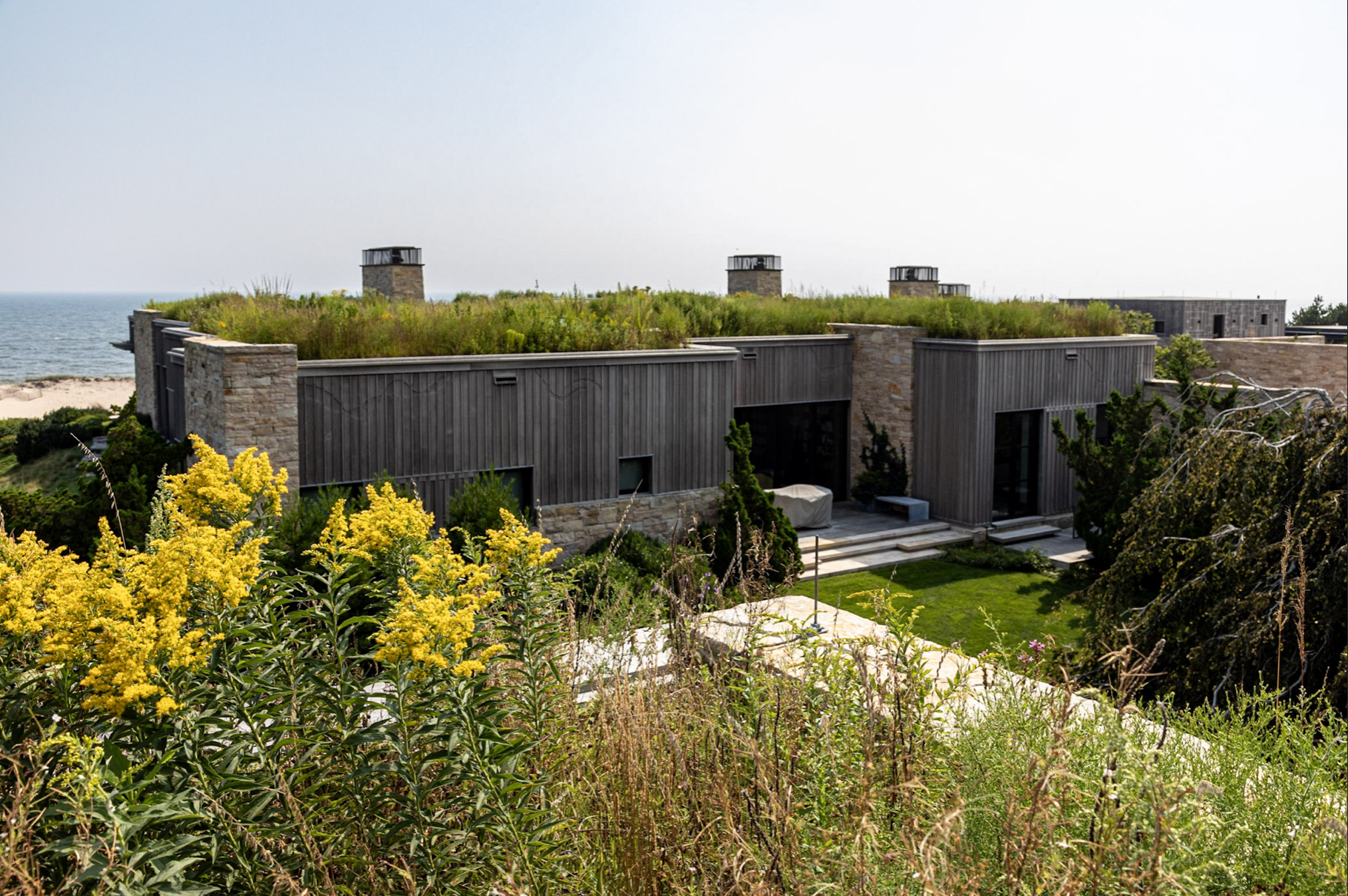
A close up of some of the longer plants growing at Dune Dwelling. Photo: New York Green Roofs
The green roofs plant palette is composed of a varied tapestry, one that makes the home disappear into the natural landscape. From a small, second story home office, the owner can access a portion of the green roof via a wall of sliding glass doors that lead out to a green infrastructure integrated patio. From there they can take in the sights and sounds of the richly-created environment with incredible views of the Atlantic Ocean.
The rooms below the green roof (which is almost all of them) benefit from the added insulation of a veneer landscape system and require less energy for cooling in the summer months. The owner's second story office connects the interiors to the rooftop amenity space via walls of floor to ceiling glass doors and windows. In the summer the green roof provides the interior spaces on this level with a rooftop amenity whose temperatures mimic ambient air therefore lessening the load of the HVAC system which would have to work much harder to keep the indoor temperature constant if the roof were a traditional one with severe fluctuations in daily heat gain.
During a rain event, as stormwater flows over driveways, lawns, sidewalks and streets, it picks up debris, animal waste, salt, pesticides, fertilizers, oil and grease, and other pollutants. At this stately residence, instead of increasing the amount of impervious surfaces, the 17,000 sf of green roof at 6" depth has the capacity to retain and offset 35,737 gallons of water, which is more than equivalent to a 3" rain event. Sitting right on the Atlantic Ocean, this vegetated rooftop is the work horse of the estate, managing flow and reducing pollutant loading in coastal waters.
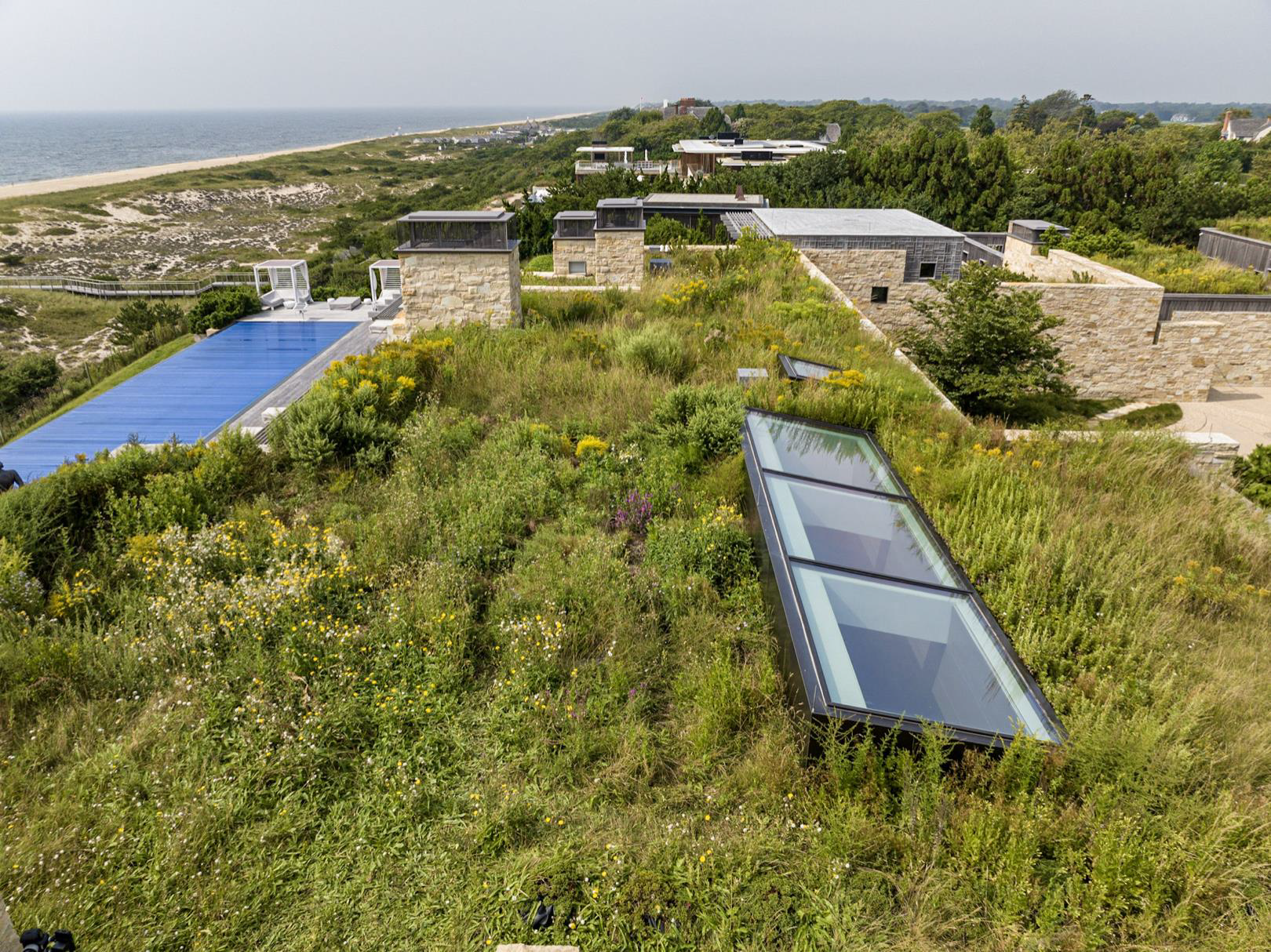
The skylight and solar panels on the green roof. Photo: New York Green Roofs
The installer worked hand in hand with the architect and the landscape architect to specify green roof components and methodologies. Leveraging their partnerships with industry leaders to help advise key details which ensure the roof would be designed and realized responsibly with a holistic understanding of how the system would function over time. The installation team worked closely with the General Contractor to make sure the green roof was installed appropriately and have continued to work directly with the owner as stewards of long term care.
Conclusion
Rather than completely separating the space from its surroundings, the green roof allows for the owner to have a spectacular view of the surrounding natural landscape and for the viewer walking along the beach only to notice the dunes. The design and execution of this project ensured that the built ecosystem would exist as an extension of the borrowed natural landscape and would enhance the beach front ecosystem, providing forage for insects and birds alike.
Advertisement
For more information about the Awards of Excellence or to submit a project for this year please see here.