Red Gold on the Rooftops: Saffron Production on Green Roofs, an Emerging Economic Opportunity
Introduction
As we all know, green roofs in North America are often considered an expensive addition to any building project, even if the reality is that they provide instant value to the property. But what if there was a way for that green roof to be paid off in a short amount of time? The potential solution may surprise you: farming.
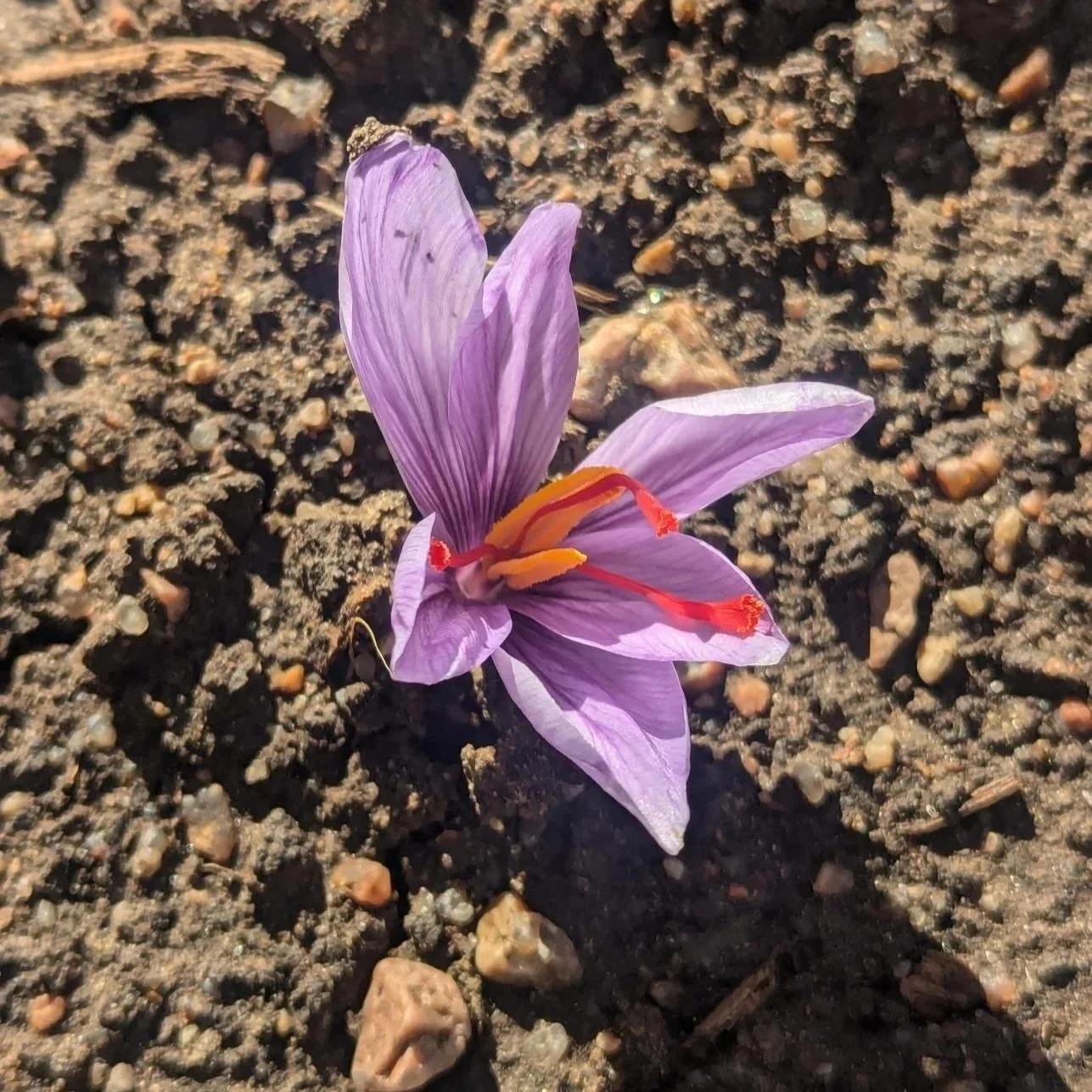
Saffron Flowering at CSU Spur in Denver, Colorado 2024, Photo Courtesy of Reece L. Bailey
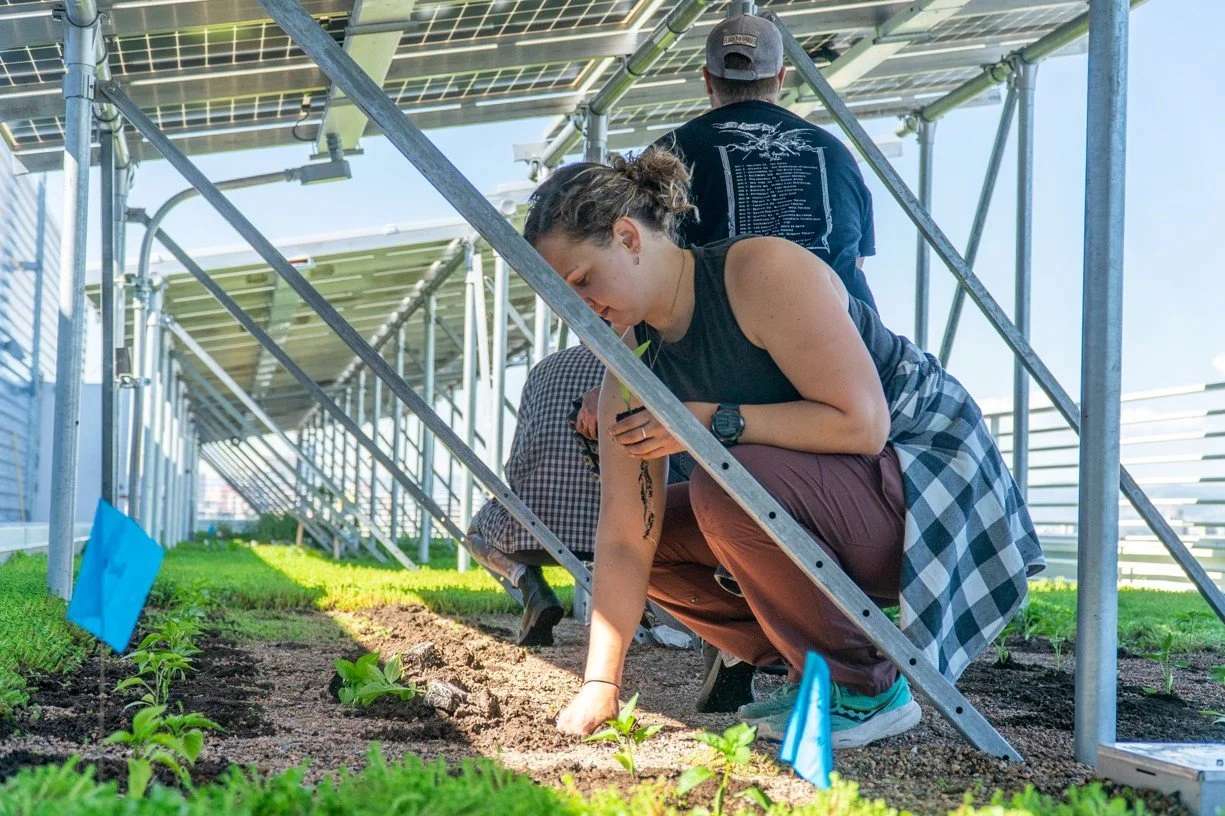
While the concept of rooftop farms is well-established, our industry rarely focuses on or highlights specific high-value crops. On our team, we push the limits even further by incorporating solar panels into our rooftop farms, which is a concept known as rooftop agrivoltaics.
The crop we are proposing to cultivate in this novel rooftop agrivoltaics system is saffron. Saffron can generate up to US $9,000 per pound of dried stigmas (Skinner, 2021). Combine that income with energy generation from solar panels, and we can create a dual-use, dual-income green roof. Theoretically, that means the initial investment of installing the green roof is paid off relatively quickly.
Saffron Production on Green Roofs
Saffron (Crocus sativus), also known as “Red Gold”, is a perennial herbaceous crop that has been revered across the globe for centuries for its dried red female reproductive parts: stigmas. Saffron was first domesticated on the island of Crete approximately 3,500 years ago (Cardone et al. 2020). The top five countries that currently cultivate saffron are Iran, India, Greece, Morocco, and Spain in arid mountainous regions. These five countries collectively produce 98% of the global saffron supply (Koocheki and Khajeh-Hosseini 2020).
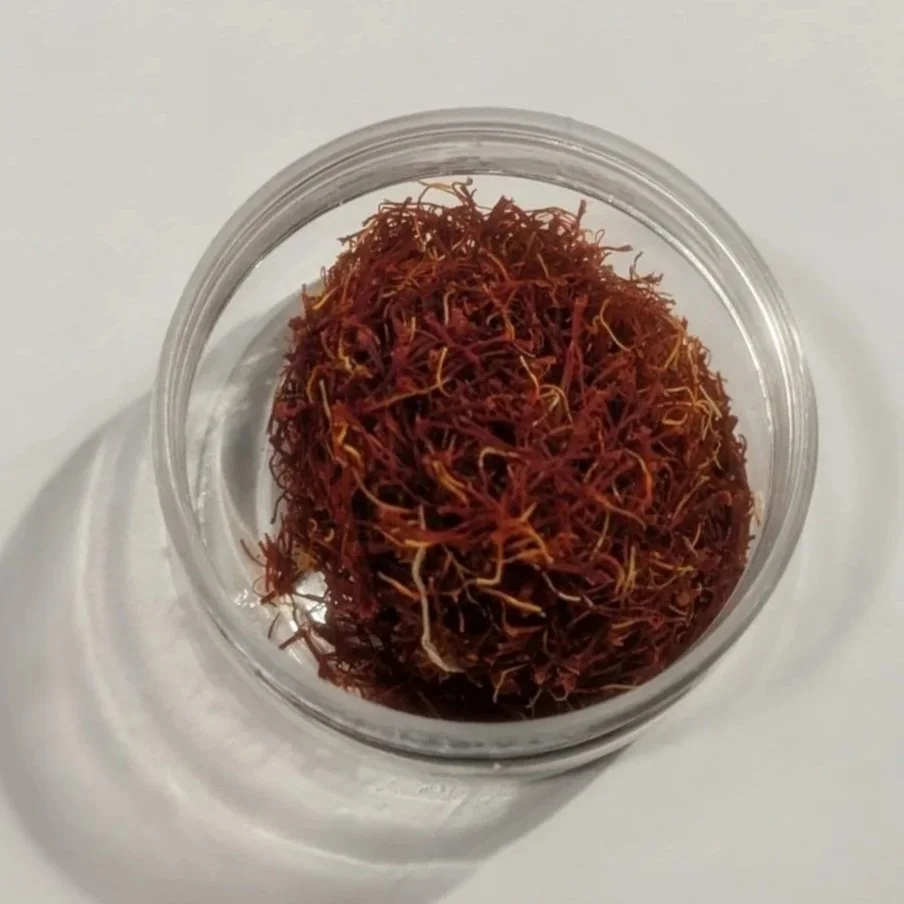
Dried Stigmas Harvested from Saffron Flowers, Photo Courtesy of Reece L. Bailey 2025
The conditions on a green roof – well-drained, nutrient-poor substrates and extreme microclimates – are surprisingly ideal for saffron production. Recent research from Kentucky has confirmed that saffron thrives when grown in green roof conditions. Both stigma yield and daughter corm production increased in green roof systems compared to field or high tunnel cultivation (Poudel et al. 2025, Poudel et al. 2023). Our pilot study at Colorado State University demonstrated similar findings – the saffron grown in green roof conditions outperformed field-grown saffron in dried stigma yield.
Saffron flowers from October to December in our climate. The foliage emerges after blooming and harvest. This grass-like foliage provides cover on our green roofs over the winter when there is little visual interest. The foliage dies back in May, which is when we begin to install our other crops for the growing season. Saffron production can help fill the agricultural and income gap in the fall and winter months.
In the northern half of North America, our growing seasons are shorter, and therefore, many of the workers in our industry are only seasonal. The labor required to cultivate, harvest, and preserve saffron occurs in late fall and winter and could, theoretically, keep our green roof workers more fully employed year-round.
Unique Opportunities with Saffron Cultivation in Rooftop Agrivoltaics Systems
Producing saffron on green roofs is showing early promise through the Kentucky and Colorado trials. However, on our team, we are evaluating saffron's response to the shaded conditions in rooftop agrivoltaics. To our knowledge, saffron has not been evaluated in agrivoltaics in field conditions, let alone atop roofs. So, we are specifically evaluating how shade affects saffron growth and yield.
We know from existing research that agrivoltaics systems combine two synergistic systems: agriculture and solar energy generation. The shade from the solar panels provides protection and reduces both evapotranspiration and temperature extremes for crops. The synergy comes in as the plants evaporatively cool the solar panels so they operate more efficiently.
However, too much shade can be detrimental to saffron yield. Research from Morocco has shown that the optimal shade level for saffron production is 30% shade (Ibtissam Mzabri et al. 2022). Similar to that, our research showed that the number of flowers and dried stigma yield doubled under 40% semitransparent solar panels. Most solar panels are not semi-transparent. Most are opaque panels that allow very little light (10%) through to the crops. If we were to design the theoretically optimal rooftop agrivoltaics system for saffron production, we would specify 30-40% semi-transparent panels placed 6 to 8 feet above the substrate surface.
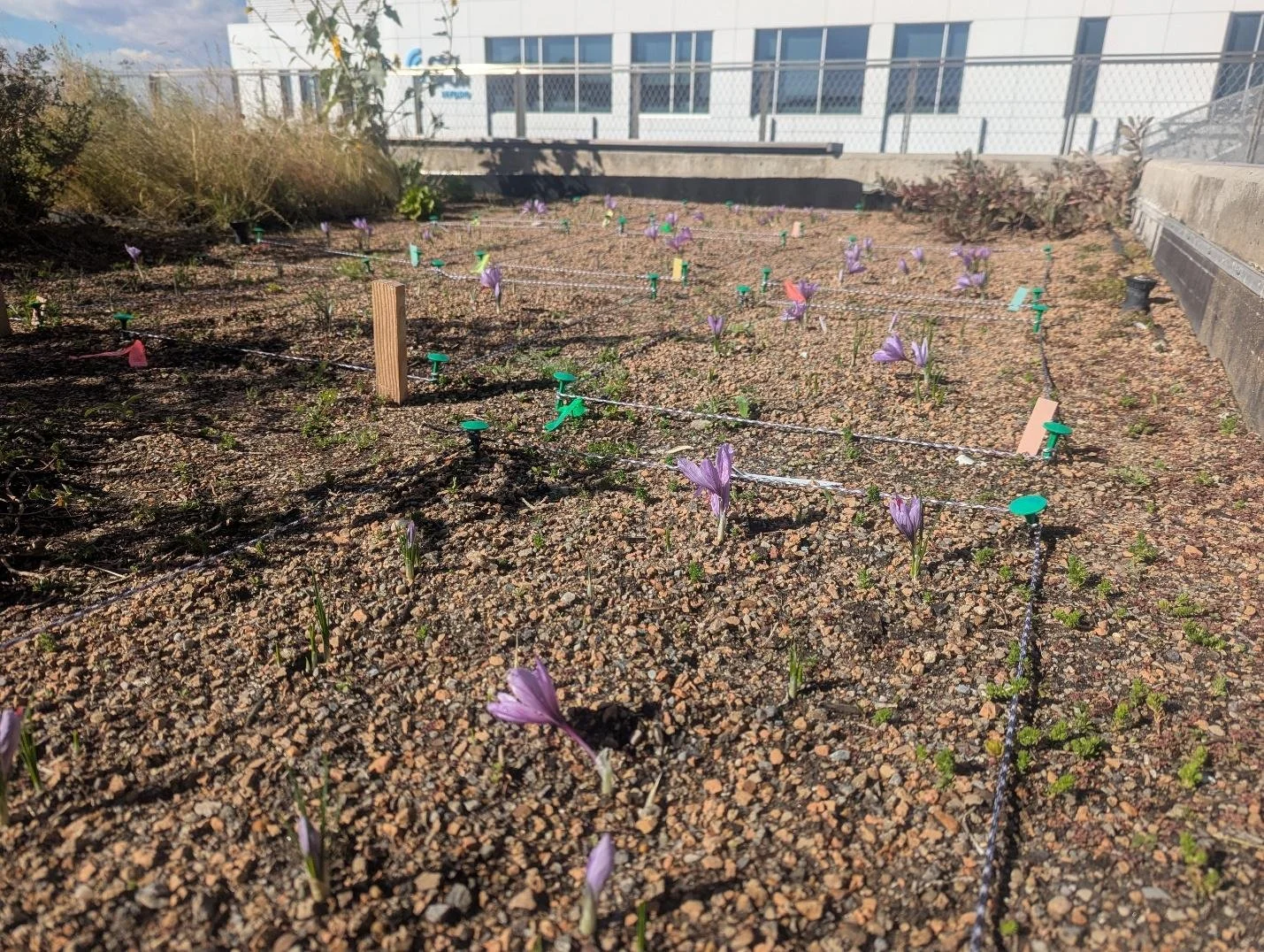
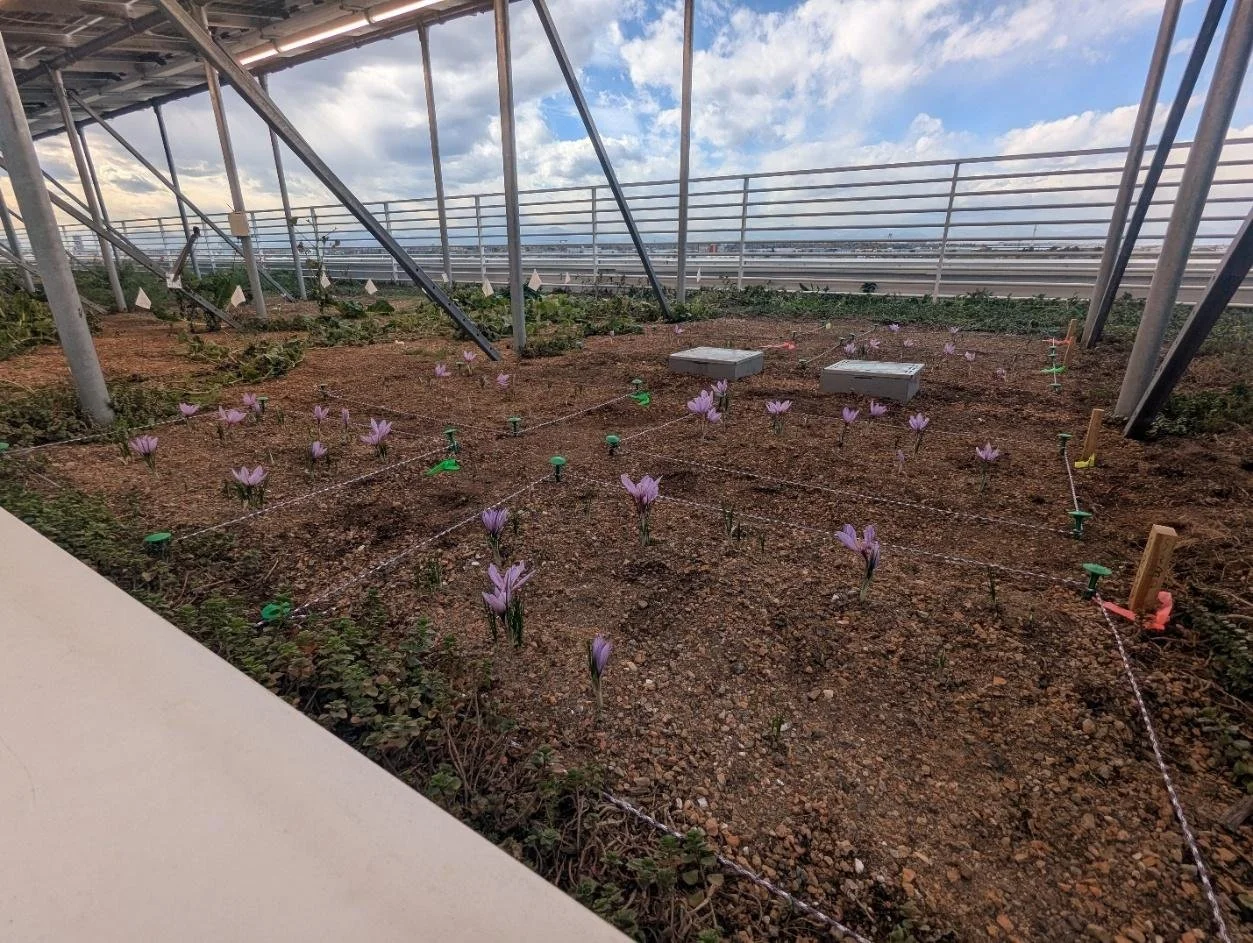
Left: Saffron Green Roof Test Plots in Full Bloom on CSU Spur Terra Green Roof in Denver, Colorado Fall of 2025, Photo Courtesy of Reece L. Bailey 2025. Right: Saffron Rooftop Agrivoltaics Test Plots on the CSU Spur Hydro Building Fall of 2025, Photo Courtesy of Reece L. Bailey 2025
Example 5-Year Saffron Enterprise Budget
We used two tools in drafting a hypothetical 5-year saffron enterprise budget for an existing rooftop agrivoltaics installation (Figure 1; Skinner 2021; InSPIRE/Financial Calculator). Enterprise budgets are commonly used in agriculture to forecast the potential costs, revenues, and profits of expanding into a new product or market. When using enterprise budgets, practitioners assume that there are other capital expenses related to the project but these budgets are used to isolate only those elements that are directly related to the proposed enterprise.
Here we will use the example from our rooftop agrivoltaics research plots. The CSU Spur Campus in Denver, Colorado, has a 46-kilowatt array with 4,356 ft2 (404 m2) of cultivable space for saffron production. The southeast-facing array is estimated to produce an annual energy yield equal to $2,694 of revenue. Over five years, this rooftop agrivoltaics array is estimated to generate $13,470 from energy production.
Saffron cultivation in our climate requires many inputs, such as irrigation, fertilizer, bed preparation, and planting, plus labor costs for this labor-intensive crop. Revenue comes in two forms – dried stigma sales and daughter corms that are periodically harvested. Stigma prices vary based on quality and market fluctuations; however, for this analysis, we used $992/ounce ($35/gram; Skinner 2021). Daughter corms are valued at $0.25 each.
In the first year, costs exceed revenue. However, every other year, this example enterprise budget shows a profit. Over five years, we estimate the net revenue of this enterprise to be over $60,000. Remember that this income is mostly from production and labor requirements that take place during the late fall and winter months. Rooftop growers can supplement this saffron enterprise with other seasonal crops.
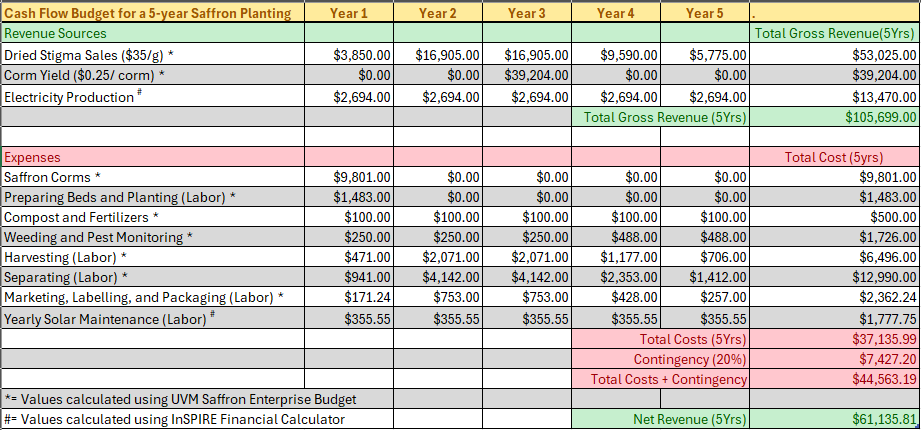
Figure 1: Example 5-Year Saffron Rooftop Agrivoltaics Enterprise Budget.
Conclusion
Growing saffron in rooftop agrivoltaics is a unique dual-use model that pairs a high-value crop with an income-generating solar system on a rooftop. Having two primary revenue sources from the same space diversifies the income types to maximize benefits. Pairing these income streams with green roof incentives can accelerate the payoff time. Collaboration between green roof researchers, solar engineers, and construction experts will further optimize this model. Cultivating lush fields of vibrant purple flowers in the autumn on rooftops is also beautiful.
Reece L. Bailey, GRP is a current Masters of Horticulture Student at Colorado State University. He is a member of Dr. Jennifer Bousselot’s lab where he is conducting his thesis work on saffron production in green roof and agrivoltaics systems.
Jennifer Bousselot, Ph.D. is an Associate Professor of Horticulture at Colorado State University. Her decades-long research interests span from rooftop agrivoltaics to green roof pollinator provisioning. She is the editor of the GRHC-hosted Journal of Living Architecture and former research chair for the GRHC board of directors.
References
Cardone L, Castronuovo D, Perniola M, Cicco N, Candido V. 2020. Saffron (Crocus sativus L.), the king of spices: An overview. Scientia Horticulturae. 272:109560. doi:https://doi.org/10.1016/j.scienta.2020.109560. https://www.sciencedirect.com/science/article/abs/pii/S0304423820303885.
Ibtissam Mzabri, Rimani M, Khadija Charif, Noureddine Kouddane, Abdelbasset Berrichi. 2022. Effect of Shade on Agro-Morphological Parameters and Weed Flora of Saffron (Crocus sativus L.) Cultivation in the Semiarid Zone of Eastern Morocco. The Scientific World JOURNAL. 2022:1–8. doi:https://doi.org/10.1155/2022/9954404.
InSPIRE/Financial Calculator | Open Energy Information. openeiorg. https://openei.org/wiki/InSPIRE/Financial_Calculator.
Koocheki A, Khajeh-Hosseini M. 2020. Saffron : science, technology and health. Duxford, United Kingdom: Woodhead Publishing.
Poudel P, Whittinghill L, Kobayashi H, Lucas S. 2023. Evaluating the Effects of Bacillus subtilis Treatment and Planting Depth on Saffron (Crocus sativus L.) Production in a Green Roof System. HortScience. 58(10):1267–1274. doi:https://doi.org/10.21273/hortsci17220-23.
Poudel P, Whittinghill L, Kobayashi H, Lucas S. 2025. Preliminary Assessment of Saffron Production in Different Growing Systems in Kentucky, USA. Journal of Living Architecture. 12(2):12–27. doi:https://doi.org/10.46534/jliv.2025.12.02.012.
Skinner, Margaret 2020. Saffron Enterprise Budget [Excel spreadsheet]. North American Center for Saffron Research and Development, University of Vermont.
Skinner M. 2021. Saffron: A Golden Opportunity for Diversified Farmers. North American Center for Saffron Research and Development. [accessed 2026 Mar 2]. https://www.uvm.edu/~saffron/pages/factsheets/SaffrongeneralbrochureAug2021new.pdf.