Roofing with Overburden as Protection from Hail, Fire, and Wind
Introduction
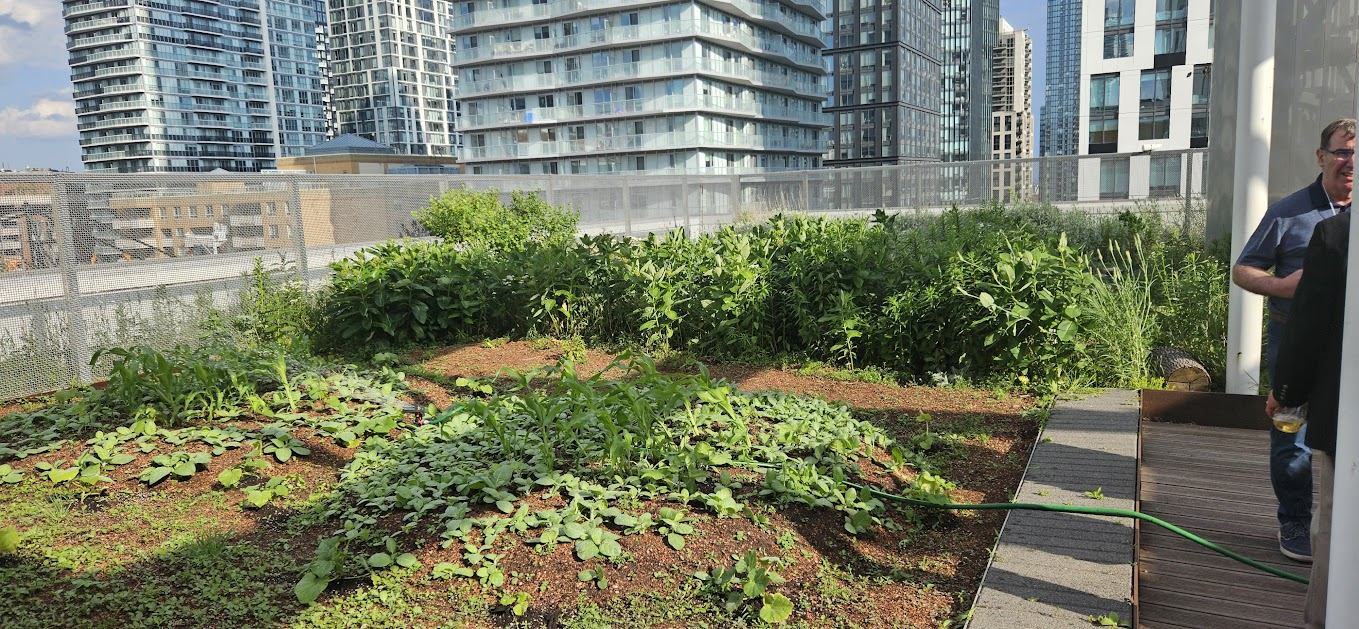
There are countless reasons to use green roof systems, but the deciding factor usually ends up as some combination of managing stormwater and enhancing the building occupant experience. These are great benefits. Add in migratory pollinator habitat, reduction in the urban heat island effect, and air quality improvements, and those are reasons enough to explain the wide-spread adoption of green roofing over the past two decades.
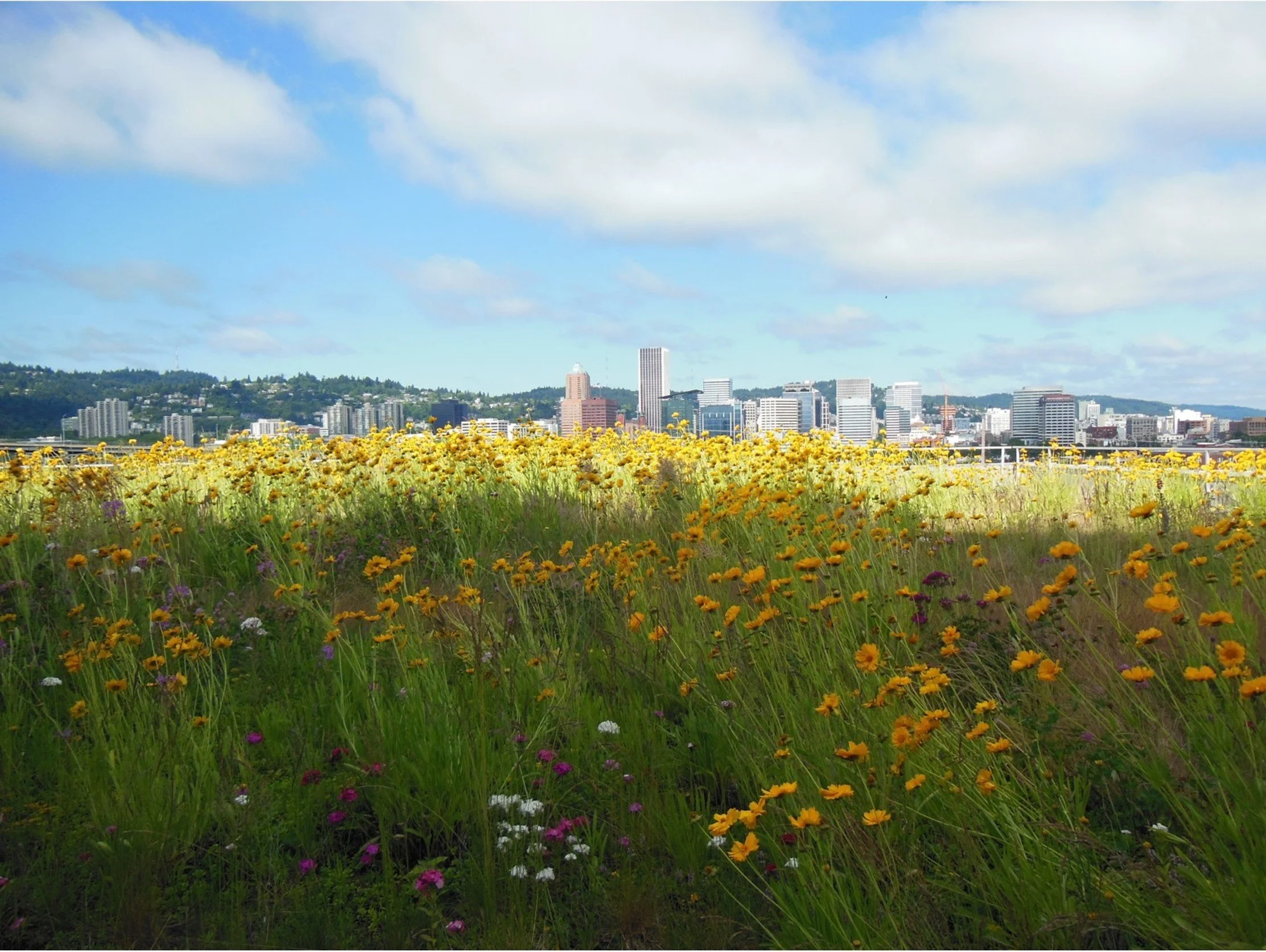
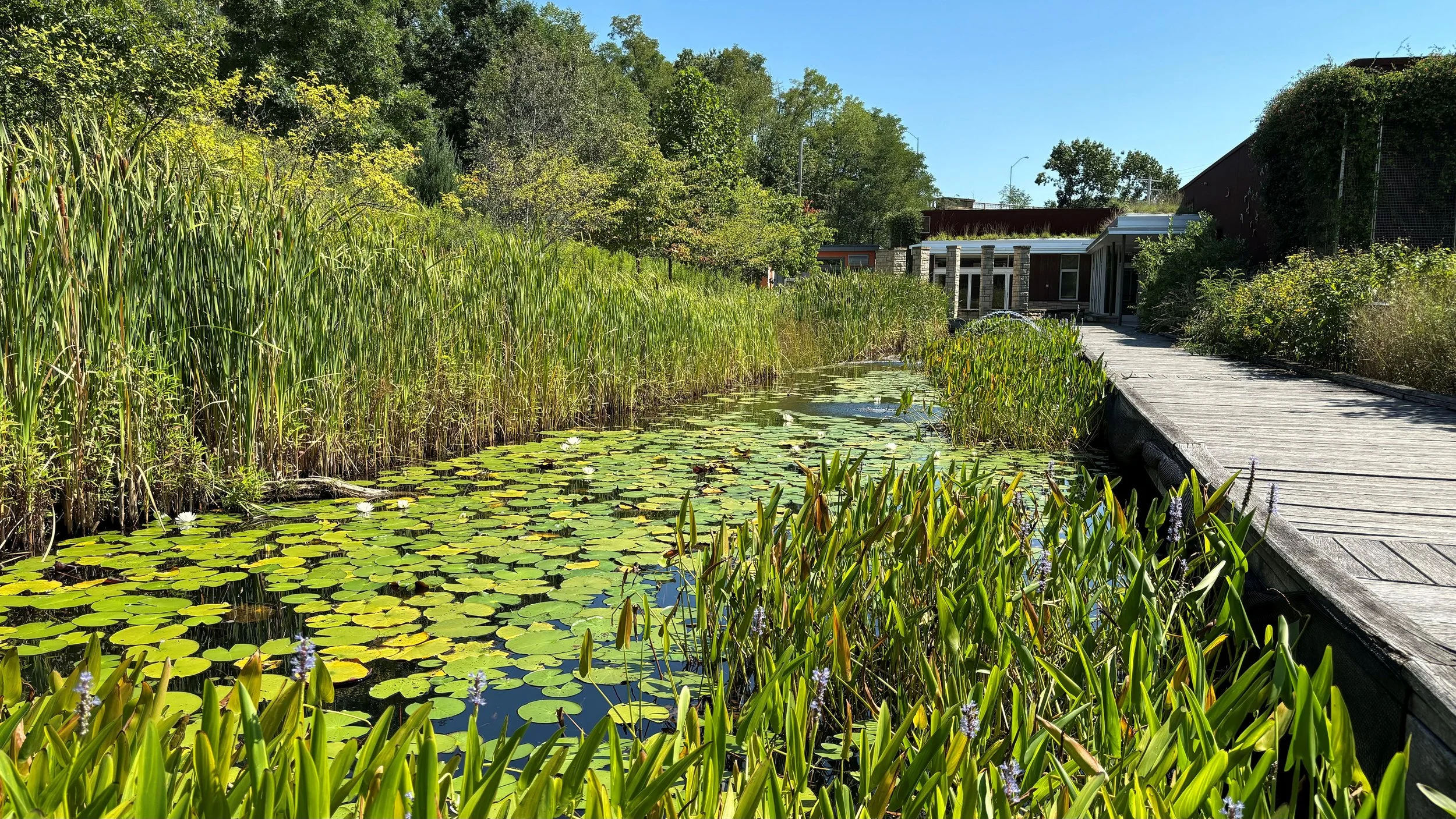
Multnomah County Building Green Roof is over 20 years old with no roof leaks. Photo: Tara Nikzi
However, some of the greatest but often-overlooked benefits of these resilient technologies comes from the protection they offer to roofing – extending its lifecycle and protecting it from extreme weather events. As one of the most expensive, and high-liability building features (the majority of building litigation is due to roofing), it can be a simple economic choice to completely cover the building with vegetation and isolate the roofing from what causes it to age and leak.
The primary causes of roof aging and eventual failure arise from exposure to the sun’s ultraviolet radiation (UV), as well as the constant movement from thermocycling. As the roof gets warm during the day, it stretches out. At night it cools and shrinks. Throughout the seasons and years, this movement leads to holes and cracks. Covering the roof with a vegetated roof or paver system (collectively referred to as “overburden”) blocks the UV rays, and stabilizes the temperature of the roof.

Portland City Hall Green Roof tour with IIBEC Portland Chapter
Patching, repairing, restoring, and ultimately replacing the roof is one of the most expensive and disruptive aspects of maintaining any building enclosure, but covering it with overburden can significantly extend the lifecycle of the roofing system.
This is especially beneficial to building owners that will own the building for its full lifecycle; for example, tax-payer funded municipal buildings, hospitals, and college campuses. This is also beneficial for condominium communities that will fund ongoing roof repairs and replacements.
Green roofs have unique abilities in protecting the roof from extreme weather events – to not only suppress but to extinguish fire; it can keep the roof in place during a hurricane while protecting it from flying debris; and otherwise destructive hailstorms leave no lasting damage to roofing.
Properly designed, installed, and maintained green roofs and paver systems will protect the roof assembly, allowing for extended lifecycles and less overall maintenance and repair costs. This lowers the risk to the building owner and should be considered by insurance companies for extended coverage and reduced rates. There are plenty of studies, standards, and test methods to demonstrate these capabilities, as well as existing projects that have already survived multiple extreme weather events.
Roofing Systems – Protected Assemblies and Extended Lifecycle
“Good roofing systems depend on how they are piled. Not the material.”
The most prevalent green roof and paver systems are on low-sloped, commercial building roofs. There are many quality, durable roofing options that can be used including single ply, hot and cold fluid-applied membranes, and even old-fashioned built-up roofing. All of these options have their successes and failures. What matters more is the quality of the design, installation, and maintenance of the roofing system.
Protecting the Roofing
In an ideal project scenario, the building has a very strong structural concrete deck, with a minimum of a quarter inch slope per foot, and the waterproofing is fully adhered to the roof deck. Extruded polystyrene (XPS) insulation is added over roofing, and then the green roof or paver system is laid on top of the insulation. This is called an inverted roof system, or a protected membrane assembly, and is more commonly referred to as “waterproofing” regardless of what materials are used. “Roofing” generally means a conventional roof assembly, with insulation between the waterproofing and the deck, but the terms are often used interchangeably.
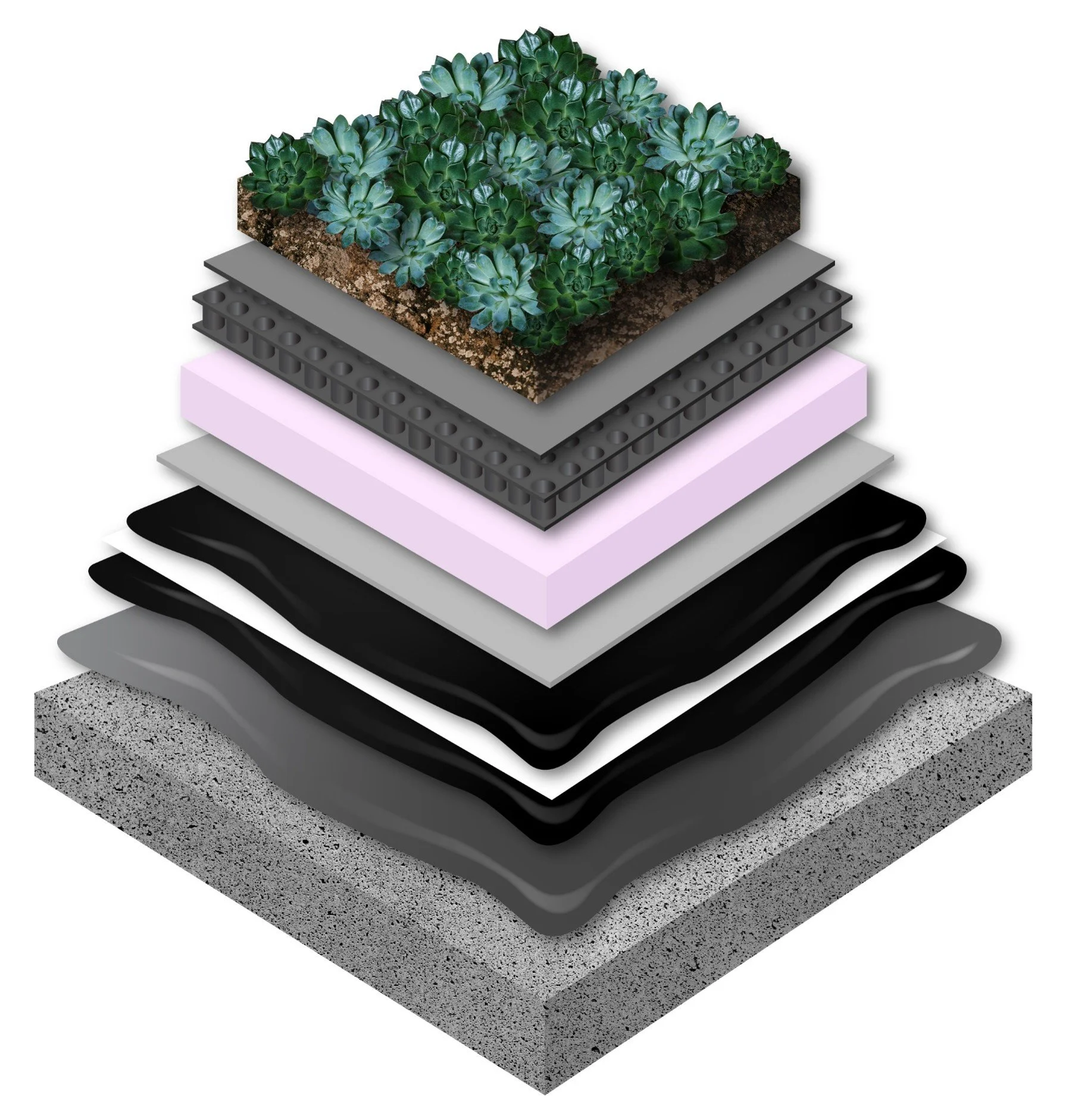
Cross Section of an Inverted Roof. Photo: W.R. Meadows
When the roofing system is fully adhered to a concrete deck, if there is a breach in the membrane, there is nowhere for the water to travel and it might not ever enter the building. The waterproofing also acts as the vapor retarder, reducing some of the complexity and failure points of designing conventional roofing systems. Inverted membrane systems have become commonplace beneath green roofs because of their long history of success.
There are also countless watertight green roofs that use conventional roofing systems, with the insulation placed beneath the waterproofing. These systems might use polyisocyanurate insulation, coverboards, vapor retarders, air barriers, and other accessories. This is common for deck types other than concrete, to stay within limited structural weight capacities. There is often some XPS insulation placed over the roofing, with both types of insulation contributing to R-value.
XPS insulation is the workhorse of overburden roofing systems. It insulates, absorbs impacts, and keeps the waterproofing preserved. It is commonly 60 pounds per square inch (PSI) compressive strength, up to 100 PSI, which is strong enough to support vehicular traffic. At R-value of 5 per inch, a standard R-30 roof insulation would include 6 inches of XPS insulation over waterproofing, keeping it pristine.
Roof Longevity
For a traditional, conventional roofing system with no overburden, building owners should plan to start patching and repairing the roof around 7 to 12 years after it is installed, depending on the system type and site conditions. Roof replacements commonly happen after 10-15 years of service life. With a quality roofing system, experienced installers, and a good maintenance plan, it is possible to get 15-20 years from a low-slope roofing system before it is restored or replaced. But with a protected roof assembly, 20 or more years of service life is standard and often guaranteed by the supplier.
There are serious waste implications with re-roofing, beyond the dollars spent. The whole footprint of every building is tossed into the landfill every 10-20 years and the roofing materials do not break down. Preserving the roof in place by protecting it with a green roof can extend its lifecycle into perpetuity, saving money, resources, and significantly reducing landfill waste. Check this author’s wild plans for composting roofing waste and using the resulting mushrooms for roof insulation.
Protection from Hail Damage
Hail can quickly destroy a roof system. It is one of the most common and expensive weather events across North America. In 2024, the most destructive weather in Canada was a hailstorm in Calgary, Alberta. In just over an hour, the hail caused over $3 billion in insured losses. 2024 shatters record for costliest year for severe weather-related losses in Canadian history at $8.5 billion
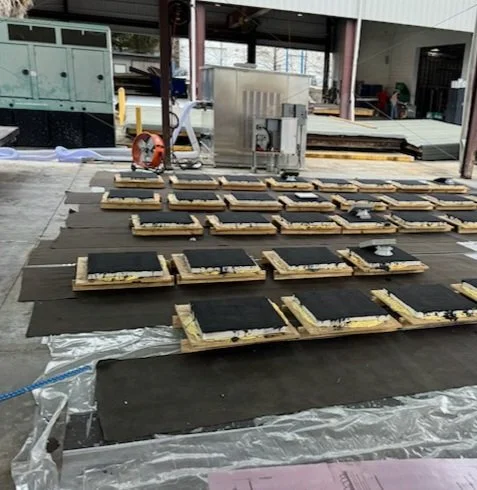
W.R. Meadows and GreenRise test assemblies for high velocity hurricane zones. Photo credit to GreenRise Tech and PRI Laboratory.
Underwriter Laboratories UL 2218 Class 4 for impact resistance is the highest rating for roofing materials and overburden. This rating indicates that the material can withstand a 2-inch diameter ball dropped from 20 feet without cracking or structural failure. Concrete roof pavers meeting this rating can absorb impacts of even the worst hail storms without significant damage. A healthy green roof with thriving plants can protect the roof from hail. The growth media, drainage composite and any XPS insulation absorbs the impact before it reaches the waterproofing.
Protection from Extreme Wind
There are three primary ways that wind can destroy a roof. The first is damage caused by flying debris. There is also the risk of lateral wind separating parts of the roof from the deck. But one of the greatest concerns is caused by wind pressure inside of the building blowing the roof off from underneath, releasing it to the sky along with its mechanical equipment which become dangerous projectiles.
But pavers and green roof systems are heavy. They hold down the roofing and can keep it from blowing off even in hurricane strength winds, while also protecting the roof from flying debris. Vegetated roof growth media (soil) saturated weights can range from 6-8 pounds per vertical inch of depth. Wind uplift resistance of concrete roof pavers can reach 350 pounds per square foot, with wind flow resistance of 165 mph. That is well in a Category 5 hurricane.
ANSI/SPRI RP-14 is a wind design standard for vegetated roofing, created by Green Roofs for Healthy Cities in partnership with SPRI, Inc, and serves as minimum design criteria for green roof projects. Florida Products Approvals have their own guidelines for wind-resilient roofing, and Miami-Dade has a Notice of Acceptance for roofing overburden that can withstand High Velocity Hurricane Zone winds. The University of Miami is a great example of vegetated roofing protecting a facility from hurricane winds.
Protection from Fire
Fire ratings are part of every major building code. The question is not just if the roof will ignite, but whether and how fast the fire will spread, whether it drips hot flames into the facility, or if as in the case of vegetated roofing and paver systems, the overburden can actually help extinguish fires.
Most occupied buildings with a green roof call for a Class A fire rating as designated by UL 790, the Underwriters Laboratories Standard Test Methods for Fire Tests of Roof Coverings, including both the roofing system and the overburden.
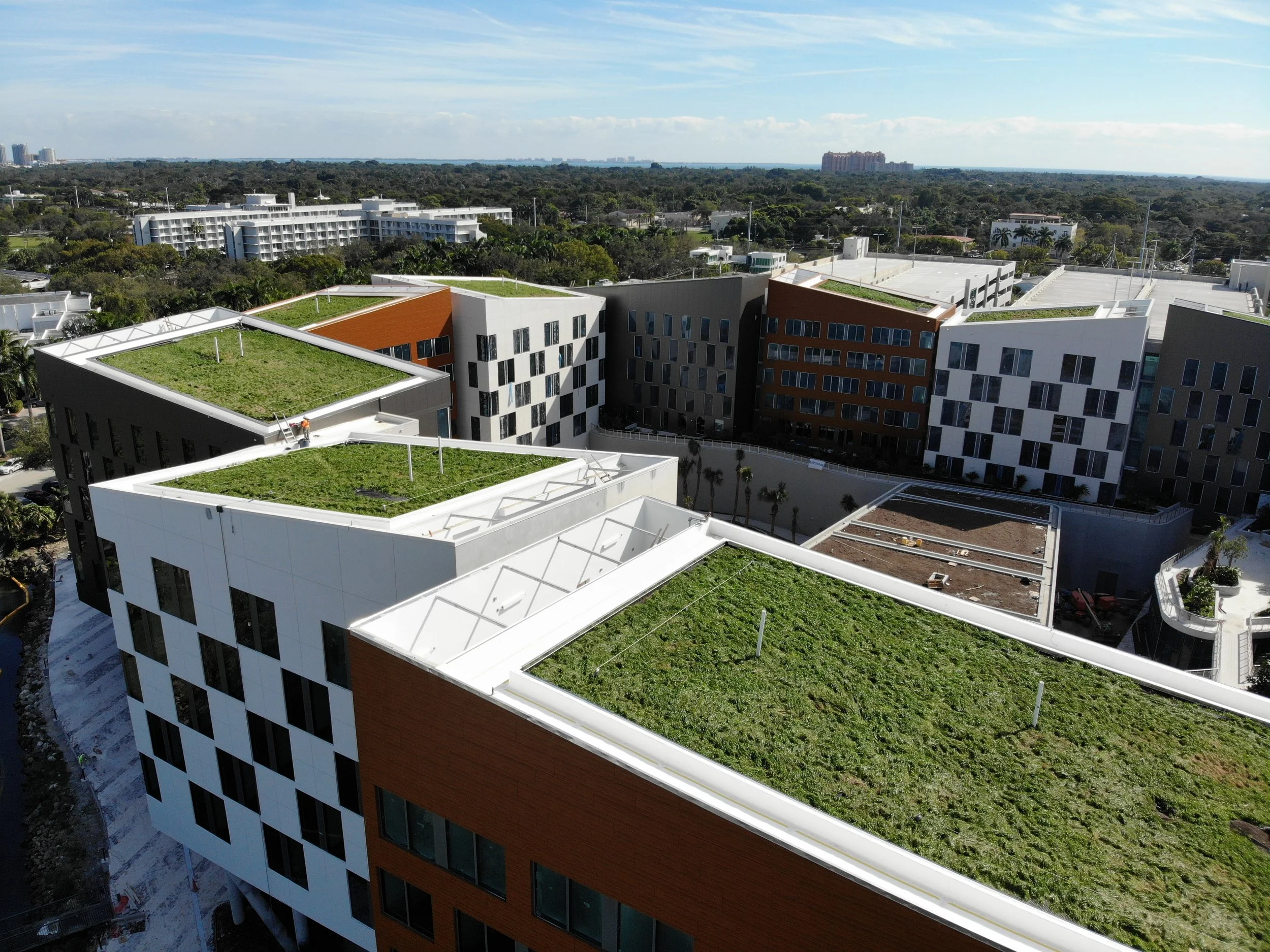
These green roofs on the University of Miami were engineered to withstand high velocity hurricane zones and have already survived several hurricanes. Photo: GreenRise Technologies
In studies at independent laboratories, GreenRise Technologies demonstrated their modular vegetated roofing system not only showed no significant lateral spread of flame from the path directly exposed to the test flame, but according to VP Michael Whitfield, Vice President of GreenRise Technologies Green Roof Products Division, when following the ASTM E108-17 Standard Test Methods for Fire Tests of Roof Covering, the green roof not only resists but can actually help extinguish flames. Another great reference is the ANSI/SPRI VF-1 External Fire Design Standard for Vegetative Roofs, including the use of border zones and area dividers (also called vegetation-free or separation zones).
Insurance Coverage
There have been anecdotal stories of insurance companies lowering rates for roofing with overburden in a protected membrane assembly, but there is no quantifiable data that demonstrates consistent discounting. Several leading insurers were contacted for this article and none had information to share on insurance coverage, reduced rates, or what systems would qualify. Additionally, none of the green roof, paver, or insulation suppliers, nor designers or building owners contacted for this article, had any experience with insurance claims on roofing overburden. Indeed, there were only stories of the systems remaining unharmed during extreme weather when the surrounding facilities suffered a worse fate.
Warranties – Manufacturer, Installer, and Third-Party
Even in the absence of clear, definable insurance coverage for green roofs and amenity decks, building owners are not left without protection and support. Roofing and overburden product manufacturers recognize how much green roof systems protect the roof, and commonly provide extended warranties. An exposed roofing system may get a 10 or 15 year manufacturer warranty, but when covered with overburden, 20 year warranties are standard and 30+ years are not unheard of.
In addition to the product manufacturers, the installers of the roof and green roof also usually have their own warranty, generally tied into ongoing preventative maintenance. Sometimes there are third party coverages as well, for example the Roofing Contractors Association of British Columbia has a program where they take on warranty coverage for registered projects that follow their green roof standard.
A Higher Level
Roofing overburden can significantly preserve and extend the lifecycle of the building’s most expensive asset, while also protecting against potentially catastrophic weather and fire. Insurance companies should recognize these capabilities and factor them into their fee structures, providing a market-based incentive for implementation.
The built environment is shifting away from a throw-away culture, to an economically and environmentally resilient society. As in nature, what is good for the individual is good for the whole community. The benefits of green roofing unite and compound – protecting the building, restoring the city, and delighting the occupant.
There is a magic in the reintroduction of nature to the built environment. Plants want to thrive. They can protect, feed, cleanse, heal, and inspire. The more building owners, designers, and insurers understand the compounding benefits of these beautiful technologies, the faster humankind can change the nature of our urban environments.
Katarzyna Wolańska - board member of the Polish Green Roof Association responsible for cooperation with cities and PR. Publicist specialising in green infrastructure. Since 2013 she has been running her own thematic portal www.ZielonaInfrastruktura.pl.
CHANGE THE BOTTOM FILTERS