Financing Green Roofs with C-PACE: Unlocking the Economic Value of Green Infrastructure
Introduction
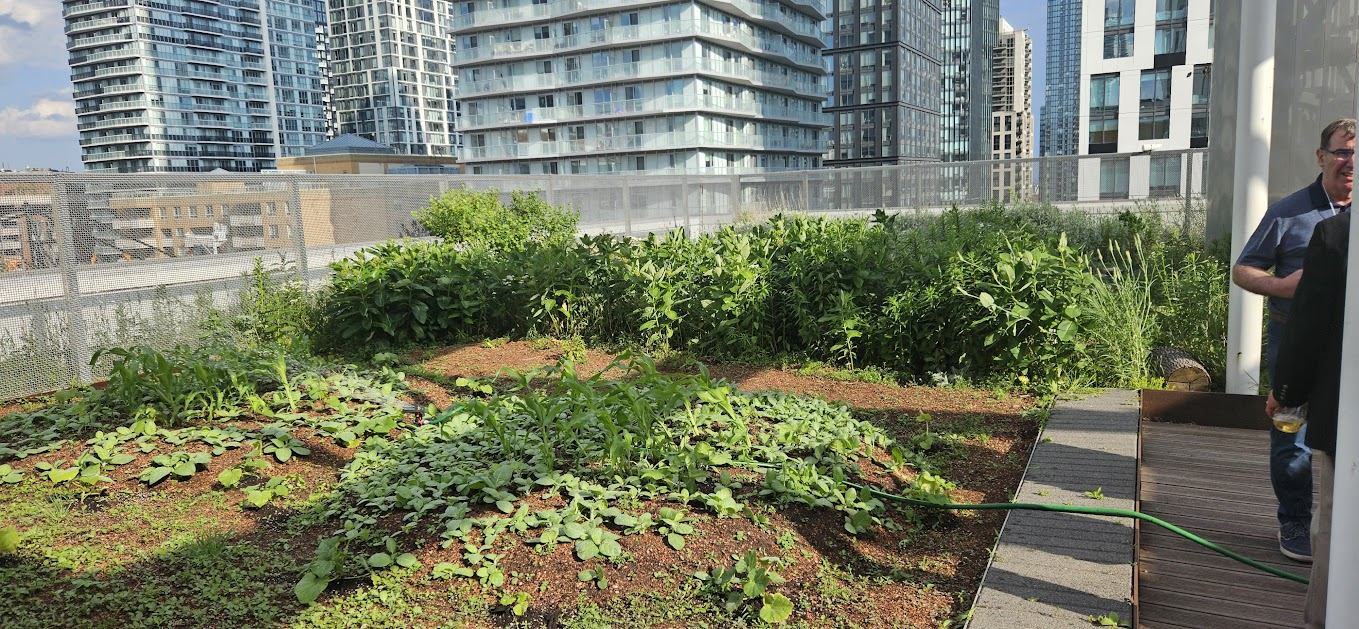
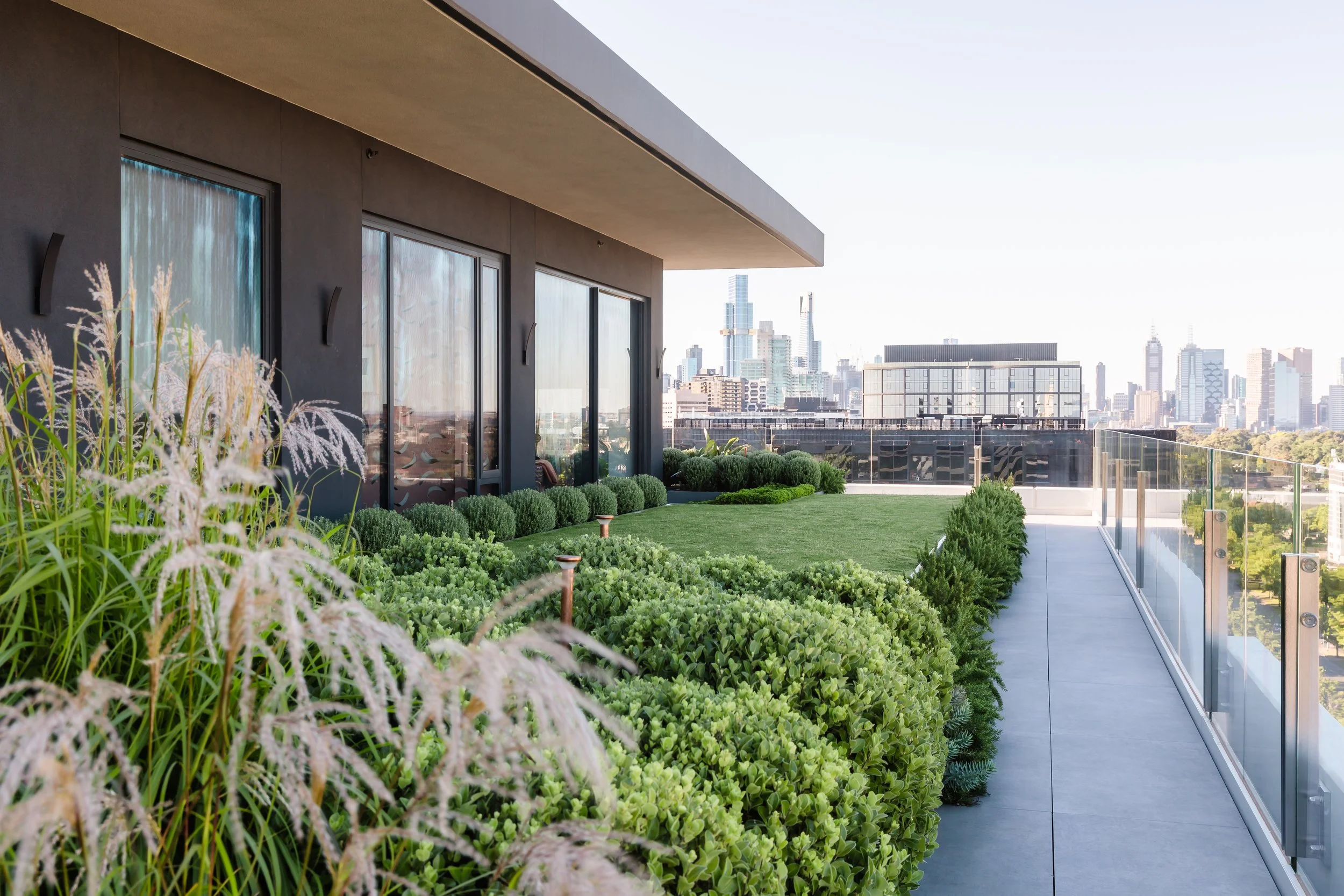
Green roof installations are being increasingly mandated by urban governments to help meet climate goals, such as managing stormwater, and to help to regulate extreme temperatures. Almost all these governments have also enabled a specialized financing tool that allows property owners to increase property taxes on their building to finance these mandatory green roof installations.
Commercial Property Assessed Clean Energy (C-PACE) legislation is coupled with green roof legislation to provide low-cost capital with minimal-to-no upfront out-of-pocket costs; this transforms both mandated and voluntary green roof installation projects from capital-intensive outlays into financially efficient investments with first year pay back.
C-PACE Financing: A Transformational Capital Solution
C-PACE is a long-term, fixed-rate financing mechanism that funds eligible energy efficiency, renewable energy, water conservation, and resilience improvements that include all stormwater management on private commercial property. Financing is repaid through an agreement with the municipality to increase property taxes, often as a voluntary Special Assessment, with the private capital entering into agreement with the municipality to fund the installation of these measures.
Key characteristics of C-PACE include:
100 percent financing of all project costs, including design and engineering
No impact to credit, with no personal guaranty required
Fixed-rate terms that provide cost certainty over the repayment term up to 30 years
Potential off-balance-sheet treatment
Transferability upon sale of the property
No consent or notifications required upon refinancing of any debt on the property
Can be repaid by tenants who are responsible for paying property taxes
Can finance pre-paid green roof maintenance contracts along with the installation
For green roofs and other capital improvements with long operational lifespans, this financing structure is particularly well suited. Instead of a capital expense or increasing debt to fund installation, owners can finance all costs with no capital outlay. C-PACE is the long-awaited solution to the commercial building sector’s barriers to environmental upgrades, because the financing is tied to the property, not the owner. The financing is treated as a tax on the property rather than a loan expense, which greatly improves a commercial project’s economics and triggers an accounting transformation with considerable benefits. Because C-PACE is structured as a real property tax or special assessment, repayment obligations can often be passed through to tenants under typical commercial lease structures. Project costs are also generally capitalized into the property’s asset basis, reflecting the long-term nature of the improvements. Depending on state law and transaction structure, C-PACE assessments may be treated similarly to other real property taxes or special assessments for tax and accounting purposes, which can further influence the project’s financial treatment.
Matching Financing to Useful Life
Green roof systems are long-duration improvements. C-PACE terms are typically 30 years of repayment structured around the useful life of the installed measures. This allows repayment to align with the period over which benefits are realized, rather than compressing cost recovery into short amortization schedules.
Preserving Equity and Borrowing Capacity
C-PACE can finance up to 100 percent of eligible project costs, including construction, engineering, and related soft costs. By using C-PACE instead of equity or mezzanine debt, owners can preserve internal capital and maintain flexibility for additional investments or acquisitions.
Enhancing Cash Flow Stability
Because C-PACE offers fixed-rate financing and can include interest-only or deferred payment structures during construction, projects can be structured to minimize near-term cash flow impact. When combined with operational savings from energy reduction and potential maintenance savings from an extended roof lifespan, green roof installations can achieve cash flow neutrality over time.
Aligning Green Roof Economics with C-PACE
While the operational and environmental advantages of green roofs are well documented, upfront capital cost has historically limited adoption. C-PACE directly addresses this barrier, making it a gamechanger with widespread national adoption garnering media attention.
Mandatory Green Roof Legislation and C-PACE
City planners carefully consider the cost of mandating measures that support climate goals and the potential impact upon economic development. C-PACE can provide low-cost private capital with no administrative burden or cost to the municipality. New York City’s Climate Mobilization Act of 2019 including legislation enabling C-PACE financing to complement the City’s broader greenhouse gas reduction mandates.
C- PACE financing benefits all stakeholders including the construction industry. The American Council for an Energy Efficient Economy (ACEEE) estimates 17 jobs are created for every $1 million financed, creating stable work for local contractors.4
New Construction Case Study
A current mixed-use project qualified for $46.5 million C-PACE, roughly 25% of vertical construction costs, based upon design exceeding 2021 IECC. Because significant stormwater management measures were included in the design, an additional 5% of the total eligible construction costs became eligible for C-PACE financing. This additional $9.3 million of C-PACE at an interest rate almost 2% less than the construction loan significantly lowered overall development costs. C-PACE is revolutionizing design and the thinking of developers by incentivizing the incorporation of sustainable measures into construction.
This project was able to qualify for an additional $9.3millionm because the developer included stormwater management measures in the construction of the office, multifamily, and retail buildings and improved the feasibility of the project by reducing the blended cost of capital.

How to Qualify Green Roof installation for C-PACE
In recent years, states have added stormwater mitigation and resiliency to the list of projects that qualify for C-PACE financing. In some states, the project must still qualify as an energy efficiency measure which can be demonstrated by utilizing industry standards rather than expensive energy modeling. For example, Aprelle O’Hara et. al concluded that in hospitals and based on varying climates, “green roofs have been recorded to save institutions an average of $0.15 - $0.57 per yd2 ($0.18–$0.68 per m2) in cooling and $0.18 per yd2 ($0.22 per m2) in heating annually.”1 Wang et. all found that green roofs can achieve a combined energy-water saving of $9.68 m−2 roof area in Phoenix with moisture-controlled irrigation, and $5.23 m−2 in Princeton without irrigation. Utilizing conservative estimates based upon published research has been an accepted method to qualify a project. All related costs including any structural upgrades to accommodate the weight load may be included in the amount financed.
Strategic Considerations for Owners and Green Roof Professionals
Integrating green roofs with C-PACE financing should be a proactive decision rather than a late-stage add-on.
Best practices include:
Early feasibility analysis to confirm eligibility and projected energy or resilience benefits
Coordination with mortgage lenders to obtain required consent for the C-PACE
In new construction, structuring C-PACE alongside construction financing or permanent debt to optimize the capital stack
Leveraging green roof installation as part of broader property improvement and tenant engagement strategies. Completed work may be retroactively financed to incentivize owners to give the green light to green roof projects.
Ease of payment to professionals; the first payment to the contractor is disbursed to order materials, to pay subcontractors or at the start of demolition with subsequent payments disbursed at scheduled milestones or monthly draws.
Conclusion: Expanding the Market for Green Roofs Through C-PACE
As cities confront increasing climate risk, heat stress, and stormwater challenges, green roofs are positioned to become standard components of high-performance real estate. The remaining constraint is capital allocation. C-PACE removes that constraint.
Michele Pitale, M.D. is a Managing Director and heads principal transactions and retrofit commercial PACE transactions. She leads Counterpointe’s team focused on commercial PACE financing with a focus on new construction development, transitional and rehab investments. Dr. Pitale provides an expertise in deep energy retrofits and a passion for advancing projects with community benefits that provide accretive economics for owners. She serves as liaison to the Department of Energy Better Buildings and the National Academy of Medicine as part of its Climate Collaborative.
About CounterpointeSRE
CounterpointeSRE is a portfolio company of MassMutual. Our focus is to provide one-stop sustainable finance solutions to our commercial real estate owners/operators. We bring deep expertise in commercial real estate infrastructure, finance and underwriting. Our team works closely with owners, developers, brokers, and capital partners to structure C-PACE solutions that support durable performance improvements and long-term asset value creation. CounterpointeSRE’s ability to structure financing solutions that align public policy goals with private capital deployment.
For more information, visit https://CounterpointeSRE.com
Resources
O’Hara, A. C., Miller, A. C., Spinks, H., Seifert, A., Mills, T., & Tuininga, A. R. (2022). The sustainable prescription: Benefits of green roof implementation for urban hospitals. Frontiers in Sustainable Cities, 4, 798012.
MacIvor, J. S., Lundholm, J., Simmons, M. T., & O’Connell, C. (2024). Building energy savings by green roofs and cool roofs in current and future climates. npj Urban Sustainability, 4, Article 22.
Yihang Wang, Zhi-Hua Wang, Negar Rahmatollahi, Haoran Hou. (2024). The impact of roof systems on cooling and building energy efficiency. Applied Energy, Volume 376, Part B, 2024, 124339.
American Council for an Energy-Efficient Economy. (2011). How does energy efficiency create jobs? ACEEE. https://www.aceee.org/files/pdf/fact-sheet/ee-job-creation.pdf