Branching Out: A Look at Tree Protection in the UK
Advertisement
Introduction
“Our capacity and willingness to learn the language of trees, to study the language of trees, it’s so obviously to me now, might incline us to be less brutal, less extractive. It might incline us to share, to collaborate. It might incline us to give shelter and make room. The language of trees might incline us to patience. To love. It might incline us to gratitude.”
Earlier this year, a friend expressed her dismay in a social media post after the management company of her building cut down a mature tree outside her window. In a private message, she told me that seeing the chain sawed sections of the tree and the stump had brought her to tears. She has lived in her apartment for a few years and has enjoyed watching the tree change through the seasons. Its casual destruction left her feeling sad and unsettled.
The United Kingdom is home to a substantial number of ancient and veteran trees (AVTs), with England having more native ancient oaks than the rest of Europe combined (The Tree Council, 2024). Unfortunately, the current protections of this priceless and irreplaceable green infrastructure are falling short of truly safeguarding our rich woodland heritage.
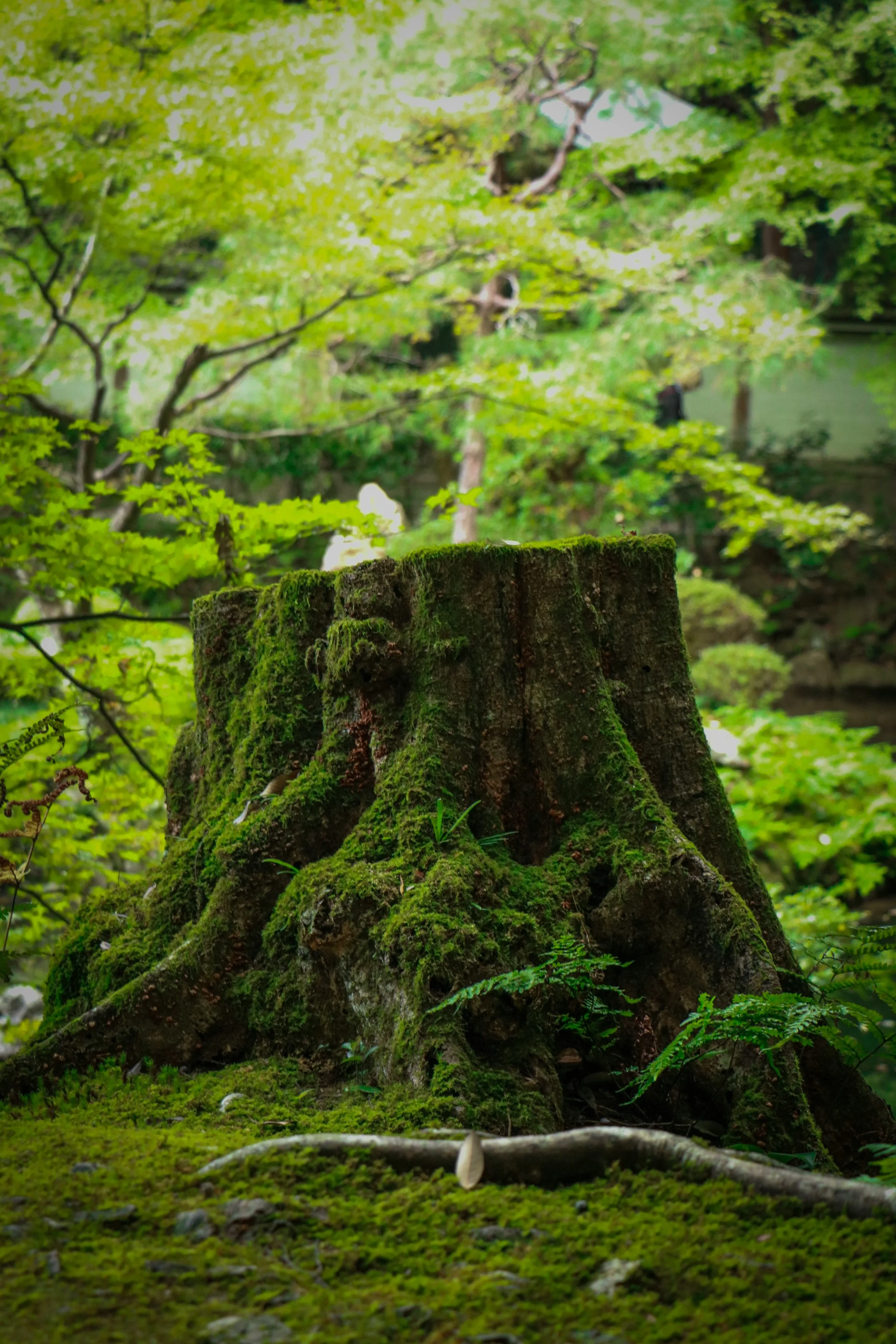
Tree stump. Eco-vandalism is on the rise in the UK and ancient trees have been targeted.
Growing Eco-Vandalism in the UK
Despite more public awareness of the value of trees, over the last few years there has been a noticeable rise of mindless environmental destruction across England. For example, Plymouth City Council came under fire in March 2023 after residents awoke to find dozens of mature trees had been felled overnight in the heart of the city. In September 2023, many nature lovers were dismayed to learn that the world-famous Sycamore Gap Tree had been cut down in an act of eco-vandalism. The Gap Tree had been growing from a hole in Hadrian’s Wall in Northumberland for over two centuries. Featured in the 1991 movie Robin Hood: Prince of Thieves, the tree has been valued at between £450,000 – 622,000 (Dodd, 2025). Two men were found guilty of ‘mindless destruction’ of the Sycamore Gap Tree and in July of this year were sentenced to over four years in prison for destroying the tree and damaging Hadrian’s Wall, a UNESCO World Heritage Site. The landmark ‘belonged to the people’ said the National Trust, who had managed the site since 1942.
More recently, the Whitewebbs Oak, another ancient tree that is believed to have been standing in 1605 when Guy Fawkes was plotting to blow up the Houses of Parliament was felled on April 3rd by contractors working for a restaurant chain. The Whitewebbs Oak was deemed of more ecological value than the Sycamore Gap Tree. Oaks native to the UK can support the lives of over 2,300 species (Phillips, 2025). The ancient oak’s monetary value has been placed at around £1 million.
As is the case in many other countries, the protection of trees in general is either non-existent or found wanting. In the United Kingdom, woodland designations are not consistent. In England, Wales and Northern Ireland, a wooded area is designated ancient if it has existed continuously since 1600, while in Scotland the wooded area must have existed since 1750. Unfortunately, while this is used as a classification for woodland areas, the designation itself does not automatically safeguard these habitats.
Advertisement
“There is wisdom in things with which we share this earth; in the language we use to speak of them; in the ways we choose to honour both.”
UK Tree Protections
In the UK, the main policy tool used for protecting individual trees is a Tree Preservation Order (TPO). These aim to prohibit cutting down, uprooting, topping, lopping, wilful damage or wilful destruction of specific trees. This policy tool first came into force through the Town and Country Planning Act 1947 (Department for Communities and Local Government, 2006). TPOs can carry a fine of up to £20,000 for the destruction of a protected tree, although they are the responsibility of local councils (rather than nationally) and are discretionary by nature. In many countries, the fines levied for illegal tree removal are insufficient to dissuade developers from removing them. More problematically, approved planning permission to develop an area can outweigh a TPO. For some reason neither the Sycamore Gap Tree nor the Whitewebbs Oak were covered by this legislation.
Policy Push for More Protection
Spurred on by the increasing destruction of trees in recent years, in 2024 the Woodland Trust, UK’s largest woodland conservation charity launched the Living Legends campaign. The Trust’s aim with the campaign is to expand the limited policy protections for the country’s oldest trees. The campaign collected over 100,000 signatures demanding greater protection. These were delivered to 10 Downing Street, the official residence of the Prime Minister in November of 2024, and the request was subsequently debated in the House of Lords. The new tree protection policy is long overdue given that three quarters of ancient trees are currently outside of legally protected wildlife sites and trees are increasingly recognized as key to mitigating and adapting to climate change. If successful, the campaign will help to expand the protection granted by TPOs and calls for consistent government policy protection for old trees; better support for land managers and farmers who care for ancient and veteran trees; plus, the creation of a new ‘Heritage Tree’ designation for legal protection.
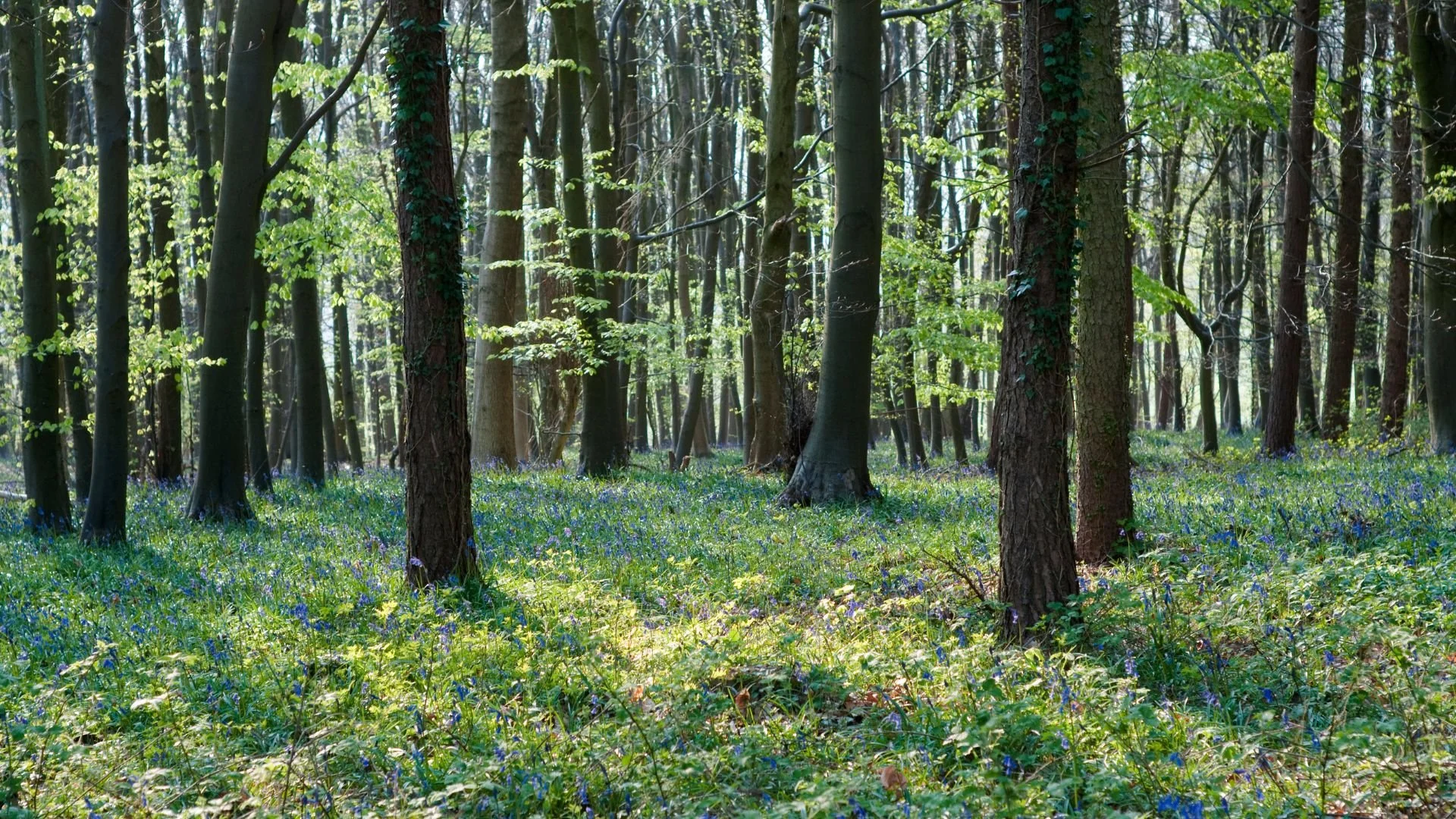
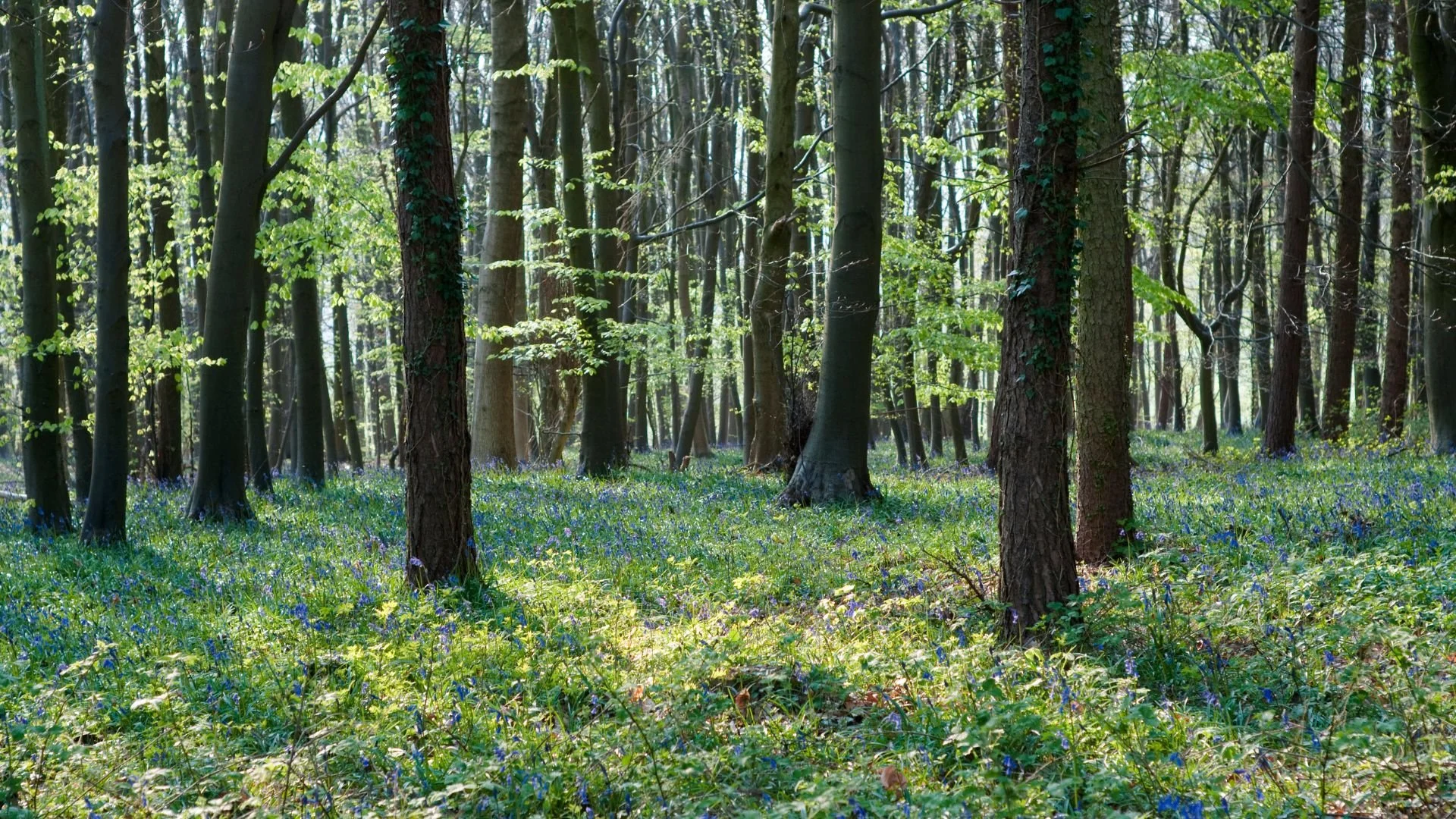
Woodlands in Southwest England.
However, the history of protecting individual trees and woodlands in the UK is bureaucratic and diffuse. In 1919, The Forestry Commission was created to manage the UK's woodlands after many of the forests across England, Scotland and Wales had been felled to meet demands of the First World War. As the country emerged from the conflict, the restitution of these woodlands was the organisation’s original main raison d’être. Yet, its central purpose was not conservation – the government wanted to protect and increase domestic timber production. While England’s modern Forestry Commission has extended its scope to include research, much of the most effective and publicised protection campaigns are orchestrated by charities such as the Woodland Trust and smaller local groups.
Public support for policy change exists. According to a survey commissioned by the Wildlife Trust in May of this year, almost one third of adult voters (26%) believe the government is not taking the nature crisis seriously enough. This research has emerged as charities and Non-Governmental Organizations including the Woodland Trust, The Wildlife Trust, and the Royal Society for the Protection of Birds (RSPB) push back against the current Labour government’s new Planning & Infrastructure Bill. The chief executive of the RSPB, Emma Marsh, explained that “the Bill in its current form will rip the heart out of environmental protections and risks sending nature further into freefall.” (The Wildlife Trusts, 2025).
The Importance of Ancient Trees and Woodlands
Ancient and veteran trees provide ecological microhabitats that host hundreds and sometimes thousands of plant, insect and fungi species, including many rare lichens. For instance, the rare hazel gloves fungus (Hypocreopsis rhododendri) is found solely on old hazel trees. Its presence is an indication not only of old growth forest, but also good air quality (Woodland Trust, 2025).
According to the Woodland Trust, the UK’s forests currently store around 1 billion tonnes of carbon in total (1,095 Mt C). In their State of the UK’s Woods and Trees 2025 report, they noted that according to studies on UK ancient woodlands, even as forests age and decomposition increases, they remain net carbon sinks, accumulating vast carbon stores.
The UK also boasts a large proportion of Europe’s temperate rainforests, which are globally rare habitats. Great Britain and Northern Ireland contain 40 per cent of Europe’s suitable climatic space for temperate rainforests, however their condition falls well below its potential. For example, Scotland hosts a hyper oceanic zone on its western side and research suggests that as little as 30 per cent of Scotland’s rainforest is in a satisfactory condition (Woodland Trust, 2025).
The government itself acknowledges the dangers of this shortcoming with temperate rainforests. The Office of Science and Technology has noted that ancient woodland “cannot be recreated, as their composition is a product of environmental conditions and historic management that will not occur again.” (Wentworth, 2014).
Some of the aforementioned ancient woodland is found in Britain’s urban areas. In cities, forests provide a wide range of important services, including intercepting rainwater to help reduce flooding, improving air quality and helping to reduce the urban heat island effect. Trees provide much needed shade and cooling during increasingly severe heat waves.
Advertisement
Health Benefits From Trees:
Cleans the air of pollutants (such as CO2 and greenhouse gases)
Helps to clean water as part of the water cycle
Improves mental and physical health (i.e. lowering feeling of stress)
Trees produce phytoncides, which help to strengthen our immune, circulatory, hormonal and nervous systems when inhaled
Reduces urban heat island effect and related health issues like heat stress and air pollution
Helps to reduce noise pollution
Improves soil health for agriculture
Protects water bodies (and wildlife) from chemicals found in farm run-off (Woodland Trust)

Teens volunteering to pick up litter at outdoor parks.
Possible Next Steps
Extending the national science curriculum in schools to include information on old growth forests could help to further spread awareness and embolden a new generation of environmental guardians. A further extension would be to create a requirement for all graduating 16–18-year-olds to complete 20 volunteering hours, with 10 mandated to outdoor conservation efforts, such as litter picking.
Additionally, the fine for TPOs should be increased beyond £20,000 to provide a greater disincentive to developers who are too willing to cut and pay under the current system.
And finally, the Forestry Commission and Natural England could be expanded; provided with larger budgets and the power to enforce stricter policies on both extending protections to more wooded areas and preserving existing woodlands.
Conclusion
Though at times the actions of different local interest groups, charities and NGOs working to protect and preserve ancient woodlands and individual trees can seem disparate and disconnected, there does appear to be a groundswell in recent public support for these irreplaceable environments. A growing appreciation of the important human health, climate mitigation and adaptation and ecosystem services provided by ancient woodlands and urban forests may result in better policy protections.
Cheeringly, there are 49 saplings growing from seeds taken from the Sycamore Gap Tree that have been distributed to keen recipients by the National Trust. They received over 500 applications for these ‘Trees of Hope’. Perhaps in this way moments of eco-vandalis can be reclaimed and used to unite communities around their shared passion for the natural world. As Adam Cormack, head of campaigning at the Woodland Trust, said in the Guardian, “these astonishing trees are our inheritance from history, and we should be treating them like national treasures”.
Advertisement
About the Author
Emily Gillings-Peck is a nature enthusiast living in London, England. She is working on her MSc in Environment and Sustainability at Birkbeck, University of London.
References
Department for Communities and Local Government (2006). ‘Tree Preservation Orders: A Guide to the Law and Good Practice’. Available at: https://assets.publishing.service.gov.uk/media/5a790b1d40f0b679c0a08161/tposguide.pdf (Accessed: 3 September 2025).
Dodd, S. (2025). ‘Sycamore Gap & The Enfield Oak: Are They The Same?’ Available at: https://www.treelaw.co.uk/sycamore-gap-the-enfield-oak-are-they-the-same/ (Accessed: 3 September 2025).
Holten, K. (ed.), The Language of Trees: How Trees Make Our World, Change Our Minds, and Rewild Our Lives (Elliott & Thompson, 2023).
Horton, H. and Barkham, P., ‘Study suggests existence of up to 2.1m ancient and veteran trees in England’, The Guardian, 30 January 2022.
Phillips, O. (2025). ‘Woodland Trust Expresses Shock at London Ancient Oak Tree Felling’. Available at: https://www.woodlandtrust.org.uk/press-centre/2025/04/london-ancient-tree-felling-shock/ (Accessed: 3 September 2025).
The Tree Council (2024). ‘100,000 Strong Petition Calls for Increased Tree Protection Ahead of National Tree Week’. Available at: https://treecouncil.org.uk/100000-strong-petition-calls-for-increased-tree-protection-ahead-of-national-tree-week/ (Accessed: 3 September 2025).
The Wildlife Trusts (2025). ‘Planning Bill Breaks Labours Nature Promises Say the Wildlife Trusts and RSPB’. Available at: https://www.wildlifetrusts.org/news/planning-bill-breaks-labours-nature-promises-say-wildlife-trusts-and-rspb#:~:text=The%20Planning%20Bill%20threatens%20to,as%20strongly%20protected%20from%20development (Accessed: 3 September 2025).
Wentworth, J. (2014). ‘Ancient Woodland’. Available at: https://researchbriefings.files.parliament.uk/documents/POST-PN-465/POST-PN-465.pdf
(Accessed: 3 September 2025).
Woodland Trust (n.d.). ‘Hazel Gloves Fungus’. Available at: https://www.woodlandtrust.org.uk/trees-woods-and-wildlife/fungi-and-lichens/hazel-gloves-fungus/ (Accessed: 3 September 2025).
Woodland Trust (2025). ‘Woodland Cover and Condition’ in State of the UK’s Woods and Trees 2025’. Available at: https://storymaps.arcgis.com/collections/ee33b90deddd4af484ff2f270b270154?item=2
(Accessed: 3 September 2025).