Advertisement
Introduction
For more than a decade, the green roof at Public School 41 (PS 41), located in Greenwich Village, New York City, has not only been a garden in the sky but also a sanctuary for both teachers and students. In addition to the significant environmental and educational benefits the green roof has provided since opening in 2012, it has also quietly transformed mental health counseling in the elementary school community.
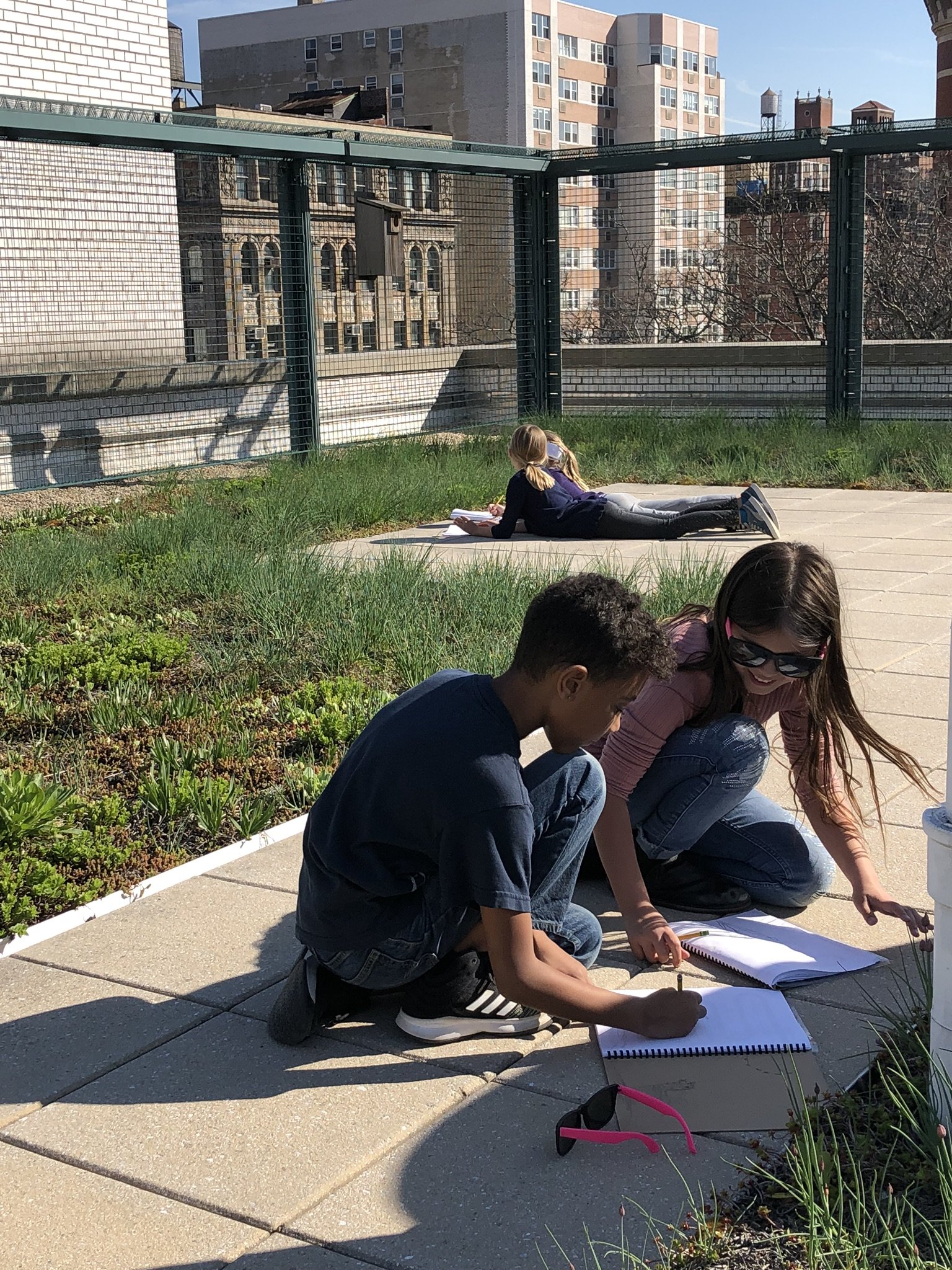
Students working on the green roof. Photo: Vicki Sando
In 2023, an estimated 20.9 per cent of adolescents were reported by their parents/caregivers to need treatment or counseling from a mental health professional, regardless of a currently diagnosed mental or behavioral health condition (Sappenfield, et al. 2023). Exposure to green spaces has been linked to mental health benefits in children and increasing exposure to green spaces, particularly at schools, could be incorporated into preventive policies to promote mental health in children (de la Osa et al., 2024). Fortunately, at PS 41, students and teachers can step onto a living rooftop landscape that calms the nervous system, sharpens focus, and sparks creativity and collaboration.
The Green Roof in Practice
Unlike the school’s lower-level playgrounds, the extensive sedum and native plant green roof was initially designed as an outdoor classroom and wildlife habitat. Teachers sign up to use the green roof in various capacities, from long-term science, STEM projects, and art activities to movement breaks and quiet reading time.
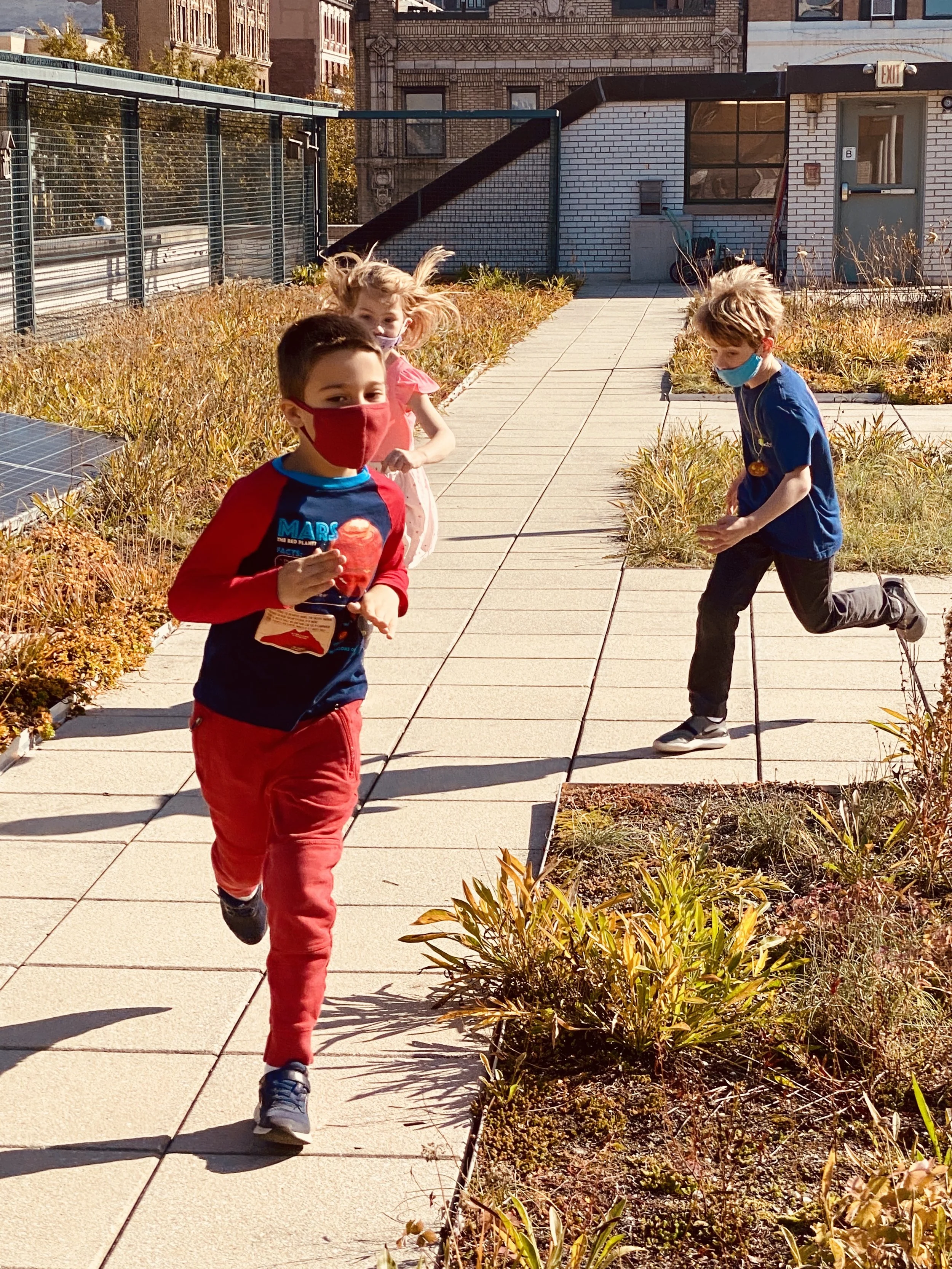
During COVID, students used the green roof for physical activity to elevate stress and anxiety. Photo: Vicki Sando
In addition to supporting comprehensive curriculum benefits, the green roof has also served as a vital space for students who need emotional support during the school day. Some children at PS 41 arrive at school with mental, behavioral, and developmental disorders, such as Attention Deficit Hyperactivity Disorder (ADHD), anxiety, depression, and even suicidal thoughts. The school’s counselors favor utilizing the green roof during counseling sessions and/or as a form of crisis intervention over other areas of the building and school grounds because being surrounded by the open sky and green space has proven to be extremely calming and restorative. For example, one of the group activities the school counselor initiates is a nature walk around the green roof. During the walk, children utilize their five senses—sight, sound, smell, touch, and taste—to explore and understand the rooftop habitat, which in turn fosters observation skills, creativity, and a deeper connection to the natural world. Engaging in sensory activities, such as nature walks, whereby someone can listen to bird songs, smell flowers, feel the textures of leaves, and even taste some edible plants, provides a hands-on way for students to learn new words to describe their experiences, learn about their environment, and benefit both psychologically and physically by resetting their emotions and lowering stress levels.
Another activity the counselor has implemented is “scavenger hunts” with teams of students. Playing this game on the green roof encourages social interactions among children who may not typically interact with each other. The game promotes better social skills in children with ADHD. Outdoor activities promote physical health, which can positively impact ADHD management and appear to reduce its symptoms in children across a wide range of individual, residential, and case characteristics (Leeb, R.T., 2024).
Advertisement
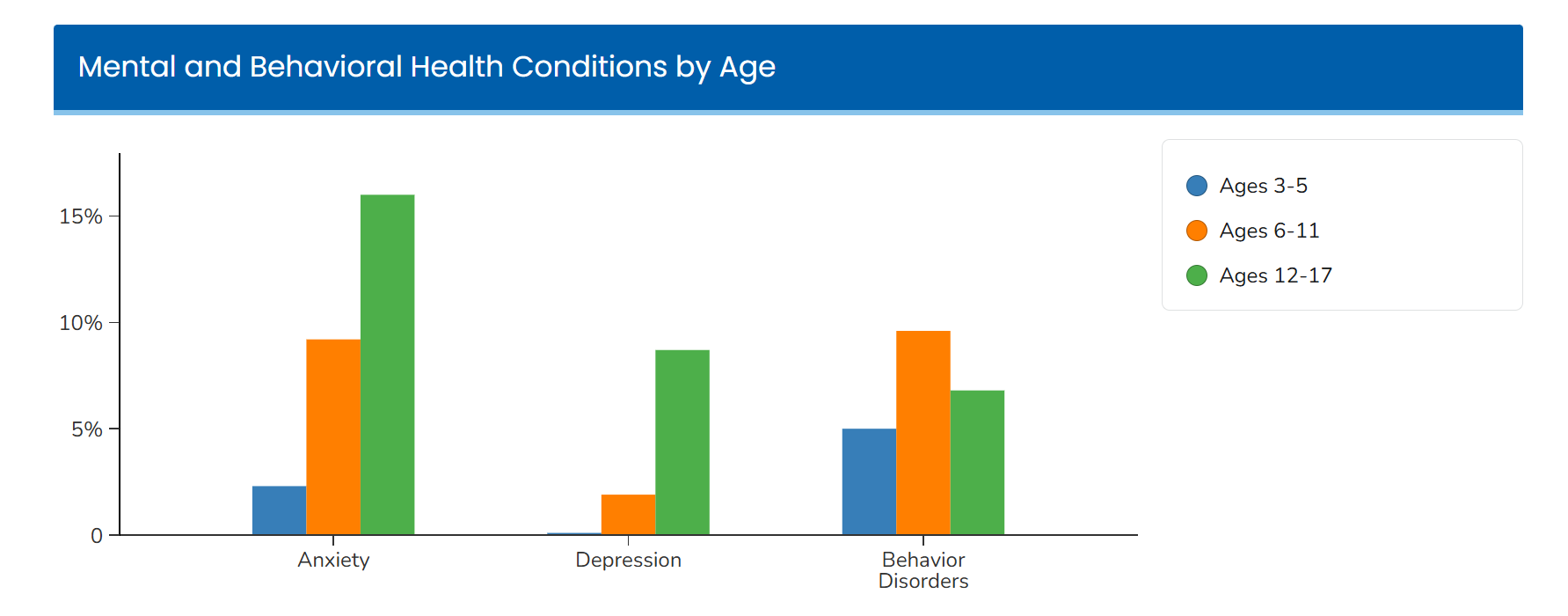
As children grow, they are exposed to more stressors and their mental health becomes affected. Photo: https://www.cdc.gov/children-mental-health/data-research/index.html
Student Experiences and Perceptions
Children are exposed to a variety of stressors before school even begins, as well as throughout the school day. Utilizing the green roof for students is a way to help them feel calmer and more grounded. It provides an opportunity to move feelings of anxiety and stress out of both their minds and their bodies. In surveys, students have repeatedly reported feeling more peaceful and positive after being on the green roof. They often returned to class newly energized. Longer-term benefits include an elevated mood, stronger coping skills, improved ability to focus, and an increased appreciation for the healing power of nature.
In 2021, a detailed green roof survey was administered to 150 students in which they were asked, “How does the green roof make you feel?” The top responses were “happy,” “calm,” “relaxed,” and “free.” Another question posed was, “Do you feel the same or different on the green roof compared to the playground?” Most students responded that each space was different: “because the green roof is calm with nature, and the playground is active and energizing” (see Appendix A).
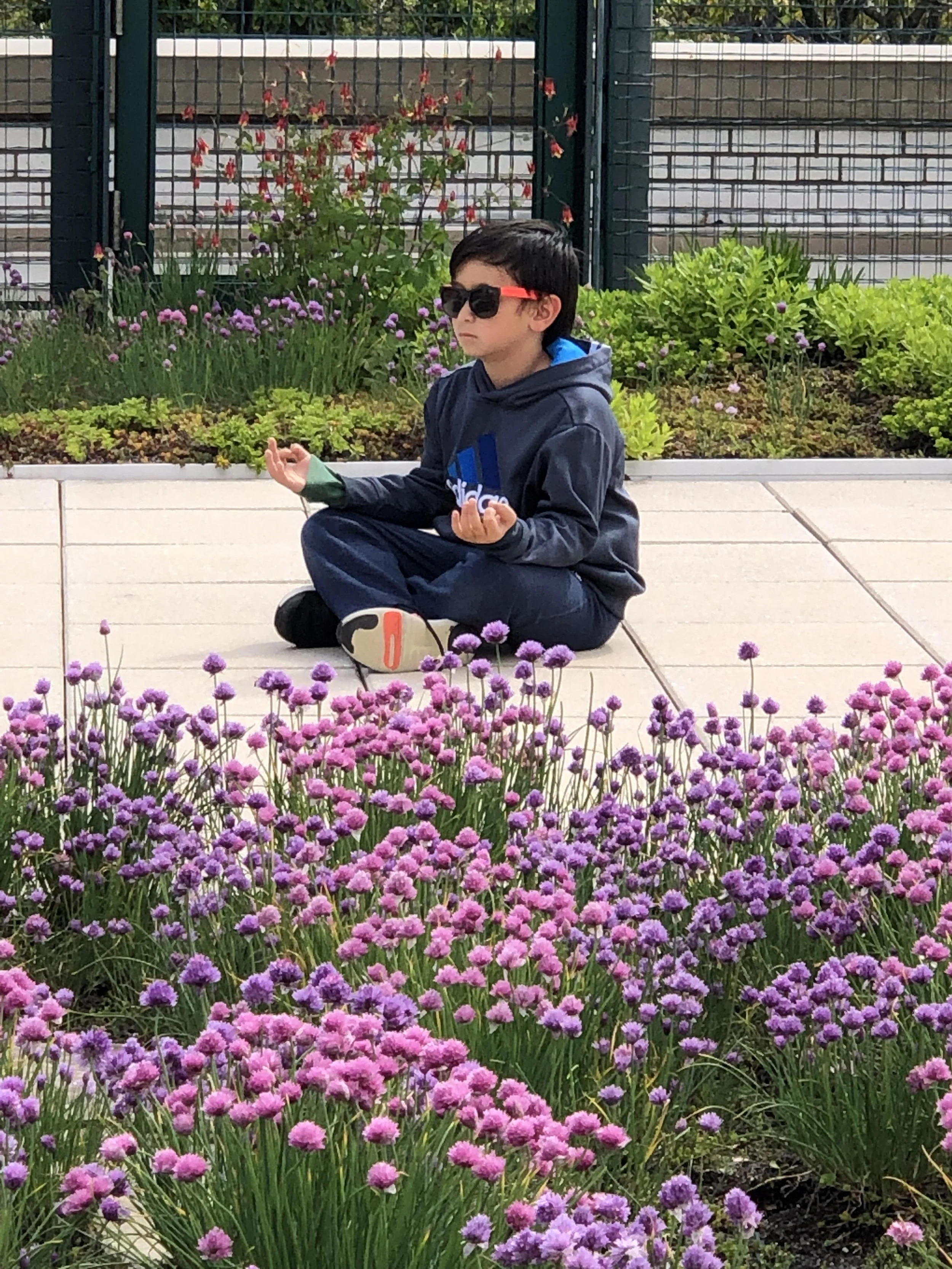
The green roof has been a vital resource for mindfulness and stress-reduction activities among students and staff. Photo: Vicki Sando
The Impact of Losing Access to the Green Roof
Unfortunately, PS 41’s green roof closed in the fall of 2024 as part of a two-year school-wide extensive building renovation. The temporary loss of this serene green space has necessitated a shift in the work that school counselors do with their students. While taking students outdoors is still possible, the ground-level playground is less green, more confined, and often boisterous.
With access to the green roof, the counselor was able to utilize the space for students in crisis. For example, if a student were on the verge of a panic attack, the counselor could bring them to the roof and implement the Five Senses Grounding Technique, a mindfulness exercise designed to calm the mind and bring one back to the present moment (Smith, S., 2018). “Being outside in an elevated space, surrounded by nature, helped alleviate feelings of anxiety in children within minutes,” says Daniels, who provides student counseling at the school.
Without access to this space, attempts have been made to utilize other outdoor spaces on the school grounds. While being outdoors is undoubtedly beneficial, the impact is nowhere near as significant as it was on the green roof. Many students prefer the elevated, peaceful environment, where they feel greater freedom to express themselves verbally and move their bodies.
Advertisement
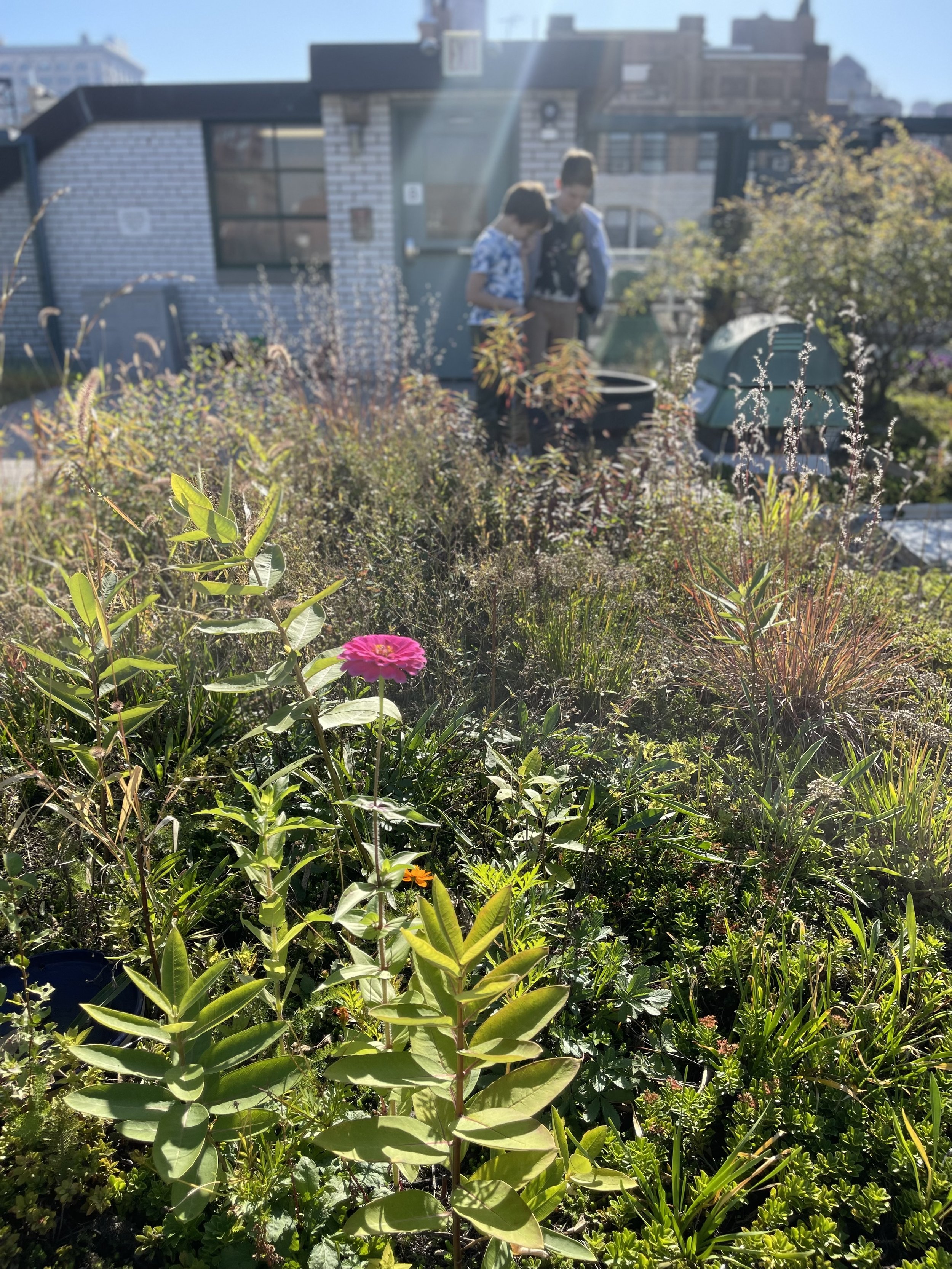
Pollinators growing on the rooftop where the children play. Photo: Vicki Sando
Call to Action: Policy and Legislation
The New York City public school system comprises approximately 130 million square feet across over 1,400 facilities. Despite scientific research and firsthand experience highlighting the benefits of school green roofs for the educational and mental well-being of students, their installation has lagged.
The School Construction Authority (SCA), which oversees new and major construction of New York City public schools, is committed to installing more green infrastructure- including green roofs- to meet New York City's Local Law 92 and Local Law 94, which requires roofs of certain buildings to be partially covered with green roofs or solar photovoltaic electricity-generating systems (Treglia, M.L., et al 2022).
The SCA has prioritized installing solar arrays on existing schools because of their relative simplicity. Two new schools in Brooklyn and Queens are currently being built with hybrid green roof/solar combinations, also to mitigate stormwater, which is promising (EME Group, 2022). However, student access to these rooftops is often restricted, primarily due to the added costs of making them accessible and compliant with government regulations (Kenney, S. 2024). A potential path forward is to conduct green roof feasibility studies at existing schools in neighborhoods with high heat indices and stormwater challenges, particularly where roof replacements are already needed. This approach could help identify more cost-effective ways to create accessible, student-centered green spaces. The New York City Council proposed a new Local Law in 2024 that would require green roof feasibility studies for two schools in each community school district; however, it is currently pending in committee.
Conclusion
PS 41's successful green roof program can be replicated across other public schools, thereby contributing significant environmental benefits in their respective communities, providing outdoor education, reconnecting children to nature, and creating a sanctuary for students who may need mental health support. There are so many positive outcomes if every child had access to "a garden in the sky."

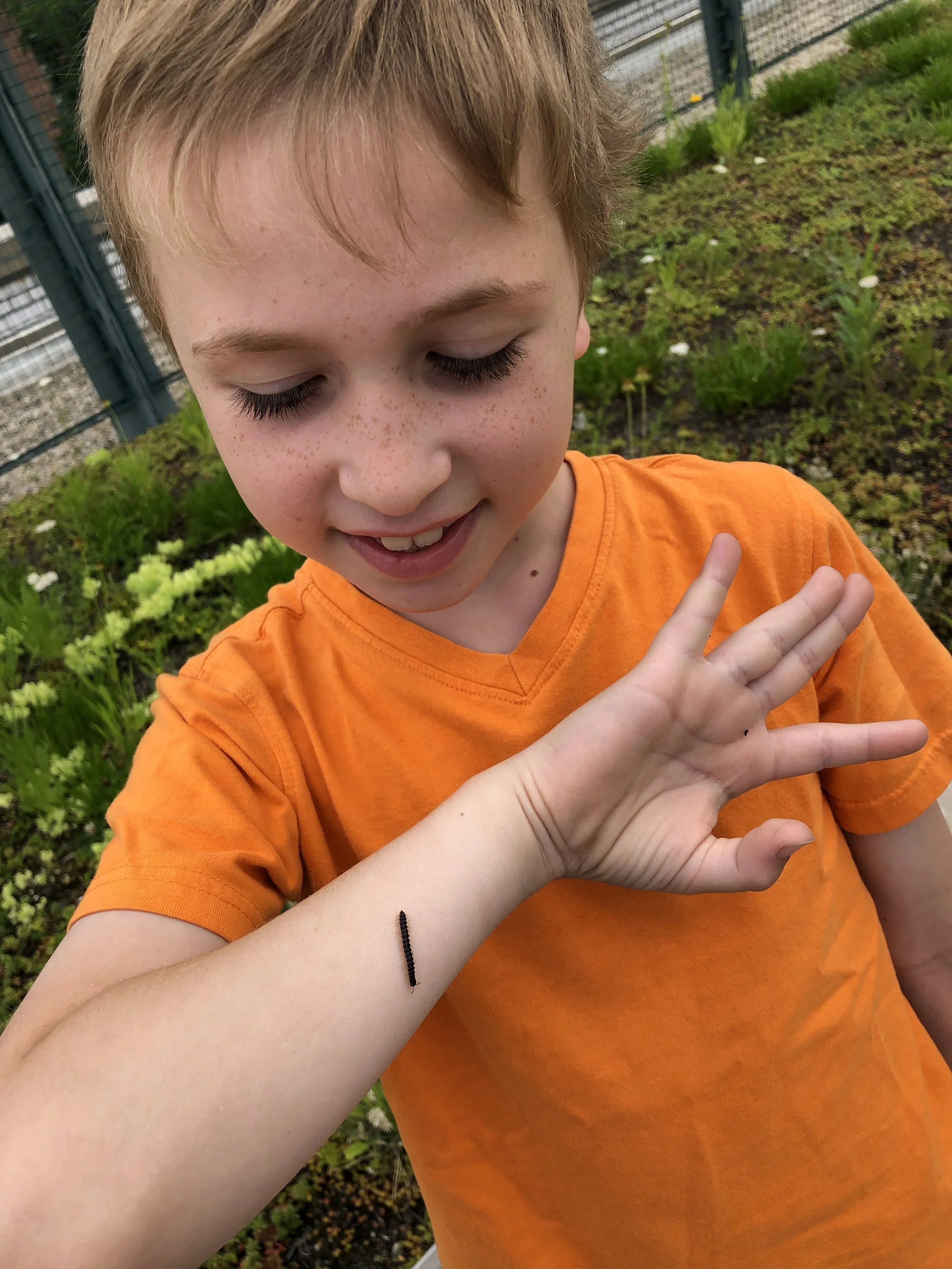
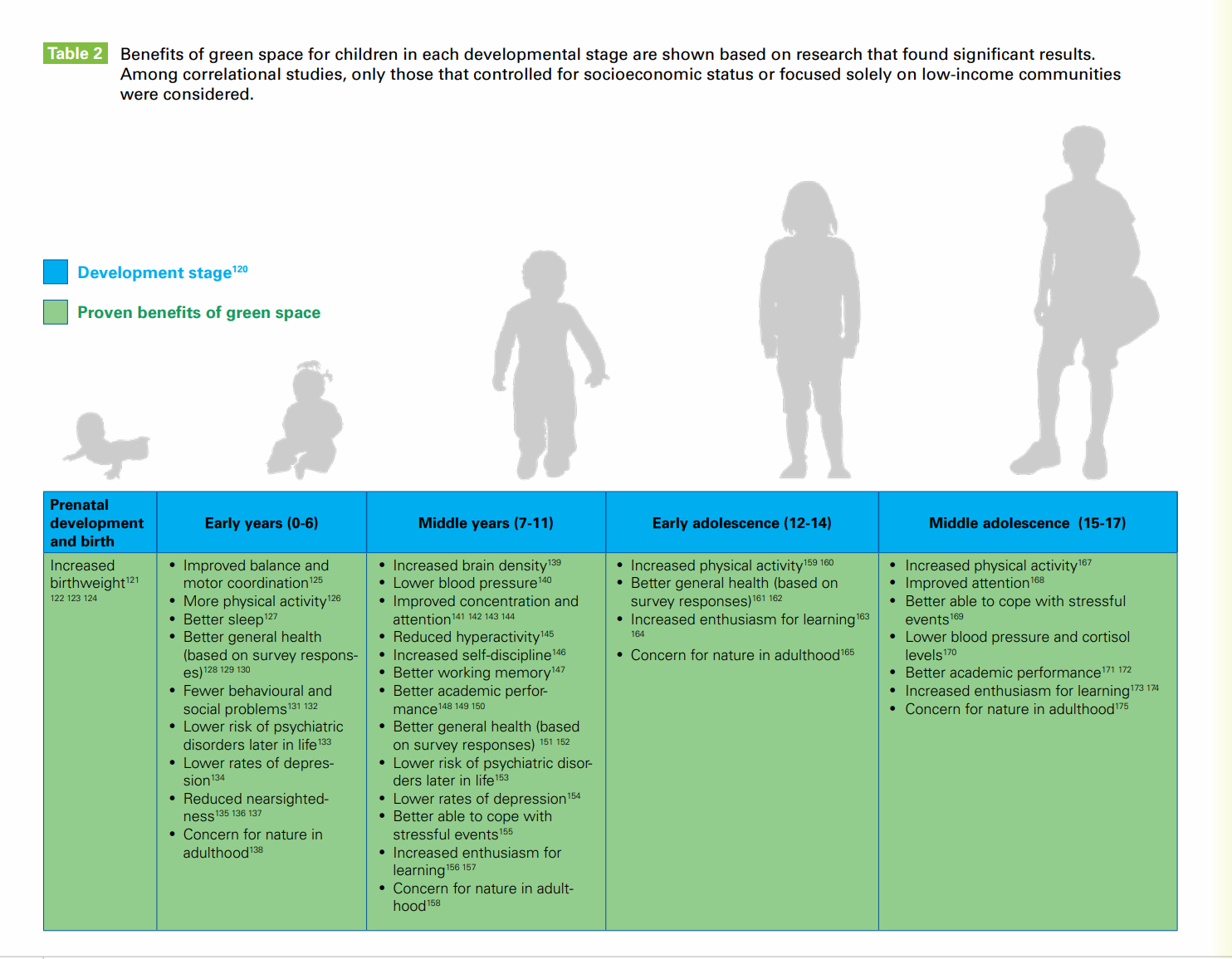
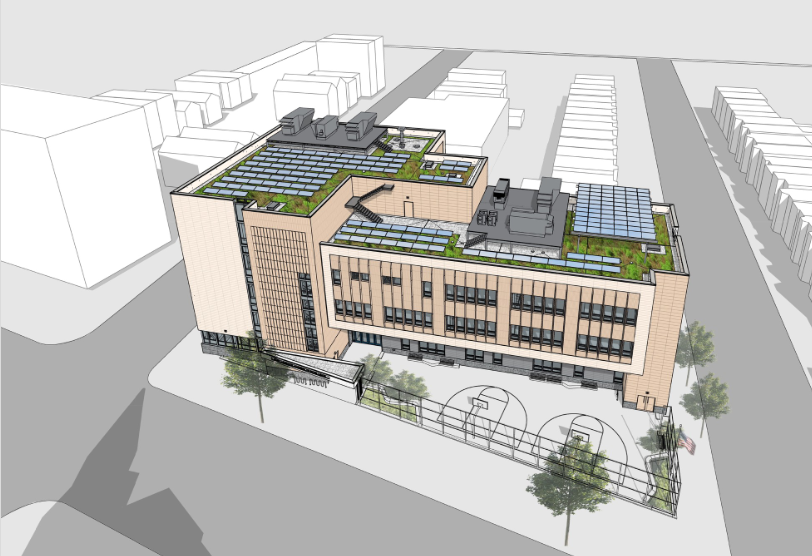
Photo 1: Students reconnect with nature, which often produces calming effects. Photo: Vicki Sando. Photo 2: PS41’s green roof. The east section is available for student use. Photo 3: Urban Green Spaces for Children. Photo 4: New middle school at 4012 Fort Hamilton Parkway in Brooklyn that's anticipated to open in September 2026.
Advertisement
About the Authors
Kimberly Daniels is the School Counselor and Mindfulness Director at PS 41, as well as the founder of Wellness by Kimberly, a Holistic Health practice with a focus on women’s wellness. www.wellnessbykimberly.com
Vicki Sando is the founder of PS 41’s green roof. She is an educator, author, and advocate for educational green roofs. www.vickisando.com
References
A Local Law in relation to requiring the Department of Education to conduct a study on the feasibility of installing green roofs on schools. The New York City Council, Int 0577-2024, 3/7/2024, https://tinyurl.com/3sfc5656
Appendix A: Green Roof Student Survey 2021
de la Osa, N., Blas Navarro, J., Penelo, E., Valenti, A., Ezpeleta, L., Dadvand, P., “Long-Term Exposure to Greenspace and Anxiety from Preschool and Primary School Children.” Journal of Environmental Psychology, Academic Press, 3 Dec. 2023, www.sciencedirect.com/science/article/pii/S0272494423002554.
EME Group. (2022). New York City Public Schools Solar PV Canopy + Rooftop Stormwater Management Feasibility Study. New York City School Construction Authority. https://tinyurl.com/3txykjer
Kenney, S., Li, Z., Ugur, Z., Liu, Z., Lau, L., Hsieh, S., “Op-Ed: Patterns and Policies of New York City’s School Green Roof Trend.” AIA New York, 21 Oct. 2024, www.aiany.org/membership/oculus-magazine/article/fall-2024/op-ed-patterns-and-policies-of-new-york-citys-school-green-roof-trend/.
Leeb, R.T., Danielson, M.L., Claussen, A.H., Robinson, L.R., Lebrun-Harris, L.A., Ghandour, R., et al. “Trends in Mental, Behavioral, and Developmental Disorders Among Children and Adolescents in the US, 2016–2021.” Prev Chronic Dis 2024;21:240142. DOI: http://dx.doi.org/10.5888/pcd21.240142.
Sappenfield, O., Alberto, C., Minnaert, J., Donney, J., Lebrun-Harris, L., Ghandour, R., “National Survey of Children’s Health Adolescent Mental and Behavioral Health, 2023.” Https://Mchb.Hrsa.Gov/, The Health Resources and Services Administration, Oct. 2024, mchb.hrsa.gov/sites/default/files/mchb/data-research/nsch-data-brief-adolescent-mental-behavioral-health-2023.pdf.
Smith, S. “5-4-3-2-1 Coping Technique for Anxiety.” University of Rochester Medical Center, 4 Oct. 2018, www.urmc.rochester.edu/behavioral-health-partners/bhp-blog/april-2018/5-4-3-2-1-coping-technique-for-anxiety.
Treglia, M.L., McPhearson, T., Sanderson, E.W., Yetman, G., Maxwell, E., (PDF) Examining the Distribution of Green Roofs in New York City through a Lens of Social, Ecological, and Technological Filters, Aug. 2022, www.researchgate.net/publication/362934123_Examining_the_distribution_of_green_roofs_in_New_York_City_through_a_lens_of_social_ecological_and_technological_filters.