Satoyama: Living Walls, Green Roofs, and the Ancient Philosophy Reshaping Japan's Cities
Advertisement
Introduction: Philosophy & Satoyama
In Japan, nature has never been something to conquer but rather something to belong to — a philosophy so deeply rooted that, centuries before the word 'biophilic' entered the design lexicon in North America, the Japanese already had a word for it: satoyama 里山. “Sato” in Japanese means “village” and “yama” means mountain, where people live in harmony with local agriculture, forestry, or fishery.
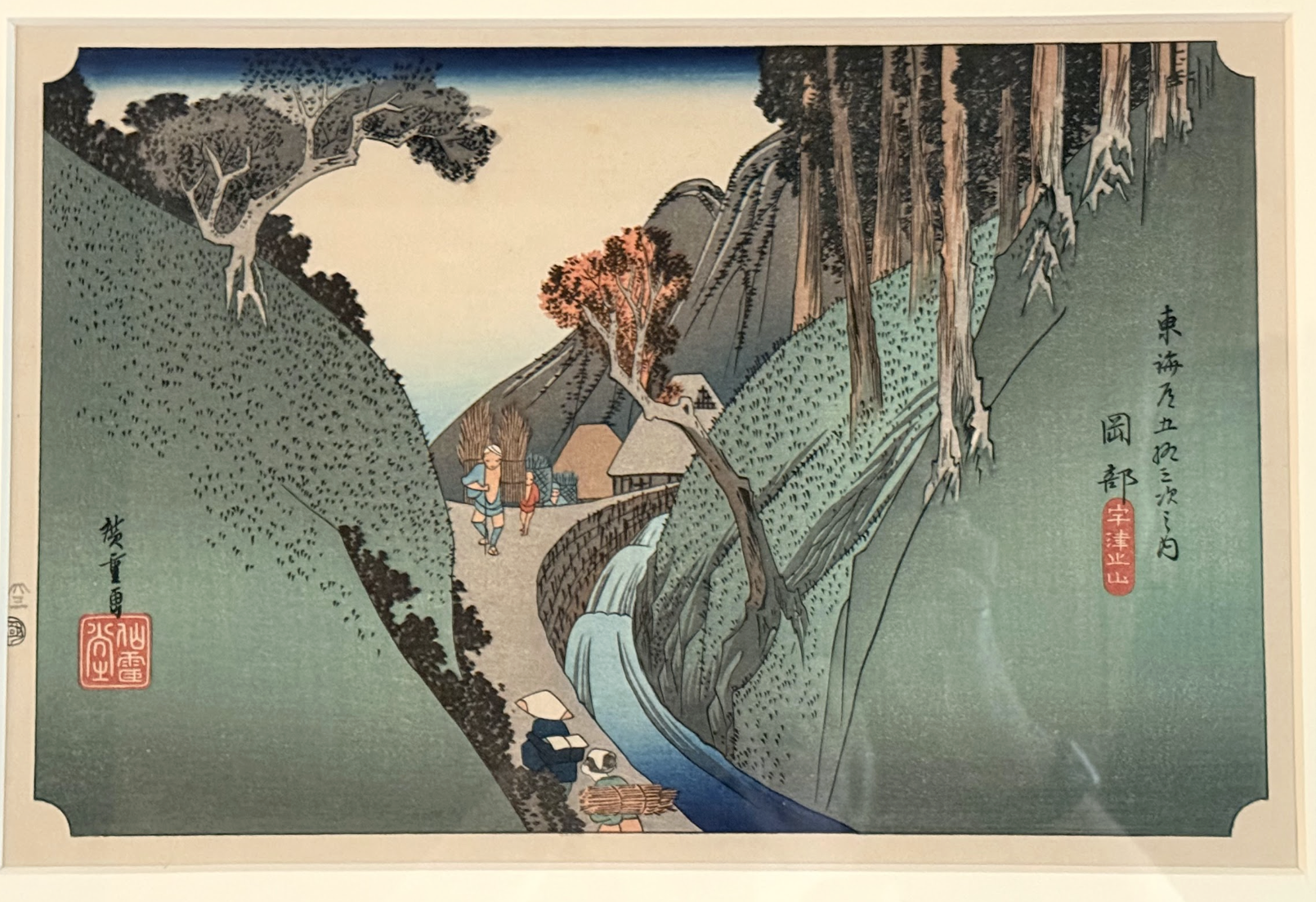
Utagawa Hiroshige (1797-1858). This wood block print is an expression of Satoyama, harmony between nature and humanity.
The Japanese people feel a deep connection to their satoyama landscape, which has been a powerful source of inspiration, imagination, and creativity for centuries. The satoyama philosophy is founded on the principle that humans and nature are intertwined in harmonious coexistence rather than dominance over one another, for the ultimate benefit of biodiversity and human wellbeing. (1)
Today, however, most Japanese people live not among the patchwork of forests and rice fields, as their ancestors once did, but within some of the densest, most concrete-saturated cities on earth. Nevertheless, the desire for satoyama remains embedded in the Japanese psyche and finds expression in these places.
The Urban Reality
Tokyo’s massive scale sets the scene dramatically: the Greater Tokyo Area, which includes Tokyo and parts of six adjoining prefectures, is home to 33 million people as of 2025, making it the third-most populous metropolitan area on the planet. (2) Additionally, Tokyo packs a population density of 6,490 people per square kilometer (P/Km²). This massive concentration means roughly one in every three people in Japan lives in this region. (3) For contrast, the Greater Tokyo Area is comparable to or larger than the populations of more than 180 countries. (4)
In cities like this, green space is not a luxury but a public health issue. Tokyo is experiencing significantly higher temperatures, with summer nights warming by 2°C and average daytime temperatures rising by over 1°C. Summers now have more than twice as many extremely high heat index days as in the 1990s, driven by urban development and climate change. (5) It is so hot that the Japan Meteorological Agency coined a new weather word, kokushobi or “extreme heat day,” when temperatures are 40°C or above (104 Fahrenheit or higher). (6) This stark reality has propelled the Japanese building industry to create a forward-thinking, multi-purpose satoyama.
Advertisement
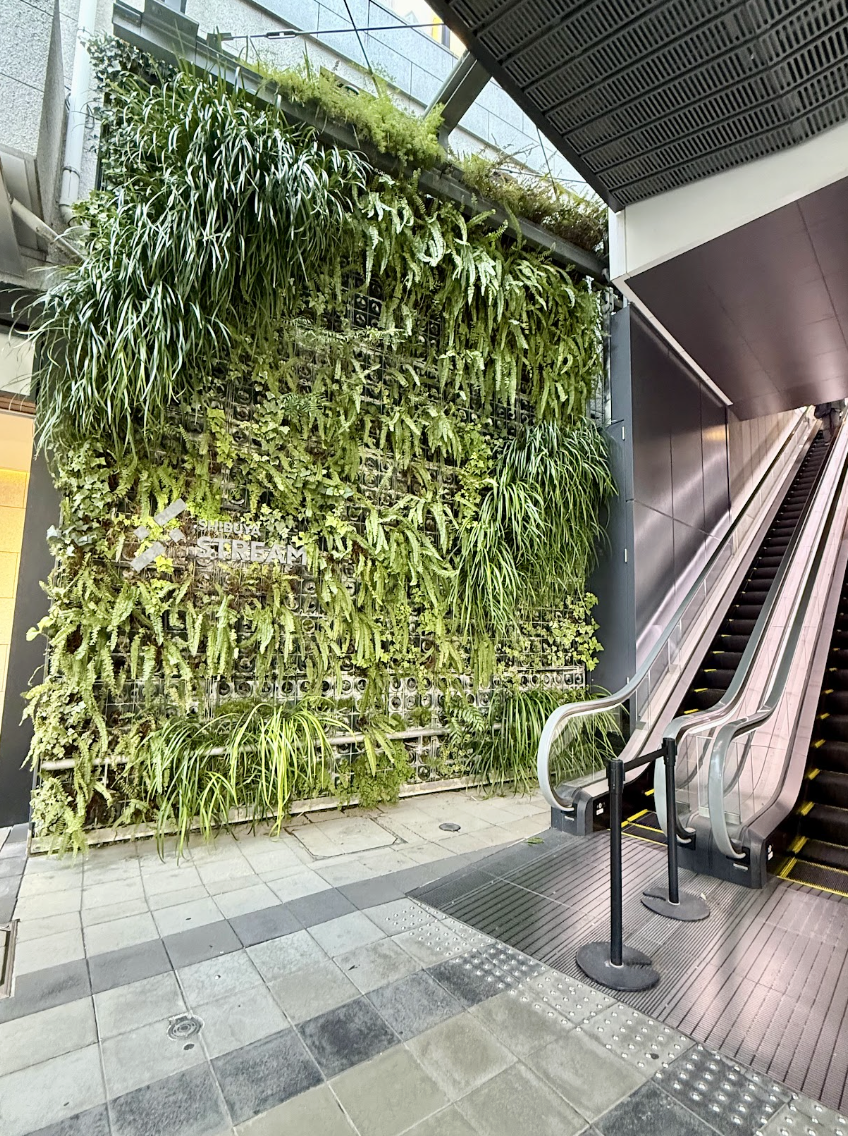
Shibuya Stream Building, Tokyo. Photo: Vicki Sando
Tokyo’s Regulatory Response
In 2001, the Tokyo Metropolitan Government passed its Nature Conservation Ordinance, becoming one of the first cities in the world to make rooftop and wall greening a legal requirement for new construction. While other global cities, such as Germany, have historically implemented green infrastructure, Tokyo’s ordinance was among the first with teeth, strictly linking mandatory urban greening to heat-island mitigation on a massive municipal scale. (7)
These regulations were further strengthened by the 2007 Ten-Year Project for Green Tokyo, which set an ambitious citywide target of creating 1,000 hectares of new green space — incorporating rooftops, building walls, railroad stations, and parking lots, while continuing to push for 25% green coverage on large buildings. These expanding directives have resulted in more than 5,700 new or existing buildings, adding about 180 hectares (1,800,000 m2) of green roofs. (8)
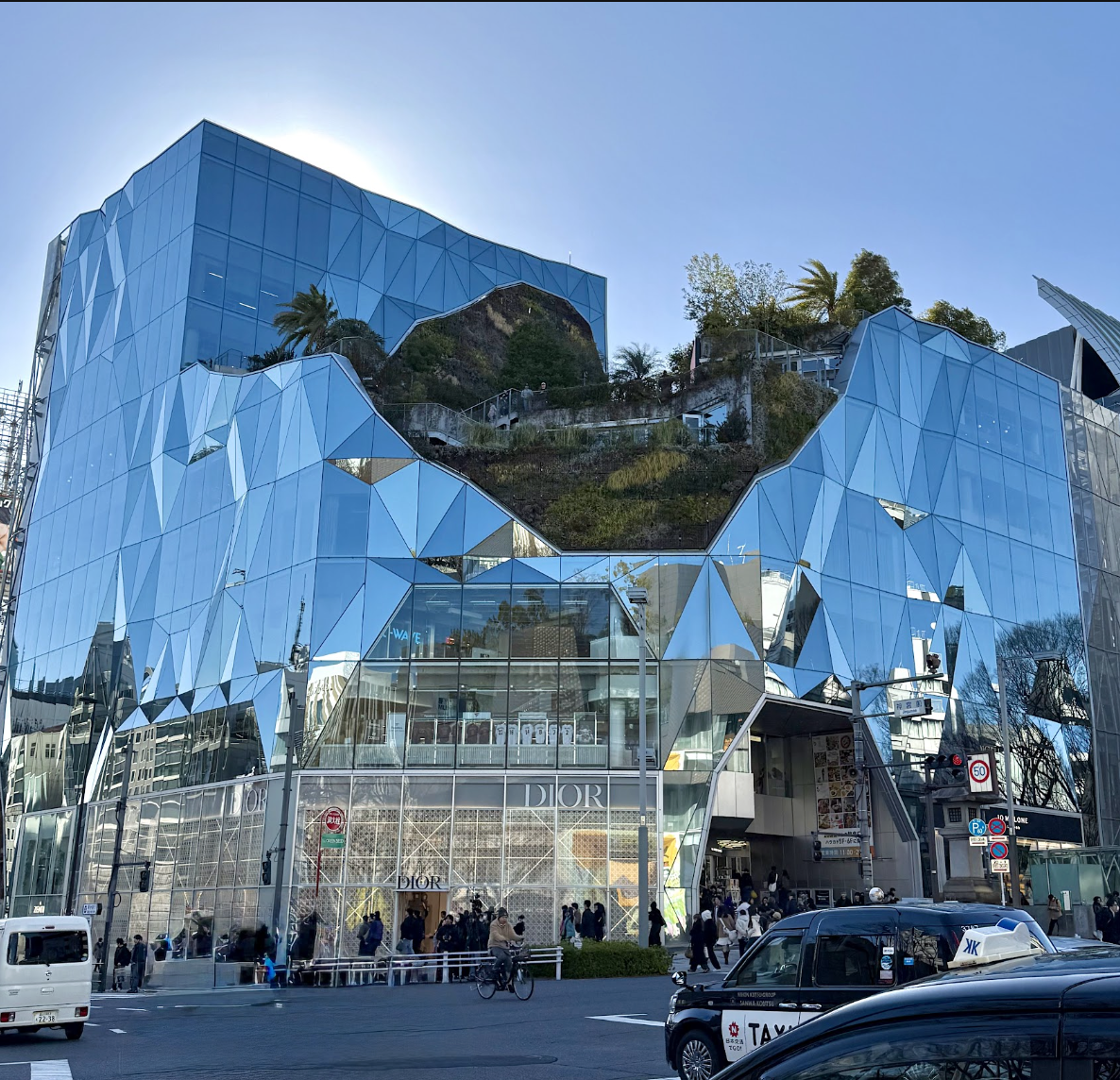
The Tokyo Plaza Harakado. Photo: Vicki Sando
In 2023, the Tokyo Municipal Government launched ‘Tokyo Green Biz,” a rebranding of its Green Plan initiative, to work with local citizens to “further enhance the value of greenery, giving a sense of ease and richness to people’s daily life, and pass our urban green spaces to the future.” By strengthening the city’s efforts to “protect,” “increase and maintain,” and “utilize” the greenery in Tokyo, thereby evolving into a sustainable city that is in harmony with nature. (9) Satoyama in practice, once again.
Looking to the future, Tokyo's architecture continues to advance while integrating mandated green infrastructure. In the trendy neighborhood of Harajuku, the Tokyo Plaza Harajuku “Harakado,” designed by Akihisa Hirata, with its faceted mirrored facade and tiered rooftop garden, has become a popular photo spot, while providing a green oasis over a bustling city intersection.
The recently opened MoN Takanawa: The Museum of Narratives, in Tokyo’s Takanawa Gateway City, features an exterior design by Kengo Kuma & Associates. The building features a distinctive spiral structure that incorporates natural wood and native plants, creating a living, breathing cultural space.
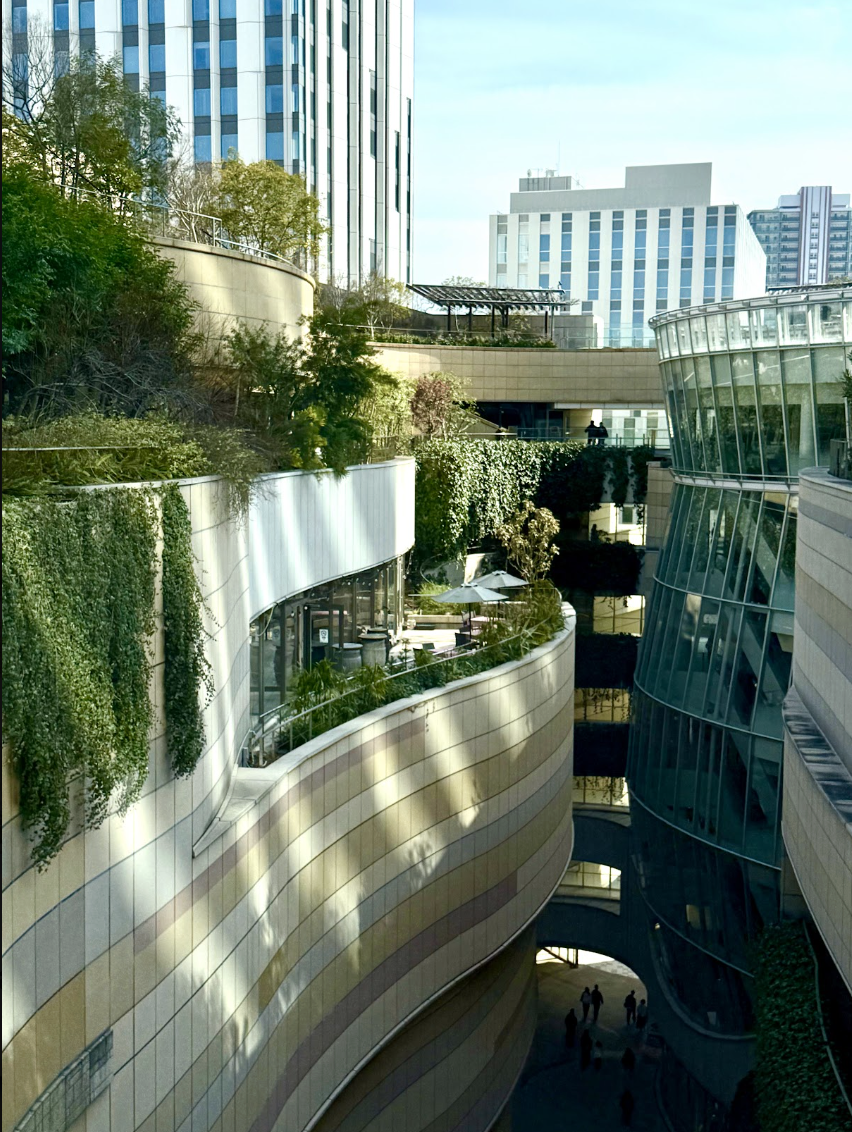
Namba Parks, Osaka. Photo: Vicki Sando
Osaka’s Approach
As Japan's second most densely populated prefecture, Osaka packs almost 13 million residents into 2,229 square kilometers, making it the world's 25th-largest city. (10)
The Osaka Prefectural Government has also been implementing various measures and projects to achieve carbon neutrality by 2050. (11) The brand new 2026 “Osaka Prefecture Green Wide Area Plan” aims for "an international city where humans and nature coexist and well-being can be felt,” by shifting the concept of greening as an amenity to one that is necessary for human health and quality of life. Instead of mandating specific rooftop coverage percentages as in Tokyo, the city revised previous guidance and incentive frameworks to encourage developers to incorporate green roofs and living walls in new construction. (12)
Despite Osaka’s historically flexible requirement system, it nevertheless produces striking results — none more celebrated than the pioneering Namba Parks, designed by The Jerde Partnership, where eight cascading stories of landscaped terraces rise above one of Osaka's busiest commercial districts, integrating over 100 shops and restaurants beneath a rooftop garden that has become a sought-after landmark of biophilic urban design.
A more recent project is Grand Green Park, located in Umeda, Osaka, and designed through a collaboration led by landscape architects GGN, along with Nikken Sekkei, Mitsubishi Jisho Design, and other firms, with completion scheduled for 2027. At 45,000 square meters, it is one of the world's paramount urban parks and is directly connected to the largest train station terminal in western Japan. The mixed-use development integrates various urban functions under the concept of Osaka MIDORI LIFE, a fusion of “greenery” and “innovation.”
Advertisement
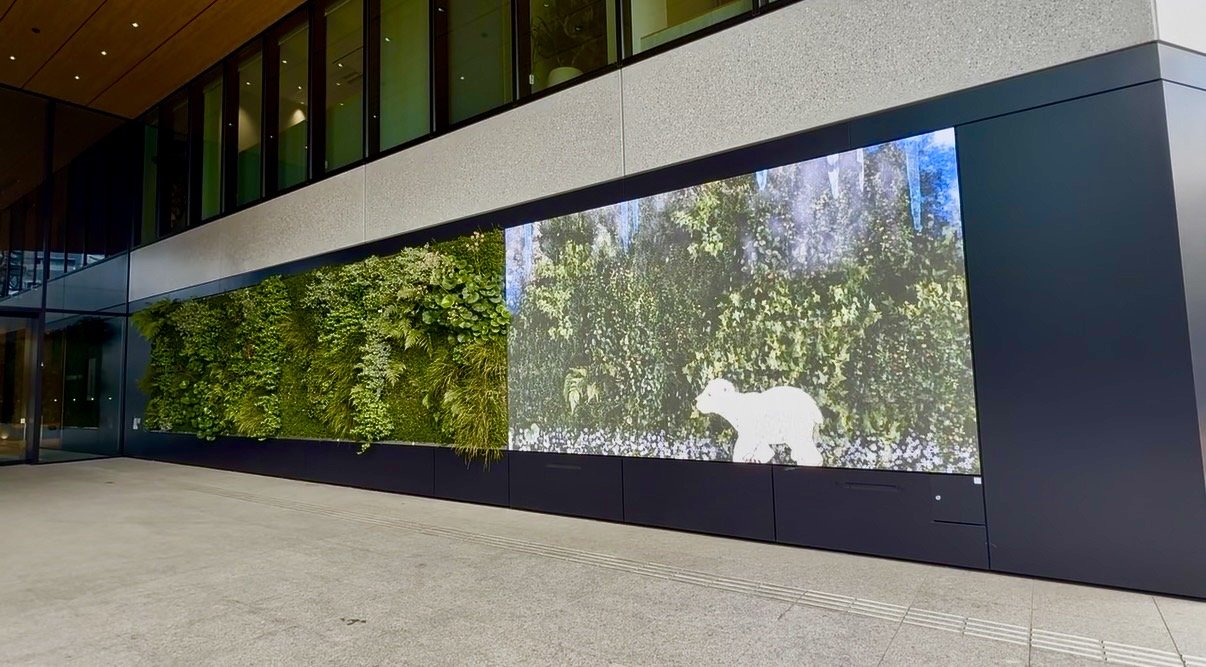
Kanden Fudosan Shibuya Building, Tokyo. Photo V Sando
Technological Improvements & Innovation
Japanese design is characterized by a unique harmony between traditional aesthetics and the latest technology, often rooted in a cultural drive to solve specific domestic challenges, thereby setting global standards.
Perhaps the most distinctly contemporary expression of Japan's green wall movement is the emergence of technology-integrated living walls — installations that pair live plant systems with LED monitors, digital art, and sensor-driven media in ways with no real parallel elsewhere in the world.
The lobby of the Kanden Fudosan Shibuya Building, Kanden Fudosan Shibuya Building completed in 2024 and designed by Takenaka Corporation, offers a compelling example: a lush panel-style living wall of ferns, ivy, and ornamental grasses set into a dark steel frame in tandem with a mirrored LED screen cycling through artwork created by students at local design schools. The building's developers deliberately paired nature with cutting-edge community creativity.
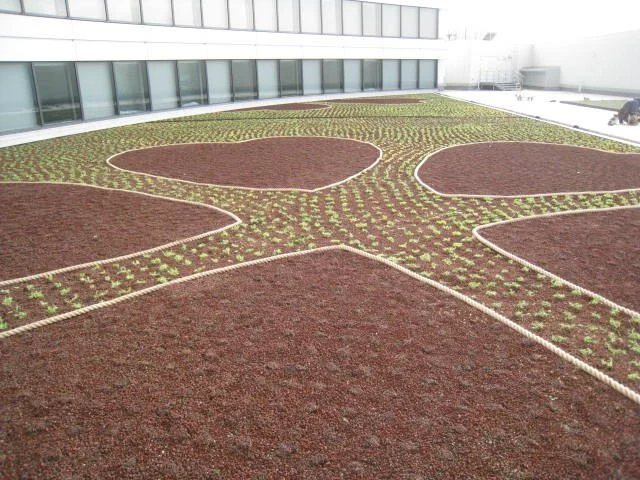
TOHO LEO Rooftop green installation. Photo: TOHO LEO
Grand Green Osaka is the first in Japan to earn both LEED-ND and SITES Gold certifications simultaneously, using five distinct indices to visualize the environmental value of its greenery. Sheet-type IoT sensors that are flexible and transparent, attached to plants and facilities to monitor environmental health without burdening the ecosystem. The site also features cutting-edge infrastructure for geothermal and wastewater heat energy recovery, alongside renewable power systems to achieve a "nature-positive" urban environment. (13)
Behind Japan’s green infrastructure is a sophisticated and growing industry, steeped in history: firms like Toho Leo, Hibiya Amenis, and Greeval have each developed proprietary systems, from panel-based planting pockets to patented cement-integrated growing substrates, that address Japan's specific challenges of high heat and humidity, rainy seasons, and typhoons.
Kota Hayashi, a representative from Toho Leo, confirms that the Tokyo Municipal Government's green infrastructure regulations have significantly increased demand for green roofs and living walls. “The regulation requiring building developers to have 20% rooftop greening of total land area has resulted in the rapid demand for green infrastructure for not only regulation compliance, but the recognition for well-being has also been a factor.”
Consistent with other global cities, Mr. Hayashi feels that most Japanese real estate developer clients implement rooftop greening to comply with mandatory regulations, so they focus on the lowest installation and maintenance costs. From his perspective, clients tend to reduce long-term maintenance expenditures rather than the initial installation expense.
To address clients' reduced maintenance needs for their living wall systems, Toho Leo has developed knowledge and expertise over the past fifty years, through much trial and error, to produce a superior product in which plants can thrive in an unnatural environment with less upkeep.
Conclusion
As the world’s climate continues to grow more extreme due to human exploitation and lagging government regulation, the satoyama concept demonstrates that the Japanese people have long understood that nature is not to be conquered but rather nurtured and respected for all it provides to the collective good of its citizens. That wisdom, older than any mandate, is what Tokyo’s green roofs and Osaka’s living walls are fundamentally trying to honor for future generations.
Advertisement
Vicki Sando is an educational green roof consultant, Green STEM curriculum developer, educator, and author. She resides in Japan for part of the year. vickisando.com
Resources
1. Ministry of the Environment, Government of Japan. (2009, March). The Satoyama Initiative. Convention on Biological Diversity. https://www.cbd.int/sustainable/doc/satoyama-initiative-brochure-en.pdf
2. Wikimedia Foundation. (2026, May 26). Greater Tokyo Area. Wikipedia. https://en.wikipedia.org/wiki/Greater_Tokyo_Area
3. Largest cities by population in Japan. Worldometer. (n.d.). https://www.worldometers.info/population/largest-cities-in-japan/
4. Population by country (2026). Worldometer. (n.d.-b). https://www.worldometers.info/world-population/population-by-country/
5. Kikumoto, H. (2025, October 15). The top hot spots in Tokyo: Revealing the impact of climate change through data fusion - もしかする未来 case#utokyo. IIS. https://magazine.iis.u-tokyo.ac.jp/en_article/p_5291
6. Japan Meteorological Agency (2017, August 4). "Extreme Heat Day" designated as the term for days with a maximum temperature of 40°C or higher.
https://www.jma.go.jp/jma/press/2604/17a/20260417_40degree_name.pdf
7. Nature Conservation Ordinance is Greening Tokyo’s Buildings - C40 cities. (2016, February). https://www.c40.org/case-studies/nature-conservation-ordinance-is-greening-tokyo-s-buildings/
8. Mejía Salazar, Gilberto (2025) "Green Urban Planning in Tokyo: Managing Natural Spaces for Sustainable Development," Japanese Society and Culture: Vol. 7, Article 10. DOI: 10.52882/2434-1738-0710 Available at: https://gensoken.toyo.ac.jp/japanese-society-and-culture/vol7/iss/10
9. Tokyo Metropolitan Government. (2024, January 1). Tokyo Green Biz - Green Urban Development -TMG. 都庁総合英語サイト. https://www.english.metro.tokyo.lg.jp/w/000-101-000551
10. Population by Country (2026). Worldometer. (n.d.-b). https://www.worldometers.info/world-population/population-by-country/
11. Department of Environment, Agriculture, Forestry and Fisheries, Decarbonization and Energy Policy Division, Climate Change Mitigation and Adaptation Promotion Group. (2026, May). 2050年カーボンニュートラルに向けて(脱炭素施策ポータル)。 大阪府. https://www.pref.osaka.lg.jp/o120020/eneseisaku/cn2050.html#cn2050
12. Osaka Prefecture Government. (2026b, May). 2050年カーボンニュートラルに向けて(脱炭素施策ポータル)。 大阪府. https://www.pref.osaka.lg.jp/o120020/eneseisaku/cn2050.html#cn2050
13. ORIX Corporation. (2024, July 17). Grand Green Osaka becomes Japan’s first*1 mixed- ... https://www.orix.co.jp/grp/en/newsrelease/pdf/240717_ORIXGE.pdf