Advertisement
Introduction
One evening years ago while watching the Late Night with David Letterman show and hearing his amusing Top Ten List, I thought, wouldn’t it be fun to do something similar every year for our living architecture industry to wow people? And so, in 2007 the "Top 10 List of Hot Trends in Greenroof Design" was inaugurated in Minneapolis at the Greening Rooftops for Sustainable Communities Conference. Figuring (correctly) the amount of time needed to gather, review, and select the noteworthy projects, I enlisted our dear colleague Haven Kiers, ASLA, GRP who was able to contribute through 2016. Over the years, I have been fortunate to share these presentations online and in over 30 cities in the world.
What is The List?
The annual Hot Top 10 List represents 10 categories of innovative, important, and amazing green roofs, green walls, sponge parks, and other green infrastructure projects - built, on the boards, and conceptual. Via designers, press releases, and other published media, I research and then curate, asking: Which designers, projects and technologies are presenting avant-garde living architecture? Which cities are best planning healthy, long-term responses to climate resiliency with living architecture and other forms of green infrastructure?
I concentrate on one overarching theme and global focus per year and this year, it is Biophilia and How Nature Makes Us Happier.
2026 Top 10 List of Hot Trends in Living Green Architecture: Biophilia and How Nature Makes Us Happier
In terms of overall happiness, spending time in nature, be it a local park or wilderness area, is not a luxury but a necessity. The eye-opening projects profiled for 2026 are offered to spark inspiration on how biophilic design is replenishing happiness, health, beauty, and ecosystem services. Improving the local economy and ecology with new green space investment, breathing spaces, community gardens, food forests, biophilic city development and more can foster a verdant Eden like environment that allows people to form a deep connection to their landscape. Here is an overview of seven projects from different subcategories that stand out this year!
University of Technology Sydney’s (UTS) National First Nations College (NFNC), Australia. In the “Client Specific ‘Boutique’ Greenroofs and Green Walls” category - for those living roof and wall projects just too unique to fit into any other - I highlight the ground-breaking celebration of Aboriginal and Torres Strait Islander culture with the current UTS NFNC. Designed by Greenaway Architects, Warren and Mahoney, and OCULUS, the project will provide accommodation for over 250 students, and its heart will host a vibrant mix for meaning, purpose, and self-realization: a knowledge hub, art gallery, and indigenous co-working spaces with open areas and native gardens.
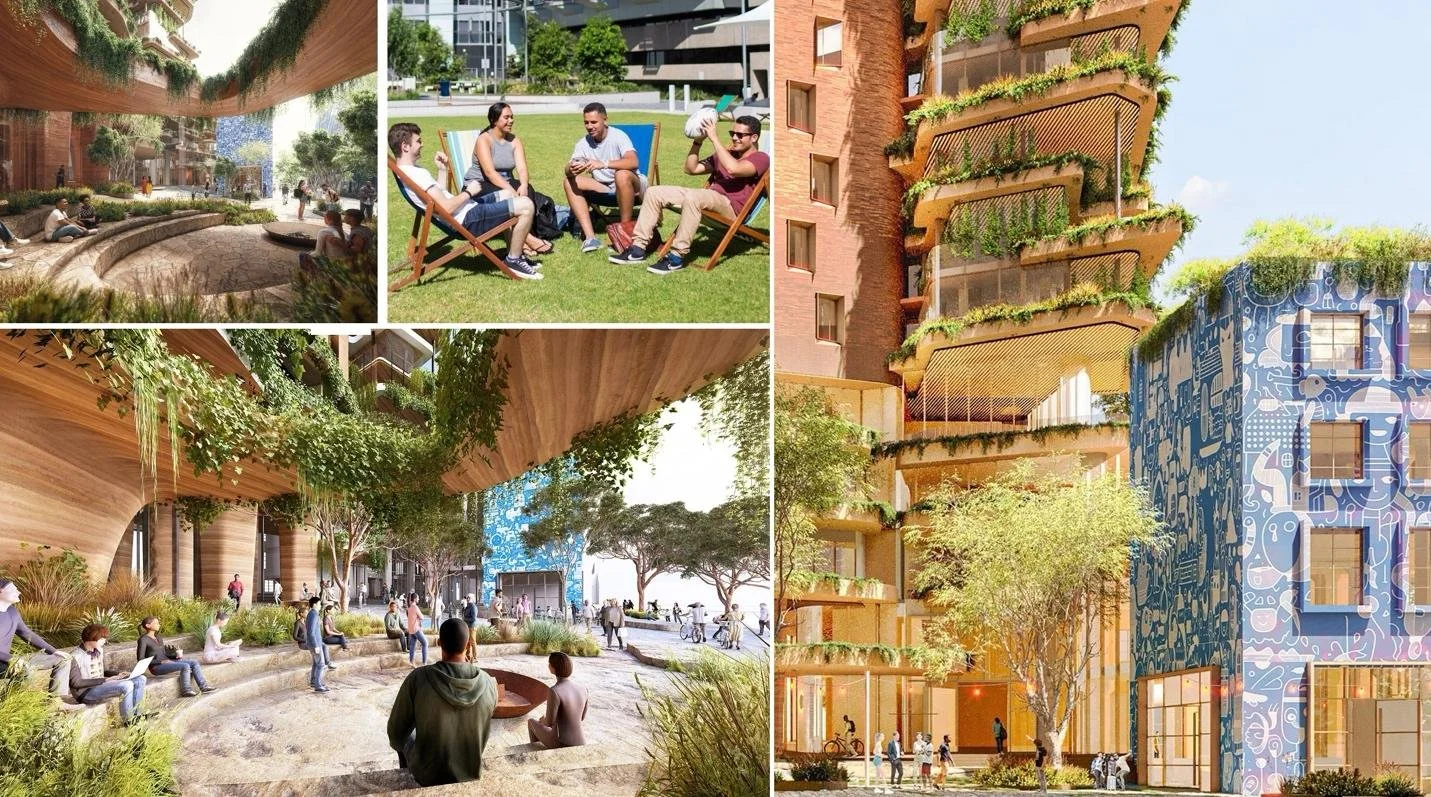
Sure to become a benchmark for excellence in Indigenous education and research, the UTS National First Nations College will be the first of its kind in Australia and one of the largest in the world. Photos: OCULUS, Anna Zhu, Warren and Mahoney
Advertisement
City of Swansea, Wales, UK. In #9’s “Living Commons & Biophilic Cities” the principle of “Caring for Nature and People” deepens ecological richness and social resilience. Swansea’s role as a Biophilic Cities Partner is committed to placing nature at the heart of urban life. (Listen to Tim Beatley’s podcast in this issue for more on Biophilic Cities) Projects include Wales’ largest intensive biodiverse roof at Amy Dillwyn Park and the Biome (Biophilic Living Swansea), a mixed-use project with a four-story vertical urban farm, greenhouses, rooftop gardens, and green walls. Featuring a solar integrated green roof that harvests rainwater and ambient loop heating powered by solar energy, it will support 50 units of sustainable social housing and commercial spaces accommodating up to 500 people.
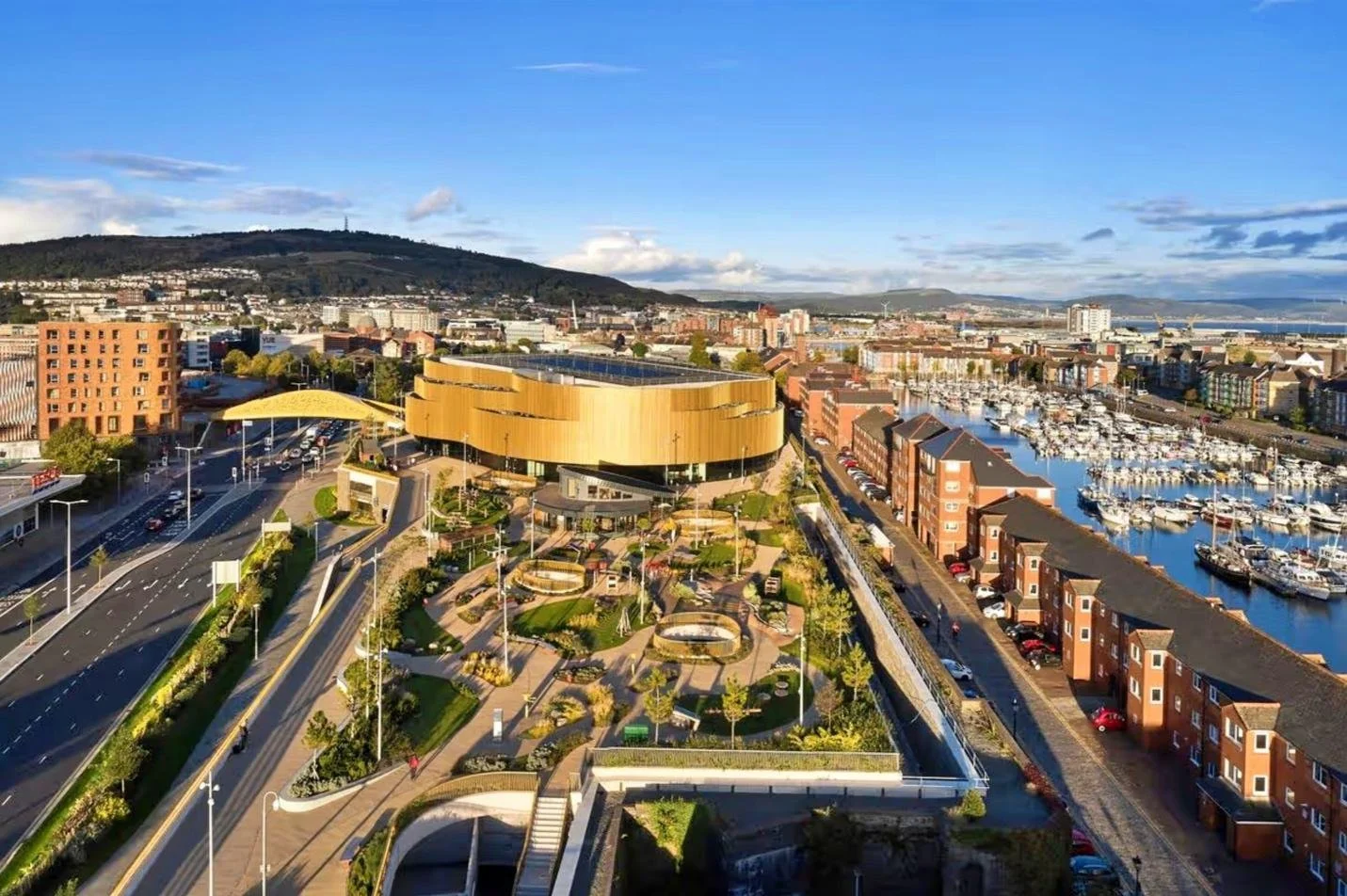
In a massive public-private partnership, the City of Swansea has combined ecological recovery with urban regeneration with approximately one hectare of biodiverse green roofs and walls across residential, commercial, and public spaces. Photo: Amy Dillwyn Park, City of Swansea
Hotel Click-Clack, Medellín, Colombia. The next category is “Biophilic Interiors and Comforting Hospitality.” It shows how feeling connected with biodiverse plantings and fellow humans can be both cozy and cool. The hotel’s grey metal exterior walls are pierced with planters brimming with plants from the local Montane forest ecosystem. The public living room, bars, and cultural event spaces bring joy to guests and locals spending the day or just passing through. Cozy in its hues of moody dark steel grays, Plan:b Arquitectos says the building “pretends to be a shadow that stands out and contrasts with the intense vegetation of the interior and the surroundings.”
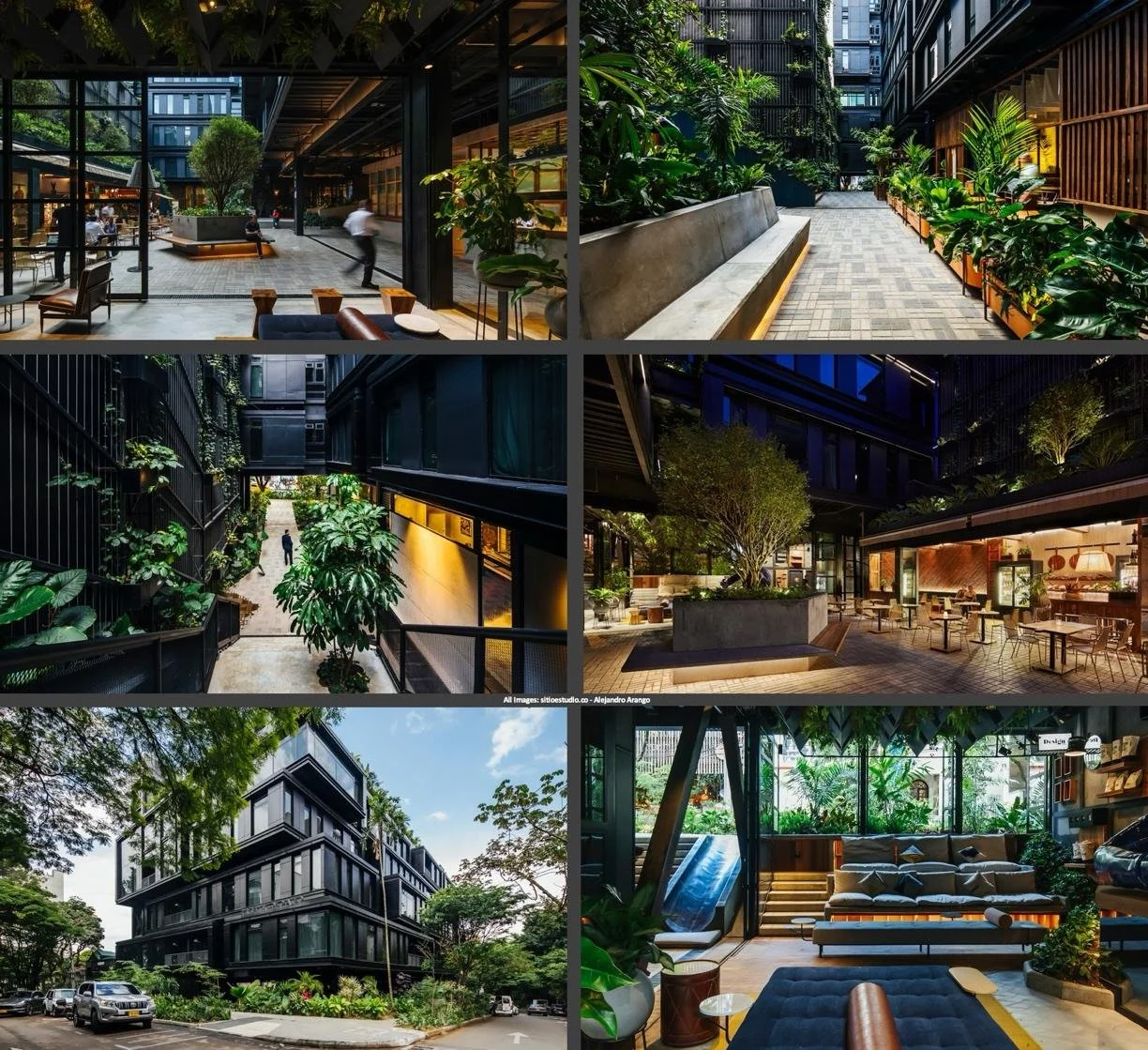
Leafy vertical gardens hang from triangular metal baskets suspended from the lobby ceiling and concrete planter benches hold native plants. Photos: sitioestudio.co - Alejandro Arango
Advertisement
Bayshore Park, Miami Beach, FL, USA. #3’s “Sponge Parks as Community Investments & Social Infrastructure” shows the transformative power of protecting our environment and establishing public reconnections. With ever-increasing storms striking our coastlines, the 19.4-acre park protects the nearby Biscayne Bay from fish kills and ecological distress from runoff. Keeping flooding at bay was essential. Having preserved the site’s mature trees, Savino & Miller Design Studio replaced the former golf course with a sponge park with trails and playful water features. The runoff from its 85-acre watershed flows into the lake which can hold the equivalent of a three-day storm.
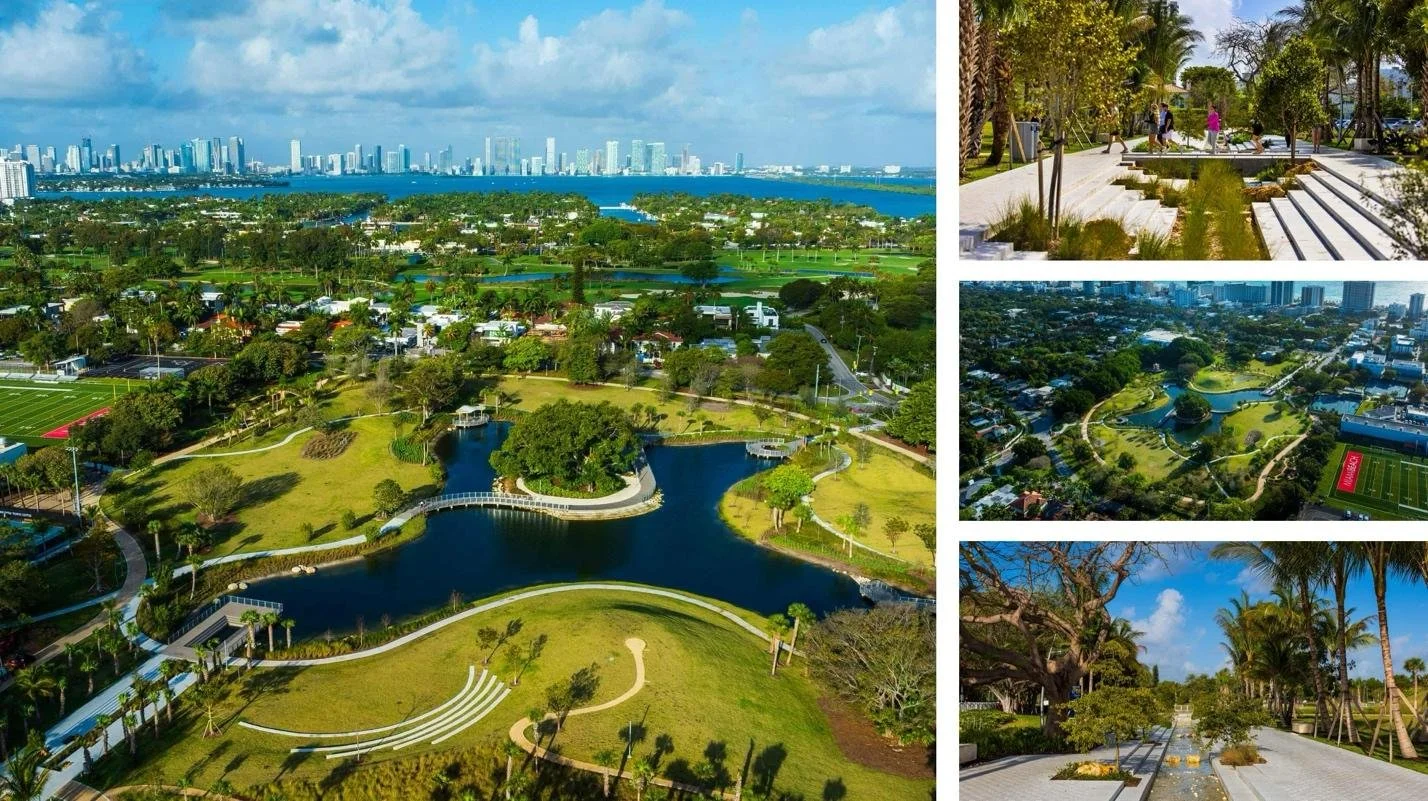
After consulting with community groups who desired a multi-experiential public park, the team asked, 'How can we save this land for community benefit and ecological benefit as well?’ Photos: Saul Martinez/The Guardian
Regenerative Hospitality Cradles & Pampers Civilization with Heritage & Biomimicry”
In the #1 category “Regenerative Hospitality Cradles & Pampers Civilization with Heritage and Biomimicry” projects demonstrate how sustainable tourism is providing happiness by restoring culture and ecology in luxury.
Forum Homini Boutique Hotel, Krugersdorp, South Africa. Designed by GREENinc and Activate Architects, this World Heritage Site is located in "The Cradle of Humankind." At the entrance, visitors are led through a ‘cut’ in the landscape that mimics the entrance to a cave. Offering a seamless and effortless expression of contextual landscape and art, the partially submerged buildings are planted with indigenous, sour-tasting Highveld plants, in part to discourage the plentiful wandering antelope and hippos. Also known as the Savanna Hypothesis, evolutionary psychologists consider the African savanna, where modern humans evolved, to be the type of landscape we connect to the most.
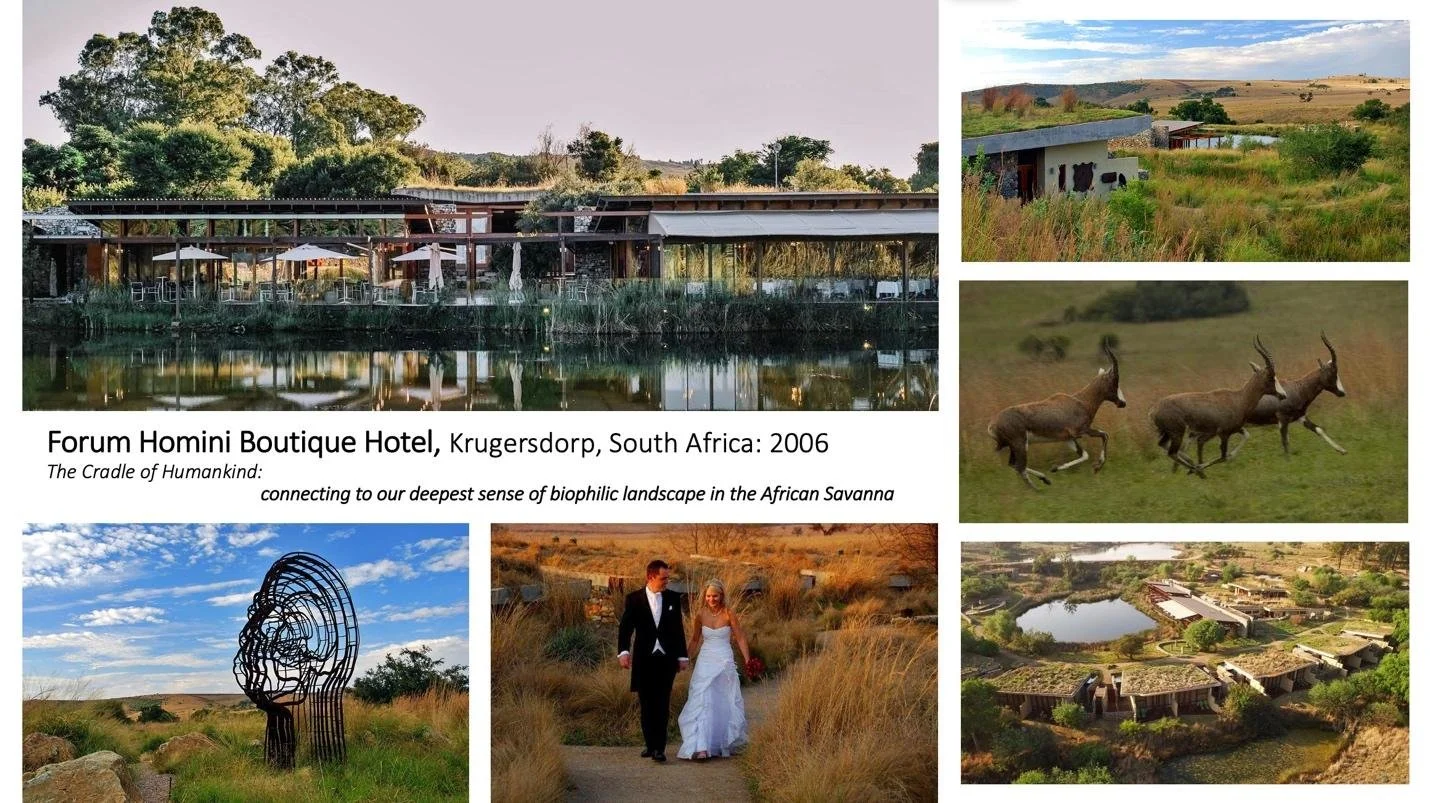
Many special events are held like weddings and other celebrations of life and at night, guests experience the light of the fire with dancing, drumming, and indigenous storytelling. Photos: Forum Homini, © GREENinc
Advertisement
Luana Farms, Batangas, Philippines. The site-driven master planning of the multi-use residential development was guided by ecological systems rather than built form and architecture emerges as a response to the land. Of the 10.9-hectare property, 73 per cent remains unbuilt, preserved as forest buffers, ecological corridors, and productive farmland. Structures are clustered around shared open spaces, rather than treated as isolated objects, encouraging openness, accessibility, and everyday social interaction. Landscape architects Plontur offer an invitation to gather, reflect, connect, and grow. Green roofs, open decks, and permeable structures allow the ground plane to remain continuous and accessible.
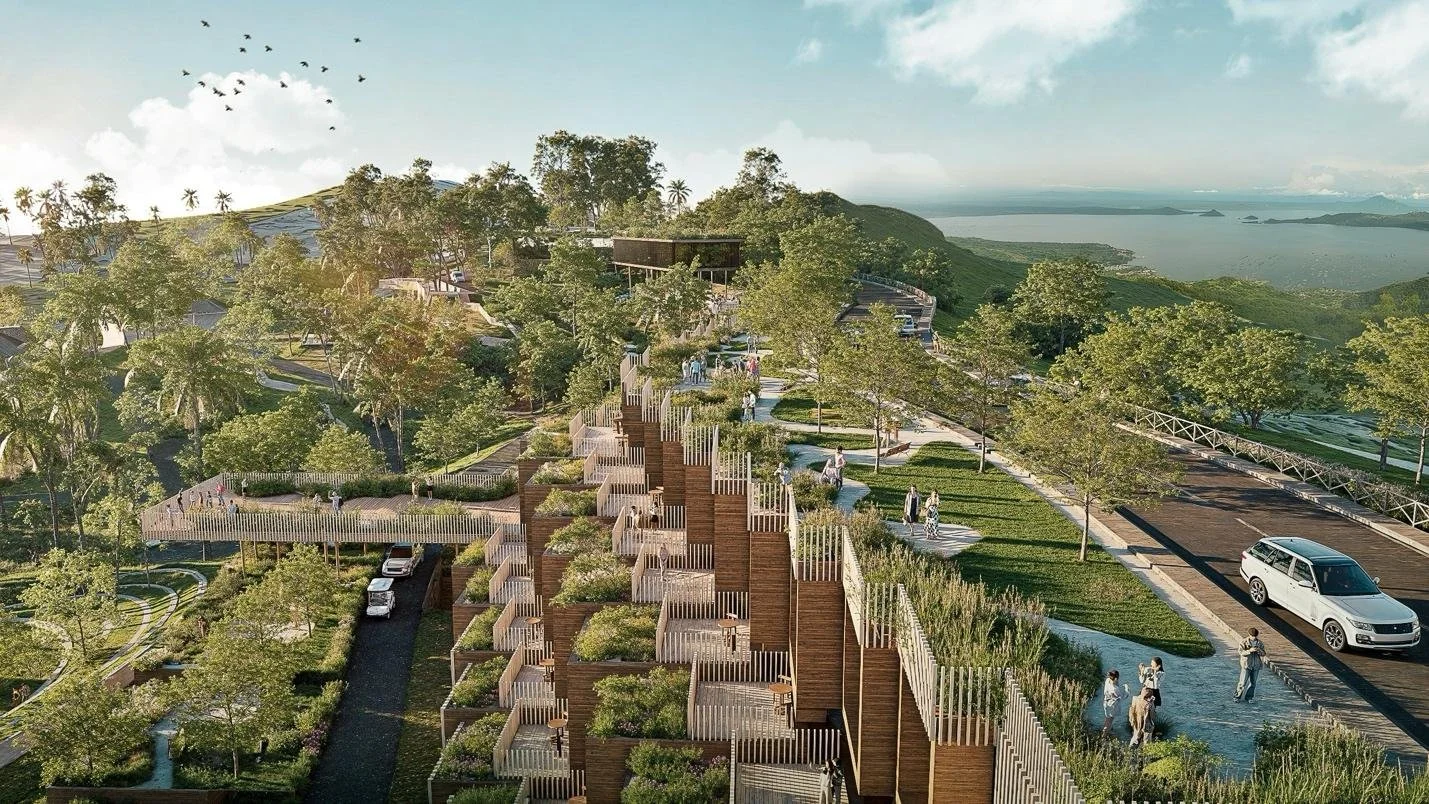
The multi-use hospitality development embraces an ecology-first, nature-led philosophy emphasizing social connections. Photo: Plontur Group via v2com newswire
Advertisement
MANTA HOTEL, Singapore. This project is still in the design development phase. MANTA HOTEL by the visionary Vincent Callebaut Architectures asks: “How can a building interact with its environment?” Inspired by the organic fluidity of the manta ray, the building’s curves mitigate wind effects, enhance passive cooling, and maximize solar exposure. Cross-laminated timber is complemented by a palette of bio-based, recyclable, and regenerative materials. Facades combine recycled copper panels with an innovative bio-concrete made from coconut shells, achieving up to a 65 per cent reduction in CO₂ emissions compared to conventional concrete. Roofs and walls integrate next-generation PVs and biomass systems, hydrokinetic devices harness water movement to generate energy, suspended gardens offer food and shelter plus micro-habitats for local fauna and closed-loop water management systems tie everything together.
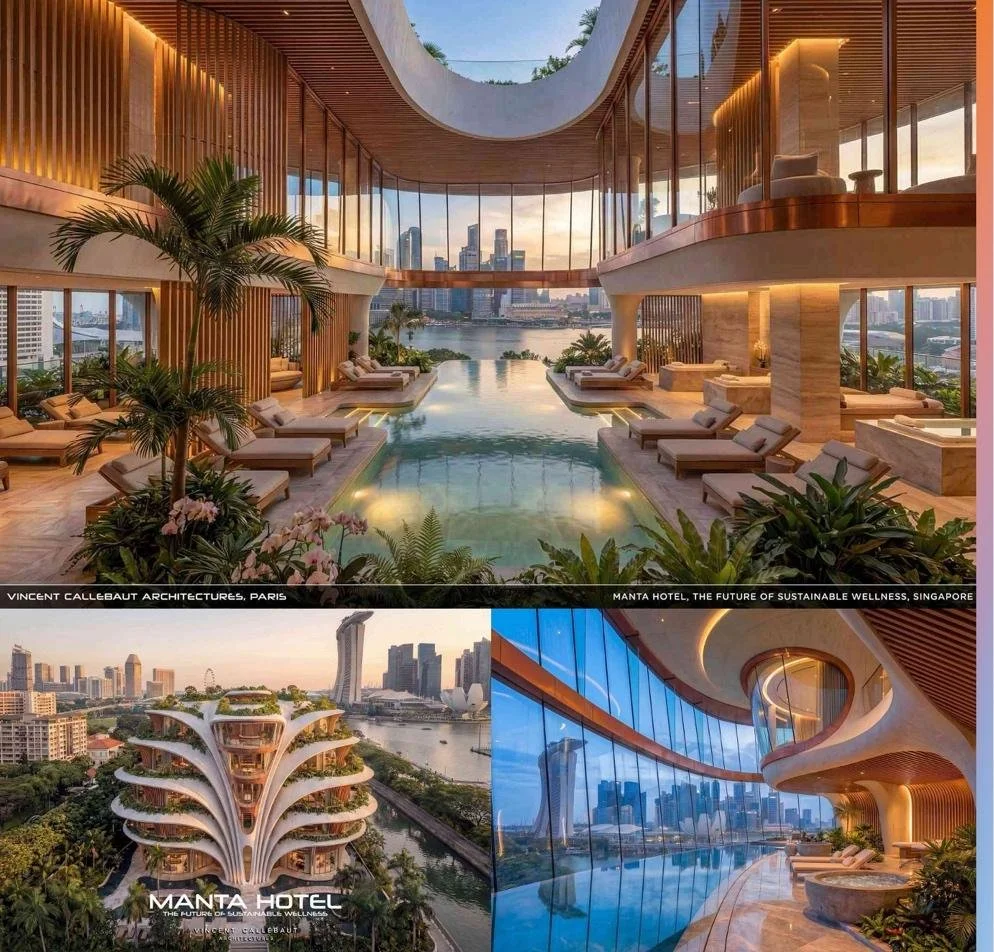
A regenerative model for hospitality architecture, biomimicry is woven into independent energy systems which enrich the urban ecosystem. Photos: Vincent Callebaut Architectures
Conclusion
As designers and global citizens, we must promote a greener, cleaner, more beautiful and happier planet. Functioning ecosystems are needed to promote health, wellbeing, and biodiversity on our climate-challenged planet. Cutting-edge design is required for long-term community resilience. Yet, equally important for humans is the preservation of opportunities to experience biophilia and the resulting happiness it engenders. Our emotional and mental wellbeing relates to our primordial need to interact with the natural world. When we mimic nature and create living architecture we strengthen our minds, bodies, and souls resulting in happier, healthier people. Bringing to light and sharing living, breathing projects throughout the world not only entertains but informs and hopefully inspires us all.
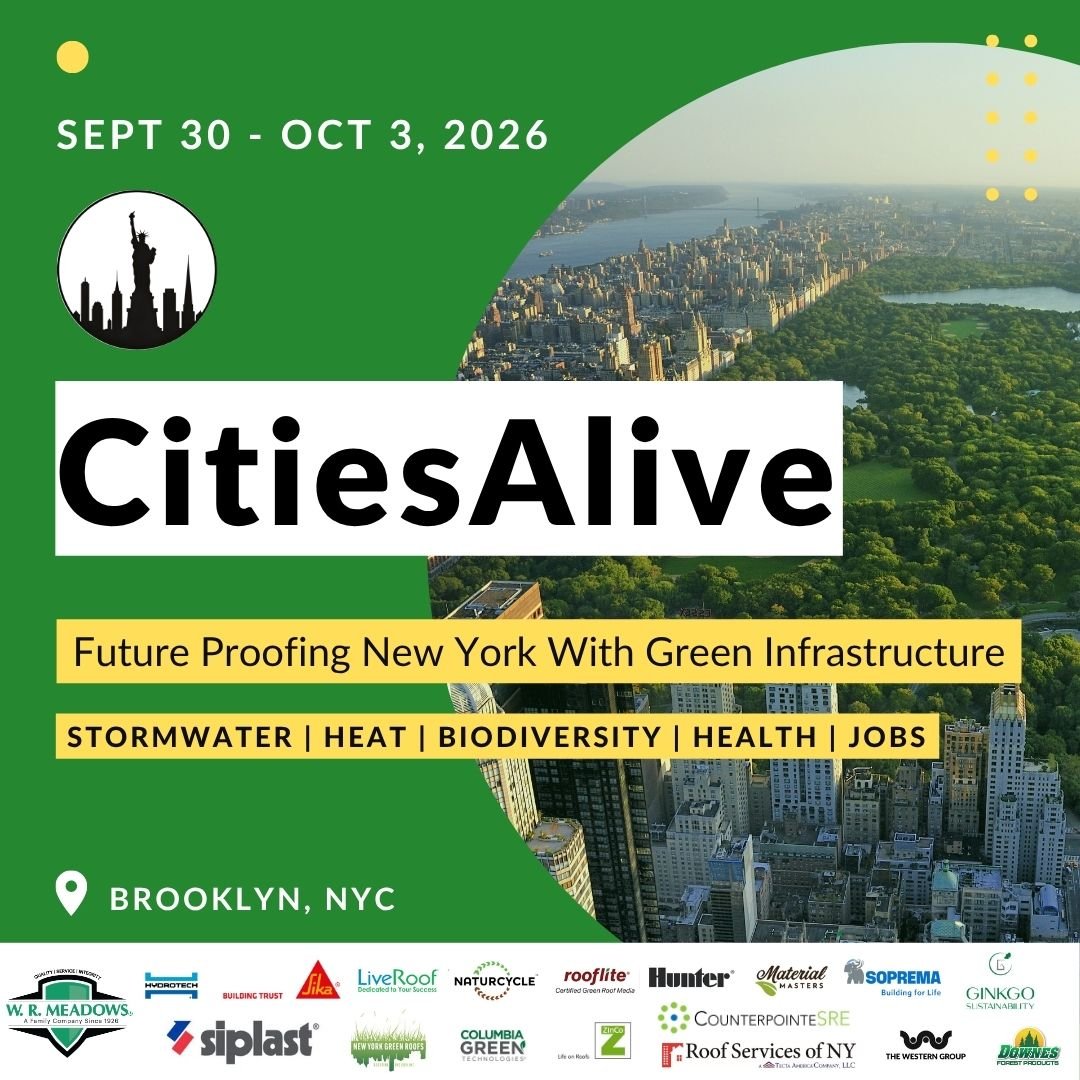
Discover and enjoy all the 2026 exemplary schemes at my upcoming presentations at CitiesAlive in NYC Sept 30 to Oct. 2, the WGIC in Barcelona Oct. 27-29, or online at Greenroofs.com at year’s end. If you're interested in contributing ideas and projects for the next Top 10 Hot List, we're happy to hear from you!
Advertisement
Linda S. Velazquez, ASLA, LEED AP, GRP is founder & publisher of Greenroofs.com (1999), presenting extensively on living green architecture. She holds a Bachelor of Landscape Architecture from the University of Georgia (2000), has been published in numerous books & journals + is principal of Sky Gardens Studio (2004).
Greenroofs.com, Connecting the Planet + Living Architecture is an online news media & marketing company with a vibrant social network. We publish the Greenroofs.com Directory & Greenroofs.com Projects Database (~1,800 project profiles), have created over 600 videos, and produced five Greenroofs & Walls of the World™ Virtual Summits (2011-2019).