Advertisement
Introduction
Modern humans spend approximately 90% of their lives indoors within sterile, geometrically simple spaces. While modern architecture historically favored minimalist, Euclidean lines and blank surfaces, our biological systems were forged in a radically different environment. Over some 600 million years of evolution, the human visual system adapted to process the complex geometries of the natural world. As Dr. Richard Taylor explains, "This machine [the human eye] has taken 600 million years to develop, and what it's expecting to look at is nature. It's not expecting to look at these Euclidean boxes that we've chosen to live in fairly recently".

This serene lake in New Zealand demonstrates perfect symmetry, creating a calm, reflective environment. By Pseudopanax at English Wikipedia - Own work, Public Domain
When we strip these natural geometries from our daily environments, we force our eyes and brains to work in a state of constant "translation," attempting to decode foreign, non-fractal shapes. This environmental disconnect contributes directly to chronic stress and cognitive fatigue. To address this public health crisis, a growing movement of architects, neuroscientists, and environmental psychologists is turning to "fractal fluency": the science of how nature's repeating geometries can be engineered to reduce stress, restore attention, and promote deep physiological healing in the built environment.
Understanding Fractals: Nature's Organic Signature
“The book of nature is written in the language of mathematics.”
Coined by mathematician Benoît Mandelbrot in his 1982 book The Fractal Geometry of Nature, the term fractal describes a "never-ending pattern" that repeats itself across increasingly fine magnification scales. In nature, a tree is a classic example: a trunk branches into smaller limbs, which split into twigs, and finally into leaf veins. This scaling hierarchy of self-similarity is nature’s structural blueprint, found in coastlines, clouds, river deltas, lightning, and even our own internal anatomy, such as human lungs, blood vessels, and neural networks.
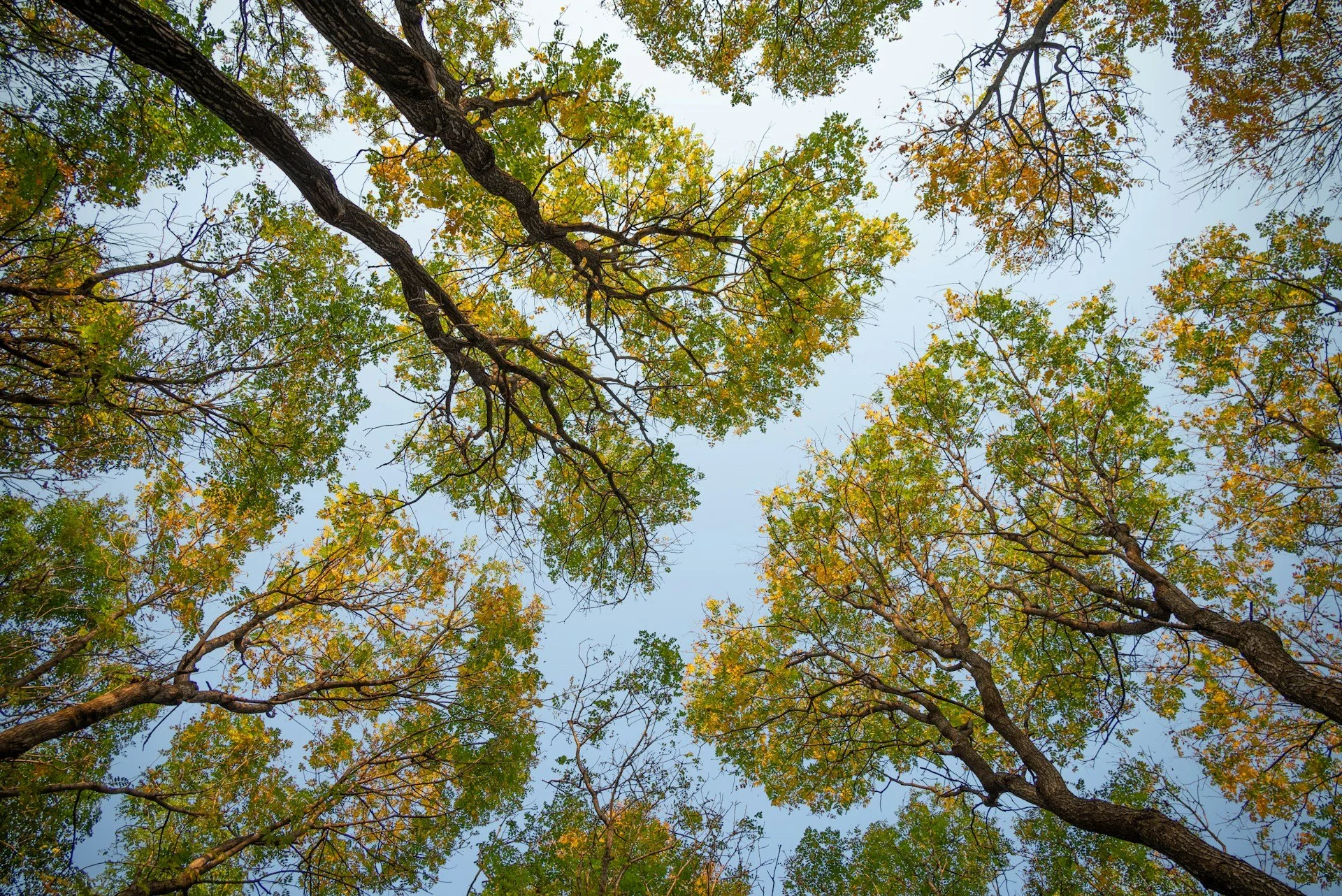
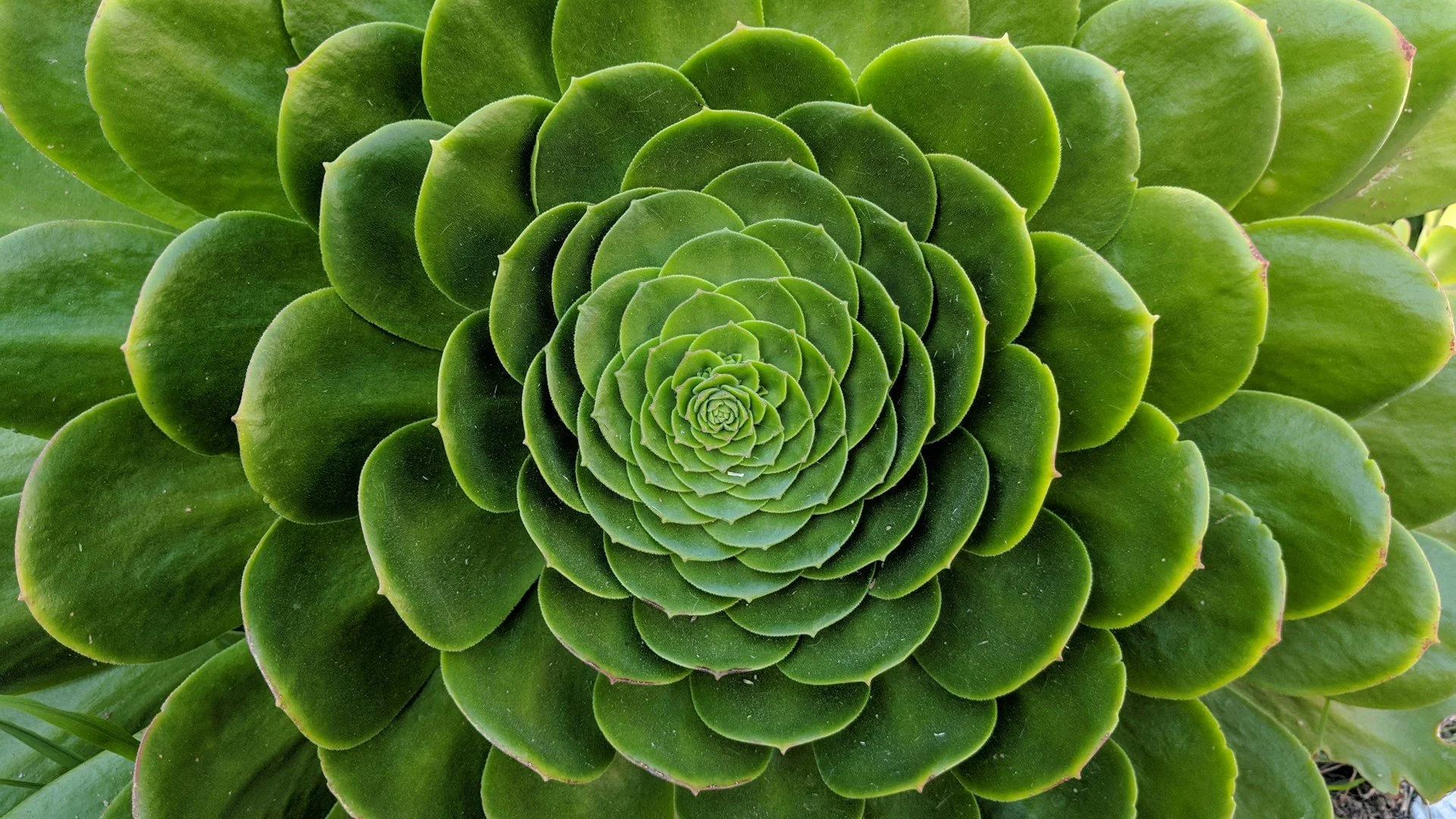
Succulents provide a perfect example of an exact fractal, showcasing the precise mathematical symmetry found in plant life. Photo by Martin Rancourt on Unsplash.
In design and science, fractals are categorized into two primary families: exact and statistical.
Exact fractals are perfectly symmetrical and repeat precisely at every scale, revealing the pristine cleanliness of mathematical geometry, such as succulents, snowflakes, or Romanesco broccoli.
Statistical fractals, on the other hand, incorporate randomness. They repeat their general qualitative properties (such as roughness, density, or complexity) at different scales without perfect symmetry, displaying the organic, self-similar signature typical of coastlines, tree bark, and wind-blown clouds. It is these statistical fractals that our eyes are most hard-wired to process.
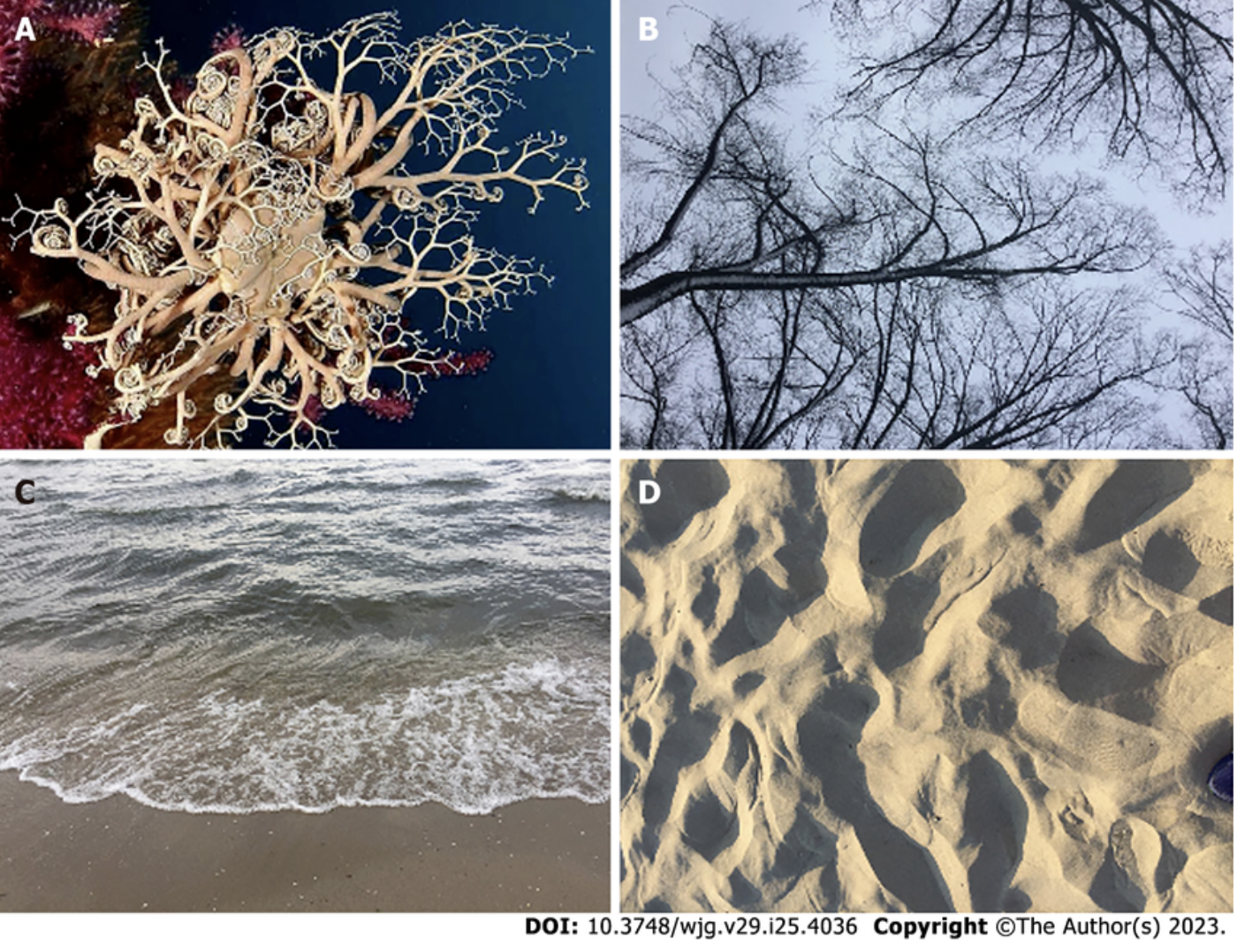
Examples of natural statistical self-similar structures resembling mathematical fractals. A: Marine invertebrates corals; B: Tree branches; C: Water breaking waves; D: Sand dunes.
This organic randomness was famously captured by Jackson Pollock in his mid-century drip paintings. Dr. Taylor’s pioneering computer analysis of Pollock's canvases revealed that the artist was "painting fractals subconsciously in the 1950s, thirty years before any of these mathematical tools came along". Pollock achieved this by utilizing his body’s own "physiological balance mechanism" as he moved around the canvas, registering sways that translated into perfect statistical fractals.
Taylor’s analysis techniques have since been adopted by major art authentication organizations. By using computers to analyze the fine-to-coarse fractal ratios of paint layers, Taylor's team (which he jokingly refers to as the "fractal police") has brought rigorous empirical clarity to the high-stakes art world, ensuring that these complex geometries are evaluated with mathematical precision before hundred-million-dollar decisions are finalized.
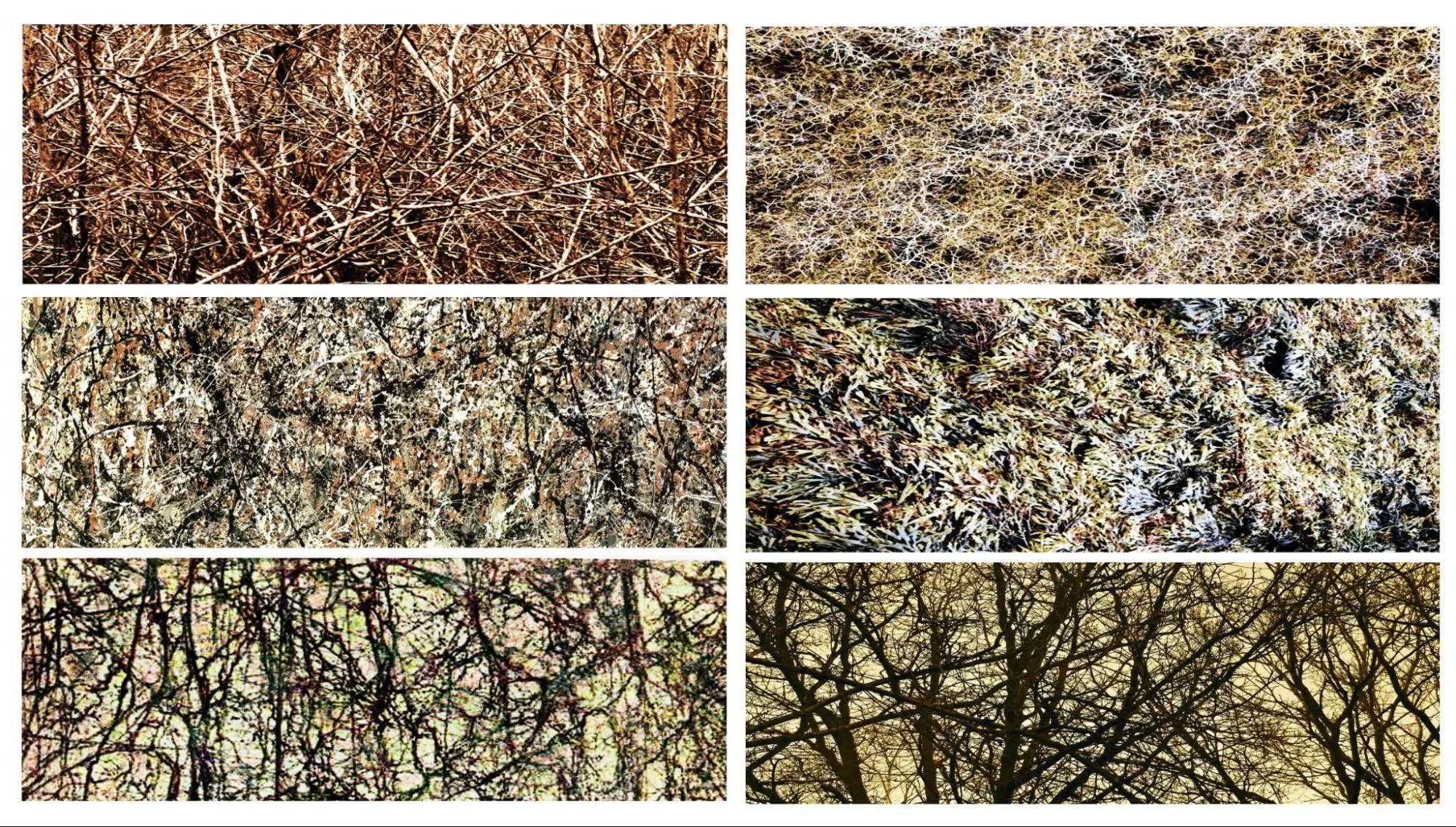
Starting top left and going clockwise: a bush, vegetation, seaweed, trees, spiders web, Pollock! Photo: Richard Taylor.
The Science of Fractal Fluency
The term "fractal fluency" describes the human visual system’s ability to process nature's fractal geometry easily and efficiently, accompanied by a decrease in physiological stress. The brain's visual processor is an incredibly powerful engine, receiving roughly two billion pieces of information every second and devoting up to 30% of its cortical volume to processing this data.
When our eyes are placed in "search mode", foraging for information in our surroundings, they trace a fractal path known as a "Lévy flight": scanning small regions in detail before making a larger leap to a neighboring region. This is the exact same efficient, mathematical search pattern that animals use when searching for food, in human mobility, and in seismology.
When we look at a statistical fractal pattern, a physiological response occurs. Our eyes naturally move in a fractal pattern (Lévy flight). When we look at a fractal design, they match perfectly, allowing our brain to take in the visual information with ease. Functional MRI (fMRI) and EEG studies reveal that this "effortless looking" state shifts the brain into a "visual comfort zone”. Looking at a mid-complexity fractal for as little as ten seconds triggers the brain’s default mode network, associated with daydreaming, resting, and light meditation, and activates the part of our brain involved in memory retrieval. This experience instantly signals the autonomic nervous system to shift into a parasympathetic state, which slows the heart rate, lowers blood pressure, and reduces physical muscle tension, reducing overall physiological stress levels by up to 60%.
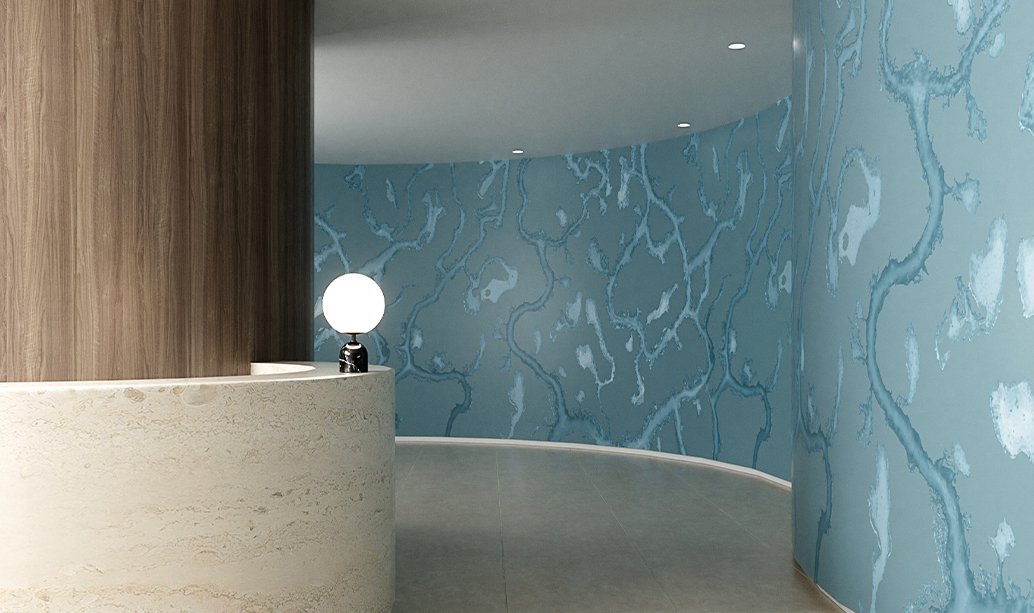
The Fractal River wallcovering, inspired by the renaturalized River Aire, uses fractal patterns to bring organic complexity into indoor environments. Photo: Momentum Textiles and Wallcovering.
Dr. Taylor notes, "If you look at a pattern for just 10 seconds, it can relax your physiological stress levels by up to 60%, which is a huge amount for a non-pharmaceutical approach to stress reduction". This rapid reduction in stress proves that "nature's beauty isn't something ethereal, it is very powerful... and if you get it right, it has positive impacts".
Complexity and Order: Tuning the "D-Value"
Architects and designers can measure and control this stress-reducing visual complexity using a parameter called the fractal dimension, or D-value. The D-value charts complexity on a scale between 1.0 and 2.0. A simple, smooth line has a D-value of 1.0, while a completely filled two-dimensional surface has a D-value of 2.0.
By analyzing nature, we find that clouds in the sky represent a low-complexity fractal (D ≈ 1.3), mud cracks represent moderate complexity (D ≈ 1.7), and a dense forest canopy represents high complexity (D ≈ 1.9). Human preference and physiological recovery are highly dependent on the amount of complexity. A moderate complexity range of D = 1.3 to 1.5 serves as the optimal "sweet spot" for relaxation and stress reduction, while a medium-high complexity (D = 1.5 to 1.7) is highly effective for visual interest, excitement, and cognitive engagement.
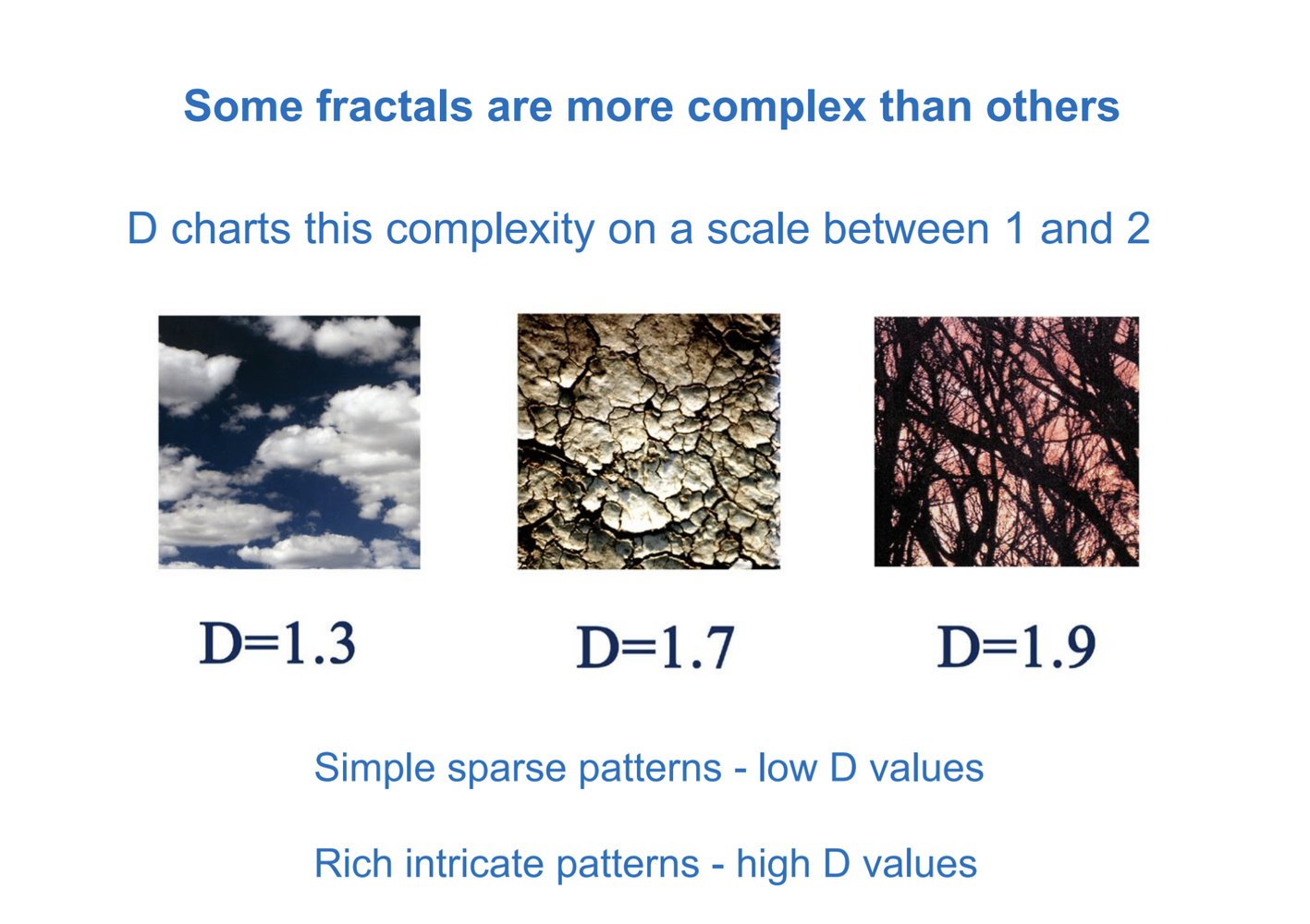
These examples demonstrate how the fractal dimension (D) measures visual complexity, with clouds showing low complexity, mud cracks displaying moderate levels, and dense branches representing high complexity. Photo: Richard Taylor.
To translate this science into practical design, Terrapin Bright Green’s 14 Patterns of Biophilic Design framework classifies fractals under Pattern 10: Complexity and Order. This pattern is defined as "rich sensory information that adheres to a spatial hierarchy similar to those encountered in nature". Designers can "tune" the D-value of building surfaces like flooring, wallcoverings, and light fixtures using a "three-legged stool" framework:
The Occupant: Selecting the D-value based on the user group, taking into account neurodiversity and sensory thresholds.
The Task: Using lower D-values (D ≈ 1.3) for calming environments like hospitals and classrooms, and higher D-values (D ≈ 1.5 to 1.7) for stimulating spaces requiring engagement and focus.
The Environment: Consider the environment and context. For example, boosting the D-value of a pattern if it is placed in an exceptionally stark room to compensate for the extreme simplicity of the surrounding blank walls]. When we walk from nature surrounded by these mid-complexity patterns and wander indoors, Dr. Taylor notes, "it's like being taken to a far off land where you're having to speak a foreign language".
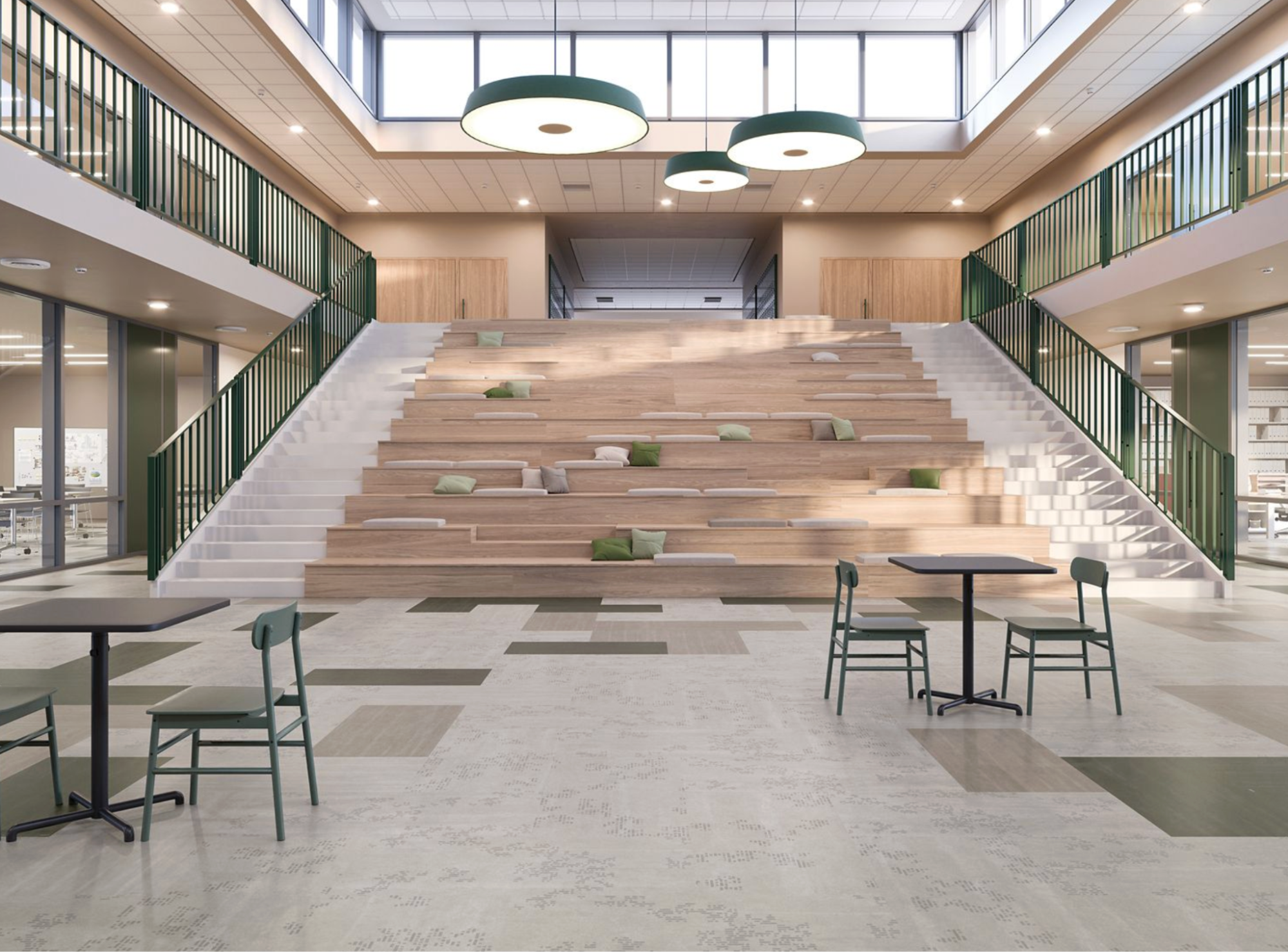
This contemporary workspace lounge utilizes commercial carpet tiles designed with custom, stress-reducing statistical fractals. The soft earth tones and calibrated D-value provide a balanced sensory experience that prevents cognitive fatigue. Photo: Mohawk Group.
Applied Biophilic Design: Real-World Case Studies
The practical application of fractal fluency has transitioned from computer screen laboratory tests to award-winning physical architecture and product design. Below are three key case studies showcasing how engineered fractals are transforming modern spaces:
1. The Biophilic Classroom at Green Street Academy (Baltimore, MD)
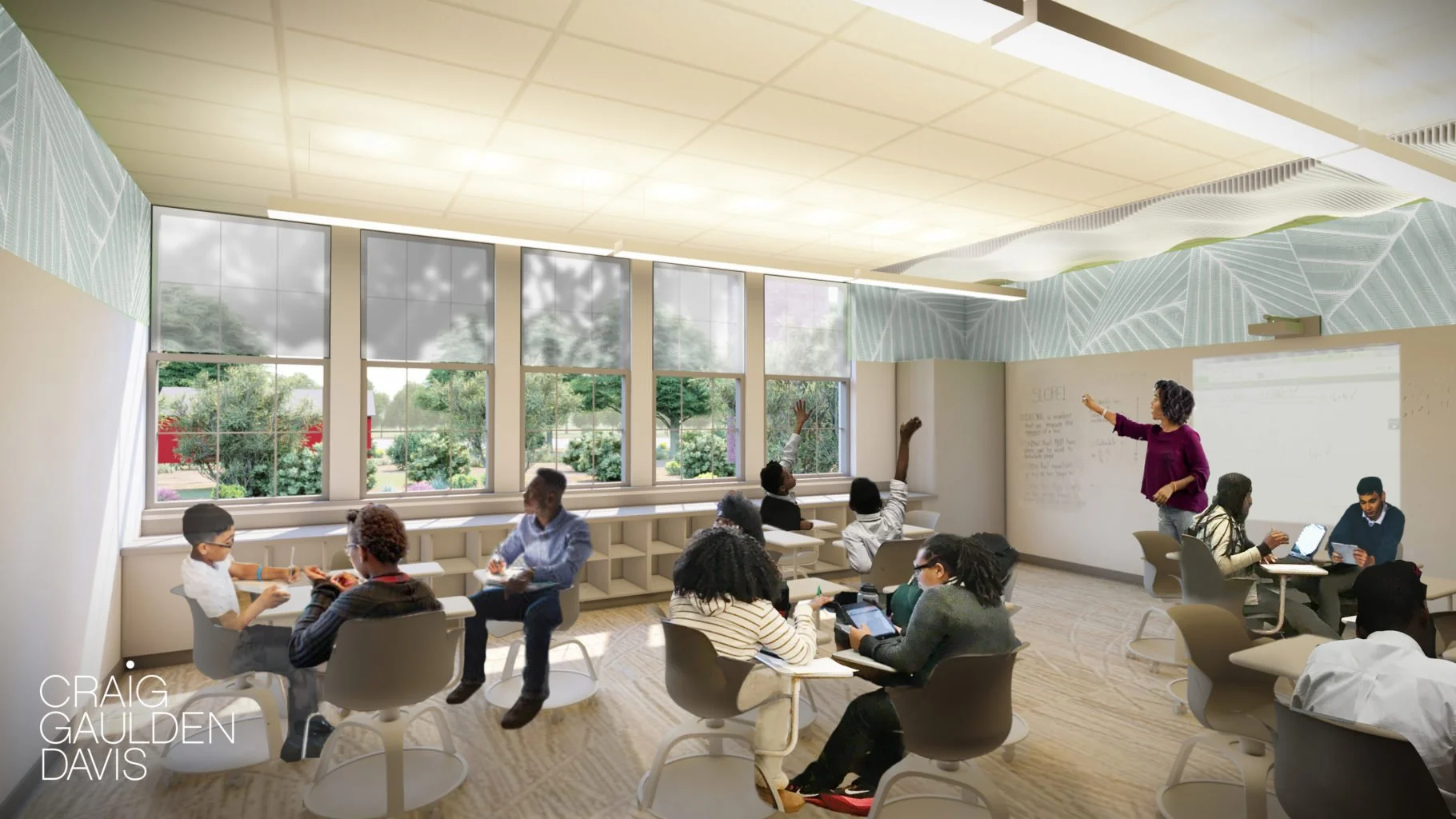
An engineered biophilic learning space incorporating custom-printed fractal window shades, prairie-grass patterned carpets, and biomorphic wallcoverings to enhance focus and reduce academic anxiety. Photo: Craig Gaulden Davis Architects.
Craig Gaulden Davis Architects assembled a multi-disciplinary team of scientists, educators and designers in an AIA-funded study to determine the contribution of biophilic design to student stress reduction and academic performance in a 6th grade Math class at Green Street Academy, a Baltimore City charter school.
The classroom was enriched with multiple biophilic fractal layers: custom Mecho window shades imprinted with a dappled tree shadow pattern to blend with the outdoor landscape, Interface carpet tiles mimicking the curving collinear fractal pattern of waving prairie grass, and custom DesignTex wallpaper based on the natural fractals of palm leaves.
The results were staggering: quantitative biometric and cognitive tests showed that students in the biophilic, fractal-enhanced classroom experienced significantly less physiological stress and achieved test scores three times higher than their peers in standard Euclidean classrooms.
2. The Fractal Chapel at the University Hospital (Graz, Austria)
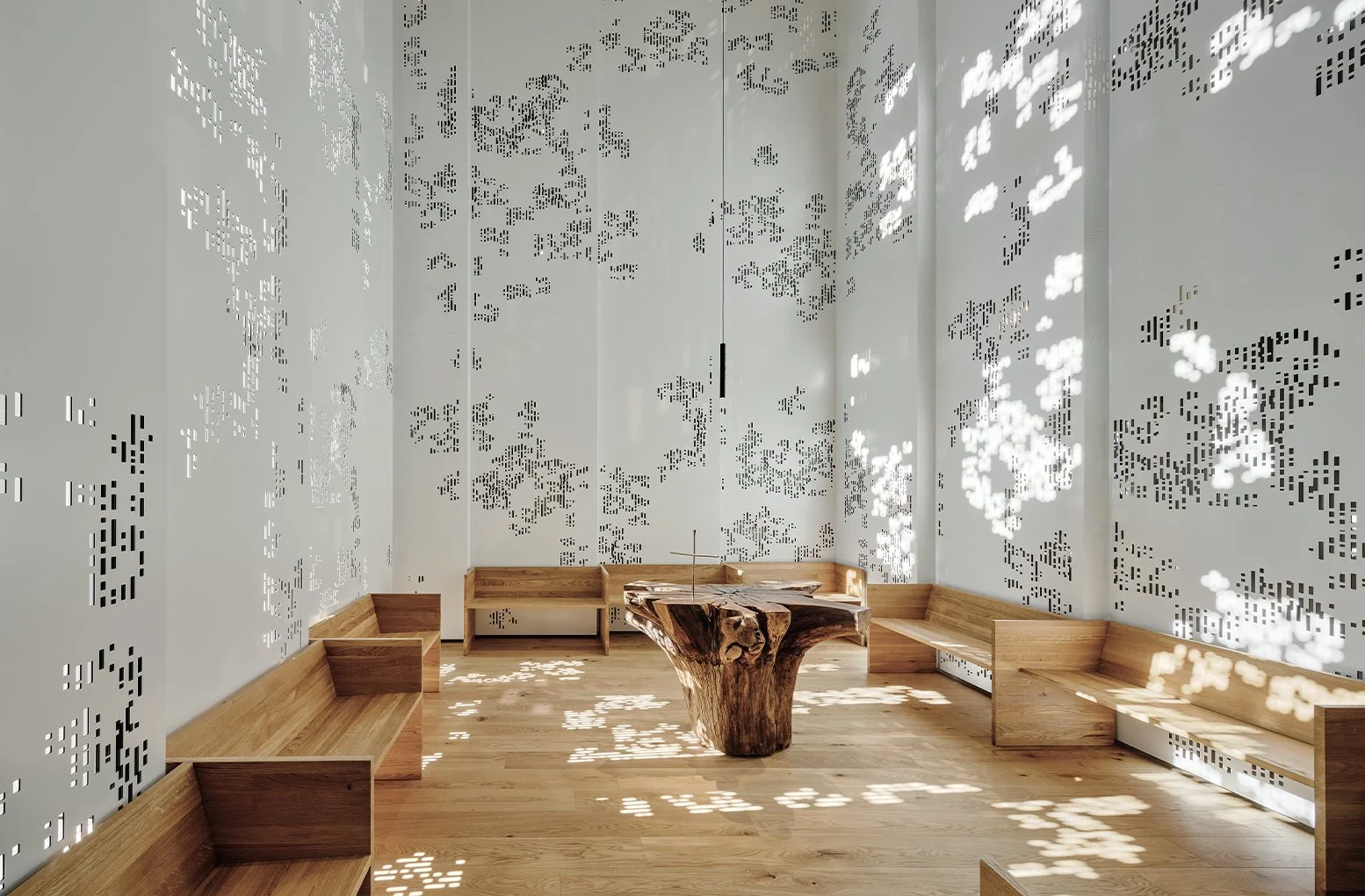
The interior of the award-winning Fractal Chapel in Graz, Austria, featuring a perforated wooden helix skin that filters sunlight into dynamic, stress-reducing fractal light and shadow patterns. Photo: Paul Ott.
Winner of the prestigious World Interior of the Year 2025 at the World Architecture Festival (WAF) and the IIDA Best of Competition 2025 award, the Fractal Chapel is a masterclass in healing architecture. Designed by INNOCAD Architecture and 13&9 Design in collaboration with Fractals Research, the chapel is located in a high-stress trauma hospital.
The architectural intervention of the chapel is built upon "fractal fluency". To bring this evolutionary science into physical reality, the design studio teams collaborated with Dr. Taylor (University of Oregon / Fractals Research) to build a custom, proprietary generative software. This unique art-science tool allowed the designers to inject their creative, intuitive artistic vision, while the scientists mathematically analyzed and calibrated the patterns to hit the optimal visual complexity range (or "D-value"). Because these patterns resonate so universally without causing sensory overload or boredom, the Fractal Chapel celebrates neurodiversity, making the space deeply restorative for everyone, regardless of their neurological profile.
The space features a second skin of perforated wood panels wrapped in a spiral helix. The perforations were mathematically engineered as mid-complexity statistical fractals. As natural sunlight filters through the panels, it projects dynamic, ever-changing fractal patterns of shadow and light across the interior. For three hours each day, this play of light mimics the experience of walking under a forest canopy, inducing a profound sense of peace and comfort for patients, staff, and grieving families.
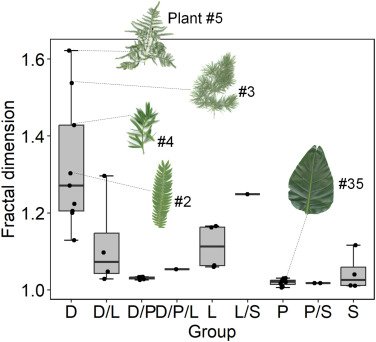
Fractal dimension measurements of whole leaves. Typical scanned images of the whole leaves with large (Plant #5, 3, 4, 2) and small (#35) fractal dimension are shown. D, dot plant group; L, line; P, plane; S, surprise. Photo: https://doi.org/10.1016/j.buildenv.2025.112828.
3. The Leaf Morphology & Botanical Selection Study
One factor when selecting plants for indoor green walls, living columns, or botanical art, designers can leverage this 2025 study which establishes a mathematical framework for species selection based on leaf geometric complexity. An empirical study published in the journal Trees, Forests and People evaluated 235 participants across 12 distinct leaf silhouettes spanning a fractal complexity dimension range of D = 1.1 to D = 1.5.
The study demonstrated clear, statistically significant biometric and cognitive thresholds based on the perceived D-value:
Optimal Relaxation: Leaf silhouettes with moderately-low complexity (D ≈ 1.3), most notably Ginkgo biloba, were proven to be the most effective at promoting physiological relaxation and autonomic nervous system recovery.
Cognitive Stimulation: Conversely, leaves with higher, moderate fractal complexity (D = 1.4 to 1.5), such as Platanus orientalis (Oriental Plane tree) and Aesculus hippocastanum (Horse Chestnut), were found to be highly effective at triggering visual interest, psychological excitement, and cognitive engagement.
This is exciting scientific proof showing what architects and designers can leverage when choosing which plants to introduce indoors by mathematically selecting specific botanical species based on their leaf morphology to program the precise psychological and physiological response of a space.
Conclusion
Biophilic design is rapidly evolving from a decorative luxury into a vital performance standard for human health and planetary regeneration. By integrating "Complexity and Order" through the deliberate application of fractal dimension and dynamic light, architects, and designers can build spaces that actively align with our evolutionary biology. As climate change threatens to degrade our natural ecosystems and strip away our "fractal friends" outdoors, the responsibility of "renaturating" the built environment becomes a moral and public health imperative. Through the engineering of fractal fluency, we can transform our sterile indoor boxes into restorative habitats that nurture, revitalize, and heal.
Alexandra Bowen is a Program Manager at Google, and the founder of the Biophilic Design Community on LinkedIn, a global network of over 140,000 professionals dedicated to integrating nature into the built environment. With a degree in Environmental Design and extensive experience in both tech and sustainable design, her work focuses on bridging the gap between our hyper-accelerated "machine speed" and our evolutionary need for nature. She specializes in nature-inspired design strategies, educational courses, and interactive workshops on Biophilia and Biophilic Design. Check out her course: https://www.learnbiomimicry.com/biophilic-design
References
Galilei, Galileo. Quote: “The book of nature is written in the language of mathematics.” (1564–1642).
Taylor, R. P. (2022). Fractal Shifts and Aesthetic Rifts: Climate Change and Emotional Well-being. Climatic Change, 173, 1–9.
Davison, A., Barron, S., Blood, A., & Taylor, R. (2025). Fractal Complexity in Visual Nature: Perceptual Preferences of Leaf Silhouettes and Implications for Biophilic Design. Trees, Forests and People, 22, 100996.
Abboushi, B., Elzeyadi, I., Taylor, R. P., & Sereno, M. E. (2019). Fractals in Architecture: The Visual Interest, Preference, and Mood Response to Projected Fractal Light Patterns in Interior Spaces. Journal of Environmental Psychology, 61, 57–70.
Taylor, R. P. (2021). The Potential of Biophilic Fractal Designs to Promote Health and Performance: A Review of Experiments and Applications. Sustainability, 13(2), 823.
ScienceDesignLab. (2025). IIDA "Best of Competition" 2025 - Fractal Chapel. (INNOCAD Architecture, 13&9 Design, Fractals Research).
ScienceDesignLab. (2025). Growing and Morphing Fractal Processes.
ScienceDesignLab. (2025). Dr.med.univ. Anastasija Lesjak profile.
University of Oregon. (2026). Richard Taylor | Professor of Physics, Psychology, and Art / Head, Department of Physics.
Taylor, R. P. (2006). Reduction of Physiological Stress Using Fractal Art and Architecture. Leonardo, 39(3), 245–251.
Trombin, R. (2020). Working with Fractals: A Resource Companion for Practitioners of Biophilic Design. Terrapin Bright Green.
Taylor, R. P., & Spehar, B. (2016). Fractal Fluency: An Intimate Relationship Between the Brain and Processing of Fractal Stimuli. In: Di Ieva A. (eds) The Fractal Geometry of the Brain. Springer.
Fairbanks, M. S., & Taylor, R. (2011). Measuring the Scaling Properties of Temporal and Spatial Patterns: From the Human Eye to the Foraging Albatross. Nonlinear Dynamical Systems Analysis for the Behavioral Sciences Using Real Data, 341–366.
ScienceDesignLab. (2025). FRACTAL PATTERNS IN THE BUILT ENVIRONMENT. (13&9 Design and Fractals Research).
Joye, Y. (2007). Architectural Lessons from Environmental Psychology: The Case of Biophilic Architecture. Journal of Architectural and Planning Research, 24(4), 305–328.
Viswanathan, G. M., Afanasyev, V., Buldyrev, S. V., Murphy, E. J., Prince, P. A., & Stanley, H. E. (1996). Lévy flight search patterns of wandering albatrosses. Nature, 381, 413–415.
Taylor, R. P., Spehar, B., von Donkelaar, P., & Hägerhäll, C. M. (2011). Perceptual and Physiological Responses to Jackson Pollock’s Fractals. Frontiers in Human Neuroscience, 5, 1–13.
Taylor, R. P. (2026). Fractal Fluency: The Science of Nature's Stress-Reducing Geometry (interview transcript).
Browning, W. D., & Ryan, C. O. (2020). Nature Inside, A Biophilic Design Guide. London: RIBA Publishing.
Browning, W. D., Ryan, C. O., & Clancy, J. O. (2014). 14 Patterns of Biophilic Design: Improving Health and Wellbeing in the Built Environment. New York: Terrapin Bright Green.
Mandelbrot, B. B. (1982). The Fractal Geometry of Nature. W.H. Freeman and Company.
Spehar, B., & Taylor, R. (2013). Fractals in Art and Nature: Why do we like them?. Proceedings of SPIE, 8651.
Determan, J., Akers, M. A., Albright, T., Browning, B., Martin-Dunlop, C., Archibald, P., & Caruolo, V. (2019). The Impact of Biophilic Learning Spaces on Student Success. Craig Gaulden Davis Architects.
Taylor, R. P., Micolich, A. P., & Jonas, D. (1999). Fractal analysis of Pollock's drip paintings. Nature, 399(6735), 422-422.
Tokuhiro, K., Sugimoto, H., Ikeuchi, A., Tsujie, T., Wada, E., Muramatsu, M., & Ohto, C. (2025). Subjective mapping of indoor plants based on leaf shape measurements to select suitable plants for indoor landscapes. Building and Environment, 276, 112828.