Advertisement
Introduction
Making life in cities healthier and happier by design is our collective goal, and achieving that through connections to nature has multiple benefits that are worth exploring. The discussion about green roofs frequently focuses on stormwater and heat island reduction benefits, often missing the habitat, human health, social and economic values. Here are some examples to expand the conversation.
The COOKFOX Experience
COOKFOX Architects are known for having one the first green roofs in Manhattan at their original offices in the Chelsea neighborhood. Office partitions were kept to 42 inches high to ensure that the green roof was visible from many to the workstations. A post occupancy evaluation of the space indicated that the areas of lowest self-reported stress were nearest to the view, while the areas of highest reported stress had no view to the outside. (Browning & Ryan, 2026) The roof was originally considered beautiful and stress reducing. The roof began with a few species of sedums and later native little bluestem grass brought in by birds. Over time the observed faunal biodiversity increased first with small insects, then dragonflies hunting insects, then small birds hunting insects and dragon flies, and mostly dramatically a kestrel hunting and eating one of the birds on a windowsill. This event shifted everyone’s perception, the green roof moved from being a storm water mitigation measure and a beautiful stress reducing feature to being a living ecosystem. That new realization changed perceptions and led to greater engagement with the green roof.
When the COOKFOX moved to a new location in Manhattan, finding a space that had outdoor spaces that could be planted and occupied was crucial. The office space chosen has three green roofs, one is a space strip on the north façade, the eastern terrace has food gardens, beehives and a small seating area, while larger western terrace has trees, shrubs, a secluded seating area and a large pergola and conference table. The value of biophilic experiences and supporting biodiversity is a continual theme in COOKFOX’s designs.
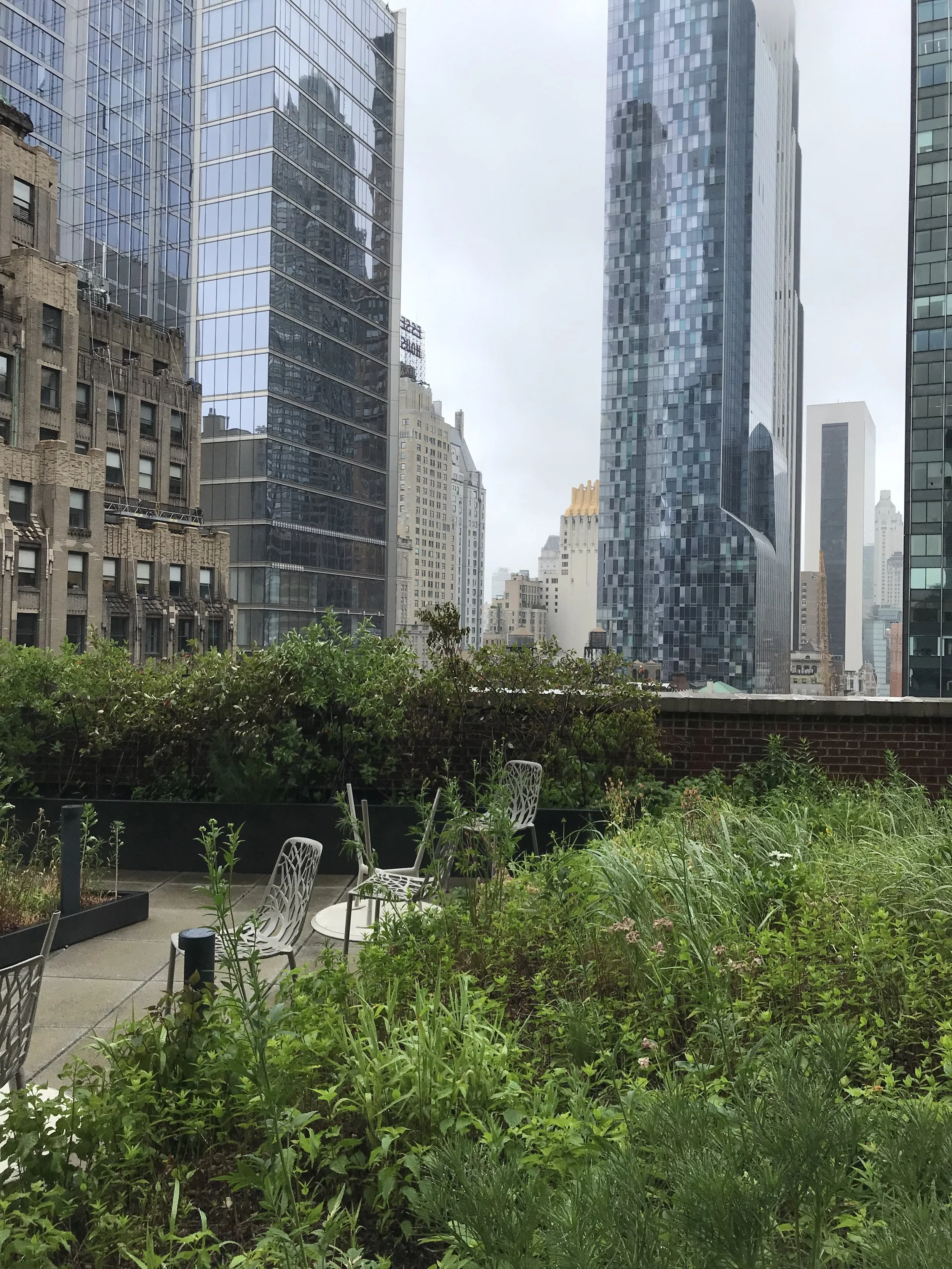
COOKFOX east and west terrace green roof.
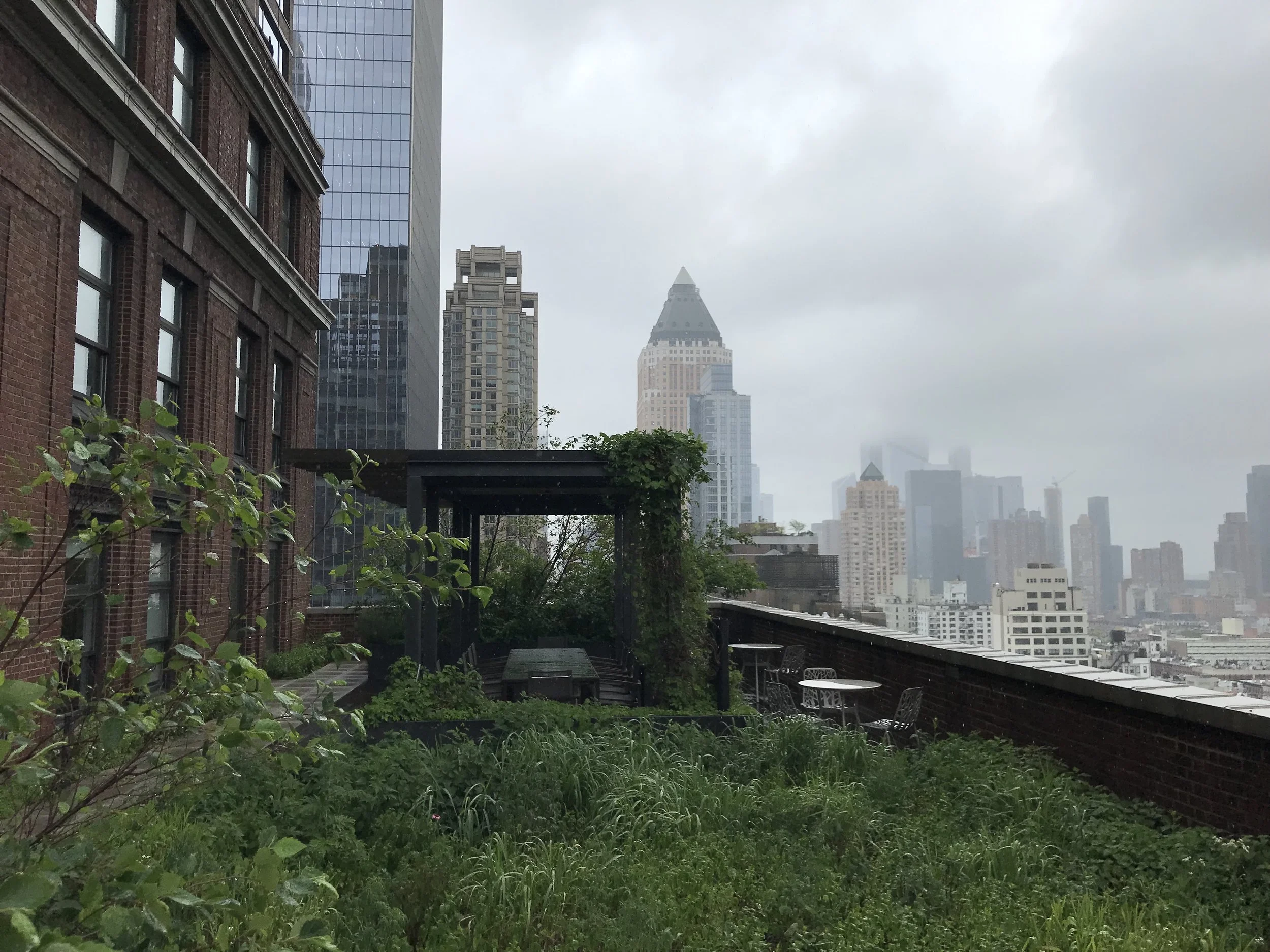
Photos: Bill Browning
One of the more recent COOKFOX projects is 550 Washington, located on along the shoreline of the Hudson River in Manhattan. This enormous wedding cake groundscraper was originally the elevated railyard at the terminus of the Highline railroad. The beefy structure to support 8 freight trains two stories in the air, meant that the substantial building could be added on top of the existing one. Google , which has their own biophilic design requirements for their spaces, occupies the building. One the key strategies was putting more than an acre occupiable green roofs on the layers. The green roofs feature a palette that consists of 90% New York native species of which 80% are native to New York City. The roof is monitored for biodiversity and earlier this year a bird species that had not been seen in Manhattan in 120 years appeared on the roof.
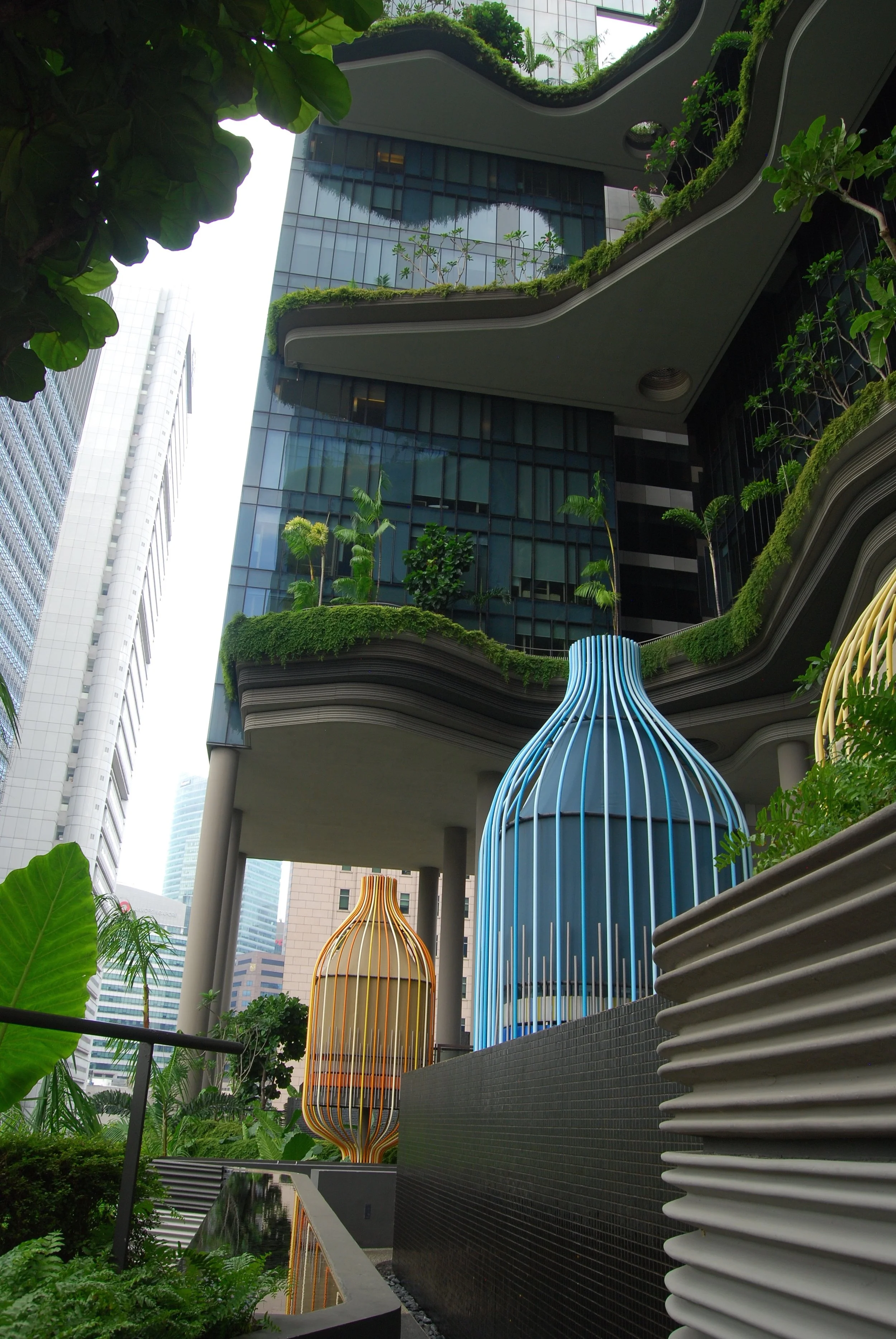
PARKROYAL Colleciton Hotel. Photo: Bill Browning
WoHa Architects Examples
Singapore based, WoHa Architects is well known for their biophilic designs that may have more than three times the footprint of the building dedicated to green roofs along with significant green walls. They also monitor biodiversity on their projects. For example, at the PARKROYAL Collection Hotel on Pickering and the Oasia Hotel have recorded higher levels of faunal diversity than the adjoining parks. Both hotels have social spaces, swimming pools, gardens and social spaces on their multi-level green roofs. PARKROYAL is a midrange brand, and sky gardens and other biophilic strategies far exceed type brand design. The hotel captures much higher room rates than other PARKROYAL hotels and was rebranded as the PARKROYAL Collection. (Browning & Ryan 2026)
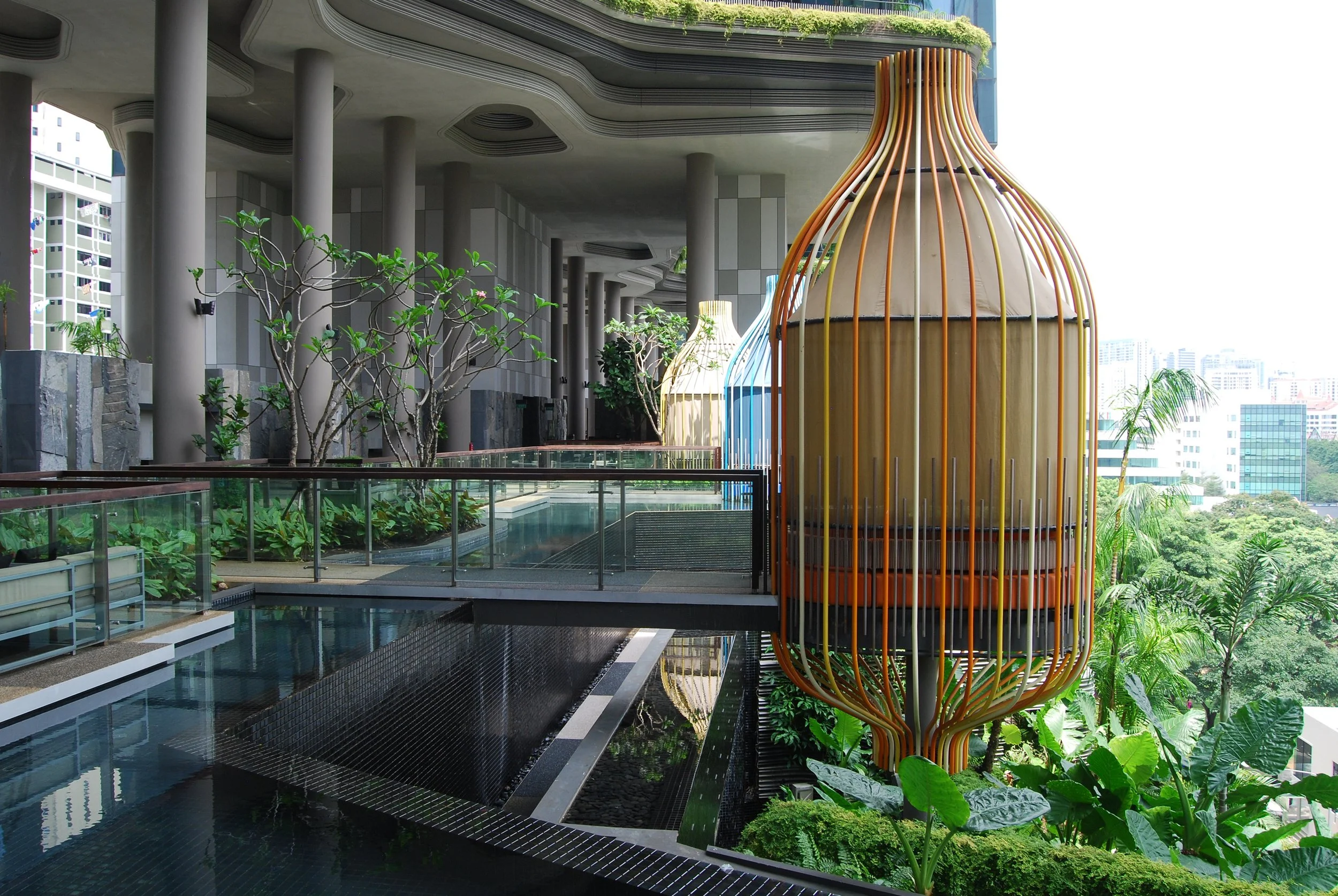
PARKROYAL Colleciton Hotel. Photo: Bill Browning
There is a social benefit as well to these intensive green roofs, the stair stepped multilevel gardens on top of the Kampung Admiralty provide walking trails, exercise, gardening and gathering spaces for the resident senior citizens. The linear sky gardens connecting the towers of SkyVille at Dawson have children playing, adults dining and neighbors are observed interacting outdoors in midday, a practice considered unusual for Singapore.
These project examples support the data that common spaces with more vegetation have been shown to increase utilization and subsequently encourage greater social ties in an area. Residents with access to well-planted common spaces are shown to have more social activities, more visitors, to know more neighbors, and to feel a stronger sense of belonging and safety (Kuo et al., 1998).
Vegetation Increases Social Vitality and Real Estate Values
In addition to social ties, the social vitality of communities can also be measured by prosocial behavior. For instance, those who report a greater connectedness to nature also report feeling greater empathy toward others (Fido & Richardson, 2019; Metz, 2017); may act more cooperatively and show more environmentally sustainable behavior after viewing nature scenes (Zelenski, Doplo & Capaldi, 2015); and tend to show a greater willingness to give money to others and support social goals (Weinstein et al., 2009).
It has long been established that greenery, especially in dense urban settings, increases the desirability and subsequent value of real estate (e.g. Crompton, 2001; Correll, Lillydahl & Singell, 1978; Morales, Boyce & Favretti, 1976).
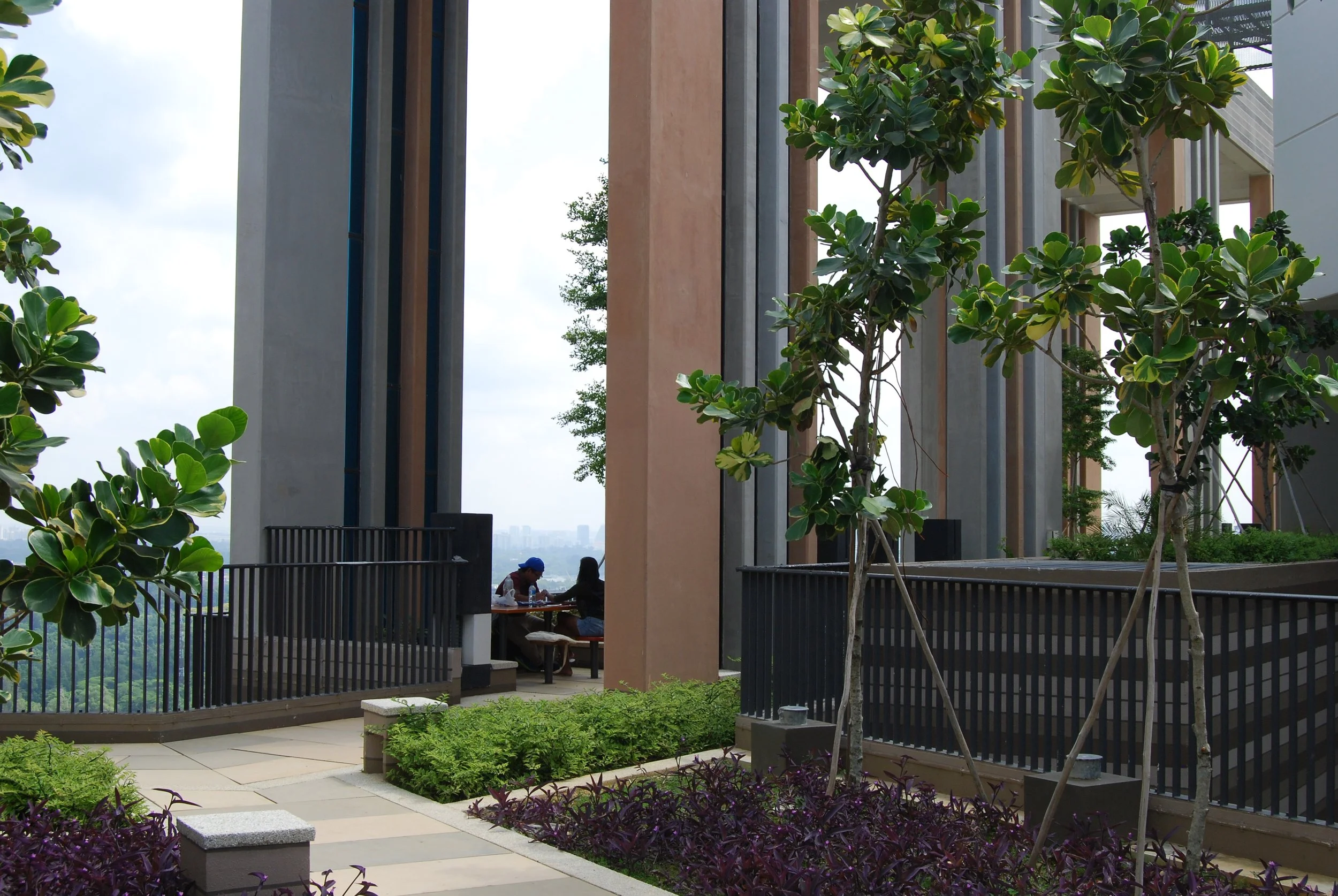
SkyVille at Dawson. Photo: Bill Browning
Green Roofs, Healing Environments and Profitability
Roger Ulrich’s 1984 study of patients recovering from gallbladder surgery determined that patients with a view to nature took less painkillers, had fewer nursing calls and left the hospital much sooner than those with a view to a brick wall (Ulrich 1984). Average Length of Stay (ALoS), a metric for approximating a patient’s healing rate, is key to managing operational efficiency, as it is often regarded as a top determinant of profitability; on average, hospitals with a lower ALoS have a higher profit margin (Bai & Anderson, 2016).
Ten years ago, the average hospital expense per inpatient recovery day in the U.S. was $2,143 (Ellison,2019) and has increased since then. Considering that the average U.S. hospital conducts 5,809 inpatient operations annually, those per-patient cost savings quickly multiply. Reductions in patient LoS due to biophilic interventions can range from 4.9% to 33.3%, with an average decrease of 18.1%, or 1.0 days. The annual savings for a hypothetical hospital due to fewer per diem expenses could be approximately $12,363,559. Most importantly, with a higher inpatient turnover rate, a hospital has greater capacity at a given time to treat more patients, which would in turn results in higher annual profit margins.
Ulrich’s original study helped inspire the design of Khoo Teck Puat Hospital in Singapore. Patients in the recovery wards have a view across to the community gardens on the roof of the clinical wing. The hospital director for the Singapore public hospital service that built and operates the hospital believes that creating health is a public function. So the main pedestrian circulation path from the adjoining neighborhood to the transit station goes through the center of the hospital complex, and the organic community gardens on the roof of the hospital produce food for the hospital and people in the neighborhood. The patients are connected to nature, to their neighbors and with their food, thus supporting the notion of health as a community experience. (Browning & Ryan, 2026)
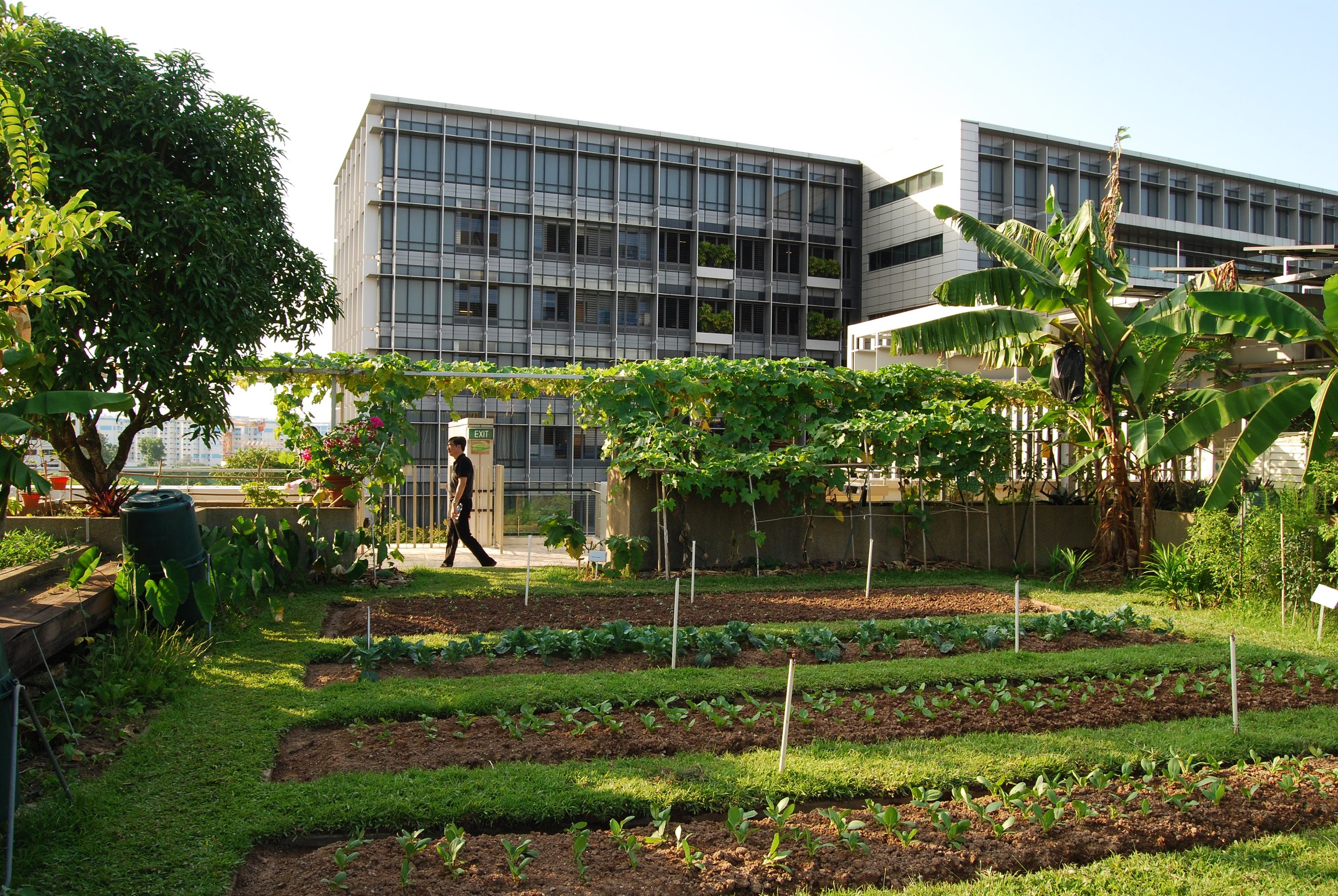
Khoo Teck Puat Hospital in Singapore. Photo: Bill Browning
Conclusion
Greening our roofs with occupiable gardens can have clear ecological, economic and social benefits. We need to be building more!
Bill Browing is the founder of Terrapin Bright Green and a leading international expert in the theory and practice of biophilic design. www.terrapinbg.com
More Information
The economic data in this essay comes from our publication The Economics of Biophilia (Ryan, Browning & Walker, 2023). If you are interested in learning more about these case studies and other examples please see the 2nd edition of Nature Inside, A Biophilic
Design Guide (Browning & Ryan, 2026) https://www.terrapinbrightgreen.com/report/eob-2/
https://www.terrapinbrightgreen.com/report/nature-inside-2/
Join us at Citiesalive 2026 in NYC September 30 to Oct.3, where I will be teaching a master class in biophilic design.
References
Bai, G., & Anderson, G.F. (2016). A More Detailed Understanding Of Factors Associated With Hospital Profitability. Health Affairs, 35(5), 889–897. doi:
10.1377/hlthaff.2015.1193
Browning, W., & Ryan, C. (2020, 2026). Nature Inside, A Biophilic Design Guide. London:
Royal Institute of British Architects.
Correll, M.R., Lillydahl, J.H., & Singell, L.D. (1978). The Effect of Greenbelts on Residential Property Values: Some Findings on the Political Economy of Open Space.
Land Economics, 54(2), 207–217.
Crompton, J.L. (2001). The Impact of Parks on Property Values: A Review
of the Empirical Evidence. Journal of Leisure Research, 33(1), 1–31.
Ellison, A. (2019). Average hospital expenses per inpatient day across 50 states. Becker’s Hospital Review. Retrieved April 14, 2021,from https://www.beckershospitalreview. com/finance/average-hospital-expenses per-inpatient-day-across-50-states.html
Fido, D. & Richardson, M. (2019). Empathy Mediates the Relationship Between Nature Connectedness and Both Callous and Uncaring Traits. Ecopsychology, 11(2). DOI: 10.1089/eco.2018.0071
Kuo, F.E., Sullivan, W.C., Coley, R.L., & Brunson, L. (1998). Fertile Ground for Community: Inner-City Neighborhood Common Spaces. American Journal of Community Psychology, 26(6), 823–851. DOI: 10.1023/A:1022294028903
Morales, D.J., Boyce, B.N., & Favretti, R.J. (1976). The Contribution of Trees to Residential Property Value: Manchester, Connecticut. Valuation 23(2), 26–43.
Ryan, C.O. Browning, W. D. & Walker, D. B. (2023). The Economics of Biophilia: Why designing with nature in mind makes financial sense. Second edition. New York: Terrapin Bright Green, LLC. http://www.terrapinbg.com/report/eob-2
Ulrich, R.S. (1984). View through a window may influence recovery from surgery. Science, 224(4647), 410–411. doi: 10.1126/science.6143402
Weinstein, N., Przybylski, A.K., & Ryan, R.M. (2009). Can Nature Make Us More Caring? Effects of Immersion in Nature on Intrinsic Aspirations and Generosity. Journal of Personality and Social Psychology, 84, 960–971.
Zelenski, J.M., Doplo, R.L., & Capaldi, C.A. (2015). Cooperation is in our nature: Nature exposure may promote cooperative and environmentally sustainable behavior. Journal of. Environmental Psychology., 42, 24–31. https:// doi.org/10.1016/j.jenvp.2015.01.005