Nature, Mental Health, and Inequity: Rethinking Access in Our Cities
Advertisement
Introduction
Writing this article, I’m in an old wooden rocking chair, surrounded by greenery, and enveloped by strong winds and heavy currents. I’m at a friend’s family cottage, listening to the waves crash upon the shore of Baldrock Lake - a six-hour drive north from my home in downtown Toronto
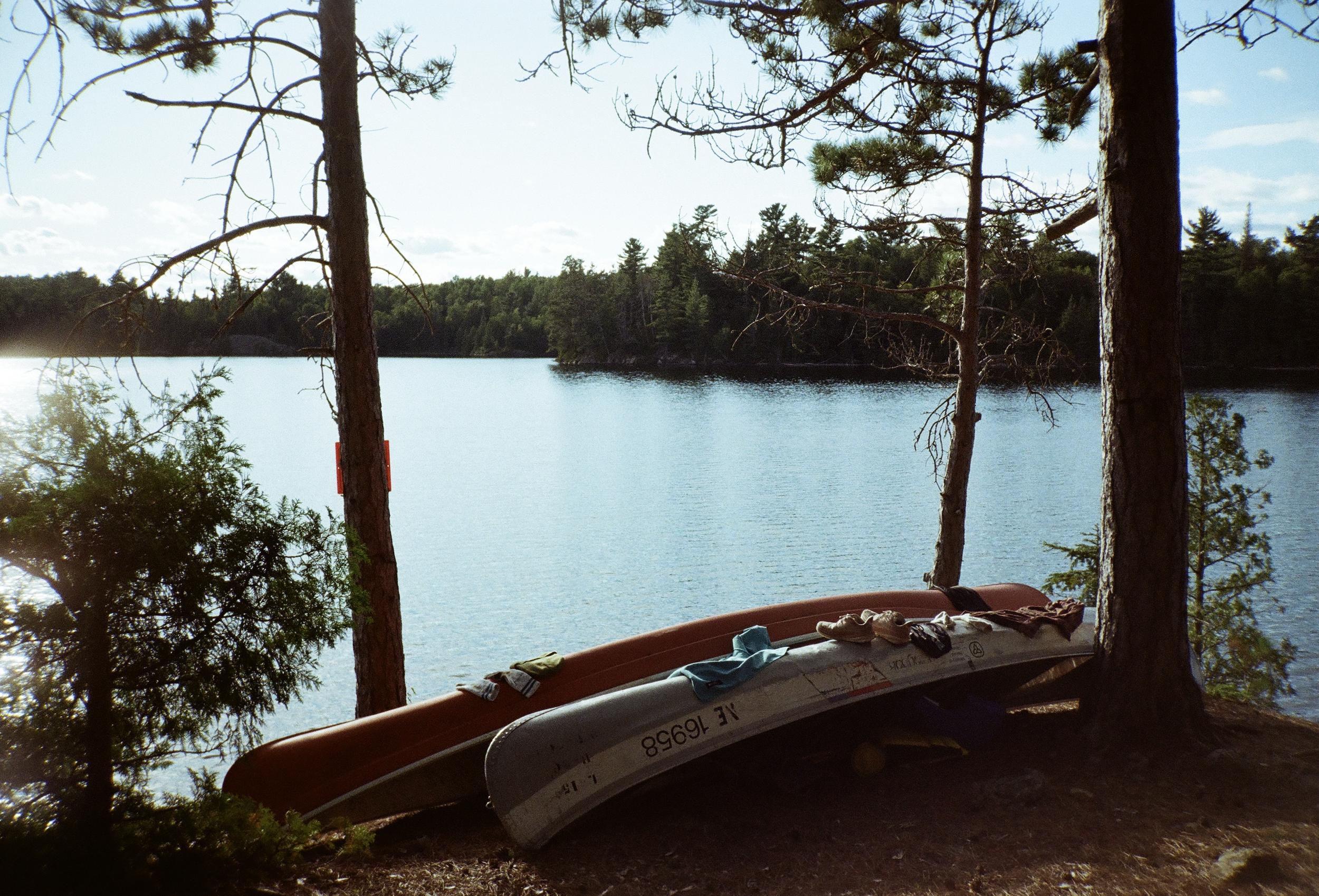
Two canoes resting at Missisaugi provincial park.
Sitting here, I feel my body and mind slowing down. I feel at peace. I wake up earlier, sit on the long dock by the water, practice my morning yoga, meditate, read, strum the guitar, make elaborate meals for my friends, learn and play new card games, and generally stay offline (aside from writing this article, of course).
But I can’t ignore the fact that my ability to be here, surrounded by nature, is rooted in privilege. The modern cottage is a colonial concept, born out of escaping the concrete urban or suburban “hellscape” for those who can afford it. My friend’s family owns this place; I’m only here because I was lucky enough to be invited. Growing up, my family wasn’t able to spend time in nature like this, we were focused on trying to get by. Given that having access to green spaces helps to improve our overall wellbeing, shouldn’t everyone have equal access to it?
My contrast of experiences makes me think about why nature has such a large impact on mental health, and who actually gets to experience it.
The Link Between Nature and Our (Mental) Wellbeing
The peace I feel here isn’t unique to me, it’s actually backed by a significant body of scientific research.
More than 50 percent of people around the world live in urban areas, and urbanization is linked with higher rates of mental illness. Could high rates of mental illness be caused by artificially created grey spaces, and the lack of natural greenery in so many cities?
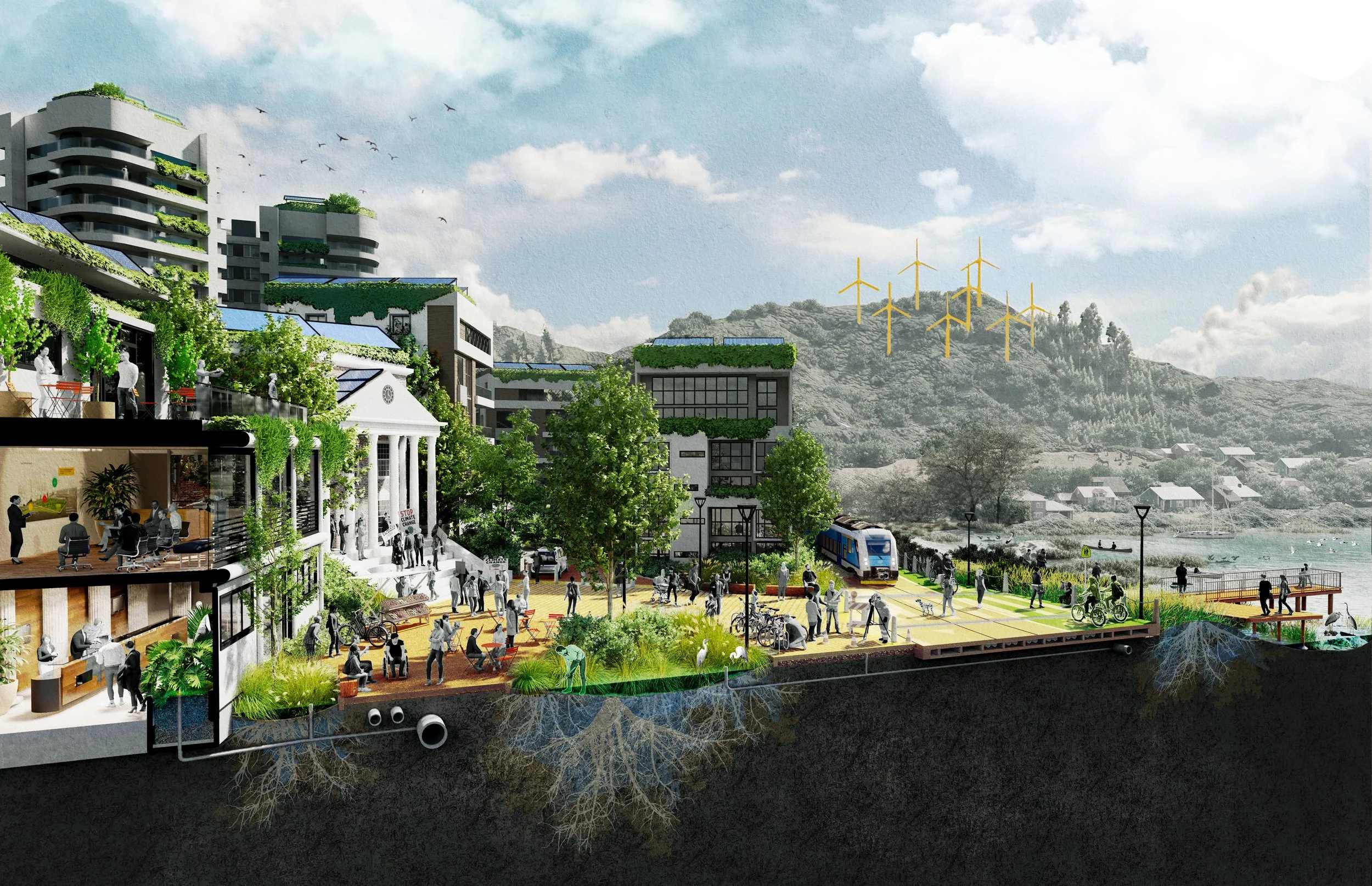
When I look out at the crystal clear water, and the surrounding cedar, birch, and pine trees my stress melts away. Studies show that even brief visual contact with greenery lowers cortisol, a stress hormone, and improves concentration. In fact, patients in hospitals recover faster with a window view of trees, rather than with a blank wall. Hospitals worldwide are integrating scenic views outside their patients' windows, and providing them with accessible green spaces on podium decks to help improve healing and mental wellbeing for patients, visitors and staff. Green infrastructure in cities, such as street trees, rooftop gardens, and parks have the same positive health effect.
The soundscape matters too. Here, I hear the crashing of the waves, and the howling of the wind through trees. I love Toronto, but it's a bustling city full of honking, traffic, sirens and the always present rumbling of cars. Research confirms what I instinctively know and feel, that natural sounds reduce stress and improve focus, while the urban soundscape contributes to anxiety and poor sleep. Biophilic sound design practices involve the use of recordings of birdsong, or running water that can help to create small environments in the city or in buildings designed to help calm our nervous systems!
And then there’s movement. Each time I walk to the dock or paddle on the lake, my body releases endorphins and dopamine, the same neurotransmitters activated by antidepressant medication. We know that physical activity is good for our mental health, but there are additional benefits to exercising in nature. Physical activity in natural settings, known as green exercise, has stronger benefits for mood and mental health than exercise indoors or beside traffic-filled streets.
Finally, there’s connection. At the cottage, I’ve spent time cooking with friends, playing games, paddling, talking outdoors, and laughing under the stars. Green spaces, whether a cottage or a community garden, create conditions for social bonding. Research shows these connections reduce loneliness and strengthen personal resilience.
But Who Enjoys These Benefits?
I know I’ll return soon to Toronto, where my version of “nature time” is a balcony garden overlooking a laneway of dusty parked cars. That little green corner brings me joy, but it’s not the same as living right beside a lake, a park, or having integrated greenery in our cities.
But not everyone has a balcony. Access to green space is unequal, across Canadian cities, and especially in Toronto. Wealthier neighborhoods have abundant parks and cover from the canopies of old-growth trees, while racialized and lower-income communities face “nature deprivation” with fewer parks and urban greenery. The lack of green infrastructure in poorer neighbourhoods is a feature of most cities across North America.
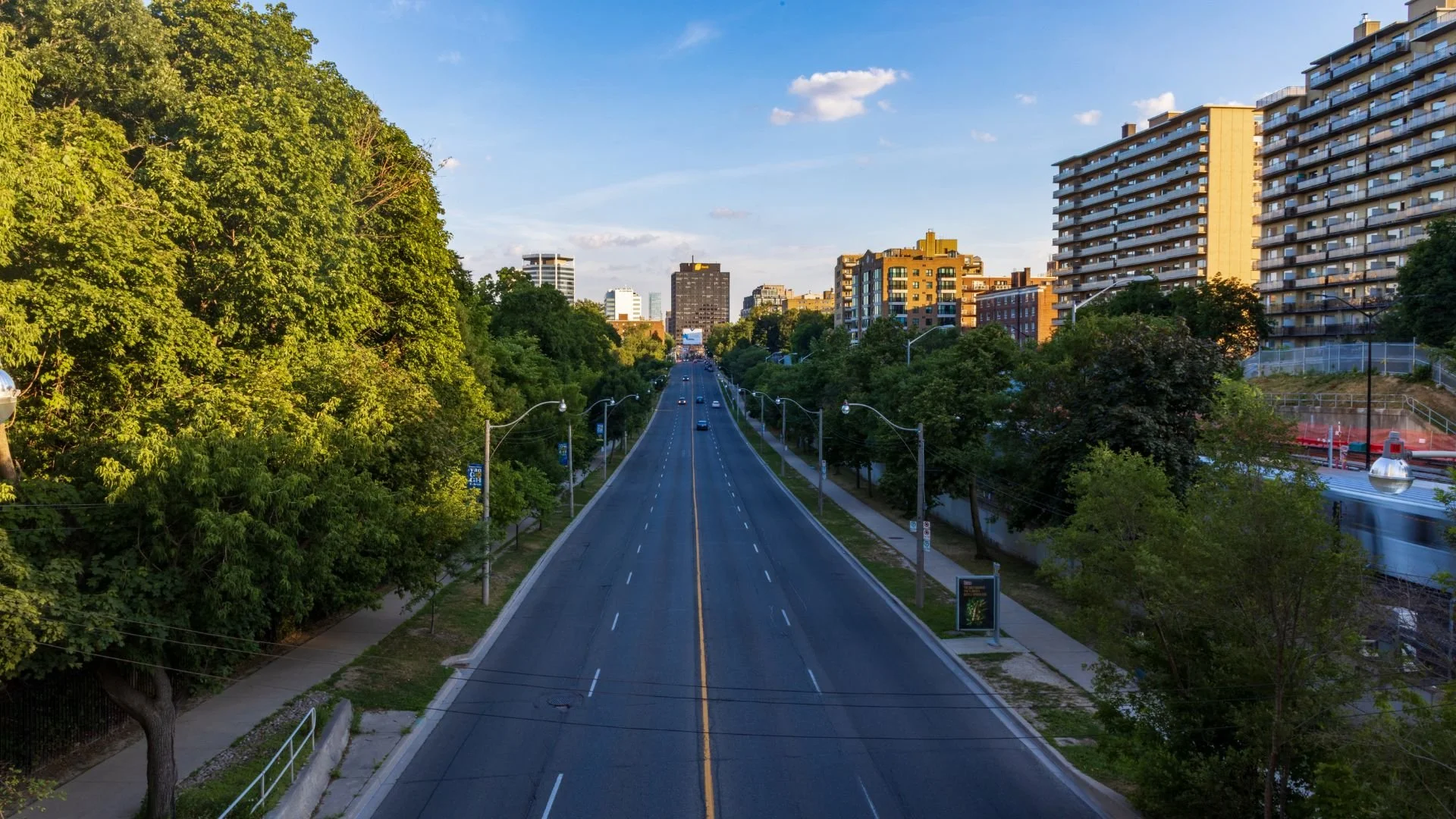
Yonge Street surrounded by large trees.
Socio-economic standings of communities can affect people in drastic ways. In fact, life expectancy varies by almost 12 years depending on which Toronto neighborhood you’re born into. Affluent neighborhoods like the Yonge-Doris see residents living past 86, while residents in neighborhoods like Moss Park average under 74. While access to green space is one factor contributing to these disparities, wealth, health, and access to green space are inseparable to both our mental and physical well being.
When I sit at the cottage and feel calm, I wonder: why should this sense of wellbeing be reserved for the privileged? Why can’t our cities provide these green infrastructure benefits to everyone?
What Can We Do?
Green infrastructure isn’t just about aesthetics, it’s a public health necessity. If we want cities that support mental wellbeing, we need to fight for the following:
Policy change: Advocate with your local politicians to invest in more parks, tree canopy, green roofs and community gardens.
Focus on preventative care: Green infrastructure often has a higher upfront cost, but what about the mental health costs of doing nothing? Stress, depression, and anxiety, all carry economic and human tolls.
Share access: If you have a backyard, balcony, or cottage, consider how you can open it up, invite neighbours, host gatherings, or support community groups. Land is never truly ours; it’s borrowed, and it can be stewarded collectively.
Strengthening local land trusts: Community land trusts, like the Chinatown Land Trust or Kensington Market Land Trust in Toronto, are powerful examples of how residents can come together to preserve land for public use and community benefit. Supporting these trusts helps ensure green and cultural spaces aren’t lost to development pressures and remain accessible for future generations. The Kensington Market Land Trust is currently selling community bonds for those interested in offering financial support!
Staying curious and persistent: Change doesn’t happen overnight. Keep supporting local initiatives, volunteer in green projects, and hold leaders accountable for equitable access. Currently, the city of Toronto has launched their Neighbourhood Climate Action Grant, Indigenous Climate Action Grants, and PollinateTO Grants, for those interested!
Conclusion
The lake is still lapping at the shoreline as I finish writing. Soon I’ll return to the stress-inducing honking of cars and concrete sidewalks of Toronto. But this trip has reminded me of something crucial: access to green infrastructure should not be a privilege, it should be provided to everyone. The peace I feel at this cottage shouldn’t be rare. It should be built into the fabric of every city, for the sake of our minds, our communities, and our collective future.
About the Author
Rushil Malik is the Communications Manager for GRHC and is actively learning about the green roof industry. Connect with her at rmalik@greenroofs.org
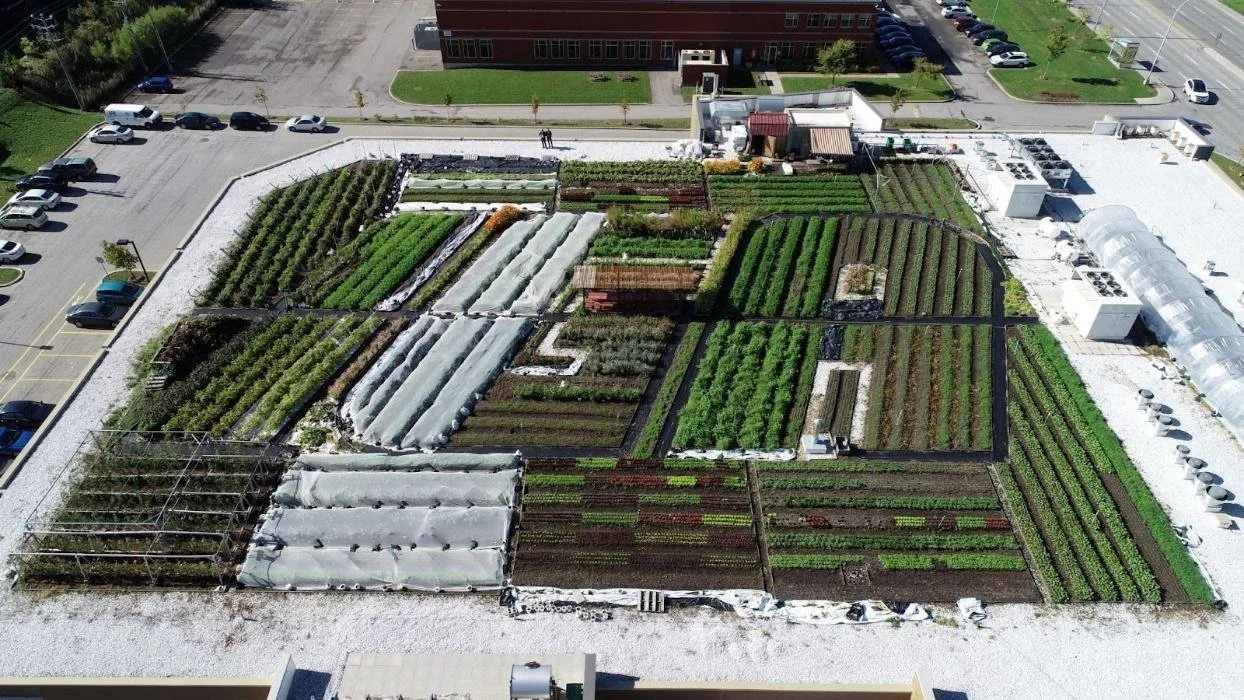
If you live in Toronto, I encourage you to check out TMU’s rooftop farm, open to the public on Wednesdays from 11–2 pm until September 26, 2025. It’s a small but powerful example of how cities can bring nature back into our lives through programming, community building, and food.