How the Health Sector Can Benefit from Embracing the Power of Nature
Advertisement
Introduction
Modern medicine excels at treating symptoms, but too often overlooks a truth embedded in our evolutionary DNA: humans are designed to thrive in environments rich with the qualities of our natural habitat. Hospitals and environments of care that integrate nature are not indulging in “nice-to-haves” — they are meeting a fundamental biological need.
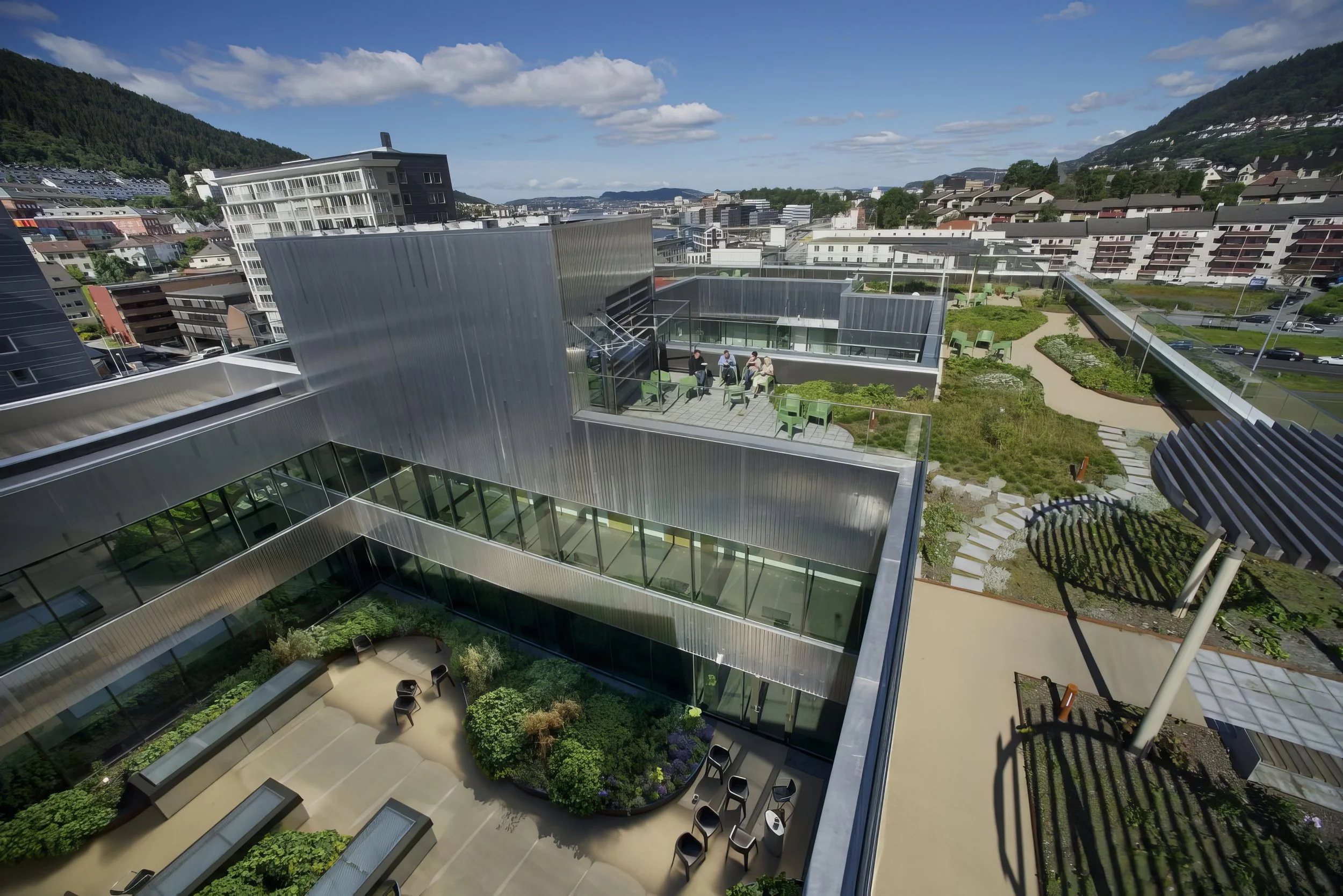
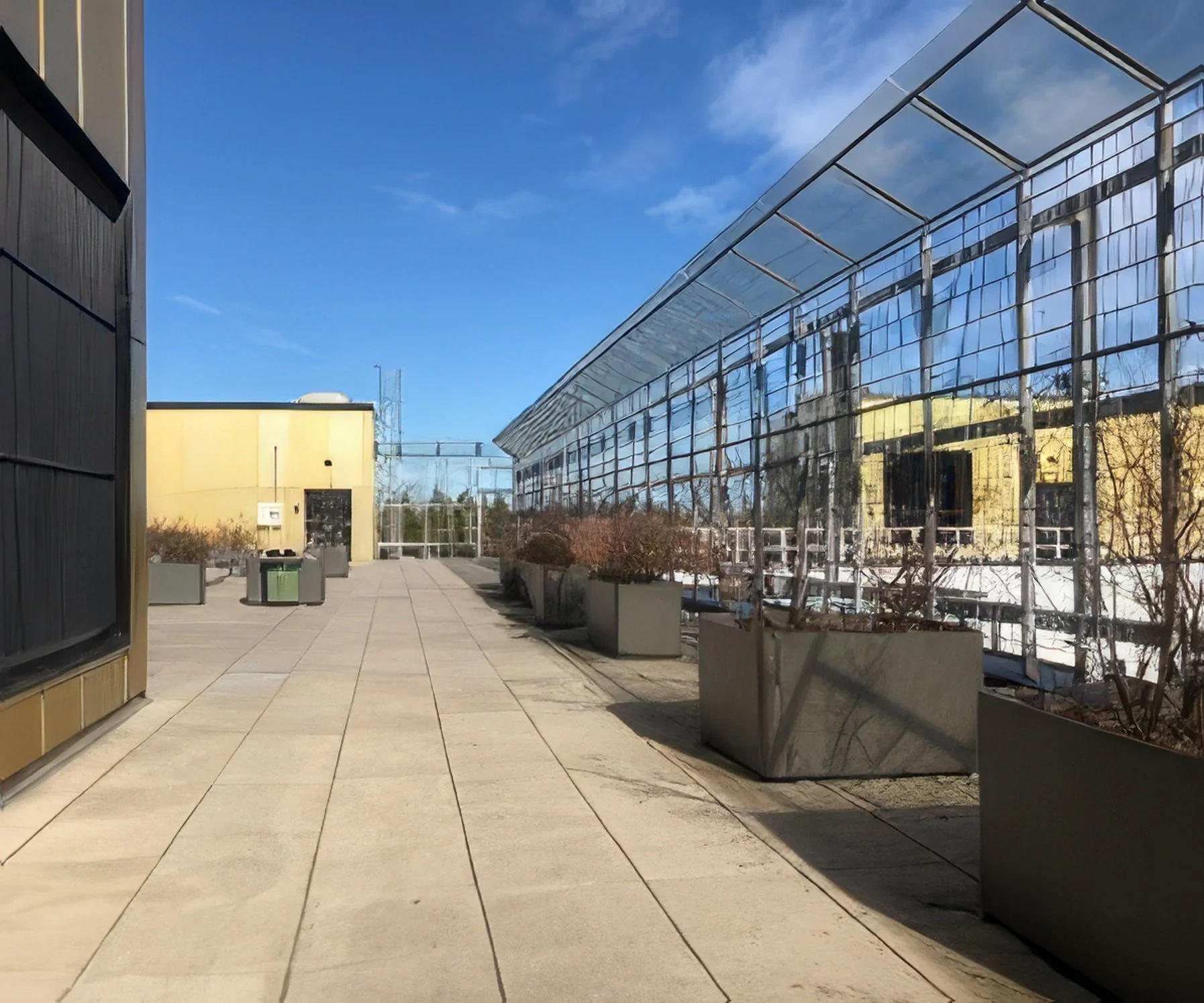
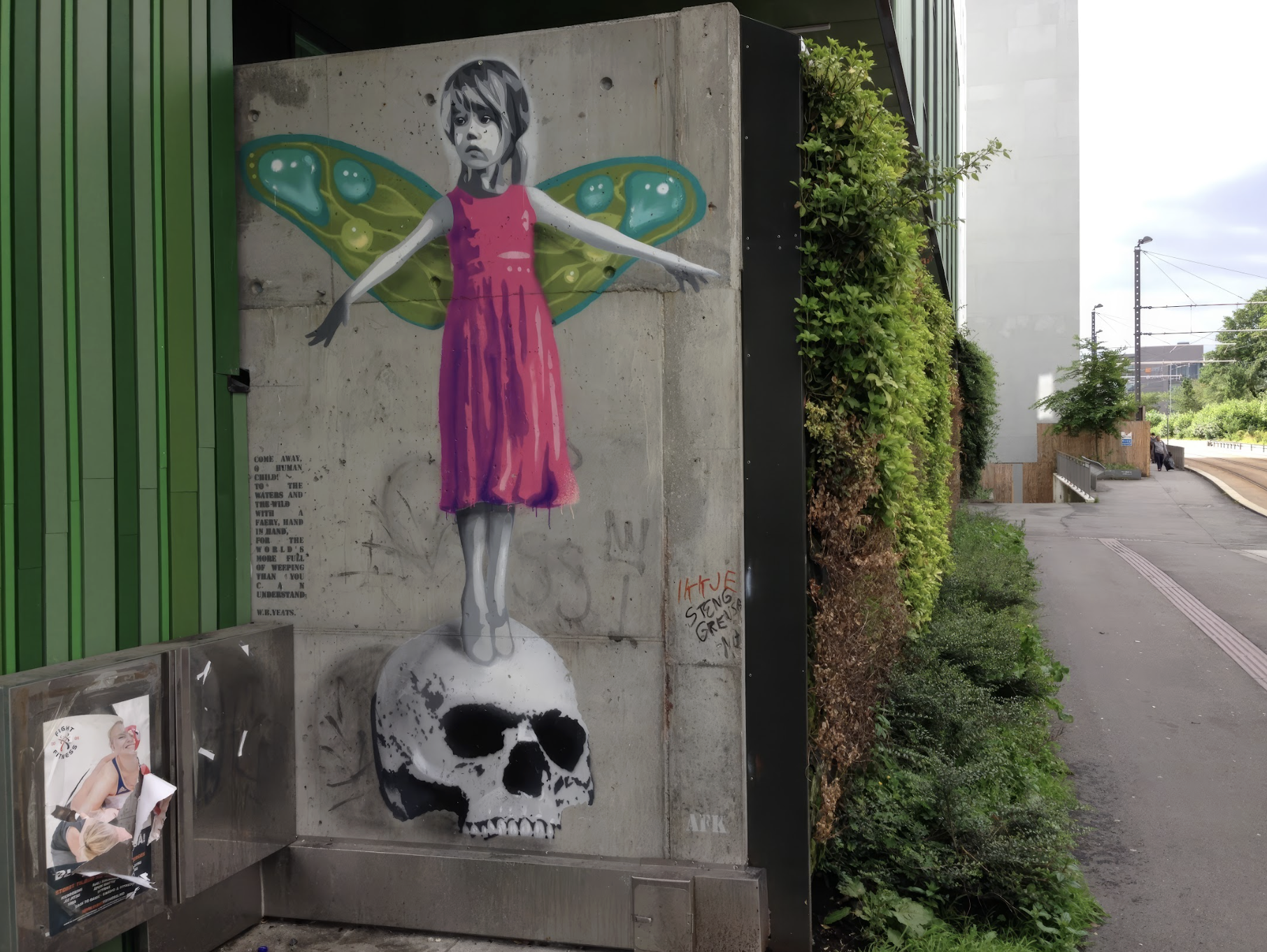
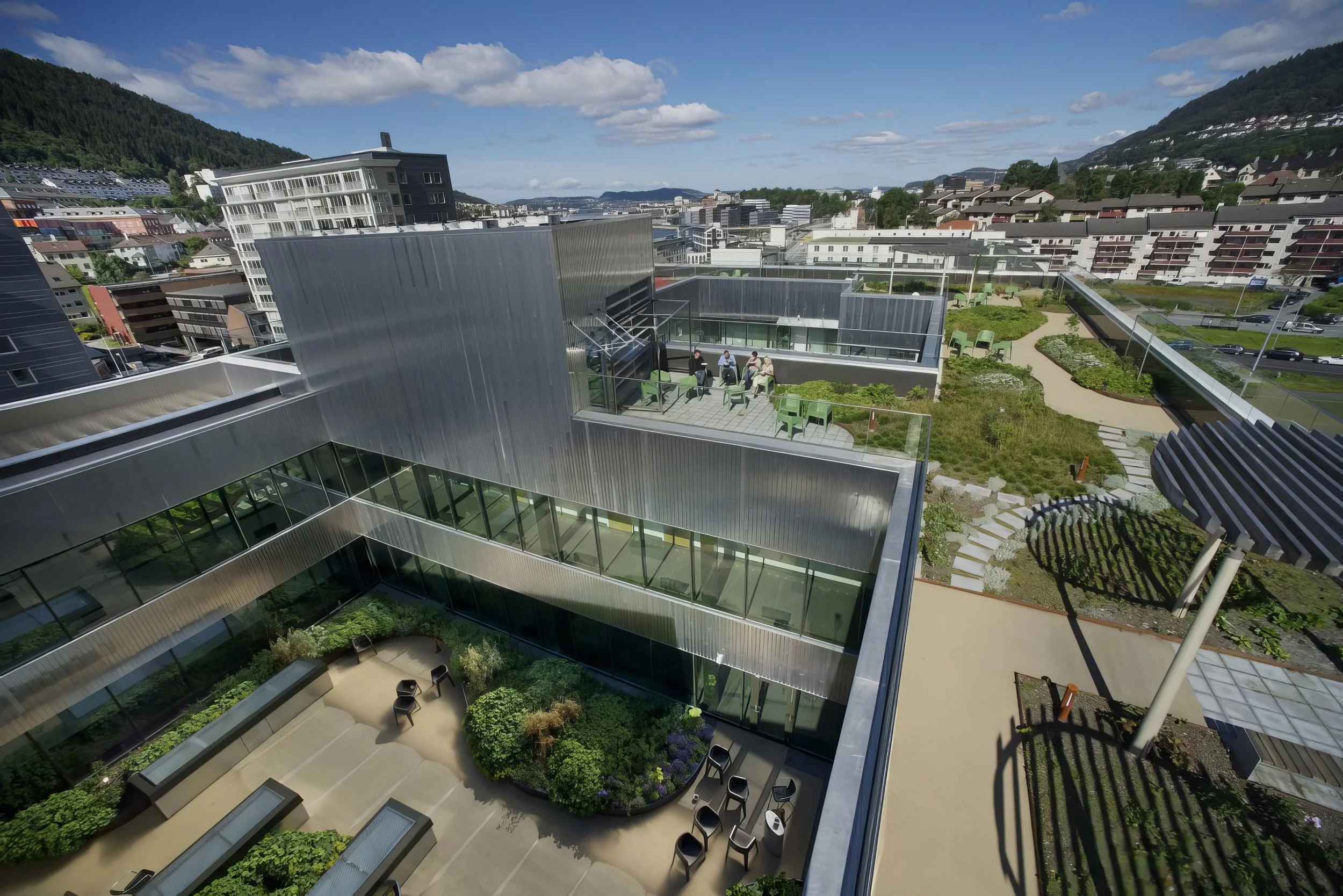
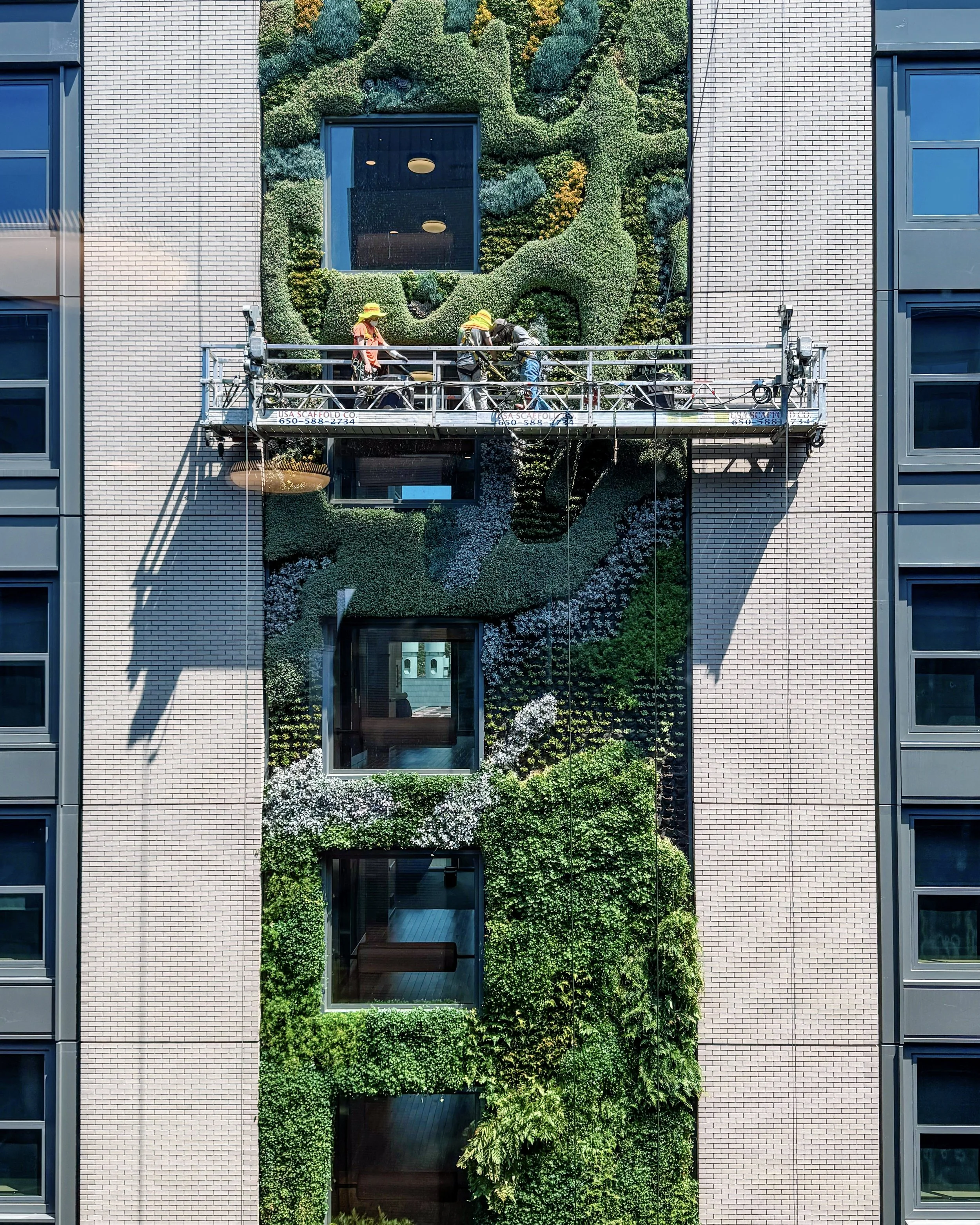
The Kronstad District Psychiatric Center in Bergen, Norway embodies this principle. Its living façades, green atriums, and rooftop gardens offer patients not just visual relief but moments of privacy and dignity — a stark contrast to the sterile, concrete roof terraces of some other facilities. Such design choices resonate with street art at the end of a green wall on the Psychiatric Center’s façade, where William Butler Yeats’s vision of “waters and the wild” in “The Stolen Child” invites us to re-imagine healing as a return to our ecological roots in nature.
Image 1: Kronstad Psychiatric Hospital, Bergen, Norway - Photo: Smedsvig Landscape. Image 2: Street art at end of a green wall at Kronstad Psychiatric Hospital, Bergen, Norway - Photo: David Brasfield. Image 3: Rooftop Security at Kalnes Psychiatric Hospital, Norway - Photo: Sykehusbygg HF
Biophilic Design is More Than a Trend
From Darwin’s theory of evolution to the emerging field of environmental neuroscience, the evidence shows our bodies and minds are tuned to the rhythms, textures, and variability of nature. Circadian light cycles, dynamic temperatures, natural scents, and even soundscapes like that of flowing water directly affect our hormones, sleep, stress levels, and recovery rates.
Research by Nobel Prize–winning scientists on our internal clocks, and studies like Roger Ulrich’s 1984 “View Through a Window,” confirm that natural environments help to reduce stress, speed recovery, and improve clinical outcomes. Yet modern urbanization and architecture have stripped away much of the nature we evolved in, confining us in spaces that biological evolution hasn’t prepared us for; morphing us into what I view as “bonsai humans” – an analogy inspired by the spoof website Bonsai kittens.
Thinkers from René Dubos and Erich Fromm, to Edward O. Wilson and Stephen Kellert have warned that disconnection from nature erodes not only health, but creativity, empathy and our sense of meaning. Richard Louv’s concept of “nature-deficit disorder” captures the idea that children growing up indoors are at risk, and their natural development is constrained. E.O. Wilson’s view about children and the lack of contact with nature is perhaps more extreme than that of Louv’s, for he believes that children brought up in a totally artificial environment and who remain out of touch with the natural world are very much like feedlot cattle. “When you see cattle in a feedlot they are perfectly content, but they are not cattle,” he goes on to say. “It's an exaggeration, of course, to compare those with children, but somehow children can be perfectly happy with computer screens and games and movies where they get to see not only African wildlife but, lo and behold, dinosaurs. But they're just not fully developing their psychic energy and their propensities to develop and seek on their own. (Wilson 2009)
Advertisement
The Doctor’s Role as Humanist Advocate
Adaptations of the Hippocratic Oath remind us that warmth and humanity matter as much as technical skill. Understanding our evolutionary programming should deepen medical empathy and drive health facility design toward nature-integration. Planning a hospital is a rare opportunity to build ecological thinking into the blueprint: starting with biodiversity surveys, utilizing the integrated design approach, and engaging a design team skilled in living and non-living biophilic environments.
According to Dr. Anna Bengtsson, design should match the needs and abilities of patients — from serene, easily navigable gardens for those in fragile states to more stimulating natural environments for rehabilitation. Examples of biophilic healthcare design include Herzog & de Meuron’s Basel Rehabilitation Hospital and their forthcoming New North Zealand Hospital, integrating landscape views, natural materials, and green roofs not as decoration but as therapy.
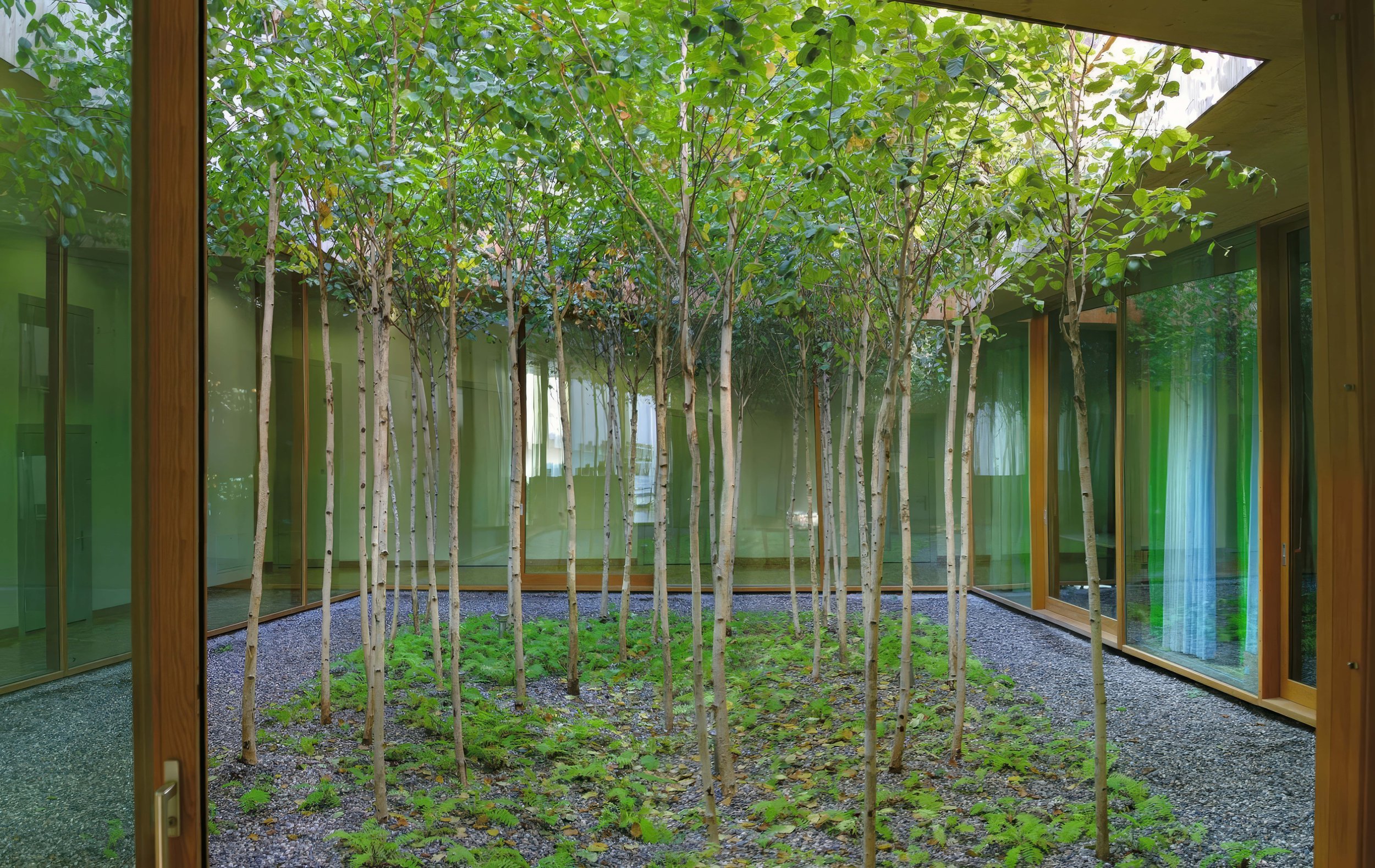
Herzon & de Meuron’s biophilic quality at Basel Rehab, Switzerland - Photo: Basel Rehab
Rights of Nature, Rights to Nature
International frameworks increasingly recognize the link between environmental health and human health. The UN Resolution 76/300 affirms a right to a clean, healthy, and sustainable environment. Unfortunately, the resolution stops short of naming immediate, local access to nature as a human right. This needs to be addressed.
The Biopolis Global Manifesto goes further: declaring equitable urban nature access a universal right and calling urbanization without biodiversity “a form of desertification.” It insists cities be co-inhabited by plants, animals, and humans alike — a vision that echoes the requirements embedded in zoo legislation on species-appropriate natural habitats. If we grant the right to nature to other animals, why not to ourselves?
Advertisement
Practical Steps for the Health Sector: From Policy to Rewilding of Lawns
Medical professionals hold the public’s trust. By championing “green prescriptions” — as in New Zealand, England’s NHS, Canada, or Japan’s shinrin-yoku (forest bathing) — they can link patients to restorative therapies grounded in nature. Such approaches reduce stress, improve mood and cognitive function, and aid recovery, even for Post Traumatic Stress Disorder (PTSD).
Climate resilience offers another entry point for the health sector. Green roofs and walls improve stormwater management, reduce urban heat islands, filter air, and shelter biodiversity. Rewilding of hospital lawns into pollinator meadows reduces maintenance while enriching sensory experience. Initial resistance to rewilding, as seen at Sunnaas Rehabilitation Hospital in Norway, often turns to appreciation once people witness seasonal cycles and pollinator blooms.
Long-stay facilities and environments of care with “incarcerated” patients can significantly benefit from increasing access to nature. Kronstad’s rooftop gardens prove that security need not mean prison-like enclosures. Even without new investments, providing maps and signposting to existing biophilic spaces at health facilities can guide patients and staff toward restorative places.
Healthcare workers themselves should also guard against their own nature deficit — walking meetings, dining outdoors, indoor greening and commuting via urban green corridors can all help offset stress, improve cognitive function and reduce medical errors.
Conclusion - A Call for Systems Thinking in Health Facility Design
Reductionism in science has given us modern medicine’s miracles, but also habitats that undermine our well-being. To heal both people and the ecosystems we depend on, we must see health as a co-creation with nature. Hospitals can be more than places of treatment — they can be microcosms of the world we want to live in: biodiverse, dynamic, and resonating with our evolutionary determined genetic makeup.
As René Dubos in So Human an Animal warned, uniformity in surroundings breeds uniformity of thought and stifles our biological richness. Let doctors, architects, and policy-makers instead craft environments of care that acknowledge our natural origins — spaces where the art of medicine merges with the genius of life itself.
Advertisement
About the Author
David Brasfield is the Chairperson of the Norwegian Association for Green Infrastructure and Secretary of the World Green Infrastructure Network (WGIN).
Citation
Wilson 2009 Interview with Nova. ”https://www.pbs.org/wgbh/nova/eowilson/biophilia.html
More Information
Biophilia
by Edward O. Wilson. Harvard University Press, 1984.
The Biophilia Hypothesis
edited by Stephen R. Kellert & Edward O. Wilson. Island Press, 1993.
Biophilic Design: The Theory, Science, and Practice of Bringing Buildings to Life
edited by Stephen R. Kellert, Judith H. Heerwagen, and Martin L. Mador. Wiley, 2008.