Green Roofs, Your Health and The Challenge of Managing Plastics
Advertisement
Introduction
You often can’t see them, smell them or even taste them, but each day they are building up slowly in your body and in our shared environment. Microplastics are incredibly small pieces of plastic, less than five mm in diameter, that are the result of plastic breaking down from erosion and heat. Microplastics, and even smaller nano plastics, a subset of microplastics (<one μm in length) can now be found in every corner of the earth, as well as in your fatty tissues and even in your brain. Early research has found that the presence of microplastics has been linked to respiratory complications, endocrine disruption, inflammatory bowel disease symptom severity, narrowing of fetal capillaries, and stomach and esophageal cancers. Endocrine disruption is the most well studied of these risks, due to the endocrine-disrupting chemicals typically found within plastics (e.g., phthalates, perfluoroalkyl substances, bisphenol A, and flame retardants). Endocrine disruption is being linked to a myriad of health effects from endometriosis and breast cancer to heart disease and obesity. (1)
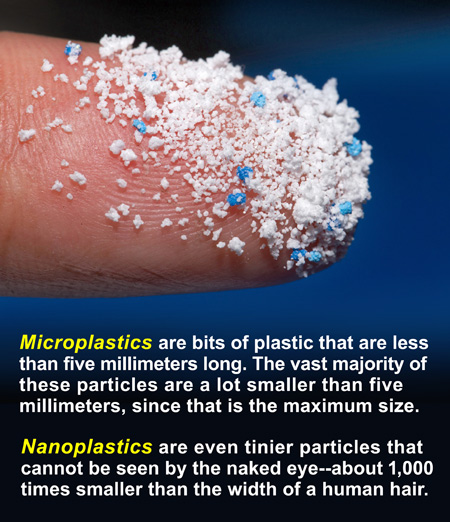
The difference between microplastics and nanoplastics, both harmful to our long term health. Source: blog.optimalhealthsystems.com
This information should not surprising, given that plastic production has sky rocketed in the last seven decades. In 1950, the worldwide production of polymer resin, the raw material used to make most plastic products and fibers was two million tonnes worldwide. By 2019 polymer resin production was estimated at nearly 460 million tonnes. (2) This amounts to more than 6.9 billion tonnes of plastic waste, three quarters of which ends up in landfills, the oceans, and uncontrolled waste management streams.
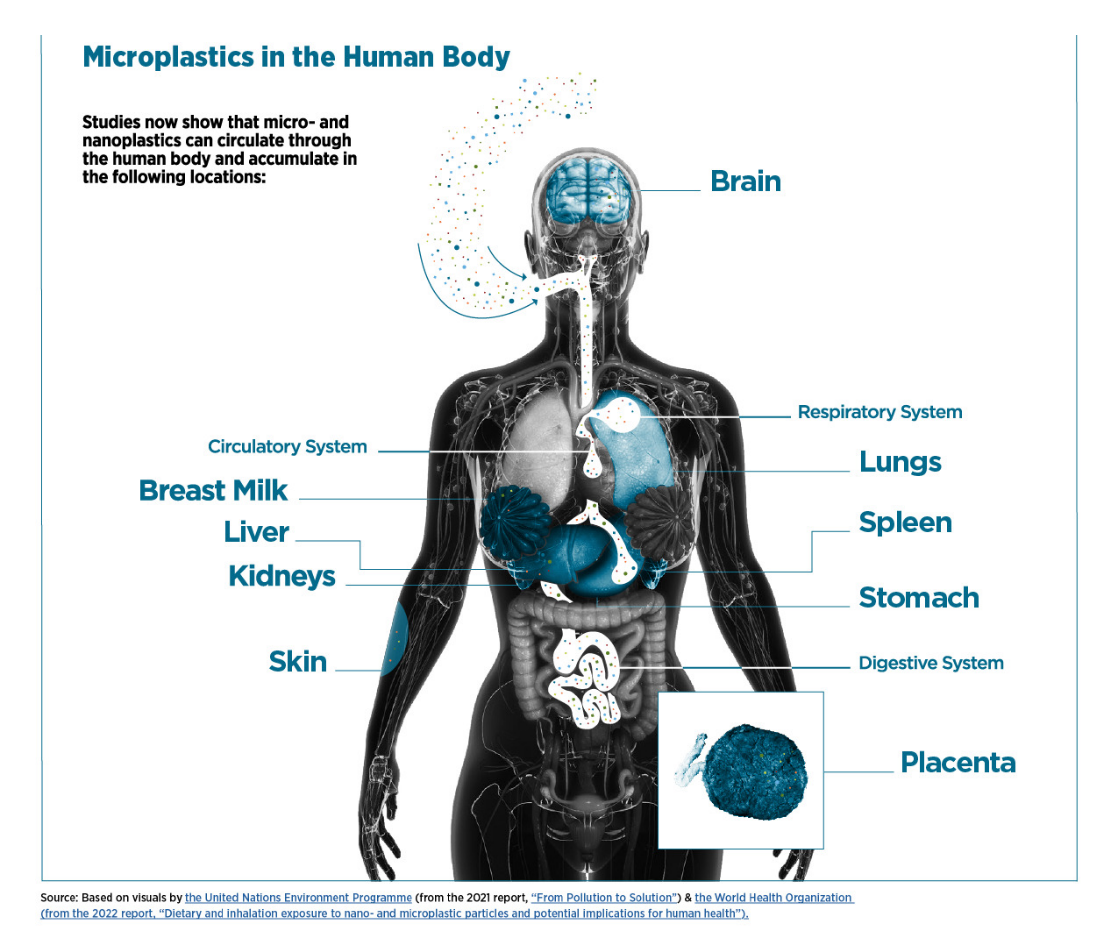
Microplastics have intruded into our lives, and bodies. Photo: Based on visuals by the United Nations Enviornment Programme (from the 2021 report, "From Pollution to Solution") & the World Health Organization (from the 2022 report, "Dietary and inhalation exposure to nano- and microplastic particles and potential implications for human health")
Plastics, while posing dangers to our environment and health, have also become a very important component of the global economy. Just walk into any drug store, grocery store or department store and you won’t find craft paper, wax paper or glass jars because the shelves are overflowing with plastic packaging and plastic products. Covid seems to have accelerated the use of plastic packaging of food. Plastics are used in everything from car parts and children’s toys to textiles and small medical devices that save lives. Plastics are also used in the green roof and green wall industry, particularly modular systems but also in most drainage layers, edging, packaging for plants and more. Many of these products use recycled plastic, but more can and should be done to reduce plastic use as the industry grows around the world.
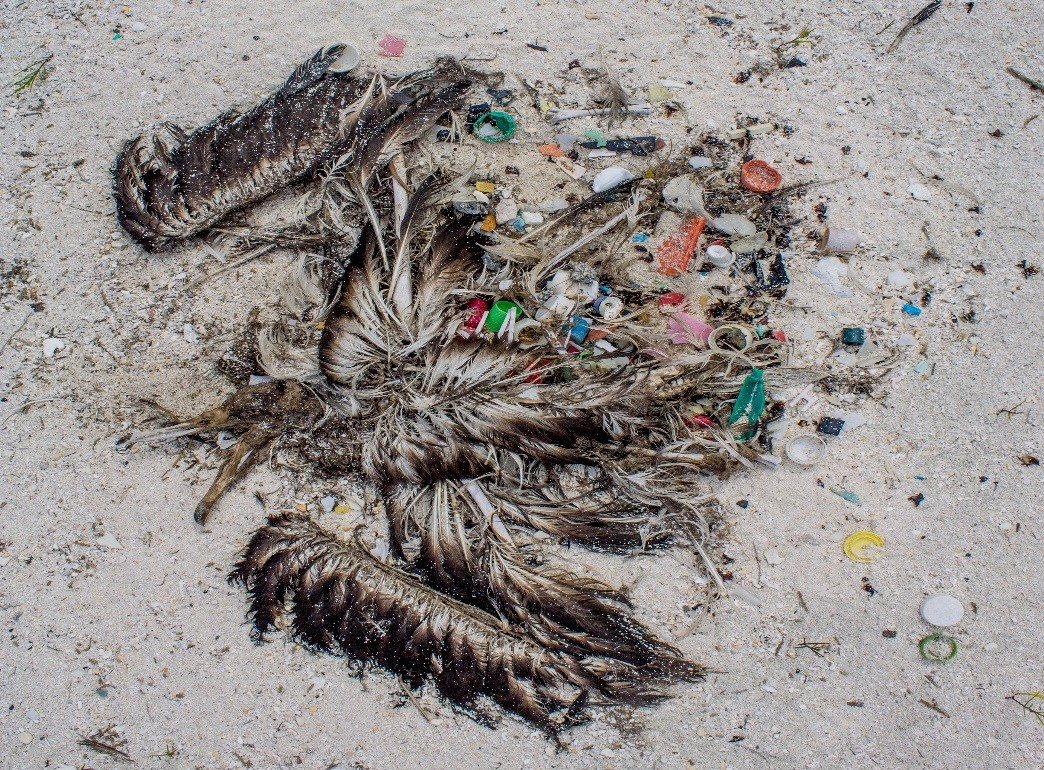
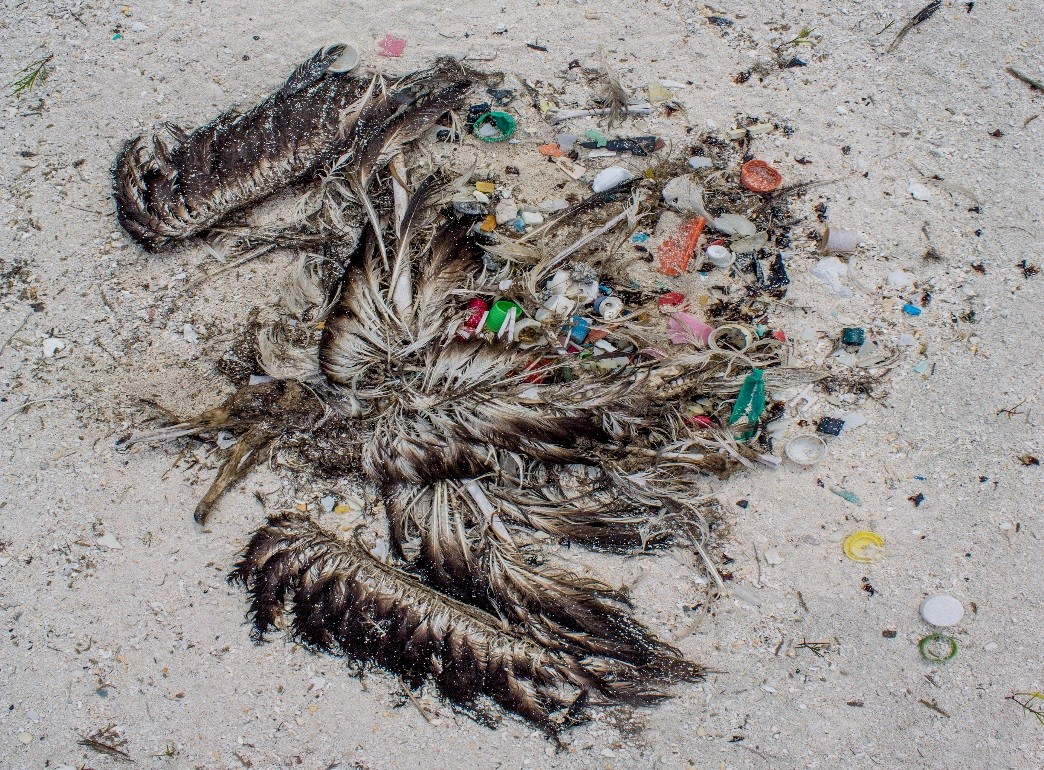
This image is of a seabird from the remote Mid Way Atoll that has died from ingesting too much plastic. Photo: scienceline.org
Significant Growth in Plastic Use Projected
Plastic is practically ubiquitous. And plastic production is projected to grow significantly in the near term. A recent analysis by the Organization for Economic Cooperation and Development, (OECD) entitled “Global Plastics Outlook: Policy Scenarios to 2060” predicts the following:
The use of plastics could almost triple globally, driven by economic and population growth. While OECD countries are projected to double their plastics use, the largest increases are expected in emerging economies in Sub-Saharan Africa and Asia.
Plastic waste is projected to almost triple by 2060, with half of all plastic waste still being landfilled and less than a fifth of it recycled.
Primary plastics will continue to dominate the feedstock. And while recycled (secondary) plastics are projected to grow more quickly than primary plastics, they will only make up 12 per cent of all plastics in 2060.
Plastic leakage to the environment is projected to double to 44 million tonnes (Mt) a year, while the build-up of plastics in aquatic environments will more than triple, exacerbating multiple environmental and health impacts. (3)
Plastic pollution is killing seabirds and a wide range of animals from turtles to fish in aquatic environments around the world.
Advertisement
According to the United Nations Environment Program (UNEP), addressing plastic pollution requires urgent action. Its web site states: “Currently, it is estimated that 19-23 million tonnes of plastic leaks into aquatic ecosystems annually – from lakes to rivers to seas – all from land-based sources. Exacerbated by contributions from sea-based sources, this combined plastic leakage is having major impacts on ecosystems, economies and society – including on human health.” (4) Studies cited by the Guardian have estimated the human health and cleanup costs of plastics to exceed 1 trillion dollars annually. (5)
Policy Responses Are Needed But Challenging
The recent legislative ban of plastic straws and other single use plastics in many countries such as the US and Canada is just the tip of the iceberg. The Sixth Intergovernmental Negotiating Committee Conference organized in Geneva by UNEP recently concluded with a failure to reach agreement on a binding, international treaty to reduce the production of plastics around the word. Lobbyists from fossil fuel and plastic producing countries have been pushing for a weak treaty that would not include reduction targets, while other lobbyists are pushing for a stronger agreement that would reduce the sheer amount of plastics produced. A strong treaty would also ban some particular products, such as micro beads often used in beauty products, and reduce their overall toxicity while working to improve overall waste management practices. More than 100 countries support a strong treaty, while others, primarily petrostates led by Saudi Arabia do not.
Their failure to reach agreement in Geneva means that another round of treaty negotiations will need to take place. Balancing the very useful benefits of some plastic products, with the need to significantly reduce their production and toxicity is a significant challenge. There are billions of dollars at stake on both sides of the equation. Dr. Richard Thompson, a professor of marine biology at the University of Plymouth and a coordinator at The Scientists’ Coalition for an Effective Plastics Treaty, suggests the way forward: “{An effective treaty} requires evaluating the plastic products that are essential to society and those that we can avoid. For those that are essential, support will be needed for the development of safer sustainable materials, products and markets including innovation and viable alternatives as substitutes for plastic. To move forward, we need globally harmonized criteria that establishes a level playing field for businesses; criteria that fosters innovation and supports trade and safer, more sustainable products.” (6)
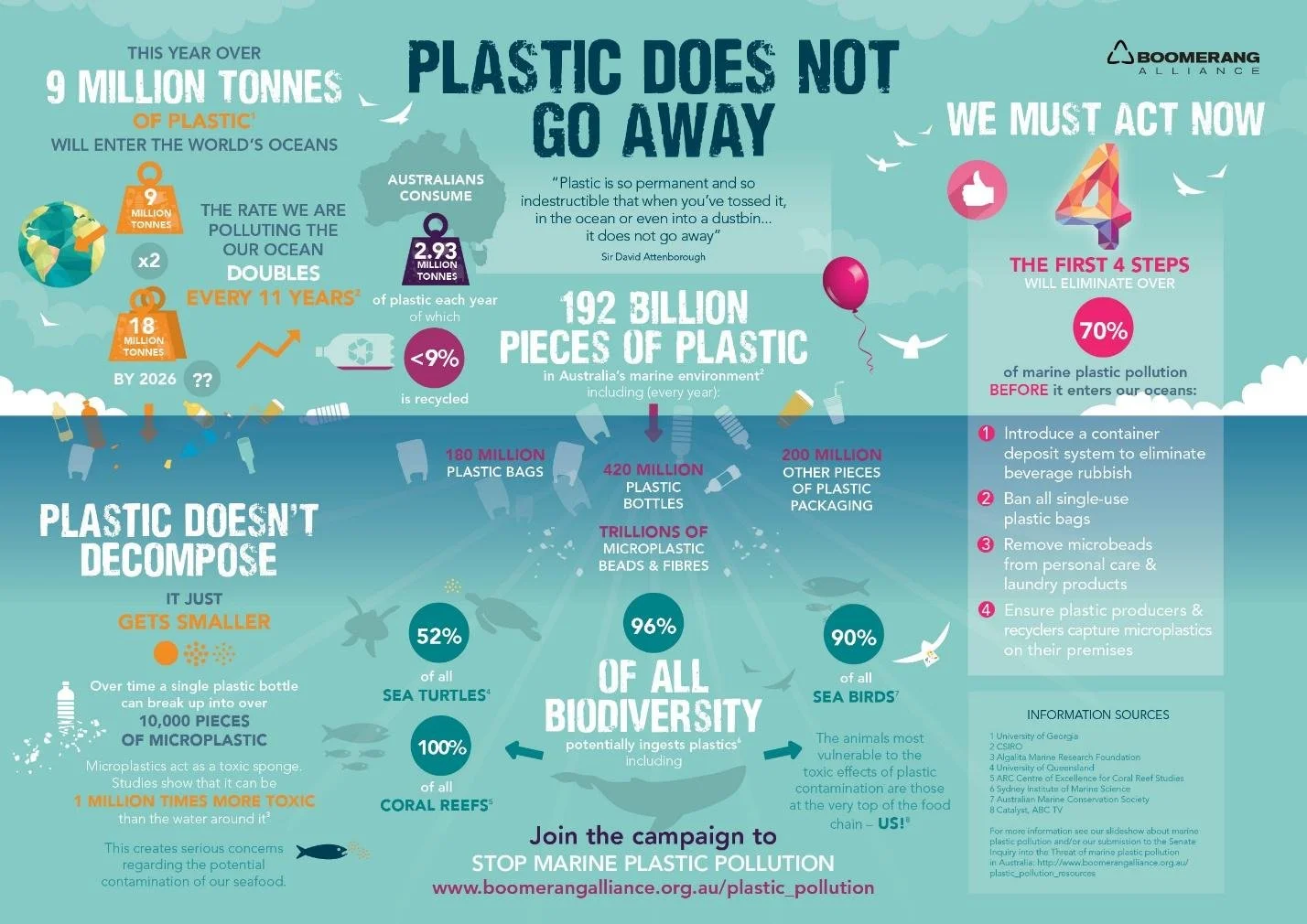
Plastics don’t decompose, so they stay in our oceans and affect all living creatures. Photo: https://www.boomerangalliance.org.au/zero_plastic_pollution
Advertisement
Short Term Responses - Green Roofs
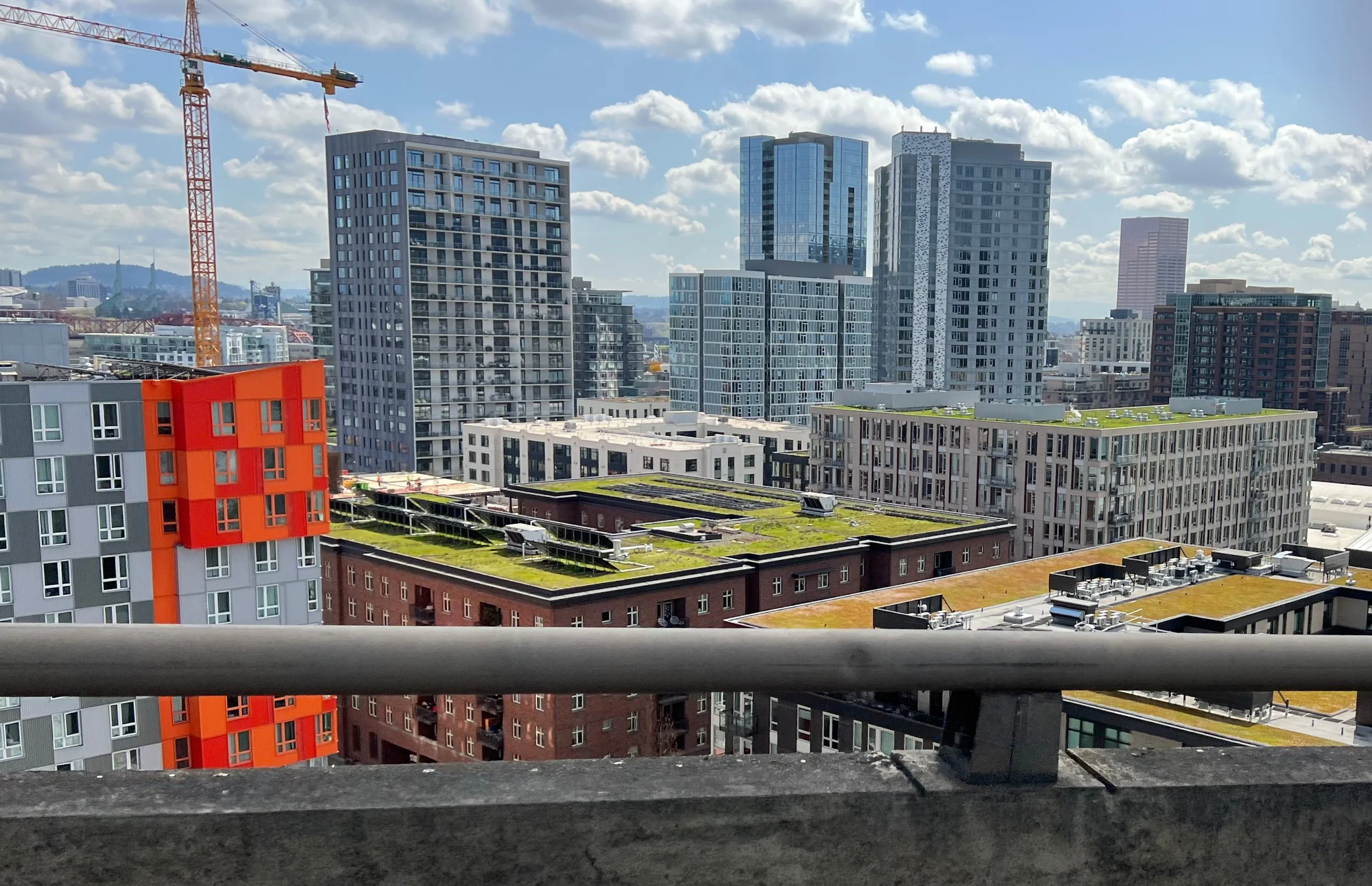
While lobbyists continue to work on a meaningful treaty, there are things that can be done, even if international talks fail to deliver meaningful results. There are many scientists working on ways of eliminating microplastics.) A recent study conducted by a team of researchers from Tongji University and the Shanghai Academy of Landscape Architecture Science and Planning published in Communications Earth & Environment this year, has revealed that green roofs can quietly and effectively remove microplastics from the air and water. Their experimental rooftop garden removed up to 97.5 per cent of microplastics from a simulated rainfall event in their laboratory. In their study, the researchers found that most of the microplastics got caught in the soil used to grow plants in the experiment. They then extrapolated these findings to the city of Shanghai, which currently has about 3.56 million square meters of green roofs. If every rooftop in the city were transformed into a green roof, the scientists predicted, they could remove approximately 56.2 metric tons of airborne microplastic each year. This represents more than 120,000 pounds of particles removed from the Shanghai environment annually. (7) More research is needed to better understand the interaction of green roofs and different types of micro plastics, and the effects of plastic build-up over the long term.
Conclusion
We should reduce our use of plastic as much as possible, both as individuals and as an industry, as we wait and hope that governments will take action to protect us from the projected onslaught of significantly more plastics in our bodies and our environment. On a personal level, while we wait for international treaties, new legislation and better technologies, there are several things we can do to reduce the build-up of microplastics in our bodies. This includes activities such as not using plastic containers to heat food in microwaves, avoiding drinking water from plastic water bottles, avoiding seafood, and avoiding textiles such as nylon and polyester in your clothing, opting for cotton or other natural fibers. (8) Furthermore, supporting efforts to reduce plastic production and remove harmful chemicals used in their manufacture is another way that we can move towards a more sustainable economy that reaps the benefits of plastic use and reduces its detrimental effects on our health and planetary ecosystems. Perhaps the widespread use of green roofs will one day have an important role to play in helping us address the growing problem of airborne microplastics in cities!
Advertisement
About the Author
Steven Peck is the founder and president of Green Roofs for Healthy Cities – North America Inc and the editor of the Living Architecture Monitor.
References
1 - https://pmc.ncbi.nlm.nih.gov/articles/PMC10314155/
2 - Geyer et al. (2017); OECD (2022) – with major processing by Our World in Data. https://ourworldindata.org/grapher/global-plastics-production
3 https://www.oecd.org/en/publications/global-plastics-outlook_aa1edf33-en.html
4 - https://leap.unep.org/en/knowledge/toolkits/plastic/about
5 – The Guardian. https://www.theguardian.com/environment/2025/jul/23/total-infiltration-how-plastics-industry-swamped-vital-global-treaty-talks
7 - Jianshi Huang et al, Green roofs act as the first barrier to intercept microplastics from urban atmosphere, Communications Earth & Environment (2025). DOI: 10.1038/s43247-025-02407-w
8. BBC You-tube Video on avoiding microplastics. https://ca.video.search.yahoo.com/search/video?fr=mcafee&p=green+roof+micro+plastics&type=E210CA885G0#id=3&vid=b0ed7bcaed85c53436ebe7fa43f113dd&action=click