Soak It Up: Building Value With Stormwater Infrastructure on a Historical Boston Rooftop
Introduction
Like many coastal cities in North America, Boston has a complex relationship to stormwater: a legacy combined sewer overflow system (CSO), a history of marshland reclamation, and ever-present tidal risks. To confront this complexity, the City and local utilities, including Boston Water and Sewer Commission (BWSC), have updated their stormwater guidance, highlighting the importance of green infrastructure (GI). Yet, even with this support, ground-level green infrastructure faces obstacles rooted in building and parking density, pointing to the importance of green roofs and over-structure GI within the city’s stormwater and climate resilience strategy.
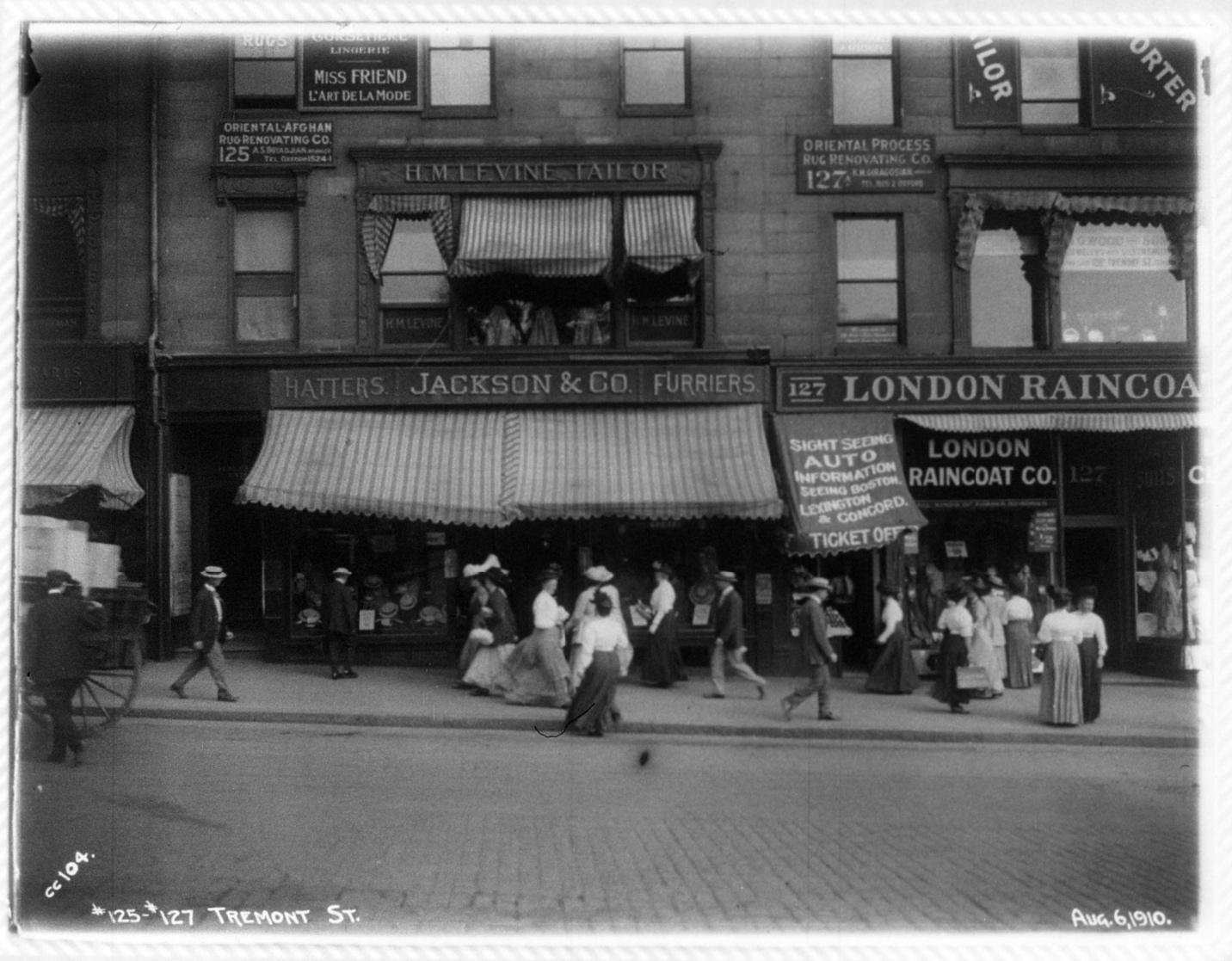
The neighborhood as captured in 1910. Jackson & Company, Hatters and Furriers is next to the London Raincoat Company. Between the two is a ticket office for Sightseeing Auto, Information Seeing Boston, Lexington & Concord. Site Profile: 127 Tremont Street. Photo: Historic New England archives
In Boston, few places are as iconic as Boston Common, the country’s oldest public park and the green space heart of the city. Nearby sits Boston Public Garden, the golden dome of the State House, and The Monty Boston apartments at 127 Tremont Street. The 19th-century historic building, once home to commercial businesses such as the Jackson & Company Hatters and Furriers, fell into disrepair after decades of deferred maintenance. In 2018, GP Properties purchased the building and began a complex full core demolition and reconstruction as well as exterior shell restoration, following strict sightline and façade regulations set forth by the Historical Commission.
As part of Boston’s occupancy permitting process, BWSC requires that buildings within the city retain 1 inch of rainfall over the entire impermeable footprint of the property. At 127 Tremont, the 2,433 square foot roof occupies the entire property footprint, requiring 203 cubic feet (~1,500 gallons) of water capture for a 1-inch, 24-hour storm event (2433 sq. ft x (1/12 in) = 202.7 cf). To meet BWSC’s requirements, GP Properties co-owner Paul Grant initially planned for a subsurface infiltrator system - installed in the building’s basement — with estimated costs ranging from $250,000-$400,000. An infiltrator system is an engineered drywell system that requires significant excavation and, in the case of 127 Tremont, the removal and replacement of dozens of yards of soil. It was a “logistical and cost nightmare,” said Grant, noting the complications involved with basement excavation and sitework — further complicated by the surrounding utilities, Massachusetts Bay Transportation Authority (MBTA) subsurface public transit lines, bustling sidewalks and historical preservation requirements. Inspired by previous visits to local green roofs, Grant hired Roofterra to conduct a cost-benefit feasibility analysis to explore alternatives to the subsurface infiltrator, opening the door for a green roof solution.
Value Engineering a Green Roof Solution
A green roof alternative to the subsurface infiltrator required meeting BWSC’s retention requirements while keeping structural modifications and costs to a minimum. To meet these needs, Roofterra proposed a 1,500 sq. ft lightweight Omni Ecosystems green roof, with depths varying from 4-inch to 18-inch. The meadow roof garden surrounds clean, linear, industrial style decking using an ADA compliant fiberglass oil rig style platform grating on pedestals- a durable and maintenance friendly solution. This design was rooted in structural load distribution of over 50 cubic yards of media, a volume determined by Omni Ecosystems Infinity Media specification to exceed the 203 cubic feet of water storage while utilizing the differing load capacities of each roof area based on media saturated weight and plantings.
Infinity Media was selected for its low bulk density and high water storage capacity, which effectively met both goals. In the cost comparison, the green roof scope also included major revisions to the building envelope detailing and waterproofing materials to provide a more robust and long term reliable roof system. The green roof alternate costs included replacement of the originally specified EPDM with a TPO membrane, Electronic Field Vector Mapping leak detection testing, architectural and structural design revisions, steel beam upsizing, additional stormwater engineering services, and the green roof design, installation and maintenance costs. In total, the alternate scope amounted to approximately $250,000, aligning with the lowest estimate for the infiltration tank installation.
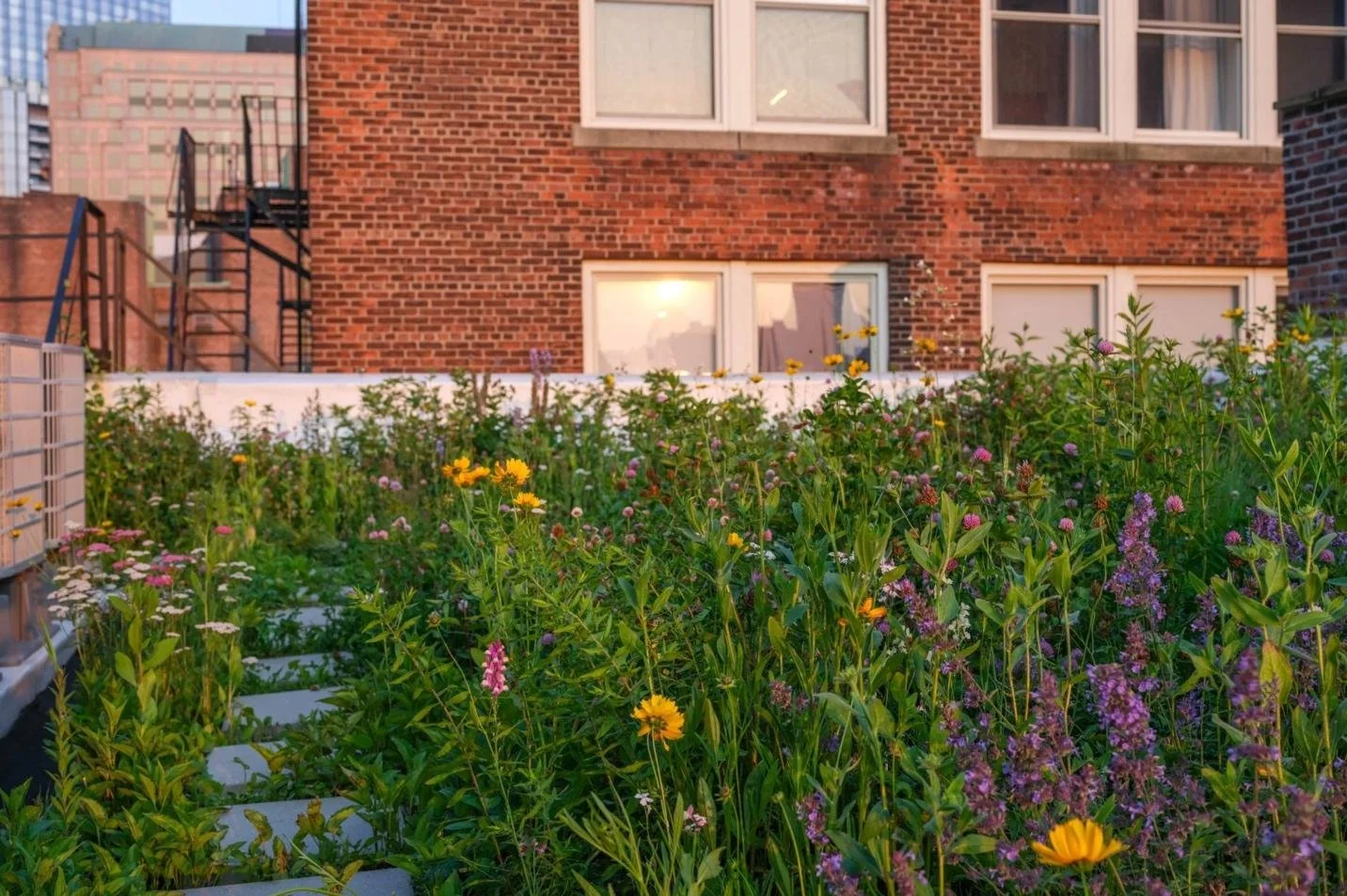
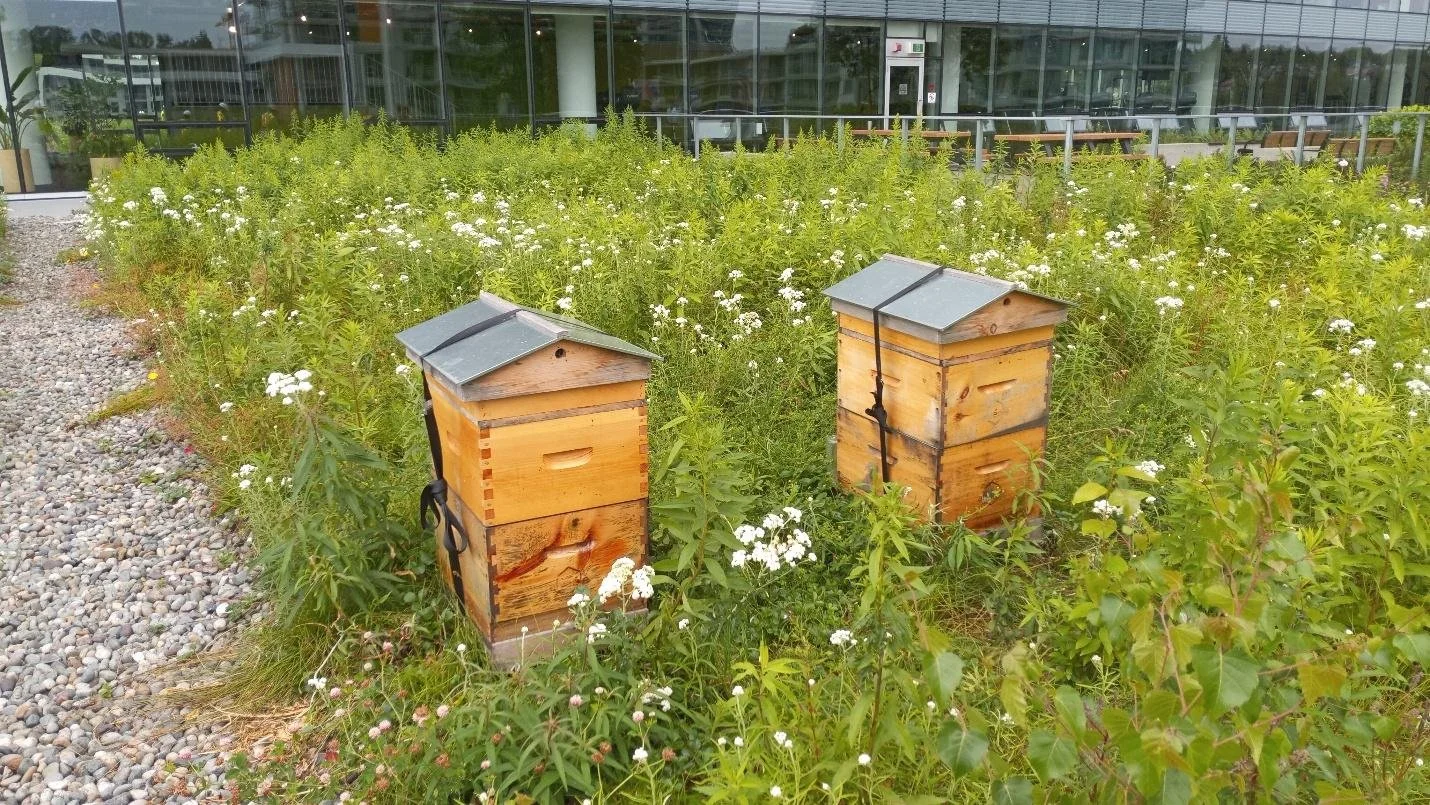
A diverse pollinator friendly mix was used for the project and it evolves all season long. Photo: Carlos Paronis Photography
An Integrated Design Process
With ownership approval, a collaborative design and build process was set in motion. Along with architectural and structural design changes, the team needed to expedite changes to material specifications, subcontractors’ scope of work, HVAC placement, and additional rooftop water and power requirements. Working with Recover Green Roofs on installation and maintenance logistics, Roofterra developed the roof’s planting palette and undulating topography. This was done to distribute the load of the green roof and create a pollinator-friendly meadow. The planting palette included alliums, echinacea, rudbeckia, heliopsis, clover and dogwoods, making the roof inviting for residents and winged visitors alike.
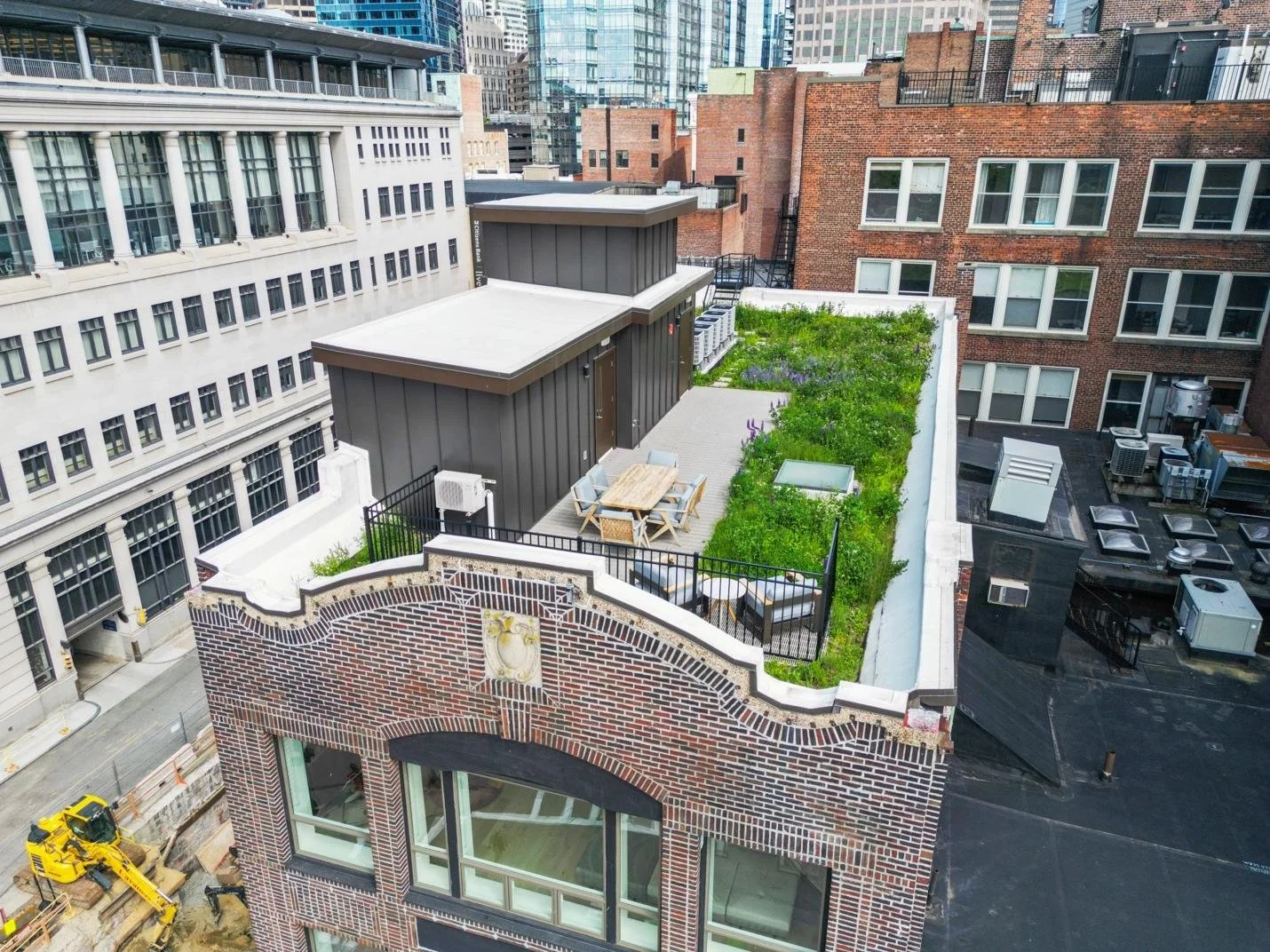
Old meets new. Photo: Jack Vatcher Photography.
Stormwater Management That Stacks Benefits
Biodiversity at foliar and growing media level creates resilient green roof ecosystems that support habitat creation and have greater drought resistance. Omni Ecosystems’ Michael Davenport emphasizes this point, noting the intentional colonization of its Infinity Media (green roof substrate) with a purpose-developed “microbial consortium, with over 1,500 species of fungi and bacteria” to promote soil media and plant health. Together with experienced long-term maintenance management, this emphasis on growing media and plant diversity builds successful green infrastructure projects.
While not a solution for all buildings, the site-specific conditions at 127 Tremont made a purpose-built green roof the ideal solution for meeting the BWSC’s stormwater requirements. The site’s urban density, high real estate values, and predetermined need for structural improvements (regardless of the green roof) all contributed to selecting the green roof option. The early intervention by ownership and their commitment to an integrated design and development process — a collaboration between Roofterra, civil and wetland engineers Hancock Associates, Balance Architects, Omni Ecosystems, and Recover Green Roofs — contributed significantly to the green roof’s viability. This was paired with a specialist approach to the installation and ongoing management, performed by Recover Green Roofs, ensuring system performance and stormwater management functionality.
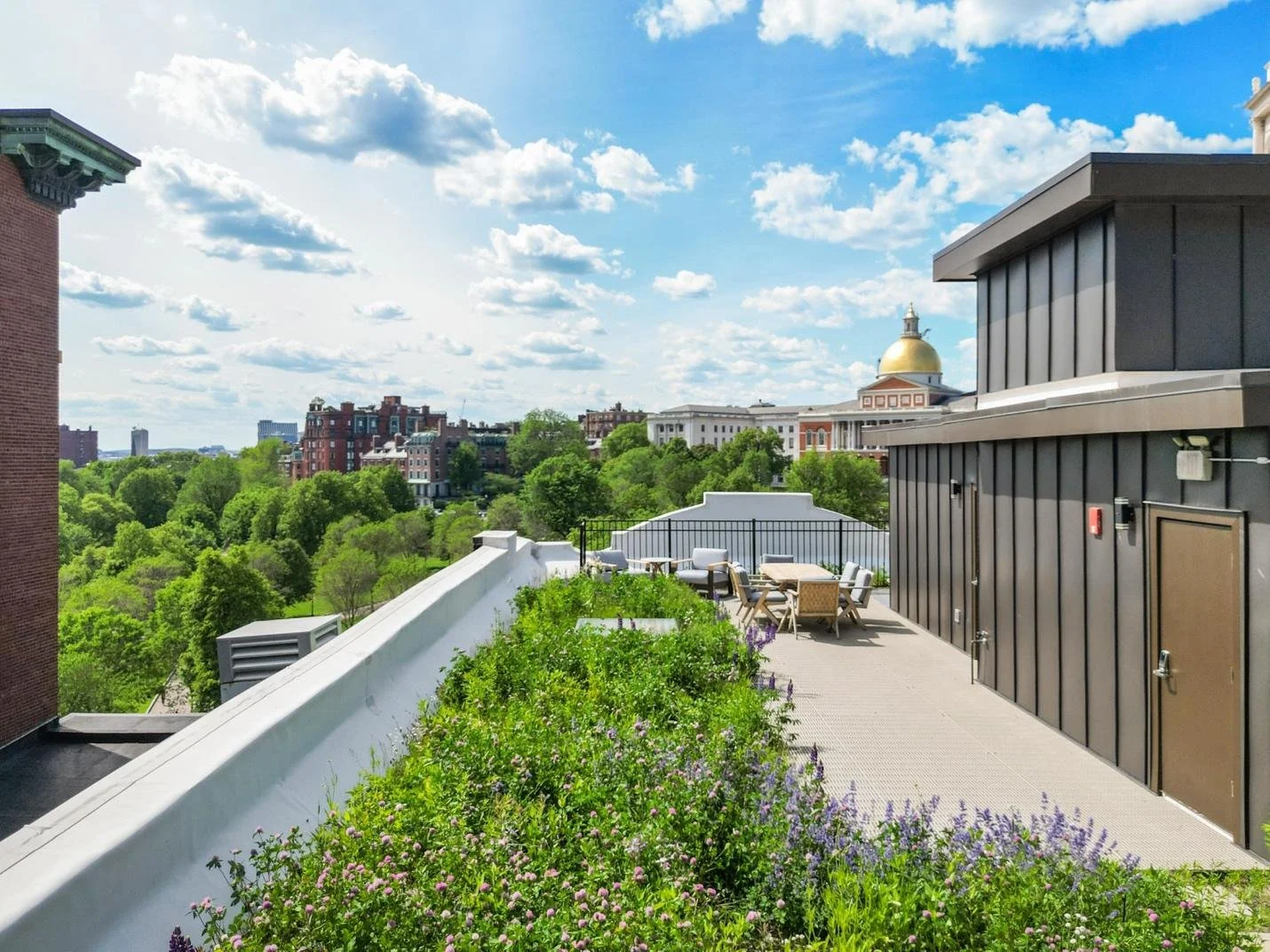
Skyline views from the amenity deck on the new green roof include the golden dome of the statehouse and Boston Common. Photo: Jack Vatcher Photography.
Conclusion - One Roof Seeding the Next
The green roof at 127 Tremont feels at home within the Boston skyline and it’s now hard to imagine the State House views without the rooftop meadow . “It’s a tremendous amenity…and once they see it, they’re always blown away.” says Grant, who views the roof as both resident amenity and stormwater infrastructure. The Monty Boston showcases the relevance of green roofs as a stacked-function tool — progressive stormwater management systems that build urban biodiversity, connect residents with nature, and support climate adaptation. The project also reflects the momentum of Boston’s legacy green roof adoption. When asked how the green roof value engineering pivot came about in the first place, Grant reminisces about earlier visits to other well-known green roofs, a reminder of how one green roof can help sprout the next.
Pete Ellis - Principal at Roofterra. Green infrastructure specialist with over 15 years of experience designing, delivering, and advocating for nature within the built environment.
Brendan Shea - Roofing Sales Rep at Soprema. Building envelope and green infrastructure specialist with over two decades of project management and design-build experience.
See roofterra.com