Advertisement
Introduction
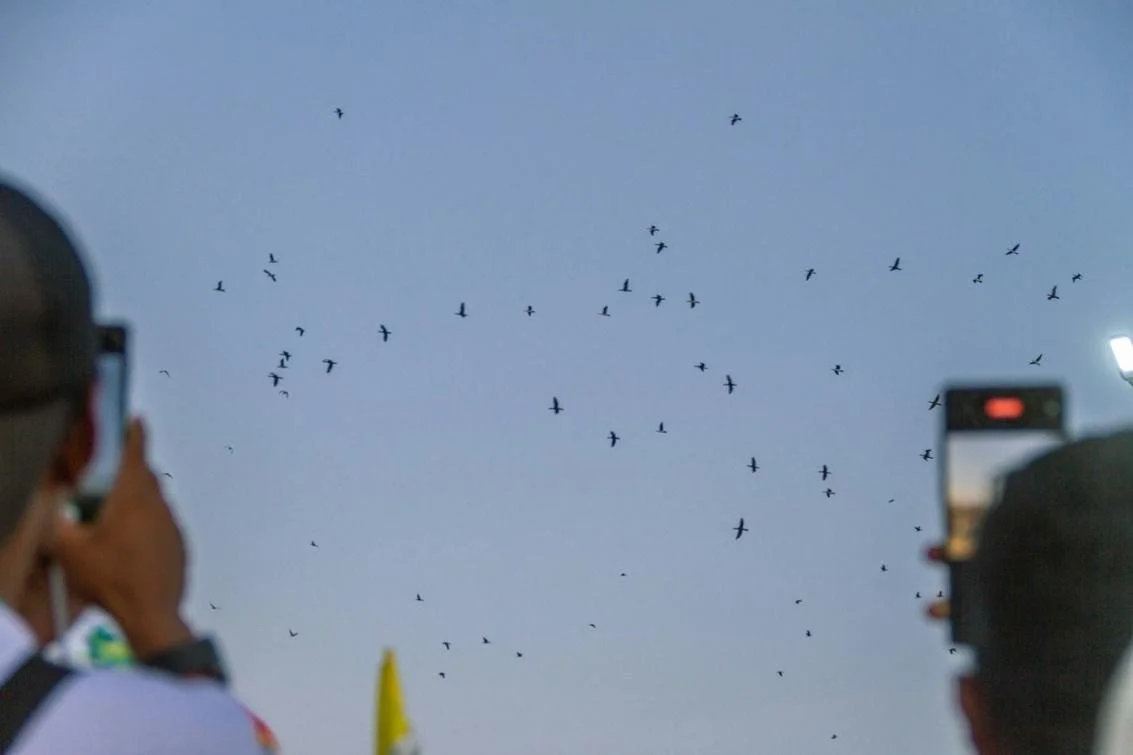
Birds in flight are a particularly captivating sight. Credit: Ligio Pereira (Unsplash)
Birds have long informed cultural expression around the world, through art, song and poetry. In today’s busy urban environment, in addition to improving building sustainability (stormwater management, building temperature regulation, air pollution capture, etc.) biodiverse green roofs and birds offer aesthetic and auditory benefits to urban residents. Though often overlooked, biophilic acoustic elements, from birdsong to the sound of rushing water, can subtly influence our perceptions of place, creating a calm and safe environment for city dwellers who find their access to green spaces increasingly limited.
Acoustic biophilic elements may even be able to further enhance green roof policy adoption, by harnessing the might of the global birding community and their lobbying power. In the UK, membership to the Royal Society for the Protection of Birds (RSPB) is listed as just under 1.2 million members and with it the claim of being the largest nature conservation charity in Europe (RSPB, n.d.). Birdwatching continues to be an increasingly popular hobby. According to May 2026 research, almost 750 thousand 16 to 29-year-olds in Britain enjoy regular birdwatching, a statistic that has increased over 1,000% since 2018 (Barkham, 2026). Similar figures are coming out of North America, with 30% of those aged 16 to 34 reported to birdwatch in the U.S. in 2024 (Hayashi, 2026).
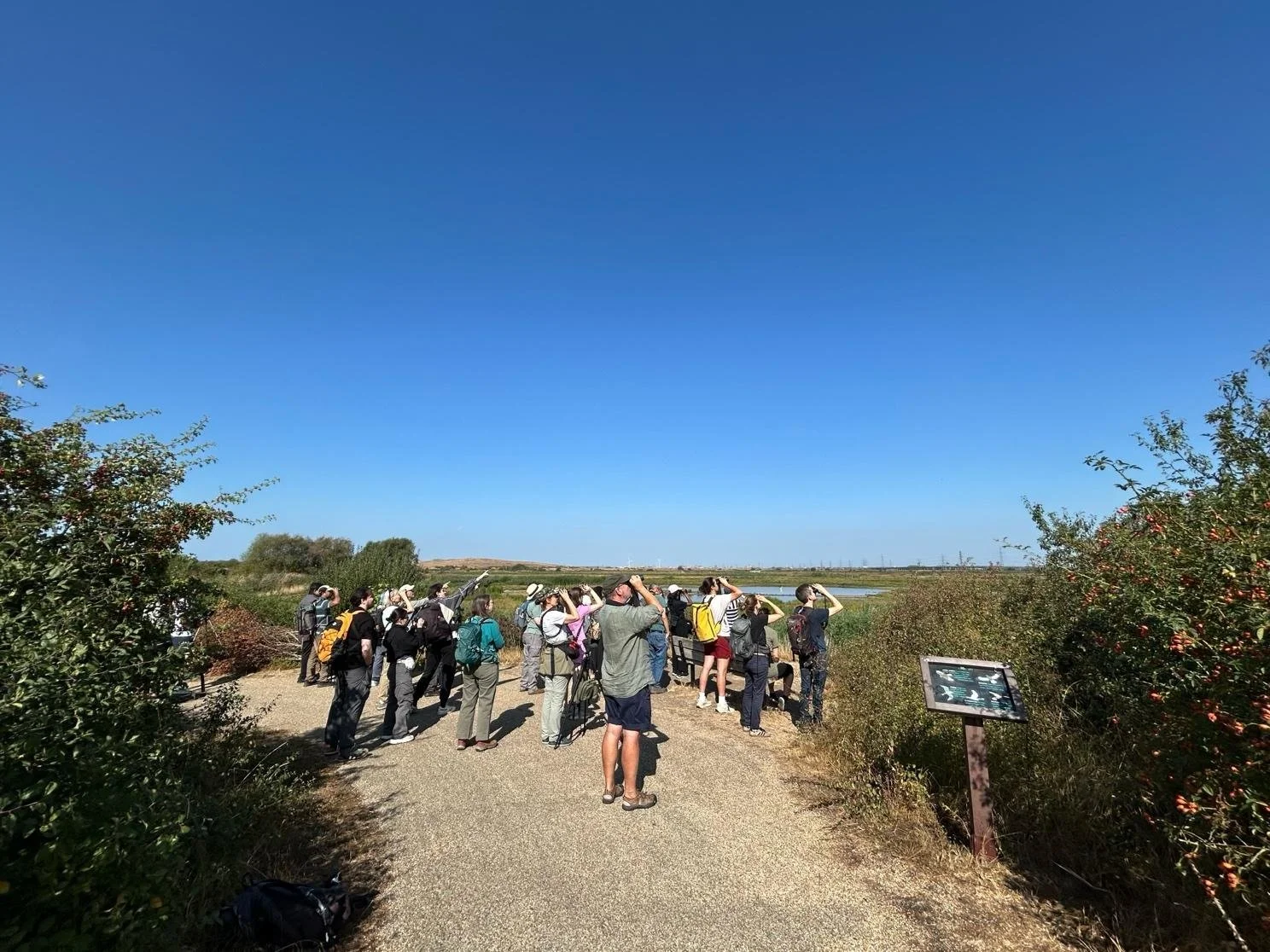
Urban birdwatchers at Rainham Marsh, on the outskirts of London. Bird watching is on the rise. Credit: Emily Gillings-Peck
With an ethos of ‘anywhere, anytime, by anybody’ (Peterson et al. 2026) urban birdwatching has the potential to be an inclusive and therapeutic activity that could positively impact the lives of millions of people living in urban environments. Actively encouraging birds onto green roofs could be a design consideration that helps to drive greater support for urban policies that support biodiversity on buildings.
Adaption of the built environment is already aiding some migratory bird species. In 2025, residents of Swinton in Salford, England banded together to retrofit over 100 specialist swift nest boxes on their homes (RSPB, 2025). Spread across two streets, this community project helped to create a large safe haven neighbourhood for a species that travels up to 22 thousand kilometres each year (RSPB, n.d.). Small steps like these can make all the difference to avian visitors, although more must be done to encourage and support their return to historic nesting sites.
“We are talking only to ourselves. We are not talking to the rivers, we are not listening to the wind and stars. We have broken the great conversation.”
Advertisement
Birdsong Research
Like petrichor – the smell of earth after rainfall – birdsong generally elicits positive responses. These soothing sounds, many nature lovers assume, are universally liked. Research demonstrates that birdsong can help to reduce stress, create the feeling of a safe environment, help individuals feel connected to nature, and even increase self-reported feelings of cognitive restoration (Ratcliffe, 2015).
However, not all birdsong is perceived as positive. According to research conducted by Dr. Eleanor Ratcliffe in 2015, varieties in bird species, sound intensity, complexity, pattern and familiarity can affect our perceptions of bird sounds. For instance, the call of the red wattlebird, scored very low when measuring stress reduction and restoration of focus (Begum, n.d.). Perhaps this phenomenon relates to the distinction between bird calls and birdsong. While birdsong is musical in nature and typically used by birds to locate or attract a mate, bird calls are often employed as a defence against predators and therefore more likely to be louder and jarring. Dr. Ratcliffe found that most test subjects enjoyed listening to quiet, high frequency or melodic bird sounds.
Furthermore, participant’s lifestyles and hobbies affected outcomes. People with an appreciation for nature derived the most benefit from birdsong, while those who preferred to remain indoors or experienced noise sensitivity were more likely to report feelings of indifference, or negative experiences (Ratcliffe, 2015).
Birds and Health Benefits
“Designing outdoor spaces with birds in mind is not just a ‘tree-hugger’ priority, but also sensible public health policy,” – Cindy Franz, Environmental Psychologist (Kimbrough, 2026)
In an increasingly urban and anxious world, creating habitat for birds in densely populated areas could bring about meaningful health benefits. A study conducted by King’s College London (KCL) found that seeing or hearing birds can improve mental wellbeing by up to eight hours (KCL, 2022). Conducted between 2018 – 2021, the study included over 1,200 people from around the world. Researchers asked participants three times a day if they could see or hear birds and then followed up with questions on their mental wellbeing. The research looked at assessing the relationship between bird presence and wellbeing and estimated the length of the impact. The lead study author Ryan Hammoud said:
“There is growing evidence on the mental health benefits of being around nature and we intuitively think that the presence of birdsong and birds would help lift our mood. However, there is little research that has actually investigated the impact of birds on mental health in real-time and in a real environment. By using the Urban Mind app we have for the first time showed the direct link between seeing or hearing birds and positive mood.” (KCL, 2022).
Building on this research, a 2026 study compared birdsong to traffic noise, with participants sitting in a restored urban forest versus a paved plaza. This research was headed by Dr. Nils Peterson, with 106 students at North Carolina State University and used to measure stress levels and wellbeing, utilising Scales of Positive and Negative Experience (SPANE). Its findings suggest not only that bird soundscapes have additive potential when combined with natural environments, but also a connection to birds in natural landscapes can help to build one’s resilience (Peterson et al. 2026).
Advertisement
On the Roof: Combatting Urban Biodiversity Loss & Sustainable Food Systems
The Javits Center in New York City is a convention center located beside the Hudson River. It hosts an extensive 6.75-acre green roof, which was installed in 2012 after the devastation of Hurricane Sandy (Javits Center, 2023). In 2021 The Farm, an accessible 10,000 square foot orchard and 3,500 sf climate-controlled green house, was built and maintained in partnership with Brooklyn Grange. The roof also features 100 moveable planters, housing native perennials. (Brooklyn Grange).
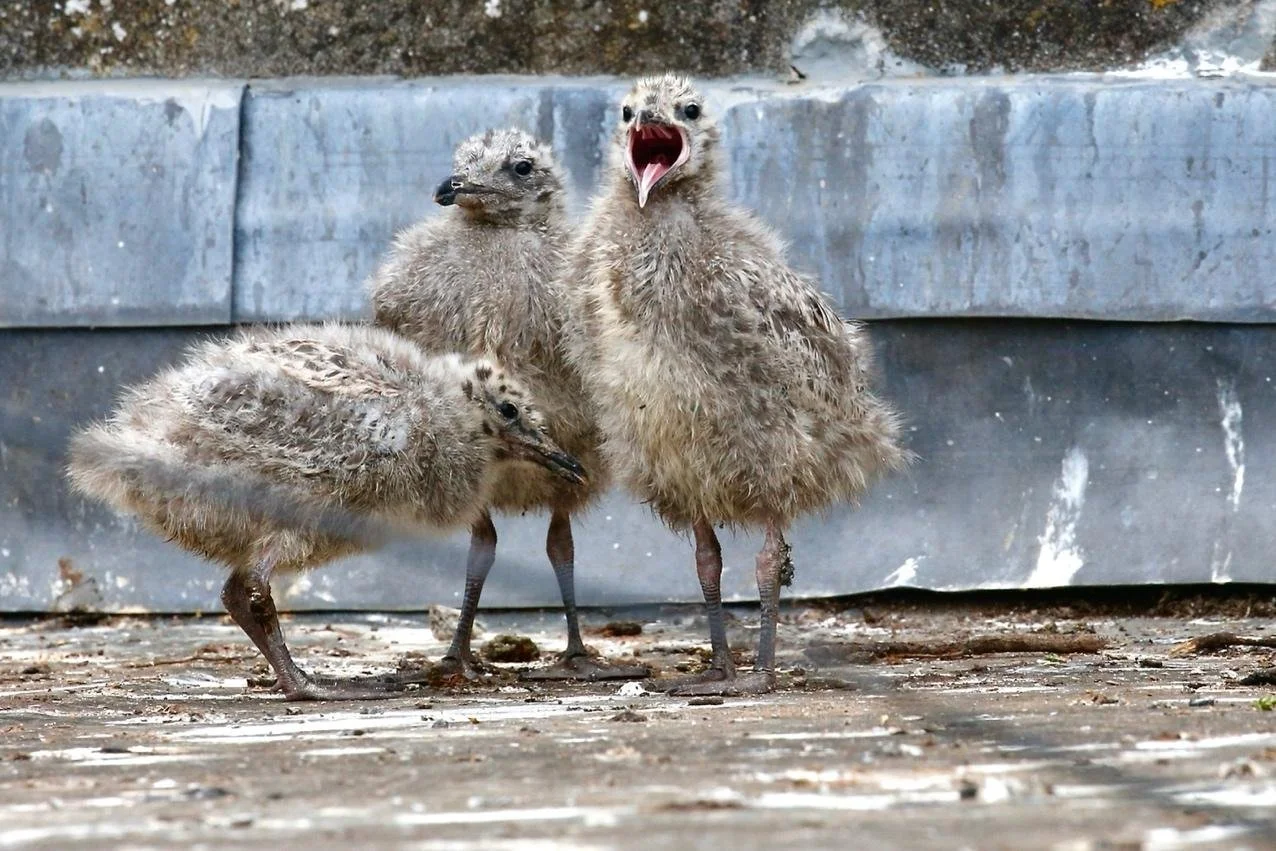
Herring gull chicks, which have been reported to live in large numbers on the roof of the Javits Center in NYC. Credit: James Wainscoat (Unsplash)
The Farm’s rooftop expansion is clearly attracting visitors. Reported bird species jumped from 15 in 2015 to 65 in 2023 (Javits Center, 2023). Bird-friendly design elements include opportunities for birds to perch and low reflection fritted glass (patterned with dots) to prevent collisions. According to Dustin Patridge of NYC Bird Alliance, the Javits Center has evolved from a major bird killer from collisions with windows to “one of the most bird-friendly and environmentally sustainable buildings in the City.” (Charlé, 2022). The farm is also home to a herring gull community of around 150 nests (Charlé, 2022).
By transforming the roof of this huge convention center, the Javits Center has allowed for human and avian communities alike to thrive in a highly dense urban location.
Roof Design Checklist for Supporting Birds
There are many ways that green roof designers can support migratory and resident bird populations. Insect eating birds will be attracted to green roofs that support a variety of insect life. Plant eating species will look for the foods that they eat, such as berries and seeds. Below is a list of some general design features that can help facilitate bird life in urban areas on rooftops.
Ensure there is some form of water feature on the roof. This will increase the variety of birdlife, alongside being a vital source of water for other species. This can be a fountain, or a simple bubbler.
Think seasonally – plant a variety of native, flowering plants alongside shrubs and trees that bear autumn and winter berries for resident species.
Consider geography of the roof placement. Is the building in a dense, downtown area? Is there a nearby park with woodland habitat? Green corridors will allow for a more diverse range of potential bird species to the find the rooftop habitat.
Don’t forget migratory birds. Biodiverse green roofs can help provide a much-needed rest stop en route for species such as swifts, hummingbirds, orioles, etc.
Provide habitat for insects (and therefore food for insect-eating birds). Speak to project stakeholders up front regarding garden zoning and the importance of elements such as secured logs/wood and rock piles.
Use various substrate depths and composition to help support insect life and plant diversity.
Provide opportunities for birds to perch.
Adapt an existing roof. Could creating an insect and bird-friendly portion of an established green roof help to increase biodiversity and the natural health benefits?
Where possible, create spaces that cannot be reached by visitors.
Prepare a detailed maintenance plan with information on all of the plants.
Advertisement
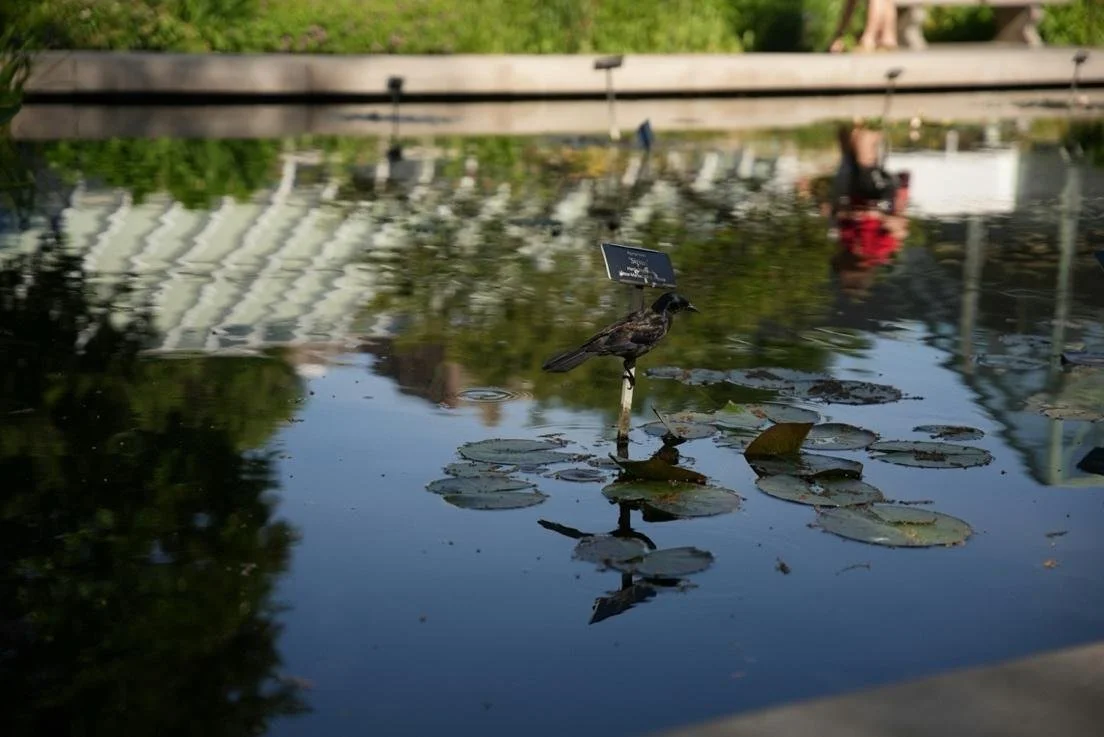
Corvid by lillypads in artificial pond. Water access is an important element of a bird-friendly green roof. Credit: Sofia Ogneva (Unsplash)
Conclusion
Urban green roofs have the potential to create support biodiversity. By considering bird-related elements during the roof design process, both project stakeholders and building owners can increase habitat area for species that have been pushed out by rapid urban development. Small, incremental changes across a variety of roofing projects can create the mosaic of green corridors required to fully support both resident and migratory bird populations. For instance, you are now more likely to hear a Dunnock or Black Redstart singing in the City of London because of the hundreds of green roofs present in its square mile (Gedge, 2020). And hearing the song of a European Robin or a Goldfinch can have a beneficial impact on your nervous system, bringing feelings of calm to those navigating through a bustling metropolis.
Advertisement
Emily Gillings-Peck is a birder and nature enthusiast living in London, UK. She is about to start her second year of an MSc in Environment and Sustainability at Birkbeck, University of London.
References
Australian Seafari (2011) Red Wattlebird Calls (720p). [Online Video]. Available at: https://www.youtube.com/watch?v=gee5BozKcCg (Accessed: 5 September 2026).
Barkham, P. (2026) Gen Z leads birdwatching boom as more Britons reach for the binoculars. Available at: https://www.theguardian.com/environment/2026/may/01/birdwatching-boom-britain-nature-gen-z-rspb-environment (Accessed: 12 September 2026).
Begum, T. (n.d.) How listening to birdsong can transform our mental health. Available at: https://www.nhm.ac.uk/discover/how-listening-to-bird-song-can-transform-our-mental-health.html (Accessed: 30 August 2026).
Berry, T. & Clarke, T. (1991) Befriending the Earth: A Theology of Reconciliation Between Humans and the Earth. Twenty-Third Publications.
Brooklyn Grange (n.d) The Farm at the Javits Center. Available at: https://www.brooklyngrangefarm.com/javits (Accessed: 12 September 2026).
Charlé, S. (2022) The Javits Center: Leading from the Rooftops. Available at: https://nycbirdalliance.org/blog/the-javits-center-leading-from-the-rooftops (Accessed: 12 September 2026).
Gedge, D. (2020) Black Redstarts, A Story Of Renewal – Green Roof Birds 1. Available at: https://dustygedge.co.uk/index.php/birds/black-redstarts-a-story-of-renewal-green-roof-birds-1/ (Accessed: 1 September 2026).
Hayashi, Y. (2026) A new generation flocks to birding: Five young birders and their favourite spots in Canada. Available at: https://www.theglobeandmail.com/life/article-a-new-generation-flocks-to-birding-five-young-birders-and-their/ (Accessed: 11 September 2026).
Javits Center (2023) Javits Center Path to Net Zero. Available at: https://www.javitscenter.com/sustainability (Accessed: 11 September 2026).
KCL (2022) Feeling chirpy: Being around birds is linked to lasting mental health benefits. Available at: https://www.kcl.ac.uk/news/feeling-chirpy-being-around-birds-is-linked-to-lasting-mental-health-benefits (Accessed: 13 September 2026).
Kimbrough, L. (2026) Listening to birdsong in a forest lowered a person’s stress during experiment. Available at: https://news.mongabay.com/2026/07/listening-to-birdsong-in-a-forest-lowered-a-persons-stress-during-experiment/ (Accessed: 10 September 2026).
Palmer, T. (2021) Goldfinch Song. [Online Video]. Available at: https://www.youtube.com/watch?v=f6QRubVV2uE (Accessed: 13 September 2026).
Peterson, N. et al. (2026) ‘Both restored forest and birdsong promote psychological well-being’, Environmental Conservation. Available at: https://www.cambridge.org/core/journals/environmental-conservation/article/both-restored-forest-and-birdsong-promote-psychological-wellbeing/26492E281F7D37965C1B0929F055B65B (Accessed: 10 September 2026).
Poetry Foundation (n.d.) To a Skylark By Percy Bysshe Shelley. Available at: https://www.poetryfoundation.org/poems/45146/to-a-skylark (Accessed: 11 September 2026).
Ratcliffe, E. (2015). Restorative perceptions and outcomes associated with listening to birds. [University of
Surrey]. Available at: openresearch.surrey.ac.uk/esploro/outputs/doctoral/Restorative-perceptions-and-outcomes-associated-with/99515682602346 (Accessed: 5 September 2026).
RSPB (n.d.) Our History. Available at: https://www.rspb.org.uk/about-us/our-history (Accessed: 9 September 2026).
RSPB (n.d.) Swifts. Available at: https://www.rspb.org.uk/birds-and-wildlife/swift Accessed: 11 September 2026).