Five Reasons Proactive Green Roof Maintenance Saves Time, Reduces Costs, and Delivers Long-Term Value
Introduction
It's spring and time for green roof maintenance. All too often maintenance is viewed as an operational expense—but in reality, it is a strategic investment in building performance, asset protection, and ensuring long-term value. Consistent, proactive care prevents costly reactive fixes, protects underlying roof systems, and ensures green roofs continue to deliver on their environmental and financial objectives.
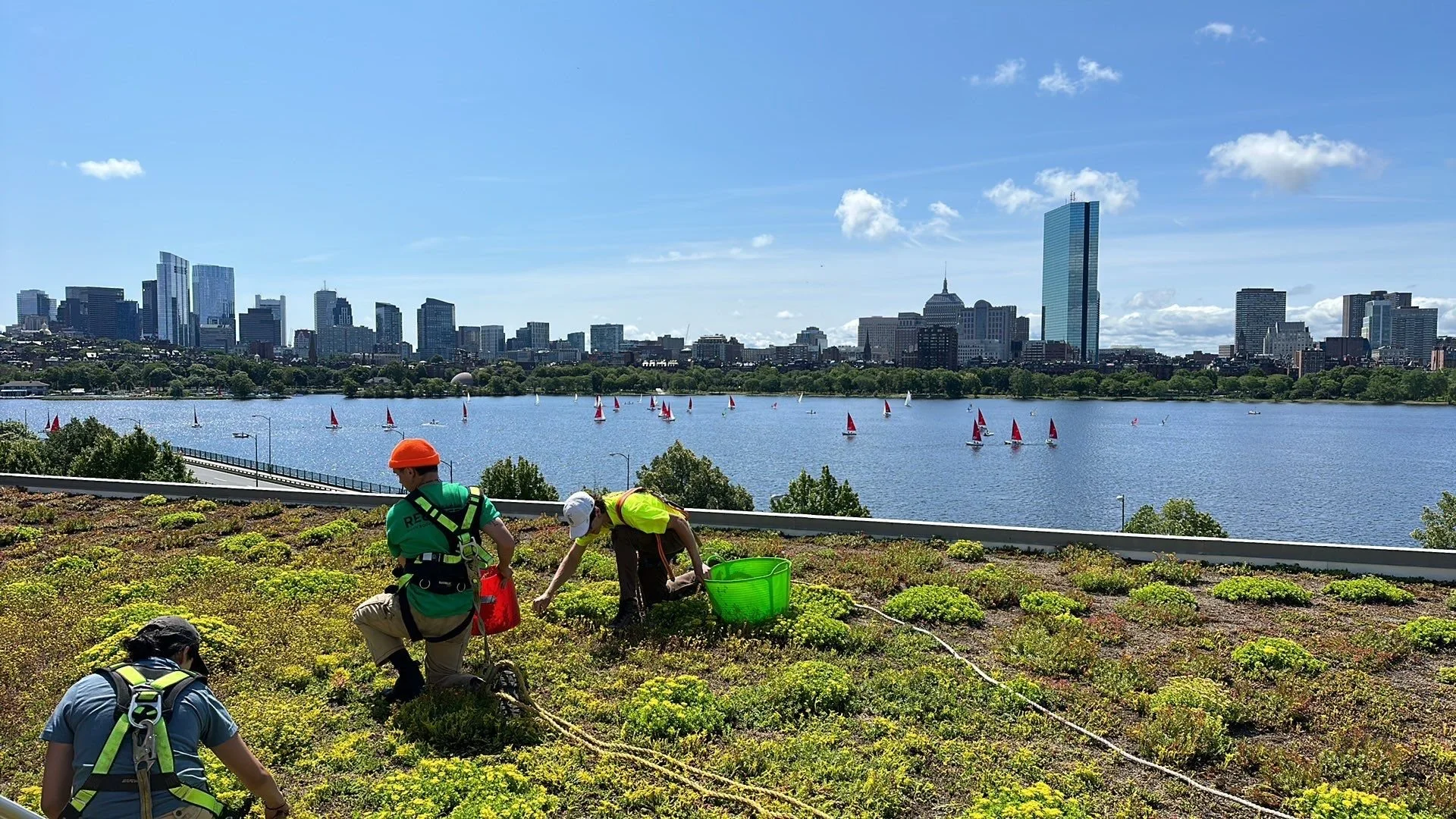
Recover Green Roofs’ skilled horticulture team brings deep knowledge of native plants and biodiversity, ensuring expert care of green roof systems. Fully trained in fall protection, our team prioritizes safety on every site.
From stormwater retention to plant health and membrane longevity, the following five reasons, supported by real-world case studies, demonstrate how thoughtful regular maintenance saves time, reduces costs, and improves outcomes over the life of a green roof.
1. Early Issue Detection Prevents Costly Repairs
Case Study: One Canal, Boston
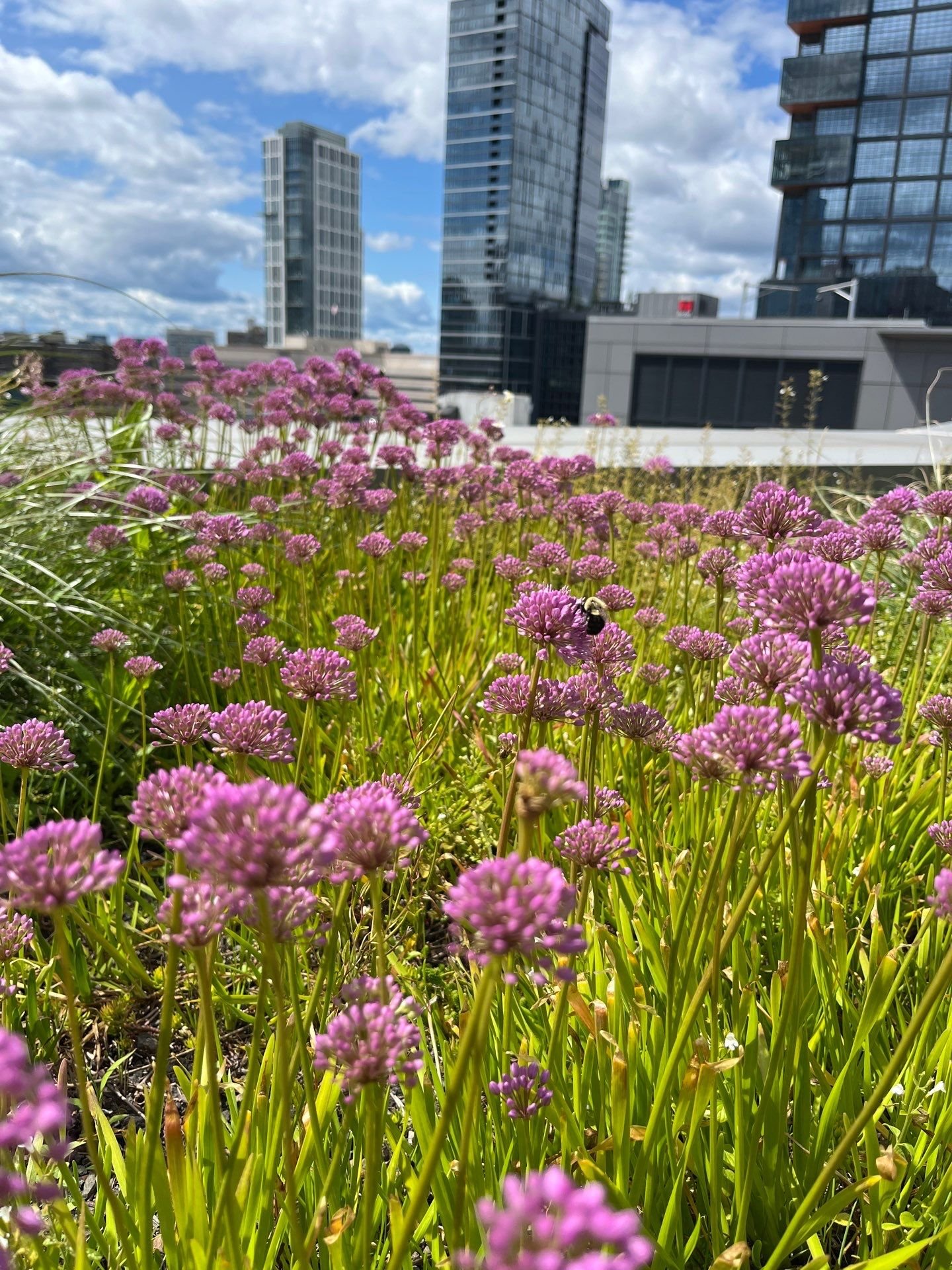
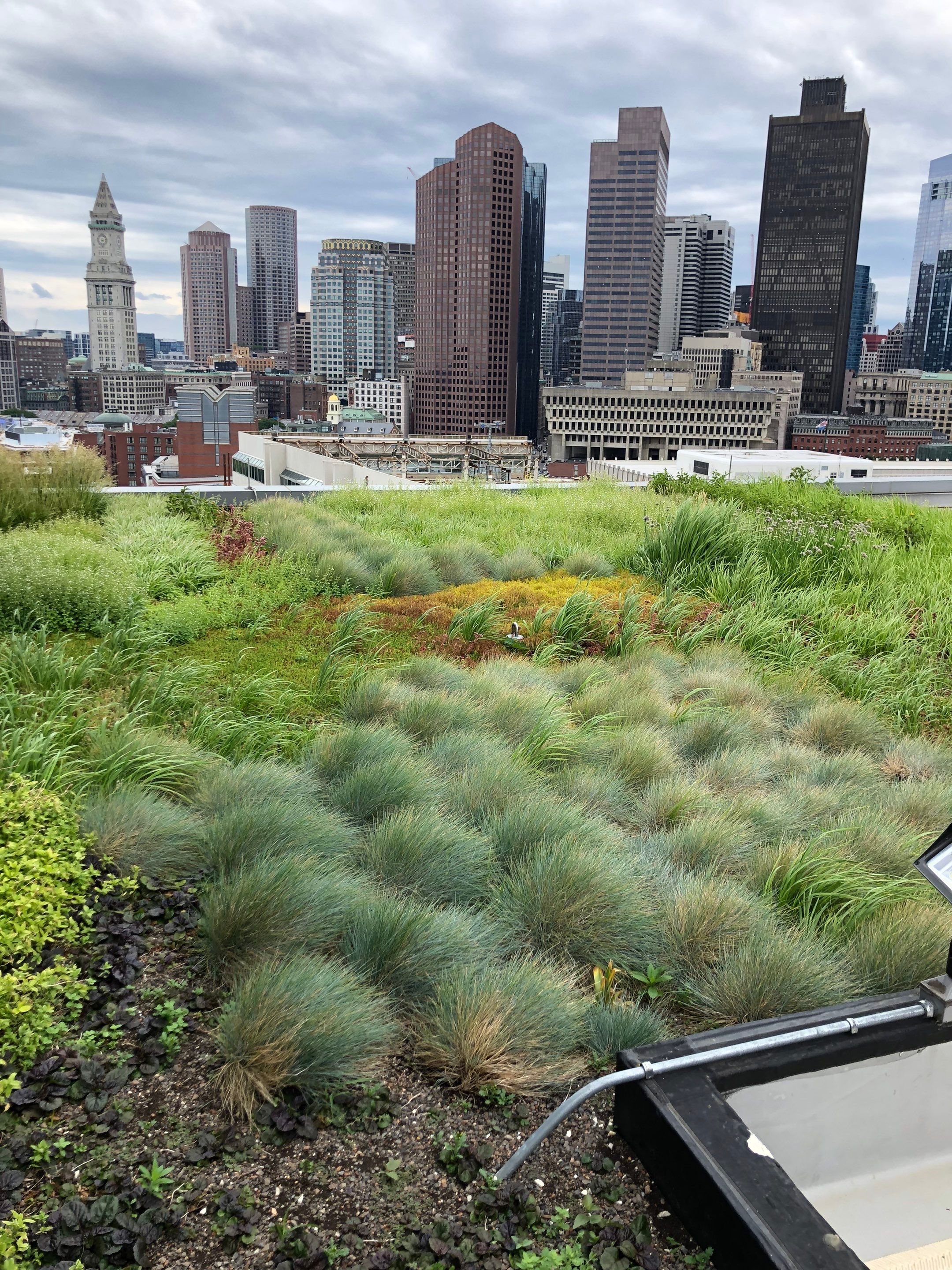
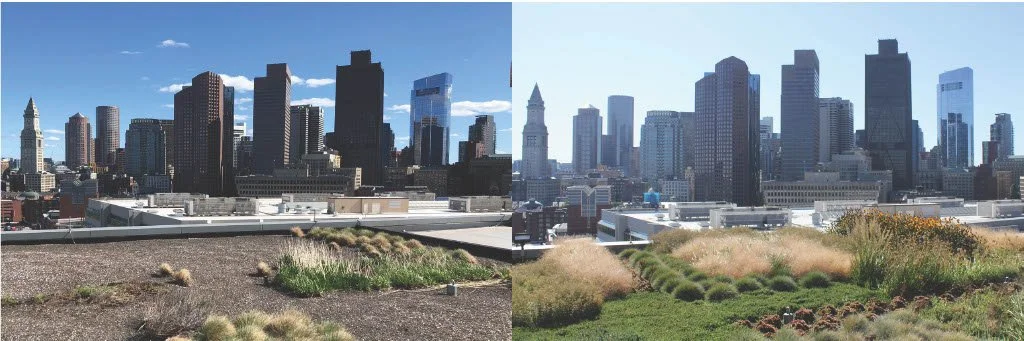
Above left, Allium 'Millenium' and right, mixed perennial palette of grasses, including Elijah Blue Fescue, Panicum, Liriope, Calamintha, and Allium 'Millenium'. Below, before left and after right at One Canal Apartment Homes, Boston. Remediation, planting, and system fixes restored performance and visual appeal.
Regular inspections are one of the most effective ways to control long-term costs. At One Canal Apartment Homes in Boston, Recover was brought in to conduct a large-scale remediation of multiple green roofs (installed by others) after years of going unmaintained. Widespread plant failure revealed underlying system issues. Through a field evaluation, the team identified failing irrigation infrastructure and erosion caused by high winds in elevated mounded beds. The remediation included installing a new irrigation system across both roofs, replacing damaged sections, and reducing mound height by removing geofoam and excess growing media. Approximately 95 per cent of the roof was replanted—requiring careful, manual transport of growing media and plants from street level to the 3rd and 13th-floor rooftops. Recover’s Director of Horticulture and Maintenance, Steph Almasi, commented: “Regular maintenance allows our team to truly understand how a roof is performing over time. By visiting consistently, we can identify early signs of plant stress, investigate underlying issues, and ensure the vegetation is thriving exactly as designed.” Today, the thriving green roofs have been restored to their original intent, supporting bird habitat, stormwater retention, and resident enjoyment.
2. Healthy Plants Reduce Replacement and Labor Costs
Case Study: Amherst College
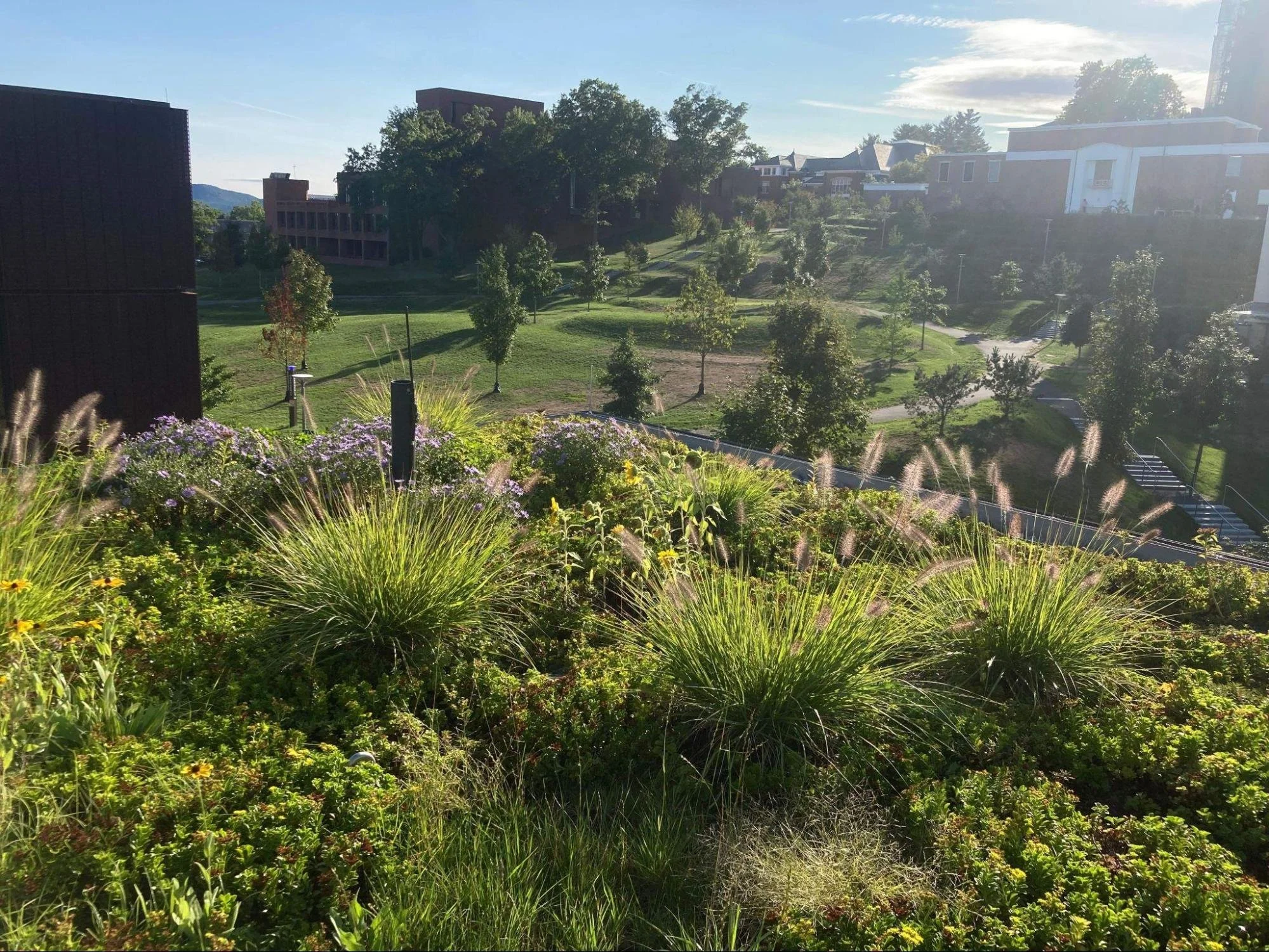
During the pandemic, a sedum roof at Amherst College became overrun with aggressive weeds such as rabbit’s foot clover and black medic. Rather than repeatedly replacing failing sedum that was being outcompeted by these aggressive weeds, Recover reimagined the roof using the existing 10”+ growing media depth to support a more biodiverse planting approach.
The team cleared weeds manually and without herbicides so as to protect the roof membrane and the surrounding environment. A diverse palette of native perennials was installed in a mix of plugs, containerized plants, and seed, forming a meadow-like ground cover with improved soil shading and moisture retention. As plant health improved, irrigation demand decreased, requiring only supplemental watering during drought conditions.
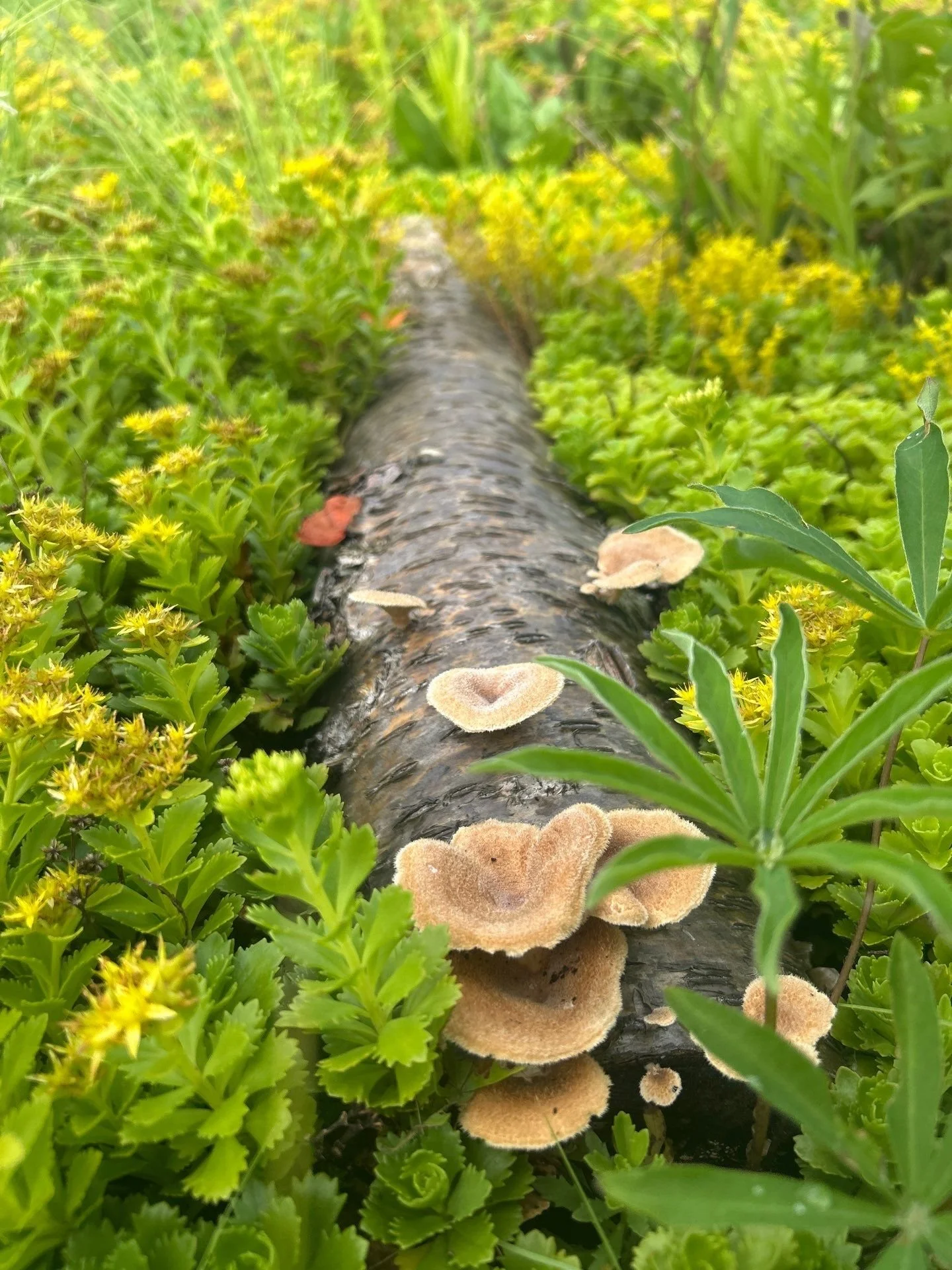
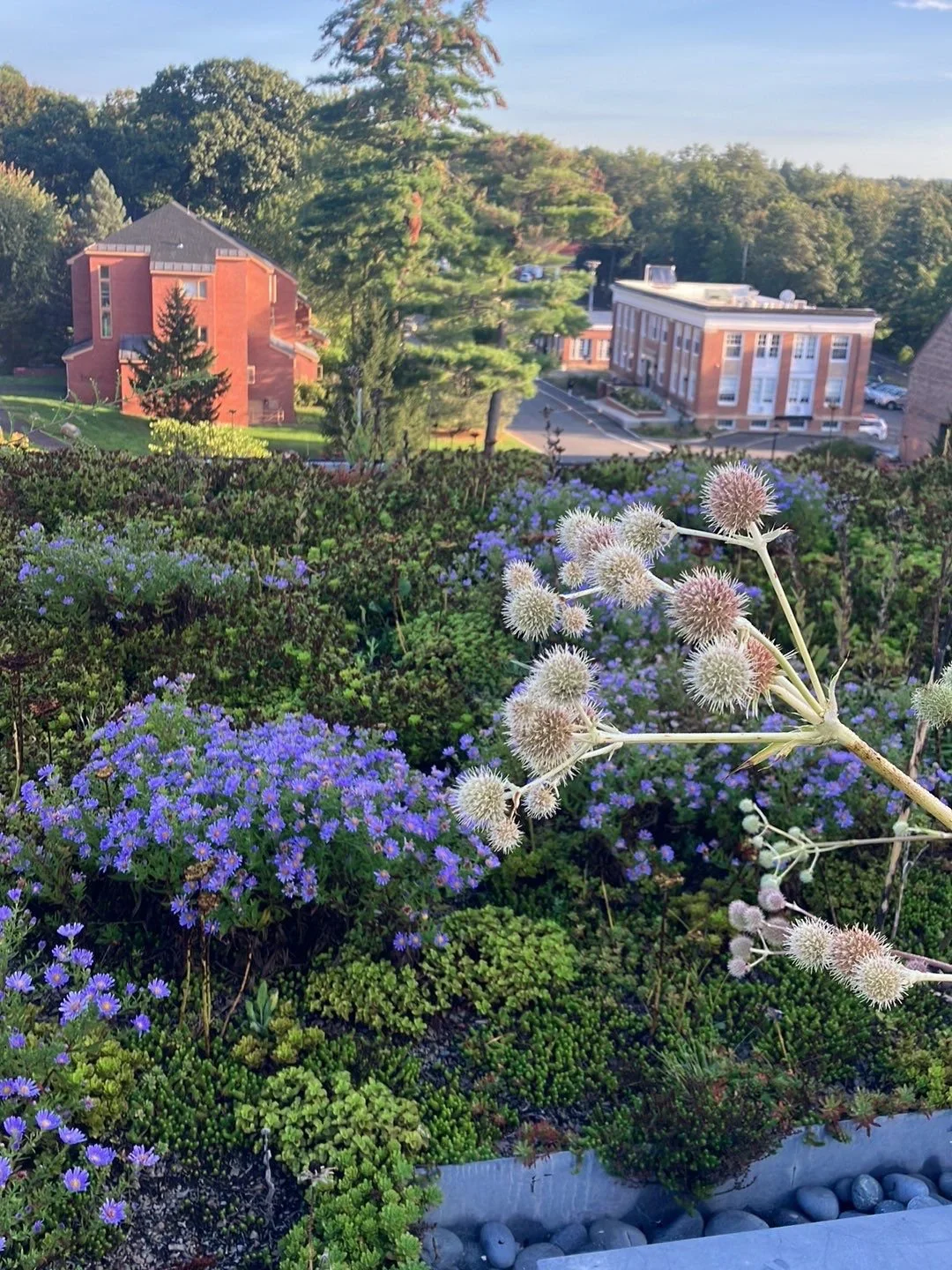
Proactive practices such as soil testing, nutrient management, and building biodiversity, including fungal- and mycelium-supported soils, helped stabilize the system, reducing long-term labor and replacement costs. Lead Horticulturist, Jonas Herbst-Rubio, explained, "The green roof has transitioned from a monoculture of sedum to a healthy, biodiverse rooftop ecosystem offering food and nesting materials for birds and other pollinators throughout the season."
Biodiverse planting promotes a more resilient roof and reduces long-term maintenance inputs. Left: Sedum kamtschaticum. Right: Aster and Rattlesnake Master are top-performing plants for biodiversity.
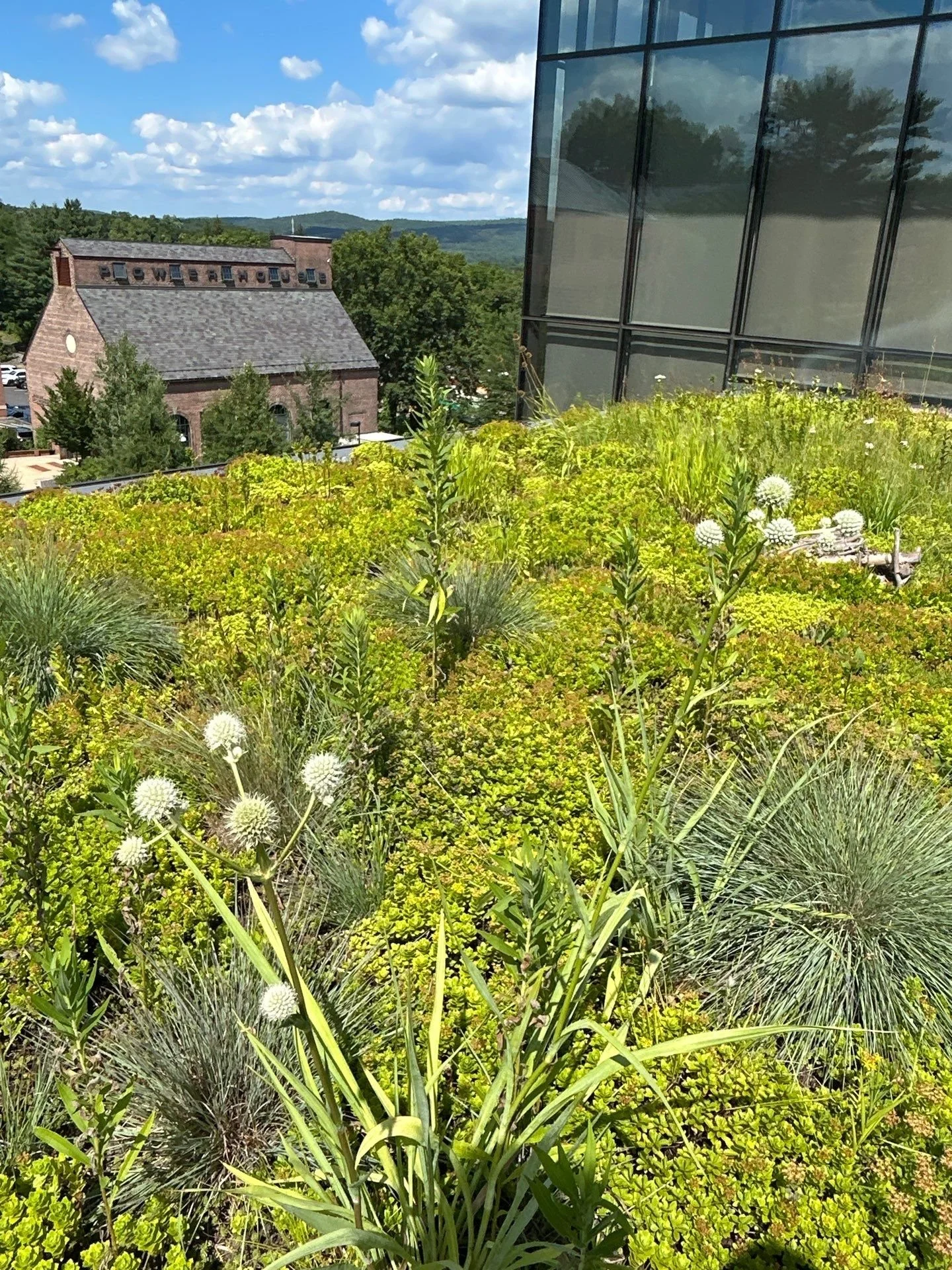
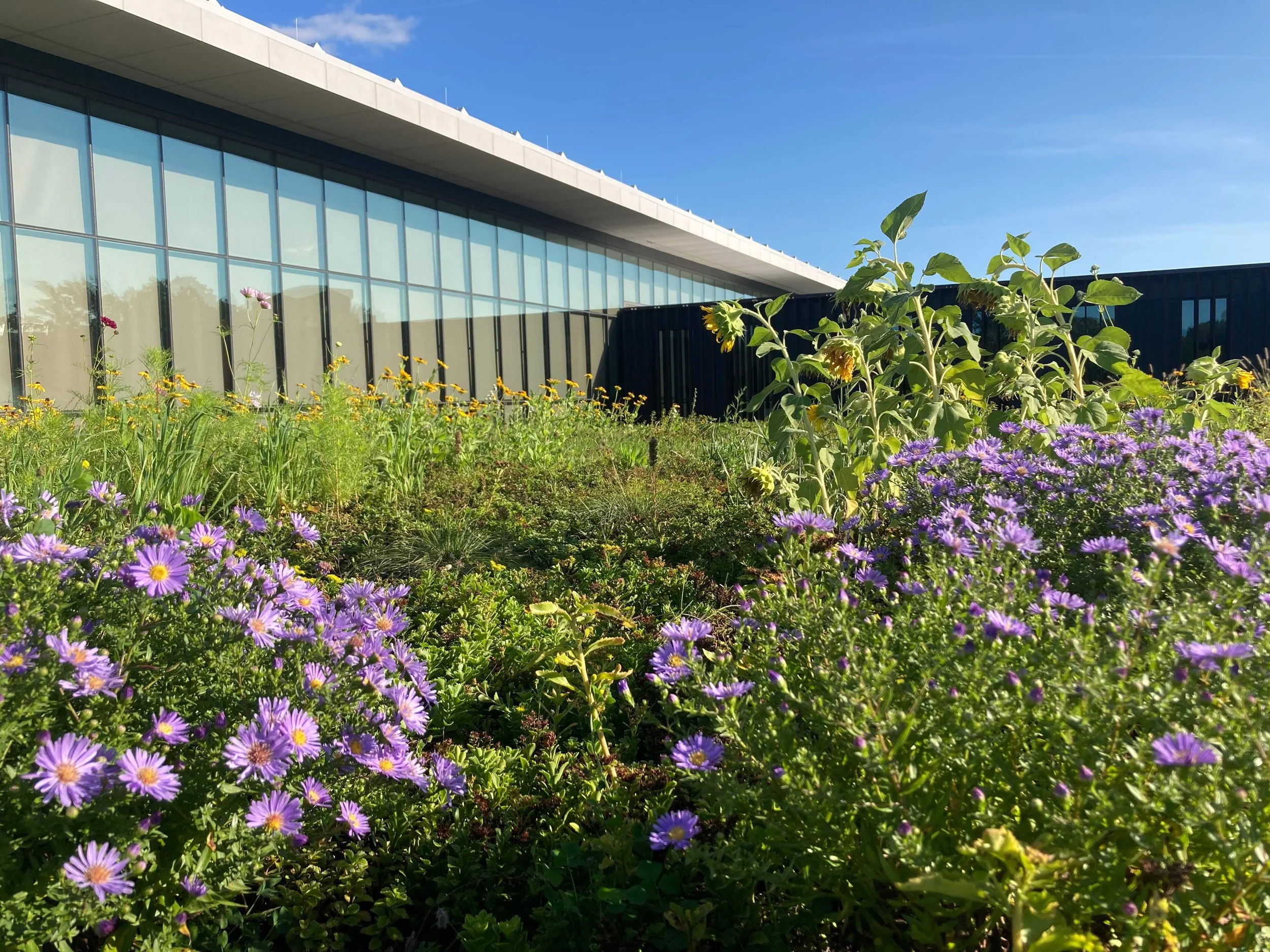
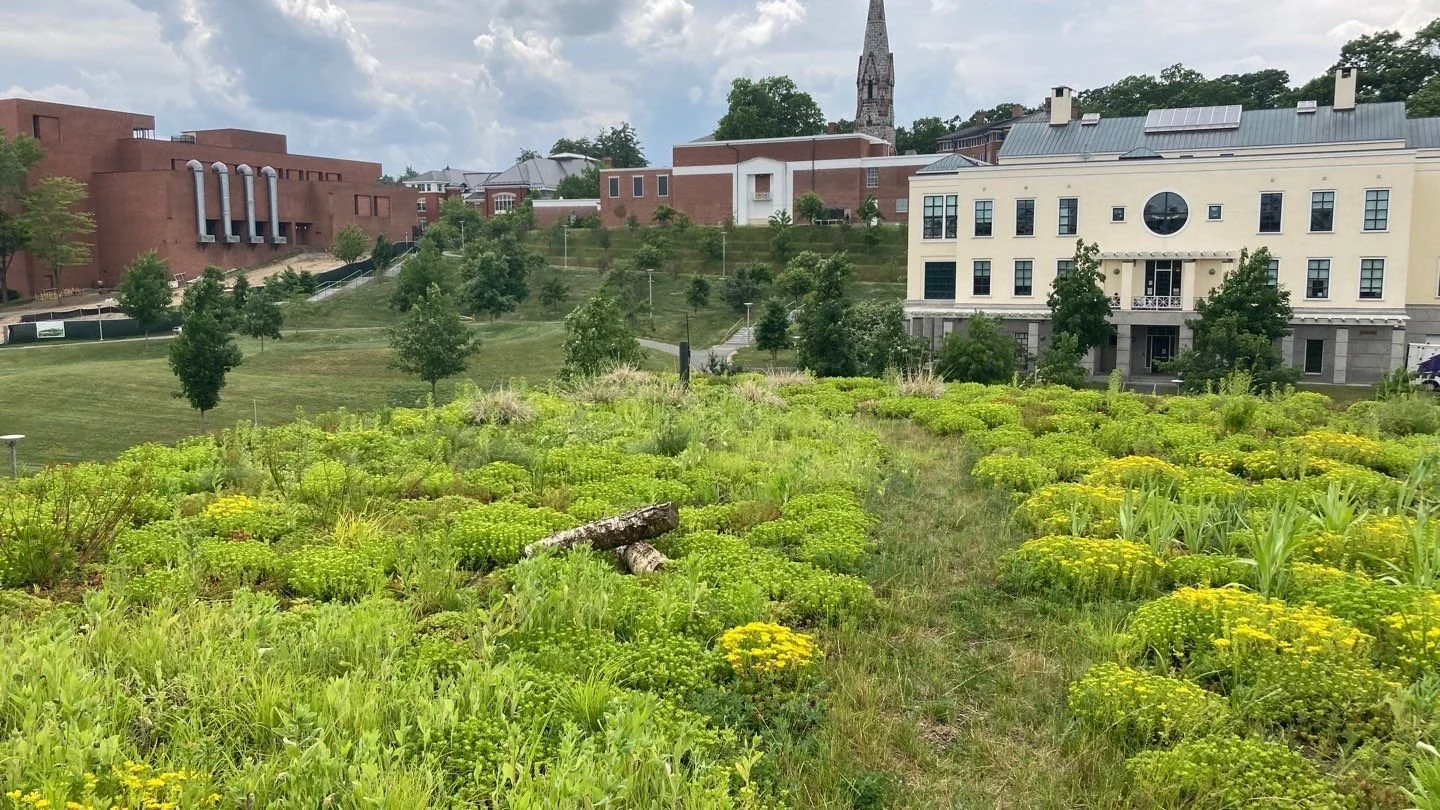
Left: Eryngium yuccifolium (Rattlesnake Master) and Festuca glauca 'Elijah Blue' (Elijah Blue Fescue) interplanted in the sedum groundcover of various species. Middle: Aster, Coreopsis, Sunflower, and Cosmos blooming in late summer. Right: Early season on the green roof highlights full sedum coverage before the layer of flowering perennial accents and grasses fill in.
3. Maintenance Preserves Stormwater and Energy Performance
Case Study: The Monty Boston
When renovating The Monty Boston—a contemporary hotel overlooking the historic Boston Common and Massachusetts State House—the owner was required to retain 1,200 cubic feet of stormwater on-site. Traditional underground detention would have cost more than $400,000 and disrupted building operations. Instead, the owner partnered with Roofterra, a green infrastructure consulting and construction management company, to explore a more efficient and purposeful approach. Almasi commented, “From a horticulture standpoint, managing stormwater at the roof level supports both plant health and system performance. Retaining water on the roof allows the landscape to actively use that moisture—reducing runoff while supporting healthier, more resilient plantings.”
Recover installed and continues to maintain the green roof, ensuring drains remain clear, growing media stays healthy, and plant coverage performs as designed. Routine maintenance protects the roof’s stormwater retention capacity, thermal benefits, and regulatory compliance—preventing gradual performance degradation over time.
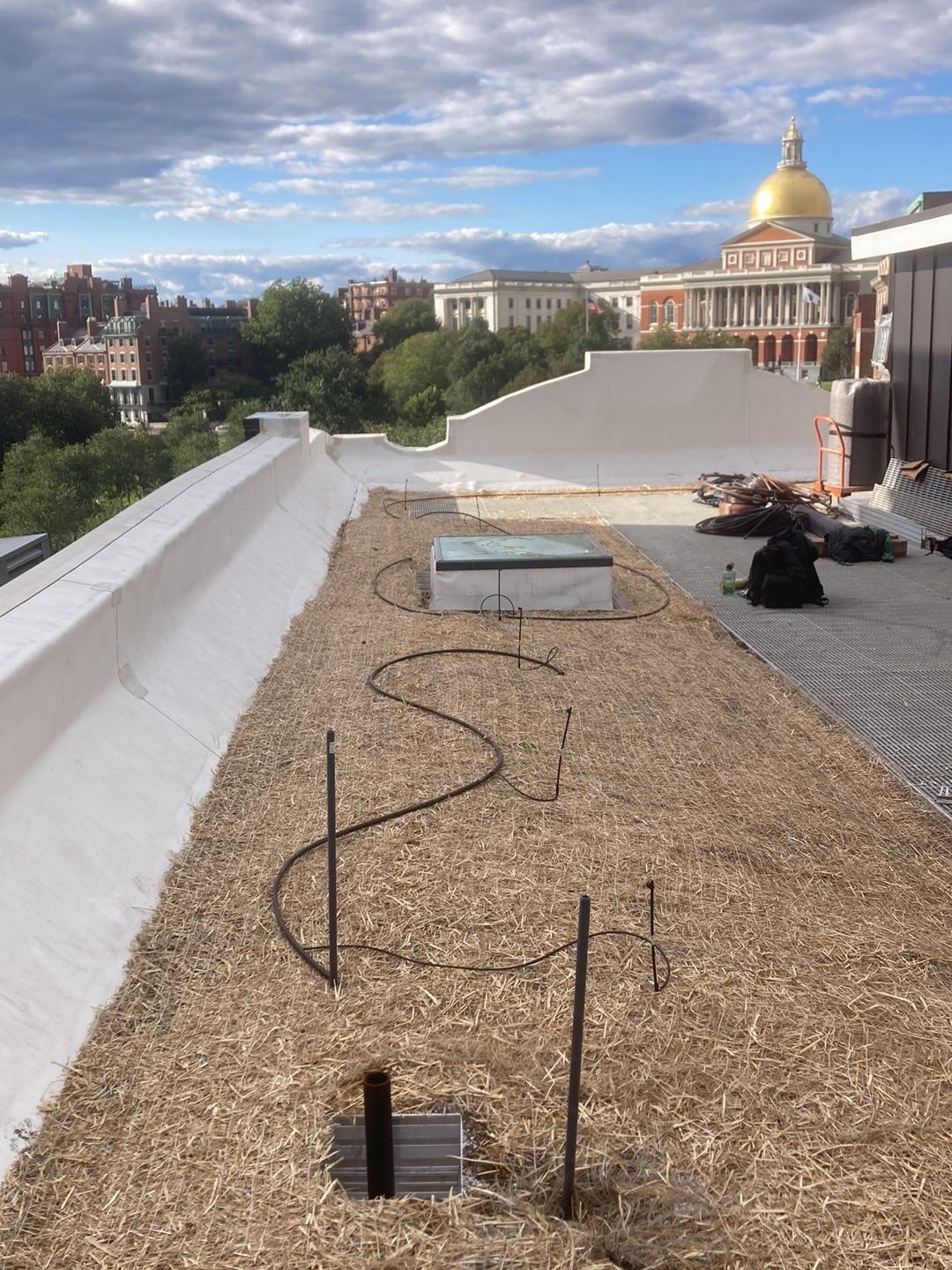
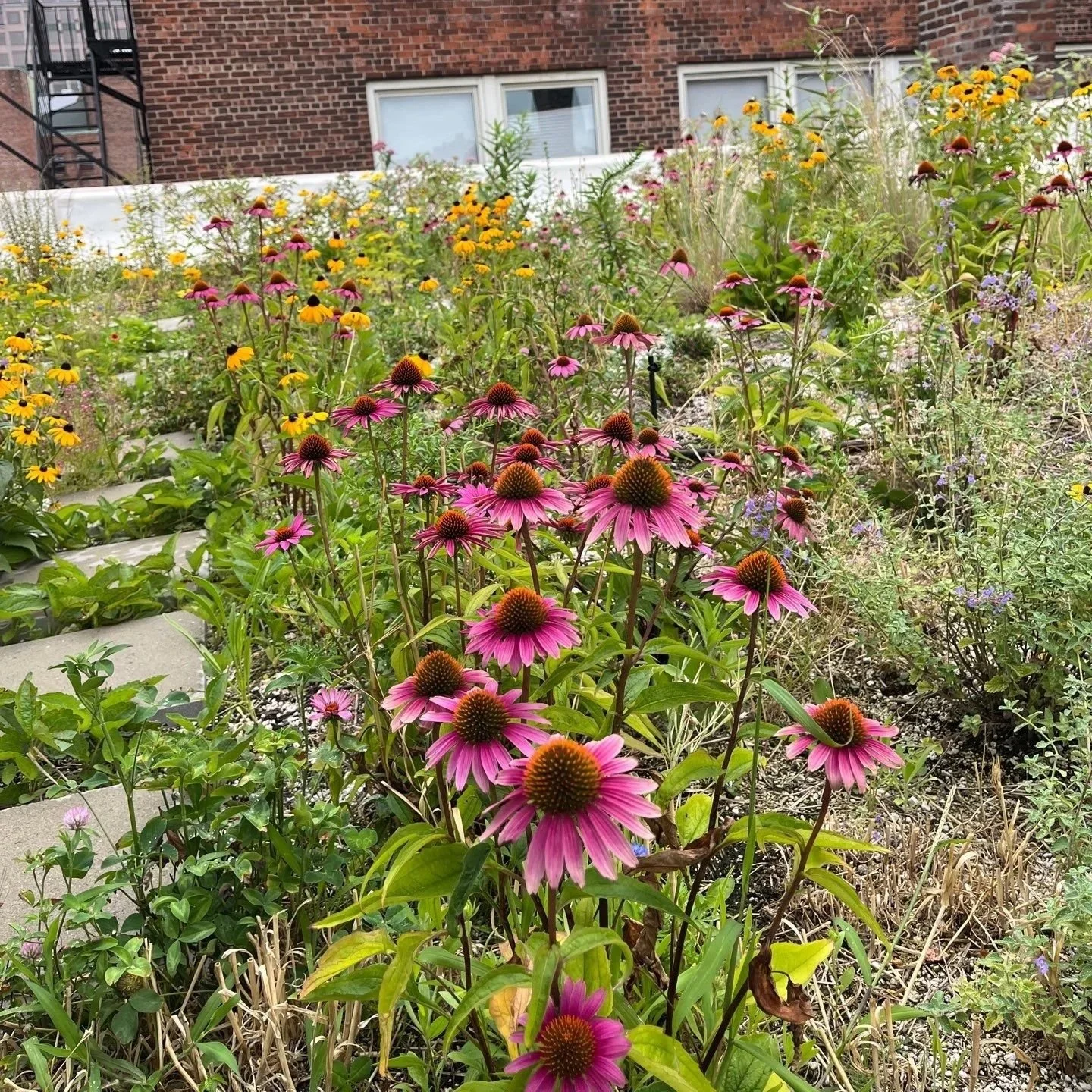
Before (left) and after (right) show transformation where healthy plant coverage supports stormwater retention and thermal performance.
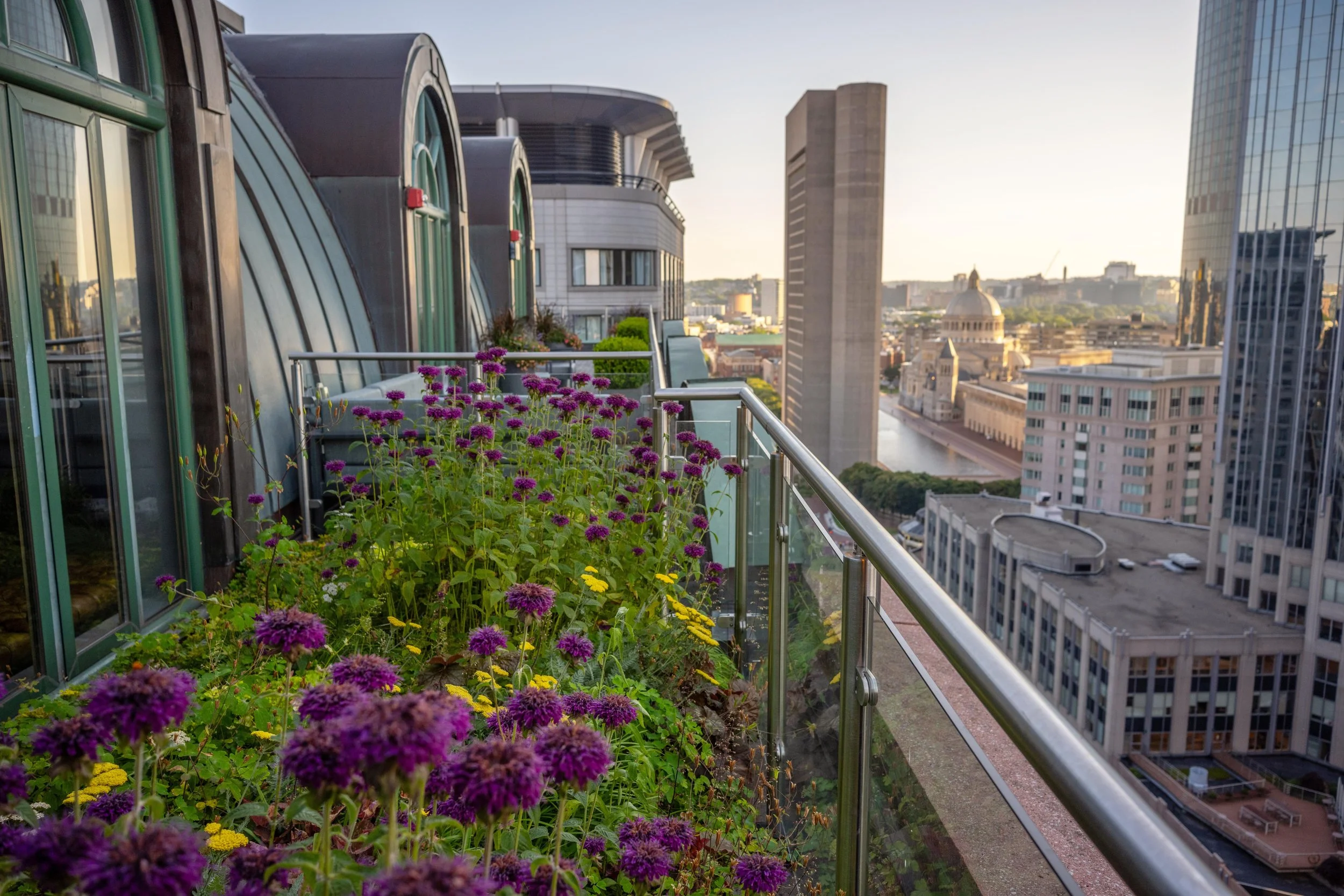
Monarda didyma 'Purple Rooster' and Achillea x 'Moonshine' thriving at the Huntington Street High Rise.
4. Documentation Saves Time for Owners and Facilities Teams
Case Study: Huntington High-Rise
Green roofs are not frequently visited by owners or facilities teams, making documentation a critical component of long-term asset management. This green roof on a Huntington Street high-rise in Boston with a northwest-facing, partly shaded roof, supports a thriving mix of pollinator-friendly perennials, including Monarda, Tiarella, and sedum, and serves as a prime example where record keeping saves time for facilities teams.
Routine reports document plant health, seasonal performance, and biodiversity observations (including multiple bee species), creating a living record of the roof’s evolution. Almasi explained further: “Because this roof is documented and observed over time, we’re able to treat it as a long-term landscape asset rather than a static installation. Tracking plant performance and pollinator activity allows us to make informed decisions that protect both ecological value and long-term performance.”This history supports warranty compliance, capital planning, budgeting, and staff transitions while saving time responding to questions.
5. Long-Term Maintenance Extends Roof Life and ROI
Case Study: New England Biolabs
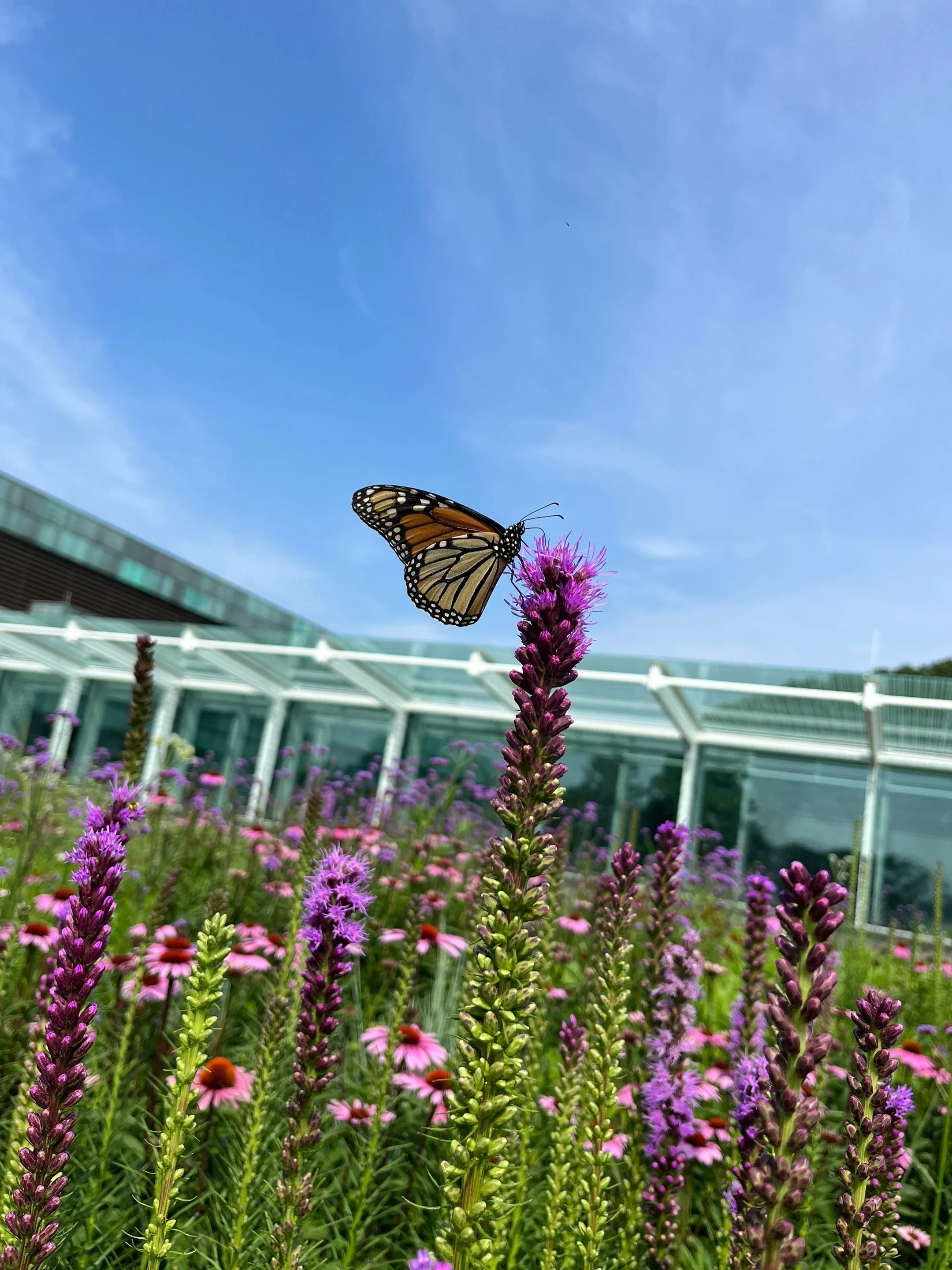
Pollinators finding habitat, season after season—proof that when living systems are designed and cared for long-term, they keep giving back.
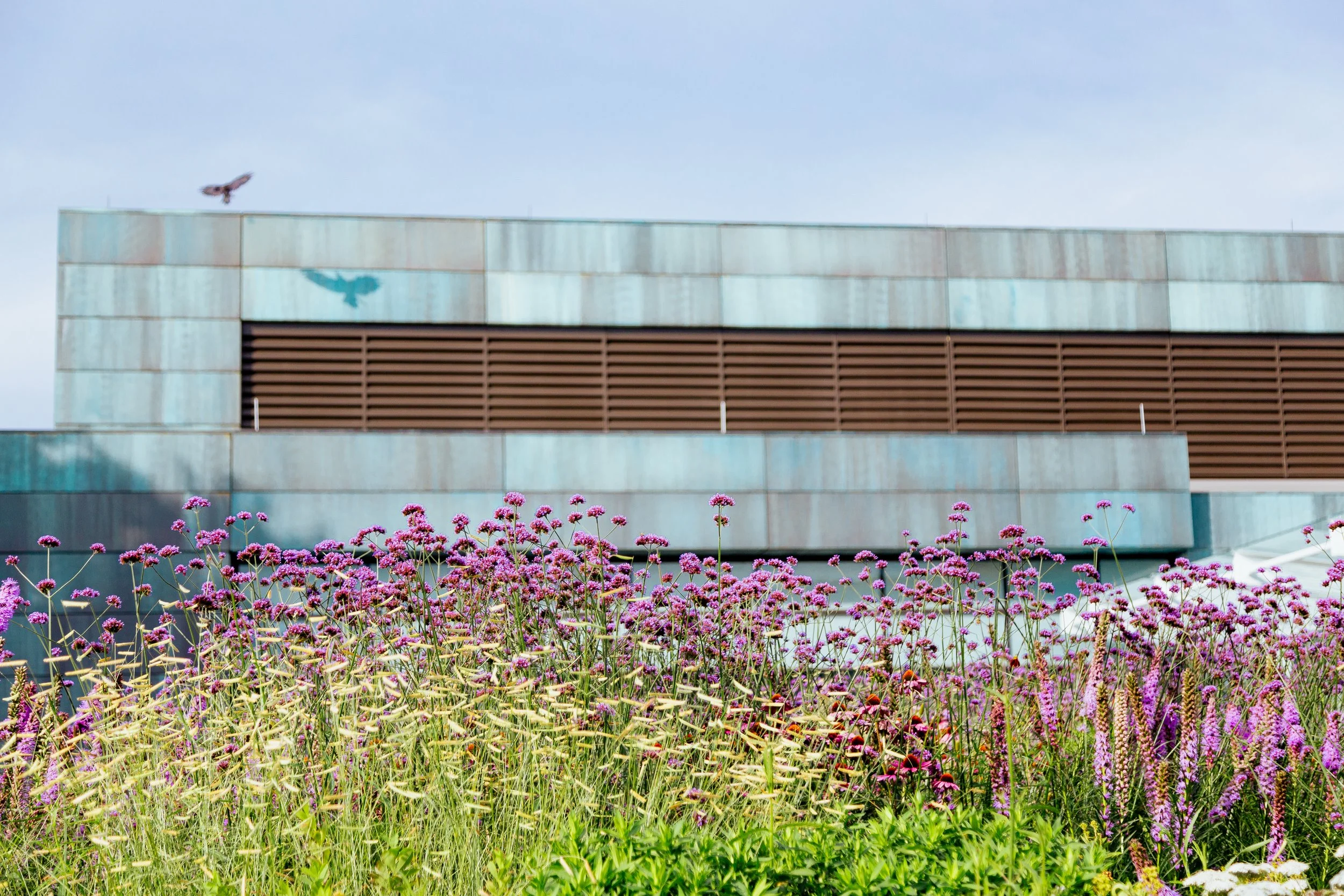
At the New England Biolabs campus in Ipswich, Massachusetts, long-term maintenance is central to maximizing the performance, lifespan, and return on investment of this living architecture. Completed in May 2023, this 32,000-square-foot green roof system was designed to support watershed protection, energy conservation, and biodiversity while blending seamlessly into the surrounding ecological landscape. Roof-level windows allow employees to experience the changing patterns and colors of the pollinator meadow year-round, reinforcing the connection between environmental stewardship and daily campus life.
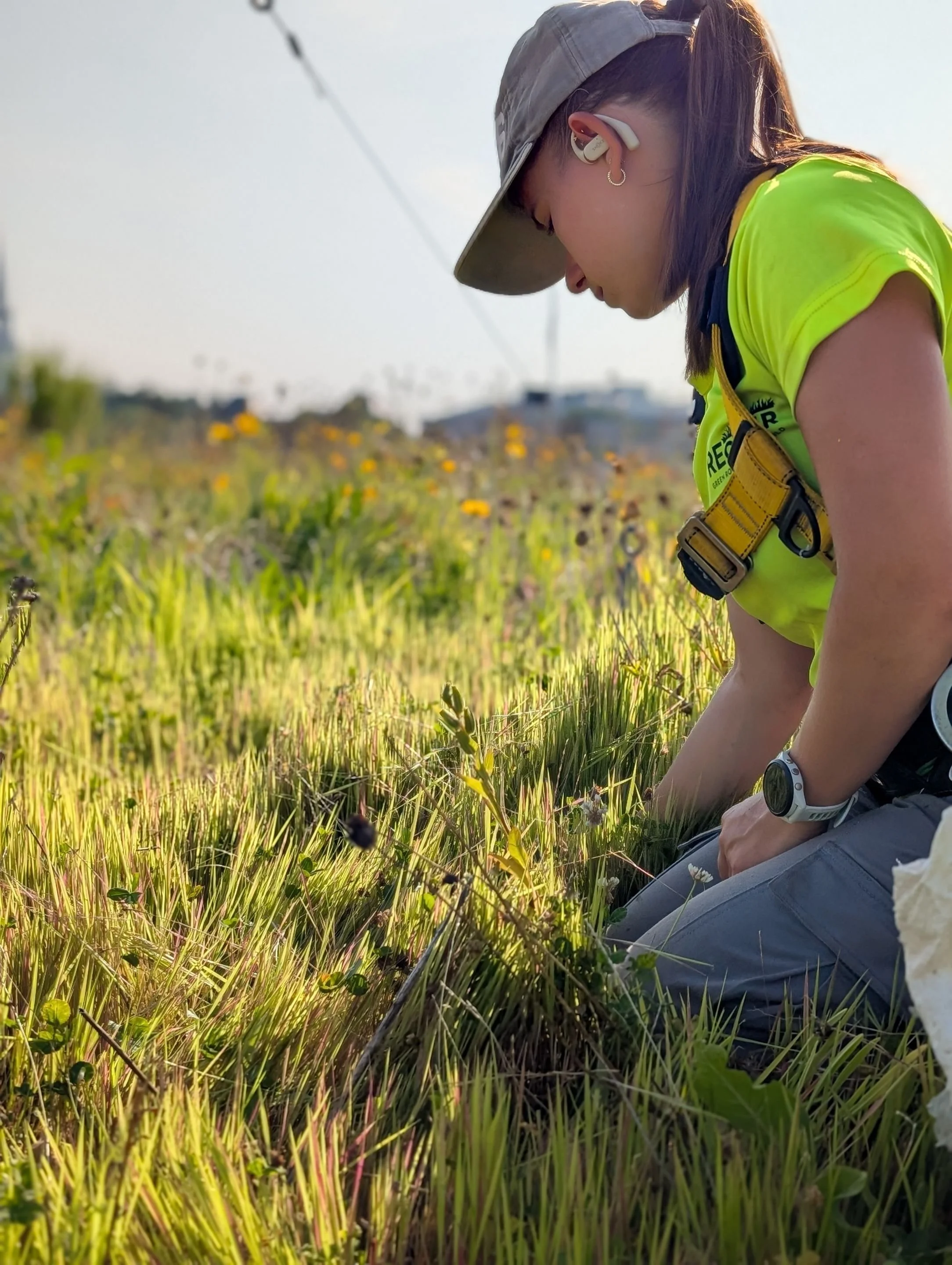
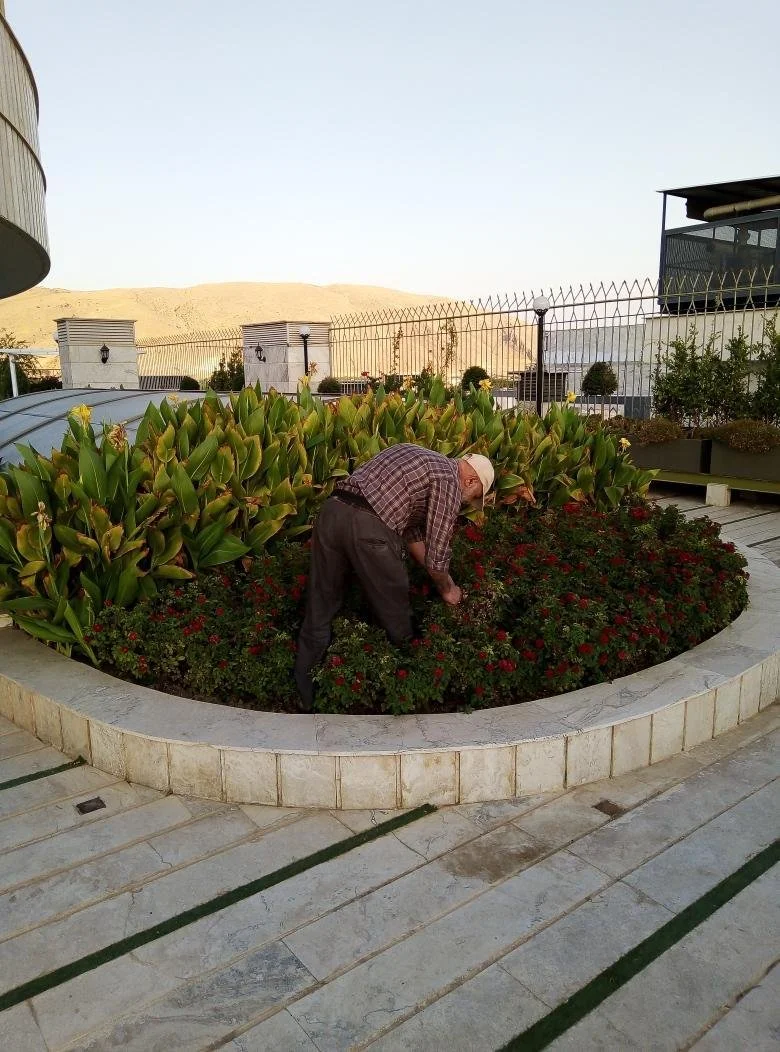
A Recover Green Roofs staff member hand-weeds the roof to follow best practices and promote healthy, resilient plant growth.
Ongoing horticultural care plays a critical role in sustaining these outcomes. With twice-monthly site visits, the maintenance program prioritizes plant health, stormwater performance, and early intervention—ensuring the roofs continue to function as both ecological habitat and long-term building assets. This proactive approach demonstrates how consistent, high-quality maintenance not only supports biodiversity but also protects structural systems, extending roof life and strengthening long-term ROI.
Conclusion
Across these case studies, and drawing on years of horticultural experience, our team at Recover Green Roofs has found that proactive green roof maintenance saves time, reduces costs, and protects performance. Early issue detection, healthy plant systems, preserved stormwater function, thorough documentation, and adaptive management all contribute to stronger environmental, operational, and financial outcomes. Ultimately, successful green roofs are the result of a partnership between owners who value long-term performance and horticulture experts who understand how living systems evolve.
Katina Bentley is the Director of Marketing at Recover Green Roofs. She can be reached by email at kat@recovergreenroofs.com
Recover Green Roofs is a design-build firm specializing in the design, installation, and maintenance of green roofs, including rooftop gardens, farms, and amenity spaces. Recover has designed and built residential, commercial, and institutional buildings across New England and beyond for over a decade, emphasizing the stacking benefits that a green roof provides to its community, local ecosystems, and the environment at large. We strive to create long-lasting, thriving green roofs that aid in recovering nature in our built environment in order to support healthier communities and more resilient cities. For more information, visit www.recovergreenroofs.com and follow us on LinkedIn.