Advertisement
Rooftop Assets
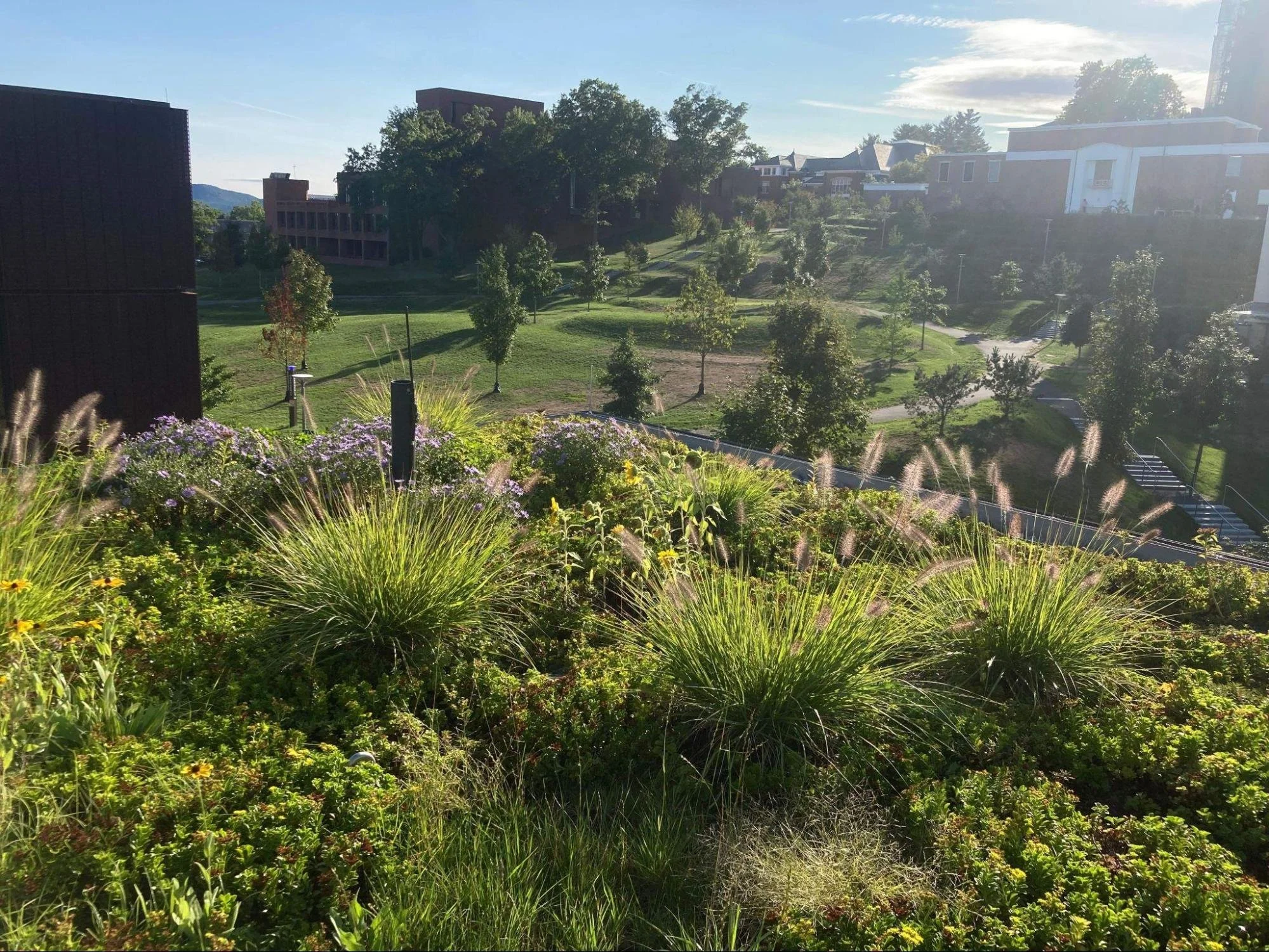
Green roofs are not only a protective layer over the structure, but also an asset for those who occupy it. Benefits have been widely discussed, including aesthetic and mental health benefits for occupants, sustainability benefits including carbon capture, stormwater retention, and extending the longevity of the roof; with some studies indicating a green roof may last twice as long as a generic flat roof – further offsetting the higher upfront costs.
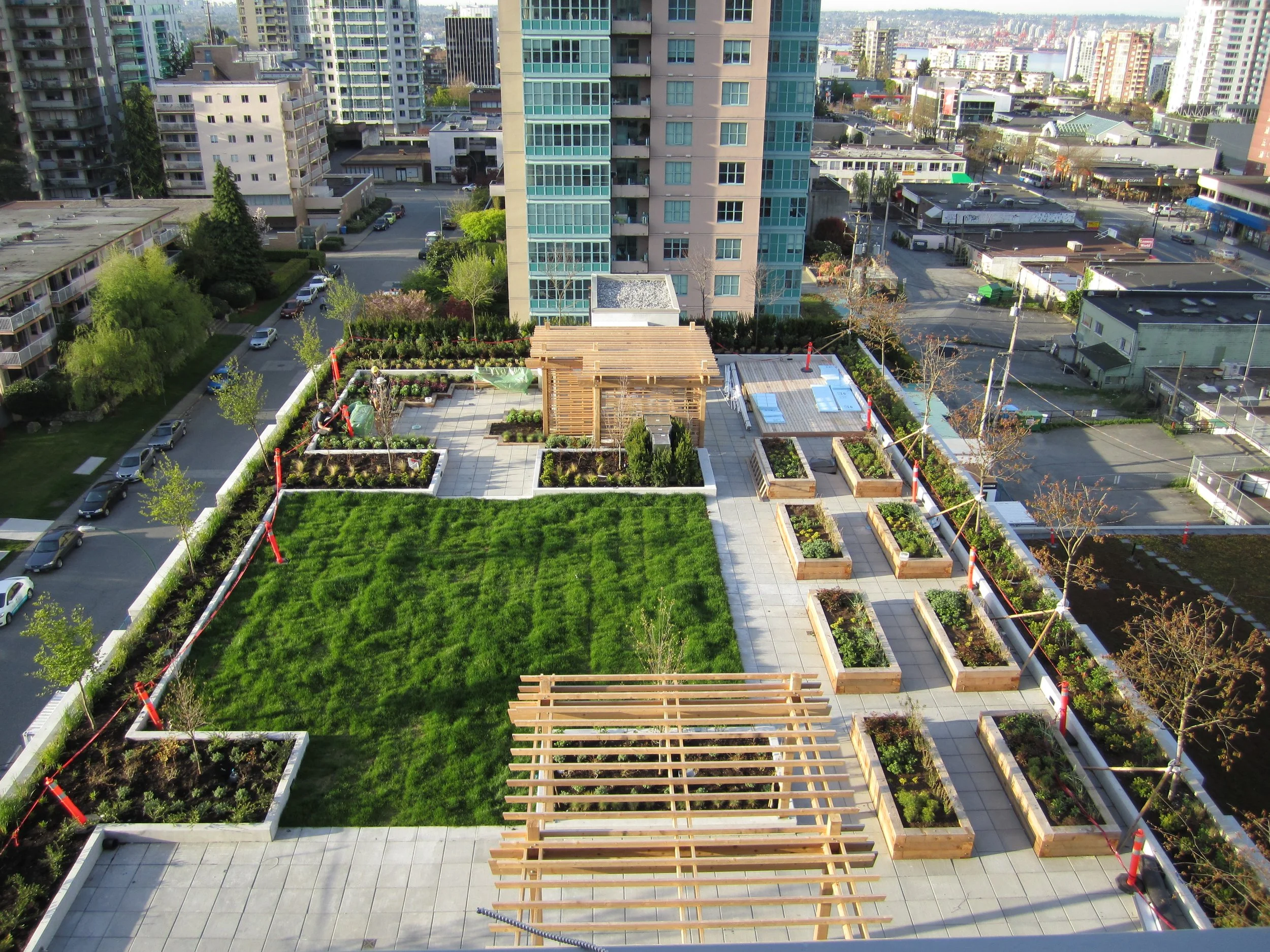
Green roof installed on top of an inverted roof assembly. Photo: SMT
However, like all flat roofs, green roofs rely on a waterproof membrane to keep water from penetrating the building. Once this waterproof membrane is covered with layers of insulation and green roof elements, finding any leak becomes very difficult. The significant amount of overburden associated with green roofs cannot be reliably scanned through with handheld tools and as a result, large sections of green roof will need to be removed to access the location of the leak on the membrane.
Membranes at Risk During Construction
In nearly 20 years of structure monitoring, we have found common issues that risk the integrity of large low-slope roofing. The majority of these issues occur as damages to the waterproof membrane during construction. The roof deck is used as a walkway, a staging area for materials and equipment, and is vulnerable to damage from above. We have seen:
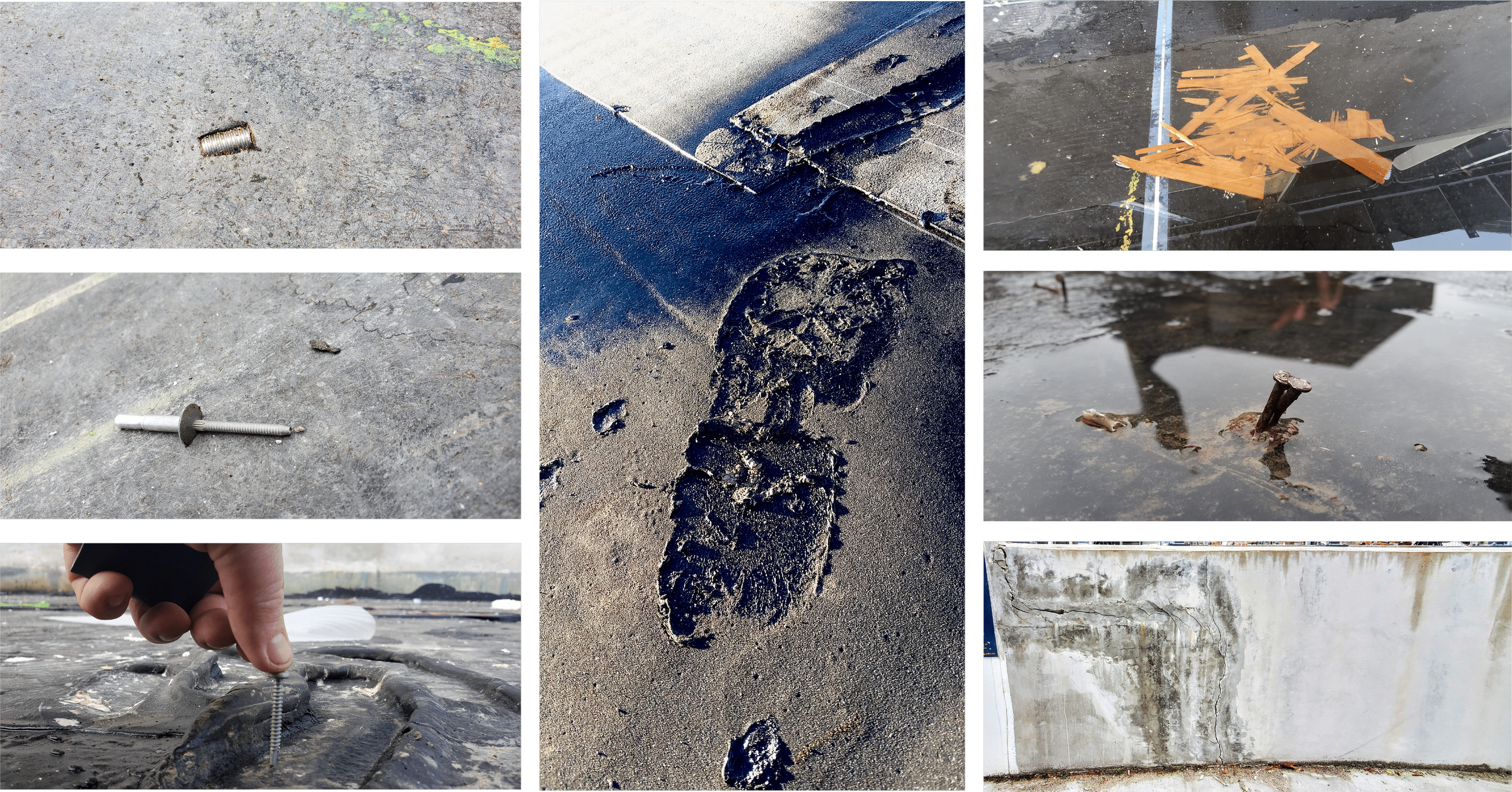
Damages found in waterproof membranes during construction. Photo: SMT
Nails and other building materials embedded in the waterproof membrane.
Chemical burns as primers for adhesives used on walls and planters drip onto the membrane.
Heavy equipment and scaffolding stored on wooden blocks digging into the protective waterproof barrier.
All this damage allows water into the roof deck where it can cause structural damage, disrupt the operation of the building and cost owners thousands, if not more, in repairs.
Advertisement
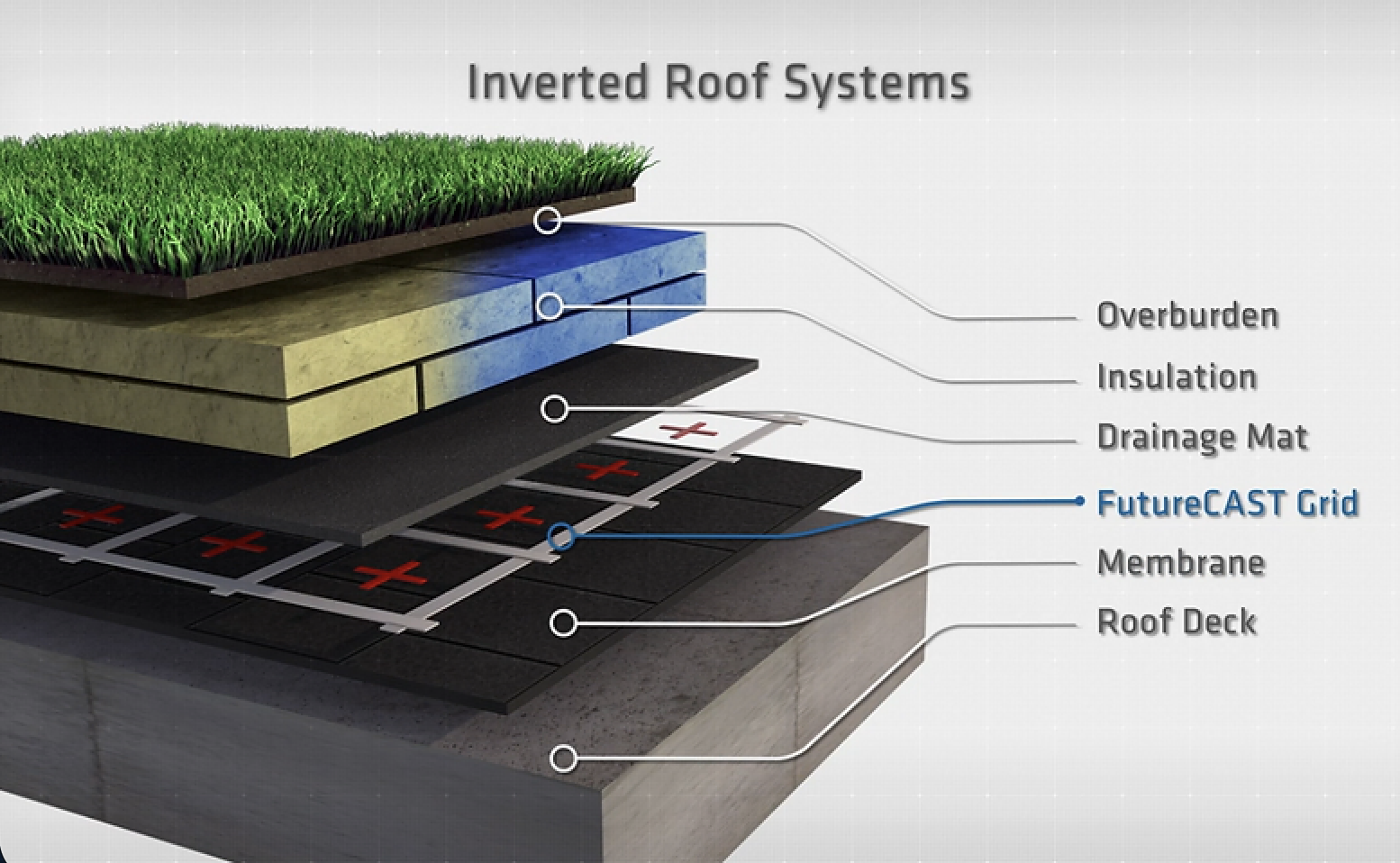
FutureCast Leak detection system installed within the layers of an inverted/protected roof assembly. Photo: SMT, Go2Productions
What is a leak detection system?
A leak detection system monitors the integrity of the waterproof membrane which covers the structural roof deck on a large low-slope roof. Advanced low-profile sensor elements are permanently installed directly on top of the waterproof membrane, and connected to monitoring electronics. This system can monitor the integrity of the membrane from the moment it is installed, through construction as layers of insulation, drainage, growing media and vegetation are placed on top.
The value of a leak detection system on a green roof is that the now-hidden waterproof membrane can be actively monitored for potential leaks, generating reports that guide building owners on when and where to perform maintenance or repairs. Any repairs are significantly less costly because leak locations can be identified allowing the removal of targeted sections of vegetation, minimizing disruption to the building occupants and damage to the green roof.
Case Study: Passive Leak Detection System Finds Leak
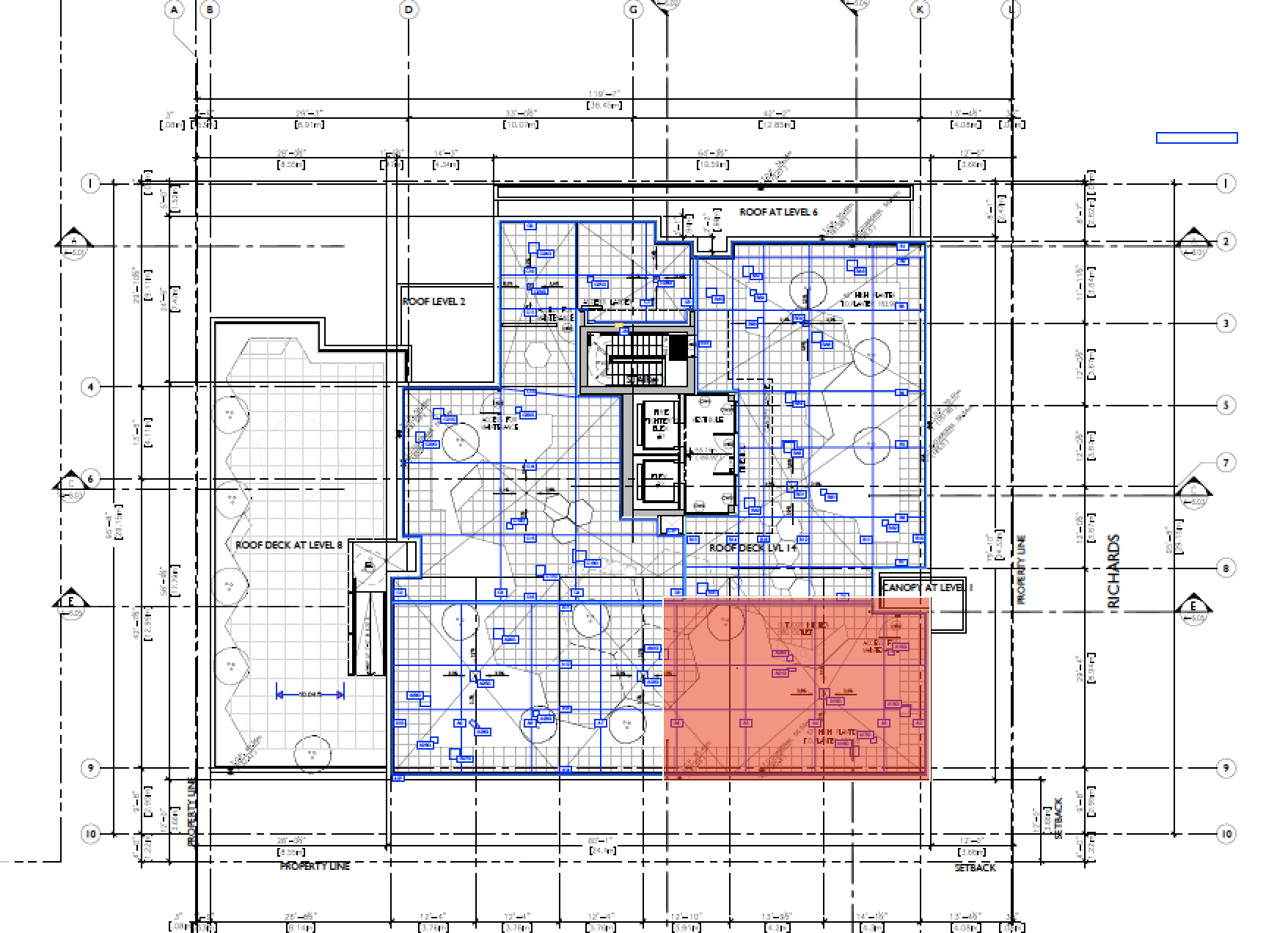
Installing a leak detection system on a green roof begins with architectural drawings. SMT was contracted to install a leak detection system on a mid-rise building in downtown Vancouver featuring an extensive green roof plaza deck.
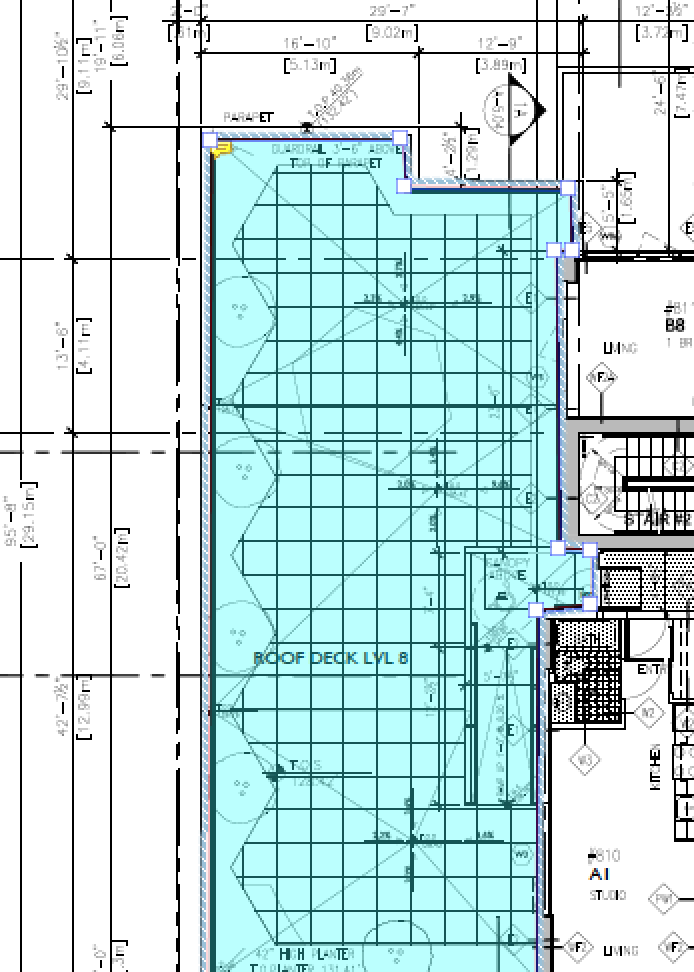
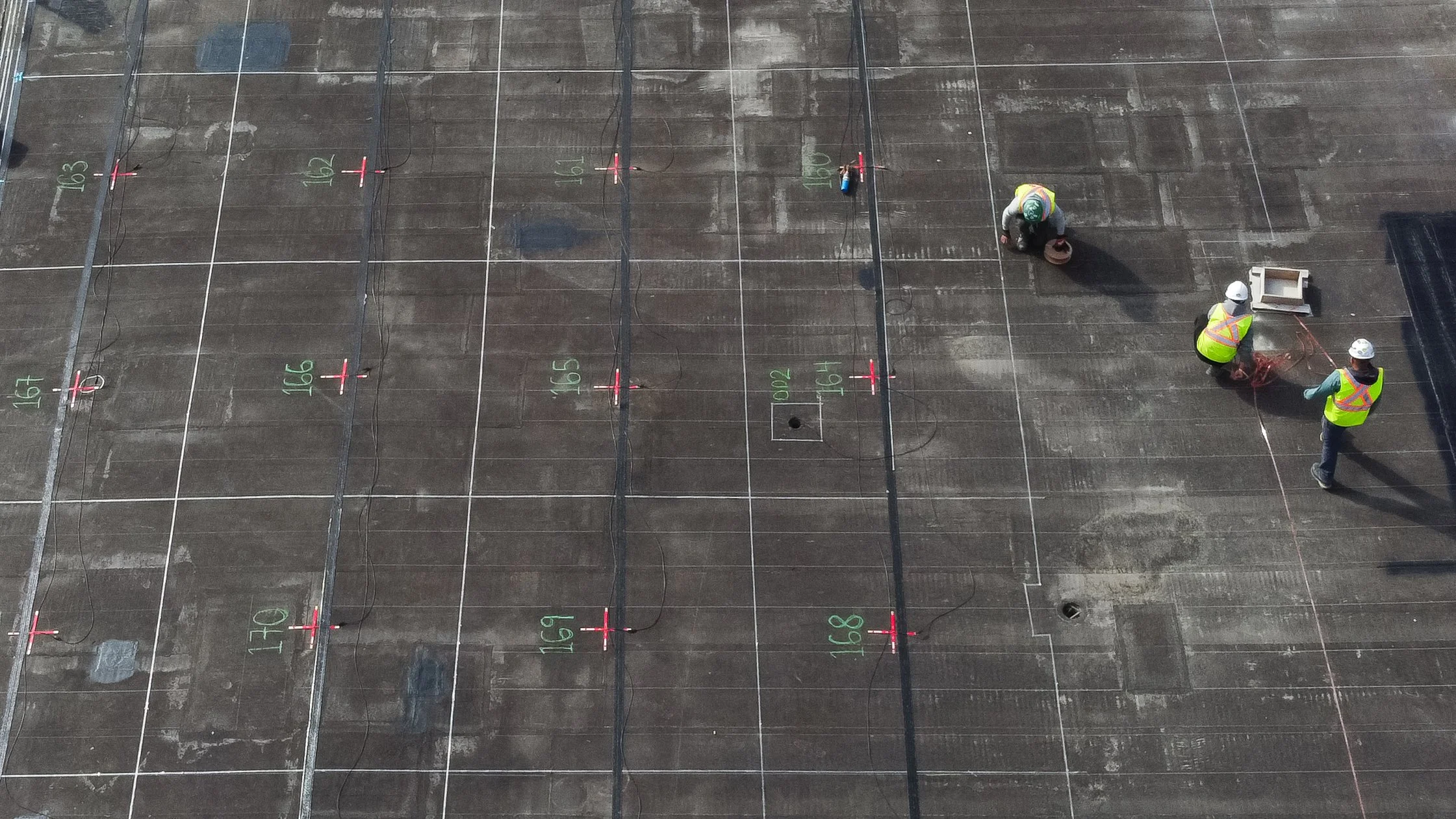
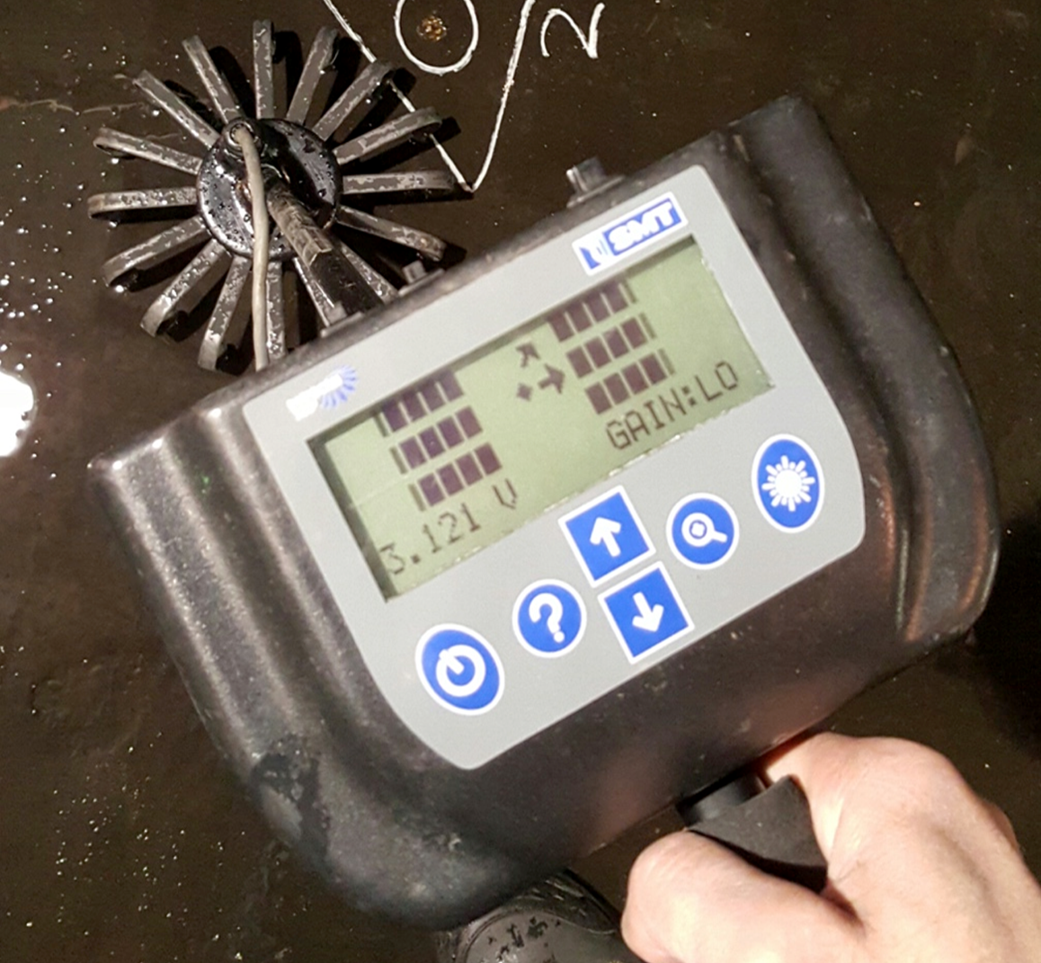
Left: Architectural drawings with leak detection system mapped out. Middle: Leak detection sensors covering the roof deck, directly on the waterproof membrane. Right: DigiScan device locates a penetration in the waterproof membrane. Photos: SMT
Once the waterproof membrane was complete, SMT installed an extensive grid of sensors that lay flat on top of the membrane. On this project, the sensors were left installed in a passive state i.e. not actively taking readings of the roof environment.
Testing waterproof membranes for possible leaks, prior to the implementation of green roof layers is a fundamentally important step in the construction process. In this case, a leak detection scan was performed using a handheld DigiScan device, pinpointing damages to the membrane so they could be repaired before the membrane is covered by the green roof. DigiScan works by saturating the waterproof membrane with a thin layer of water, before generating a low-voltage electronic field across the surface of the membrane. Where the membrane is damaged or deficient, there will be a path for electrical charge to pass through the membrane into the grounded roof deck. The DigiScan device is sensitive to current draw, and gives a vector and magnitude, allowing technicians to pinpoint the damaged area and highlight for repair.
The leak detection system becomes part of the roof assembly, covered with a root barrier, drainage matt, insulation, and green overburden.
Advertisement
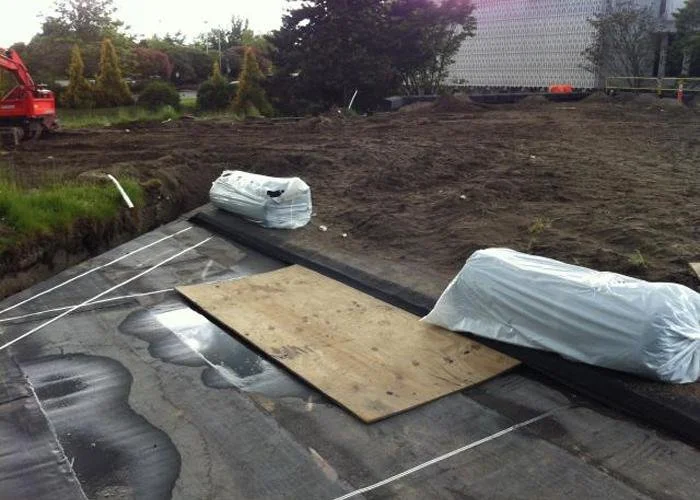
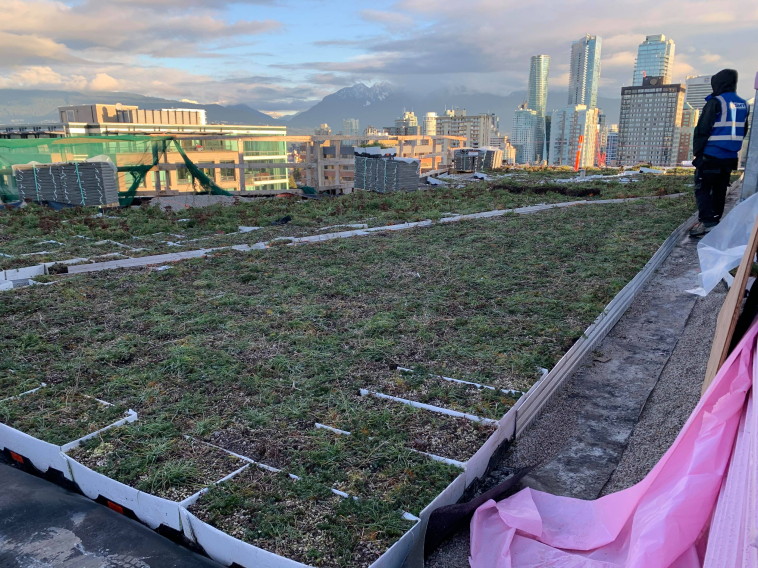
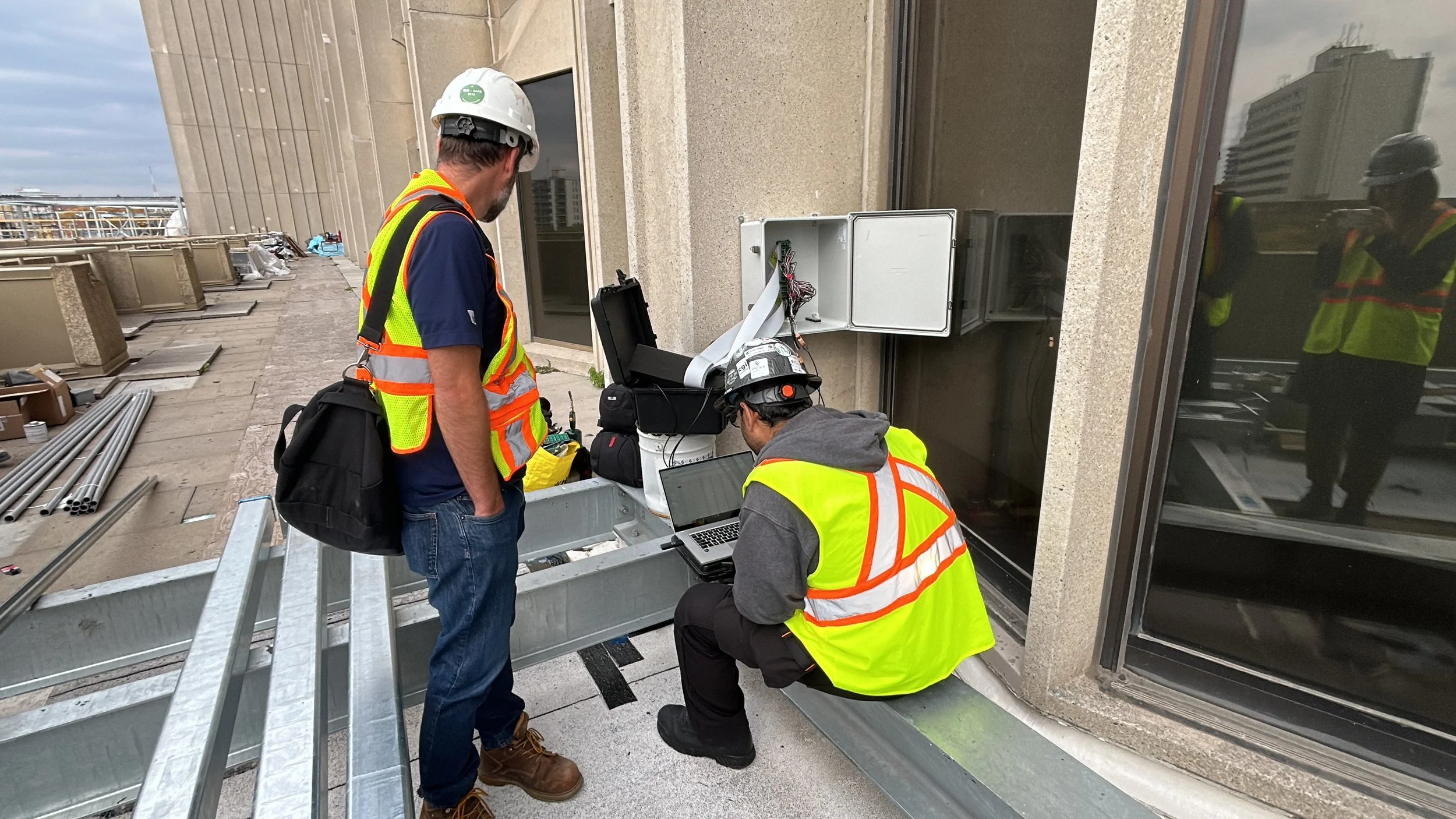
Left: Green roof installed on top of an inverted roof assembly. Middle: Completed Green Roof . Right: Portable Passive Leak Detection System Electronics. Photo: SMT
The green roof system was completed, with planters placed around the perimeter.
When a leak was discovered by a tenant, we returned to site to activate the system and take readings of the membrane environment. Multiple readings with varying levels of rooftop saturation were taken and analyzed.
Data from the leak detection system was used to generate a “heat map” of the waterproof membrane, narrowing a search area for the source of the leak.
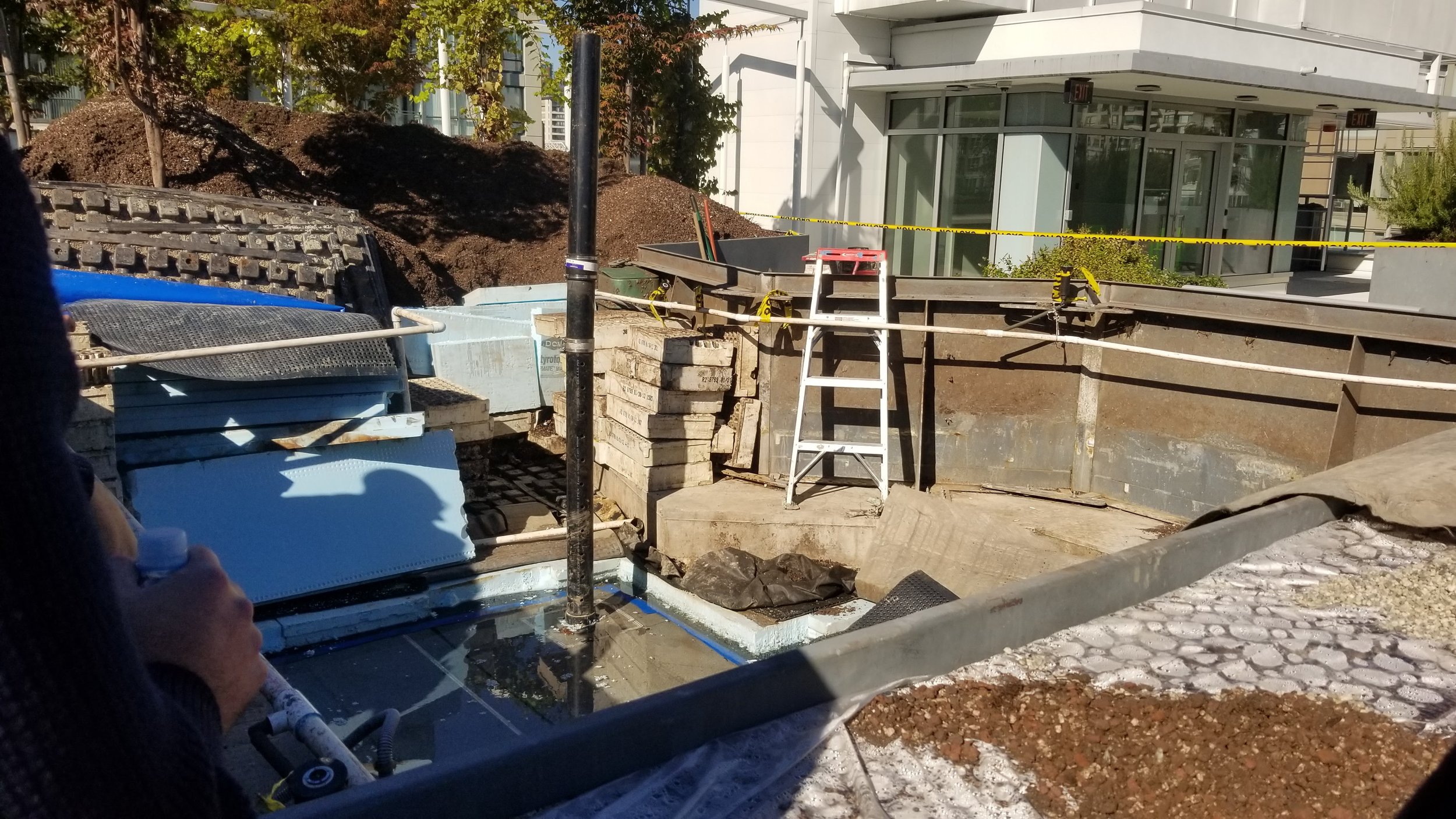
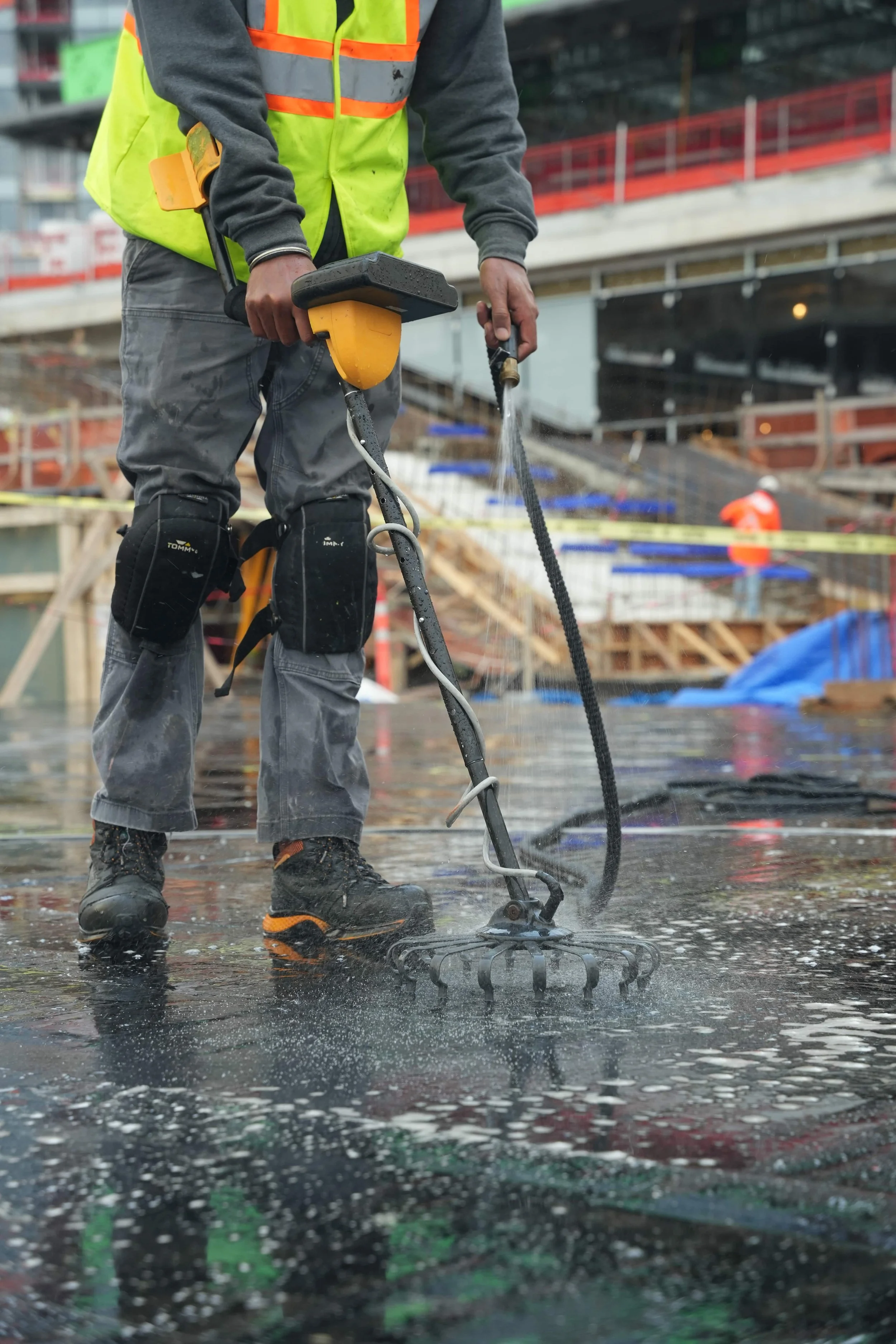
Left: CAD drawing illustrating the likely area of the leak, Photo: SMT Analytics. Middle: small area of exposed membrane for leak investigation. Right: DigiScan 360 device scans waterproof membrane, giving a vector towards the leak source. Photos: SMT
A small area of green roof was removed, allowing tenants to still enjoy the majority of the roof and saving a lot of time and cost.
During the excavation of the overburden exposed membrane was scanned with a DigiScan device to pinpoint the location of the leak.
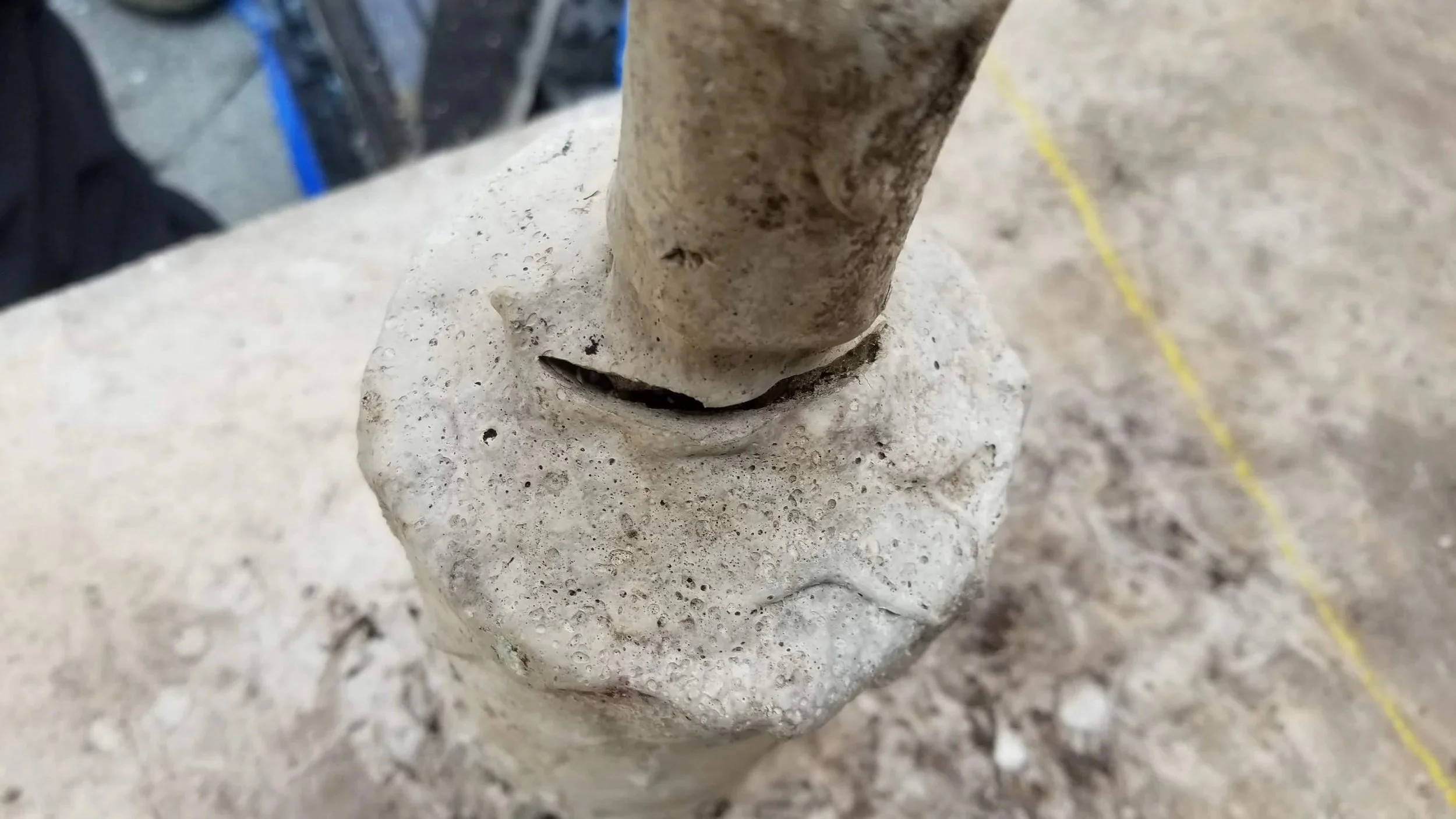
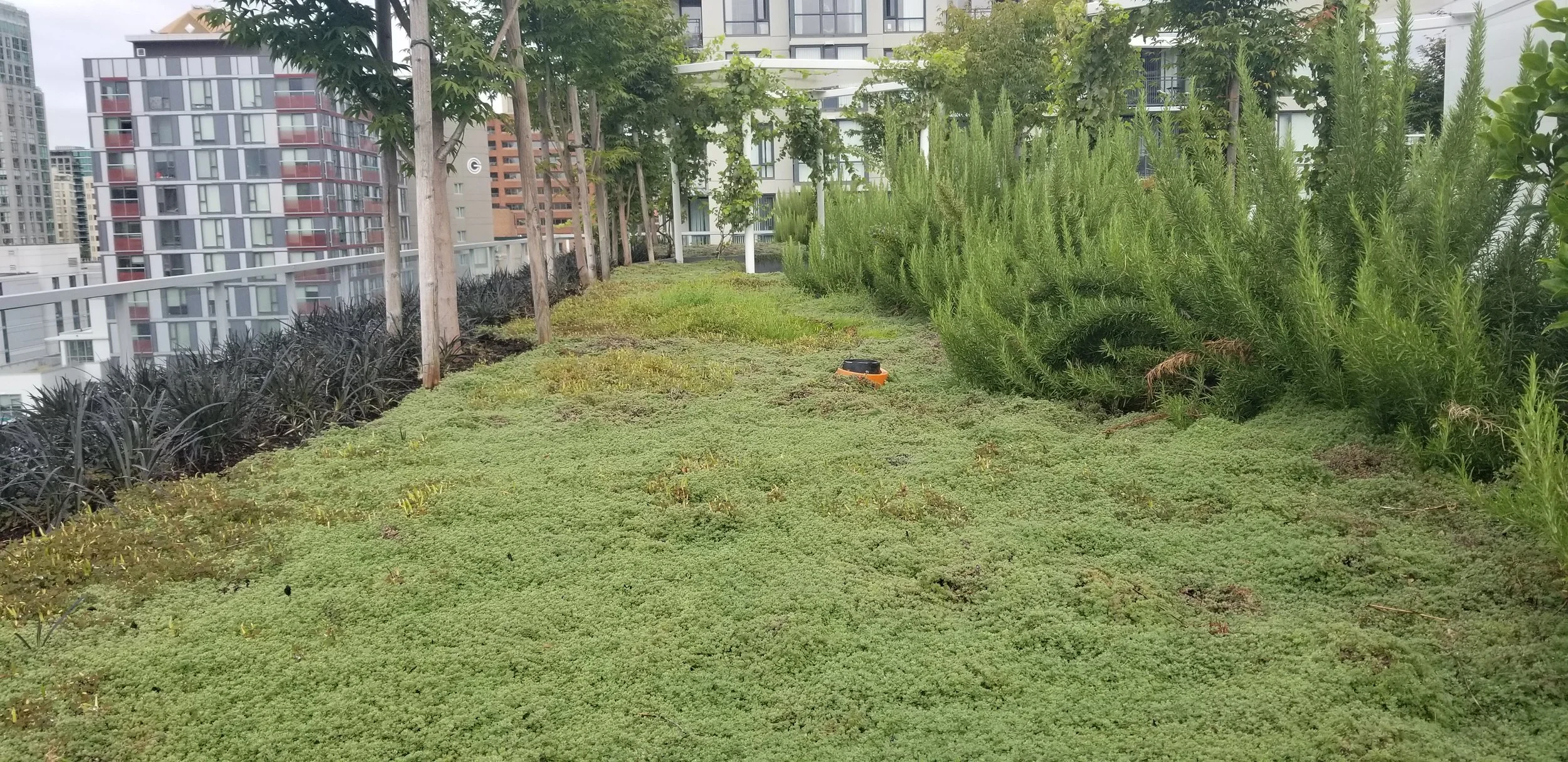
Left:Damaged pipe located. Right: Fully Covered Green Roof. Photos: SMT
A damaged pipe was located, with the scanning tool also indicating that the pipe was damaged further down on a different level - allowing for a comprehensive repair.
The roof was re-covered, with the leak detection system used periodically to check for the health of the membrane and the success of the repairs.
Advertisement
Fully Automated Monitoring
The best protection for a green roof is a fully automated leak detection system. SMT has installed over 30 fully automated leak detection systems active across Canada and the United States, offering near-live performance data for the waterproof membranes protecting structures with green roofs.
On one such project, our FutureCast automated leak detection system triggered an alarm for a membrane breach. The system data highlighted a small area of the green roof for removal so that the breach could be found.
In this instance, the membrane breach had been caused during the installation of the green roof, specifically landscaping stone placed as a walkway and barrier around the perimeter of the extensive green roof. Stones from this barrier were kicked underneath the drainage mat, allowing the full weight of the overburden to press the stone into the waterproof membrane. This kind of damage has been seen on multiple sites, and is especially pronounced where new details such as lampposts, electrical outlets, or benches have been added to the roof.
Conclusion
A green roof is installed with the mindset of longevity and resilience, yet at its foundation is a waterproof membrane at risk from all the daily activities of a construction site, with damages occurring that may not be obvious until well after construction is complete. Taking great care during installation of green roof elements is a good way to reduce the occurrences of these damages, but a fully automated monitoring system that lasts as long as the roof is the best long term solution to protecting the roof.
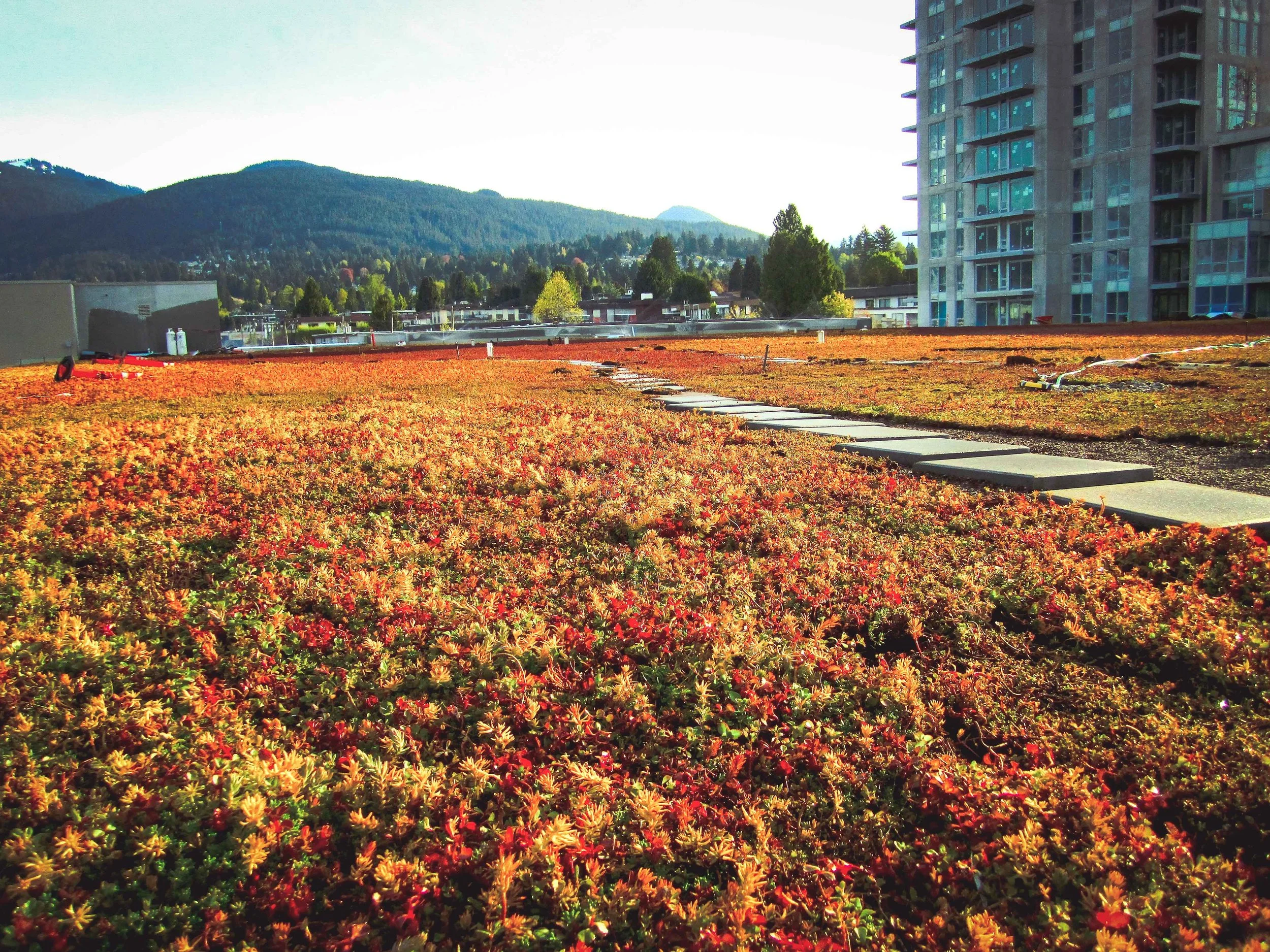
Fully Covered Green Roof, Months into Building Operation. Photo: SMT
Advertisement
Joe Dakin, Communications Assistant at SMT Research, has been with SMT Research since 2020, mainly focusing on long-form written content including white papers and blog posts. He is particularly interested in how structure monitoring can be used to extend the life of the built environment for future generations to enjoy.
For more information, visit smtresearch.ca