Sky-High Returns: The Economic and Social Case for Green Roof Amenity Space
Advertisement
Introduction
Green spaces are more than amenities. They are necessities. As North American cities are densifying to combat climate change, accommodate population growth and address housing affordability, multi-unit residential development such as condominiums and apartments are often prioritized to add housing supply. Integrating high-quality green roof amenity space into these densely populated buildings becomes increasingly valuable and necessary for human well being, as green spaces at grade are limited. COVID-19 has also inadvertently blended work into our personal lives and shone a spotlight on the importance of green space on mental and physical health with millions of people flocking to limited urban park space for respite.
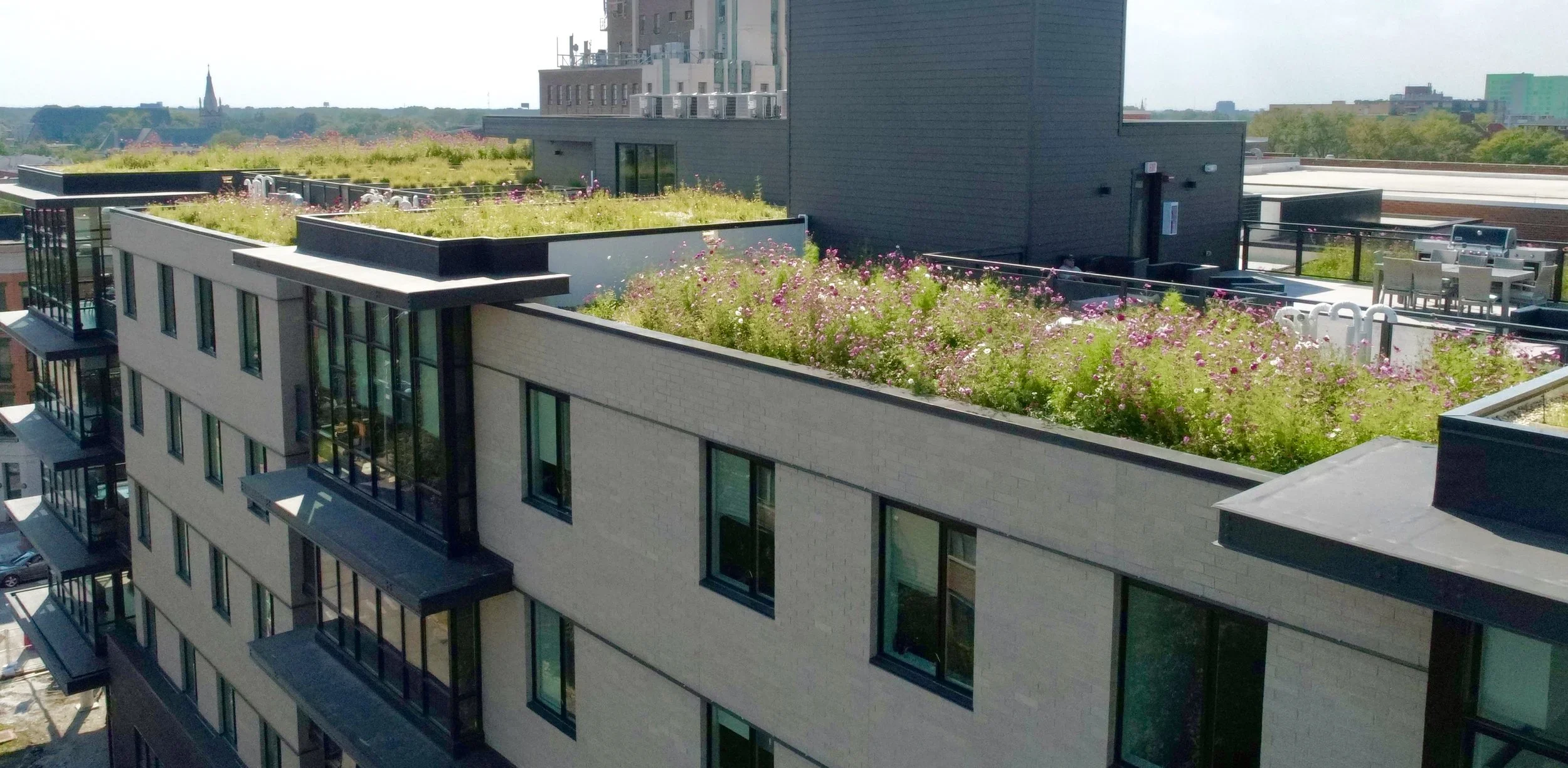
The 2nd-floor units with green roof were sold for 12.4% more per unit on average than their 3rd-floor counterparts without. District House, Oak Park IL. Photo: Omni Ecosystems
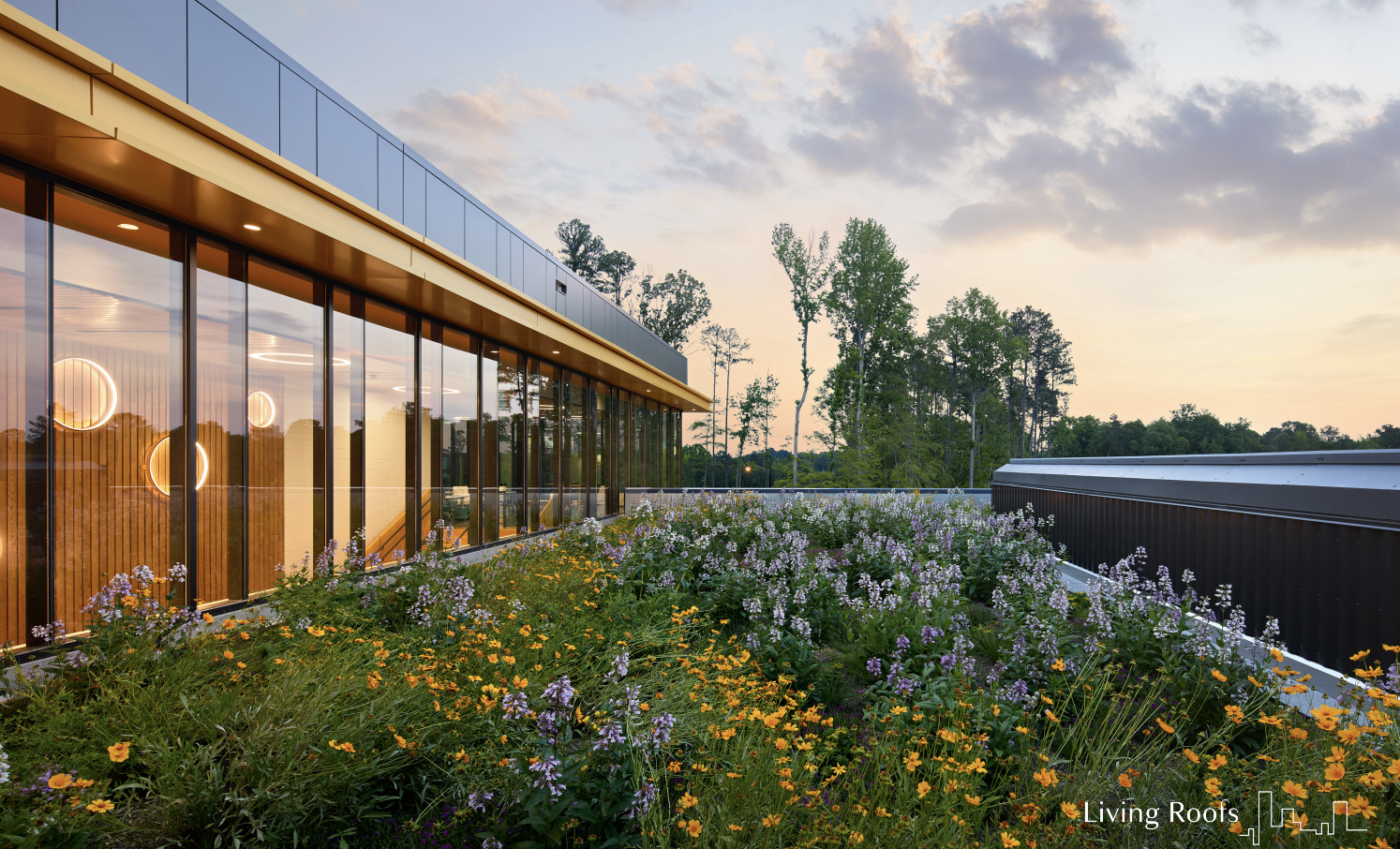
Vegetated roofs are fully visible from inside the school and the outdoor terrace, offering biophilic views and hands-on learning opportunities for students and staff. Photo: Living Roofs
Yet few studies have quantified this “soft” benefit of green roofs in terms of their monetary value. In the US, a study using hedonic regression techniques estimated that rents in apartment buildings with green roofs in the Battery Park City neighbourhood of New York were, on average¹, 16 percent higher than the same apartments without. The developers of District House, a midrise luxury condo in Oak Park IL, reported that the 2nd-floor units with private lawned terraces sold for 12.4 per cent more per unit than their 3rd-floor counterparts without green roofs². This was equivalent to a premium of US $95,030 per unit while the green roof construction cost was less than US $20,000 per unit.
In Canada, a study for the Canada Housing and Mortgage Corporation (CMHC) estimated that a recreational rooftop garden would raise the property’s value by approximately 11 per cent³. More recently, a University of Northern British Columbia (UNBC) study found green roofs positively influenced the listing prices of dwellings in Vancouver BC and Toronto ON⁴. By analyzing 2000 listing samples, the study estimated, using hedonic pricing model, that a green roof in Vancouver increased the property’s value by CDN $708,117.32 on average. Considering the mean price of the listing samples in this study was CDN $2,422,815.46, a green roof increased the property value in Vancouver BC by about 29 per cent on average.
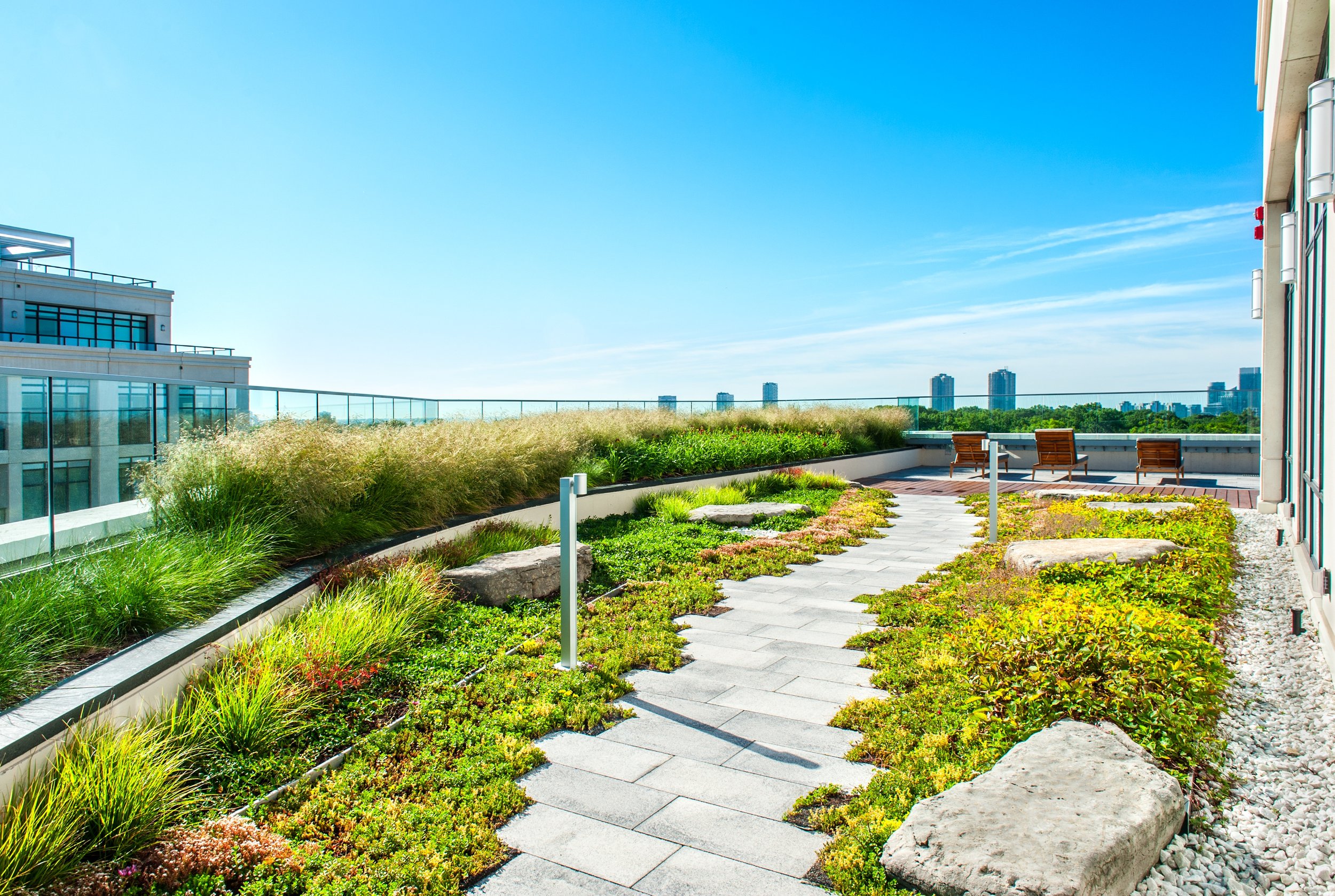
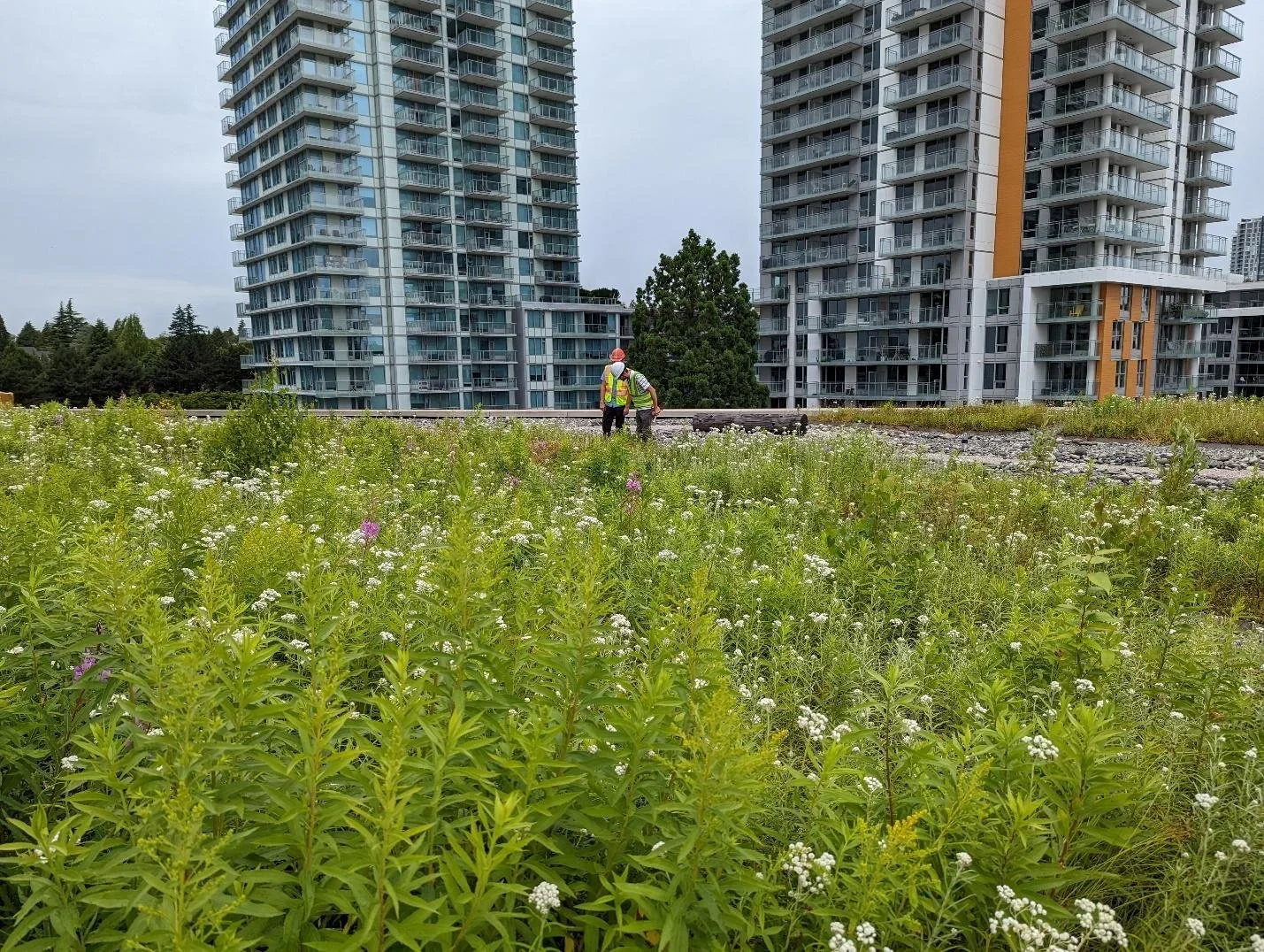
A Canadian study found that the property value was increased by CAD 30.43 per square foot of green roof installed at Two Old Mill, Toronto ON. Photo: Next Level Stormwater Management
By analyzing additional green roof area dataset for the Toronto ON listing samples, the researcher further found that the property value was increased by CDN $327.46 per square meter (CDN $30.43 per square foot) due to green roofs installed in Toronto. Considering a typical extensive green roof costs CDN $25-35 per square foot in Toronto, a developer can recover all or a large part of their investment upfront from the increase in listing price alone, without considering other benefits such as energy savings, meeting stormwater management requirements, and the extended service life of the roof membrane.
Multi-functional Rooftop Hardscapes
Municipal requirements on recreational outdoor amenity space and pervious landscaped surfaces for stormwater management often compete for precious roof space on new developments. This challenge can be exacerbated by limitations on “double dipping”, e.g. the City of Toronto states that no more than 25 per cent of the outdoor amenity space may be a green roof for apartment buildings. Fortunately, there are technologies / strategies available to allow amenity space to also manage stormwater effectively.
Advertisement
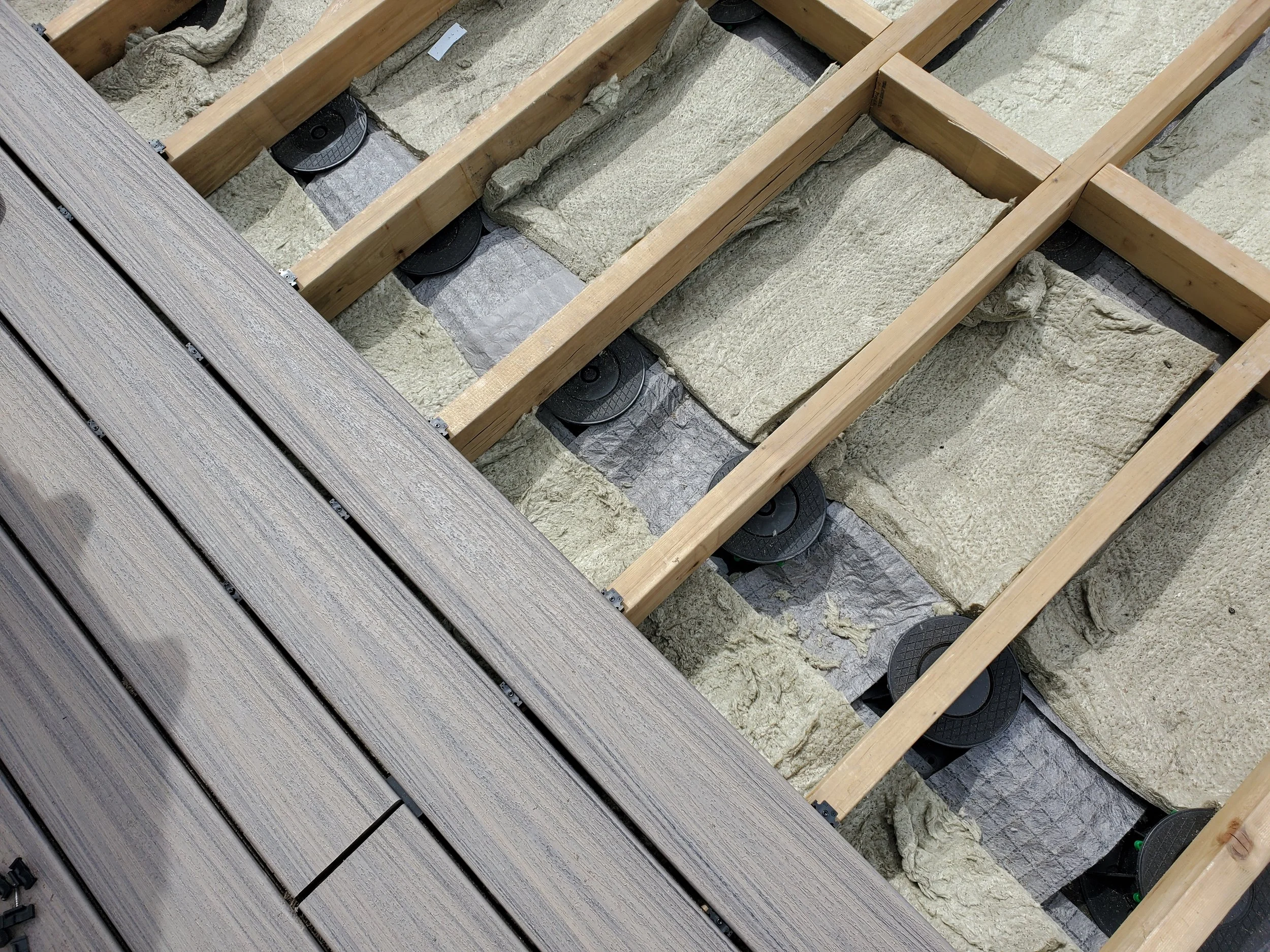
Installing water absorbent materials under the patio decking to add water retention capacity to the green roof amenity space at AbCellera, Vancouver BC. Photo: Next Level Stormwater Management
One example is to incorporate water absorbent materials in the space under the patio pavers or decking on pedestals, essentially transforming an otherwise impervious amenity space into a previous surface to help meet the water balance target on site. Another example is to install control flow drains and convert the space below the patio into a temporary detention reservoir to help meet the site’s quantity control target. These tools can be integrated seamlessly with a green roof or blue-green roof to create a dual-function stormwater management green amenity space.
Urban multi-unit residential buildings are great candidates for multi-purpose amenity green space. These buildings usually feature a ground floor built to the property line, with a podium roof transition to a smaller floor plate of multi-family units. “The step back area sees high value in being an intensive or extensive green roof.” says Eric Shullman, Senior VP of Gateway Jax, a developer based in Jacksonville, Florida. “These green roof amenity spaces perform multiple functions – they are visually appealing and allow residents to connect with nature while managing stormwater and enhancing biodiversity.”
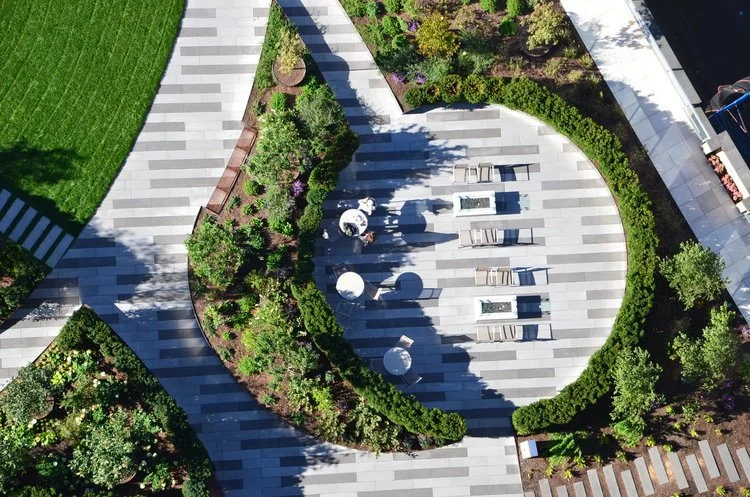
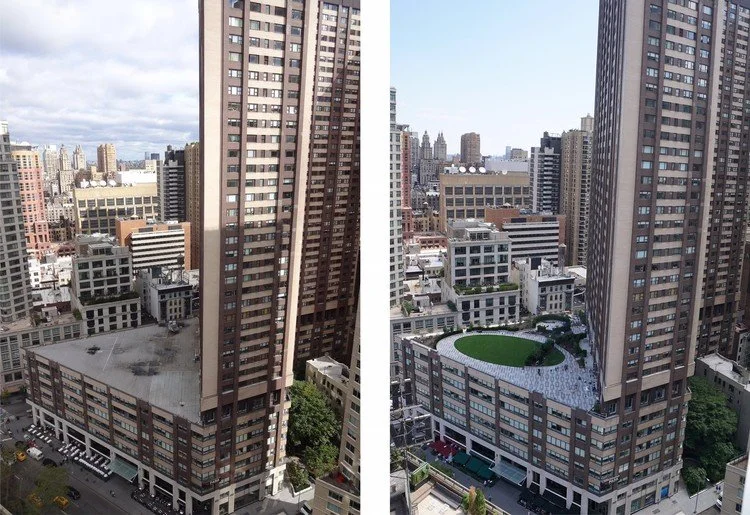
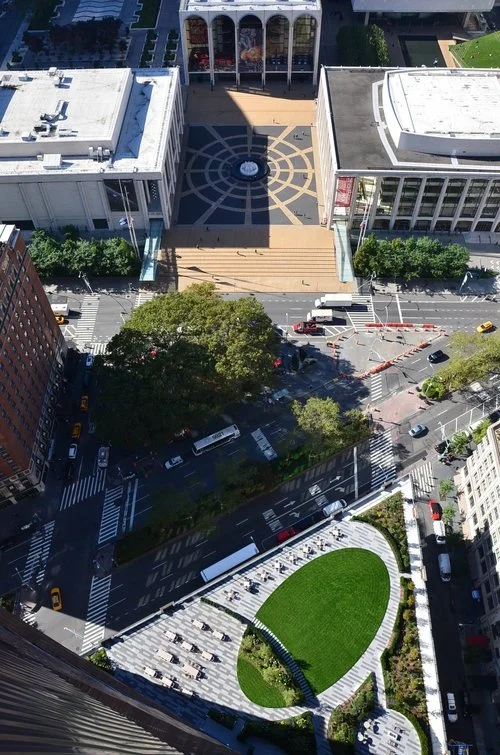
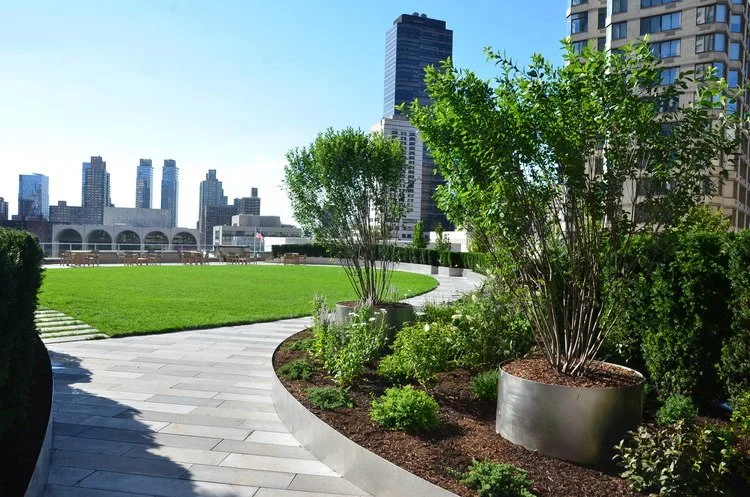
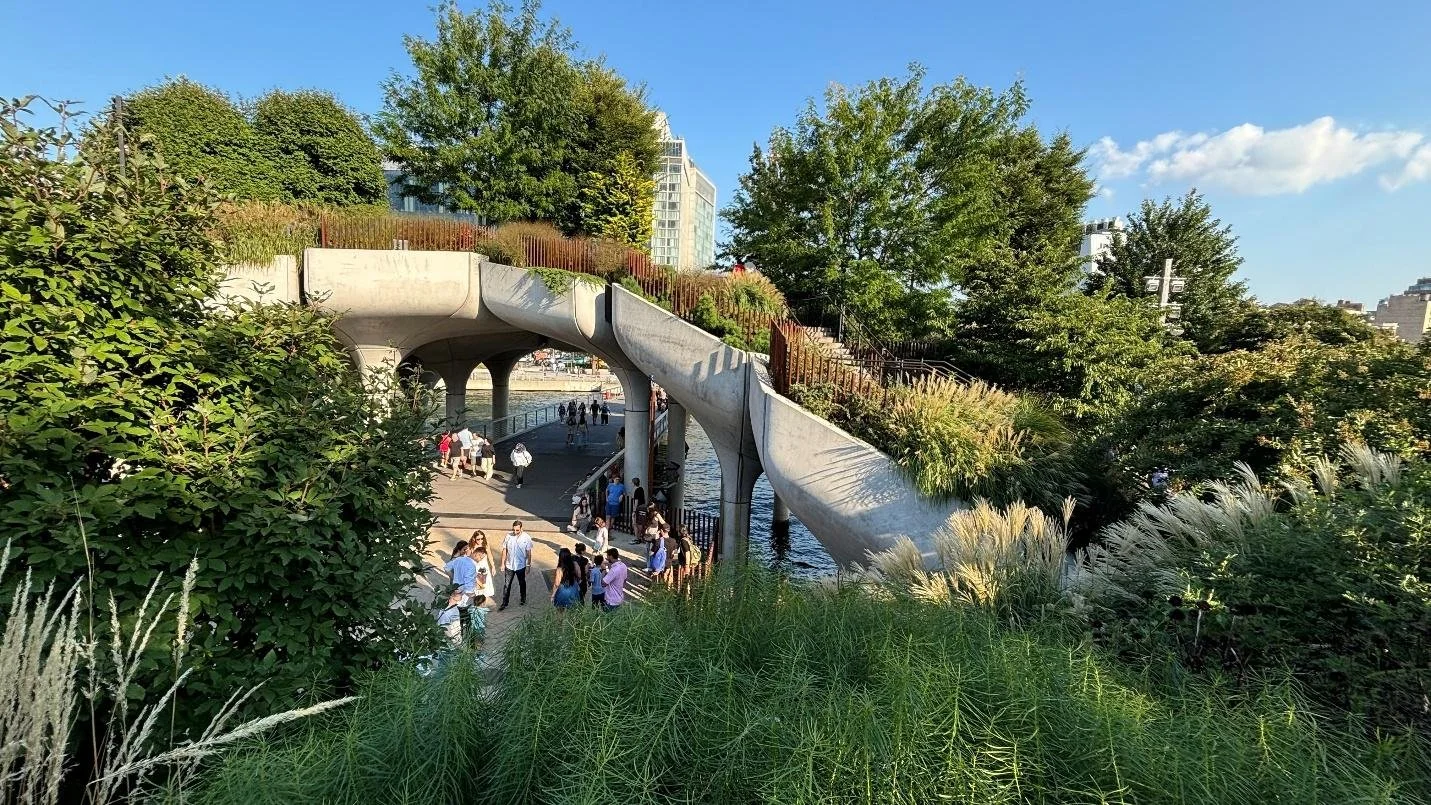
Podium roofs in multi-unit residential buildings are great candidates for creating value-added multi-purpose green amenity spaces. 1 Lincoln Plaza, NYC. Photo: FXCollaborative
Advertisement
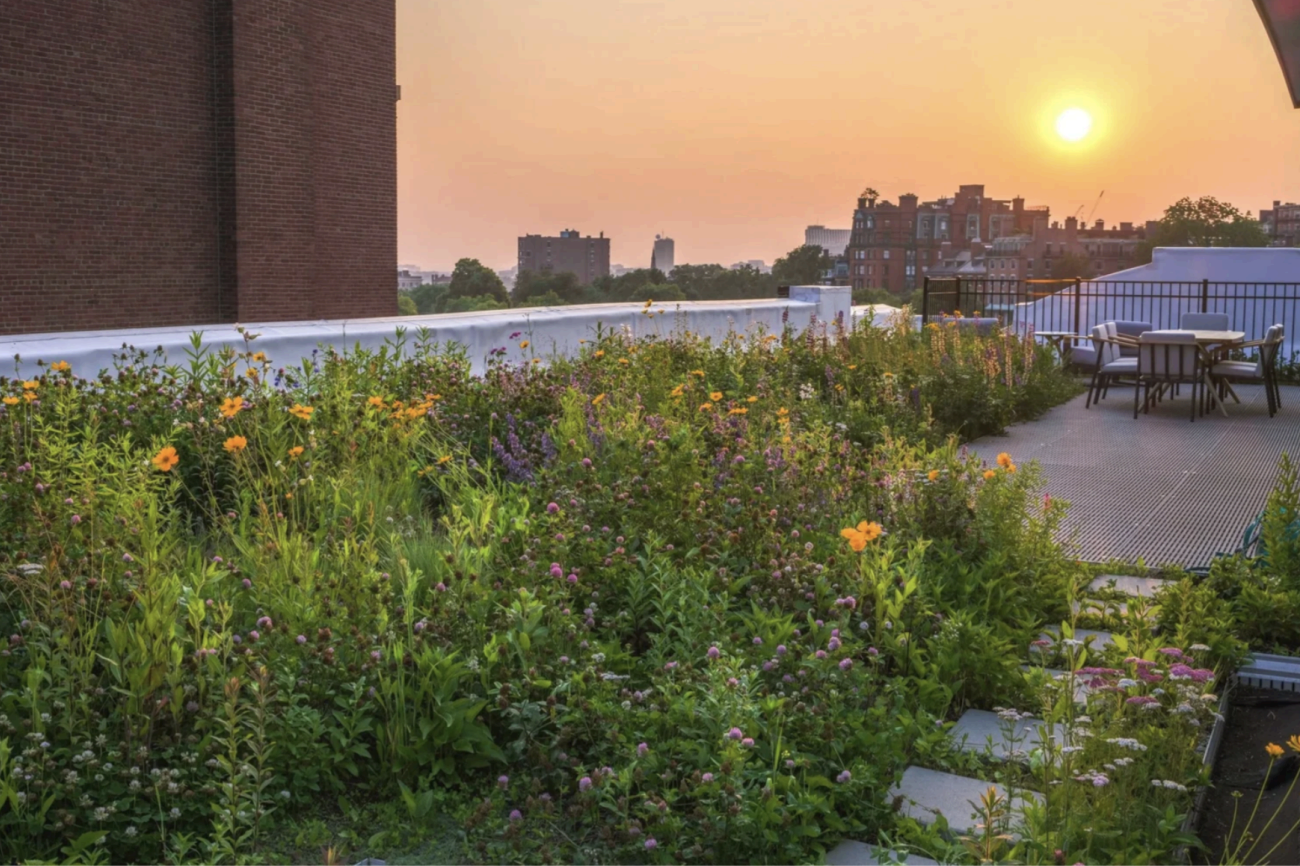
This green roof provides safe, accessible outdoor learning environment and living laboratory for the students. Photo: 127 Tremont, Recover Green Roofs
Growing Demand for Green Roof Amenity Space
While stormwater management is driving the adoption of green roofs across North America, the need for green amenity space continues to grow as North American cities densify. “Green roof amenity spaces are probably 75 per cent of our revenue, giving us full-time, year-round work.” says Mark Winterer, co-founder at Recover Green Roofs, a specialized green roof design-build firm that operates in the New England region in the US. This revenue stems from the design, installation and maintenance of the green roof amenity space.
In addition to environmental and economical benefits, green roof amenity space adds social values and fosters community connection. They can provide quiet spaces and a green oasis in busy commercial buildings for employees to take breaks, have lunch, exercise or meet. Tim Sudweeks, a designer with FXCollaborative, said this about a 8th floor Terrace green roof in New York City, “The addition of vegetation and uses including a fire pit, bench seating, grass oval, dining tables, and perimeter walking track enhances the experience of living and working in Manhattan’s dense urban context and raises property values with multiple opportunities for relaxation and exercise. Building energy costs are reduced by the addition of insulation, solar reflectance of pavers, and evapotranspiration from the green roof. Movable planters and a custom removable tent design enable the roof to be rented for events or weddings.” Rentable green roof amenity space is not an opportunity for everyone, but it does add another potential financial return on investment opportunity for some building owners and it is a regular feature of many rooftop farms.
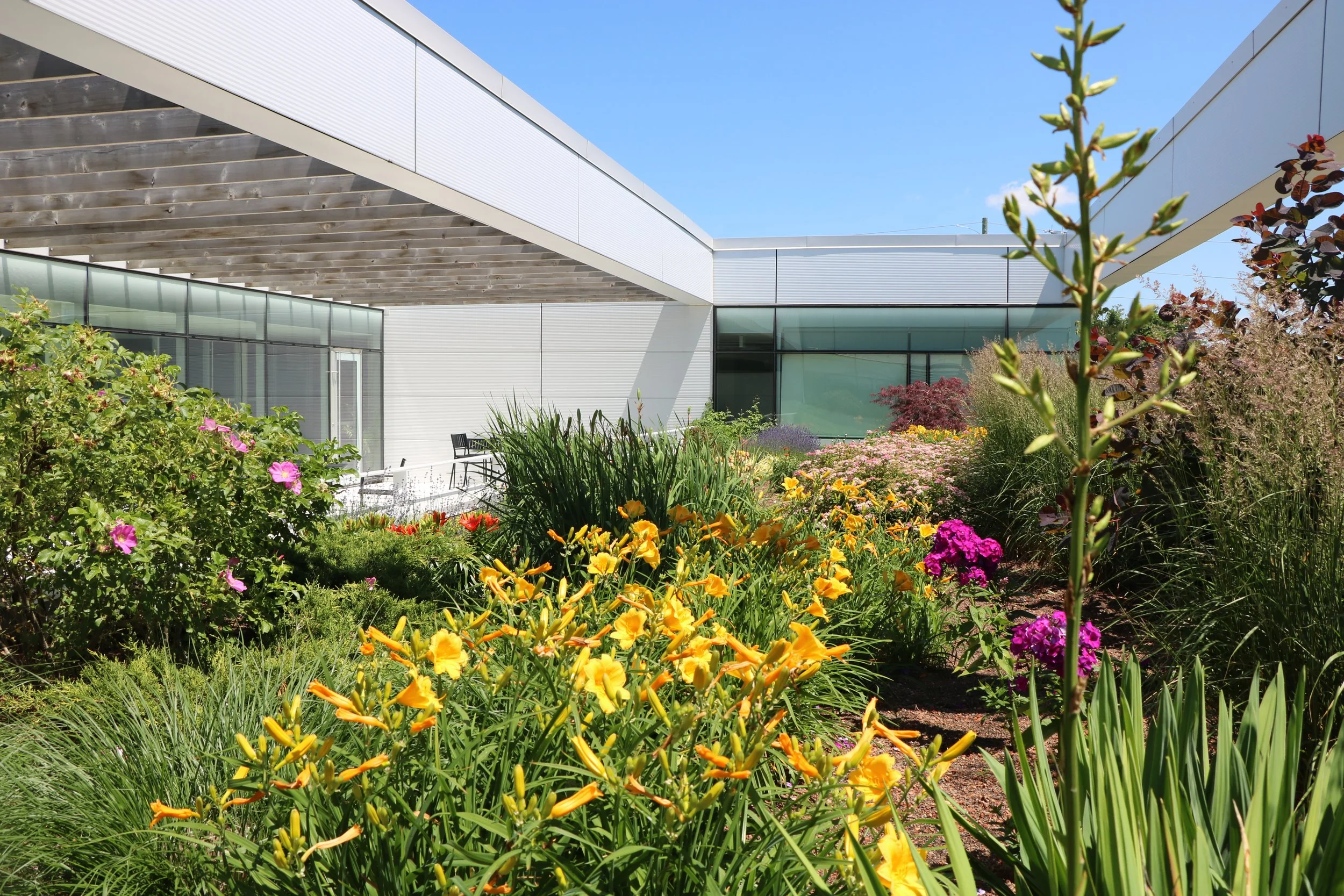
This green roof offers a quiet biophilic space for employees to take breaks, have lunch or meet. Robert C. Austin Operations Centre, Georgetown ON. Photo: Next Level Stormwater Management.
Even only visible green roofs are able to support human well being and improve property values. For example, roof gardens on schools not only create restorative biophilic spaces that connect students and staff to nature but can also create an accessible outdoor learning environment and living laboratory to enrich the curriculum and encourage hands-on exploration. Kate Ancaya, Owner, Living Roofs Inc spoke about a school project in Durham, NC in a survey conducted by GRHC on the subject of amenity space value. " The green roofs are visible, and offer a restorative view that supports student and staff well being, reduces stress, and strengthens daily connections to nature. As a biophilic, outdoor learning environment, it enriches curriculum and encourages hands-on exploration. Importantly, it sets a precedent for schools across the Southeastern region...establishing a new regional standard for sustainable educational design."
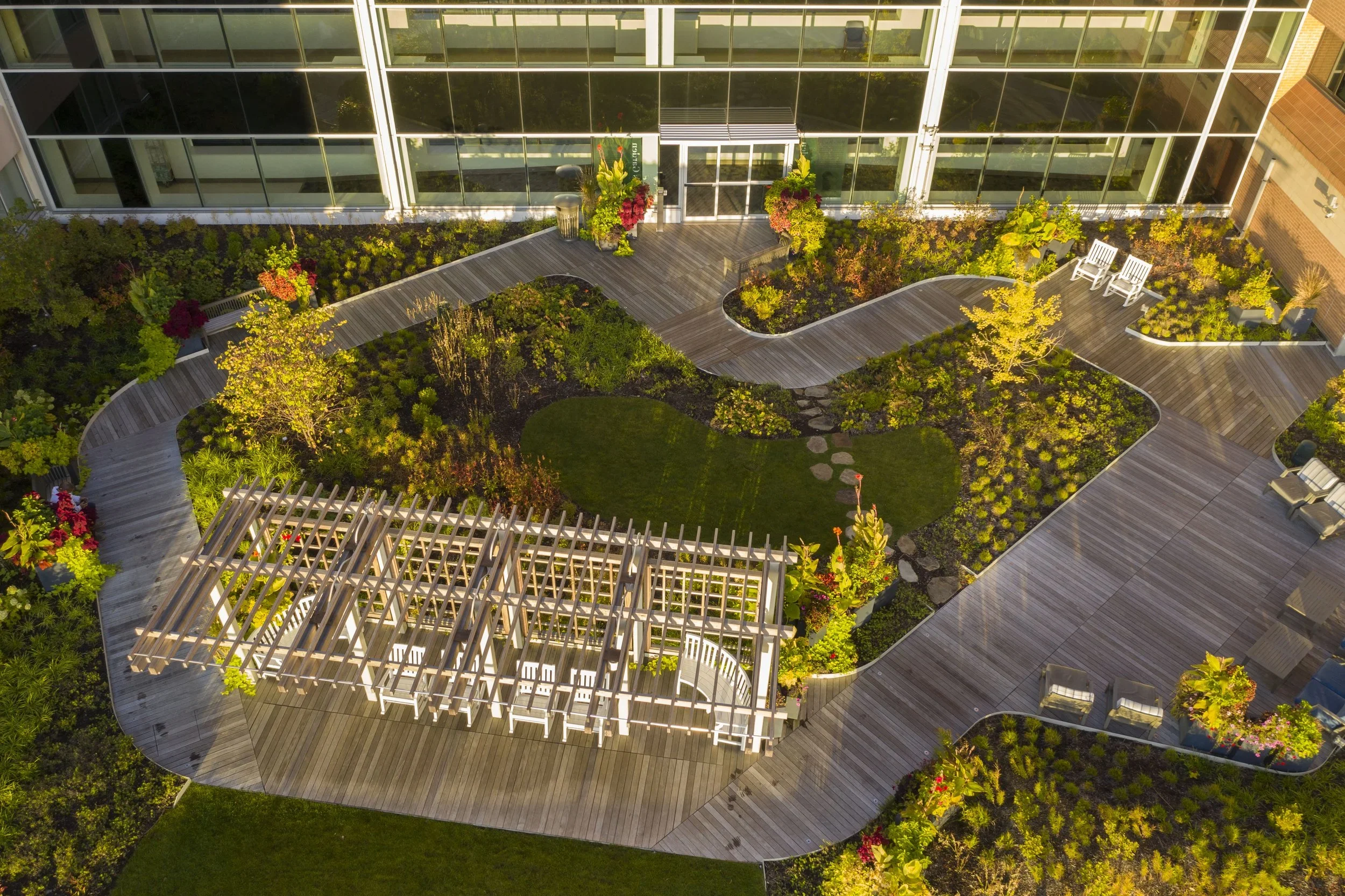
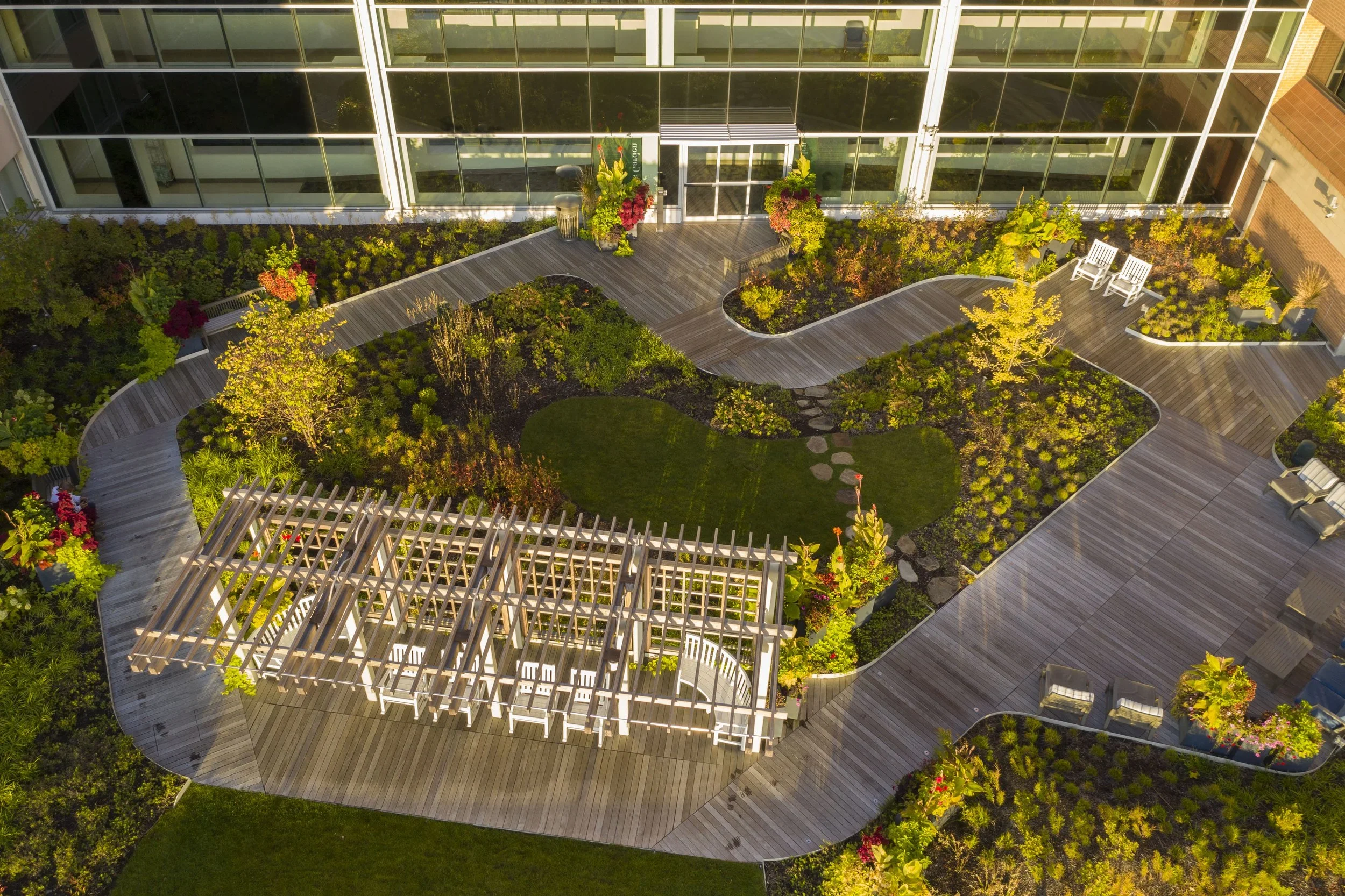
This green roof amenity space offers a therapeutic retreat for patients and a quiet respite for visitors and staff. Carle Foundation Hospital, Urbana IL. Photo: Omni Ecosystems
It is well established in the scientific literature around biophilia that rooftop gardens in hospitals provide a therapeutic benefit for many patients and a quiet respite for hospital staff and visitors to manage stress. For more information about the connection between nature access and human health please visit the Health Issue of the Living Architecture Monitor.
Conclusion
While the return of investment is building and place dependent and therefore varies widely from project to project, anecdotal reports and a handful of research studies have demonstrated that urban green roof amenity space increases property value and makes financial sense. In some cases, a green roof can also contribute to human health and well-being, healing and stress reduction, provide learning environments, support community, and even facilitate additional event rental incomes.
The value of accessible roof gardens should not be overlooked when evaluating different design options, and the possibility of achieving multiple design objectives. With over 80 per cent of people in the US and Canada living in cities, green roof amenity space is becoming more and more necessary to meet the needs of urban dwellers. Designers should be prepared to create green roof amenity spaces that serve these multiple functions to maximize the benefits for their clients.
Advertisement
Dr. Karen Liu is the Green Roof Specialist with Next Level Stormwater Management. Karen is an experienced researcher and educator and conducted green roof research at both National Research Council Canada in Ottawa and British Columbia Institute of Technology in Vancouver. As a former global product manager with a major German green roof company, she has extensive practical experience across North America, Europe and Asia. She is a member of the CSA A123 Technical Committee responsible for numerous roofing and green roofing standards. Karen serves on the Editorial Board of Green Roofs for Healthy Cities’ Living Architecture Monitor and contributes to training programs for green roofing professionals. She also serves as a lay councillor for the Ontario Association of Landscape Architects and on the Board of Directors for the Green Roof Infrastructure Network BC.
Next Level Stormwater Management is one of Canada’s leading green roof suppliers, providing innovative vegetated roofing and stormwater management systems engineered for high performance and regional requirements.
Ichihara, K., & Cohen, J. P. (2011). New York City property values: what is the impact of green roofs on rental pricing? Letters in Spatial and Resource Sciences, 4(1), 21–30. https://doi.org/10.1007/s12076-010-0046-4
Tomalty, R., Komorowski, B., & Doiron, D. (2010). The monetary value of the soft benefits of green roofs. Final Report Prepared for the Canada Housing and Mortgage Corporation. Retrieved March 18, 2026 from www.greenroofs.org/ resources/Monetary Value of Soft Benefits of Green Roofs.pdf.
Zheng, N. (2024) Investigating the Economic Value of Green Roofs in Canada’s Leading Cities (Vancouver and Toronto): A Hedonic Pricing Analysis, University of Northern British Columbia. Retrieved March 18, 2026 from https://unbc.arcabc.ca/graduate-research-projects/28873