Visioning Community - Scale Green Infrastructure Part Two - Outcomes in Chicago
Advertisement
Introduction
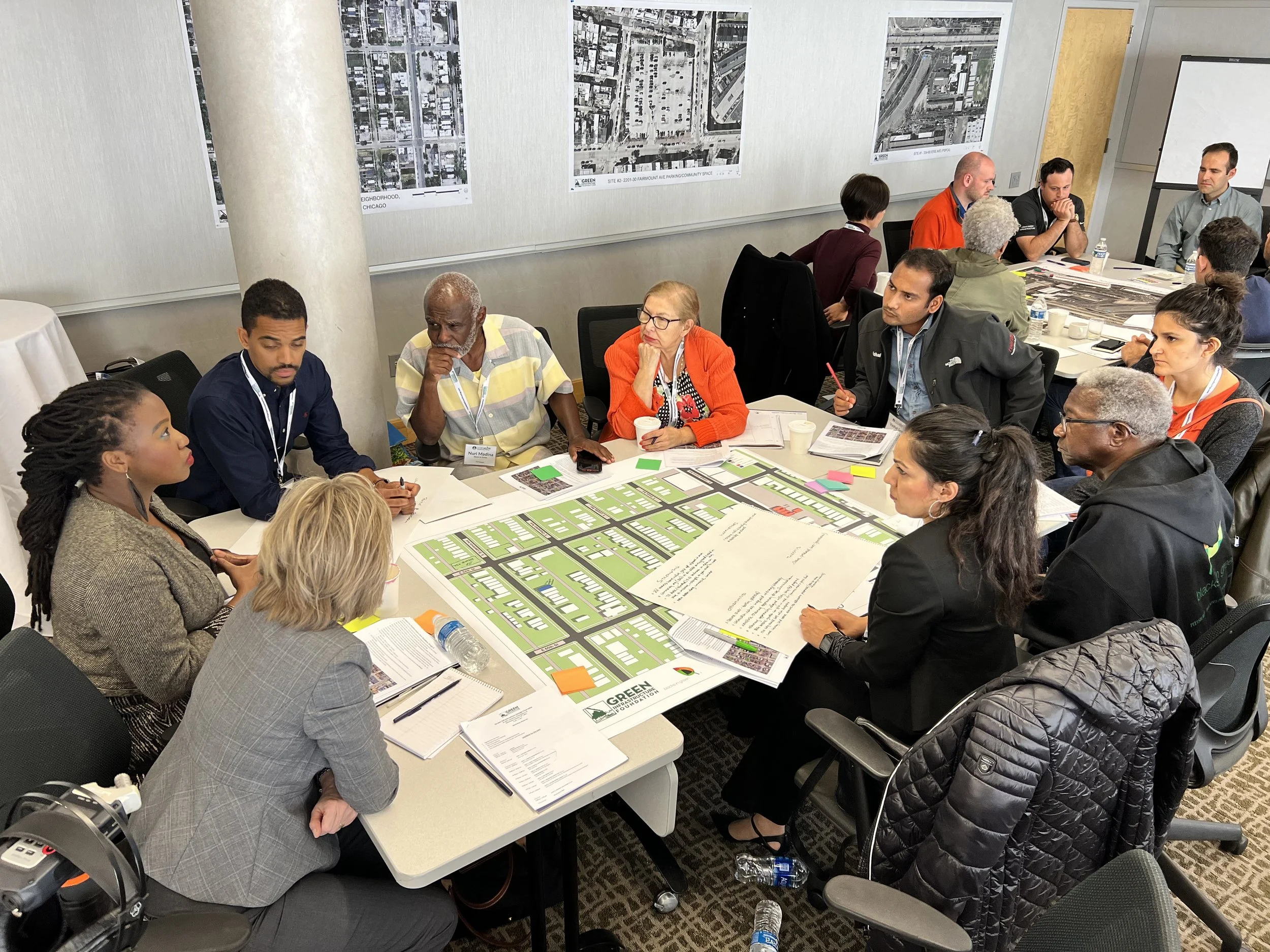
This article is about the results of the Green Infrastructure (GI) Charrette that was conducted as part of Green Roofs for Healthy Cities’ annual CITIESALIVE conference in October of 2022 in Philadelphia. The Green Infrastructure Foundation (GIF), the charitable arm of Green Roofs for Healthy Cities has been conducting these charrettes for the past two decades across North America. The goal of these charrettes is to raise awareness about the potential for exponentially greater benefits from scaling up the application of multiple green infrastructure practices in a comprehensive, integrated system, rather than as individual building scale components.
The Importance of Scale
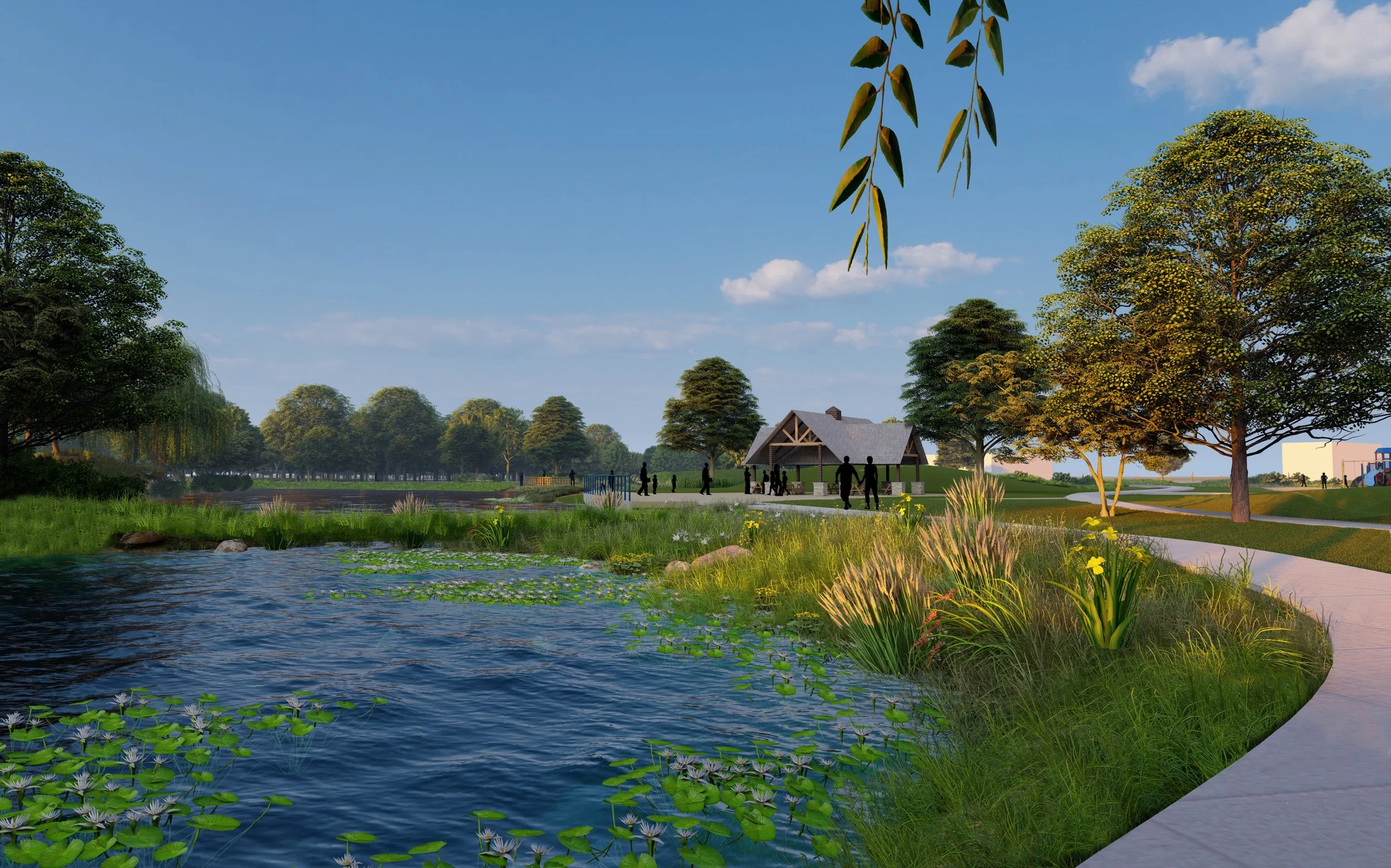
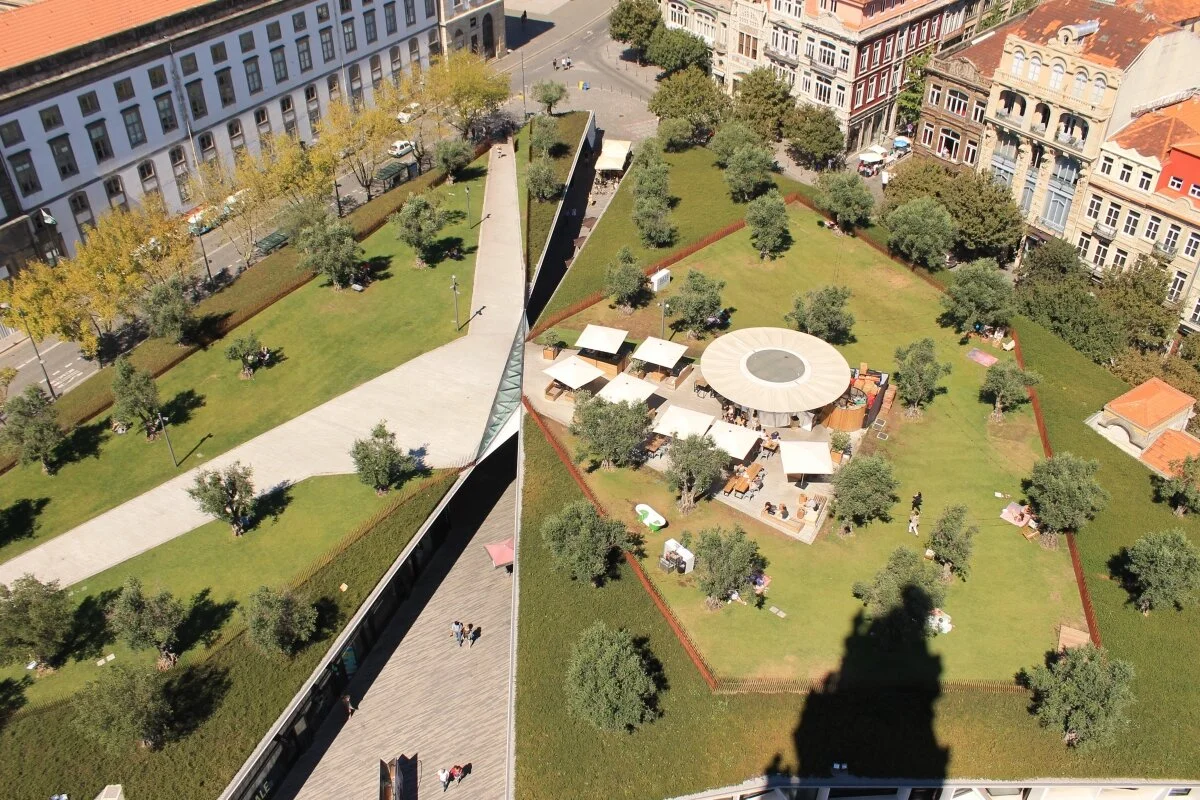
Think BIG - Dream BIGGER! While more typical site or individual building-scale applications of green infrastructure are essential, the GI Charrette explores the notion of entire blocks, corridors, or even entire neighborhoods being developed or retrofitted with a comprehensive suite of integrated GI strategies on every available surface- roofs, walls, streets/alleys, public spaces, and private yards and gardens. The economic, ecological, and social benefits of rainwater balance/flood attenuation, climate moderation/cooling/energy use reduction/ increased biodiversity/ food production/noise attenuation/human health and well-being/connection to nature, and beauty are amplified and multiplied as the scale of the application of these practices is increased.
Neighborhood or community-scale greening begins to open the door to increased local green job creation and other significant, recurring economic benefits that are often overlooked in project development proformas and analysis. The charrettes give participants the sense of the potential of scale. The charrette experience itself consists of an innovative, engaging day-long session that explores the potential to scale multiple types of green infrastructure in a way that compliments the existing environment - strengths and weaknesses. Each charrette is designed to engage a particular community group in a real location they are familiar with, and to imagine, if initial costs were no object, how that place could be transformed with the wholesale application of green roofs and walls, rain gardens, shade trees and other green infrastructure best practices.
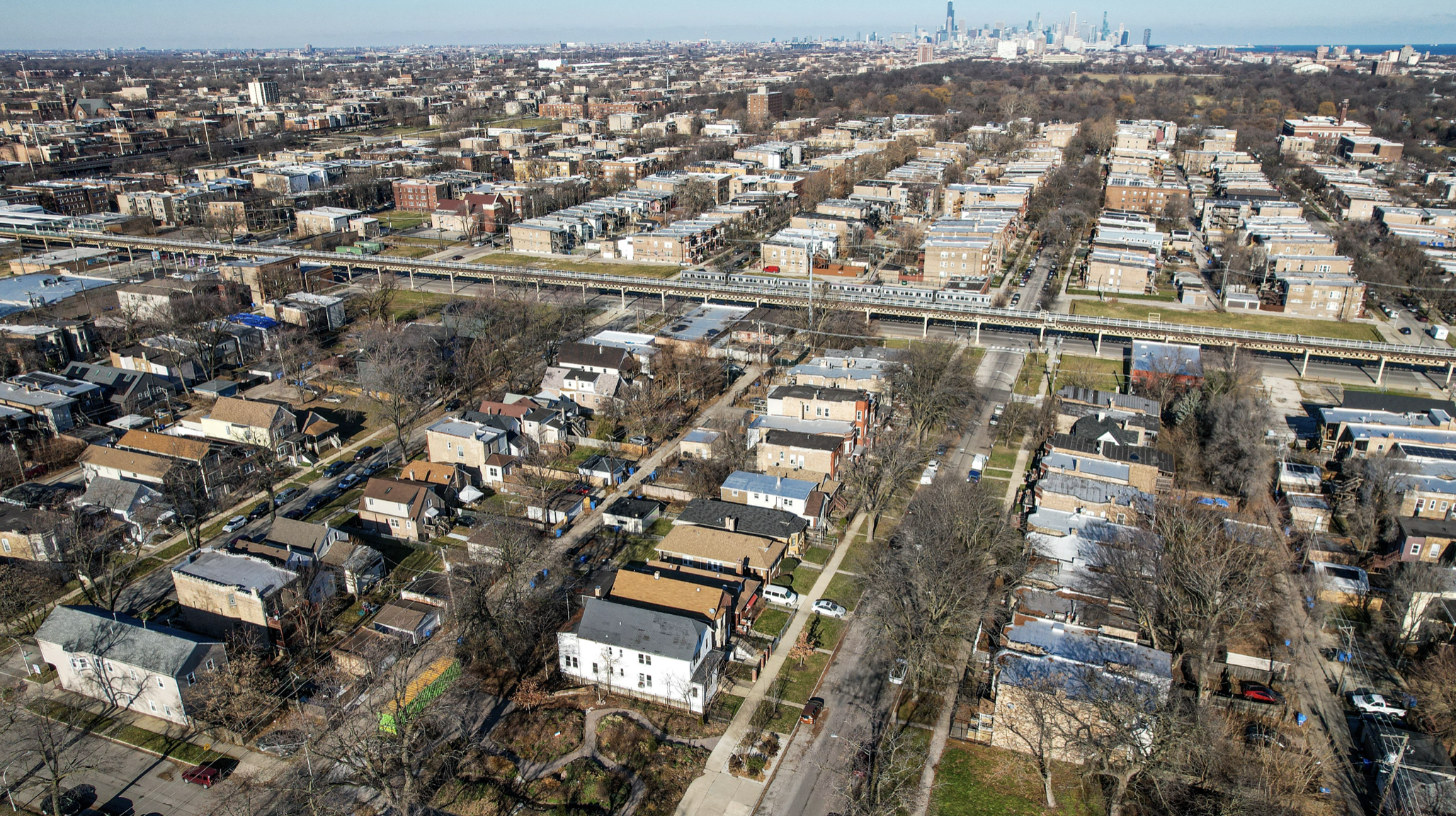
View of West Woodlawn, Chicago. Photo: BIG
Quantifying and Monetizing Benefits
But what are these increased economic values, and do they offset capital costs associated with comprehensive green urban development? Do they warrant changing the status quo of development practices by making the wholesale application of green infrastructure a matter of fact, and no longer the exception? The GI Charrette attempts to answer these questions by taking the GI scenarios created by participants and running the assumptions through a locally calibrated cost/benefit matrix developed by GIF. The outcome provides a high-level snapshot of potential economic gains to offset capital costs and possibly learning curves in communities not already adapted to GI practices.
Advertisement
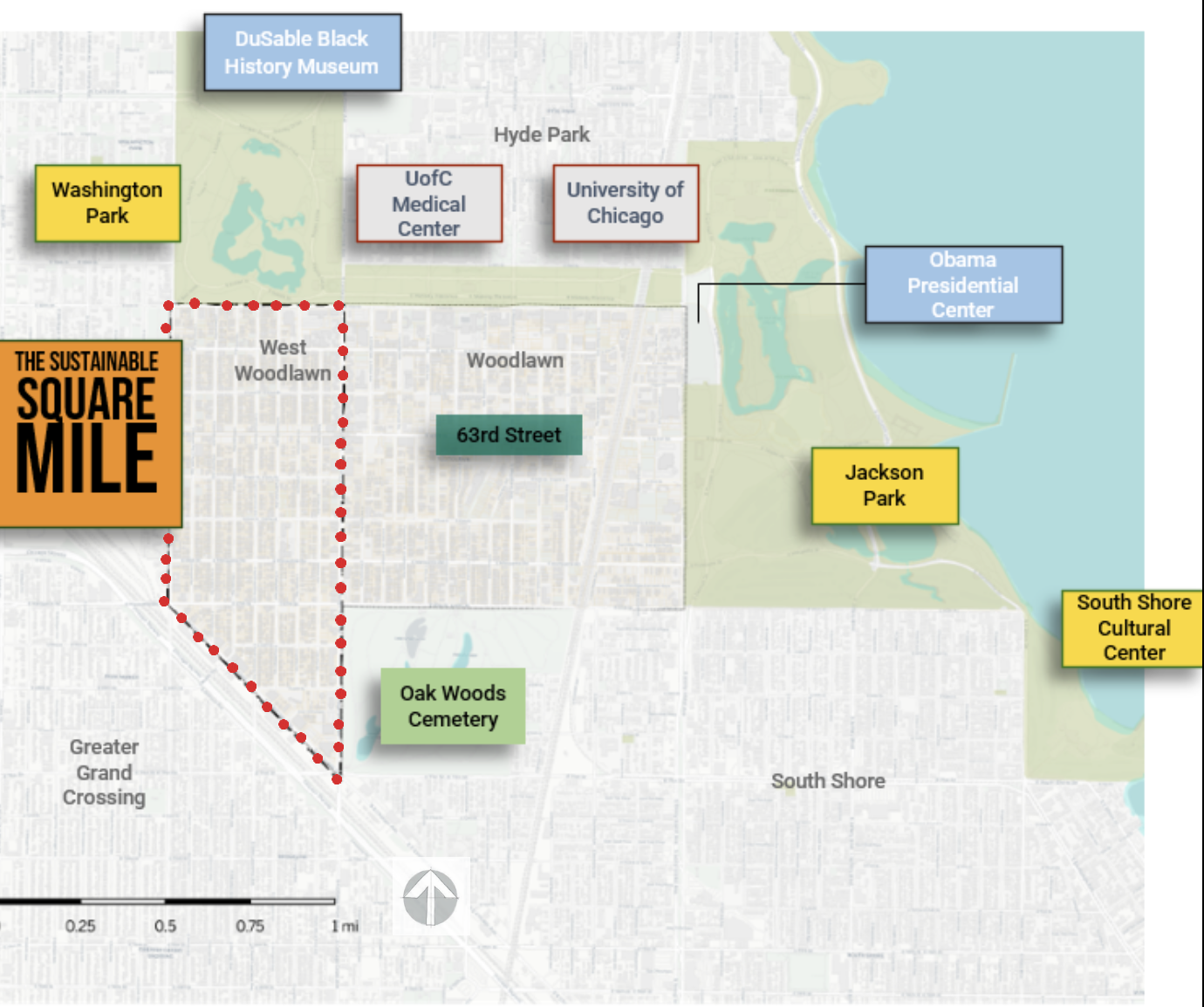
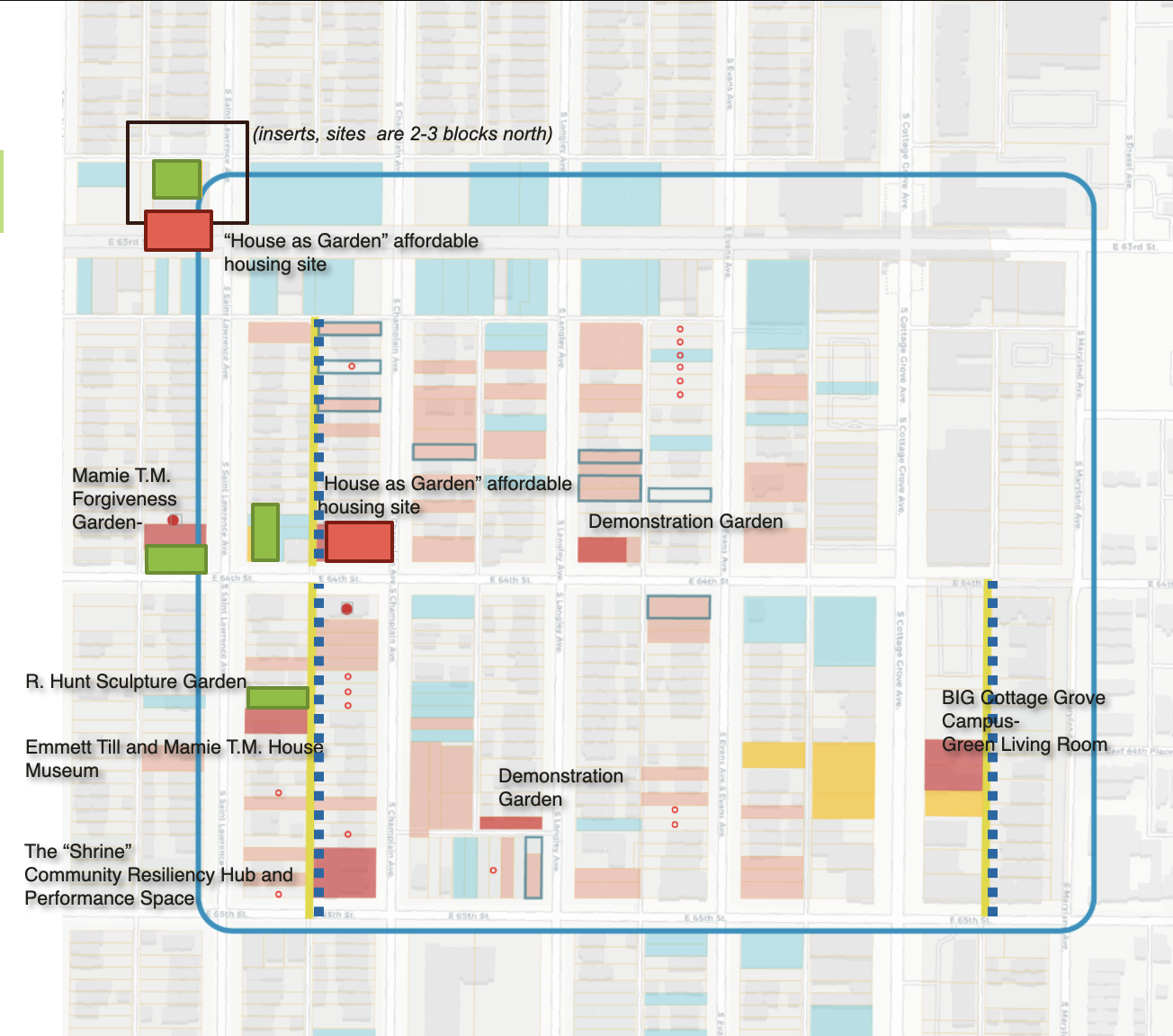
The Sustainable Square Mile™ West Woodlawn Neighborhood Context Map. Photo: BIG
BIG’s West Woodlawn Sustainable Square Mile™ pilot in Chicago
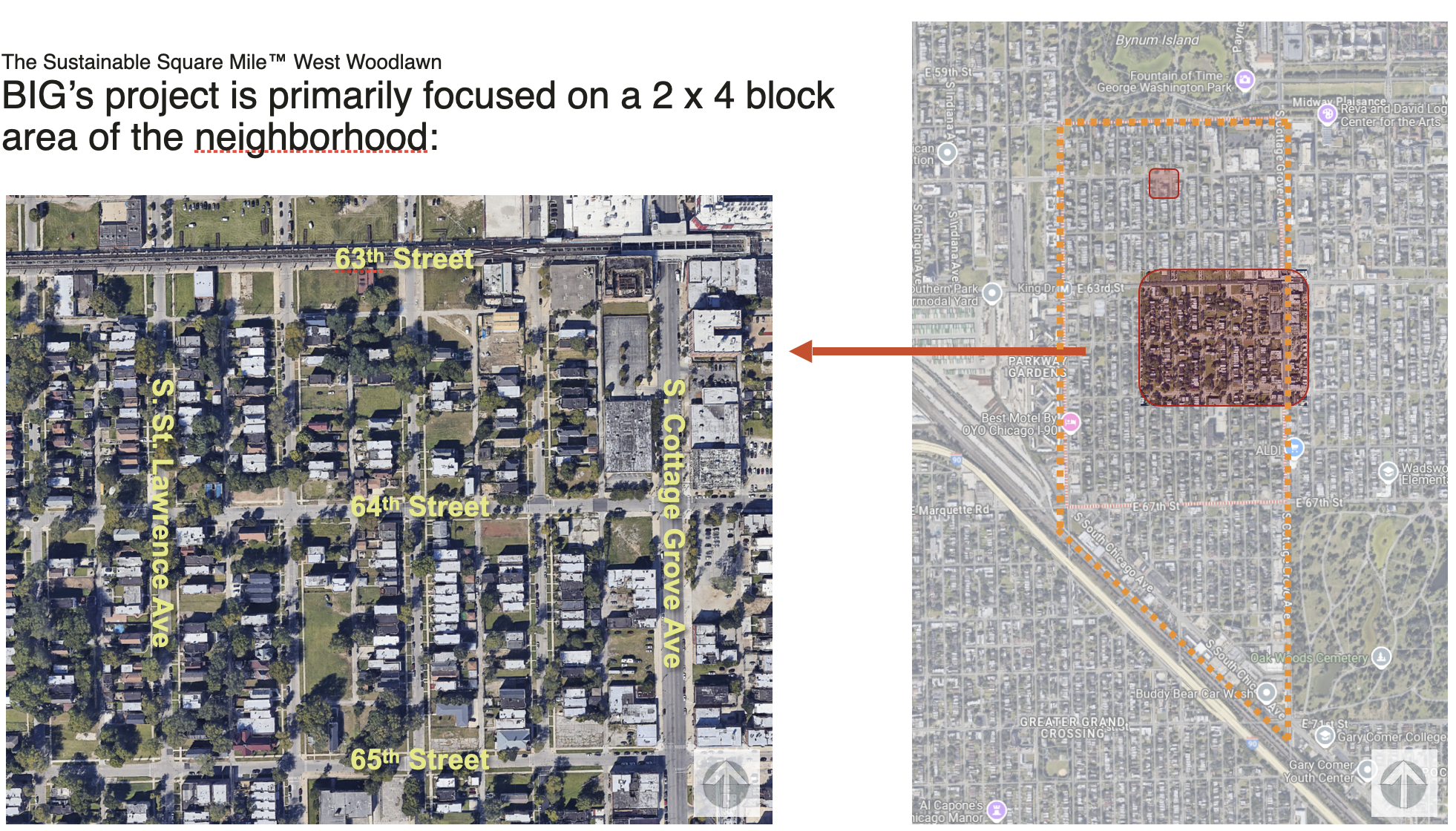
BIG’s project is primarily focused on a 2 x 4 block area of the neighborhood. Photo: BIG
One of the three community locations that were explored by the participants in the Philadelphia GI Charrette is an innovative mixed-use neighborhood renovation/redevelopment in West Woodlawn (Chicago, IL), a predominantly Black, low-income community with a rich cultural heritage. Blacks in Green - BIG™ is a national network for environmental justice and economic development created to close America’s racial health/wealth gap via the new green economy using a whole-system solution for the whole-system problem common to Black communities everywhere. Blacks in Green™ has pioneered environmental economic development for the benefit of Black America since 2007— a 501c3 non-profit tackling pollution and poverty with a goal of closing America’s racial health/wealth gap via the new green economy and transforming Black communities into oases of resilience against the climate crisis. BIG’s mission is to reinvent the walk-to-work, walk-to-shop, walk-to-learn, walk-to-play village where African Americans own the businesses, own the land, and live the conservation lifestyle. BIG is building economies in energy, horticulture, housing, tourism, and waste via this Sustainable Square Mile™ system.
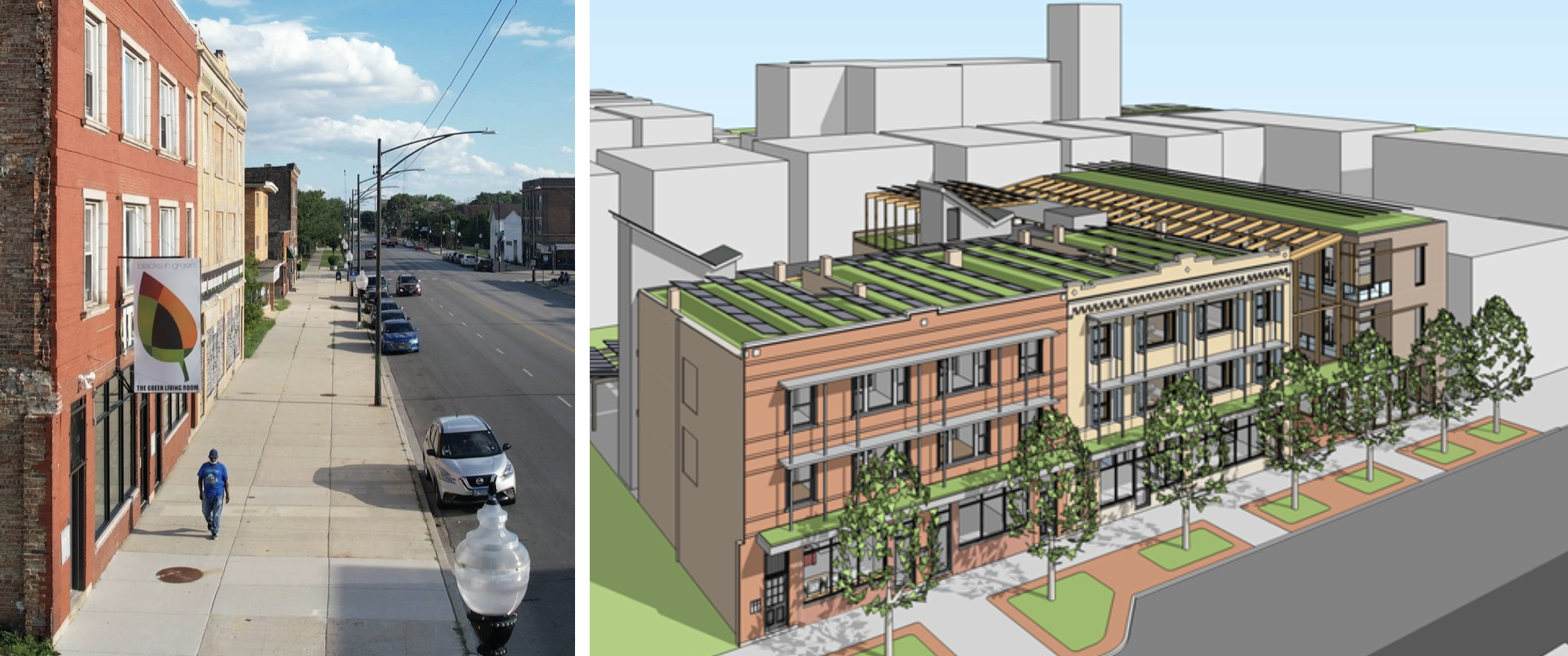
BIG Cottage Grove Properties. Photo: BIG
The West Woodlawn neighborhood was a thriving, middle-class predominantly Black community throughout the 1950’s, and then became negatively impacted by redlining, disinvestment and blight. Many homes and commercial buildings have been torn down, and existing buildings are vacant. The neighborhood is now also experiencing increasingly rapid gentrification due to increased demand for market-rate housing on Chicago’s south side, expansion of the University of Chicago campus, and the Obama Presidential Center which is under construction on the east side of Woodland in Jackson Park.
BIG has acquired a number of vacant and underutilized properties in the neighborhood, some with buildings, some vacant, and is redeveloping them with a comprehensive suite of green building and site strategies, including green infrastructure/nature-based solutions (NBS), clean district energy/decarbonization strategies, and amplifying walkability and community well-being.
Advertisement
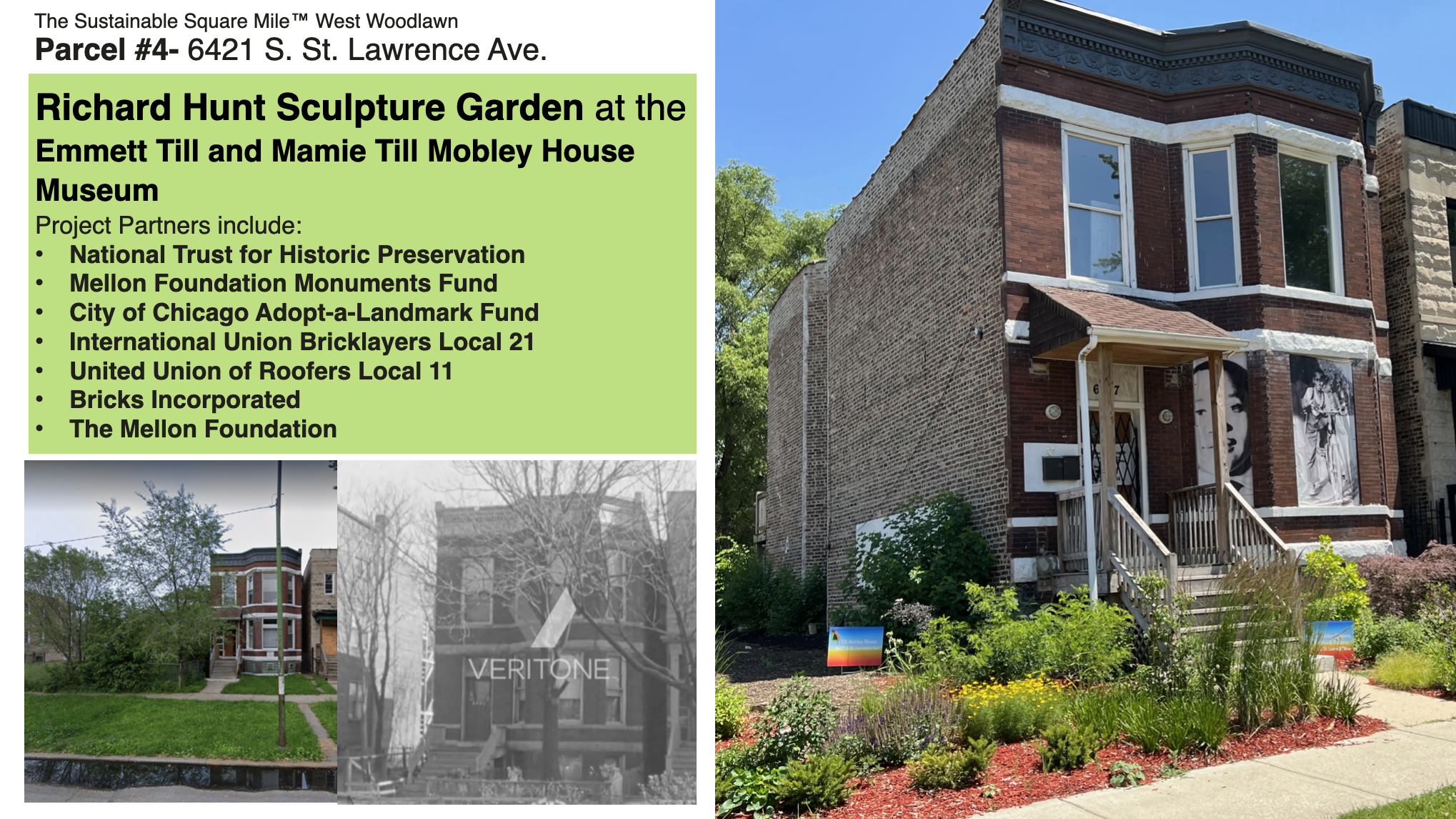
Emmett Till and Mamie Till Mobley House Museum. Photo: BIG
BIG is in-process of improving and expanding its Green Living Room headquarters mixed-use campus on South Cottage Grove Avenue, one of the two critical mixed-use commercial corridors in the neighborhood. Served with walkable transit, this redevelopment consists of three adjacent parcels—two with existing buildings, one vacant—being developed as a fully accessible, net-zero mixed-use campus.
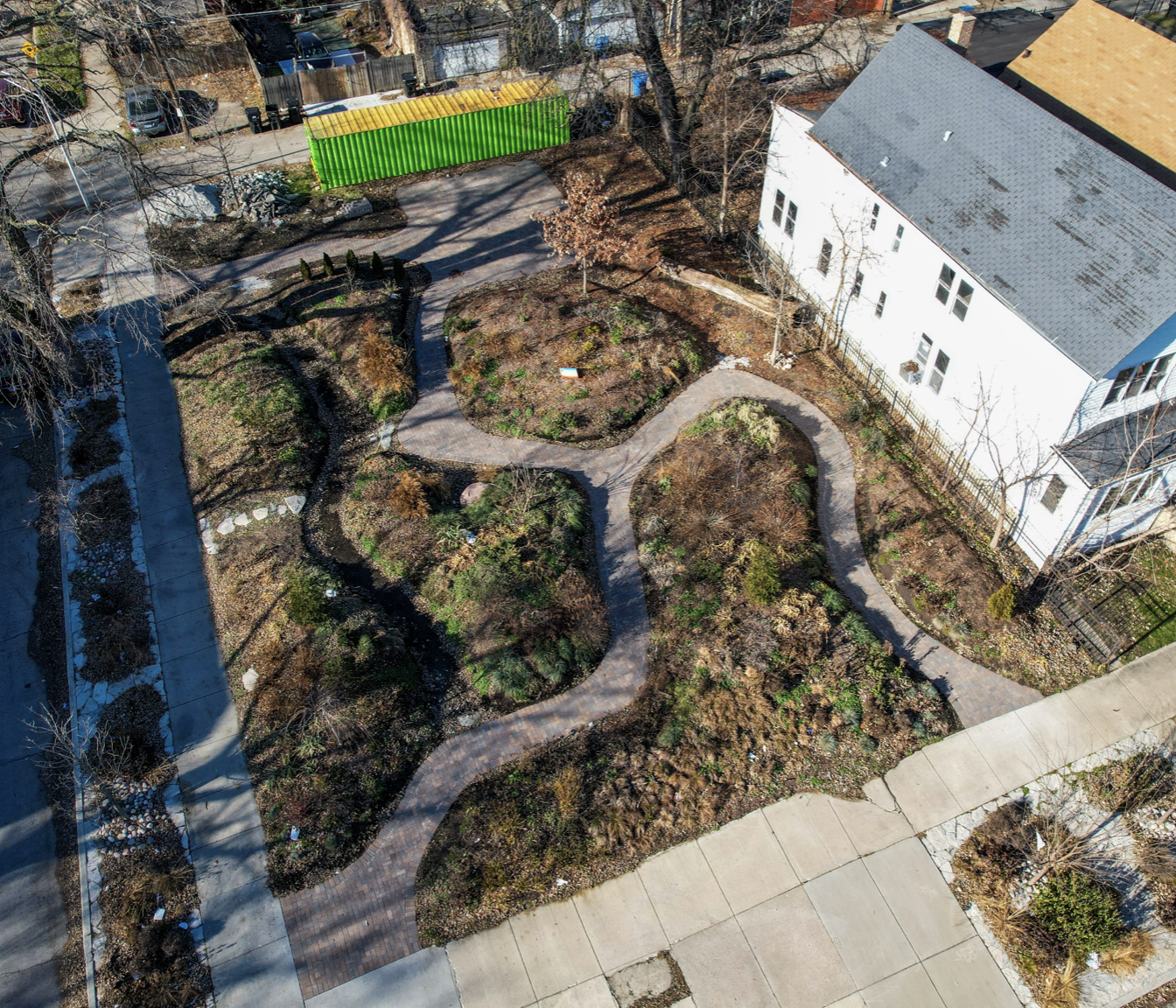
Mamie Till Mobley Forgiveness Garden. Photo: BIG
BIG was able to acquire the boyhood home of Emmett Till and his mother Mamie Till-Mobley, where they were living in 1955 when Emmett traveled south to visit relatives and was brutally murdered, subsequently helping to galvanize the growing civil rights movement in the US. BIG is restoring the home and adjacent vacant parcels with leading-edge green practices as part of the vision of an ecotourism destination, including a museum and sculpture garden with a sculpture that renowned local artist Richard Hunt created before his passing last year. This emerging tourism industry will create another avenue to increase household income and opportunity for community members.
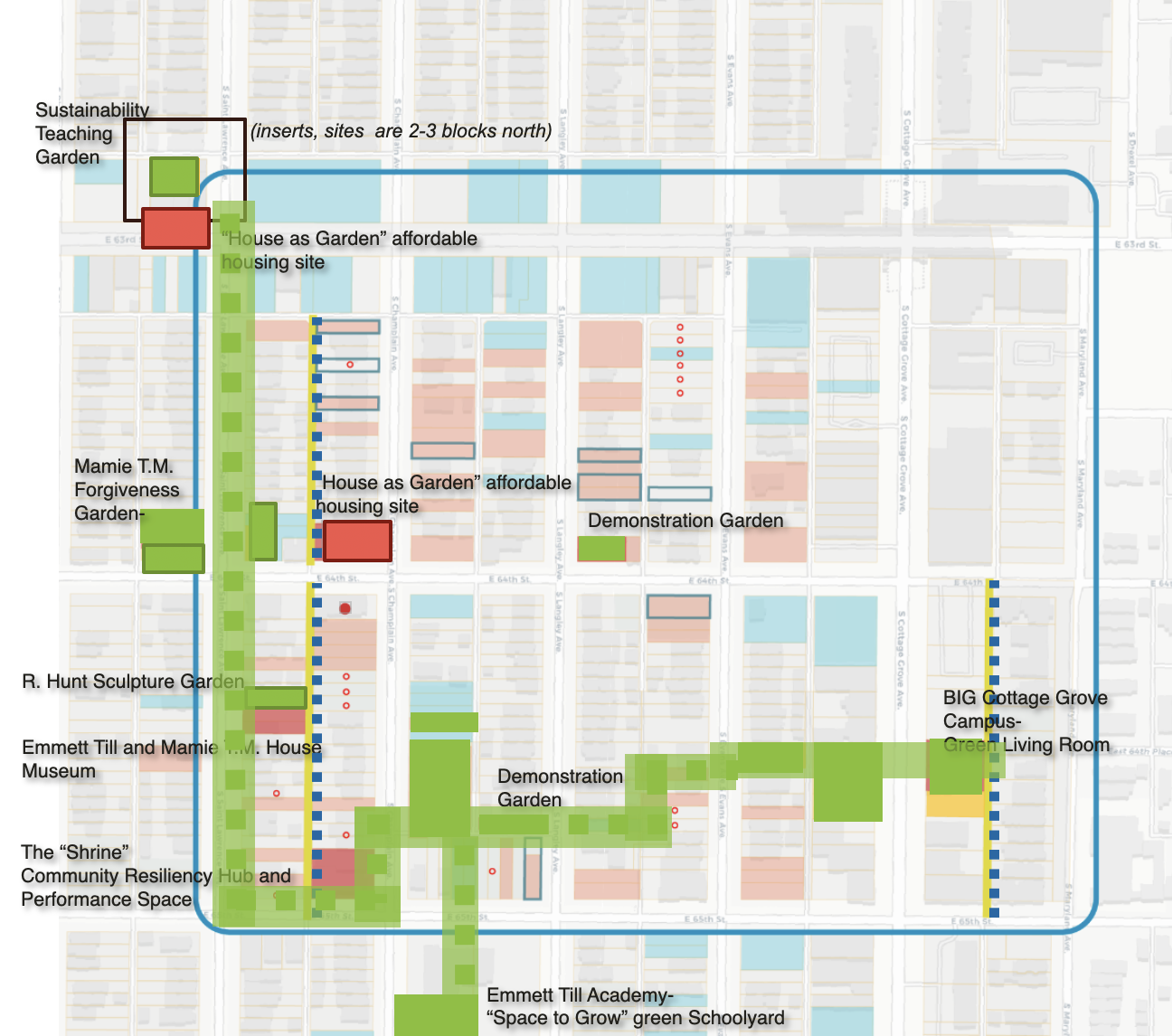
BIG has reclaimed another previously vacant site, named the Mamie Till-Mobley Forgiveness Garden, creating a model green infrastructure garden with undulating perennial pollinator plantings, native shade trees, rain gardens, permeable pavement, raised beds for herbs, and many other sustainable elements. The garden has become a beautiful and popular community space, and a chance to share green infrastructure concepts with neighbors.
BIG currently owns properties in the focus area of the neighborhood in eight locations (indicated in darker red on the first diagram)
Three properties have (existing) buildings
Two properties are planned for housing
Three properties are planned for greenway gardens
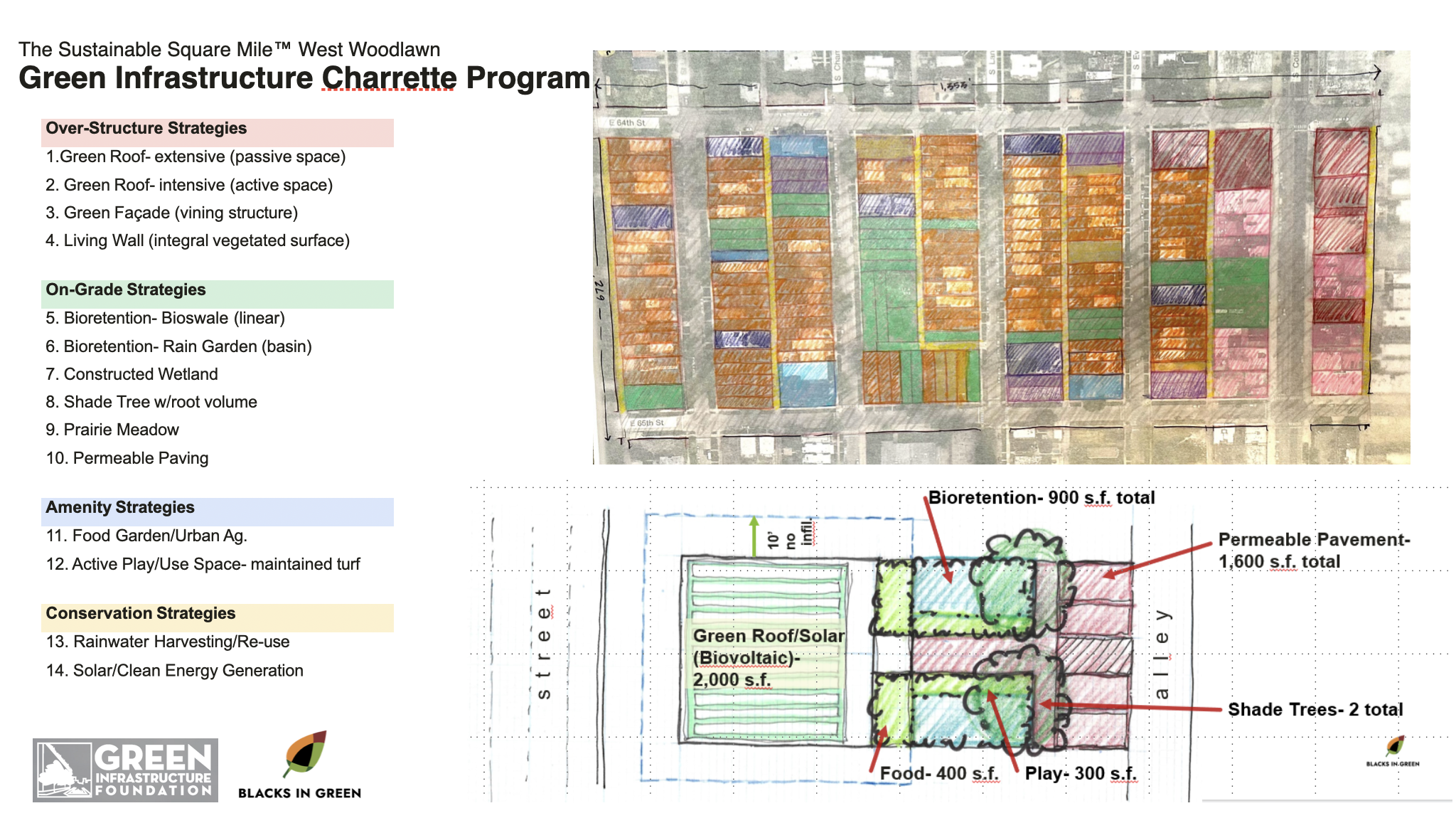
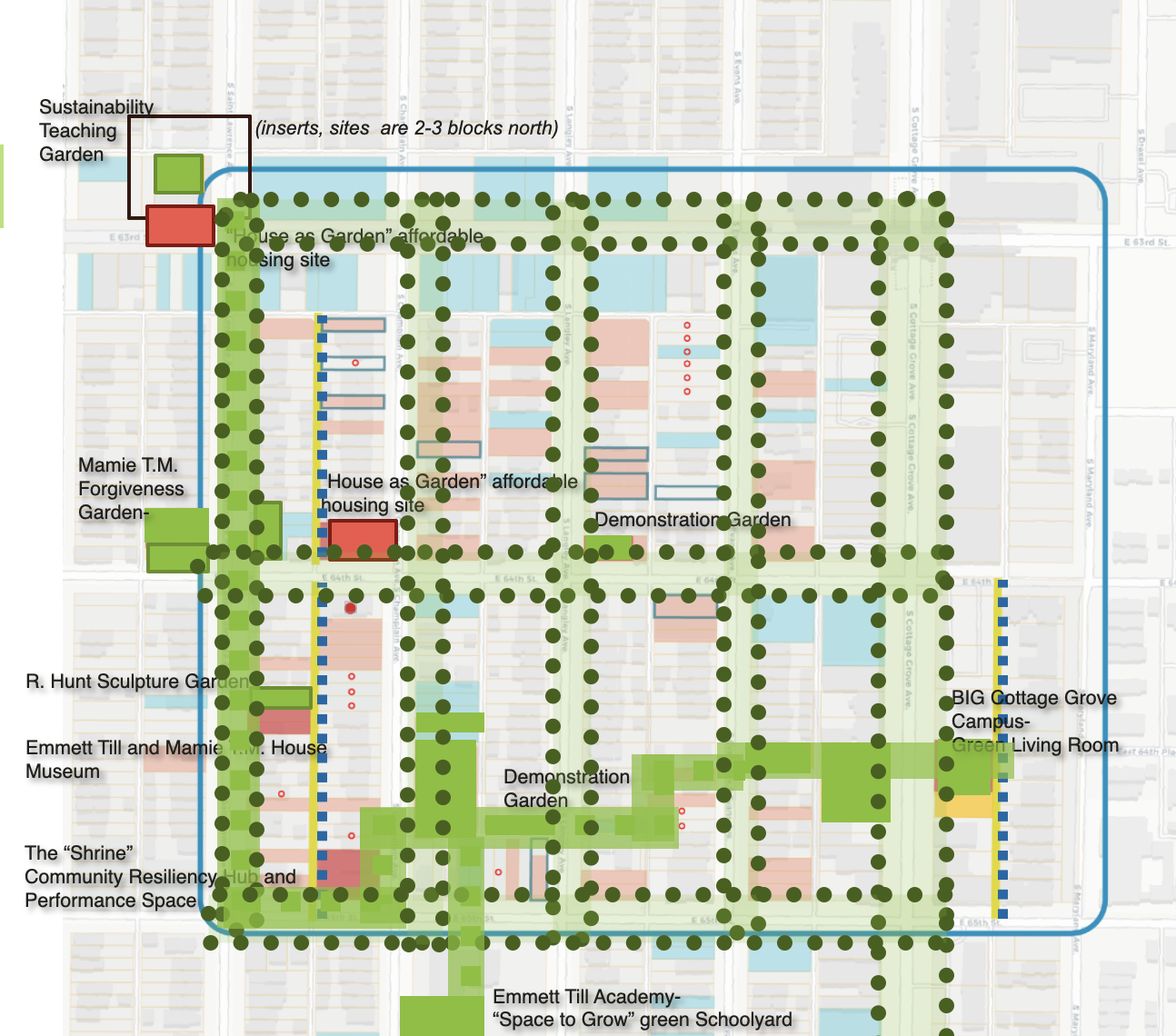
Designs and green infrastructure strategies developed for The West Woodlawn Neighborhood, Chicago. Photo: GIF and BIG
BIG’s community-based vision includes re-purposing vacant and underutilized properties to renew the neighborhood with clean energy and green infrastructure by optimizing every site and surface for function, performance, and beauty. BIG is implementing a first-of-its’- kind neighborhood-scale Great Migration Greenway connecting residents to beautiful, walkable green spaces to leverage existing and future planned BIG initiatives. The performance of these spaces is amplified with stacked community benefits through integrated green infrastructure. BIG is working with the City of Chicago Department of Forestry and community members to replace the once-dense tree canopy to provide greater cooling and rainwater absorption. BIG is also seeking accreditation as an Arboretum for this portion of the West Woodlawn neighborhood in collaboration with the Morton Arboretum, Openlands, and the City of Chicago Department of Forestry, to help promote the long-term sustainability of the restored tree canopy.
Following the GI Charrette exercise, BIG has expanded the notion of green infrastructure to the entire 2 x 4 block focus area and has projected the values and costs of converting every single property, and the entire public right-of-way, to high-performing GI surfaces. These figures were then inputted into GIF’s Cost/Benefit Matrix, which had been populated with current Chicago- based costs and values. BIG is just beginning to analyze the data, which indicates, predictably, a range of cost benefits for the various GI strategies. The most compelling statistic is the potential to create 160 new jobs to maintain, monitor, and steward the dozens of green roofs and walls, permeable surfaces, street trees, and rain gardens that would be installed. BIG is also exploring optimal systems and products to achieve greater stacked functions on the rooftop space with integrated solar green roofs, rooftop solar farms, and pollinator habitat providing increased biodiversity on roof surfaces.
Advertisement
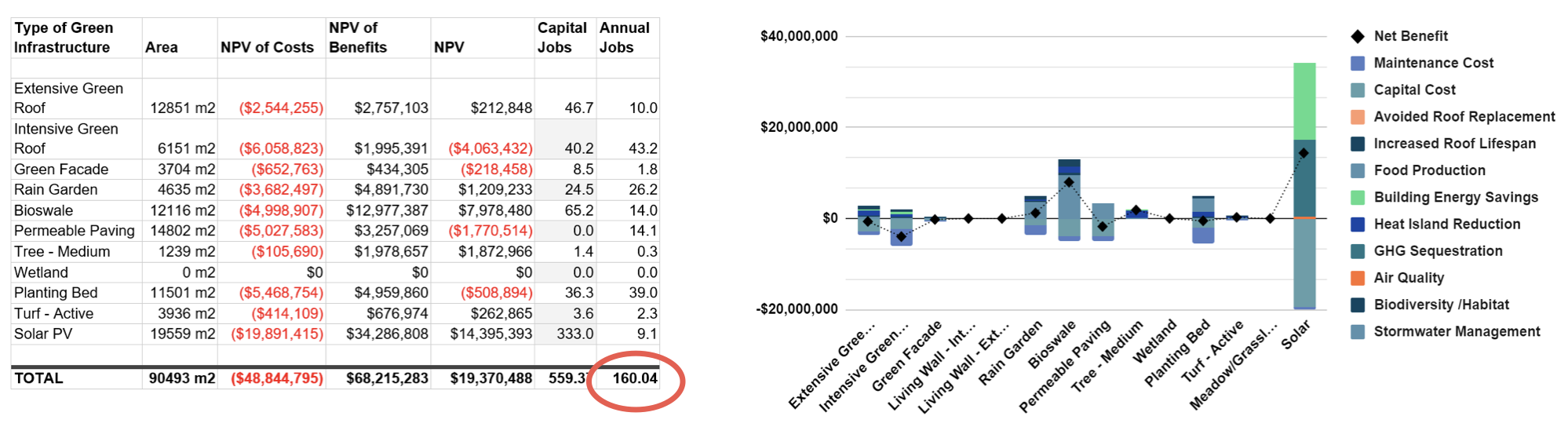
GI Charrette - Costs and Benefits. Photo: BIG and GIF
Conclusion
BIG is using the output from the GI charrette to advance its outreach efforts in the community, as well as in dialogue with the City of Chicago and other municipal agencies, funders, and community partners. BIG is continuing to dive deeper into the economic and practical benefits and opportunities made available through the holistic integration of neighborhood-scale green infrastructure, combined with best practices in walkable urbanism/complete streets, community agriculture/healthy local food, district-scale clean energy systems, and other leading-edge practices and technologies. BIG’s theory of change being modeled in the Sustainable Square Mile in West Woodlawn, will:
increase the rate at which neighbor-owned businesses are created and sustained
build the capacity of neighbors to own, develop, and manage the property in their community
advance the conservation lifestyle - the beautiful life!
BIG is especially focused on the opportunities for green job creation in clean energy retrofitting, the horticultural trades, the tourism industry (lodging, services, products, etc.), and other locally owned businesses. BIG is advancing the notion that community-scale green infrastructure is an essential part of this much larger vision of the neighborhood of the future, still rooted in its incredibly rich past, to provide greater individual and community resiliency, prosperity, and well-being.
Advertisement
About the Author
David Yocca, FASLA, RLA, GRP, a Consulting Landscape Architect/Ecological Planner, serves as the Director of Green Infrastructure for Blacks In Green (BIG), and Board Chair for the Green Infrastructure Foundation (GIF).
Resources and Charrette Background
An on-going program of the Green Infrastructure Foundation (GIF), the Green Infrastructure Charrette Program is helping community groups to learn about and better understand GI performance at a larger neighborhood or campus (community) scale. GIF partners with communities to shape healthy, resilient, and sustainable places using living GI. The summary reports from the GI Charrettes and other resources are all accessible on GIF’s website: https://greeninfrastructurefoundation.org/charrette. To learn more about how GIF and the Green Infrastructure Charrette Program can help your community to advance with GI practices, contact David Yocca, dyocca@gmail.com. These previous LAM articles shed additional light on some of the practices explored during a charrette:
Photovoltaic on Green Roofs – the Scandinavian Way
Exploring The Potential of Rooftop Agrivoltaics
A River Runs Through It: The Value of Water on Biodiverse Green Roofs
Visioning Community-Scale Green Infrastructure in Philadelphia at CitiesAlive.