Growing Green Roof Plants: Insights from the Field
Advertisement
Introduction
While sedums prevail as a preferred plant choice for extensive green roofs worldwide, the use of native vegetation on green roofs is gaining interest in some green roof markets. Native vegetation is able to address concerns about plant resilience, support of biodiversity, and improve ecosystem services provided by green roofs. However, the business of procuring plants for green roofs relies on negotiating the dynamic realities of supply and demand. Some growers don’t have the capacity or knowledge to expand plant palettes to grow sedums or natives. Others may have the knowledge and interest to expand their available plant list to grow plants for green roofs, but may have limited space or resources to grow sufficient quantities of plants to compete in the green roof market.
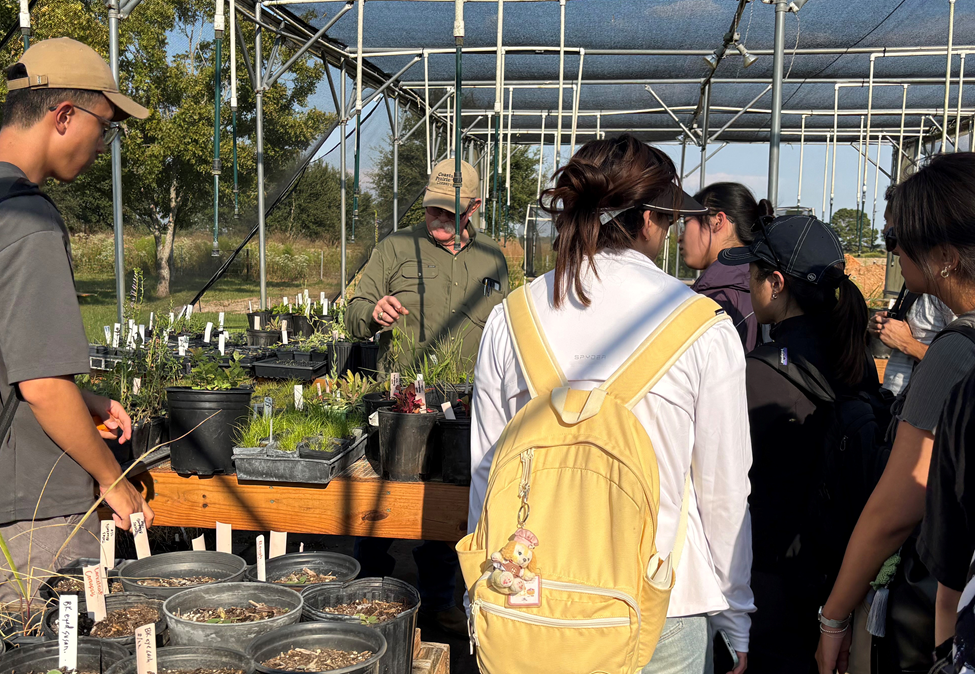
Preparing the next generation of professionals includes learning about how plants are grown in nurseries. Graduate students in landscape architecture at Texas A&M University learn how native plant seeds are collected at Indiangrass Preserve (Waller, Texas). Here, seeds are sprouted and repotted several times over growing seasons to produce mature plants for planting in a native garden on site. A similar process is used in nurseries to prepare quality plants for installation in landscapes and green roofs. Photo: Bruce Dvorak
Green roof designers are sometimes challenged to meet clients’ needs for more sustainable forms of green infrastructure, to meet requirements imposed by certification requirements such as LEED, the Living Building Challenge, BREEM, or municipal or federal regulations for sustainability. Sometimes designers want to explore and trial new plant taxa for green roofs to expand their sustainability potential; however, they may find that their plant(s) of interest are unavailable, cost-prohibitive for the project, or not available in appropriate sizes. Designers can feel trapped by the limited availability of plants in a region.
Given the dynamics of the supply and demand of access to plants for green roofs, this article explores some leading plant growers' thoughts about these issues. I report on responses to three questions I asked regarding what plant growers believe are key issues to sustaining or growing the market for green roof plants. I reached out to several individuals responsible for growing plants for green roofs and or installing green roofs. I asked each expert three questions. Here is what I found.
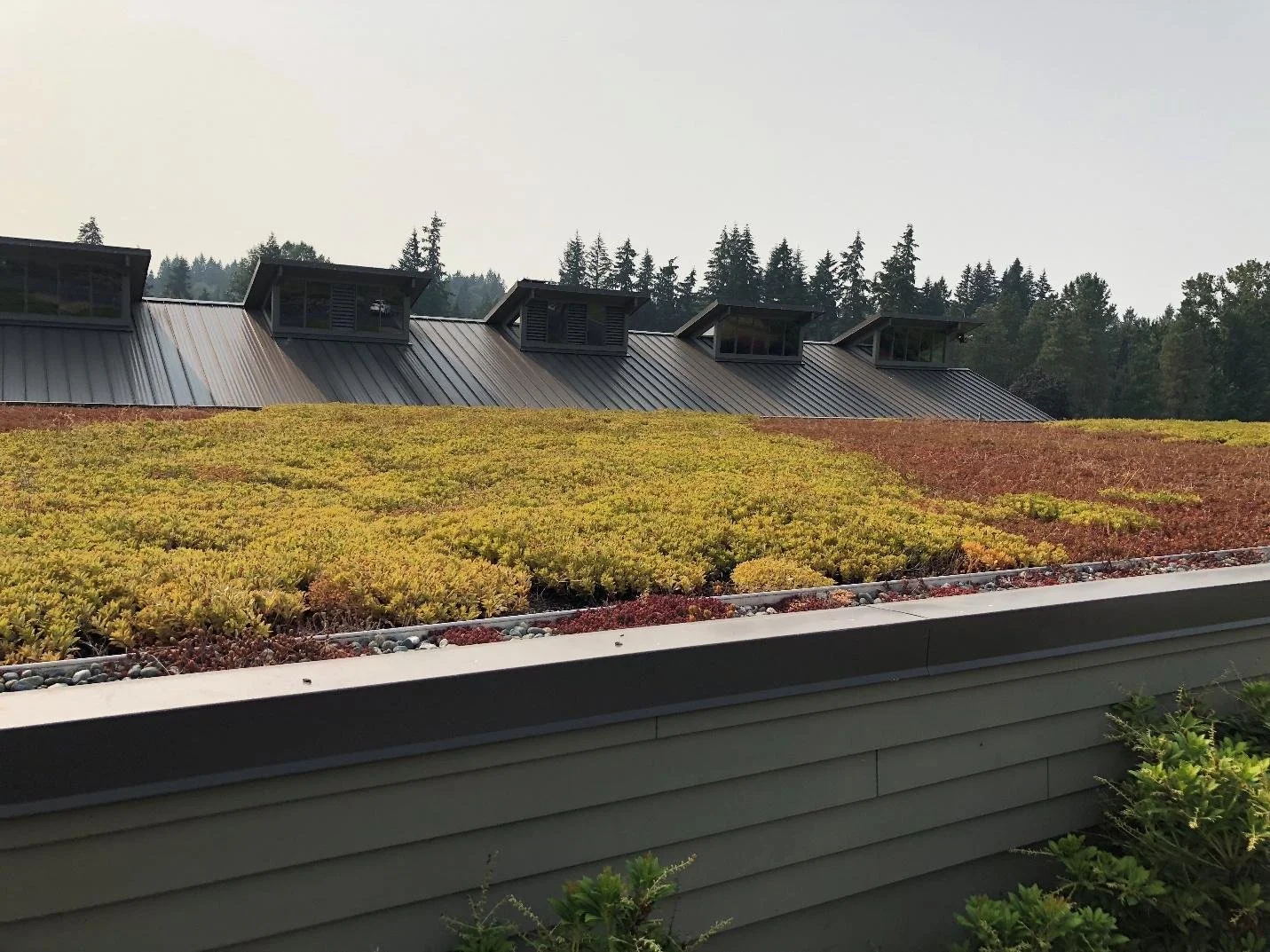
A sedum monoculture on a green roof in the Seattle, Washington, metro area. Sedums are a standard genus for shallow, extensive green roofs. While sedums are easy to reproduce in nurseries and are considered durable, low-diversity green roofs like this one may be vulnerable to extreme weather and climate events. Diversifying green roofs with 20 or more taxa, including some native species, is a preferred practice in published green roof guidelines such as the ASTM Standard Guide for Vegetative (Green) Roof Systems: 14 (2014) or the FLL Guidelines for the Planning, Construction and Maintenance of Green Roofing (2008). Photo: Bruce Dvorak
Question 1: “What are the greatest challenges for nurseries in the green roof industry today?”
Green Roofs are a Small and Specialized Market
Although there have been more than a few large green roofs installed in North America, and some municipalities and governments have incentives or requirements for green roofs, the overall market size is still small compared to the scale of operations for growing plants for landscapes on grade.
Ed Snodgrass of Emory Knoll Farms said, “The market has been and is still a non-horticultural market. Many of the stakeholders are coming to the market through regulation and not gardening or horticulture. It’s still a relatively small market for growers, so the growers have to be small or have other product lines. Producing a plant that is resilient on a green roof requires a different kind of growing than traditional horticulture.”
A similar notion was communicated by Rod Nataros of NATS Nursery in the greater Vancouver, B.C. area, calling green roofs a “Micro-industry” for plant growers. What this means is that even after more than two decades, mature markets like the East Coast, Pacific Northwest, and Midwest, the business of growing plants for green roofs is still a small market for most plant growers.
This reality is holding true in Texas and the Southern United States in general, where green roofs are an emerging market for plant growers. Emily Brown of Native Texas Nursery said, “The demand for native plants to be used on green roofs is a relatively small percentage of the wholesale plant marketplace currently in Texas. Most types of native plants used on green roofs currently have to have crossover marketability for other landscape installation projects. Until the marketplace for green roof plants grows to a larger and more significant share, it is difficult to grow specific species and sizes that are specifically grown for the green roof marketplace.”
Project Delays
Several plant growers mention that building construction delays can interfere with plant supplies and affect many aspects of running a nursery. Growers need lead time to assure the plants specified for a project can be grown and delivered on time and in peak health condition. Paul Kephart of Rana Creek Nursery said, “Delays affect plant material readiness, quality, and establishment.” This means that delays can lead to multiple and far-reaching effects. Emily Ahlstedt of Recover Green Roofs said, “Installation timelines naturally shift, and projects usually require specific plant palettes and quantities on relatively short notice, which can make planning tricky.” This means that plants may occupy nursery space for longer than planned. Rick Buist of Bioroof Systems explains, “Project delays affect inventory levels, timing, and costs in that order.” Rick further said, “It is difficult to keep products fresh" in an industry where delays are common. Both play significantly into cost, and the green roof market is quite competitive when it comes to the vegetation.”
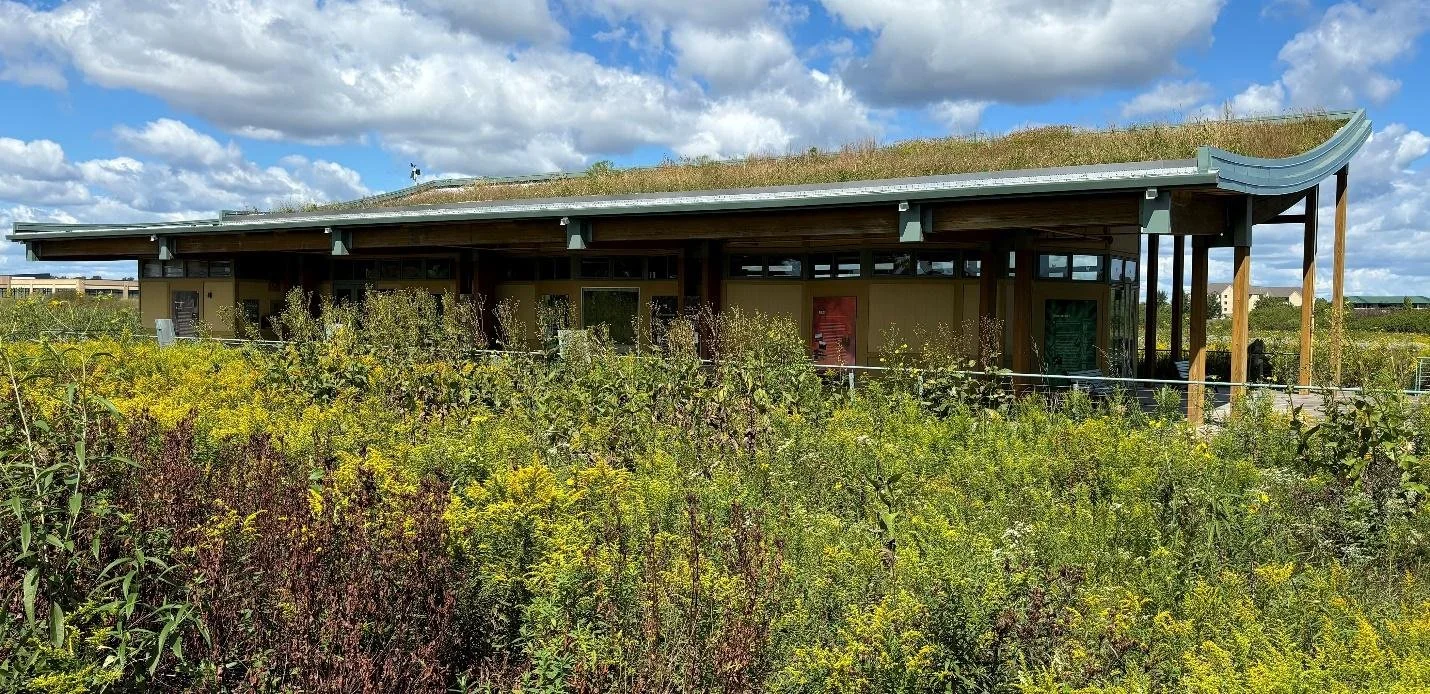
Evelyn P. Tyner Interpretive Center in Glenview, Illinois, preserves tallgrass prairie habitat and a green roof. The green roof is planted with native and adaptive plants, which helped achieve LEED Platinum certification. Plants include a sedum base with native taxa interspersed, including allium, coreopsis, heuchera, and eastern prickly pear installed into the six inches of substrate. This project exemplifies how a sedum base can be expanded by including some natives. Photo: Bruce Dvorak
Rod Nataros of NATS Nursery elaborates, “The bigger the project, the bigger the effect of delays. Holding fees can be implemented; however, project delays take up space.” Rod said that if delays occur during the summer, “unplanned watering may be necessary to keep plants alive and healthy, which can lead to cost overruns. To be a worthwhile business investment, projects need to be on time and on budget.”
What this means is that developers and financiers of projects with green roofs planned need financial securities and project approvals in place to keep projects on time. By doing so, it helps keep the green roof market vigorous and a viable investment for plant growers.
Question 2: “What opportunities are there for collaborative partnerships?”
Early Intervention
When landscape architects and green roof designers reach out to nurseries ahead of time, discussions can lead to arranging for custom-designed, and contract grown vegetation that is tailored to a green roof. Ed Snodgrass and Emily Ahlstedt mentioned the benefits of custom-growing plants for green roofs. Ed said, “When landscape architects, green roof consultants, and contractors contract grow plant material ahead of time, costs are reduced, plants are typically ready and prime, and last-minute substitutions and changes can be avoided." Emily agreed with this approach, “When nurseries are part of those early conversations (or even able to custom grow plants for a green roof), plant selection can better reflect availability, performance goals, and long-term maintenance needs - which ultimately leads to stronger, more successful green roofs.”
Continuing Education
David Hoffman of Hoffman Nurseries said, “High-quality educational opportunities – such as Grey to Green and Cities Alive conferences- play a critical role in connecting members of the supply chain and building the relationships and shared experience needed to create successful projects. In addition, industry talks at horticultural trade shows help establish a baseline understanding of green roofs while raising awareness among a broader audience that may not otherwise be exposed to this work.”
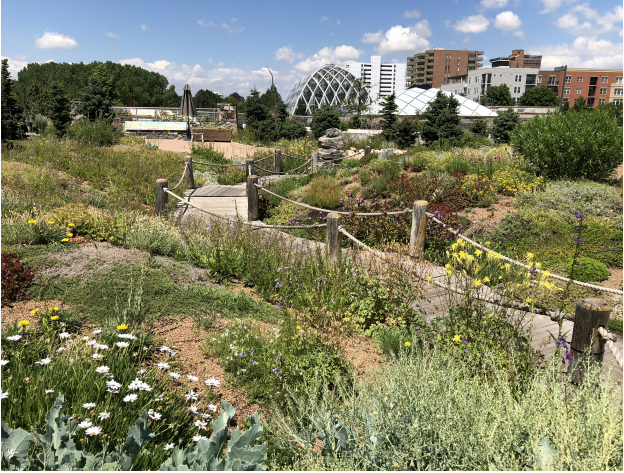
A green roof over a parking garage at the Denver Botanic Garden has trialed over 600 taxa of plants for green roofs in semi-arid climates. Accessible roof gardens such as these inform the public about the potential flora to be used on green roofs. Photo: Bruce Dvorak
Rod Nataros agreed. “We have always valued learning and education about plants, people, and culture. Over the past 20 years, the methods of teaching and learning have changed, but the results are the same: personal growth.” For many years, NATS has engaged in education in the construction industry, offering training in the field and online. Rod said that these efforts build relationships with the industry.
Question 3: “How can the nursery industry help grow green roof markets?”
This question was intended to shed light on opportunities to grow green roof markets. Suggestions ranged from growing plant palettes to growing collaborations and finding new forms of planting green roofs.
Expanding Plant Palettes for Regional Planting
Michael Guidi, Manager of Horticulture Research at the Denver Botanic Gardens, stated, “In the western US—and across most US ecoregions—we lack a diverse, vetted plant palette for green roofs. This limits options for designers, landscape architects, and green roof practitioners to experiment with innovative designs or customize green roofs for specific functions. Building these offerings will be critical for both nurseries and the larger green roof industry.”
Michael also said, “Many nurseries are growing excellent green roof plants that simply aren’t marketed as such. This also means harnessing the momentum of the native plant movement and communicating the benefits of native plants in green infrastructure.” Michael also said, “A major missed opportunity now is building collaborative relationships with seed companies to sell seed mixes tailored for green roofs. Direct seeding has proven to be a viable option for planting green roofs, even in tough western climates. Fostering partnerships to make seed mixes accessible could significantly increase their viability for green roof practitioners.”
Emily Ahlstedt said, “Increasing expectations for climate-resilient or drought-tolerant plants (including any/all sedum varieties!) is needed. There is also a need for more meadow and sedum species available as plugs. Offering these in affordable, "ready-to-go" flats would be highly beneficial, as they are needed for almost any new or existing green roof installation.”
Others mentioned the importance of expanding plant palettes. David Hoffman said, “While numerous trials have been conducted across the US and Canada, the growing interest in native plants highlights the need for localized testing. These region-specific trials can serve as practical education tools for everyone in the supply chain, helping ensure that the client’s vision is achieved in a way that aligns with real-world conditions and long-term success.”
Collaborations and Scale
Emily Brown said, “Nurseries and landscape architects should work together to create a list of native plant recommendations that are currently readily available in the nursery trade for purchase. Specifying only these plants on landscape architect plans will help to further promote and provide proof of success by installing the correct plants to begin with, those which are both aesthetically pleasing and work well in the unique growing conditions on green roofs.”
Ed Snodgrass encourages engaging youth. “Get into local high school Ag and Hort programs. Get involved at the state and local levels with codes and zoning that favor developments with nature-based solutions like green roofs. Grow great plants and expand the plant offerings in the supply chain.”
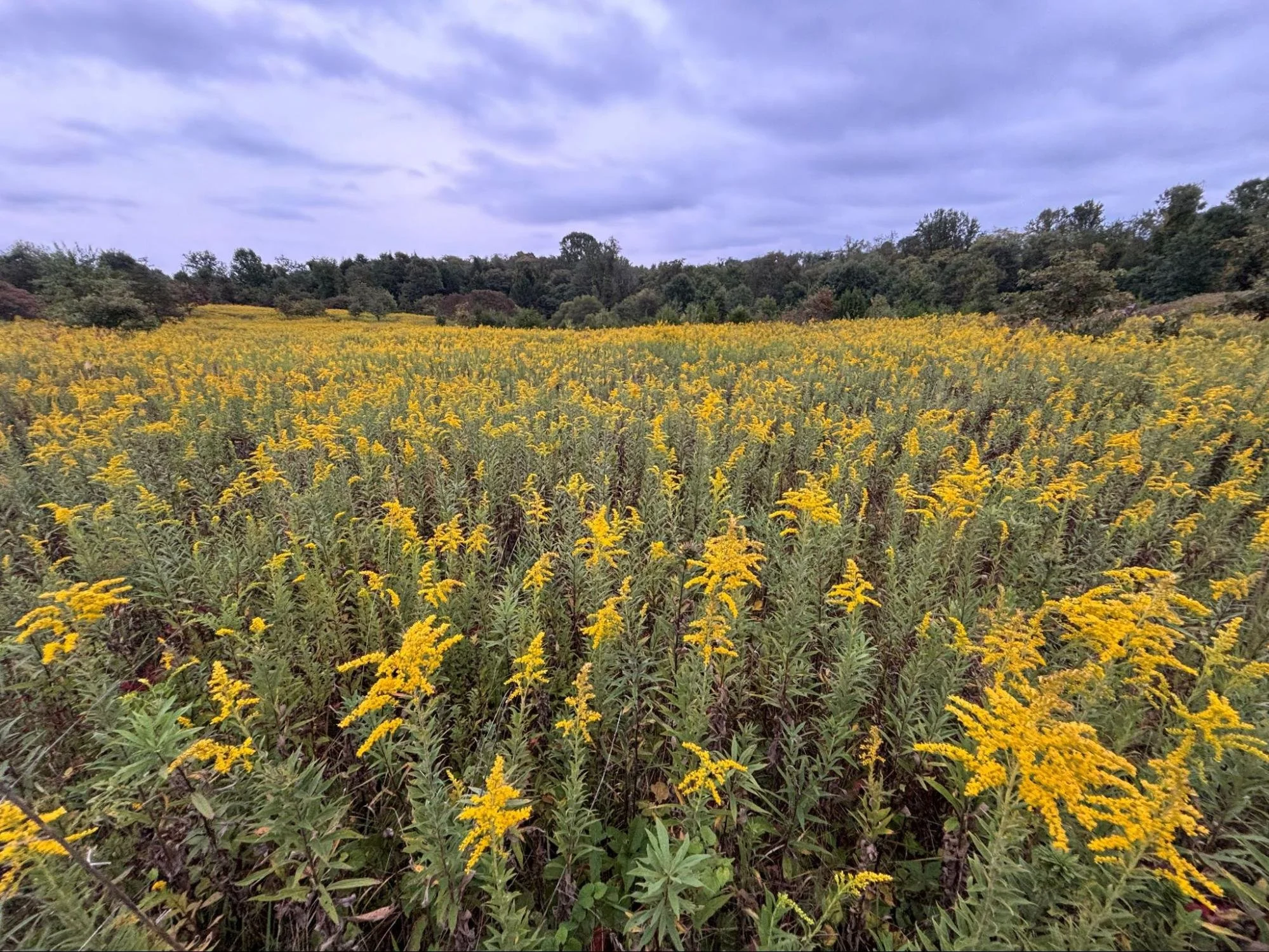
Fields of native vegetation (Solidago) grown at Emory Knoll Farms to support pollinators and seed production. Photo Bruce Dvorak
Matt Dingeldein of Midwest Groundcovers said, “Build relationships with designers. There are many ways this can happen. Conferences, workshops, lunch and learn events, and the building of local hubs of expertise. Matt also said, “If building owners could gain some benefit from start up to establish green roofs.” He said that typically developers gain from incentives; however, it is the building owner who needs support to get a green roof established and the vegetation matured.
Regarding the supply side of plants, Rick Buist said, “Create scale because increased scale reduces costs. Market products on behalf of Tier one clients.” The opportunity here is that plant growers, installers, and designers need to build relationships on key projects that function as landmark or pilot projects. These must be visible and accessible to the media and public.
Rod Nataros said, “We all need to do a little bit. It is the hands of the world that influence the ecology of a place. Activities like observing the natural world, gardening, and ecological restoration that engage people with knowledge of their environments.” Rod said that it is when people seek out long-term plant-to-human relationships that much can be learned.”
Conclusion
In my reflections on the variety of responses to the questions, there was a focus on issues associated with the realities of running a business, as well as opportunities for expanding and building better support within the green roof industry.
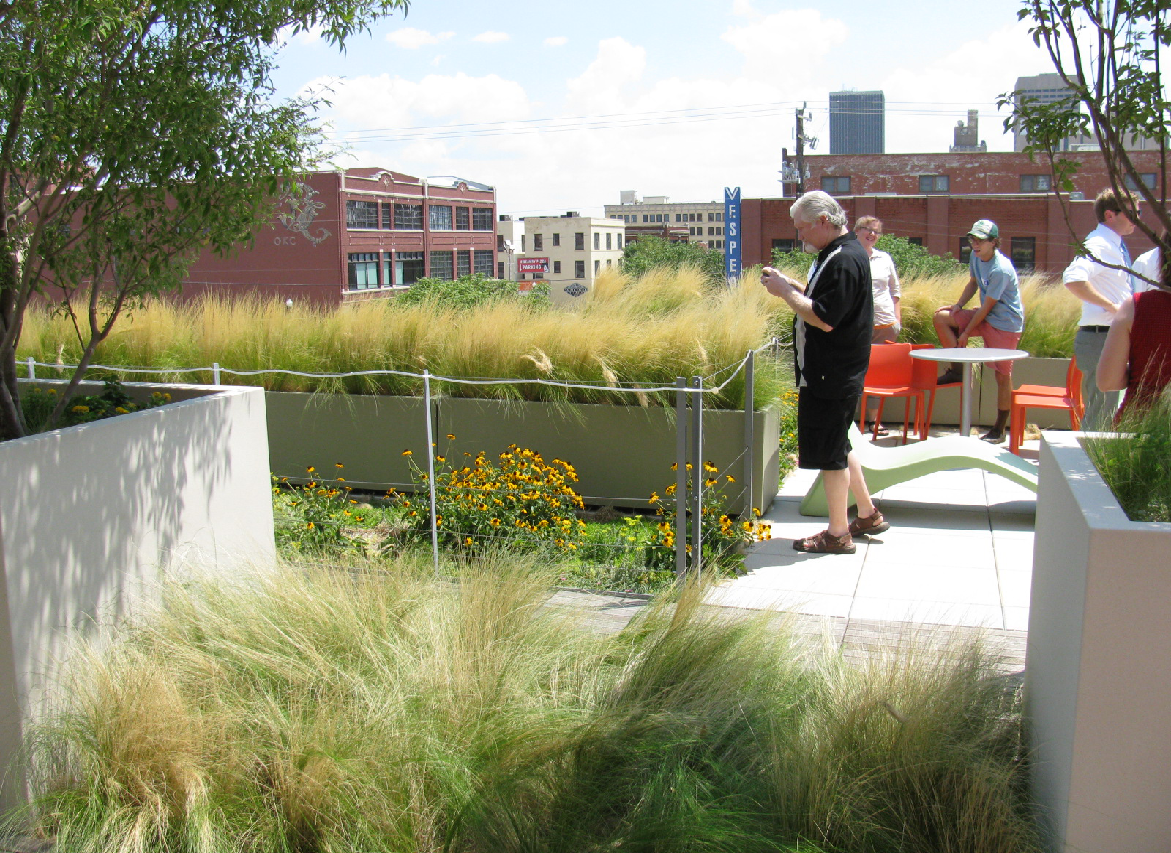
A visit to a roof garden is part of a green roof symposium in Oklahoma City in 2012. The guided tour introduces diverse stakeholders to the multiple values of diverse plants growing on rooftops. Photo: Bruce Dvorak
While some of the contributions are related to the functioning of a business that sells “living things,” other contributions tap into a call for continued education, expanding communications, and connecting with our local places and cultures. There are many avenues for doing this, such as the CitiesAlive conferences and symposiums offered through Green Roof for Healthy Cities and others.
Aside from conferences that might take place once a year, there are formats for a more continuous dialogue, to develop deeper knowledge and opportunities for trust to build over time. Various models exist for building these relationships. Local green roof advocacy groups can help build the trust and relationships necessary to build and expand those relationships between growers, installers, designers, and municipal organizations. For example, in Portland, Oregon, the Green Roof Info Think-tank (GRiT) meets monthly to discuss green roofs and support networks. They bring in speakers and help develop regional outreach and support. The City of Vancouver has the Green Roof Infrastructure Network (GRIN) and runs off a similar model. In Houston, Texas, a new green roof group is forming called the Houston Green Roof Coalition. The coalition came about after like-minded individuals attended a Grey to Green Symposium organized by GRHC in Houston. Multiple people wanted to keep the momentum moving forward and have joined together to do so.
Collaborations can also take place through membership with the Green Roofs for Healthy Cities Regional Academic Centers of Excellence (RACE) for green roofs. These regional centers are hubs of green roof knowledge and support for all aspects of green roofs. RACE hubs connect researchers at universities with green roof designers, industry partners, and municipalities. Joining or expanding centers in new areas helps to build knowledge of plants for green roofs with input from multiple perspectives. Owners of nurseries and green roof plant growers can join these organizations to contribute. It is through the collective sharing of knowledge that green roofs will become more diverse and resilient over time.
Bruce Dvorak, FASLA, PLA, is a Professor at Texas A&M University in the Department of Landscape Architecture and Urban Planning, where he has been conducting green roof and living wall research since 2009. Bruce is the chair of the GRHC Research Committee and founded a new Regional Academic Center of Excellence in 2022, the Southern Plains Living Architecture Center. Bruce received the GRHC Research Award of Excellence in 2017 and teaches green roofs and living walls in his courses in landscape architecture programs at Texas A&M University. His edited book, Ecoregional Green Roofs: Theory and Application in the Western USA and Canada (2021), provided inspiration and content for this article.
Acknowledgements
I would like to thank the following individuals for their contributions to this article (alphabetical): Emily Ahlstedt, Recover Green Roofs; Emily Brown, Native Texas Nursery; Rick Buist, Bioroof Systems; Matt Dingeldein, Midwest Groundcovers; Michael Guidi, Denver Botanic Gardens; David Hoffman, Hoffman Nurseries; Paul Kephart, Rana Creek Nursery; Rod Nataros, NATS Nursery; and Ed Snodgrass, Emory Knoll Farms (Green Roof Plants).
Resources
ASTM E2777 14 (2014). Standard Guide for Vegetative (Green) Roof Systems: 14.
Dvorak, B. and A. Volder (2010). "Green roof vegetation for North American ecoregions: A literature review." Landscape and Urban Planning 96(4): 197-213.
FLL (2008). Guidelines for the Planning, Construction, and Maintenance of Green Roofing. Bonn, Germany, Forschungsgesellschaft Landschaftsentwicklung Landschaftsbaue. V.: 119.
Rowe, B. (2015). Long-term Rooftop Plant Communities. Green Roof Ecosystems. R. K. Sutton. Cham, Springer International Publishing: 311-332.
Schneider, A., M. Fusco and J. Bousselot (2014). "Observations on the survival of 112 plant taxa on a green roof in a semi-arid climate." Journal of Living Architecture 1(5): 10-30.
Snodgrass, E. and L. Snodgrass (2006). Green Roof Plants. Portland, Oregon, Timber Press.