Community Driven Flood Mitigation in New York City
Introduction
More stormwater results in more flooding, which creates greater demand for more absorbent roofs. Heavily cemented urban environments like New York City (NYC) are grappling with how to manage more flooding from cloudburst events. A few inches of rain can turn into a few feet of flooding very quickly. We need to help accelerate micro-mitigation in thousands of smaller buildings, and in particular, green or blue roofs.
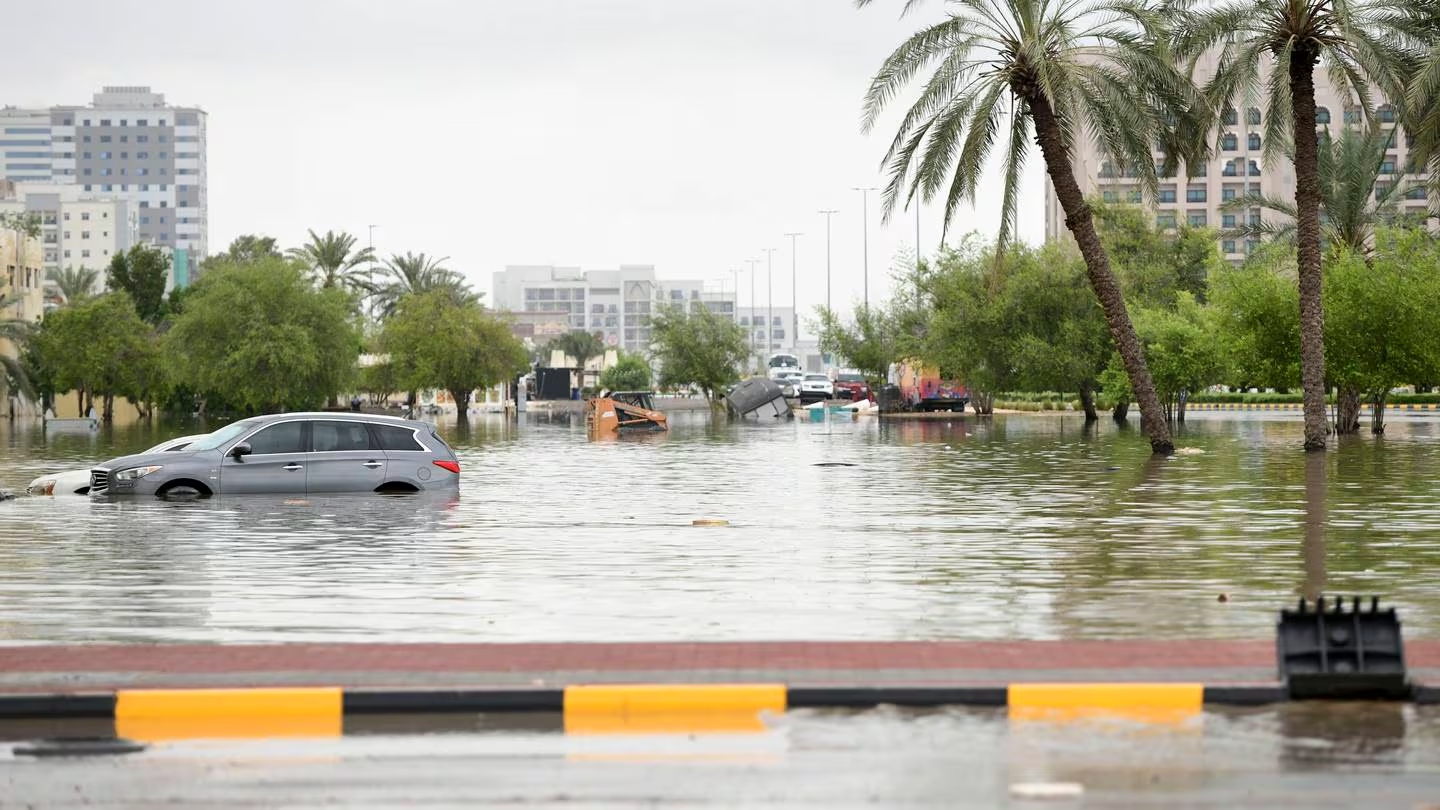
As we saw again recently on May 20 2026, NYC saw extensive flooding in Brooklyn and Queens. According to the FloodNet sensor network post on LinkedIn, in Hollis, Queens, the flood water was measured to a depth of up to 46 inches. That was from an aggregate of ~2 inches of rain, but the rainfall rate in some areas reached 1.7 inches per minute. As someone pointed out under the LinkedIn post, “Urban drainage and warning systems aren't designed for water arriving that fast.”
For decades, our NYC sewer infrastructure was designed to handle a "five-year storm" of 1.75 inches of rain per hour; however, the reality of what is needed is shifting. In 2023 alone, the city was hit by five such events, and projections suggest the "new normal" for a five-year storm will soon be 2.1 inches per hour.
Over 70 percent of New York City remains impervious, meaning that during heavy rains, water has nowhere to go but into our basements, subways, and the local waterways, often through combined sewer overflows (CSOs).
To adapt to this “sub-tropical” era in NYC, we need to evolve into a "Sponge City," shifting from a total reliance on grey infrastructure (the pipes and pumps) to a strategy of widely-distributed green infrastructure that absorbs and retains water where it falls, on public land and private properties.
The Policy Gap: Why Small Homeowners Must Lead
In 2022, the City enacted the Unified Stormwater Rule (USWR), which requires new construction and major redevelopments to detain significantly more stormwater on-site and prioritizes "retention-first" tools like green roofs. While this is a massive step forward, a significant policy gap remains: the rule is primarily triggered by "covered developments" that disturb more than 20,000 square feet of soil or create more than 5,000 square feet of new impervious surface. So this applies only to newer, bigger buildings. That’s great, but older, smaller buildings are where we need more action.
This leaves NYC’s 104 square miles of existing low-rise residential properties, where the median lot size is only 2,500 square feet, largely exempt from the new stormwater mandates. Homeowners in flood-prone neighborhoods like Jamaica, Queens, and Flatbush, Brooklyn, are often left without the regulatory push or viable incentives needed to retrofit their homes, even though a single inch of floodwater in a basement can cost a resident $25,000 in property damages, per storm. They need an easier way to answer: “What can I do about flooding?”
The City Sponge and Blue Dots
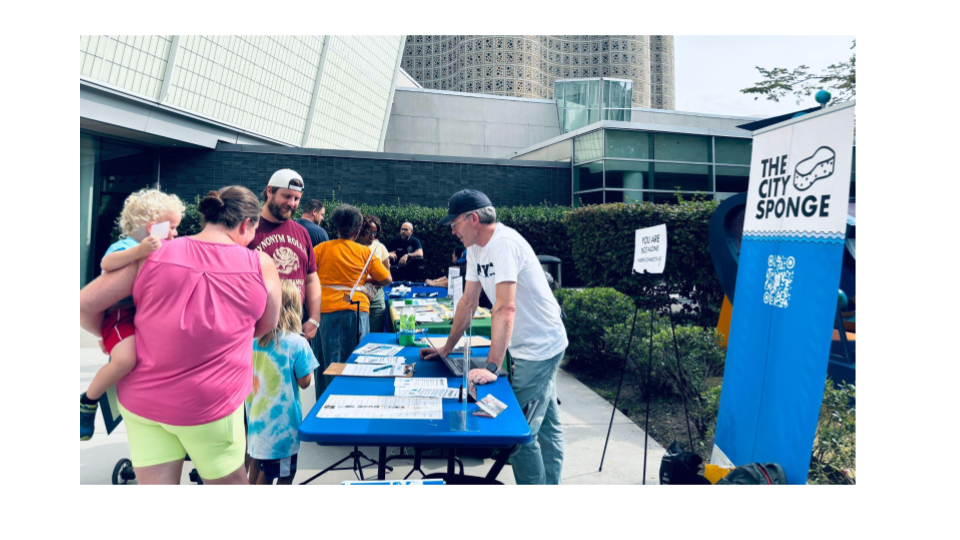
The City Sponge, via Waterfront Alliance
Helping people answer that question and helping NYC become more spongey is at the heart of The City Sponge, a community-centric platform designed to "help New York City absorb flood info and tips", and bridge the gap between technical engineering and community-led advocacy. I started The City Sponge as a website/newsletter to share what I was learning while dealing with my own flooding in Brooklyn. Then other people started sharing their stories: from risk to solutions. I went to community events to hear their questions and provide answers where I could.
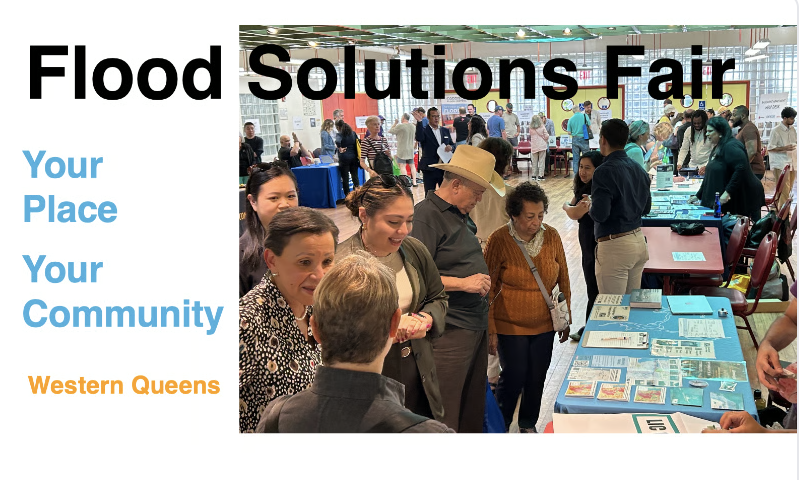
Community meetings in NYC are dedicated to sharing knowledge about flood prevention. Source: The City Sponge
That community engagement grew into Flood Solutions Fairs, where people could compare notes with each other and also get key questions answered by frontline experts across disciplines: from plumbing to policy, landscaping, masonry, insurance, and funding. People need to be able to talk to different experts in order to determine “what can I do?” as well as have a sense of what the city is doing (or not able to do).
Realizing that green solutions needed to be easier to review and also reward, we are now creating “Blue Dots,” which is part platform/part community engagementand meant to serve as an easy-to-use guide to help homeowners (and small businesses, and renters) move from reactive recovery to proactive mitigation. Through the Blue Dots website, which scales up as interest increases during flooding events, we want to show people various ways to retain or redirect water, rather than just making cement walls higher or pumping the water back onto the streets and into their neighbors ' homes.
Blue Dots will encourage people to “get their Blue Dot” either from the mitigation they already installed or plan to install. It will also help them find local resources and even funding from the NY State Resilient Retrofit program.
Similar in spirit to the Philadelphia Raincheck program, Blue Dots adds a layer of impact mapping, so any blue dot added to the map shows its capacity, the collective impact of all the Blue Dots in the area, and the total gallons diverted from the CSO over the year. In this way, we hope to help people find their own solutions and see the power of individual impact when added up.
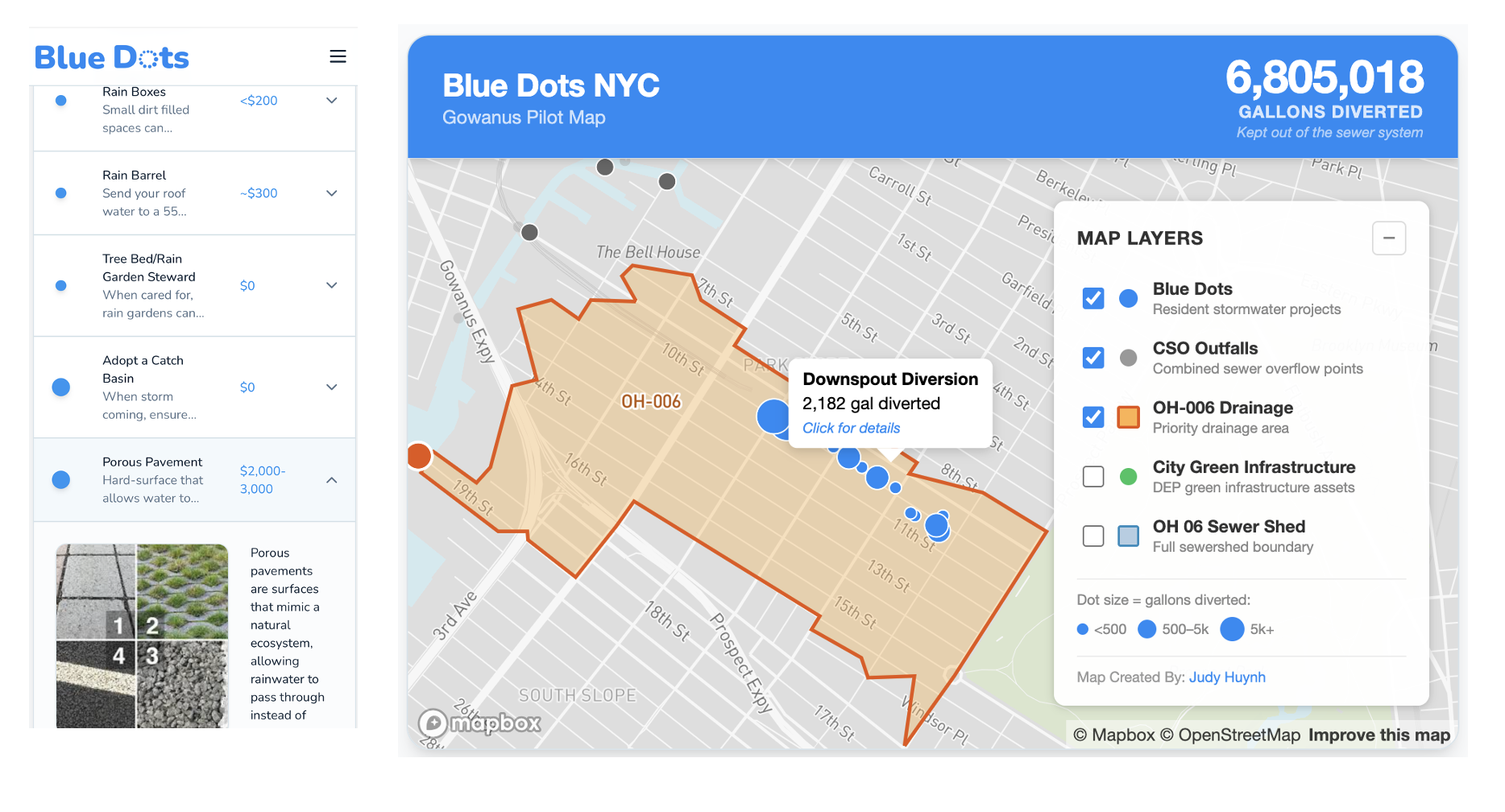
Blue Dots community program identifies projects to mitigate flooding. Photo: The City Sponge
Rooftops: The First Line of Defense
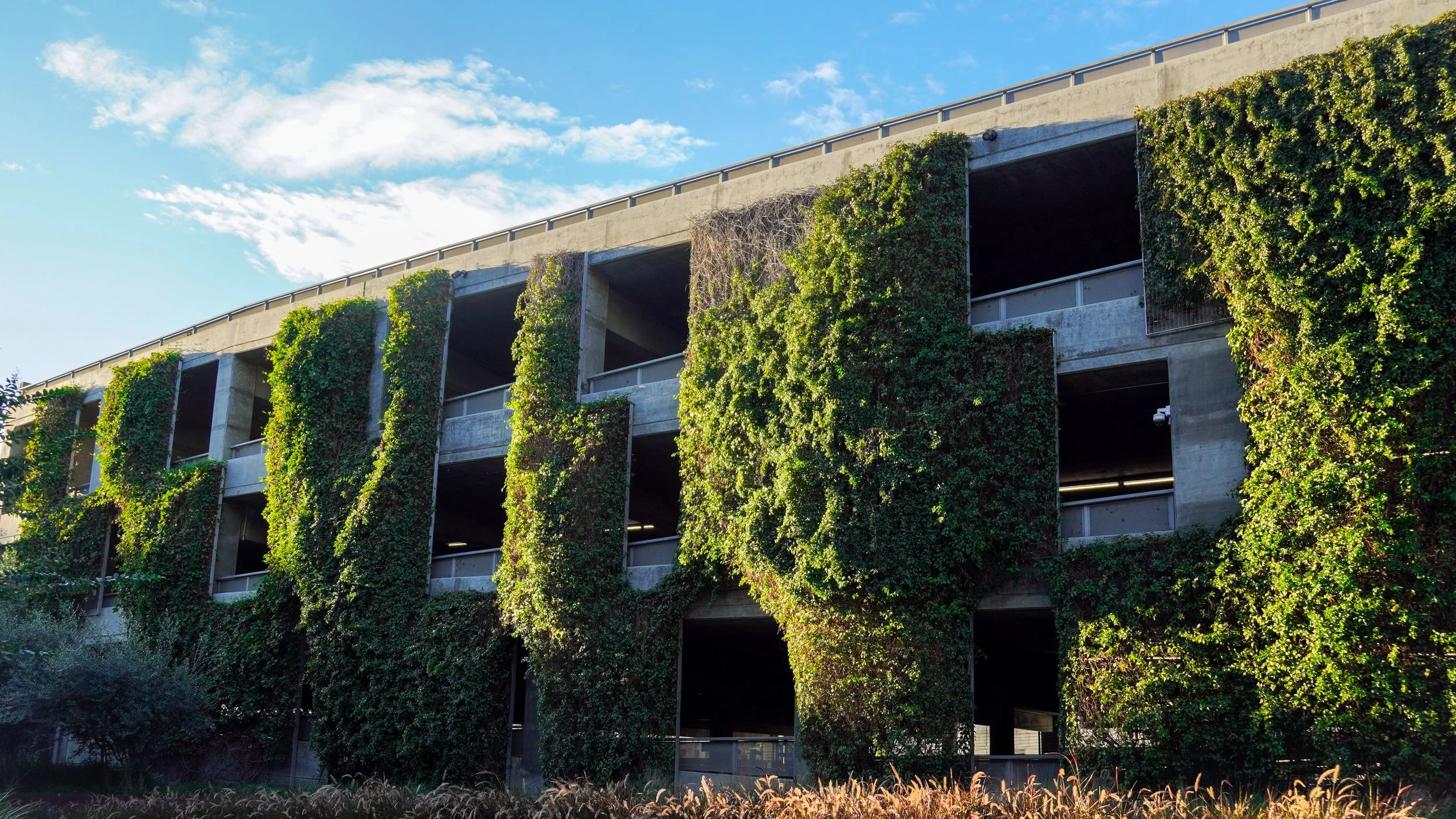
We have a lot of rooftops in NYC. And a rooftop can be the first point of contact in a "treatment train" for stormwater. Rather than letting rain rush into overtaxed sewers, rooftops can be utilized to retain it. As noted in a previous article in Living Architecture Monitor: "since green roofs can typically capture more than 70 to 80 percent of annual precipitation in most North American cities," they are perhaps the most potent tool available for urban retention.
To understand how to use this tool, homeowners must distinguish between the three primary "eco-roof" options:
Green Roofs: These use vegetated systems consisting of a waterproof membrane, a root barrier, a drainage layer, and 3 to 15 inches of engineered growing media (soil). They provide retention, meaning the plants and soil retain the water, preventing it from ever entering the sewer system and slowing water runoff, reducing peak flows.
Blue Roofs: These roofs do not use plants. Instead, they use various flow controls, like specifically sized orifices in standpipes to temporarily store water on the roof deck and release it slowly over 24 to 72 hours.
Blue-Green Roofs: This hybrid approach combines plant retention with the detention capacity of a blue roof. By creating void spaces beneath the plants, engineers can provide greater certainty over the volumes of water managed.
Capacity for the NYC Home
To convey the impact a small homeowner can have, consider the staggering volume of water involved. One inch of rain falling on just 1,000 square feet of roof—a common size for a NYC semi-detached home—generates 623 gallons of water. For a typical 18x50-foot Brooklyn rowhouse (900 sq. ft.), a single inch of rain produces roughly 620 gallons of runoff.
The impact scales dramatically with roof size. On a 5,000-square-foot roof during a 1.5-inch rain storm, a conventional roof produces 4,200 gallons of runoff. A green roof on that same building would produce only 1,400 gallons, resulting in 2,800 gallons less runoff hitting the street for that single event. Across the city’s approximately 638,000 private 1-3 family buildings, these "small" interventions add up to millions of gallons of capacity that the city's pipe network currently lacks.
Helping The NYC Homeowner Understand Strategy
Maximizing this “spongey” capacity requires more than just adding "postage stamp" sized patches of sedum. Per Living Architecture Monitor, "stormwater retention capacity is more a function of the composition of the growing media than its depth". Using high-performance media with porous aggregates like shale, perlite, and volcanic rock can greatly improve water storage because these materials have more internal surface area.
Furthermore, in The City Sponge and Blue Dots, we aim to recommend native grasses and wildflowers where possible to intercept more rain and evaporate more quickly. For NYC homeowners, choosing the right media and plant mix is the difference between a roof that just looks green and one that functions as a high-performance sponge.
Navigating Rules, Funding, and Incentives
For homeowners undertaking a major renovation or roof replacement, Local Laws 92 and 94 mandate that 100 percent of available roof space be covered with a "sustainable roofing zone," which can be solar panels, a green roof, or a combination. While many choose solar for the immediate energy savings, the NYC Green Roof Tax Abatement provides a one-time credit of $10 to $15 per square foot for installations in priority districts, helping to offset the $25 to $65 per square foot cost of a green roof retrofit.
Even if someone wants to “do the right thing” with a green or blue roof, the cost can be a real hurdle. Consider:
A green roof can cost $25 to $65 per square foot
Adding “blue roof” techniques can add another $2-$4 per square foot
Whereas a standard flat black roof costs approximately $2.50 to $3.50 per square foot
For a typical 20x50 sq ft room in a 1-4 family or townhouse, that is in the range of $25-$65K. A homeowner may weigh that against the cost of recovery (or insurance) and decide it is just not worth the added cost… or they may simply not be able to see the ROI. It might be the cheapest way to go, given recovery can be 6-13x more expensive than mitigation, according to the US Chamber of Commerce/Allstate report.
The Reality of The Green Roof Tax Abatement
Upfront Costs: A homeowner must first pay the full cost of installation and then wait to receive the credit.
Only a Portion: The abatement provides a one-time credit of $10 or $15 per square foot, about one-sixth of the total retrofit cost.
Structural Challenges: Many low-rise residential buildings require structural reinforcement to support the weight of a green roof, a cost that is not fully offset by the abatement
So, if a full green roof is structurally or financially out of reach, homeowners should look to the "hierarchy of best practices" supported by the USWR:
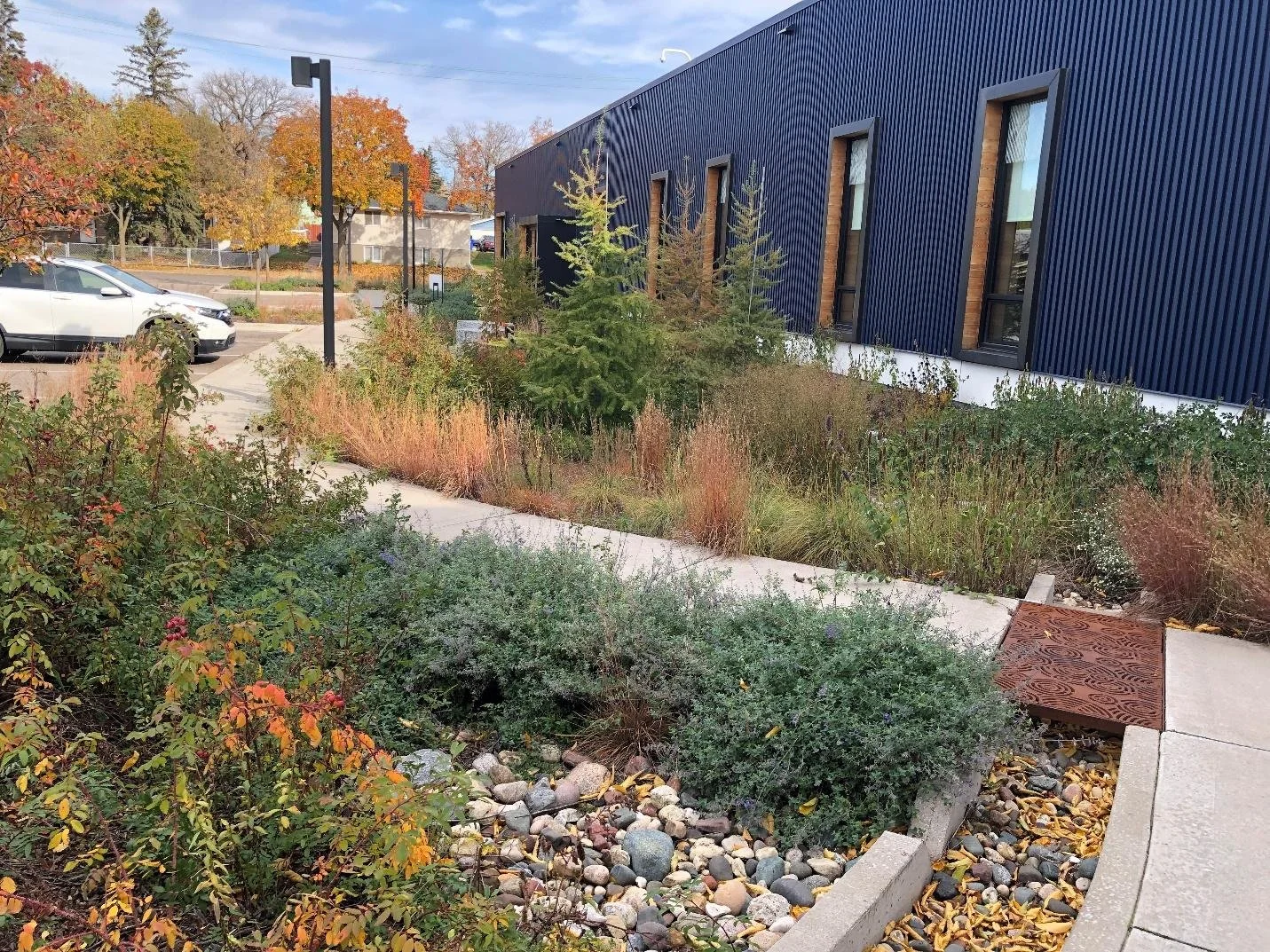
Permeable Pavers: Replacing a concrete backyard or driveway with permeable alternatives can reduce runoff volume by 70 to 90 percent.
Disconnected Downspouts: This is the single most cost-effective move, costing roughly $0.01 per gallon of water removed. Instead of pointing gutters to the sewer, attach an extension to direct them to a rain garden or a landscaped yard area at least 5 to 10 feet away from your building's foundation.
Rainwater Harvesting: A simple 55-gallon rain barrel can hold water for later use in gardening. If only 25 percent of small NYC homeowners added one barrel, they would hold back 8.7 million gallons from the sewer system simultaneously.
Maintenance: Can’t Be An Afterthought
When we talk to experts in landscape/drainage/green infrastructure, they always remind us that maintenance (aka “stewardship”) has to be factored in…be it a tree bed, rain garden, green roof… even a rain barrel requires maintenance. Annual maintenance for a green roof is estimated to be roughly 2-3 percent of the initial construction cost, and we want it to keep working over time.
Conclusion: NYC Roofs Are An Opportunity
Resilience in a changing climate is not just about the City’s $8.2 billion capital plan for sewer upgrades. It is about the thousands of small, distributed green storage sites across our private backyards and rooftops. The goal of The City Sponge and Blue Dots is to empower every New Yorker to see their property as part of the solution. If every eligible NYC rooftop became a "blue dot" on our map, our city’s flood risk profile would be fundamentally transformed. In the sponge city era, we don't just live on top of the environment, we must design our homes to function as part of it, one square foot at a time.
Nick Nyhan is a “civic entrepreneur” who combines a background in data/analytics with his experience in flooding at home. He founded The City Sponge, a local clearinghouse for NYC flooding information that focuses on the journey from risk to solutions, which led to community forums called “Flood Solutions Fairs”. He was selected by Rebuild By Design to build FloodChat: an AI chatbot for renters in 35 languages, and is now their Ibrahim Abdul-Matin Senior Fellow. He co-founded FloodLine and the Blue Dots platform to accelerate mitigation that also reduces community flooding. He has been an expert resource for NYC EM, Cornell Urban Tech Summit, Pratt, Waterfront Alliance, 350 Brooklyn, City Councilor Hanif, Assemblyman Carroll, CNYNC, and NHS.